Hohenzollern Castle
Reading time: 11 minutes
HOHENZOLLERN CASTLE, BADEN-WÜRTTEMBERG, GERMANY
A Fairy-Tale Fortress on the Edge of the Swabian Alb
Rising from a solitary conical mountain on the northern edge of the Swabian Alb, Hohenzollern Castle is one of those rare sights that lives up entirely to its photographs. Towers, battlements, and steep grey rooflines crown a forested peak almost 900 metres above sea level, often half-veiled in cloud or floating above a sea of morning mist. From a distance it looks less like a real building than like an illustration from a book of European legends, and the closer you climb the more it confirms that first impression.
The castle is the ancestral seat of the House of Hohenzollern, the dynasty that produced the kings of Prussia and the first German emperors. The present castle is in fact the third to stand on the Zoller Mountain, rebuilt in the mid-nineteenth century by King Friedrich Wilhelm IV of Prussia as a romantic homage to his family’s medieval origins. Designed by the Berlin architect Friedrich August Stüler in the neo-Gothic style, it was never primarily a military stronghold but a statement of dynastic identity, a vision of what a knight’s castle ought to look like for an age that had begun to miss them.
For cyclists exploring the Danube, Hohenzollern is one of the most spectacular detours on the entire route. It lies just beyond the watershed that separates the Danube from the Neckar, accessible by a single short train ride from Sigmaringen into the Zollernalb region. The combination of dramatic landscape, complete historical interiors, and the simple pleasure of walking up to a real castle on a hilltop makes it a destination that rewards even a brief visit, and one that fits naturally into a slower, more curious way of travelling the corridor.
CastleCloudsEpic ViewsHill
A Castle of Towers, Treasures, and Forested Heights
Few castles in Europe occupy such a perfect natural pedestal as Hohenzollern. The Zoller Mountain rises in isolation from the surrounding plain, its slopes covered in beech forest that was replanted in the nineteenth century with around 92,000 trees once the third castle was complete. Seen from the approach roads or the trails that wind up through the woods, the silhouette of towers and walls against the sky has become one of Germany’s most recognised images. On clear days the views from the bastions stretch across the Swabian Alb to the foothills of the Black Forest, and on misty mornings the castle appears to float above the valleys below.
The history of the site stretches back almost a thousand years. The first castle was built in the early eleventh century and was once praised in contemporary sources as the strongest house in German lands. It was besieged and destroyed in 1423 after a ten-month siege by the Swabian League of Cities, then rebuilt in 1454 as a second, larger fortress that was later strengthened during the Thirty Years’ War. By the eighteenth century this second castle had fallen into ruin, and only the small Catholic St Michael’s Chapel, integrated into the present building, survives from that earlier era. The current castle, the third on the mountain, was raised between 1850 and 1867 on the foundations of its predecessors and remains in the private ownership of the Hohenzollern family to this day.
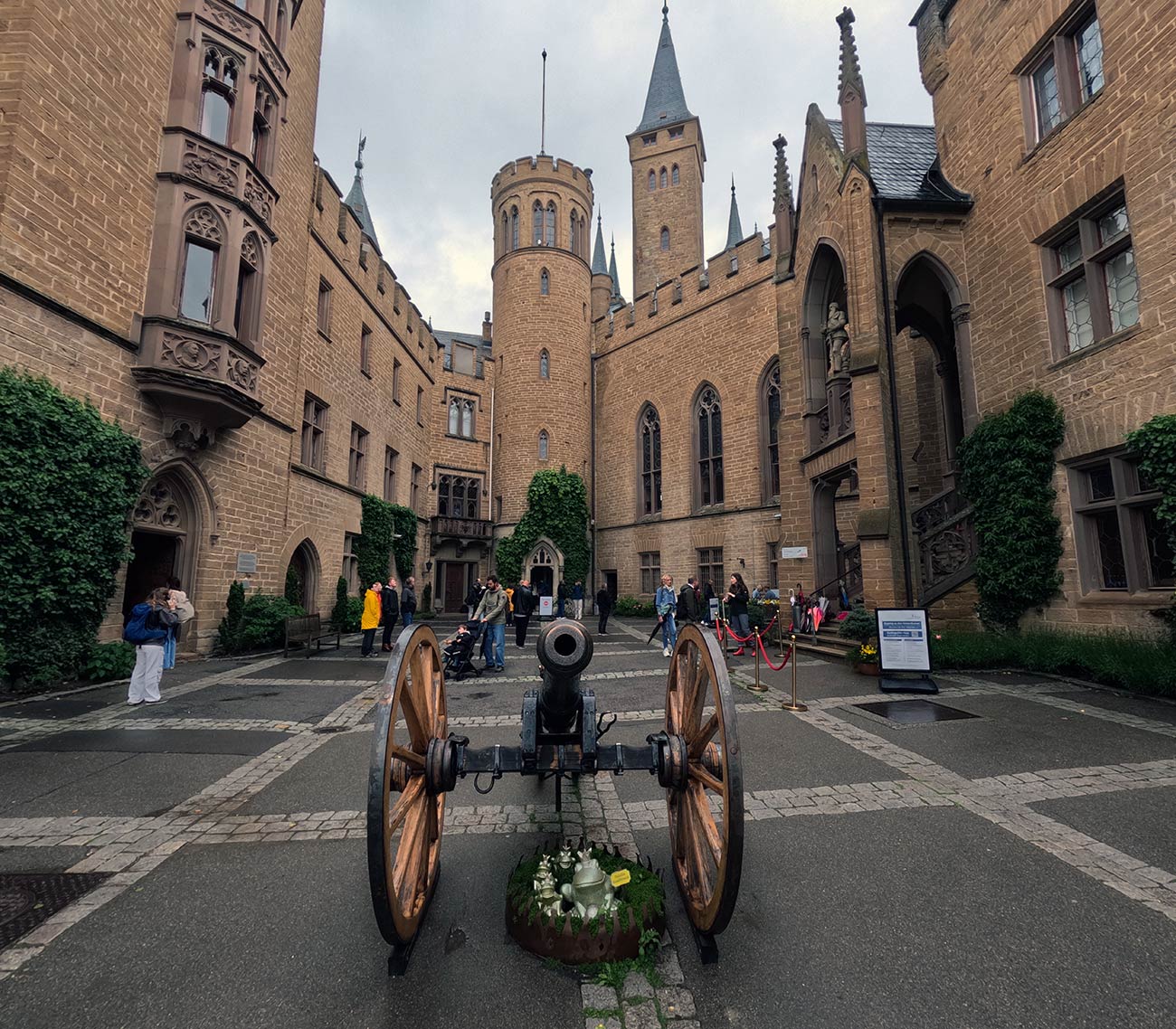
The present building owes its existence to King Friedrich Wilhelm IV of Prussia, often called the romantic on the throne, who first visited the ruins of his ancestors’ castle as a young crown prince in 1819 and never forgot the experience. Decades later, as king, he commissioned the leading Berlin architect Friedrich August Stüler to bring his childhood dream to life. The result is one of the finest expressions of nineteenth-century historicism in Germany, a horseshoe-shaped fortress with towers, gables, and a bastion ring designed by the military architect Moritz von Prittwitz. The king died in 1861 before seeing the work completed, and the inauguration in October 1867 was carried out by his brother and successor, King Wilhelm I.
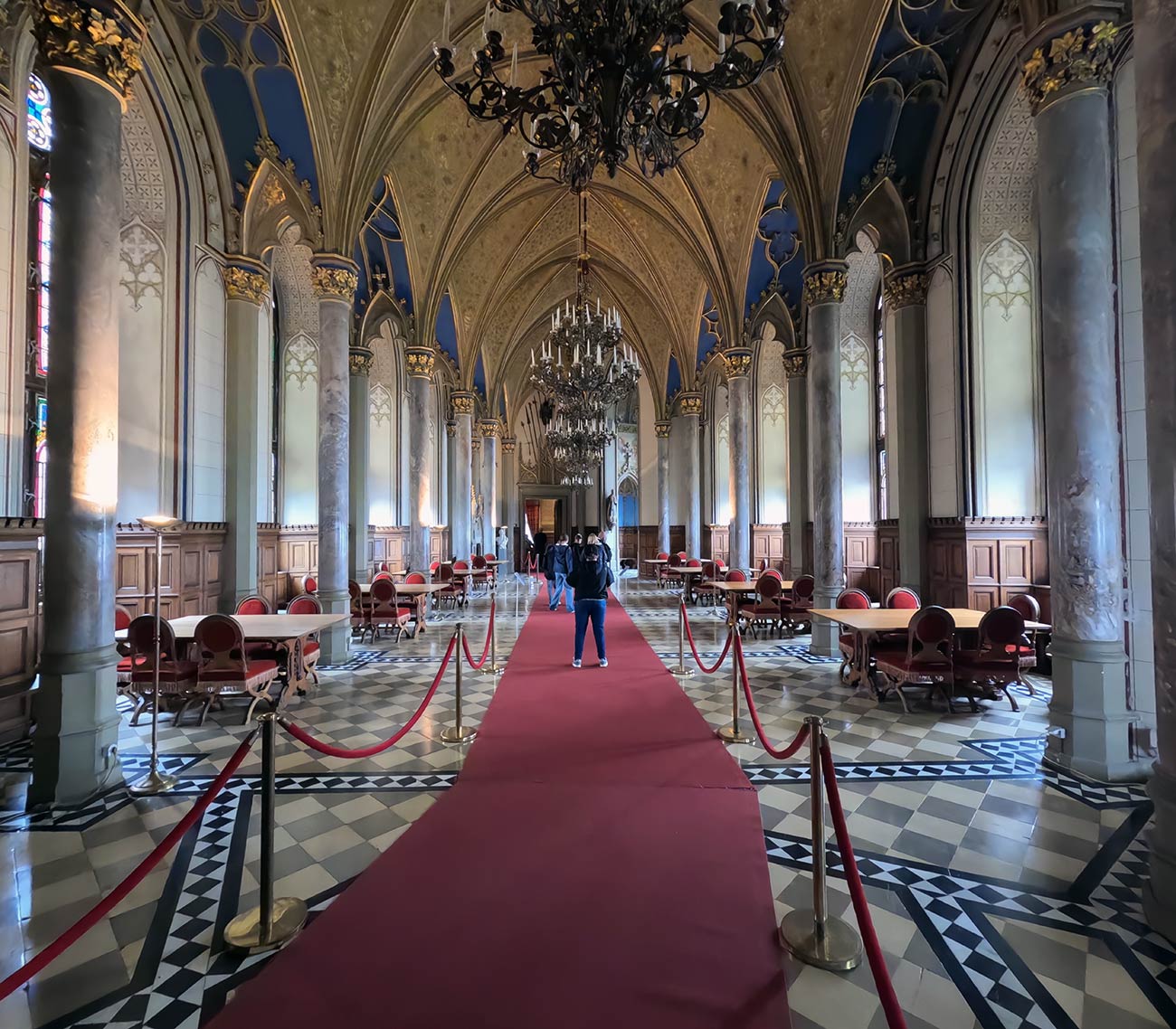
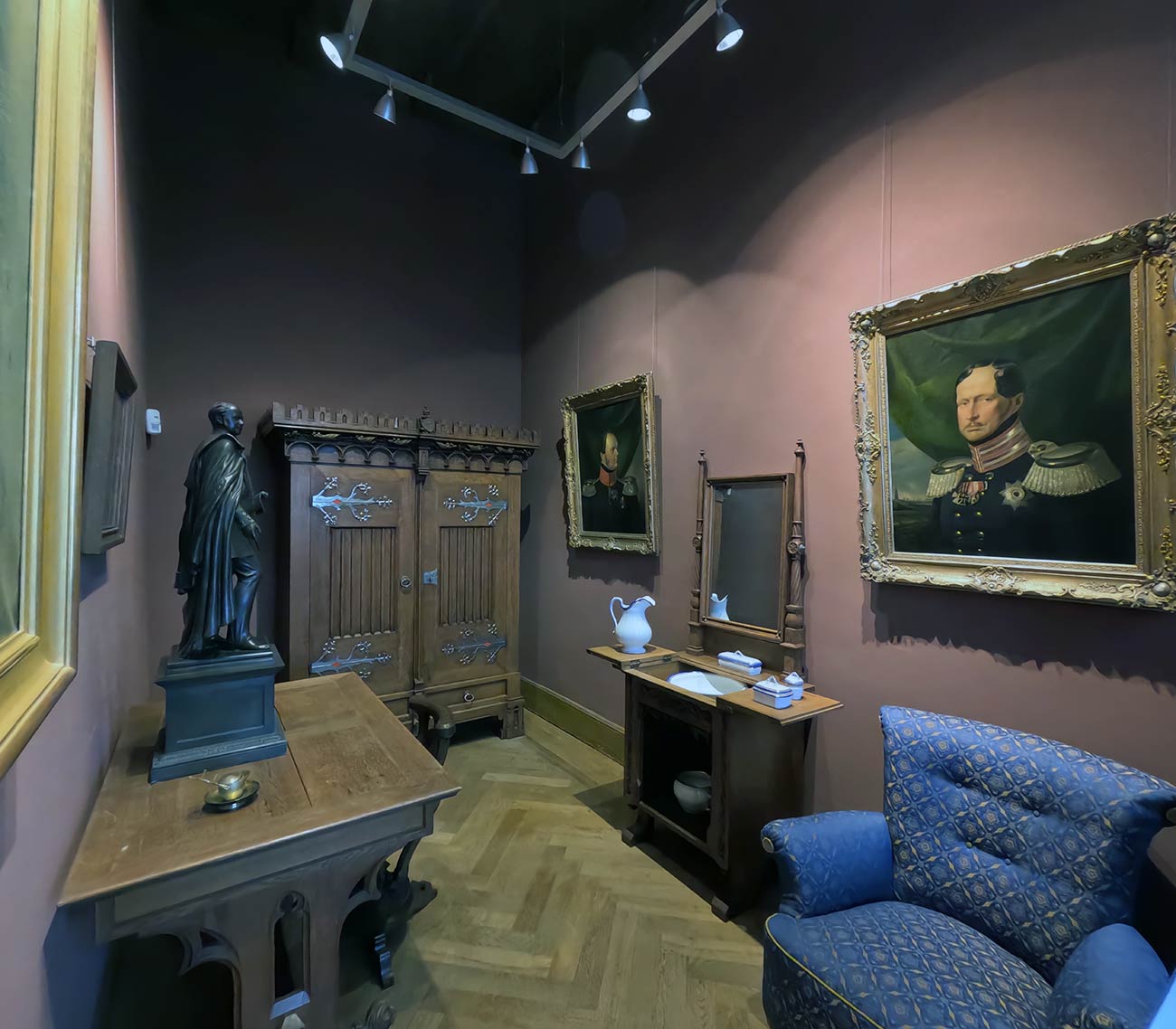
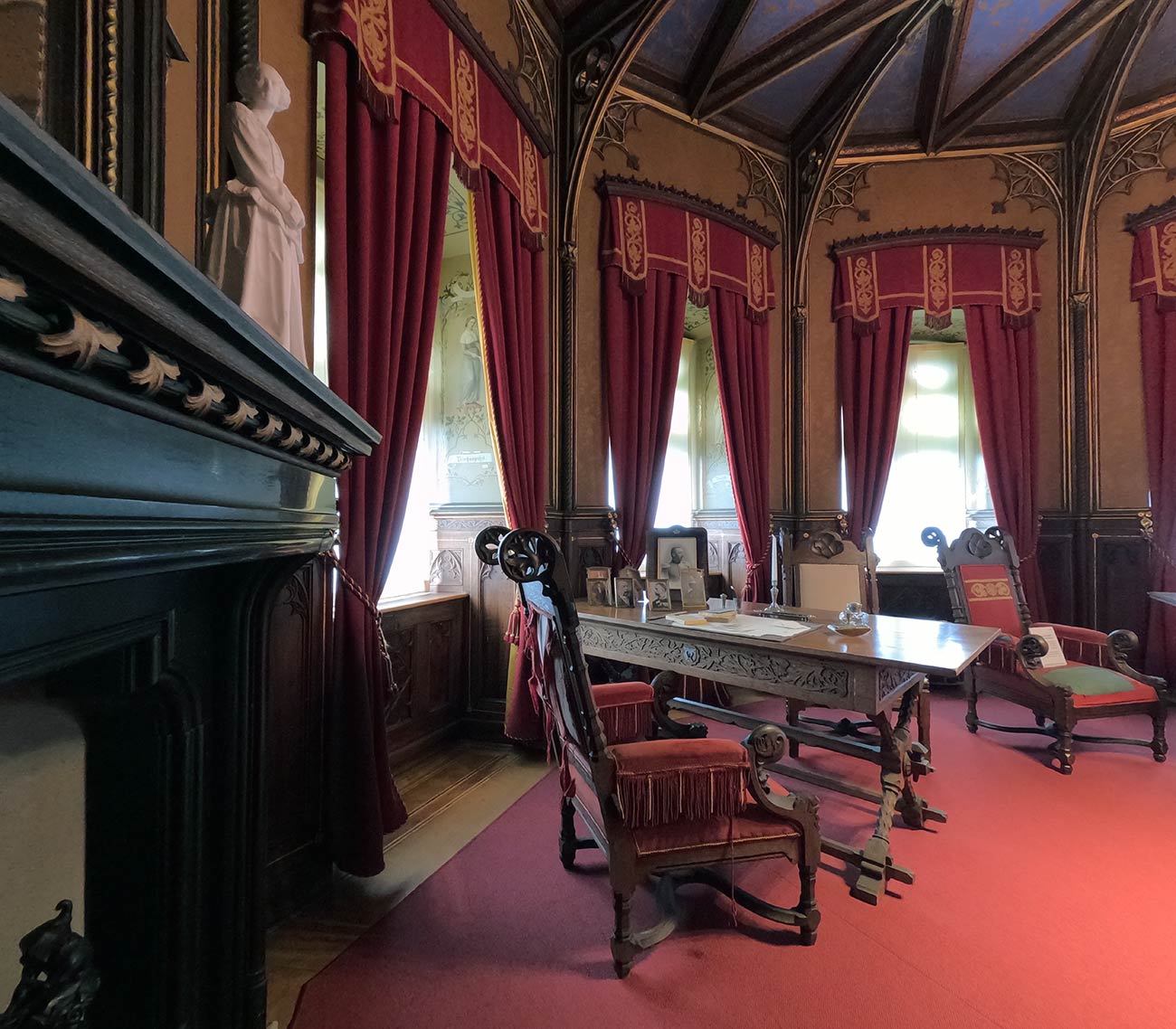
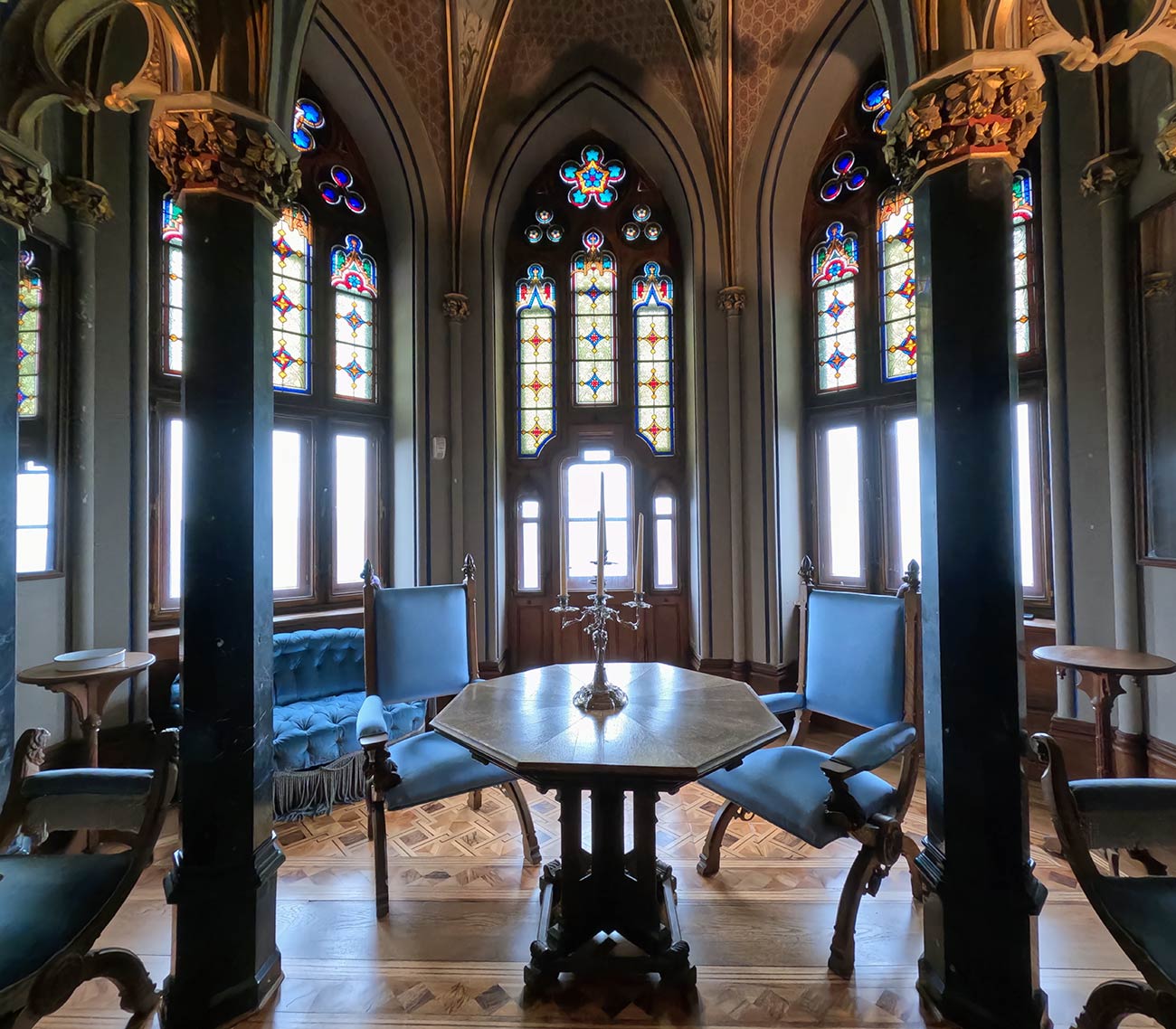
Inside, the castle contains around 140 rooms, of which a selection are open to visitors as part of the museum route. Among the highlights are the library with its richly painted murals, the King’s bedchamber, the family tree room tracing the Hohenzollern lineage, and the Blue Salon used by the Queen. The interiors are deliberately sumptuous, with gilded coffered ceilings, finely worked marquetry floors, and portraits of Prussian royals by painters such as Anton von Werner and Franz von Lenbach. The atmosphere is less that of a lived-in residence than of a carefully composed memorial to a dynasty, which is precisely what the castle was designed to be.
A particular highlight is the Treasure Chamber, created from 1952 onwards by Louis Ferdinand, Prince of Prussia, who transformed the former castle kitchen into a space for artefacts linked to the history of Prussia and its kings. The collection includes gold and silver jewellery from the seventeenth to nineteenth centuries, decorative objects, and historic regalia, among them the Crown of Wilhelm II, the last German emperor. For many visitors this is the most memorable part of the interior tour, a concentrated glimpse of the material world of a monarchy that shaped European history for two centuries before disappearing in 1918.
Beyond the museum rooms, the castle grounds reward unhurried exploration. The bastions and ramparts offer changing views in every direction, and short paths around the outer walls let you experience the building from angles that the standard tour does not cover. Two chapels stand side by side within the complex, the medieval Catholic St Michael’s Chapel and the Protestant Christ Chapel added during the nineteenth-century rebuilding, reflecting the religious divisions within the family itself. The castle restaurant and beer garden serve regional cooking and the castle’s own beer, brewed under the name PREUSSENS, which makes for a pleasant pause before the walk back down through the forest.
ℹ️ Useful Contacts
Mobility for Cyclists
Reaching Hohenzollern Castle by train with your bike
If you are riding the EuroVelo 6 along the Danube, Hohenzollern Castle makes for one of the most striking inland detours along the route. The castle sits just beyond the watershed that separates the Danube basin from the Neckar valley, close enough to reach comfortably by train with your bike and far enough to feel like a genuine change of landscape. Regional rail connections from the Danube corridor are frequent and straightforward, with the most practical option running directly from Sigmaringen along the scenic Zollernalbbahn line.
The connection
The fastest connection from the EuroVelo 6 corridor is from Sigmaringen, where regional trains run directly along the Zollernalbbahn to Hechingen, the nearest town to the castle, in just under an hour. The route follows the upper Danube valley before climbing onto the Swabian Alb, making it a pleasant journey in its own right. If you are cycling upstream along the Danube, Ulm is the first major town from which the castle becomes easily reachable, with trains connecting via Tübingen and arriving at Hechingen in around two hours. Both options run frequently throughout the day and fit comfortably into a half-day excursion, leaving plenty of time on the mountain itself.
German trains
The rail network in this part of Germany is operated mainly by Deutsche Bahn (DB), which runs most long-distance services and a large share of regional connections across the area. Alongside DB, several regional operators run local and feeder lines, particularly on secondary routes through the Swabian Alb and the Neckar valley, but they are fully integrated into the national rail system. This creates a highly coordinated transport network where transfers between different operators are seamless and require no separate tickets. The DB Navigator app is the central tool for planning journeys, checking timetables, and purchasing tickets across all services, including both regional and long-distance trains. During the main holiday season, special bike-friendly trains with expanded capacity for bicycles also run on selected regional routes, making travel with a bike across the region noticeably easier.
Taking your bike
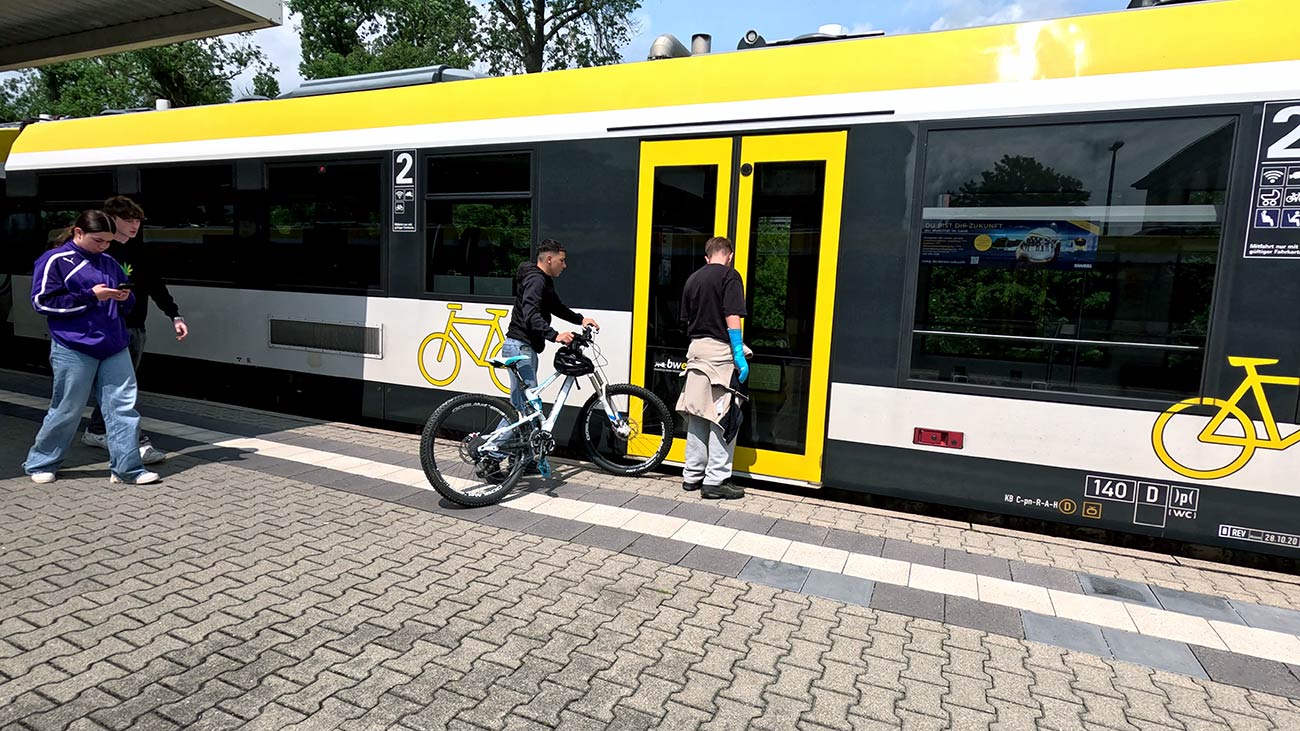
This part of Germany is generally very bike-friendly when it comes to rail transport, especially on regional trains, which form the core of mobility for cycle touring along the Danube and Neckar corridors. Most regional services allow bicycle transport without mandatory reservation, although space is limited and operates on a first-come, first-served basis. A separate bicycle ticket is typically required during weekday morning peak hours, or it can be purchased as an affordable regional day pass, while outside peak periods and on weekends bicycle transport is often free across large parts of Baden-Württemberg. Long-distance trains such as IC and ICE require advance bicycle reservations and have limited capacity, so early planning is important for intercity travel. Overall, the system is well adapted to cycle tourism, offering strong flexibility and occasional dedicated bicycle-friendly or seasonal train services that further improve connectivity for travellers leaving the EuroVelo 6 route.
Bikes on Buses
Long-distance bus services in southern Germany are primarily operated by FlixBus, complemented by a smaller number of regional and private coach operators on selected routes. Bicycle transport is available on certain intercity connections, either via external bike racks or in the luggage compartment, but it is not consistently guaranteed across the network and depends on the specific vehicle type and route configuration. Where available, bicycle transport must be reserved in advance and capacity is limited, making it less flexible compared to rail services. As a result, buses are generally used as a secondary option for cyclists, mainly for longer-distance repositioning between major cities rather than as a core part of cycling itineraries along the Danube region. While useful in specific cases where rail connections are less convenient, they are less predictable and less standardized for bicycle transport, so advance planning is essential.
Arriving at Hechingen Hauptbahnhof
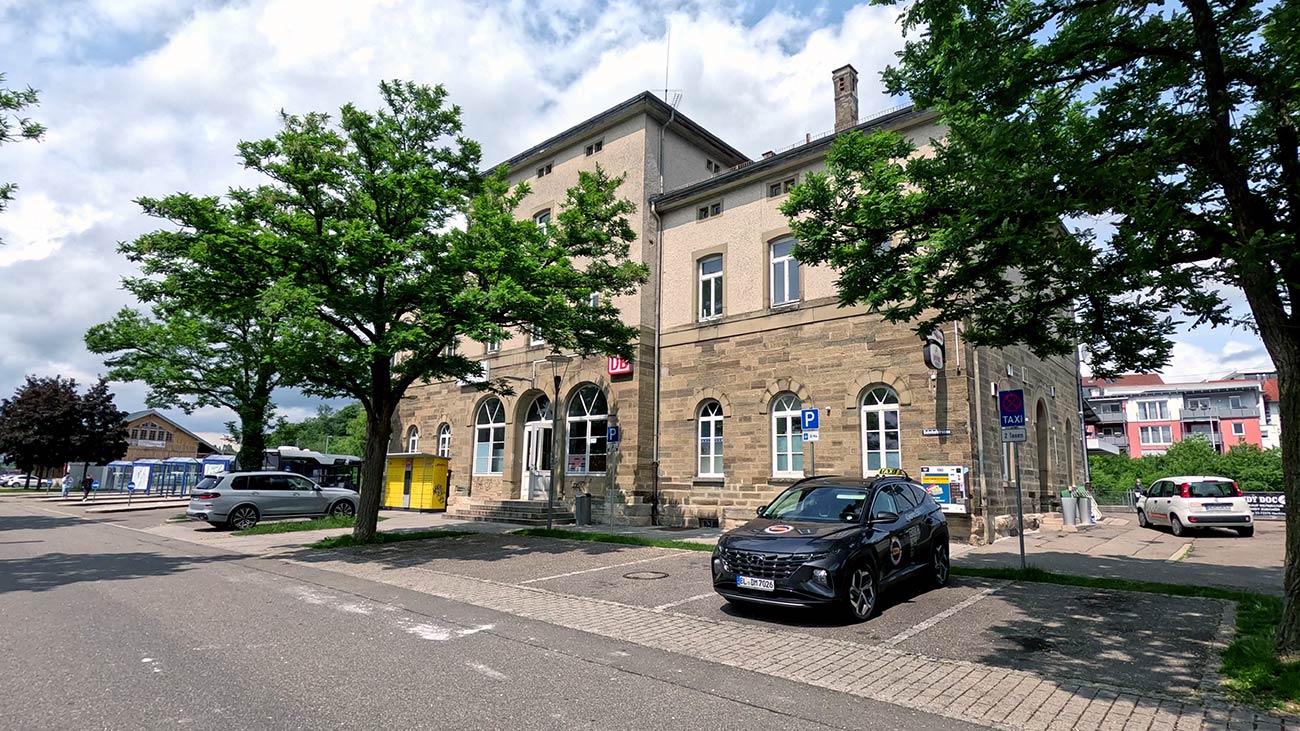
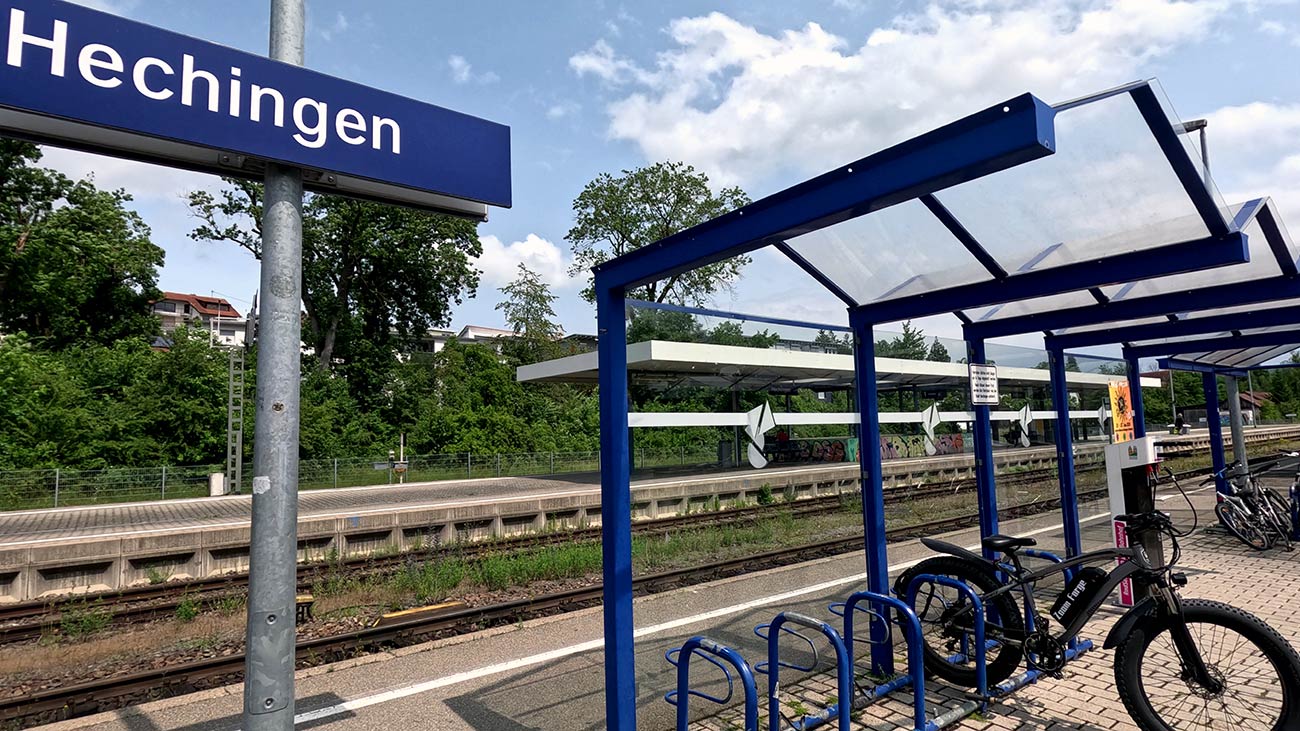
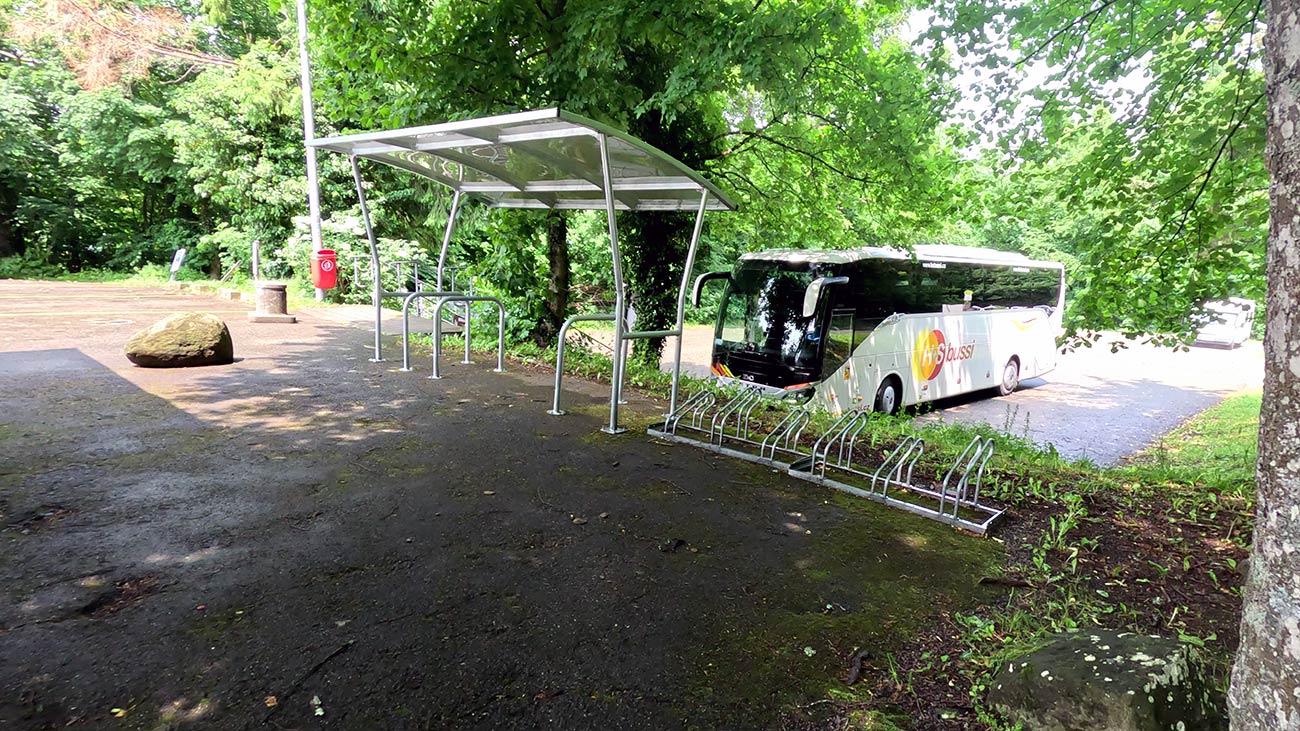
Hechingen’s main station sits at the foot of the Zoller Mountain, about five kilometres from the castle entrance. The road up to the castle is steep, narrow, and not particularly enjoyable on a loaded touring bike, so the most practical approach is to leave your bicycle behind and continue on foot or by local bus. Bike racks are available at the station itself, and additional racks can be found at the castle’s visitor parking area further up the mountain. From the parking area, a regular shuttle service runs to the castle gate roughly every fifteen minutes during opening hours. For the more energetic, marked walking trails climb through the beech forest to the castle in around an hour, offering some of the best ground-level views of the building along the way. For onward travel, Hechingen connects back toward Sigmaringen, Tübingen, Ulm, and the wider Danube region, so the castle works equally well as a half-day detour or as part of a longer loop combining Tübingen and the upper Danube valley.