Triberg Waterfalls
Reading time: 10 minutes
TRIBERG WATERFALLS, BADEN-WÜRTTEMBERG, GERMANY
Where the Black Forest Falls in Seven Steps
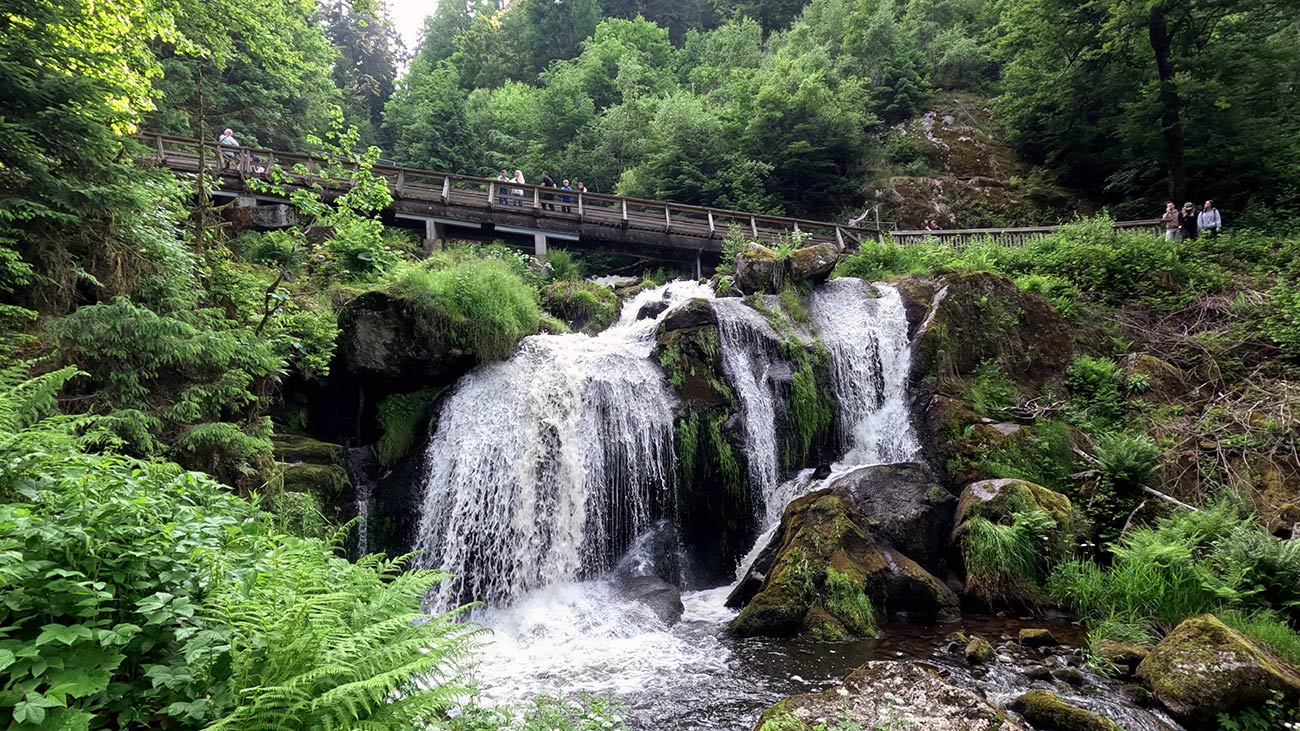
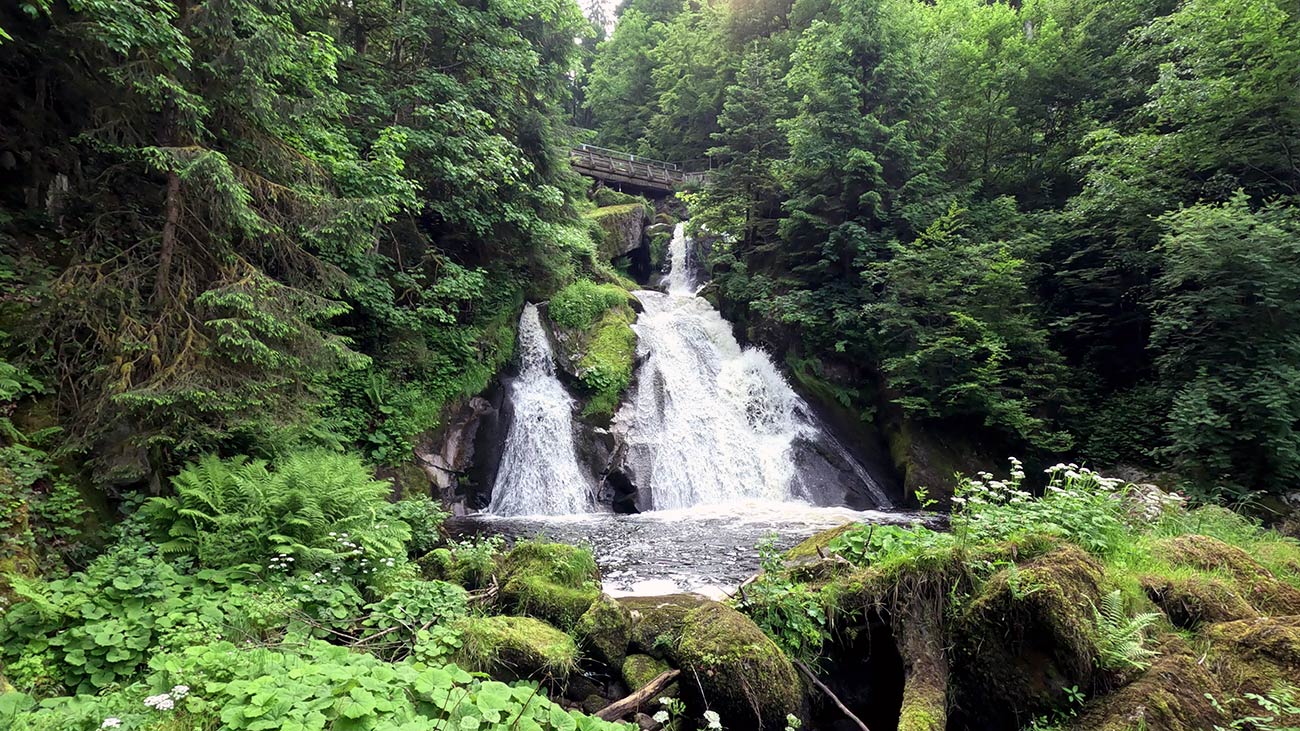
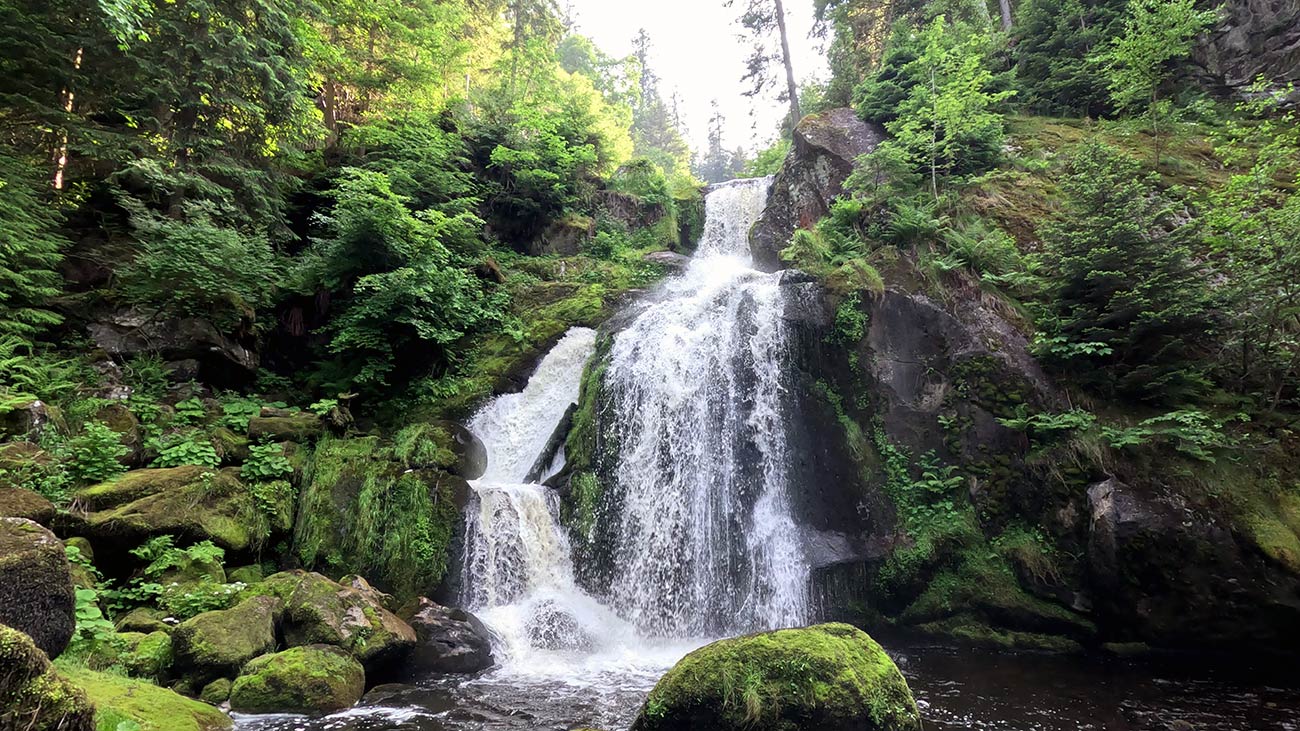
In the deep wooded heart of the southern Black Forest, the small Gutach River does something unusual for a stream of its size. It falls. Over seven cascades and a total drop of 163 metres, it tumbles down a steep, fern-covered gorge in a long sequence of leaps and pools, surrounded by tall fir trees and mossy boulders. The result is the Triberg Waterfalls, one of the highest waterfalls in Germany and the kind of landscape that makes you understand instantly why this region inspired so many of the country’s fairy tales.
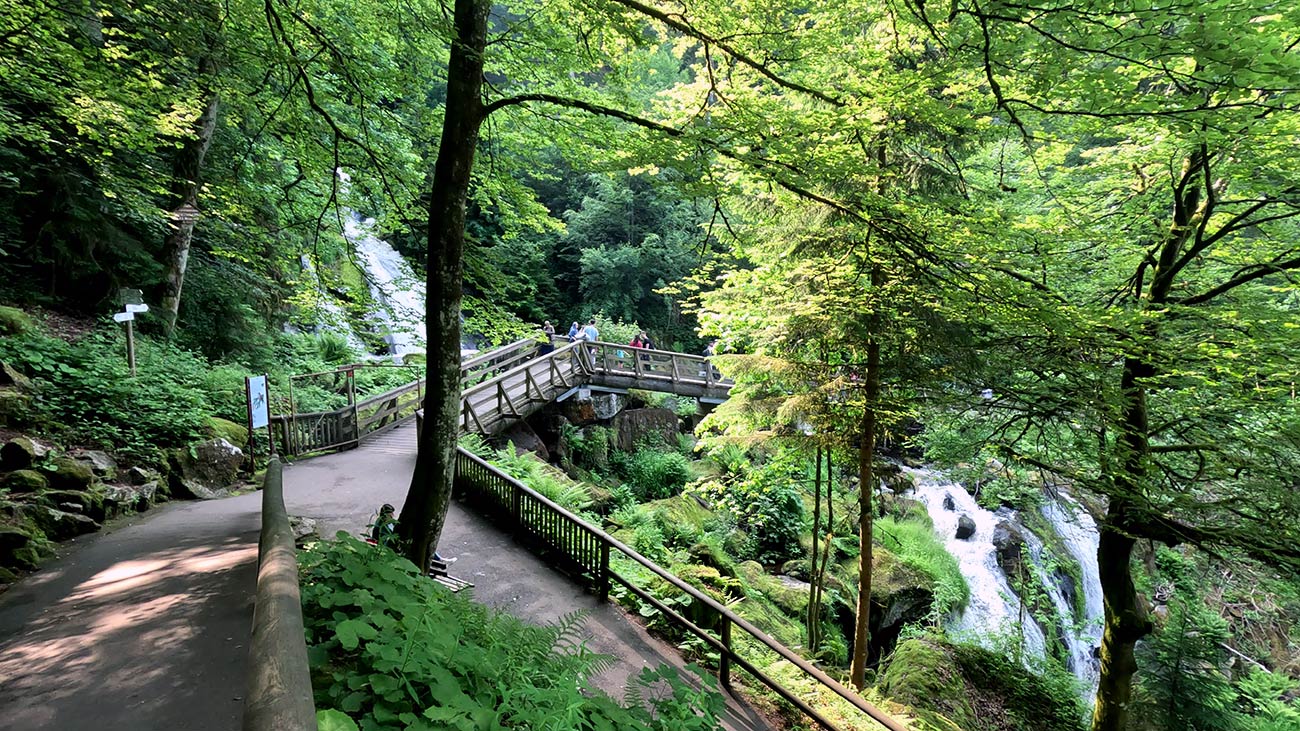
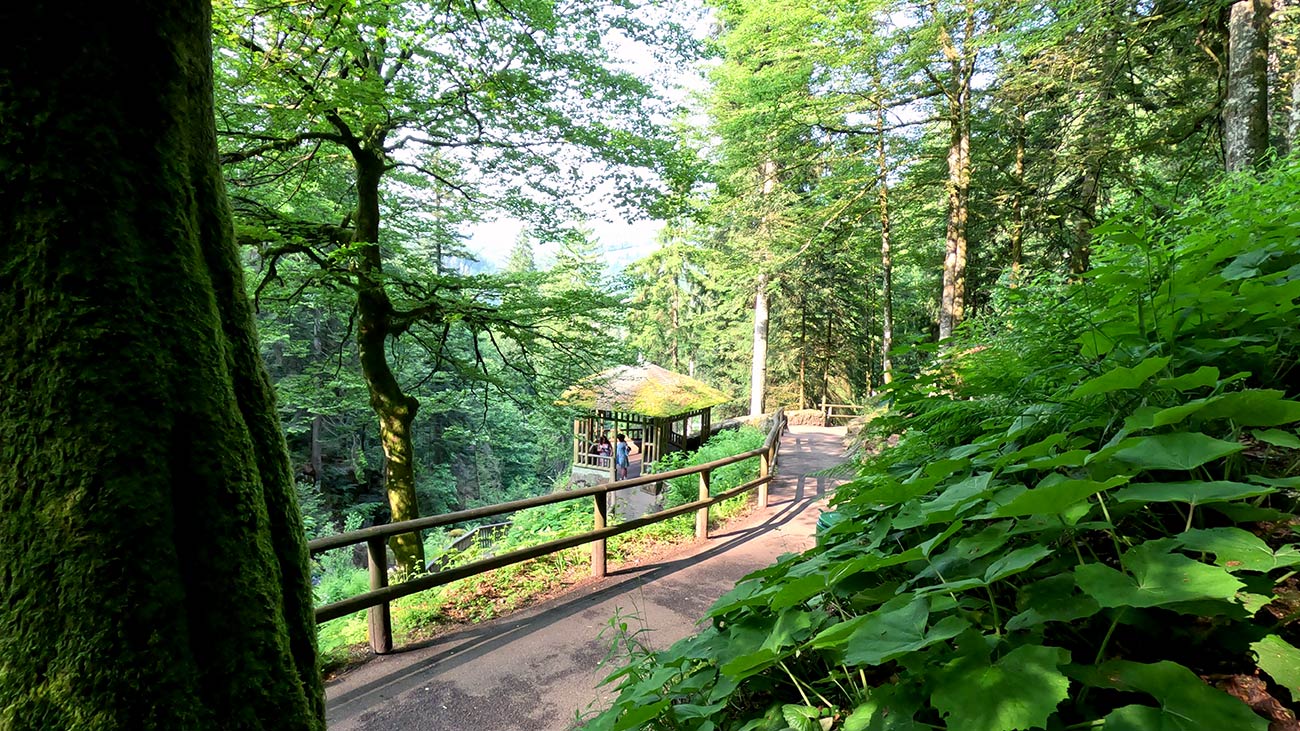
The waterfalls lie just at the edge of the small town of Triberg, hidden behind a curtain of forest that begins almost at the last houses. A network of paved paths, footbridges, and stairways climbs alongside the cascades, leading from the lower entrance in town up through the gorge to the quieter upper sections. The sound shifts as you climb, from the muffled hush of the lower basin to the close, echoing roar of the middle steps, where the spray drifts across the path and the light filters down through the canopy in long green shafts.
The setting belongs to the Naturpark Südschwarzwald, one of the largest nature parks in Germany, but the waterfalls themselves are the destination here. For cyclists exploring the upper reaches of the Danube, Triberg is one of the most spectacular nature detours within easy reach of the route, accessible by a single train ride on one of the most scenic mountain railways in the country.
NatureWaterfallsBlack ForestNature Park
A River That Falls Through the Forest
The Triberg Waterfalls are formed by the Gutach River, sometimes called the Wilde Gutach, which drops 163 metres over seven cascading stages on its way through a narrow forested gorge. The total height places them among the tallest waterfalls in Germany, and although a handful of higher falls exist deep in the Bavarian Alps, none of them are as easily accessible or as visited as Triberg. More than half a million visitors come here every year, drawn by the unusual combination of dramatic scale and gentle approachability, with paved paths and footbridges following the water from the lower town all the way to the upper edge of the gorge.
The site has three different entrances, each one offering a slightly different starting point and rhythm of climb. The main lower entrance sits in the centre of Triberg itself, beside the small town park, and leads quickly into the forest along the first and largest of the cascades. From there, the path climbs steadily through the gorge in steps and switchbacks, crossing the river on a series of footbridges that bring you close enough to feel the spray. The middle and upper entrances allow visitors with less time or energy to skip the steepest sections, but most travellers do the full ascent at least in one direction. The paths are paved but include many steps and are not suitable for prams or wheelchairs.
The waterfalls are open all year and have a different character with each season. In spring, the snowmelt from the surrounding heights swells the Gutach to its most powerful, and the cascades thunder with a force that fills the entire gorge. In summer, the flow eases but the forest is at its greenest, with ferns, mosses, and old beech and fir trees lining the paths. Autumn brings shifting colours and quieter crowds, while in winter the falls partly freeze into pale columns of ice, and the gorge is illuminated each evening during the Triberger Weihnachtszauber, the town’s Christmas market season. The cascade route is lit until late in the evening throughout the year, which makes a return walk after sunset a small pleasure in its own right.
Triberg itself has long understood the value of its waterfalls. The hydropower of the Gutach gave the small mountain town an unexpected modern distinction in the late nineteenth century, when Triberg became the first town in Germany with electric street lighting, powered by the river running through its gorge. The same hydropower also drove the world’s first electric ski lift, installed nearby in 1908. These are small but telling details, a reminder that what looks today like a quiet forest spectacle was once a working stream that helped bring electricity to a corner of the Black Forest long before most of the country was wired up.
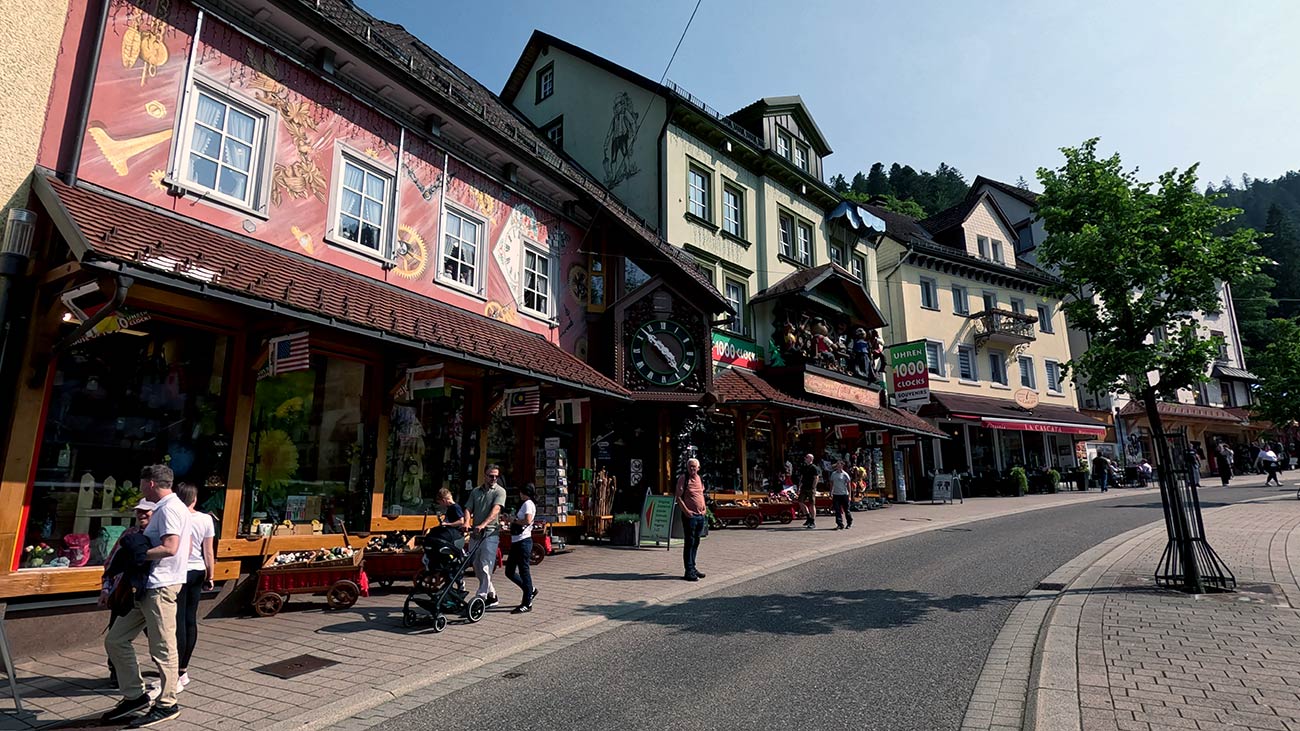
For visitors who want more than the waterfalls themselves, the surrounding town offers a deeply traditional slice of Black Forest culture. Triberg is famous as one of the historic centres of the cuckoo clock, and the streets near the lower entrance are lined with workshops and shops selling some of the most elaborate examples in the world, including those claiming the title of largest cuckoo clock. The Schwarzwaldmuseum, the local museum of Black Forest life and craft, sits a short walk from the falls. The waterfalls form part of the wider Naturpark Südschwarzwald, one of the largest nature parks in Germany, which covers much of the southern Black Forest and combines forest conservation with traditional farming, marked walking trails, and quiet upland villages.
ℹ️ Useful Links
Mobility for Cyclists
Reaching Triberg by train with your bike
If you are riding the EuroVelo 6 along the Danube, the Triberg Waterfalls make for one of the most spectacular nature detours within easy reach of the route. The town lies in the upper Black Forest, just off the watershed that separates the Danube from the Rhine basin, and is reached by a single short train ride from the Danube cycle corridor along one of the most scenic mountain railways in Germany.
The connection
The most practical connection from the EuroVelo 6 corridor is from Tuttlingen, where regional trains run to Triberg with a single change in Donaueschingen or Villingen, with a total travel time of around one hour. The route follows the historic Schwarzwaldbahn, which climbs north into the forested heights of the Black Forest, winding through tunnels and curves along one of the most celebrated rail routes in Germany and often considered an attraction in its own right. Trains run regularly throughout the day and fit comfortably into a half-day excursion, leaving time on either side to walk the full length of the cascades. Triberg also combines naturally with a visit to Donaueschingen, the official western terminus of the Donauradweg and the symbolic source of the Danube, which lies on the same rail line between Tuttlingen and Triberg and can easily be added as a stop along the way.
German trains
The rail network in this part of Germany is operated mainly by Deutsche Bahn (DB), which runs most long-distance services and a large share of regional connections across the area. Alongside DB, several regional operators run local and feeder lines, particularly on secondary routes through the Swabian Alb and the Neckar valley, but they are fully integrated into the national rail system. This creates a highly coordinated transport network where transfers between different operators are seamless and require no separate tickets. The DB Navigator app is the central tool for planning journeys, checking timetables, and purchasing tickets across all services, including both regional and long-distance trains. During the main holiday season, special bike-friendly trains with expanded capacity for bicycles also run on selected regional routes, making travel with a bike across the region noticeably easier.
Taking your bike
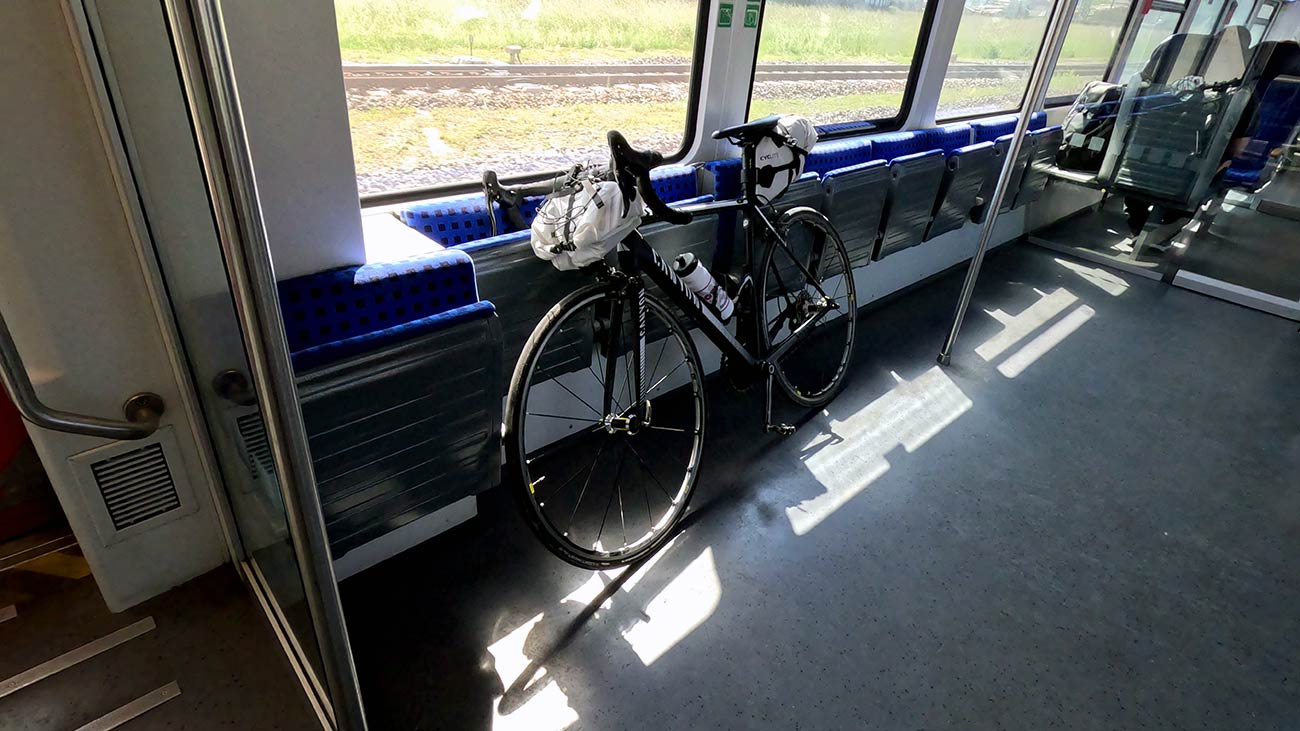
This part of Germany is generally very bike-friendly when it comes to rail transport, especially on regional trains, which form the core of mobility for cycle touring along the Danube and Neckar corridors. Most regional services allow bicycle transport without mandatory reservation, although space is limited and operates on a first-come, first-served basis. A separate bicycle ticket is typically required during weekday morning peak hours, or it can be purchased as an affordable regional day pass, while outside peak periods and on weekends bicycle transport is often free across large parts of Baden-Württemberg. Long-distance trains such as IC and ICE require advance bicycle reservations and have limited capacity, so early planning is important for intercity travel. Overall, the system is well adapted to cycle tourism, offering strong flexibility and occasional dedicated bicycle-friendly or seasonal train services that further improve connectivity for travellers leaving the EuroVelo 6 route.
Bikes on Buses
Long-distance bus services in southern Germany are primarily operated by FlixBus, complemented by a smaller number of regional and private coach operators on selected routes. Bicycle transport is available on certain intercity connections, either via external bike racks or in the luggage compartment, but it is not consistently guaranteed across the network and depends on the specific vehicle type and route configuration. Where available, bicycle transport must be reserved in advance and capacity is limited, making it less flexible compared to rail services. As a result, buses are generally used as a secondary option for cyclists, mainly for longer-distance repositioning between major cities rather than as a core part of cycling itineraries along the Danube region. While useful in specific cases where rail connections are less convenient, they are less predictable and less standardized for bicycle transport, so advance planning is essential.
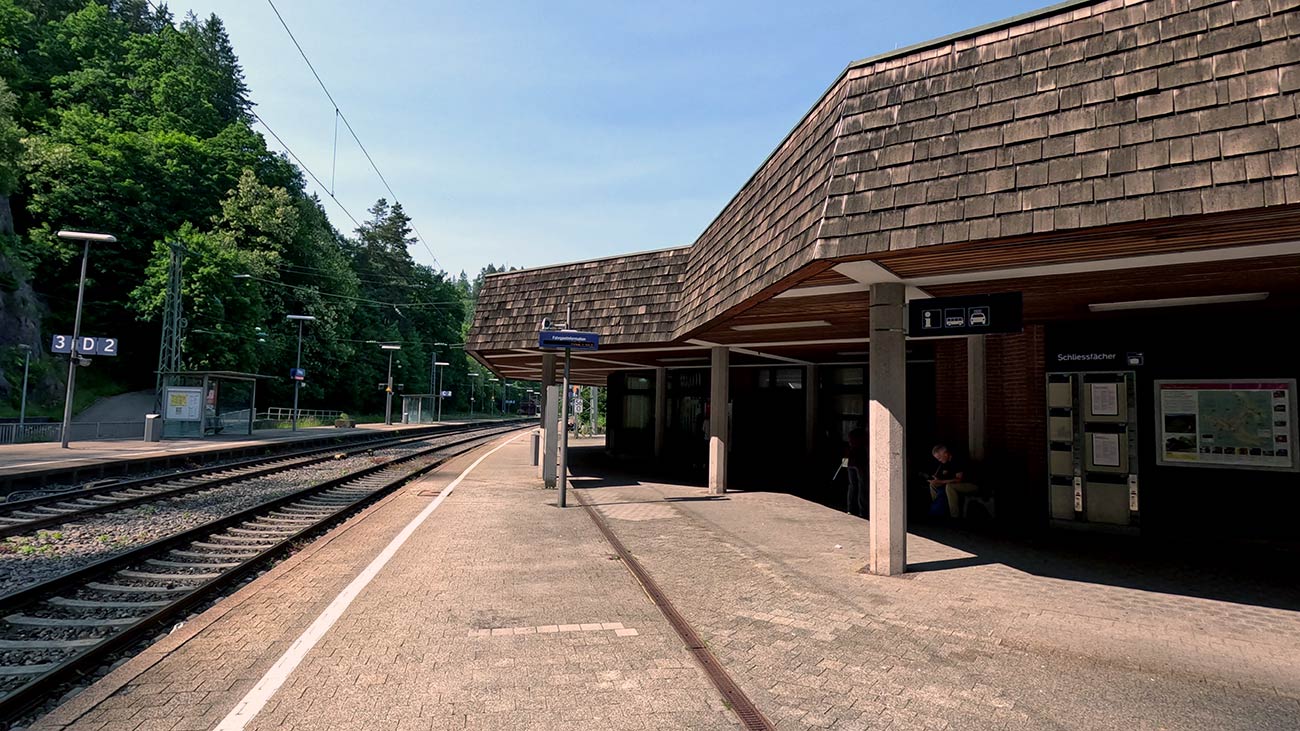
Triberg Bahnhof
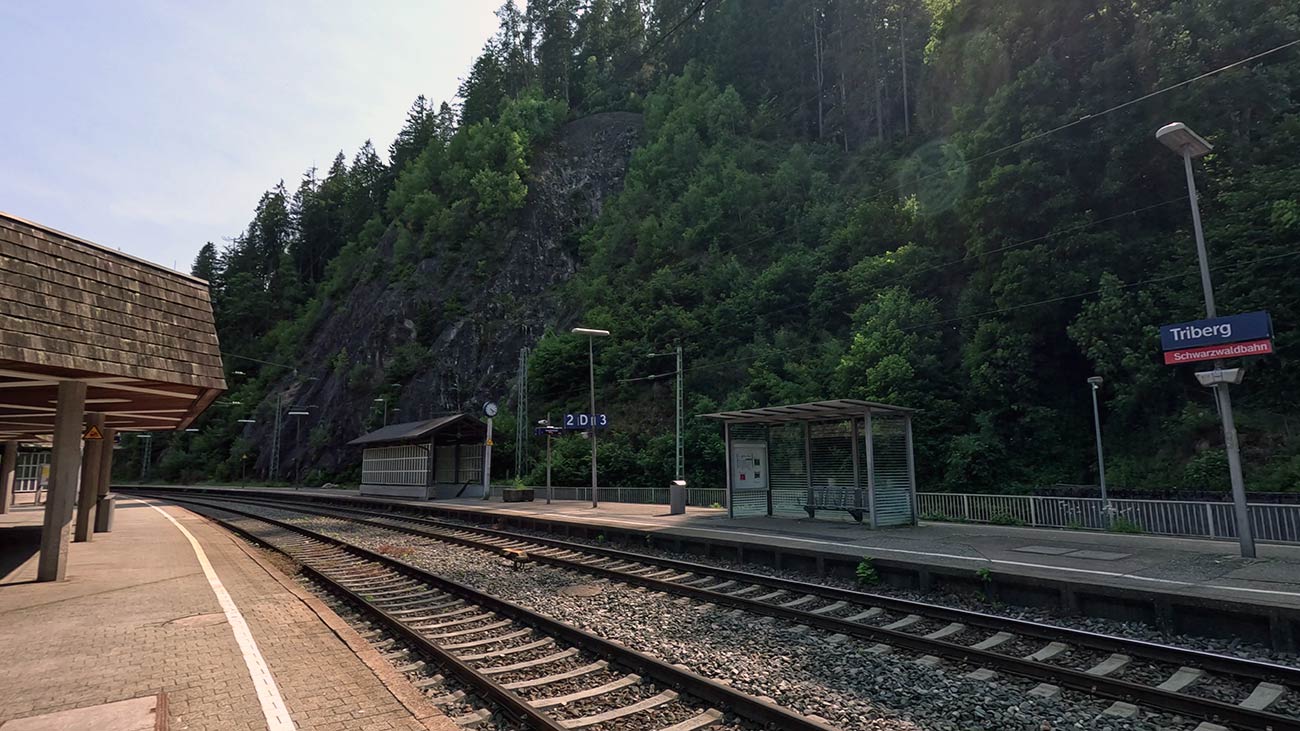
Triberg’s railway station sits at the lower edge of the town, less than a kilometre from the main entrance to the waterfalls and easily reachable on foot or by bike. The walk from the station up to the falls takes around twenty to twenty-five minutes through the town centre, mostly on a gentle incline that gives a first taste of the climb to come. Bike racks are available at the station for shorter stops. The waterfalls themselves are best explored on foot, since the paths through the gorge include steps and footbridges that are not suitable for bicycles, but the town and the station area are small and easy to navigate. For onward travel, the same Schwarzwaldbahn line connects back toward Donaueschingen, Tuttlingen, and the wider Danube region, so Triberg works well as a half-day detour from the cycle path with time to spare.