Augsburg
Reading time: 11 minutes
AUGSBURG, BAVARIA, GERMANY
A Renaissance City Shaped by Water
Augsburg is one of those rare European cities where layers of history sit so close together that you can read them in a single walk. Founded by the Romans in 15 BC and named after Emperor Augustus, the city is the oldest in Bavaria and the second oldest in Germany, with an imperial name that has lasted more than two thousand years. From its Roman foundations it rose through the Middle Ages into one of the wealthiest cities of the Holy Roman Empire, the home of the Fugger banking dynasty and a stage on which much of European history was negotiated, financed, and quietly arranged.
The city wears this past with a certain quiet glamour rather than spectacle. Magnificent fountains line the long, straight axis of Maximilianstraße, the city's grand boulevard, while guild houses, Renaissance churches, and the monumental town hall of Elias Holl gather around the Rathausplatz. The Baroque, Rococo, and Art Nouveau movements have all left their layers, and the streets still curve along the lines of medieval workshops and canals. Augsburg is also a Mozart city, the birthplace of Leopold Mozart and a city that has shaped the Mozart family story almost as much as Salzburg has.
What sets Augsburg apart, however, is not any single monument but an entire system that runs invisibly beneath and through the city. From the fifteenth century onwards, the city built one of the most advanced water management systems in pre-modern Europe, separating drinking water from industrial water centuries before other cities thought to do so. Towers, fountains, canals, and hydroelectric plants together form a network so unusual that UNESCO declared the whole thing a World Heritage Site in 2019. For cyclists on the EuroVelo 6, Augsburg is the kind of detour that rewards both a quick visit and a much longer stay.
UNESCOWaterworksFountainsRoman Era
The Rathaus and Rathausplatz
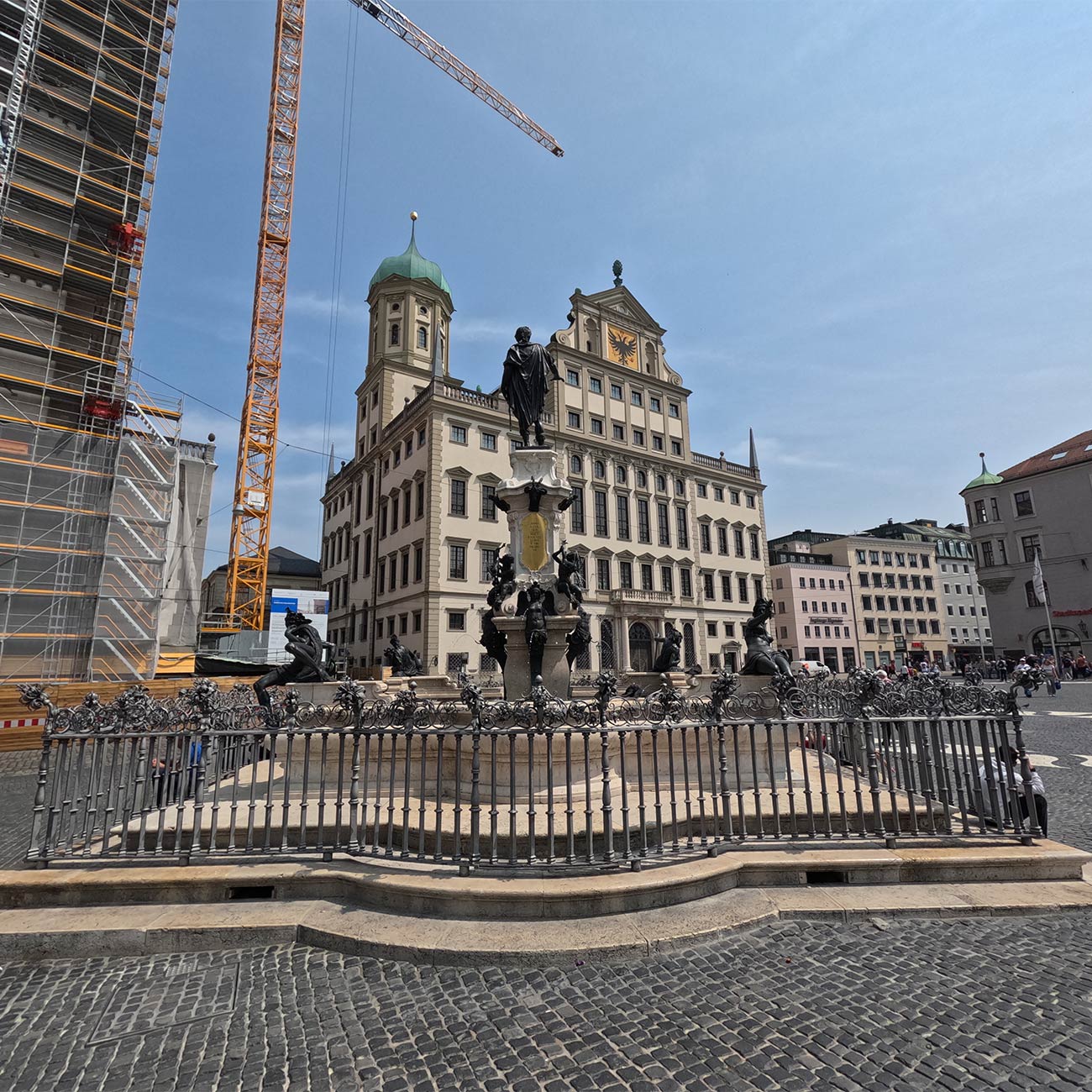
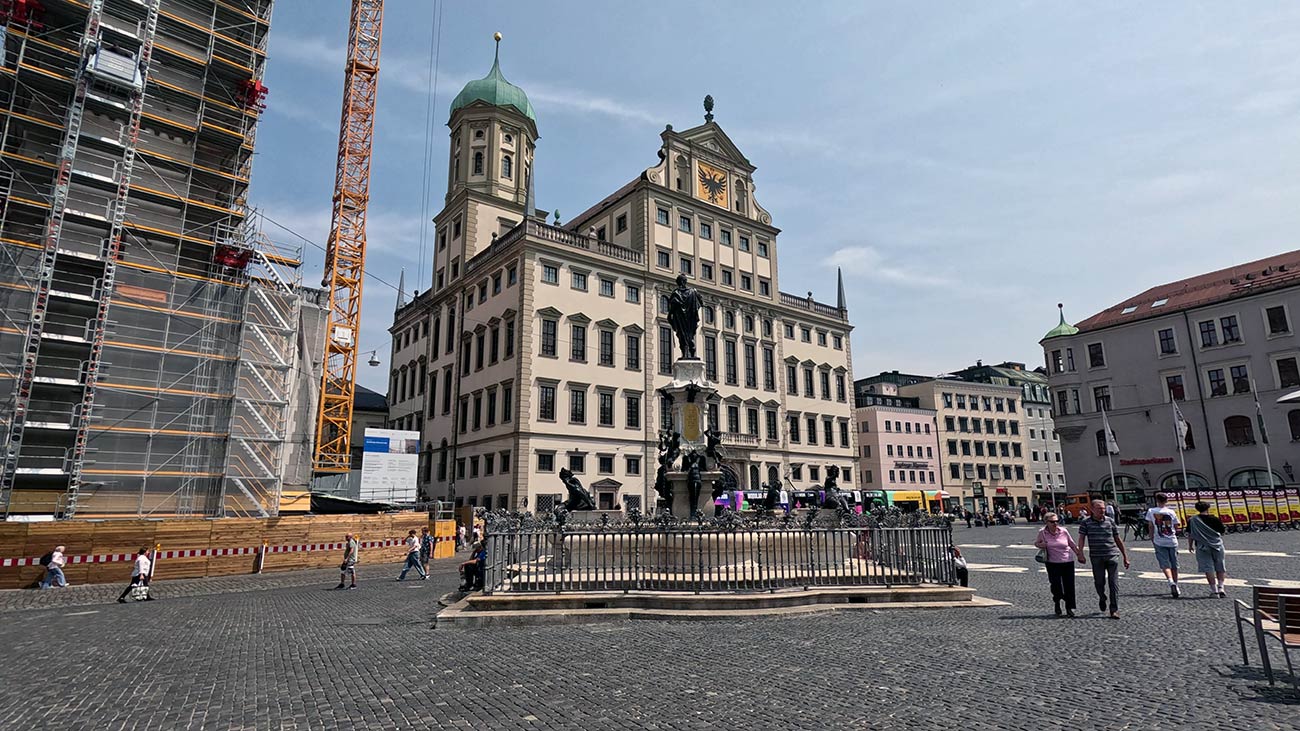
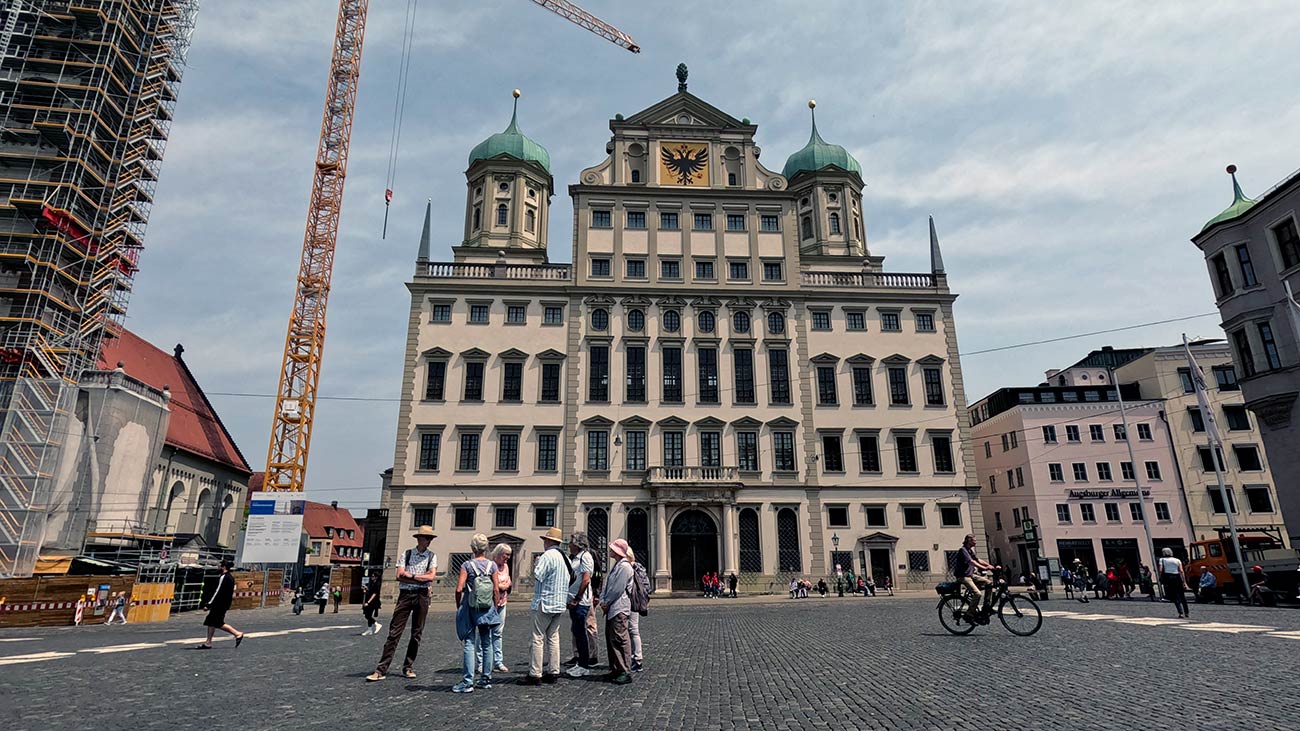
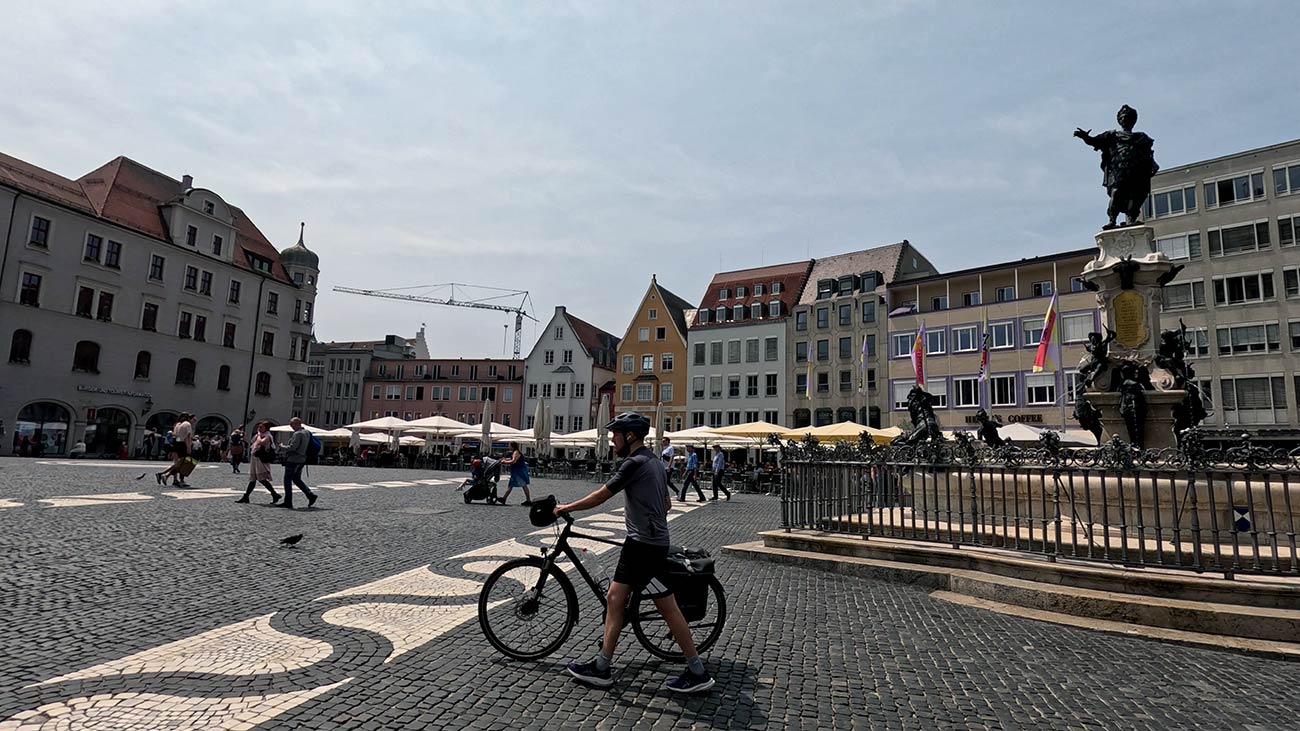
The vast Rathausplatz forms the symbolic centre of Augsburg, dominated by the Rathaus built between 1615 and 1624 by the city architect Elias Holl. It is one of the most important examples of Mannerist architecture north of the Alps, and on the third floor it hides the famous Goldener Saal, the Golden Hall, with its gilded coffered ceiling, frescoes, and panoramic views over the square. Beside it rises the Perlachturm, a 70-metre tower originally medieval and reshaped by Holl in the early seventeenth century, which can be climbed by 258 steps for one of the best views in the city. In the centre of the square stands the Augustusbrunnen, the Augustus Fountain, the first of the city's three great Renaissance fountains, completed in 1594 in honour of the city's Roman founder.
The Three Renaissance Fountains and Maximilianstraße
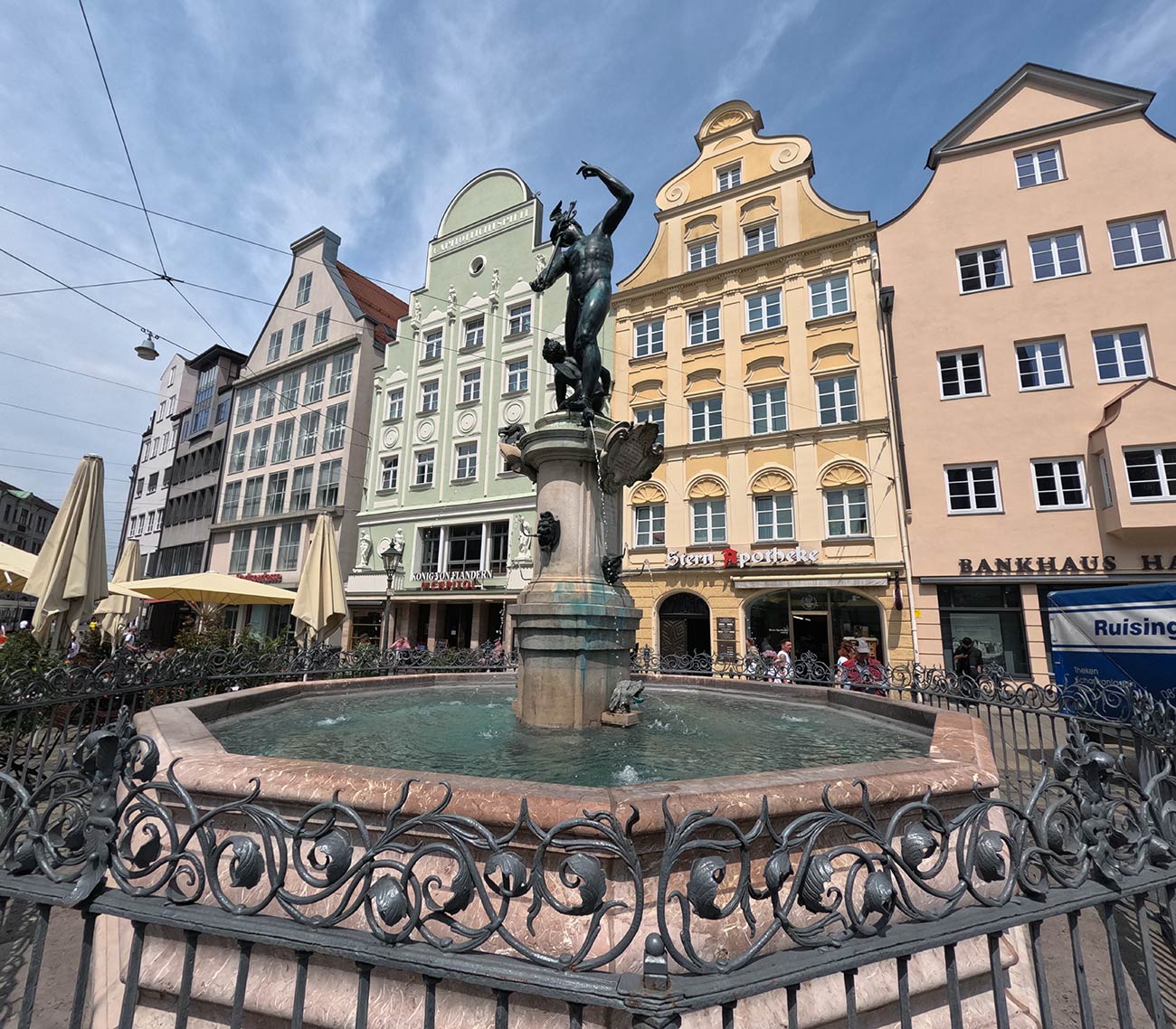
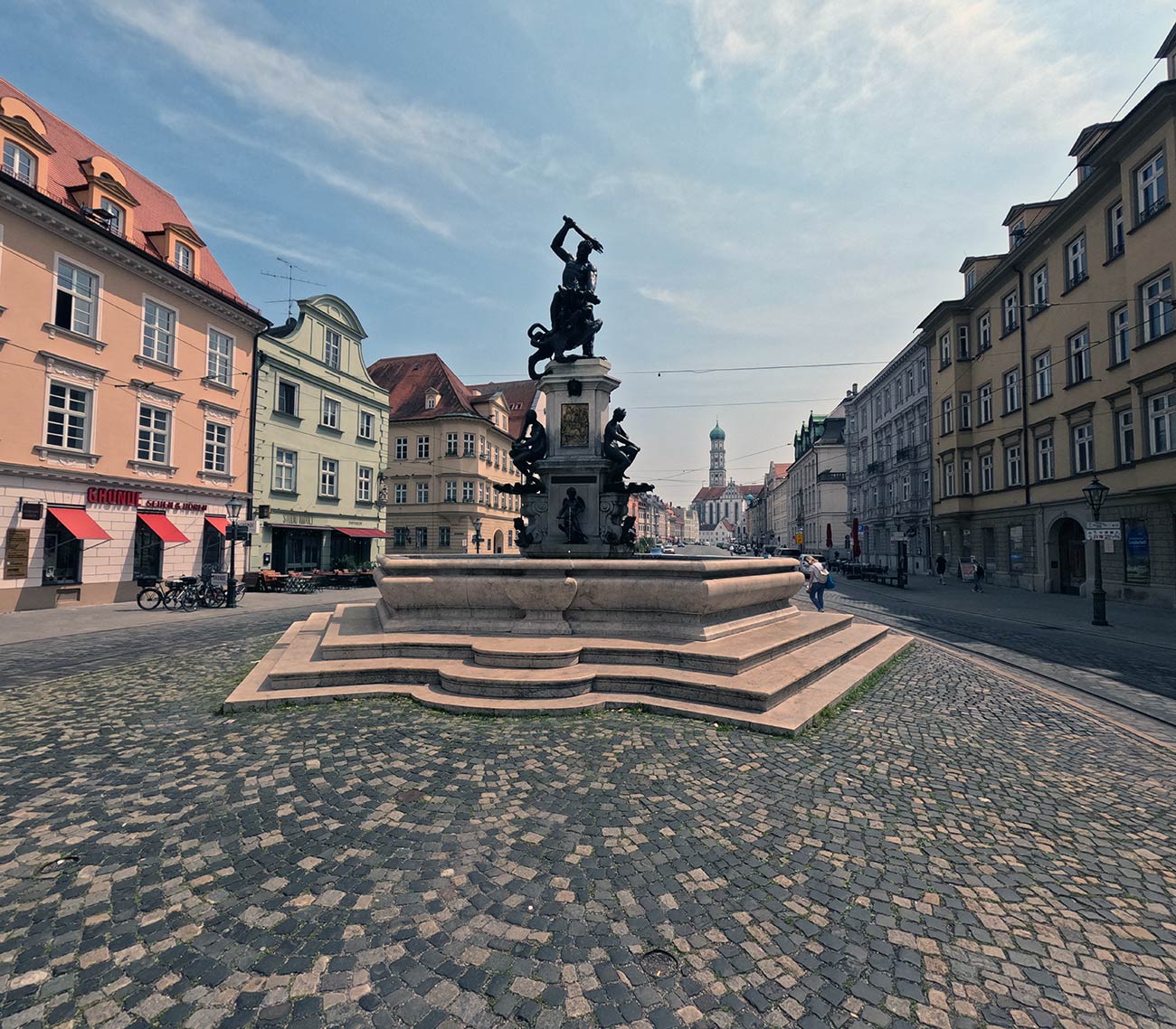
Augsburg's long ceremonial boulevard, Maximilianstraße, follows the line of the ancient Roman Via Claudia Augusta that once connected the Alps with the Danube. Along its length stand three of the most celebrated Renaissance fountains in Europe, all part of the UNESCO World Heritage water system. The Mercury Fountain by the Dutch sculptor Adriaen de Vries, erected in 1599, shows the swift messenger god in mid-stride, a symbol of Augsburg's role as a centre of trade and communication. A few hundred metres further south, his Hercules Fountain of 1602 depicts the muscular hero wielding a flaming club against the seven-headed Hydra, a Renaissance allegory of human triumph over the chaos of water itself. The original bronze figures of all three fountains are now kept in the Maximilian Museum to protect them from weathering, with high-quality casts standing in their original places outdoors.
The Water Management System and the Rotes Tor
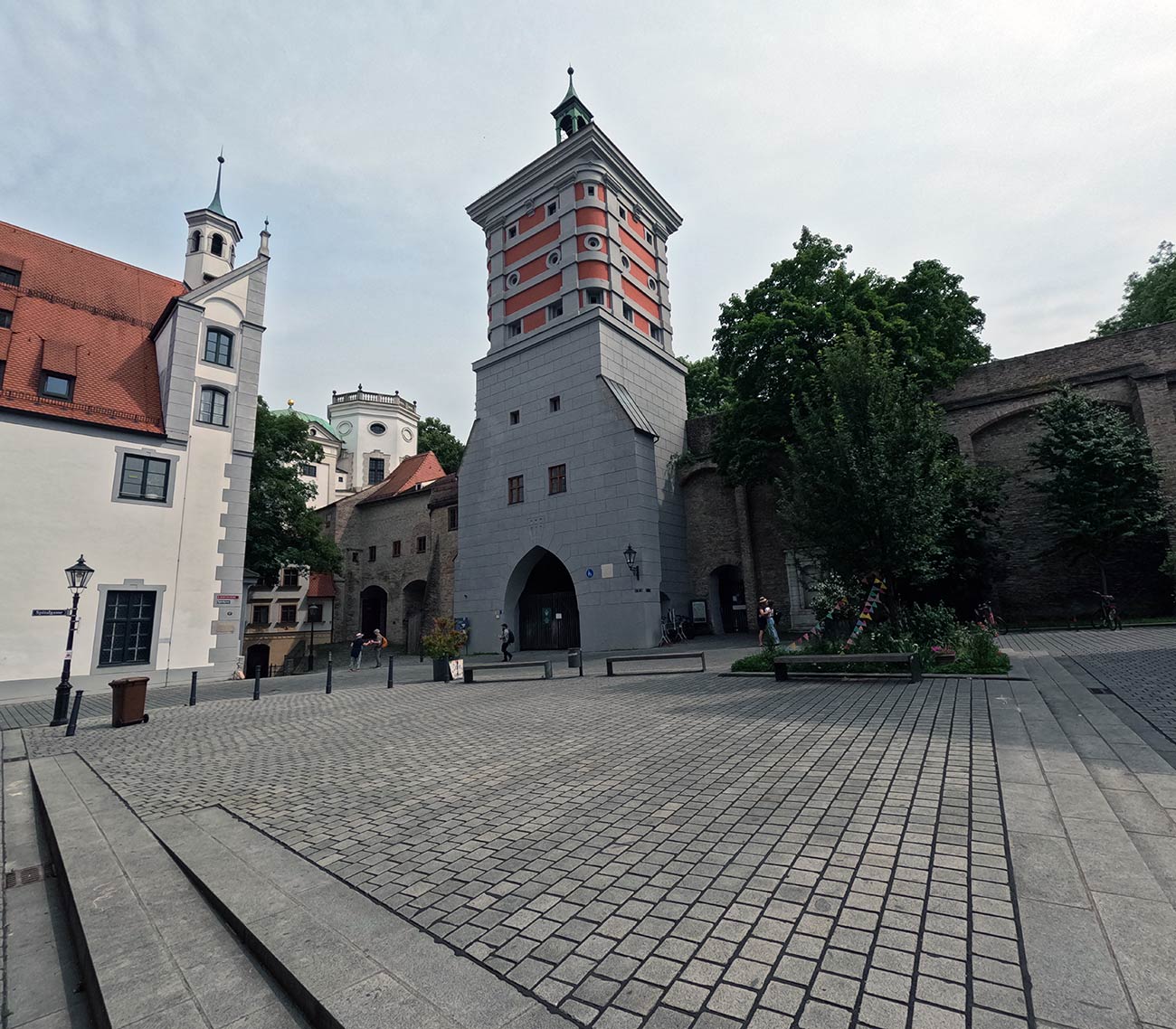
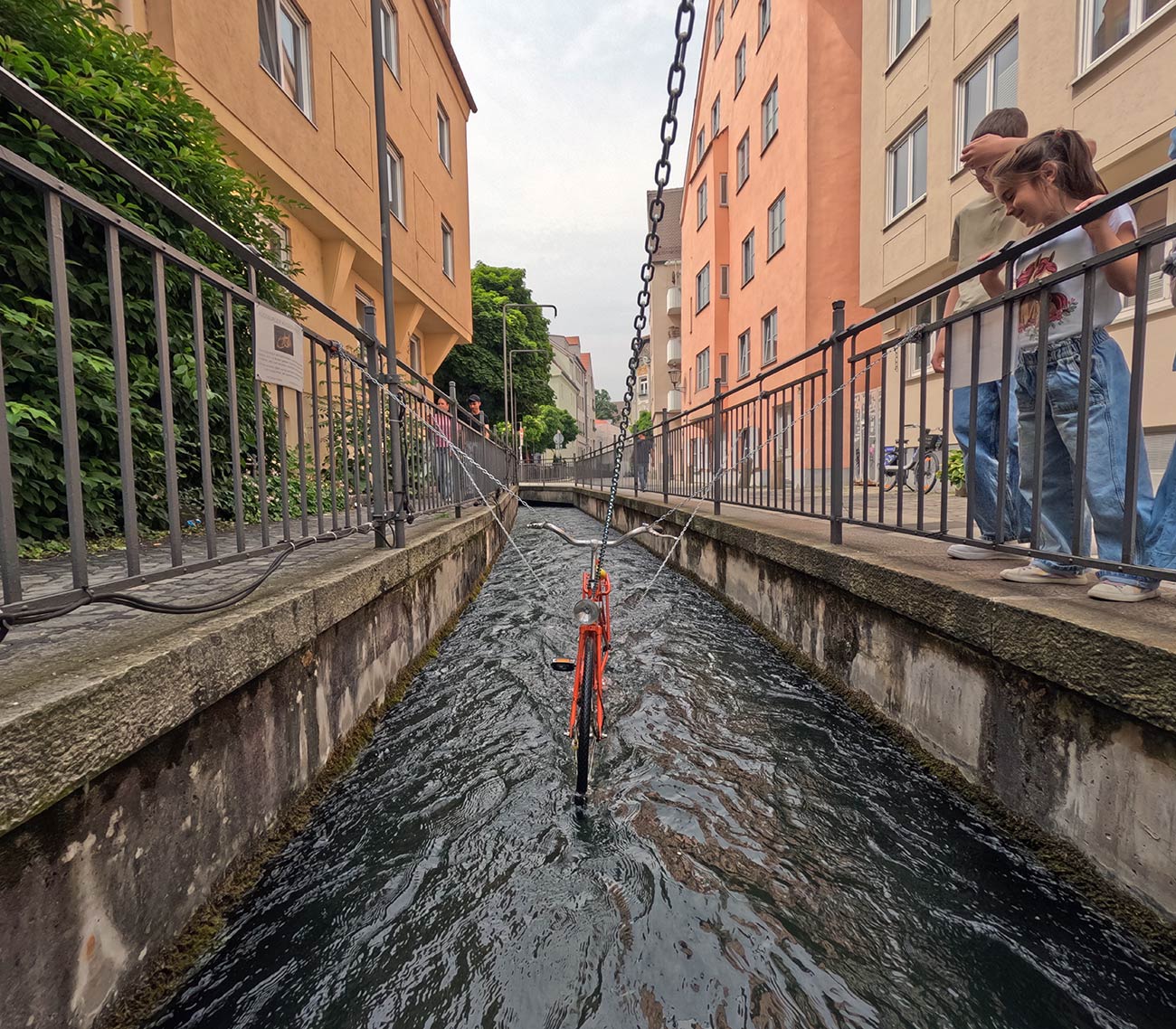
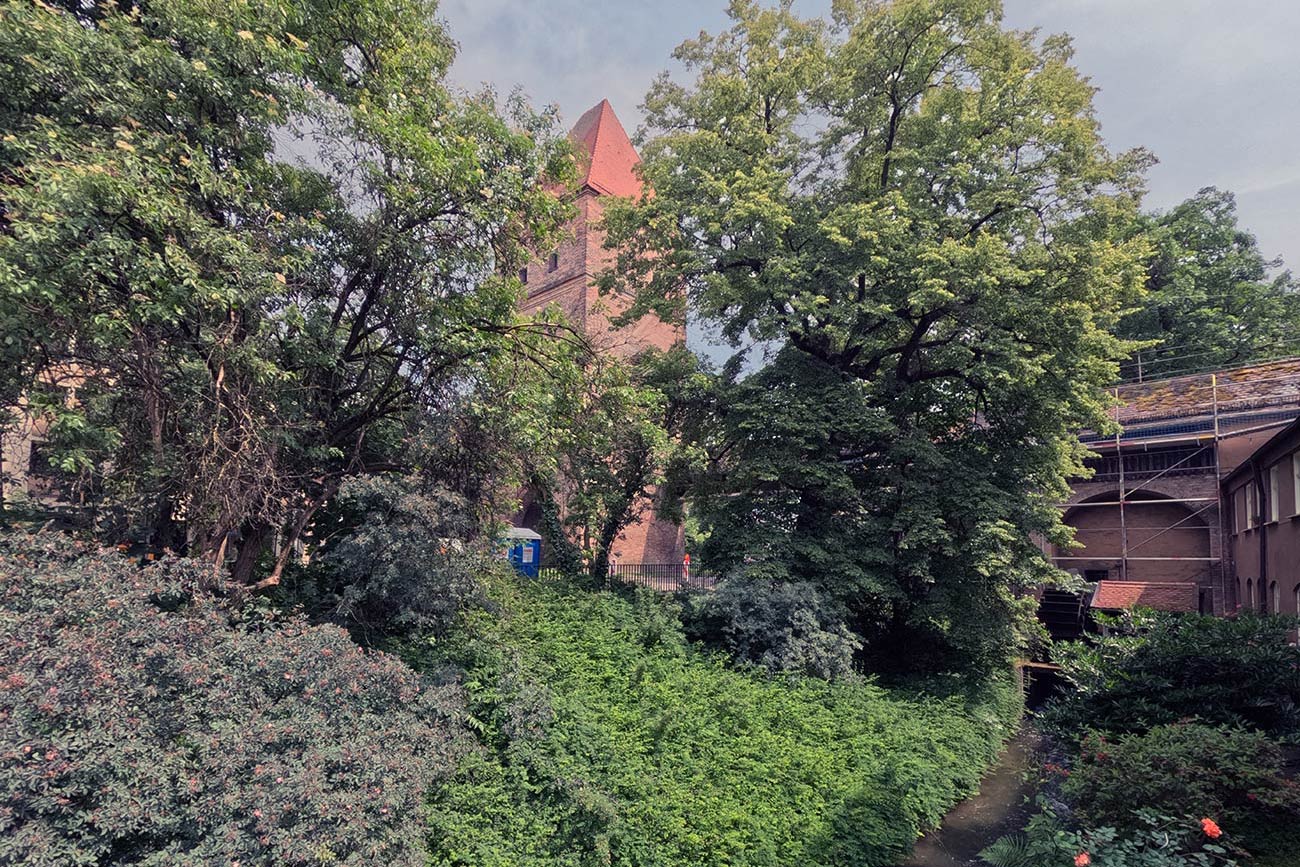
In 2019, UNESCO recognised Augsburg's historic water management system as a World Heritage Site, an unusual inscription that covers not a single building but a network of 22 elements spread across the city. From the fifteenth century onwards, Augsburg pioneered the separation of drinking water from industrial water, channelled through hand-carved wooden pipes, canals, and a series of waterworks and water towers. The most striking ensemble survives at the Rotes Tor, the Red Gate, the only fully preserved of the city's medieval gates, redesigned in the early seventeenth century by Elias Holl. Around it stand the Waterworks at the Red Gate, a cluster of towers and pumping stations that supplied the upper city for three centuries and that today form one of the most evocative corners of the old town. The system also includes hydroelectric power plants, some of them still in operation, that began to convert the city's canal network into electricity from 1875 onwards.
The Vogeltor and the Old City Wall
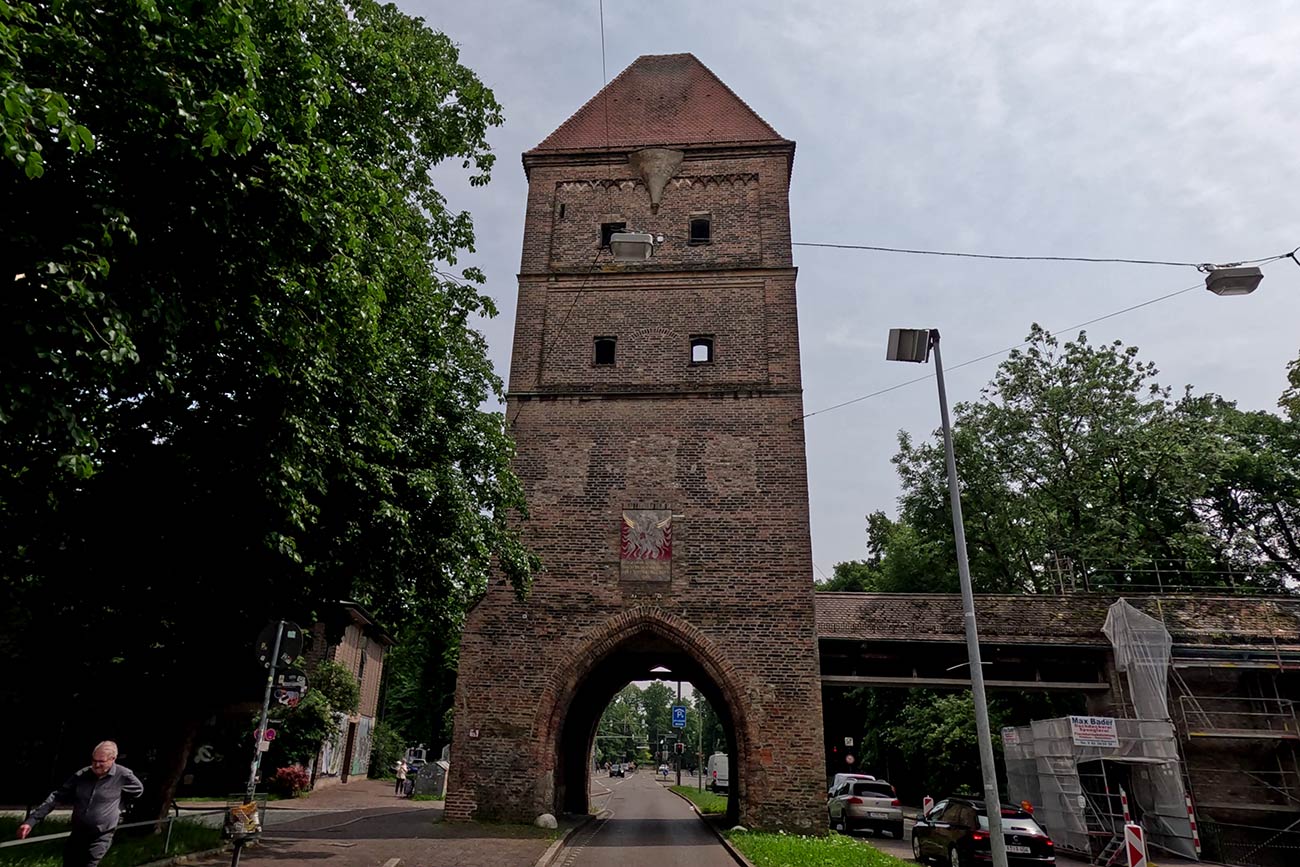
Of the five historic gates that once pierced Augsburg's medieval defences, only a handful survive, and the Vogeltor, the Bird Gate, is among the most atmospheric. Standing on the eastern edge of the old town along Vogelmauer, it dates back to the fifteenth century and once carried the city wall along the Lech canals. Together with the Jakobertor and the Fischertor, it gives a clear sense of the scale and ambition of Augsburg's old fortifications, much of which is best appreciated by walking the surviving stretches of wall and bastion. The Vogeltor also formed part of the wider water system: a small waterworks once stood beside it, distributing drinking water to this part of the city through wooden pipelines. The area around the gate is quiet and residential, a good place to slip away from the busier corners of the centre.
The Fuggerei, the World's Oldest Social Housing
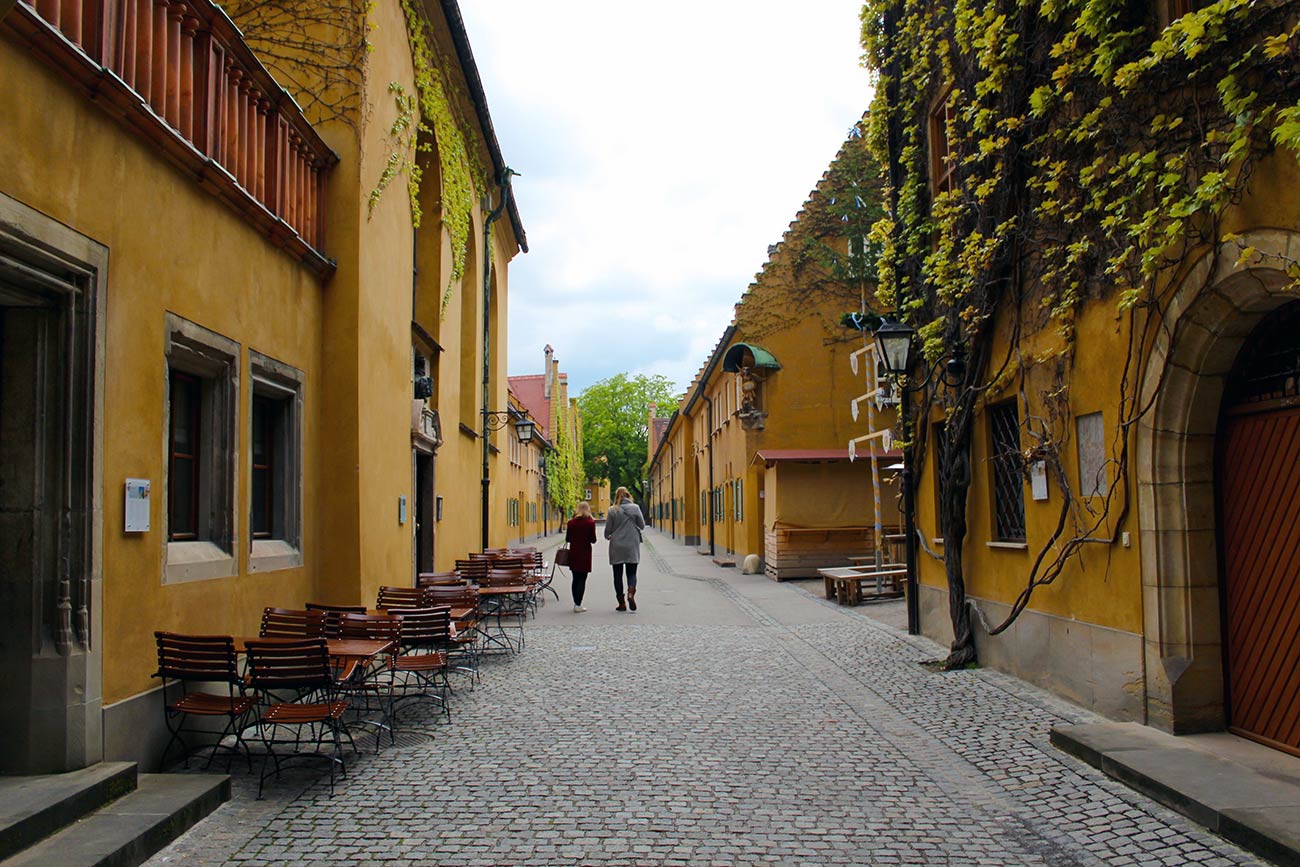
A short walk from the Rathausplatz lies the Fuggerei, a small walled settlement founded by the wealthy merchant Jakob Fugger in 1521 for poor citizens of Augsburg in need of housing. It is widely considered the oldest social housing complex in the world that is still in use for its original purpose, and its residents continue to pay an annual rent of less than one euro, a sum that has not changed in over five centuries. In return, they are asked to say three daily prayers for the Fugger family, a small ritual that has linked five hundred years of tenants in a quiet, continuous thread. The Fuggerei's narrow lanes, tidy gabled houses, and modest gardens make it one of the most unusual places to visit in Germany, and a window into a kind of civic generosity that has otherwise largely disappeared.
ℹ️ Useful Contacts
Mobility for Cyclists
Reaching Augsburg by train with your bike
If you are riding the EuroVelo 6 along the Danube, Augsburg is one of the most rewarding cultural detours along the route. The city lies north of the river on the historic Via Claudia Augusta corridor, close enough to reach comfortably by train with your bike and far enough to feel like a distinct cultural destination in its own right. Regional rail connections from the Danube corridor are frequent and straightforward, with two practical gateway options depending on where you are along the route.
The connection
The fastest connection from the EuroVelo 6 corridor is from Ulm, where regional and intercity trains run directly to Augsburg Hauptbahnhof in around forty-five minutes. The line follows the historic east-west axis between the Danube and the Lech valleys, and trains run frequently throughout the day. If you are cycling further east along the Danube, Ingolstadt offers an equally practical alternative, with regional trains connecting to Augsburg in around an hour, often with a single change. Both options fit comfortably into a single travel day and leave plenty of time to settle in before exploring the old town.
German trains
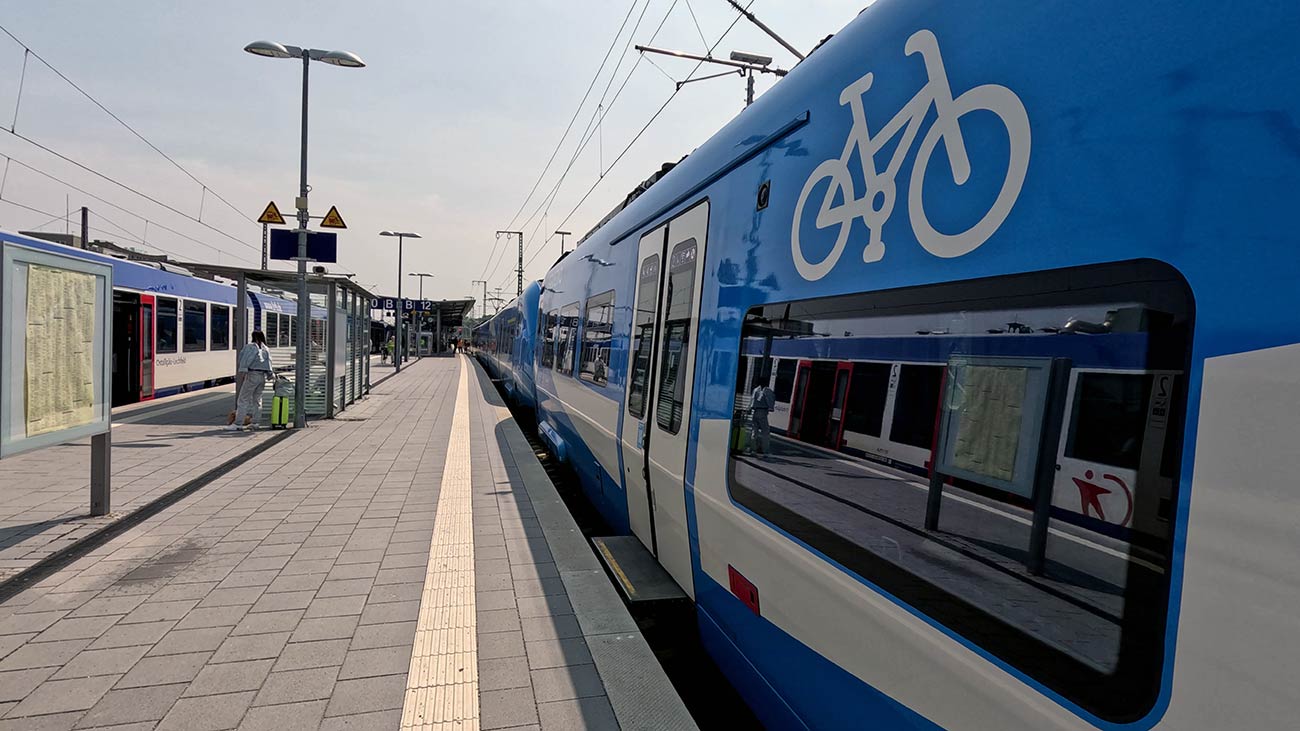
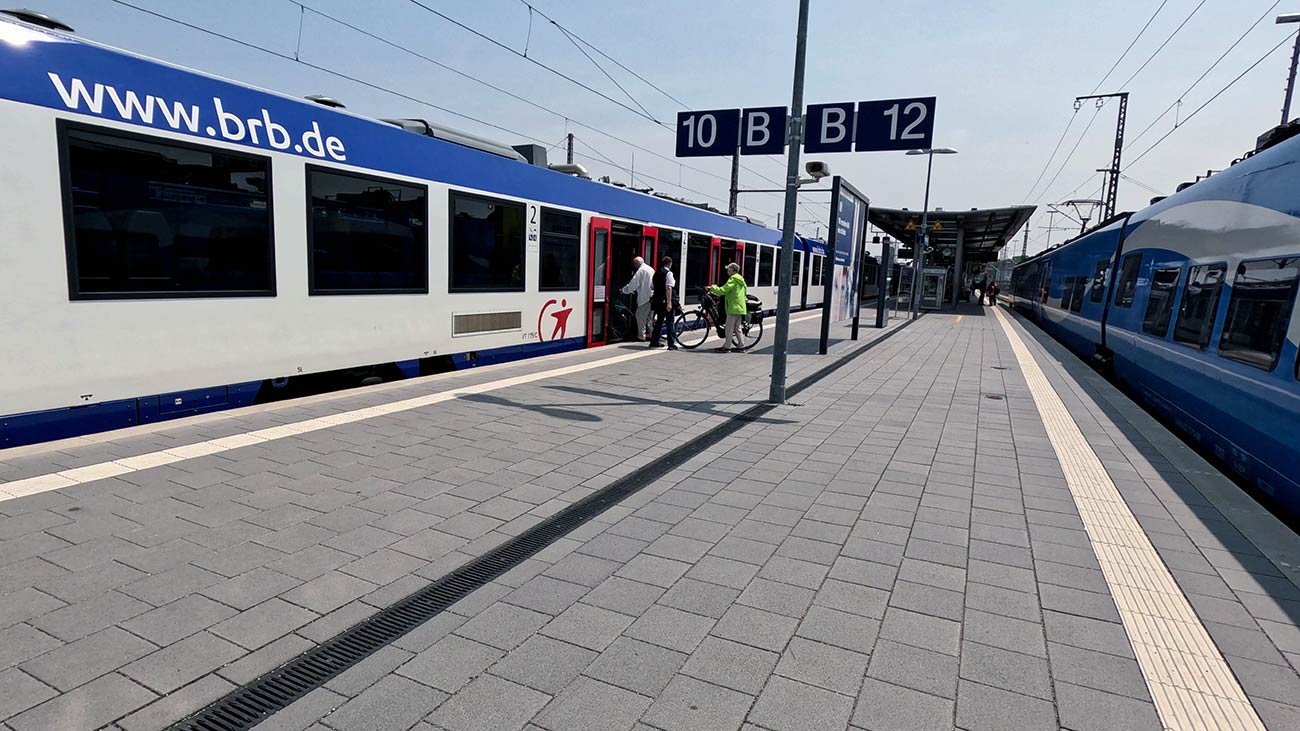
The rail network in this part of Germany is operated mainly by Deutsche Bahn (DB), which runs most long-distance services and a large share of regional connections across the area. Alongside DB, several regional operators run local and feeder lines, particularly on secondary routes, but they are fully integrated into the national rail system. This creates a highly coordinated transport network where transfers between different operators are seamless and require no separate tickets. The DB Navigator app is the central tool for planning journeys, checking timetables, and purchasing tickets across all services, including both regional and long-distance trains. During the main holiday season, special bike-friendly trains with expanded capacity for bicycles also run on selected regional routes, making travel with a bike across the region noticeably easier.
Taking your bike
This part of Germany is generally very bike-friendly when it comes to rail transport, especially on regional trains, which form the core of mobility for cycle touring along the Danube and its connecting corridors. Most regional services allow bicycle transport without mandatory reservation, although space is limited and operates on a first-come, first-served basis. A separate bicycle ticket is typically required during weekday morning peak hours, or it can be purchased as an affordable regional day pass, while outside peak periods and on weekends bicycle transport is often free across large parts of the region. Long-distance trains such as IC and ICE require advance bicycle reservations and have limited capacity, so early planning is important for intercity travel. Overall, the system is well adapted to cycle tourism, offering strong flexibility and occasional dedicated bicycle-friendly or seasonal train services that further improve connectivity for travellers leaving the EuroVelo 6 route.
Bikes on Buses
Long-distance bus services in this part of Germany are primarily operated by FlixBus, complemented by a smaller number of regional and private coach operators on selected routes. Bicycle transport is available on certain intercity connections, either via external bike racks or in the luggage compartment, but it is not consistently guaranteed across the network and depends on the specific vehicle type and route configuration. Where available, bicycle transport must be reserved in advance and capacity is limited, making it less flexible compared to rail services. As a result, buses are generally used as a secondary option for cyclists, mainly for longer-distance repositioning between major cities rather than as a core part of cycling itineraries along the Danube region. While useful in specific cases where rail connections are less convenient, they are less predictable and less standardized for bicycle transport, so advance planning is essential.
Arriving at Augsburg Hauptbahnhof
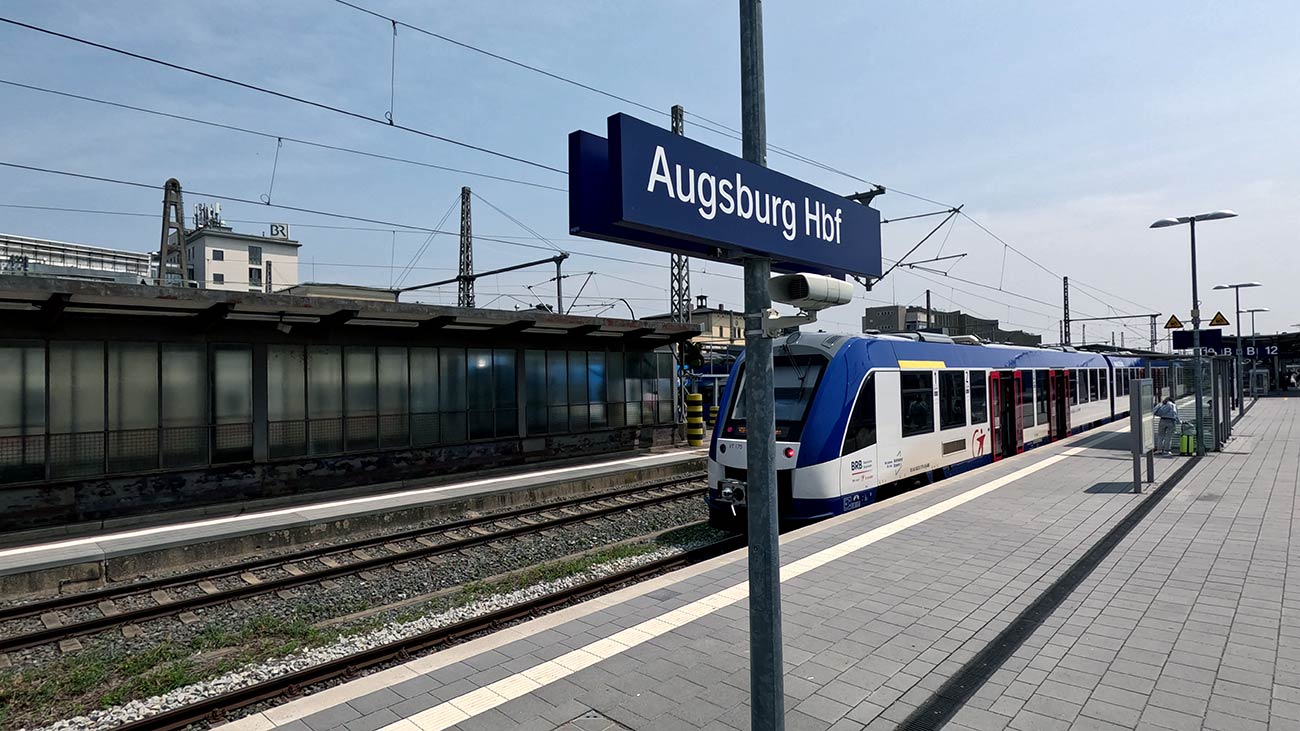
Augsburg's main station has been thoroughly modernised in recent years and now sits at the centre of one of Bavaria's busiest regional rail hubs. It is located a short ride from the historic centre, with the Rathausplatz, Maximilianstraße, and the Fuggerei all reachable in around ten minutes by bike along flat, well-signposted streets. Cycling infrastructure around the station and through the old town is generally good, and the central area is largely flat, making it easy to move between sights by bike. Bike racks and parking facilities are available at the station for shorter or longer stops. For onward travel, Augsburg Hauptbahnhof connects back toward Ulm, Ingolstadt, and the wider Danube region, so the city works equally well as a one-night detour or as a longer base for exploring this corner of Bavaria.