Nymphenburg Palace
Reading time: 13 minutes
SCHLOSSPARK NYMPHENBURG, BAVARIA, GERMANY
A Baroque Summer Where Munich Slows Down
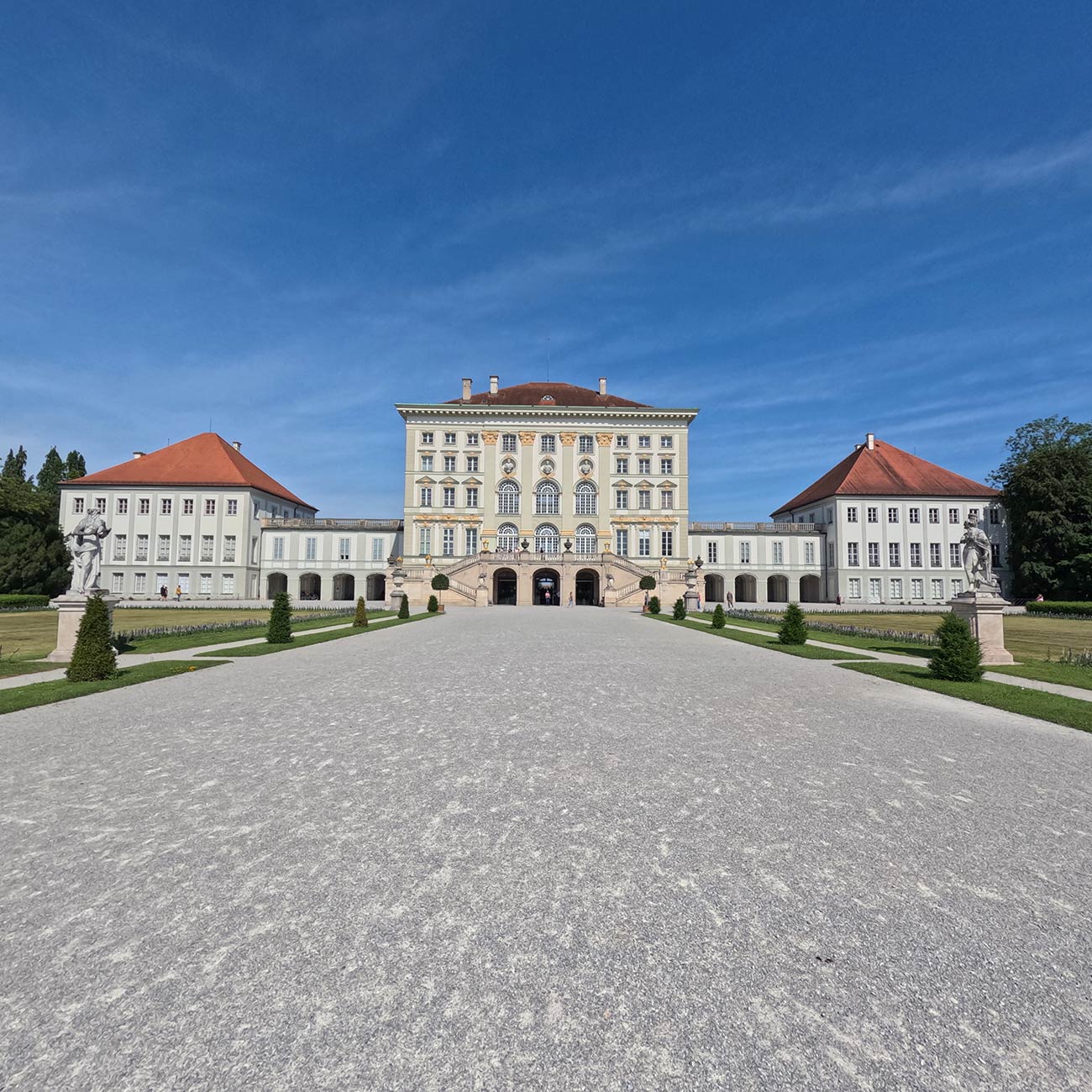
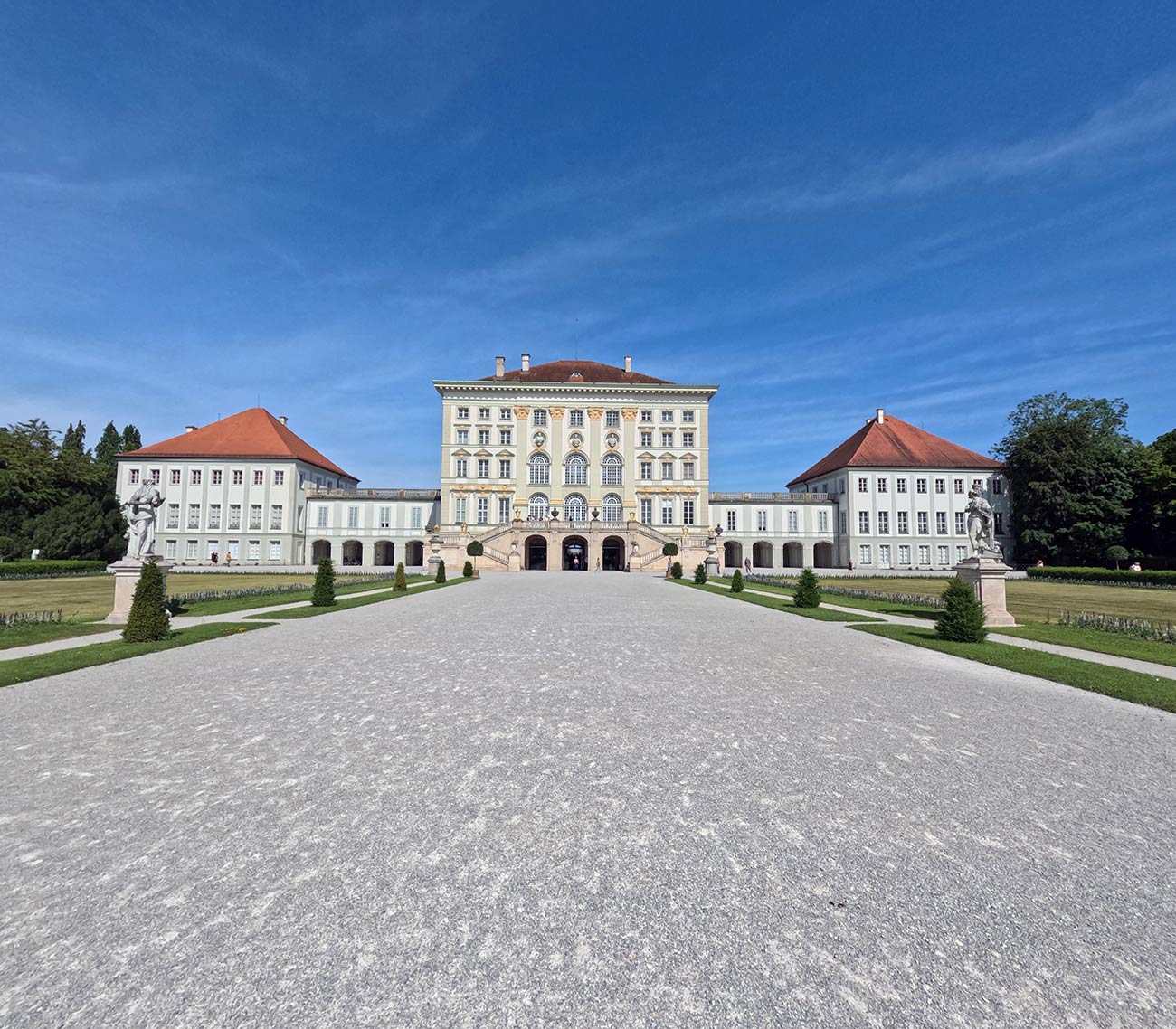
In the western reaches of Munich, where the city eases into long tree-lined avenues and quiet residential streets, the urban grid suddenly opens onto something altogether grander. A vast Baroque palace stretches across the horizon, mirrored in a perfectly still ornamental canal that draws the eye for hundreds of metres before finally letting it rest on the central pavilion. This is Schlosspark Nymphenburg, the summer residence of the rulers of Bavaria for nearly two centuries, and one of the most complete palace-and-garden ensembles anywhere in Europe.
What makes Nymphenburg unusual among the great palaces of the continent is the unity of its architecture and its landscape. Every structure, fountain, avenue, and reflecting pool was conceived as part of a single composition, refined by generations of architects, garden designers, and artists across more than a hundred and fifty years. The result is a place that feels designed at every scale, from the wide ceremonial approach to the small pavilion-style park palaces hidden among the trees, yet still leaves enormous room for visitors simply to walk, sit by the canals, or watch swans drifting across the water.
For cyclists exploring the eastern stretches of the EuroVelo 6 along the Danube, Nymphenburg is one of the most rewarding cultural detours within easy reach of the route. The palace lies just twenty minutes by train from Munich's main station, which in turn connects directly to Ingolstadt on the Danube cycle path. A half-day or full day spent here offers a complete change of register from the river: from the long horizontal of the Danube to the long axis of a Baroque garden, from open landscape to one carefully shaped by human hands across centuries.
PalaceParkMunichBaroque
A Royal Summer Residence Shaped Across Two Centuries
The story of Nymphenburg begins with a long-awaited child. The palace was founded as a summer residence to mark the birth of Max Emanuel, the heir to the throne, born in 1662 to the Bavarian Elector Ferdinand Maria and his wife Henriette Adelaide of Savoy after some ten years of marriage. Construction began in 1664 under the north Italian architect Agostino Barelli, best known in Munich as the designer of the Theatine Church. The original building was a single tall block in the Italian villa tradition, set in a modest walled garden and surrounded by a few service buildings and a court chapel, the whole standing well outside the city on land still entirely given over to fields. By 1679, this first incarnation was largely complete, and what is today one of Europe's largest palace complexes was still only a country house at the edge of the meadows.
The palace acquired its present scale under Max Emanuel himself, who reigned from 1680 to 1726. From 1701 onwards, the court architect Enrico Zuccalli added two offset pavilions to either side of the original block, linked to the central building by long galleries. When Max Emanuel returned to Munich in 1715 after years of exile during the Spanish War of Succession, he brought with him a generation of French and French-trained artists who reshaped the palace in the fashionable Parisian taste. Under the architect Joseph Effner and the garden designer Dominique Girard, the central pavilion was redesigned, the royal apartments were lavishly furnished, and the small geometrical garden was transformed into a full Baroque park with axial canals, parterres, fountains, and long perspectives. By the time Effner's plan was complete, the Bavarian court at Munich had become one of the leading artistic centres of early-eighteenth-century Europe.
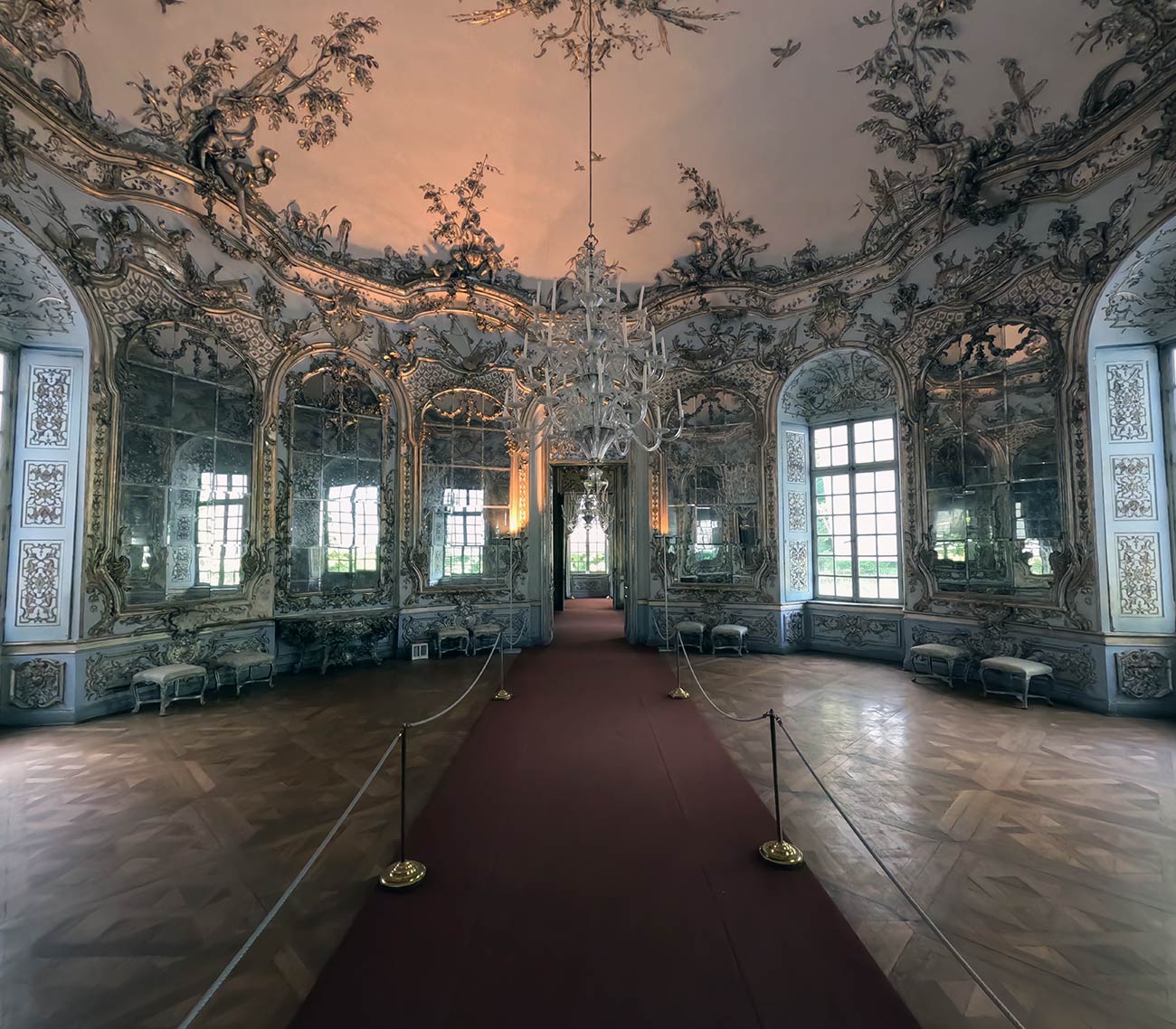
Each generation of rulers left its mark. Karl Albrecht, who reigned as Elector of Bavaria from 1726 and later as Holy Roman Emperor Charles VII from 1742, added the magnificent crescent of buildings on the town side, intended to form the centre of an unrealised model city to be called Carlstadt. He also commissioned what is now considered Nymphenburg's most exquisite jewel, the Amalienburg, a small Rococo hunting lodge built between 1734 and 1739 by the Paris-trained architect François Cuvilliés the Elder. Its silver-and-blue Hall of Mirrors, executed by leading court artists and specialist workshops, is one of the most inventive small interiors of the Bavarian Rococo. Under Maximilian III Joseph, who reigned from 1745 to 1777, the Great Hall of the main palace received its opulent Rococo ceiling by Johann Baptist Zimmermann and Cuvilliés, the palace chapel was painted, and the Nymphenburg Porcelain Manufactory moved into its present quarters at the front of the palace, where it has remained ever since.
The park itself was transformed once more in the early nineteenth century. Friedrich Ludwig von Sckell, the leading German landscape architect of his era, gently reworked Effner and Girard's strict French gardens into a more naturalistic English landscape park, while keeping the long central canal and the formal Grand Parterre as the structural spine of the composition. The result is a remarkable hybrid: a Baroque axis that opens at its edges into winding paths, meadows, woodland, and quiet lakes. In 1792, under Elector Karl Theodor, the park was opened to the public, and it has remained freely accessible ever since. King Maximilian I Joseph, the first King of Bavaria, died at Nymphenburg in 1825, and King Ludwig II of Bavaria, the famous builder of Neuschwanstein, was born here on 25 August 1845, two facts that root the palace deeply in the family history of Bavaria's royal dynasty.
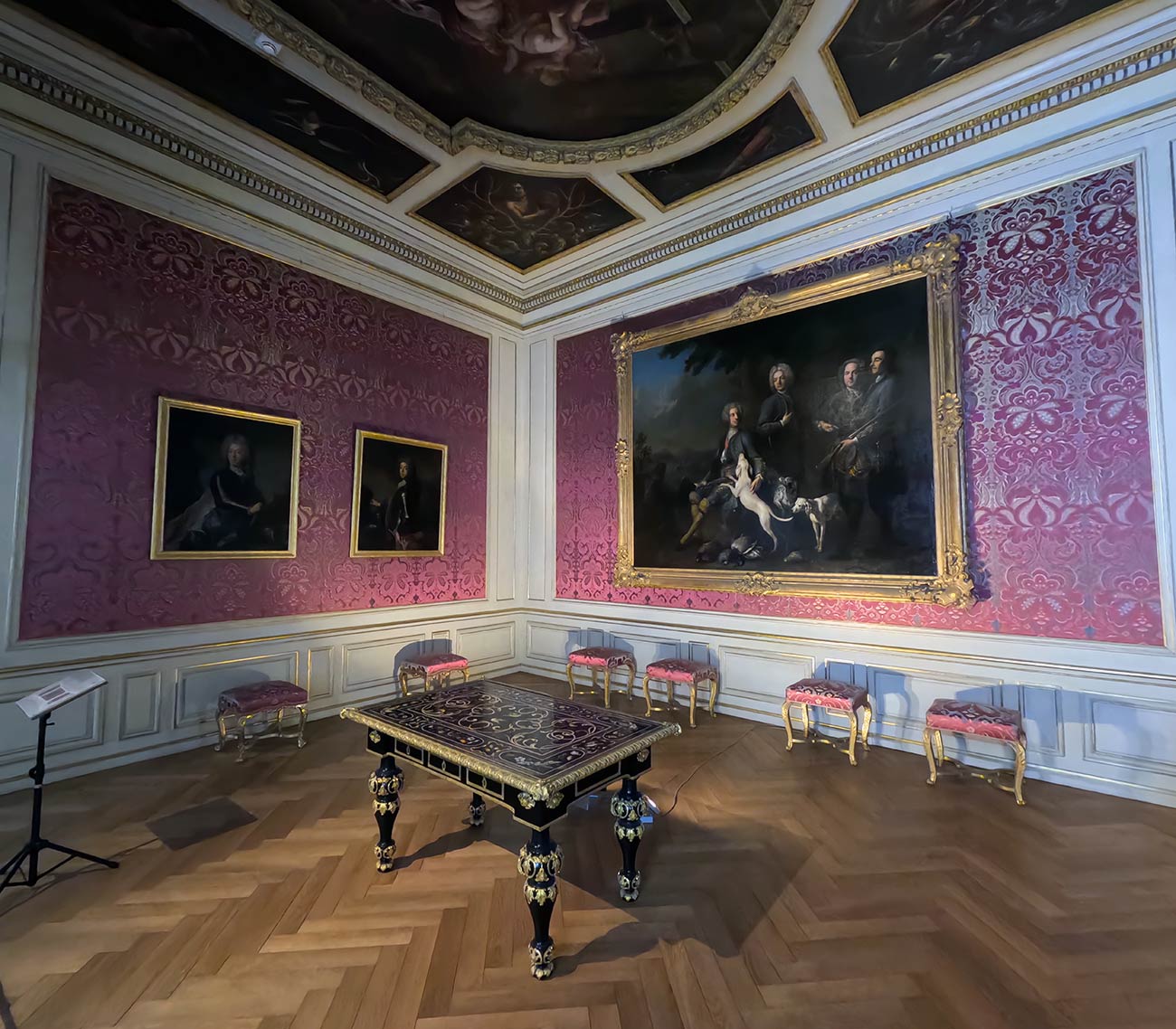
Inside the main palace, the visitor route passes through some of the most richly decorated rooms in Bavaria. The Great Hall, also known as the Stone Hall, soars through three storeys at the centre of the building, its vaulted ceiling covered in Zimmermann's airy frescoes. The south pavilion holds the famous Gallery of Beauties, commissioned by King Ludwig I in the nineteenth century, a series of thirty-six portraits of women from all walks of life painted by Joseph Karl Stieler, from princesses and noblewomen to the daughter of a Munich shoemaker. The state apartments preserve their original furniture, tapestries, and decorative schemes across multiple eras of taste, from late Baroque to early Neoclassical, and the Queen's Apartments retain the intimate atmosphere of a royal household that lived here continuously well into the twentieth century.
Beyond the palace itself, four small park palaces are scattered across the grounds, each one a complete miniature world in itself. The Amalienburg, set in a clearing on the south side of the park, is the most celebrated, with its silver-and-blue Hall of Mirrors and exquisite stucco work. The Badenburg, on the larger of the park's two lakes, holds one of the first heated indoor swimming pools in Europe, built for the elector in the early eighteenth century. The Pagodenburg, an octagonal pavilion inspired by the European fashion for Chinese design, was used as a place for refined retreats after games on the surrounding bowling green. The Magdalenenklause, deliberately built to look like a ruin, served as a place of contemplation for Max Emanuel and contains one of the most atmospheric grotto chapels in Bavaria. All four were conceived as part of a single artistic programme, and visiting them on foot through the park is one of the great pleasures of a full day at Nymphenburg.
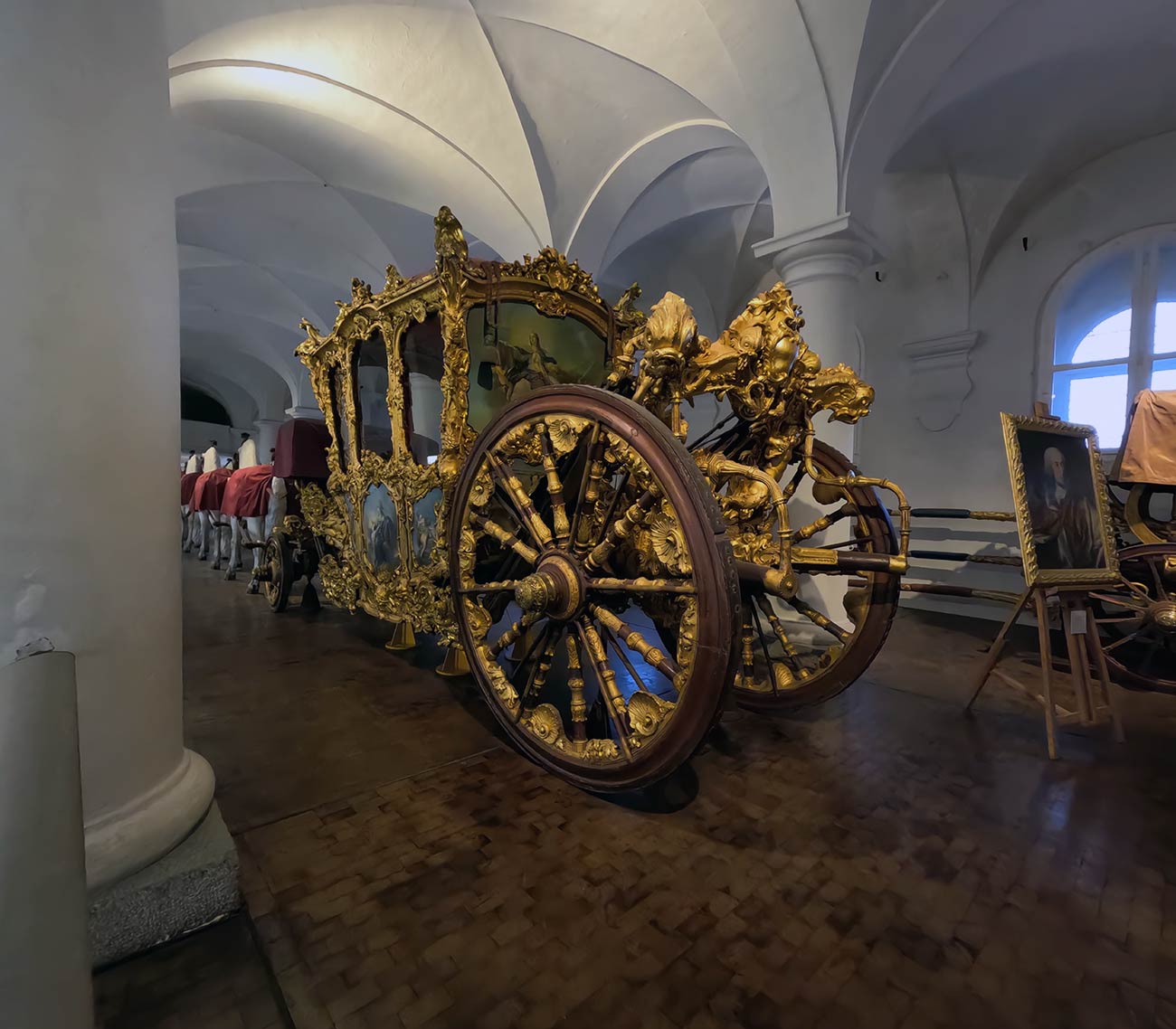
The park's water features are essential to its character. A long central canal runs the full length of the formal garden, beginning at a great fountain in front of the palace and continuing through the Grand Parterre toward a distant cascade. During the summer season, from April to October, gondolas ply this central canal when the weather is fine, offering one of the most unexpectedly Venetian experiences anywhere in southern Germany. Two ornamental lakes flank the formal axis, the Großer See and the Kleiner See, both home to swans that have become a kind of unofficial emblem of the palace. On the edge of the park, near the courtyard of the main palace, the Marstallmuseum displays one of the world's finest collections of state carriages and sleighs, including the spectacular coronation coach of Emperor Charles VII, while the adjoining Museum of Nymphenburg Porcelain traces the long history of the manufactory whose work has been produced on this site since 1761.
ℹ️ Useful Links
Mobility for Cyclists
Reaching Nymphenburg Palace by train with your bike
If you are riding the EuroVelo 6 along the Danube, Schlosspark Nymphenburg makes for one of the most rewarding cultural detours along the route. The palace lies in the western edge of Munich, close enough to reach comfortably by train with your bike and far enough to feel like a complete change of pace from the river landscape.
The connection
The most practical connection from the EuroVelo 6 corridor is from Ingolstadt, where regional and intercity trains run directly to München Hauptbahnhof in around thirty to forty-five minutes, with frequent departures throughout the day. From Munich's main station, the palace lies in the western part of the city and is reached in around fifteen minutes by tram or S-Bahn, or in roughly the same time by bike along well-signposted urban cycle paths. The total journey door-to-door is around an hour and a half, which fits comfortably into a single travel day and leaves plenty of time to explore both the palace and the park.
German trains
The rail network in this part of Germany is operated mainly by Deutsche Bahn (DB), which runs most long-distance services and a large share of regional connections across the area. Alongside DB, several regional operators run local and feeder lines, particularly on secondary routes through the Swabian Alb and the Neckar valley, but they are fully integrated into the national rail system. This creates a highly coordinated transport network where transfers between different operators are seamless and require no separate tickets. The DB Navigator app is the central tool for planning journeys, checking timetables, and purchasing tickets across all services, including both regional and long-distance trains. During the main holiday season, special bike-friendly trains with expanded capacity for bicycles also run on selected regional routes, making travel with a bike across the region noticeably easier.
Taking your bike
This part of Germany is generally very bike-friendly when it comes to rail transport, especially on regional trains, which form the core of mobility for cycle touring along the Danube and Neckar corridors. Most regional services allow bicycle transport without mandatory reservation, although space is limited and operates on a first-come, first-served basis. A separate bicycle ticket is typically required during weekday morning peak hours, or it can be purchased as an affordable regional day pass, while outside peak periods and on weekends bicycle transport is often free across large parts of Baden-Württemberg. Long-distance trains such as IC and ICE require advance bicycle reservations and have limited capacity, so early planning is important for intercity travel. Overall, the system is well adapted to cycle tourism, offering strong flexibility and occasional dedicated bicycle-friendly or seasonal train services that further improve connectivity for travellers leaving the EuroVelo 6 route.
Bikes on Buses
Long-distance bus services in southern Germany are primarily operated by FlixBus, complemented by a smaller number of regional and private coach operators on selected routes. Bicycle transport is available on certain intercity connections, either via external bike racks or in the luggage compartment, but it is not consistently guaranteed across the network and depends on the specific vehicle type and route configuration. Where available, bicycle transport must be reserved in advance and capacity is limited, making it less flexible compared to rail services. As a result, buses are generally used as a secondary option for cyclists, mainly for longer-distance repositioning between major cities rather than as a core part of cycling itineraries along the Danube region. While useful in specific cases where rail connections are less convenient, they are less predictable and less standardized for bicycle transport, so advance planning is essential.
Arriving in Munich and Continuing to Nymphenburg
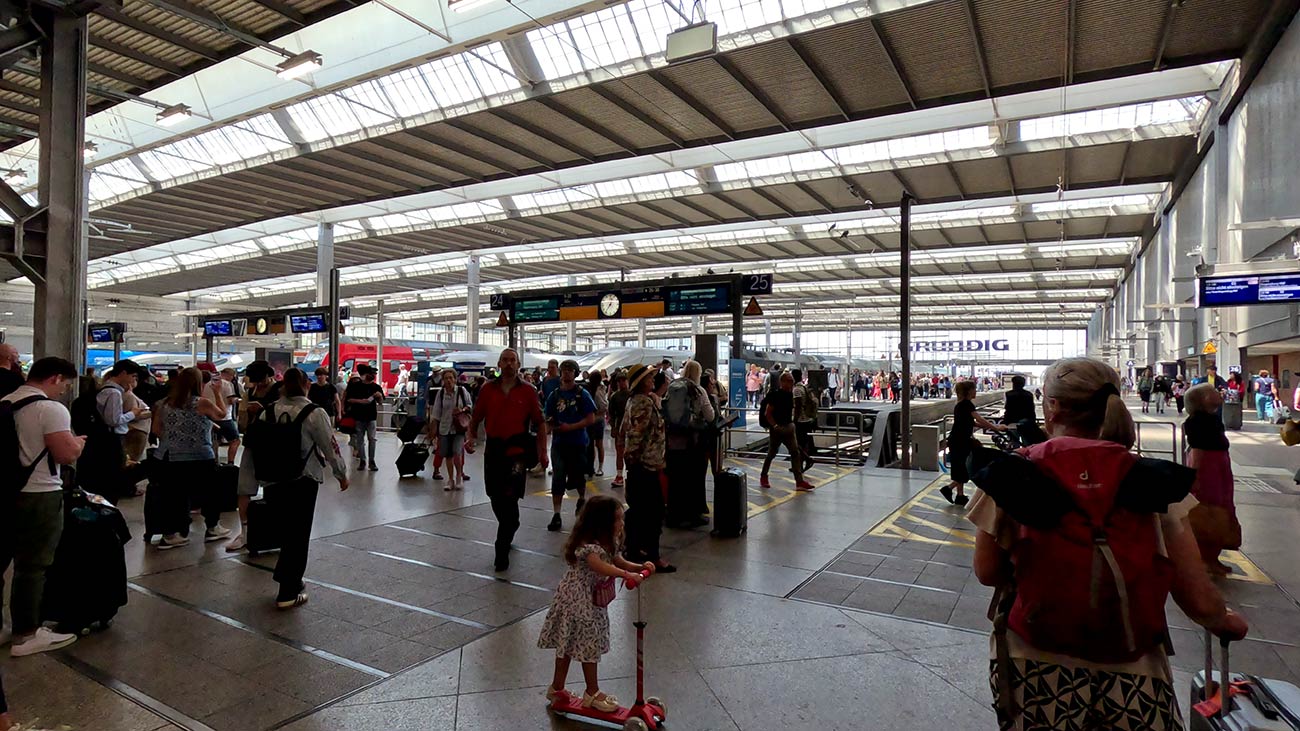
München Hauptbahnhof is one of the largest railway stations in Germany and offers full bike infrastructure, including bike parking facilities and easy access to the city's cycle network. From the station, the most pleasant way to reach Nymphenburg is by bike, with a ride of around twenty to thirty minutes through the western districts of the city along largely flat, well-signposted streets. Cyclists who prefer not to ride through the city can take the tram line directly toward the palace gates, although bicycles are not always permitted on tram or S-Bahn services during peak hours. The park itself is largely a walking area, with cycling permitted only on designated paths and gravel roads on the outer sections, so most visitors leave their bicycles at the entrance and explore the grounds on foot. For onward travel, München Hauptbahnhof connects back toward Ingolstadt and the wider Danube region, so Nymphenburg works equally well as a day trip from the route or as part of a longer Munich stopover.