Blaubeuren
Reading time: 13 minutes
BLAUBEUREN, BADEN-WÜRTTEMBERG, GERMANY
A Turquoise Spring and the Dawn of Human Art
Some places combine two stories so different in scale that visiting them feels like crossing centuries between one corner of town and the next. Blaubeuren, set in a deep limestone valley at the foot of the Swabian Jura just west of Ulm, holds two of the most remarkable in southern Germany. At the edge of its old town, water rises from the earth in a deep, almost otherworldly turquoise pool that has fascinated travellers since the Middle Ages. A few streets away, in a quiet museum near the old monastery, you can stand in front of forty-thousand-year-old figurines that are widely considered the oldest figurative art ever made by human hands.
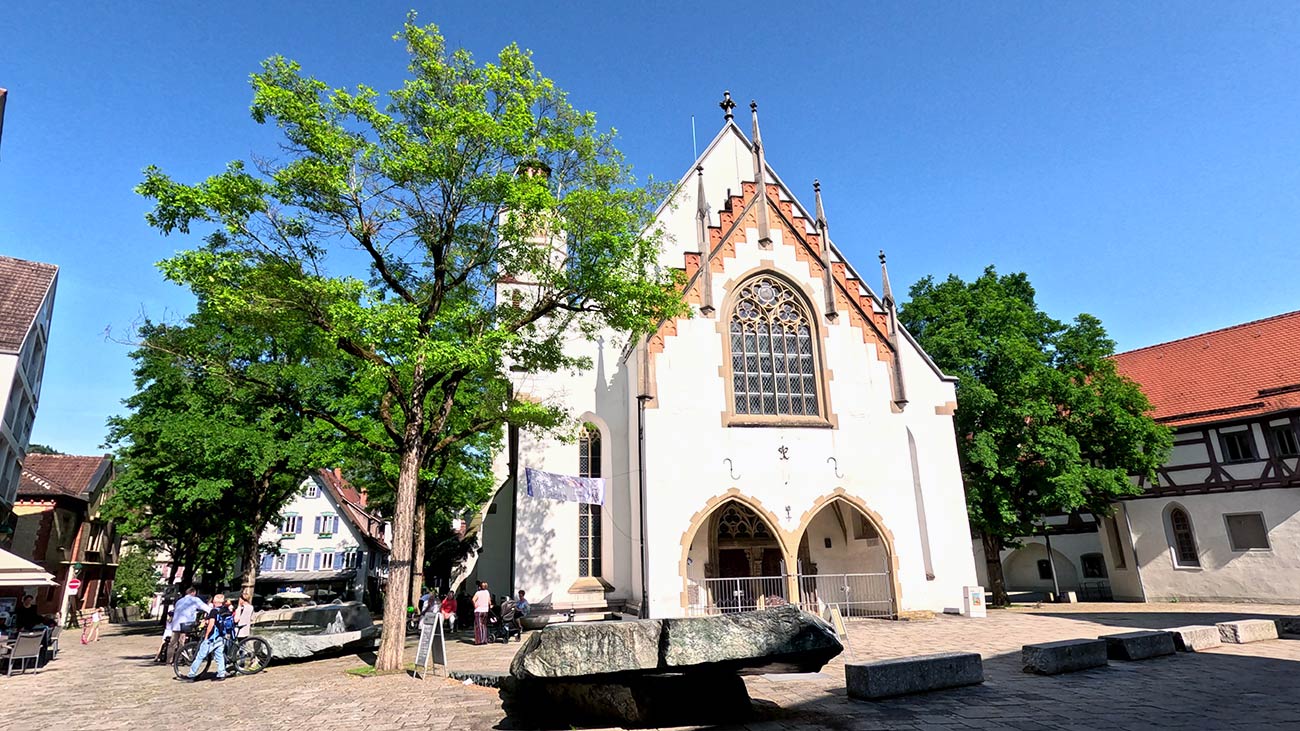
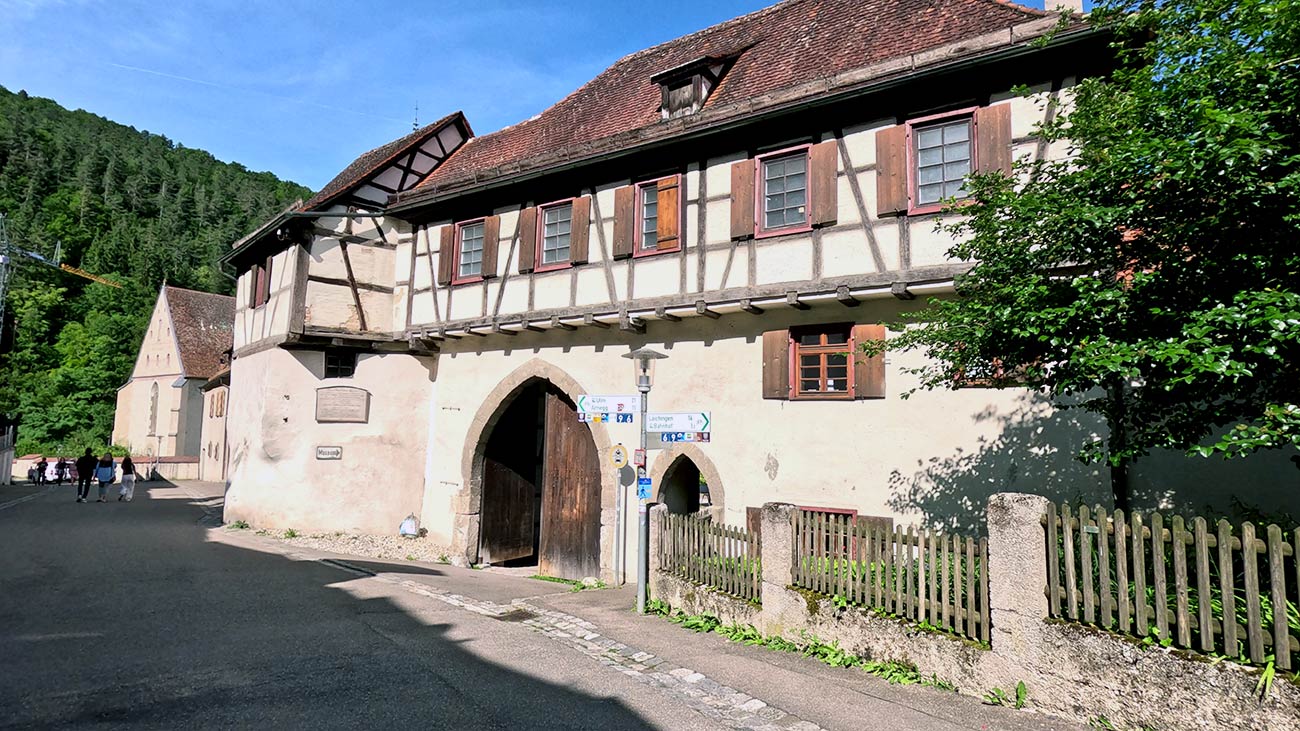
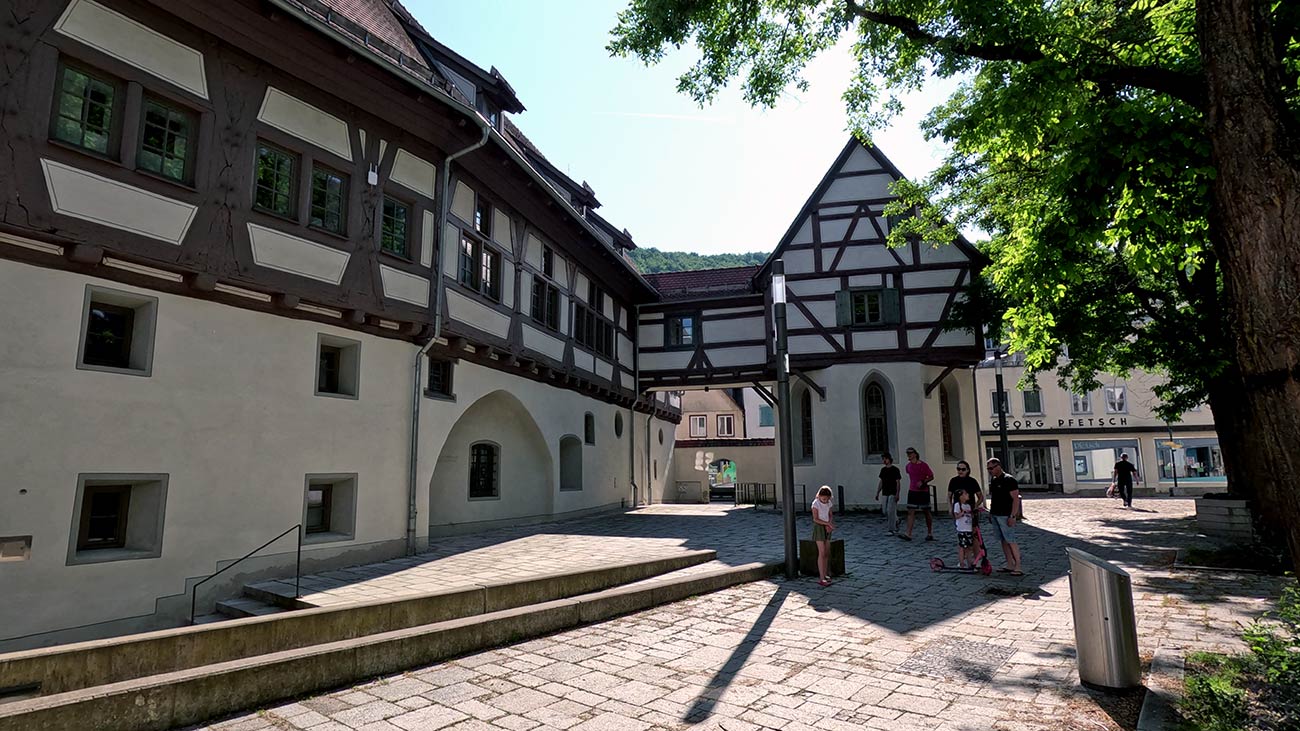
The town that links these two worlds is one of the best-preserved medieval centres in Baden-Württemberg, a small cluster of half-timbered houses, narrow lanes, and a former Benedictine monastery wrapped around the spring that gives Blaubeuren its name. It is the kind of place that rewards an unhurried half-day, with little canals running through the streets, ivy-covered walls along the river Ach, and small cafés and ice-cream stops at every other corner. The wooded hills above the town hide medieval castle ruins, panoramic viewpoints, and curious natural features like the Küssende Sau, a rock formation shaped from fossilised coral.
For cyclists exploring the Danube along the EuroVelo 6, Blaubeuren is one of the closest and most rewarding detours from Ulm. A short rail journey of around fifteen minutes brings you into a different valley, a different landscape, and a different time scale entirely, from the broad horizontal of the Danube to the deep vertical of the karst springs and Ice Age caves of the Swabian Jura.
BlueCave ArtUNESCOMuseum
The Town, the Monastery, and the Blue Spring
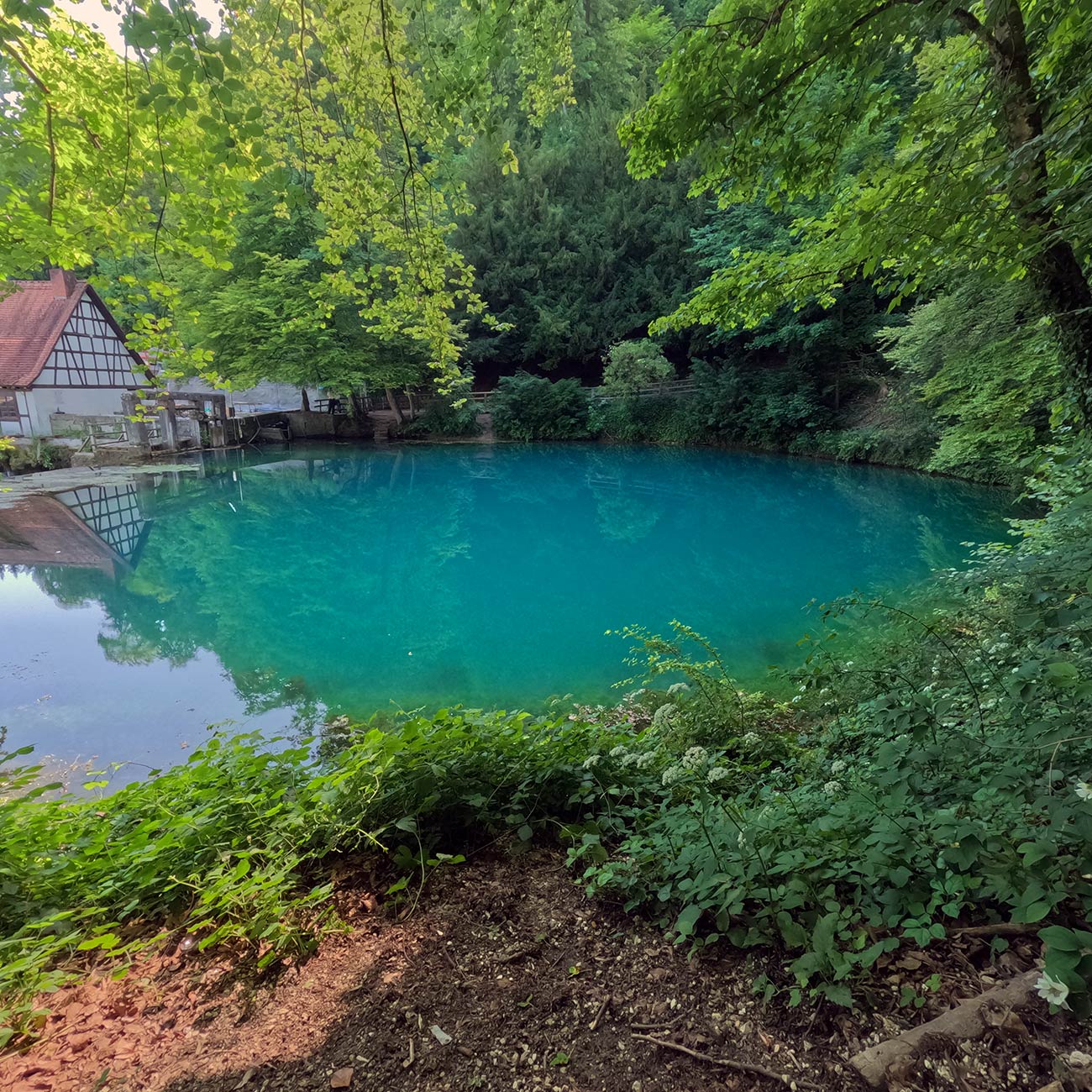
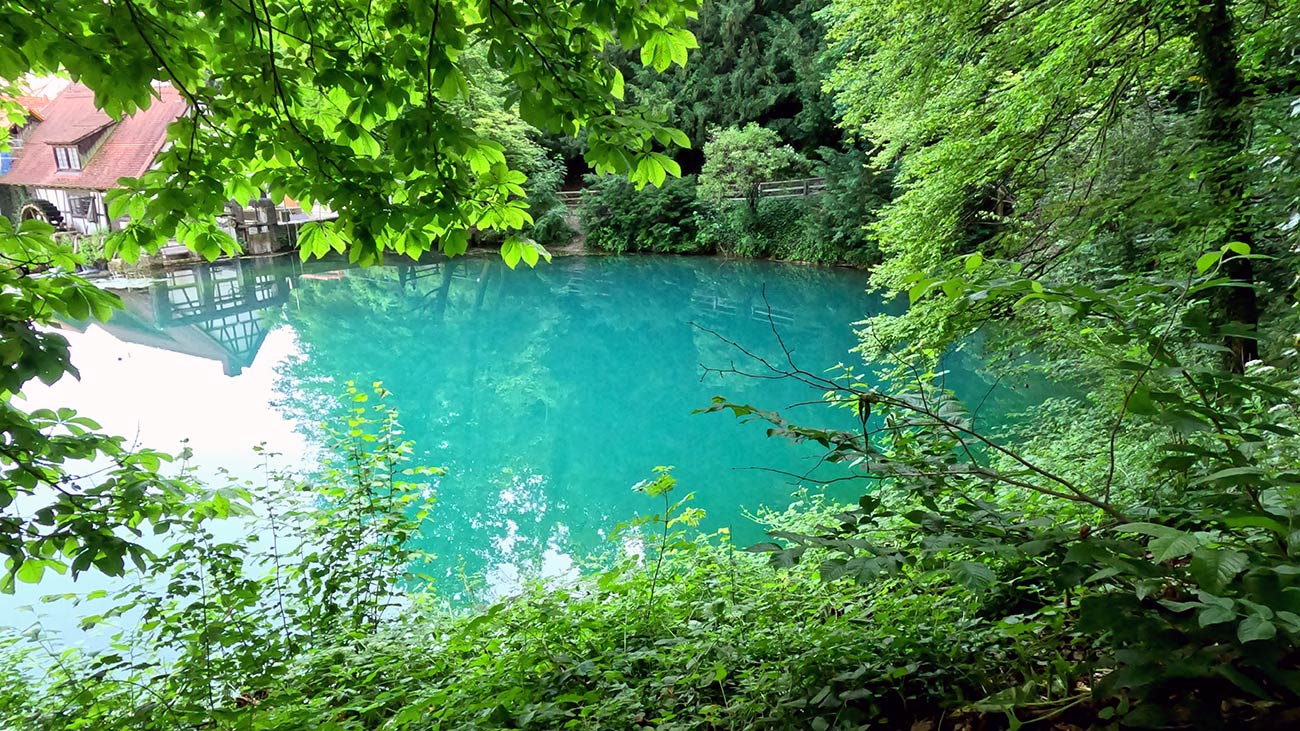
The natural centre of any visit to Blaubeuren is the Blautopf, literally the Blue Pot, a deep karst spring on the western edge of the old town. The pool is only around twenty metres across but plunges some twenty-one metres down into a flooded underground cave system, and the limestone in the water gives it a colour that ranges from deep turquoise to luminous teal depending on the light. The spring is the second most powerful karst source in Germany and the origin of the small river Blau, which then runs eastward through the streets of Blaubeuren before joining the Danube at Ulm. The Blautopf has inspired centuries of local stories, most famously the tale of The Beautiful Lau, a water nymph from Eduard Mörike's nineteenth-century novella whose sadness was believed to colour the pool itself.
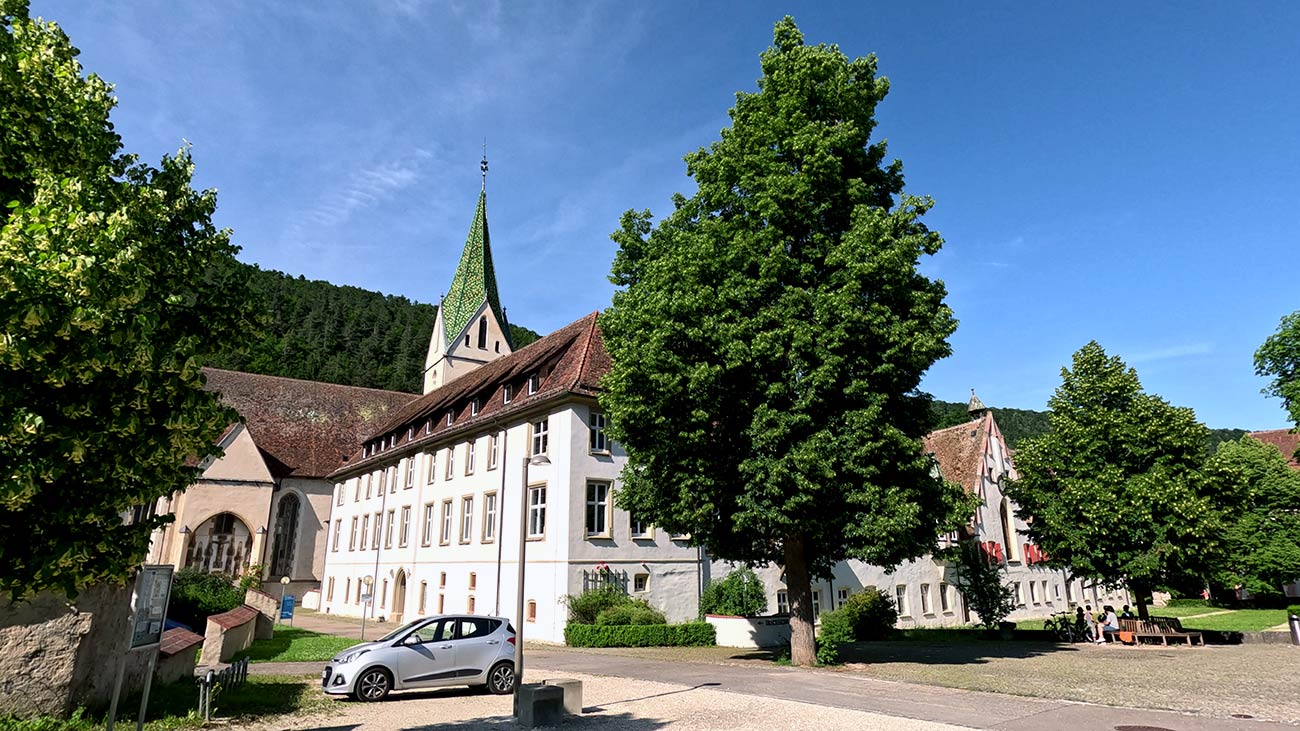
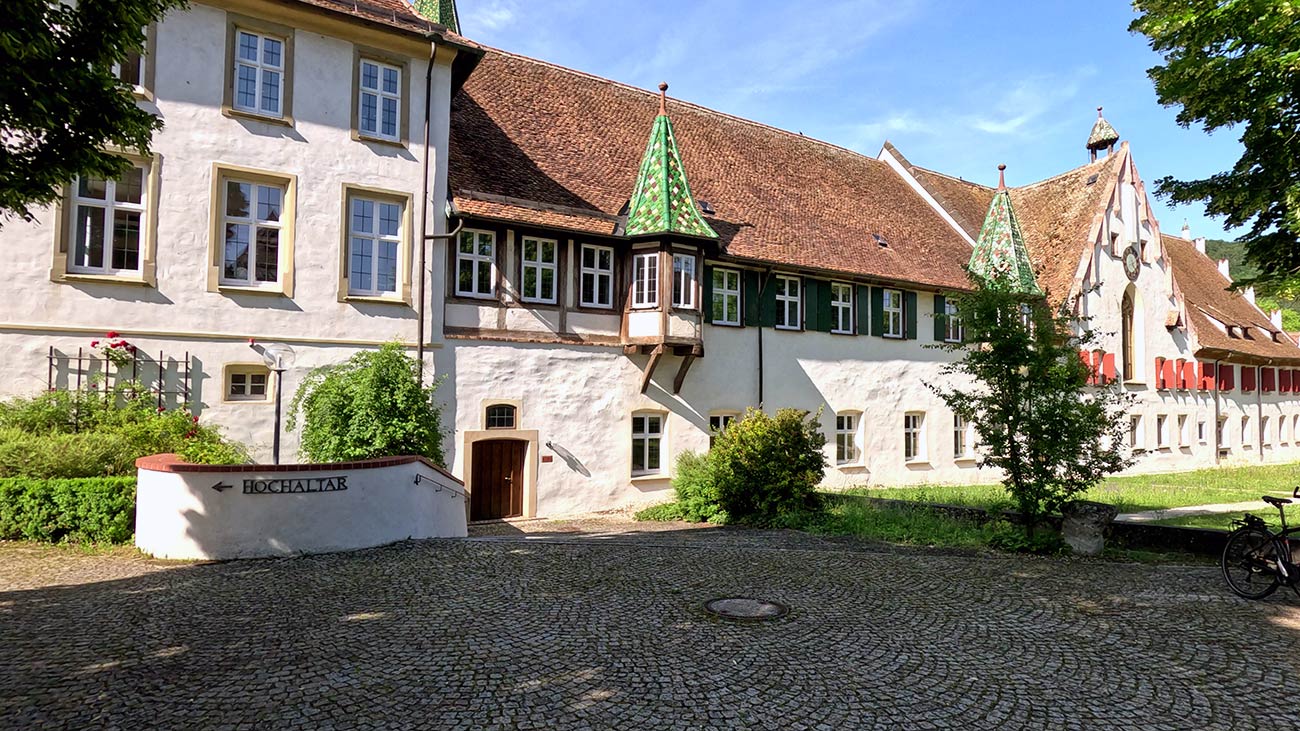
Just beside the spring stands the former Benedictine Monastery of Blaubeuren, founded in the eleventh century and rebuilt in its present late-Gothic form in the fifteenth. The monastic complex is one of the most complete in the region and includes the church, the cloister, the former chapter house, and the small bathhouse the monks built for themselves as a rare allowance of comfort. The high altar of the monastery church is widely considered a masterpiece of late medieval German wood carving, with its painted panels and gilded figures opening like a stone book at the centre of the choir. The site has been used as a Protestant theological seminary since the Reformation, and the calm of its inner courtyard has changed remarkably little across the centuries.
The historic old town itself stretches out from the spring and the monastery in a tight cluster of half-timbered houses, ironwork shop signs, and small bridges over the river Ach. Locals sometimes refer to a particular row of houses along the canal as Little Venice, with their wooden balconies leaning out over the water and the river running directly beneath their foundations. The old town hall, the former hospital, and a string of small squares mark the route through the centre, and a circular path now links the Blautopf area, the monastery, the old town, and the river meadows into a single walk that takes about an hour at an easy pace. For travellers with extra time, the hills above the town hide the ruins of Castle Hohengernhausen, sometimes called the Rusenschloss, dating back to around 1080, and a number of marked hiking trails into the surrounding karst landscape.
The Caves, the Ice Age Art, and the URMU Museum
Blaubeuren sits at the heart of one of the most significant prehistoric landscapes in Europe. In 2017, UNESCO inscribed the Caves and Ice Age Art in the Swabian Jura on the World Heritage List, a serial site of six caves in two neighbouring valleys, the Ach Valley around Blaubeuren and the Lone Valley further to the east. Excavations carried out in these caves since the 1860s have produced the oldest figurative art ever discovered anywhere in the world, alongside the oldest known musical instruments, dating roughly between 43,000 and 33,000 years ago. The six caves, three in each valley, include the Hohle Fels, Geißenklösterle, and Sirgenstein in the Ach Valley, and the Hohlenstein-Stadel, Vogelherd, and Bockstein caves in the Lone Valley.
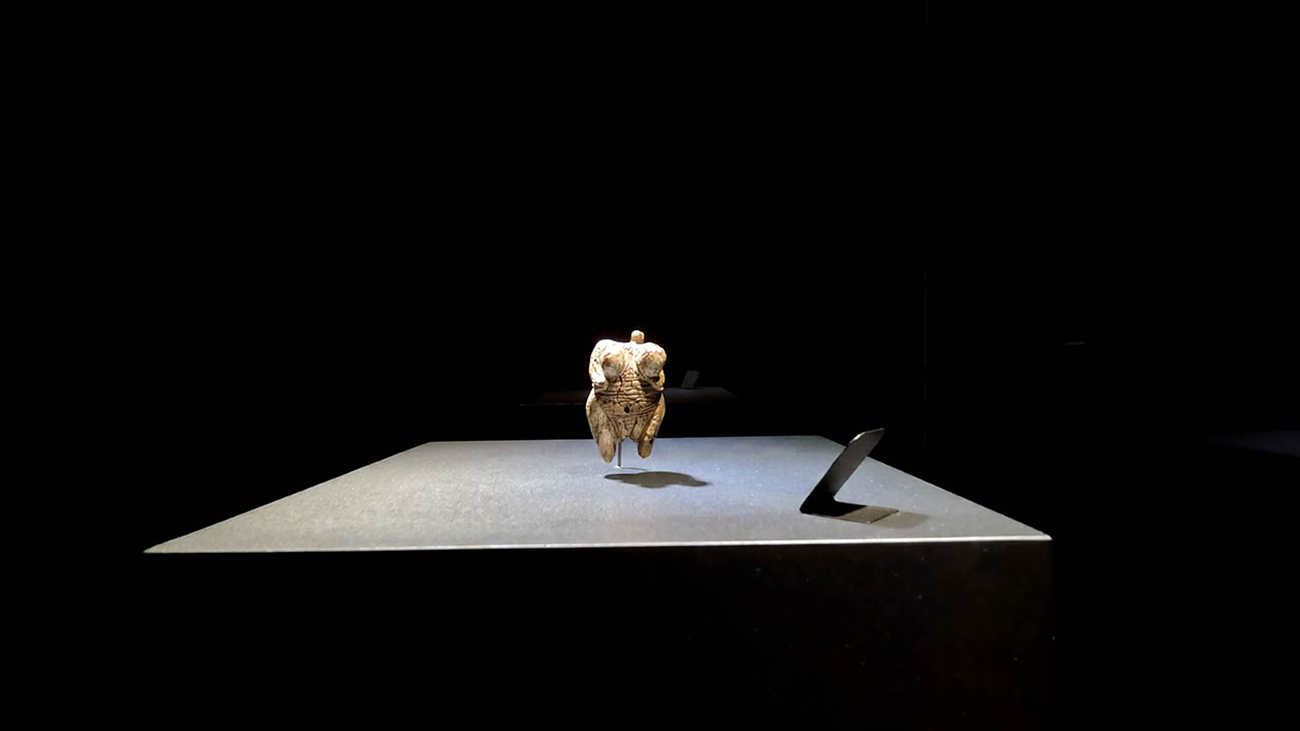
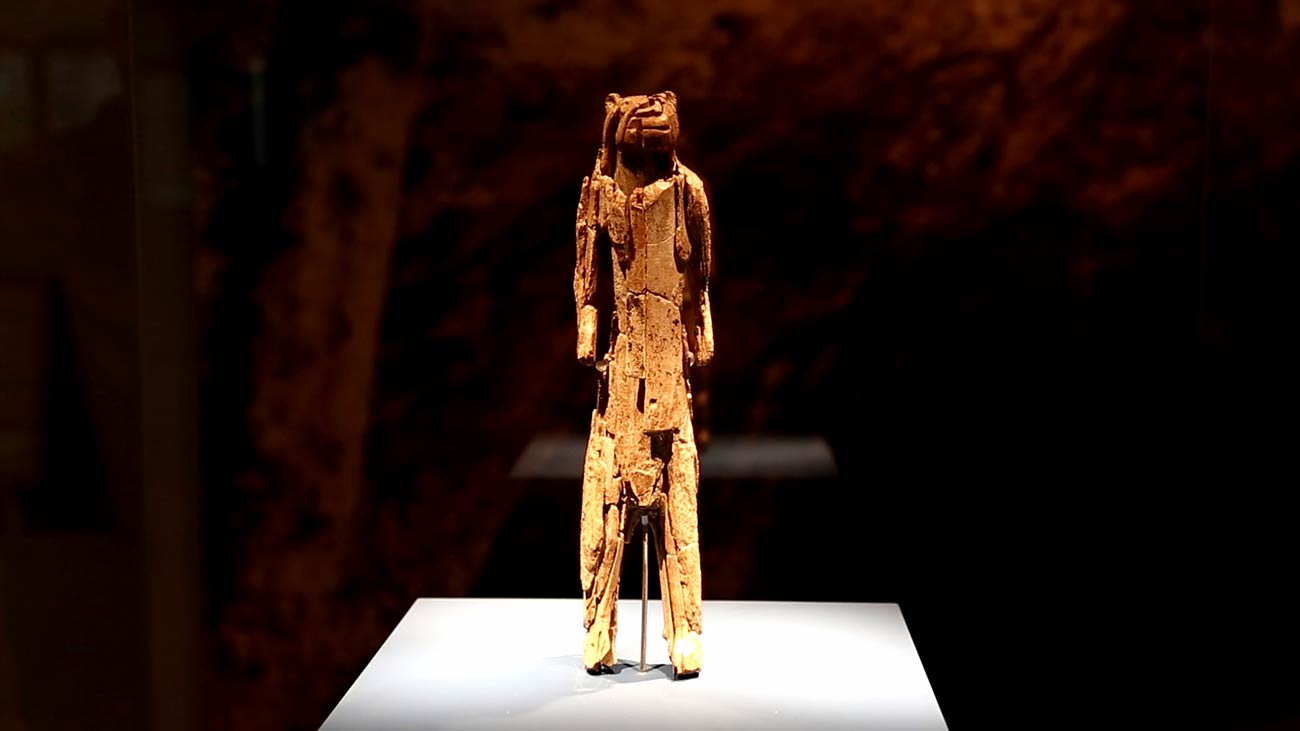
The discoveries from these caves rewrote the early history of human creativity. Carved from mammoth ivory, the figurines include cave lions, mammoths, horses, and bovids, alongside a tiny statuette known as the Venus of Hohle Fels, considered the oldest depiction of the human figure ever found. Flutes carved from the hollow bones of swans and the ivory of mammoth tusks are the oldest known musical instruments. Some figurines depict hybrid creatures that combine animal and human features, suggesting that the people who made them already possessed a developed imagination, a sense of storytelling, and perhaps a belief in the supernatural. These are not the rough beginnings of art but works of remarkable confidence, made by people who already understood form, proportion, and meaning.
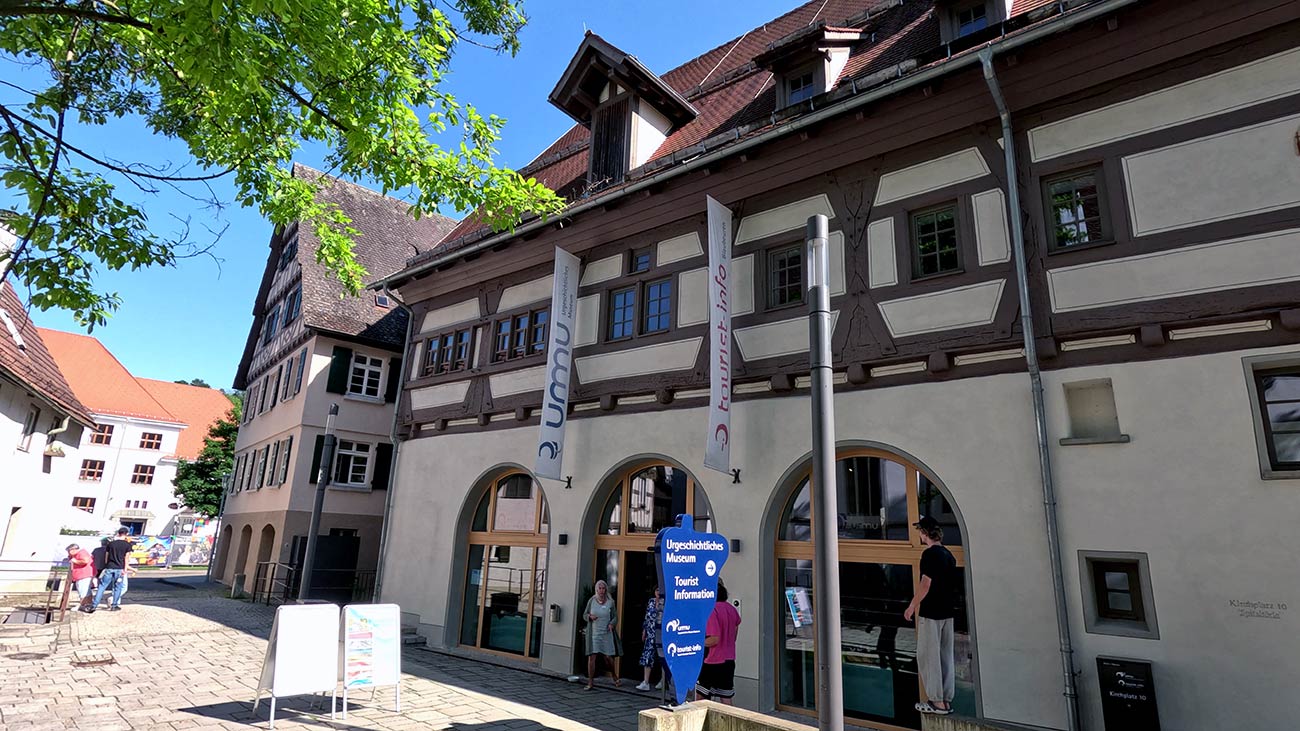
The natural place to encounter these objects is the Museum of Prehistory and Ice Age Art (URMU), located in the centre of Blaubeuren beside the church square. The museum is the official central museum for the UNESCO site and serves as the main public window onto the discoveries made in the surrounding caves. Its permanent exhibitions include rooms dedicated to the Treasure Chambers of Ice Age art, the Sound Spaces of the prehistoric flutes, the Jewellery Cabinet of personal ornaments, and the World Heritage Caves themselves, with detailed reconstructions and original artefacts brought together under one roof. Hands-on Stone Age workshops are offered for families and visitors of all ages, with sessions on flint knapping, ivory carving, and traditional materials such as leather, bone, and tinder.
The caves themselves can be visited only in a more limited way. Hohle Fels in nearby Schelklingen is open to the public as a show cave during the warmer months and is the most accessible of the six. The Vogelherd in the Lone Valley sits within an archaeological park with its own dedicated visitor centre. Geißenklösterle, the third of the major art-producing caves, is currently closed for safety reasons because of unstable rock around the entrance, although the surrounding hiking paths remain open. The other three caves are protected sites that cannot be entered, but their stories are fully told inside URMU and a handful of partner museums in the region. For most travellers, the museum in Blaubeuren is the single most rewarding place to encounter this prehistoric heritage in concentrated form.
One important piece of the story lies a short journey away. The most famous single object from the Swabian Jura, the Lion Man (Löwenmensch), is not exhibited in Blaubeuren but in Ulm. Carved from mammoth ivory roughly forty thousand years ago and discovered in fragments at the Hohlenstein-Stadel cave, the figure stands around 31 centimetres tall and depicts a hybrid being with a human body and the head and limbs of a cave lion. It is one of the very oldest known examples of figurative art anywhere in the world, and many archaeologists consider it the earliest physical evidence of human imagination, storytelling, and belief in the supernatural. The Lion Man is part of the permanent collection of the Museum Ulm, but while the museum's archaeological wing is undergoing a major redesign, the figurine is being shown as part of a special exhibition titled Fabulous! The Lion Man and His Descendants at the neighbouring Kunsthalle Weishaupt, where it can be seen until 4 October 2026. After that, it will move into its newly designed permanent home inside the main Museum Ulm building. For cyclists already passing through Ulm on the EuroVelo 6, adding a short stop at the Lion Man before or after a day in Blaubeuren makes for one of the most extraordinary prehistoric experiences available anywhere in Europe.
ℹ️ Useful Links
Mobility for Cyclists
Reaching the town by train with your bike
If you are riding the EuroVelo 6 along the Danube, Blaubeuren is one of the easiest and most rewarding cultural detours from the route. The town lies in a karst valley just west of Ulm, reached by a short rail journey of around fifteen minutes from one of the main cities on the Danube cycle path. The connection is straightforward enough to fit into half a travel day, and the entire visit can be completed in a single day without needing an overnight stop.
The connection
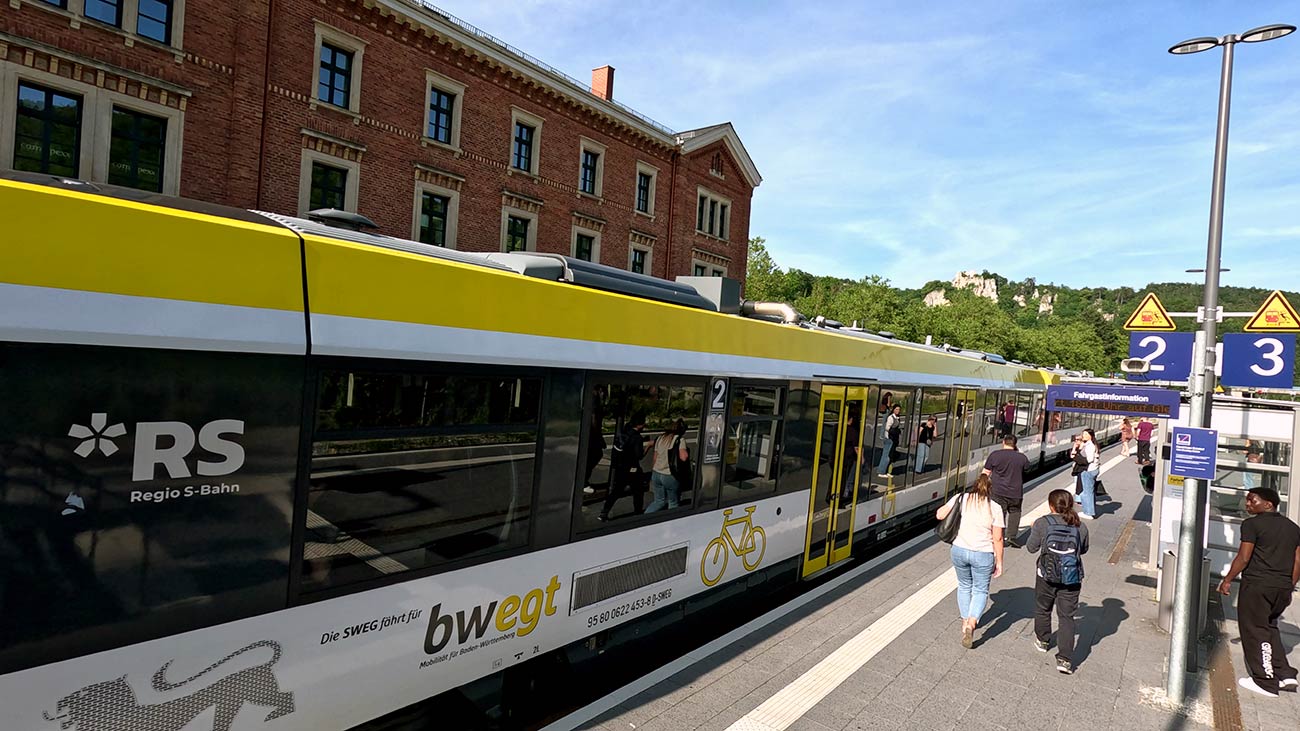
The most practical connection from the EuroVelo 6 corridor is from Ulm, where regional trains run directly to Blaubeuren in about fifteen minutes. The line follows the small valley of the river Blau westward into the limestone hills of the Swabian Jura, with frequent departures throughout the day. The proximity to Ulm makes Blaubeuren accessible as a relaxed morning or afternoon trip from anywhere along the central stretch of the Danube path. For travellers who would also like to see the Lion Man, a single visit to Ulm can comfortably combine both the city itself and a day in Blaubeuren, since the two are linked by the same short rail line.
German trains
The rail network in this part of Germany is operated mainly by Deutsche Bahn (DB), which runs most long-distance services and a large share of regional connections across the area. Alongside DB, several regional operators run local and feeder lines, particularly on secondary routes through the Swabian Alb and the Neckar valley, but they are fully integrated into the national rail system. This creates a highly coordinated transport network where transfers between different operators are seamless and require no separate tickets. The DB Navigator app is the central tool for planning journeys, checking timetables, and purchasing tickets across all services, including both regional and long-distance trains. During the main holiday season, special bike-friendly trains with expanded capacity for bicycles also run on selected regional routes, making travel with a bike across the region noticeably easier.
Taking your bike
This part of Germany is generally very bike-friendly when it comes to rail transport, especially on regional trains, which form the core of mobility for cycle touring along the Danube and Neckar corridors. Most regional services allow bicycle transport without mandatory reservation, although space is limited and operates on a first-come, first-served basis. A separate bicycle ticket is typically required during weekday morning peak hours, or it can be purchased as an affordable regional day pass, while outside peak periods and on weekends bicycle transport is often free across large parts of Baden-Württemberg. Long-distance trains such as IC and ICE require advance bicycle reservations and have limited capacity, so early planning is important for intercity travel. Overall, the system is well adapted to cycle tourism, offering strong flexibility and occasional dedicated bicycle-friendly or seasonal train services that further improve connectivity for travellers leaving the EuroVelo 6 route.
Bikes on Buses
Long-distance bus services in southern Germany are primarily operated by FlixBus, complemented by a smaller number of regional and private coach operators on selected routes. Bicycle transport is available on certain intercity connections, either via external bike racks or in the luggage compartment, but it is not consistently guaranteed across the network and depends on the specific vehicle type and route configuration. Where available, bicycle transport must be reserved in advance and capacity is limited, making it less flexible compared to rail services. As a result, buses are generally used as a secondary option for cyclists, mainly for longer-distance repositioning between major cities rather than as a core part of cycling itineraries along the Danube region. While useful in specific cases where rail connections are less convenient, they are less predictable and less standardized for bicycle transport, so advance planning is essential.
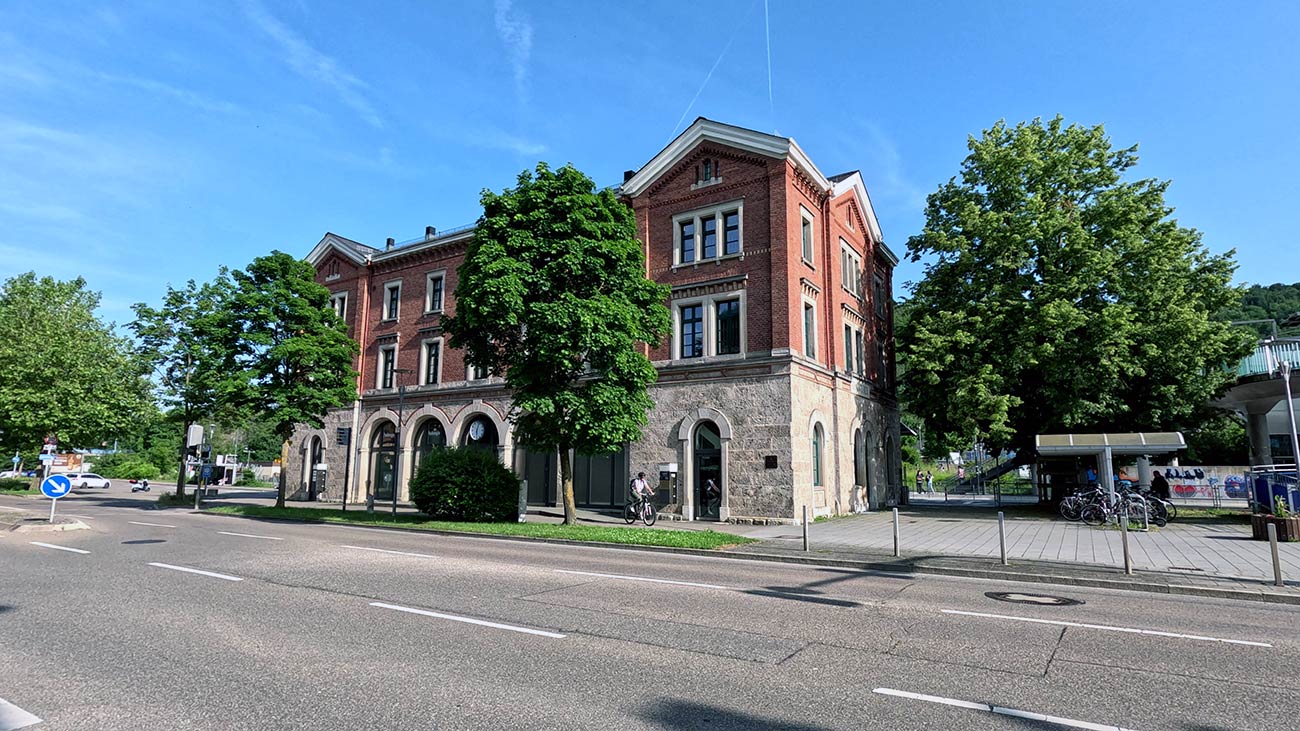
Arriving at Blaubeuren Station
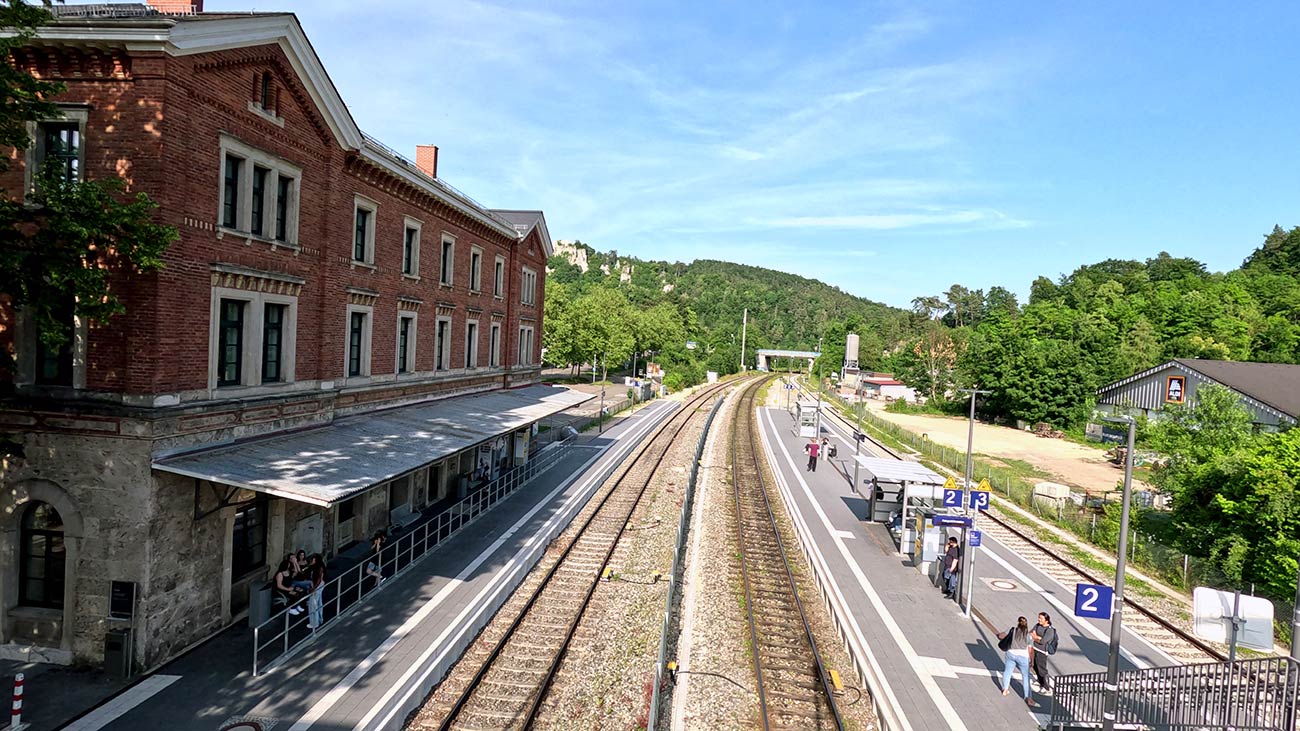
Blaubeuren's railway station is a small regional stop within easy reach of the old town centre, the Blautopf, and the URMU museum, all of which can be reached on foot or by bike in under fifteen minutes. The terrain in town is largely flat, and the historic streets between the station, the monastery, and the spring are easy to navigate. Bike racks are available at the station for shorter visits. Cycling infrastructure in and around the town is generally good, and the wider Swabian Jura around Blaubeuren is criss-crossed by marked cycle and hiking routes for travellers who would like to combine the visit with a longer day in the surrounding landscape. For onward travel, the same line connects back toward Ulm and the wider Danube region, so Blaubeuren works equally well as a short morning excursion or as a slower, more contemplative full-day stop.