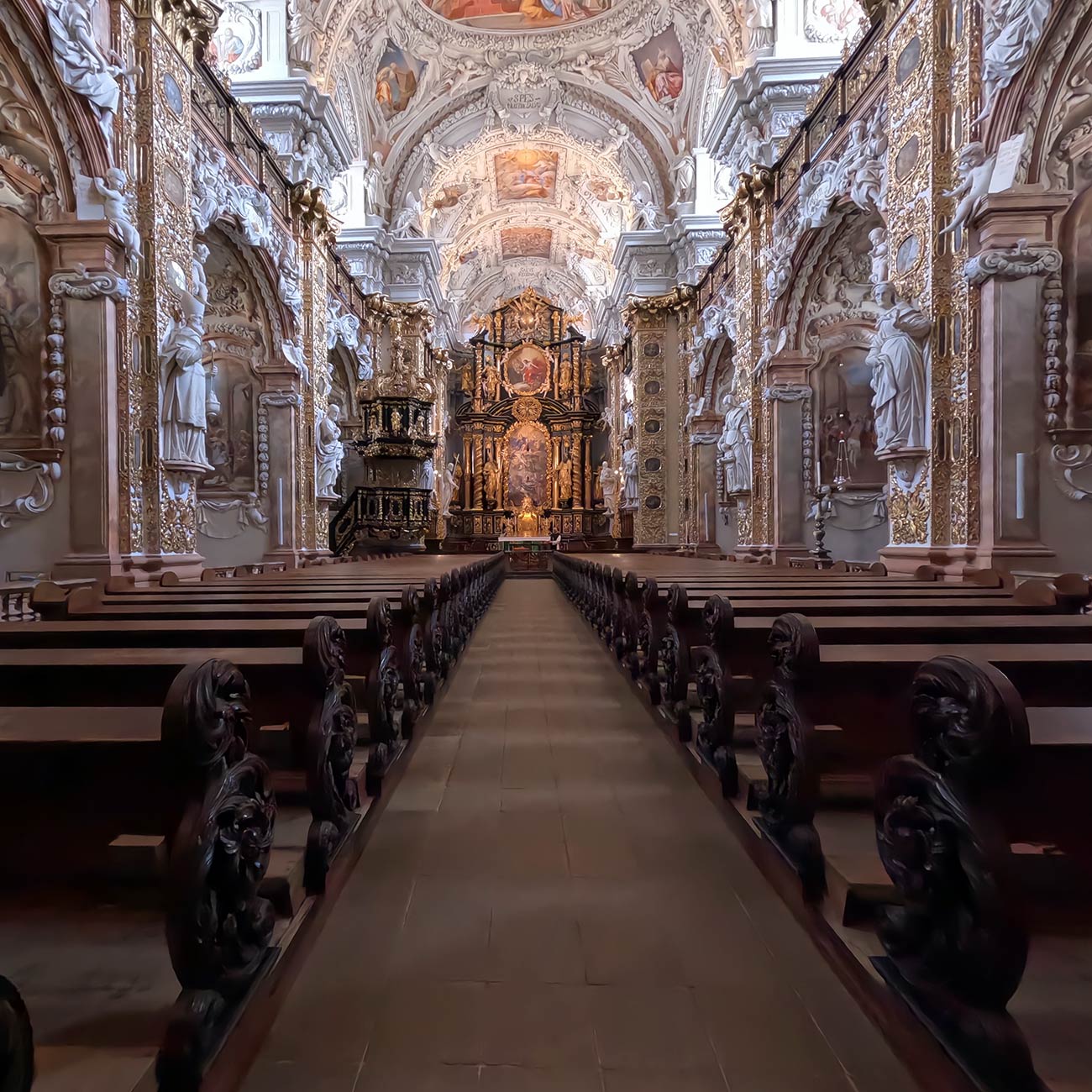
Schlierbach Abbey
Reading time: 12 minutes
SCHLIERBACH, UPPER AUSTRIA, AUSTRIA
A Cistercian Abbey That Still Lives by Its Crafts
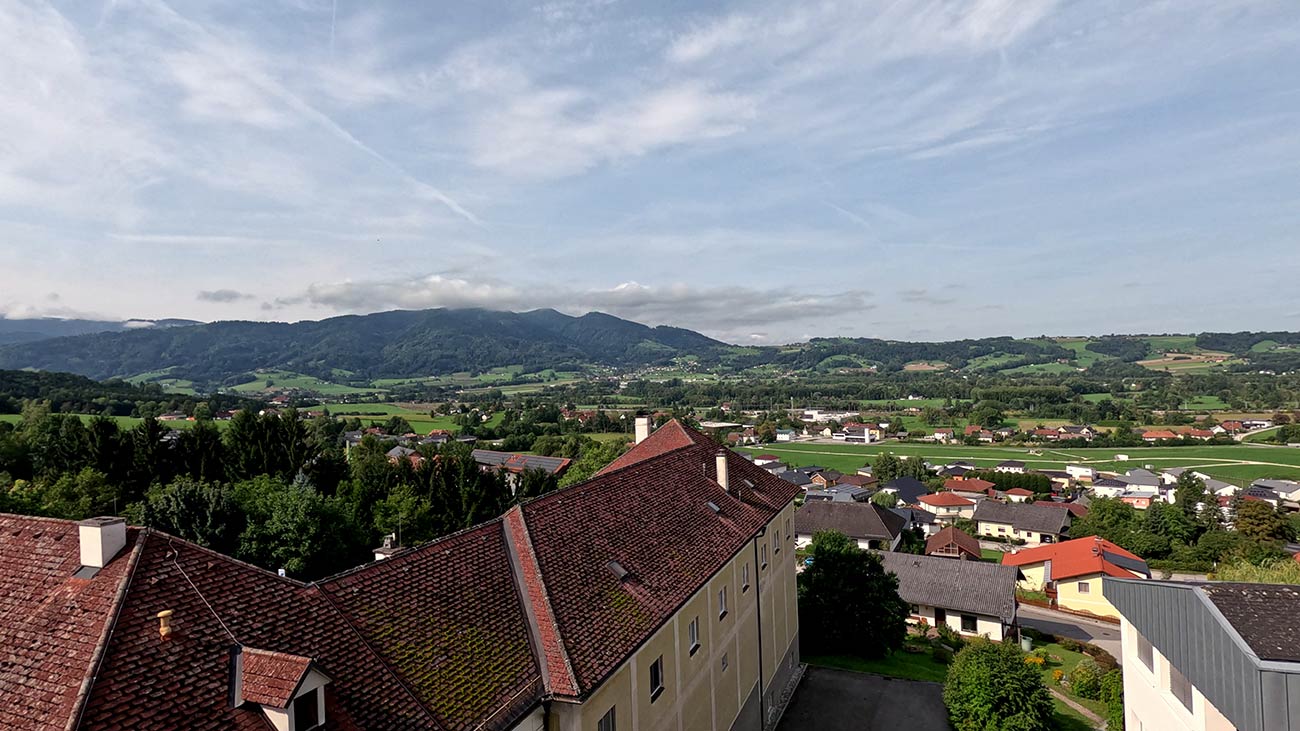
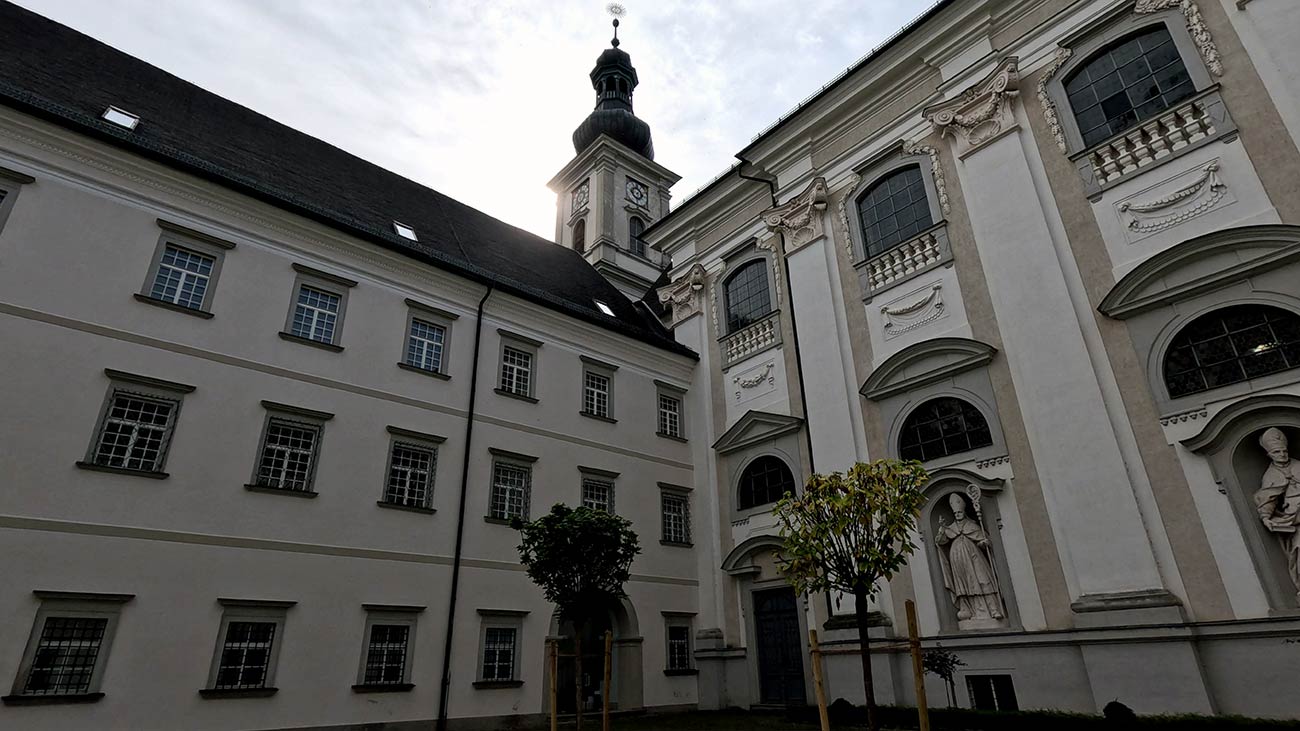
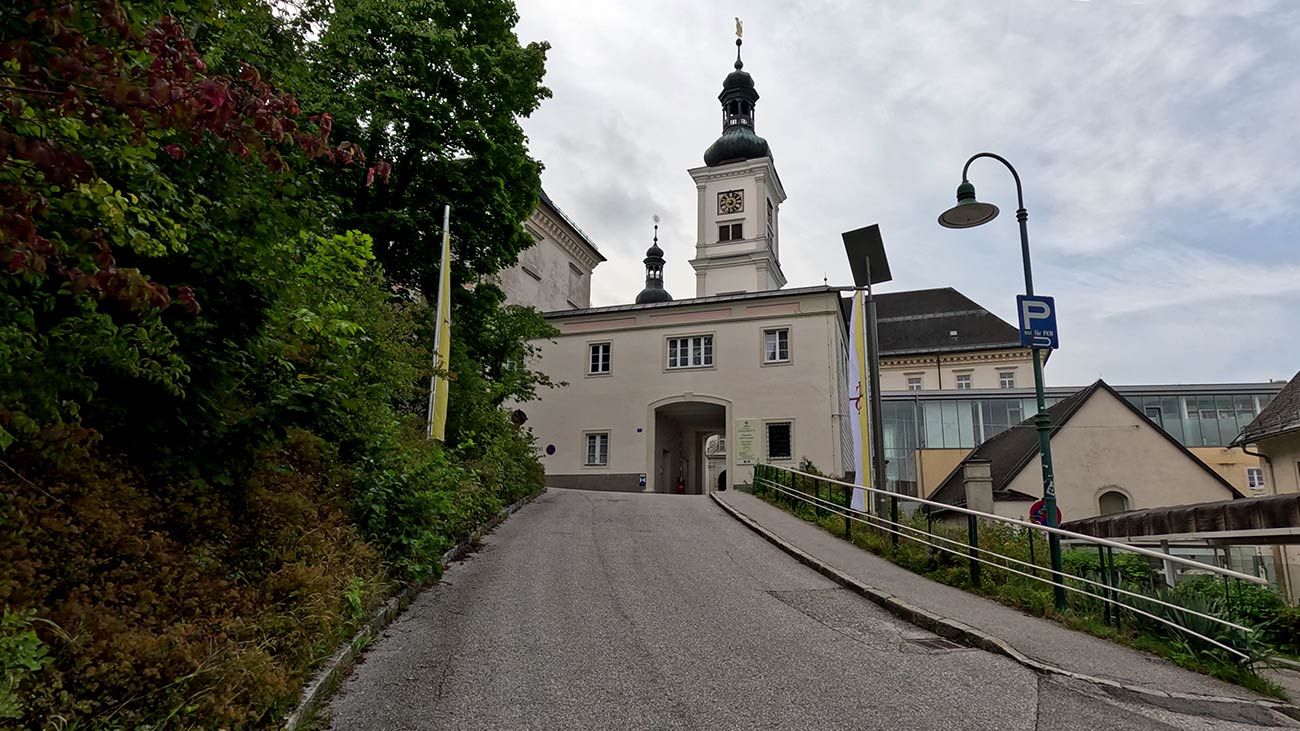
In the gentle hills south of the Danube, where the Krems valley begins to climb toward the foothills of the Northern Limestone Alps, lies a small Upper Austrian village that has grown almost entirely around a single building. Schlierbach Abbey rises from the surrounding fields with twin towers, white walls, and a long Baroque silhouette that has been part of the local landscape for almost seven centuries. The village of the same name has remained modest, but the abbey at its centre has quietly become one of the most distinctive working monasteries in Austria, combining a still-active Cistercian community with a cheese dairy, a stained-glass workshop, an education centre, and a modern lounge that looks out across the countryside.
The name Schlierbach is older than the abbey itself, first appearing in written records in the year 927 as a place name attached to a small medieval castle on this site. In 1355, Eberhard V of Wallsee converted the castle into a convent for Cistercian nuns, and although the community has changed shape several times across the centuries, including the move to a male Cistercian convent that remains in place today, the religious life of the abbey has continued almost without interruption ever since. The Baroque buildings that visitors see today are the result of an ambitious rebuilding that gave the abbey its present library, church, and ceremonial halls, while later additions have brought workshops, classrooms, and a striking glass-walled café into the same complex.
For cyclists exploring the Danube along the EuroVelo 6, Schlierbach is one of the more unusual cultural detours from the Austrian stretch of the route. The abbey sits roughly 50 kilometres south of the Danube on the main rail line between Linz and Graz, easily reached by regional train from Linz with a journey of around one hour. Once here, a single building offers an unusually wide range of experiences in a small space: Baroque art, organic cheese, contemporary glass, and the slow rhythm of Cistercian life that holds it all together.
AbbeyMonksHillTowers
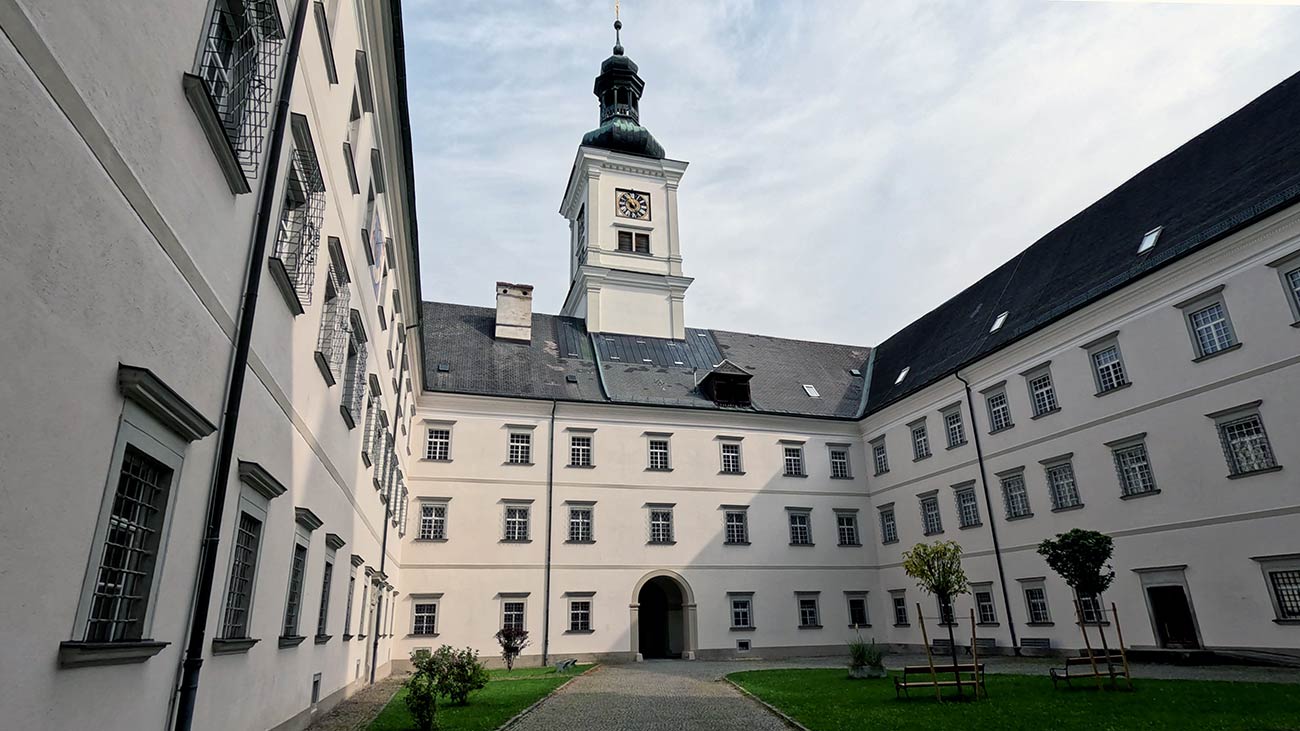
A Living Abbey of Baroque Halls, Glass, and Cheese
The standard visitor experience at Schlierbach is the guided abbey tour, which takes about two hours and follows a single route through the most significant rooms in the complex. The walk begins in the Abbey Church (Stiftskirche), a richly decorated Baroque space whose ceiling frescoes, side altars, and quiet central aisle set the tone for the rest of the visit. From there the route continues into the Cloister (Kreuzgang), the long covered walkway that surrounds the inner courtyard and houses the Schlierbach Madonna, a much-loved devotional figure that has stood here for generations. A short flight of stairs leads to the Library (Bibliothek), with its painted ceiling, shelves of historic volumes, and the calm atmosphere of a working monastic collection. The central architectural highlight is the Bernardi Hall (Bernardisaal), a ceremonial Baroque room with an elaborately painted ceiling, decorated walls, and a distinctive red-and-white checkerboard floor that has made it one of the most photographed interiors in Upper Austria.
The same building also houses the Margret Bilger Gallery and an exhibition dedicated to the abbey's centuries-old tradition of stained glass. The Stained Glass Workshop (Glasmalerei) has been part of the abbey for generations and continues to take on contemporary commissions, from small repair work to the complete glazing of new buildings, in any size and shape. The work of the Austrian artist Margret Bilger, whose religious and graphic compositions remain closely associated with the abbey, forms the core of the gallery's permanent display. Together these spaces give a clear sense of how Schlierbach has kept its artistic life renewed by inviting modern artists into a much older religious setting.
The visit usually finishes at the Cheese Dairy (Schlierbacher Käserei), where the abbey has been producing its own cheeses since 1924. The original product, a soft cheese with a red rind known as Schlierbacher Schlosskäse, is still made here and remains the most recognisable of the dairy's offerings. Since 1999 the entire dairy has been converted to certified organic production, and the present range of award-winning specialties is available for tasting at the end of each tour. The tasting takes place in the abbey's most contemporary space, the Panorama Café & Lounge, a transparent modern pavilion designed as a deliberate counterpoint to the Baroque architecture next door. The café opens out onto a wide view of the surrounding hills, and beyond cheese tastings it also functions as the abbey's shop, an exhibition space, and a venue for evening events ranging from tapas nights to live music. The tour can be combined with stays in the abbey guesthouse, where visitors can join in the rhythm of monastic life for a few days, and with courses at the abbey's Education Centre (Bildungszentrum), which has been running since 1974 and offers a wide programme of arts, crafts, and personal-development workshops throughout the year.
 Useful Links
Mobility for Cyclists
Reaching the area by train with your bike
Schlierbach can be reached from the EuroVelo 6 by a single direct rail journey from one of the main cities on the Danube cycle path. The abbey lies around 50 kilometres south of the Danube in the gentle pre-alpine landscape of Upper Austria, on the main rail line between Linz and Graz, which makes the connection both quick and straightforward.
The connection
The most practical connection from the EuroVelo 6 corridor is from Linz, where ÖBB regional trains run southbound to Schlierbach in around one hour, with hourly departures throughout the day. The line follows the valley of the Krems River into the foothills of the Northern Limestone Alps, with views of farmland, small lakes, and distant mountain ridges along the way. Cyclists riding the Danube stretch of the route will find Linz the natural transfer point. Schlierbach can also be combined naturally with a visit to Steyr or Kirchdorf an der Krems, both reachable on the same regional network, for travellers wanting to fill a longer day in this corner of Upper Austria. Long-distance Intercity trains do not stop at Schlierbach itself but call at the larger station of Kirchdorf an der Krems, just a few kilometres south, from where local services continue to the abbey.
Austrian trains
The rail network in Austria is operated mainly by ÖBB (Österreichische Bundesbahnen), the Austrian Federal Railways, which runs most long-distance services and a large share of regional connections across the country. Alongside ÖBB, the private operator Westbahn provides competing long-distance services on the main east-west corridor between Vienna, Salzburg, and onward to Munich. Several smaller regional operators run local and feeder lines on secondary routes, but they are fully integrated into the national rail system, so transfers between operators are straightforward. The Danube region in Austria is particularly well served by rail: the main east-west line links Vienna with Krems, Linz, Wels, Salzburg, and the German border at Passau, closely paralleling the river for much of its length and forming one of the busiest and most reliable rail axes in central Europe. From the main cities along this corridor, dense networks of regional and S-Bahn lines branch out both north and south of the Danube, with frequent departures throughout the day that make inland detours easy to organise without long waiting times or complicated changes. The ÖBB app is the central tool for planning journeys, checking timetables, and purchasing tickets across all services, including both regional and long-distance trains.
Taking your bike
Austria is generally very bike-friendly when it comes to rail transport, especially on regional services operated by ÖBB, which form the core of mobility for cycle touring along the Danube and its connecting corridors. On regional and S-Bahn trains, bicycles can be taken on board for an additional fee, with no advance reservation possible and a first-come, first-served allocation of space. Bicycle tickets are sold as single trips or as affordable daily, weekly, or monthly passes, and the Klimaticket Austria annual pass includes free bicycle transport on regional trains in several federal states. On long-distance services such as Railjet, Intercity, Eurocity, and Nightjet trains, an advance reservation for the bicycle is mandatory, with the bike zones located in second-class carriages. The private operator Westbahn, which runs frequent services along the main east-west corridor between Vienna, Linz, and Salzburg, also accepts bicycles, but only with an advance reservation. Folding bikes are carried free of charge as hand luggage on both ÖBB and Westbahn trains. Overall, the Austrian system is well adapted to cycle tourism and offers a flexible combination of train and bike that makes it easy to leave the EuroVelo 6 route in either direction for short or extended detours.
Bikes on Buses
Long-distance bus services in Austria are primarily operated by FlixBus and by ÖBB-Postbus, the long-distance coach arm of the Austrian Federal Railways, complemented by a smaller number of regional and private coach operators on selected routes. The long-distance bus market in Austria is less developed than in neighbouring countries, as the wider rail network covers most of the country efficiently and many connections that would otherwise be served by intercity coaches are instead handled by train. Bicycle transport is available on certain FlixBus connections, either via external bike racks or in the luggage compartment, but it is not consistently guaranteed across the network and depends on the specific vehicle type and route configuration. Where available, bicycle transport must be reserved in advance and capacity is limited, making it less flexible compared to rail services. ÖBB-Postbus also operates seasonal bicycle and hiking buses in cooperation with regional tourism boards, designed specifically to bring cyclists and hikers to popular starting points along trails and bike paths, although these services run on selected routes only and outside the main long-distance network. As a result, buses are generally used as a secondary option for cyclists, mainly for longer-distance repositioning between major cities rather than as a core part of cycling itineraries along the Danube region. While useful in specific cases where rail connections are less convenient, they are less predictable and less standardised for bicycle transport, so advance planning is essential.
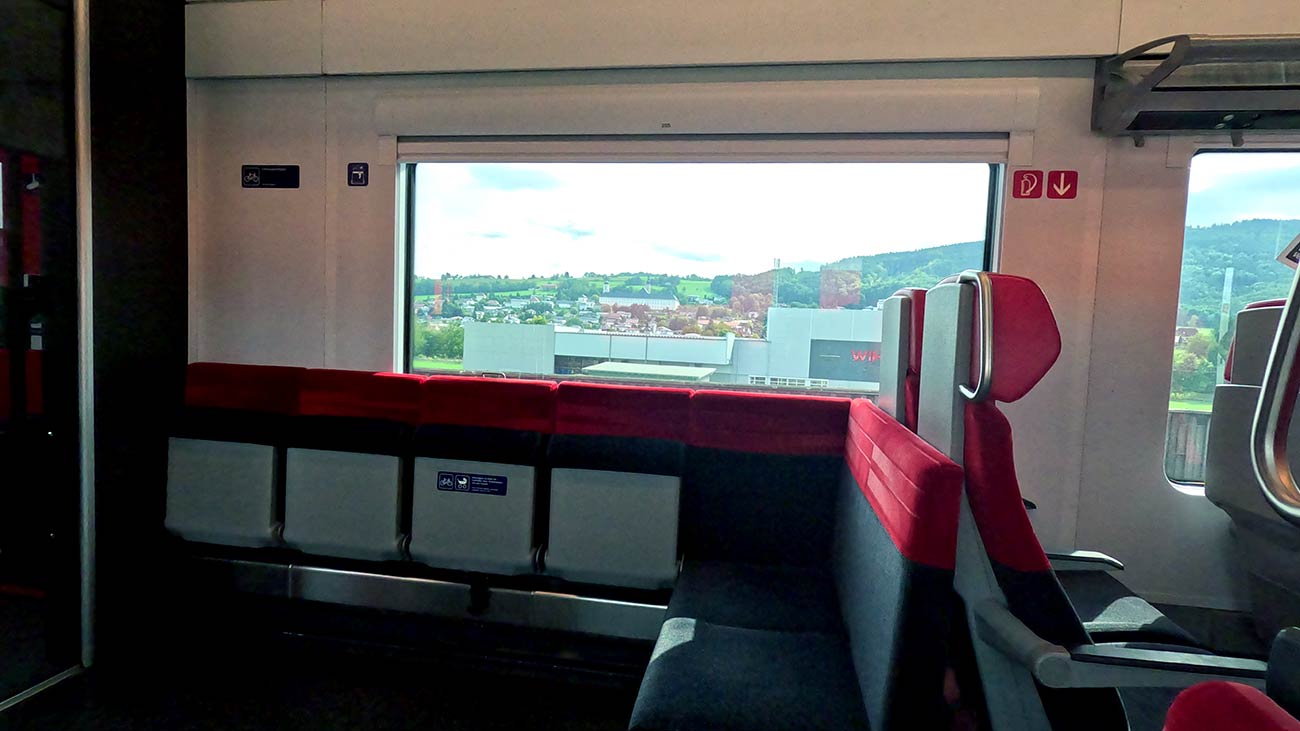
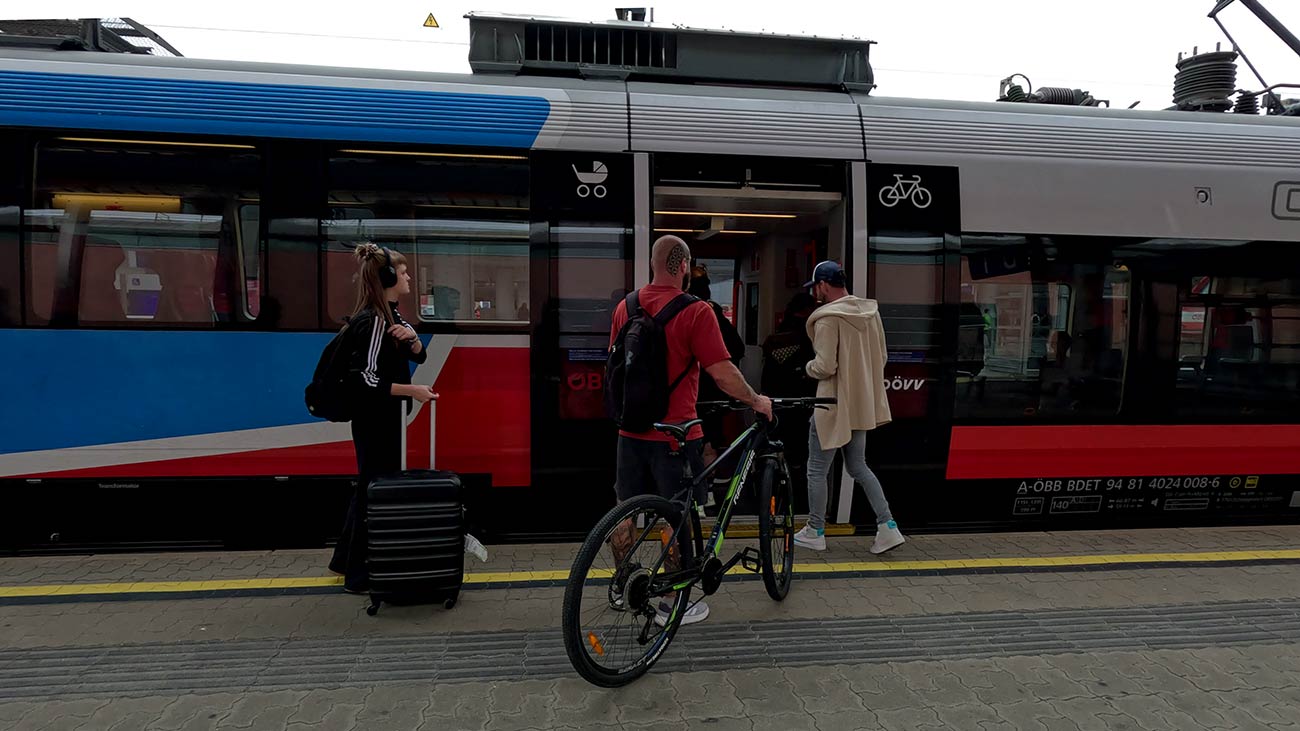
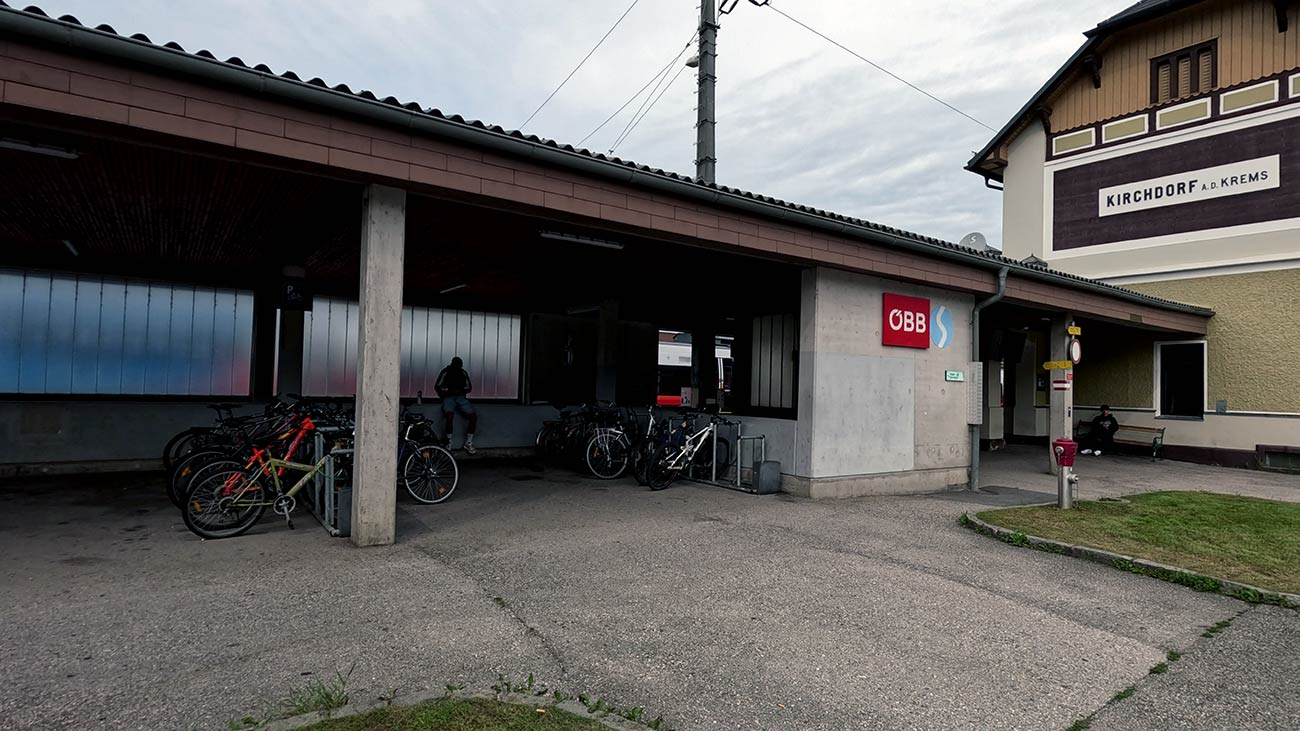
Arriving at Schlierbach Station
Schlierbach's small railway station is the closest stop to the abbey itself, but the road from the station up to the monastery includes a noticeable uphill section that can be tiring on a loaded touring bike. Travellers who prefer to leave their bike behind and continue on foot or by local transport may find the next station along the line, Kirchdorf an der Krems, the more convenient option. Kirchdorf has covered bike parking directly at the station and is served by regular regional bus lines that connect to Schlierbach and the surrounding villages, allowing a comfortable arrival at the abbey without the climb. For travellers who do choose to cycle from Schlierbach station, the abbey is reachable within fifteen minutes along well-signposted streets, and the complex itself is compact and easy to explore on foot once you arrive. For onward travel, the same ÖBB line connects back toward Linz and the wider Danube region, as well as further south toward Graz, so Schlierbach works equally well as a short half-day excursion or as one quiet stop in a longer Upper Austrian itinerary.