St. Pölten
Reading time: 14 minutes
ST. PÖLTEN, LOWER AUSTRIA, AUSTRIA
A Baroque Old Town with a Modern State Capital Attached
Roughly halfway between Vienna and Linz, just south of the Wachau Valley, lies one of the oldest documented towns in Austria. St. Pölten holds the country's oldest officially recorded town charter, granted in 1159 by Bishop Konrad of Passau, and traces its origins even further back to the Roman settlement of Aelium Cetium, founded in the first century AD. Despite this long history, it remained a quiet provincial centre for most of the modern era, only stepping into the spotlight in 1986 when it was named the capital of Lower Austria. The decision changed the city almost overnight, and today it carries two clearly different faces side by side: a tightly preserved Baroque old town and a planned modern government district built largely from glass, steel, and ambition.
The historic core of the city is one of the most concentrated Baroque ensembles in Austria. The arrival of the master builder Jakob Prandtauer in 1689 triggered a wave of construction that gave the old town its pastel facades, ornamental gables, and quiet sequence of squares. The city's status as a religious centre under the Bishopric of Passau and later as the seat of the Diocese of St. Pölten gave the cathedral, monasteries, and convents an unusual prominence for a town of its size, and many of the leading Baroque artists of the Habsburg lands worked here, including Daniel Gran, Bartolomeo Altomonte, and Jakob Christoph Schletterer. Walking the network of pedestrianised squares and narrow lanes today, the same architectural language repeats itself across one façade after another.
For cyclists exploring the Danube along the EuroVelo 6, St. Pölten makes for a straightforward cultural detour from the Austrian stretch of the route. The city lies around 25 kilometres south of the Danube on the lower reaches of the Traisen River, easily reached by a regional train ride of just over half an hour from Krems an der Donau, the natural transfer point on the river. A day spent moving between the Baroque squares, the cathedral, the modern museum, and a viewing platform 47 metres above the government district gives an unusual sense of how a small Austrian city has tried to step into a contemporary role without losing its older self.
CityMuseumsPedestrianFlat
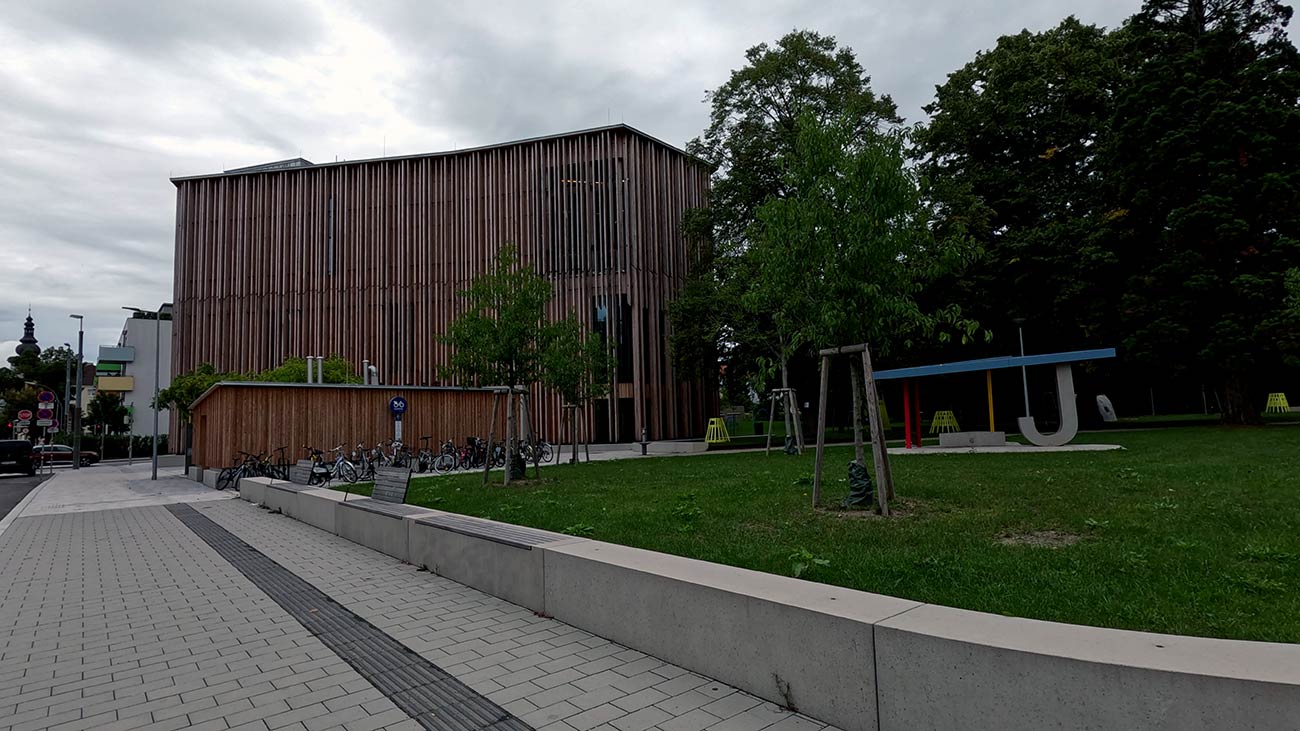
A Baroque Capital Crowned by a Tower of Sound
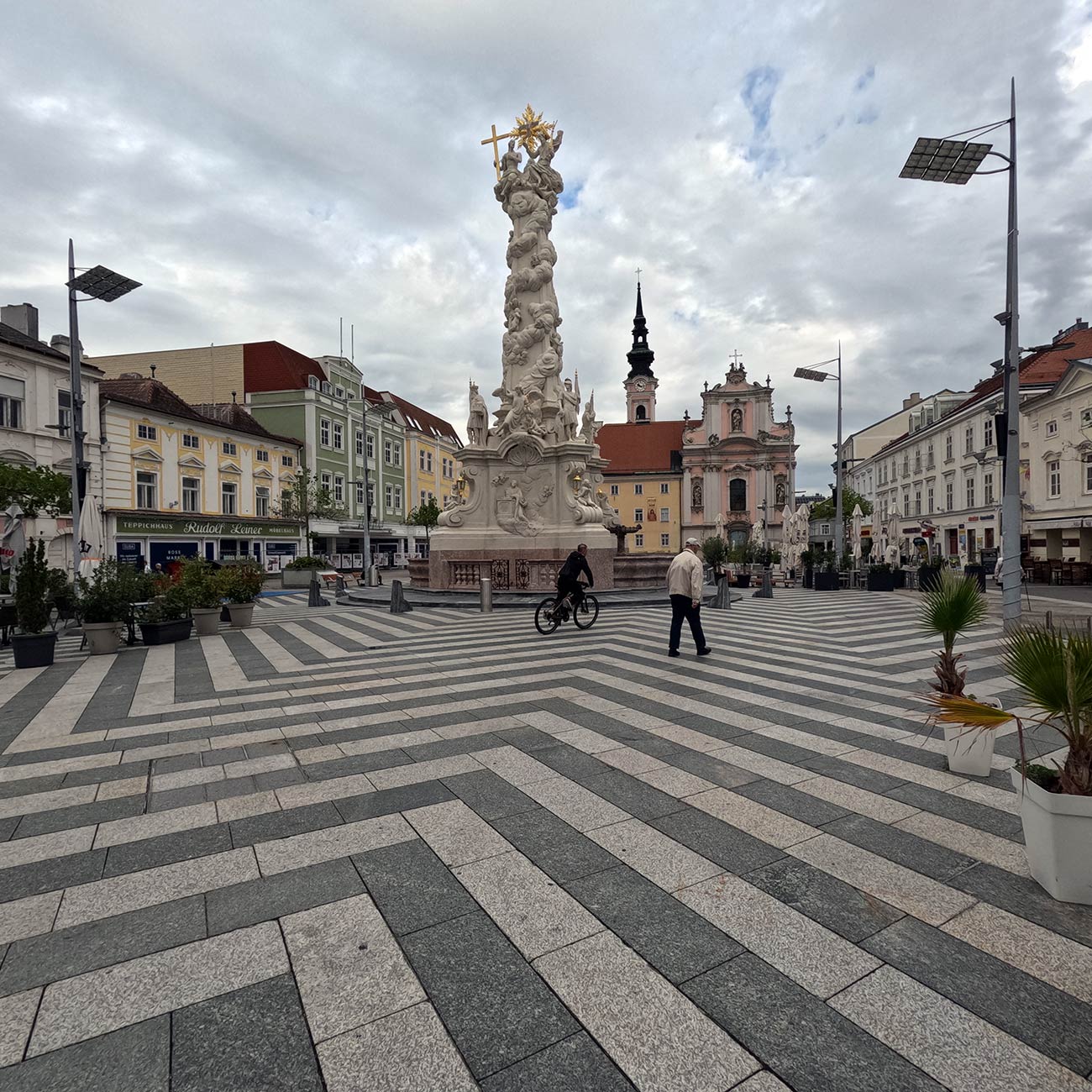
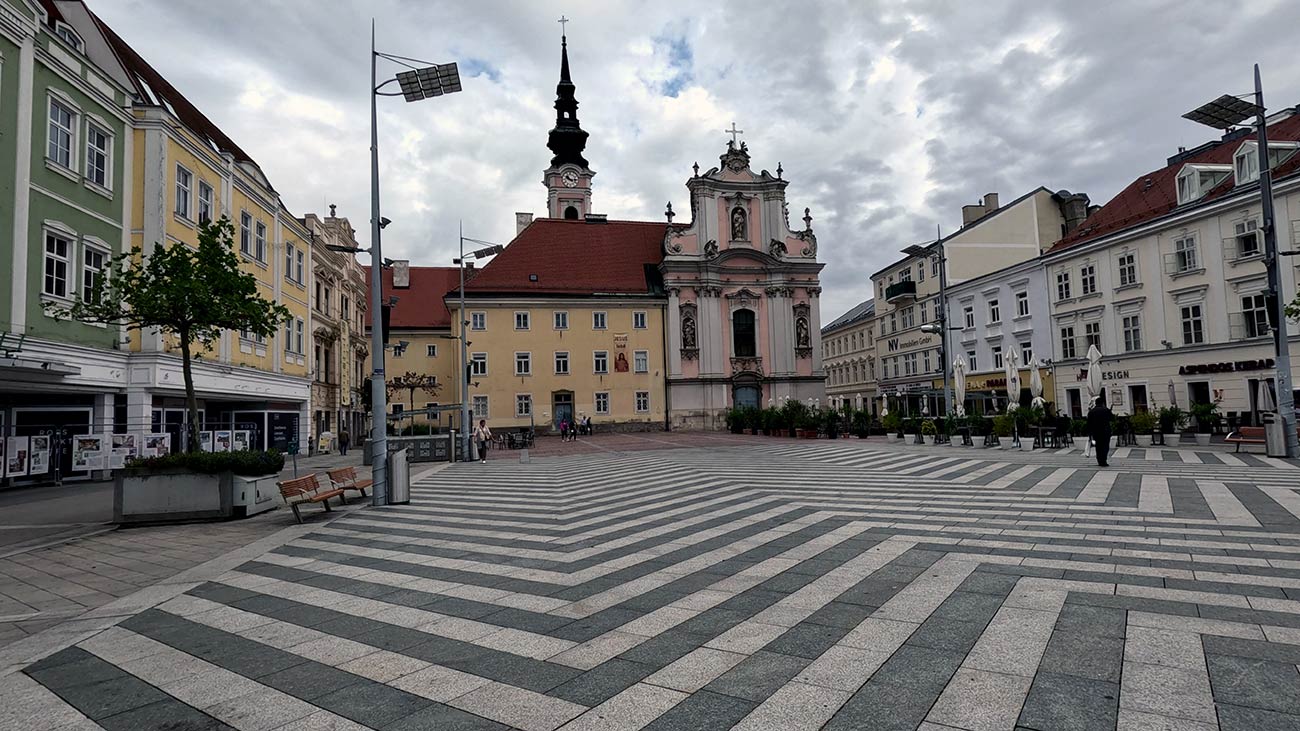
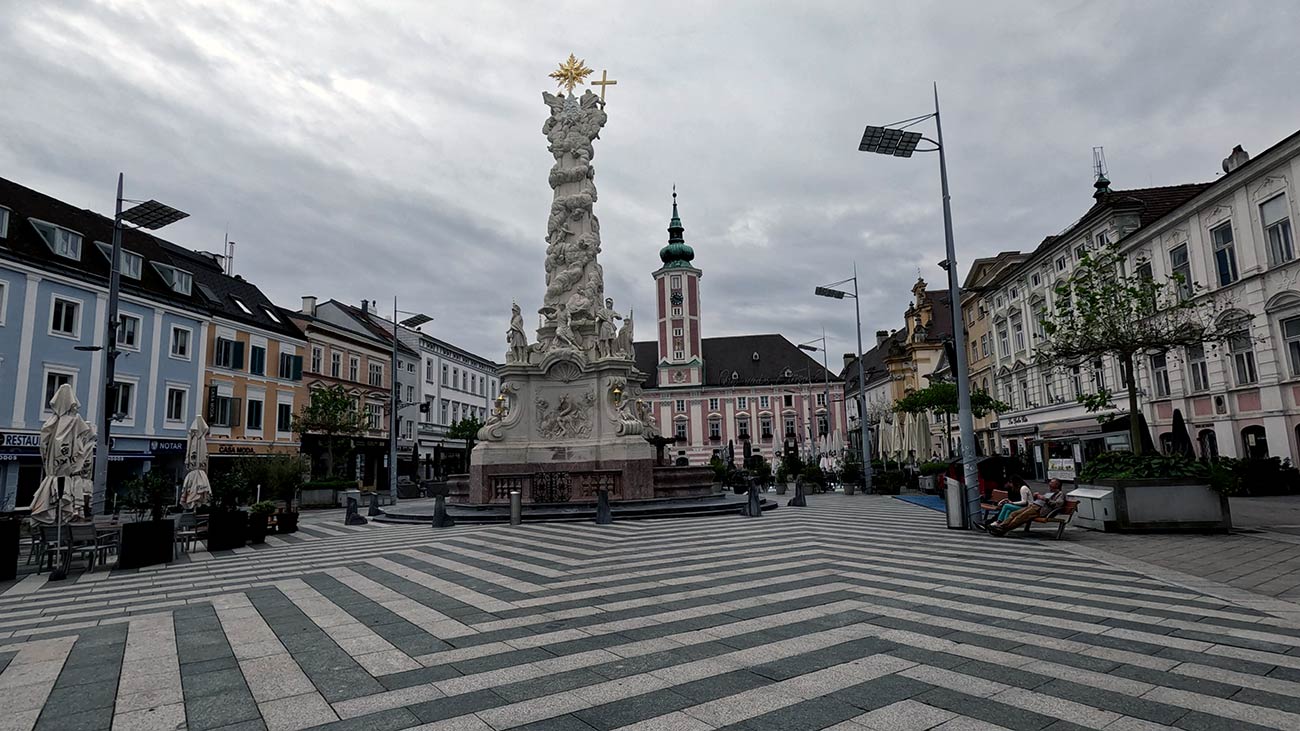
The natural starting point in St. Pölten is Rathausplatz (Town Hall Square), the long Baroque square at the heart of the old town. Pastel-coloured facades line all four sides, the town's tourist office stands at one end, and pavement cafés spill out into the square in warm weather. The square is dominated by the Town Hall (Rathaus) on its southern side, which combines a Renaissance tower with a Baroque facade from 1727 by Joseph Munggenast and a small set of Gothic niches that survive from earlier centuries. At the northern end of the square stands the Franciscan Church (Franziskanerkirche), completed in 1770, with a tall Baroque altar set against side-altar paintings by the eighteenth-century master Kremser Schmidt. The square has been the civic heart of St. Pölten for centuries and remains the most natural place to begin a walking tour of the centre. From here a short walk along the pedestrianised Wiener Straße brings you to the neighbouring Domplatz, the Cathedral Square, where a weekly market has been held on Thursdays and Saturdays since 1876.
The St. Pölten Cathedral (Dom zu St. Pölten) is one of the great architectural surprises of the city. Its plain Romanesque exterior gives little away, with a single surviving onion-domed south tower and twelfth-century walls largely unchanged on the outside. Step through the western door, however, and the interior opens out into one of the most richly decorated Baroque churches in Lower Austria. The origins of the building lie around the year 790, when a Benedictine monastery was founded on this site. After several rebuildings, the most decisive transformation came in the early eighteenth century under Provost Johann Michael Führer, who brought the leading Baroque artists of the Habsburg lands to St. Pölten. Architects Jakob Prandtauer and Joseph Munggenast reshaped the interior, while ceiling frescoes by Thomas Friedrich Gedon and Daniel Gran, side altars and paintings by Gran, and sculptures by Jakob Christoph Schletterer transformed the inside of the building into a high-Baroque sacred space of giant pilasters, barrel vaults, and gilded woodwork. Since 1785 the building has served as the cathedral of the Diocese of St. Pölten, and a small Romanesque rosary chapel preserves elements of the early medieval church beneath all the later splendour.
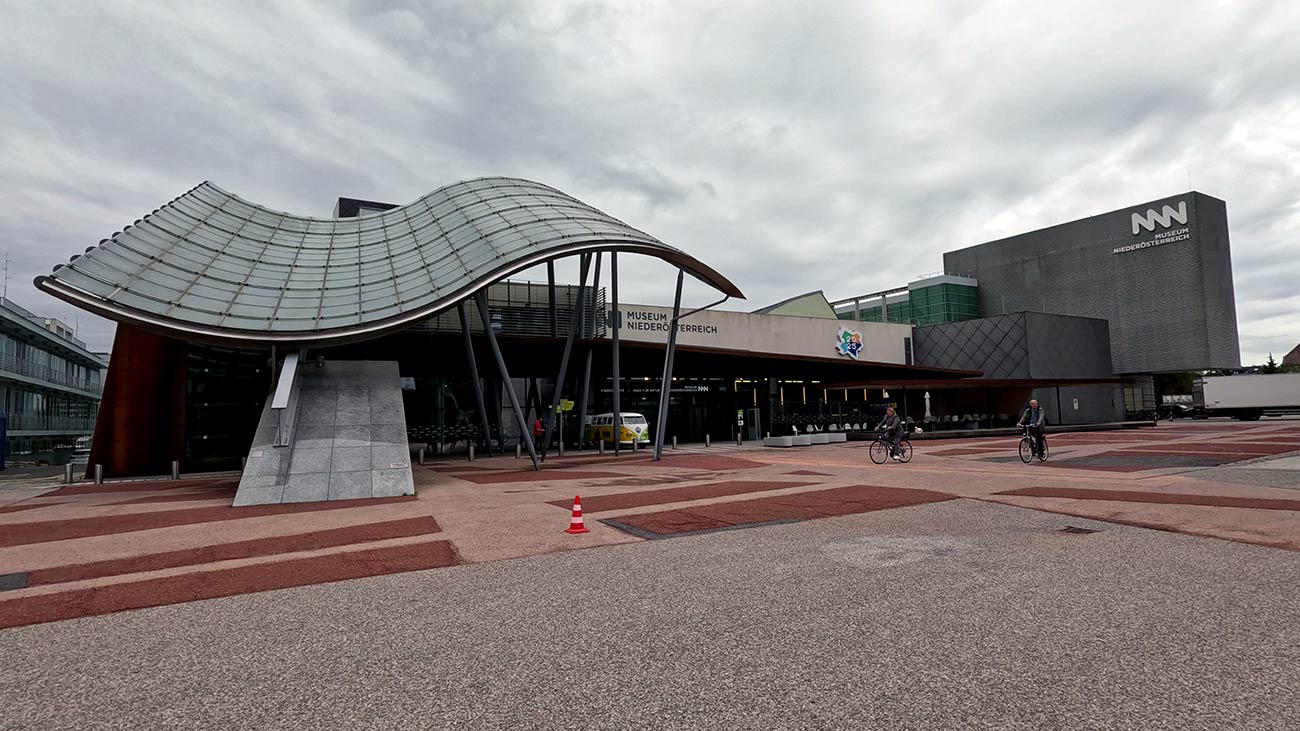
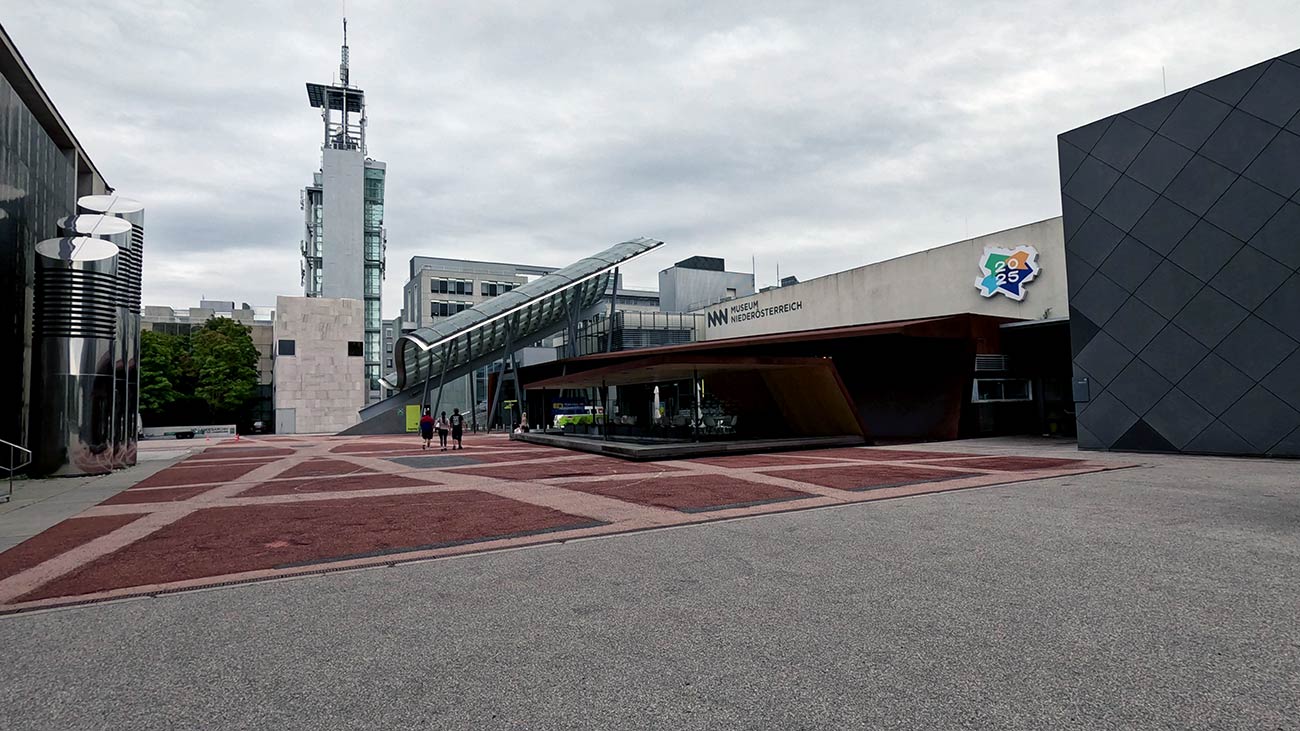
A short walk east of the old town lies the Cultural District (Kulturbezirk), built from the mid-1990s onwards when St. Pölten became the capital of Lower Austria. The district is the city's modern counterpart to its Baroque centre, a planned ensemble of administrative and cultural buildings designed by leading Austrian architects including Hans Hollein. At its heart stands the Lower Austria Museum (Museum Niederösterreich), set in a striking modern building by Hollein and combining two distinct museums under one roof. The House of Nature (Haus für Natur) presents the landscapes of Lower Austria from the high mountains down to the Danube basin and into underground show caves, with more than 40 live native animal species kept in aquariums, terrariums, and a formicarium, including green lizards, tree frogs, catfish, and a pair of sturgeon. The House of History (Haus der Geschichte), opened in 2017 over a total area of 3,000 square metres, traces the development of Lower Austria, Austria, and Central Europe through some 2,000 objects and a strong focus on the twentieth century. The same complex also includes the Festspielhaus St. Pölten, one of the leading centres for dance and music in Austria.
The single most distinctive landmark of the Cultural District is the Sound Tower (Klangturm), a 77-metre tower designed by the architect Ernst Hoffmann and opened in 1997 alongside the new capital. The building rises on a footprint of just fifteen by fifteen metres, built from 650 tonnes of steel and around 1,000 square metres of glass, and despite its size appears strikingly light and transparent against the sky. A panoramic lift, or 280 steps for the ambitious, leads to a viewing platform at a height of 47 metres, from which the whole of St. Pölten, the Cultural District, and the surrounding hills of the Mostviertel unfold. The tower's name comes from the sound-art installations inside, which present a changing annual programme of work at the intersection of visual art, media art, and music, in keeping with the architect's description of the building as a symbol of imagination at the heart of the administration. Access to both the viewing platform and the installations is free of charge, which makes the Klangturm one of the easiest and most rewarding stops in the city for a sweeping overview before or after exploring on foot.
 Useful Links
Mobility for Cyclists
Reaching the area by train with your bike
St. Pölten can be reached from the EuroVelo 6 by a single direct rail journey from one of the main cities on the Danube cycle path. The city lies around 25 kilometres south of the Danube in the lower Traisen Valley, on the main rail line between Vienna and Salzburg, which makes the connection both quick and well served throughout the day.
The connection
The most practical connection from the EuroVelo 6 corridor is from Krems an der Donau, where regional trains run directly to St. Pölten Hauptbahnhof in around 30 minutes, with frequent departures throughout the day. The line follows the Traisen Valley south from the Danube, passing through gentle wine country and the small Baroque towns of the lower Traisental. Cyclists riding the Danube stretch of the route will find Krems the natural transfer point. Vienna offers an equally convenient alternative, with direct ÖBB Railjet and intercity trains reaching St. Pölten in around 30 minutes from Vienna Hauptbahnhof for travellers arriving from the Austrian capital. Both options fit comfortably into a single travel day and leave plenty of time to explore the old town and the Cultural District on arrival. The Traisental Cycle Path (Traisental-Radweg) also runs along the same valley between Krems and St. Pölten for travellers who would prefer to ride rather than take the train.
Austrian trains
The rail network in Austria is operated mainly by ÖBB (Österreichische Bundesbahnen), the Austrian Federal Railways, which runs most long-distance services and a large share of regional connections across the country. Alongside ÖBB, the private operator Westbahn provides competing long-distance services on the main east-west corridor between Vienna, Salzburg, and onward to Munich. Several smaller regional operators run local and feeder lines on secondary routes, but they are fully integrated into the national rail system, so transfers between operators are straightforward. The Danube region in Austria is particularly well served by rail: the main east-west line links Vienna with Krems, Linz, Wels, Salzburg, and the German border at Passau, closely paralleling the river for much of its length and forming one of the busiest and most reliable rail axes in central Europe. From the main cities along this corridor, dense networks of regional and S-Bahn lines branch out both north and south of the Danube, with frequent departures throughout the day that make inland detours easy to organise without long waiting times or complicated changes. The ÖBB app is the central tool for planning journeys, checking timetables, and purchasing tickets across all services, including both regional and long-distance trains.
Taking your bike
Austria is generally very bike-friendly when it comes to rail transport, especially on regional services operated by ÖBB, which form the core of mobility for cycle touring along the Danube and its connecting corridors. On regional and S-Bahn trains, bicycles can be taken on board for an additional fee, with no advance reservation possible and a first-come, first-served allocation of space. Bicycle tickets are sold as single trips or as affordable daily, weekly, or monthly passes, and the Klimaticket Austria annual pass includes free bicycle transport on regional trains in several federal states. On long-distance services such as Railjet, Intercity, Eurocity, and Nightjet trains, an advance reservation for the bicycle is mandatory, with the bike zones located in second-class carriages. The private operator Westbahn, which runs frequent services along the main east-west corridor between Vienna, Linz, and Salzburg, also accepts bicycles, but only with an advance reservation. Folding bikes are carried free of charge as hand luggage on both ÖBB and Westbahn trains. Overall, the Austrian system is well adapted to cycle tourism and offers a flexible combination of train and bike that makes it easy to leave the EuroVelo 6 route in either direction for short or extended detours.
Bikes on Buses
Long-distance bus services in Austria are primarily operated by FlixBus and by ÖBB-Postbus, the long-distance coach arm of the Austrian Federal Railways, complemented by a smaller number of regional and private coach operators on selected routes. The long-distance bus market in Austria is less developed than in neighbouring countries, as the wider rail network covers most of the country efficiently and many connections that would otherwise be served by intercity coaches are instead handled by train. Bicycle transport is available on certain FlixBus connections, either via external bike racks or in the luggage compartment, but it is not consistently guaranteed across the network and depends on the specific vehicle type and route configuration. Where available, bicycle transport must be reserved in advance and capacity is limited, making it less flexible compared to rail services. ÖBB-Postbus also operates seasonal bicycle and hiking buses in cooperation with regional tourism boards, designed specifically to bring cyclists and hikers to popular starting points along trails and bike paths, although these services run on selected routes only and outside the main long-distance network. As a result, buses are generally used as a secondary option for cyclists, mainly for longer-distance repositioning between major cities rather than as a core part of cycling itineraries along the Danube region. While useful in specific cases where rail connections are less convenient, they are less predictable and less standardised for bicycle transport, so advance planning is essential.
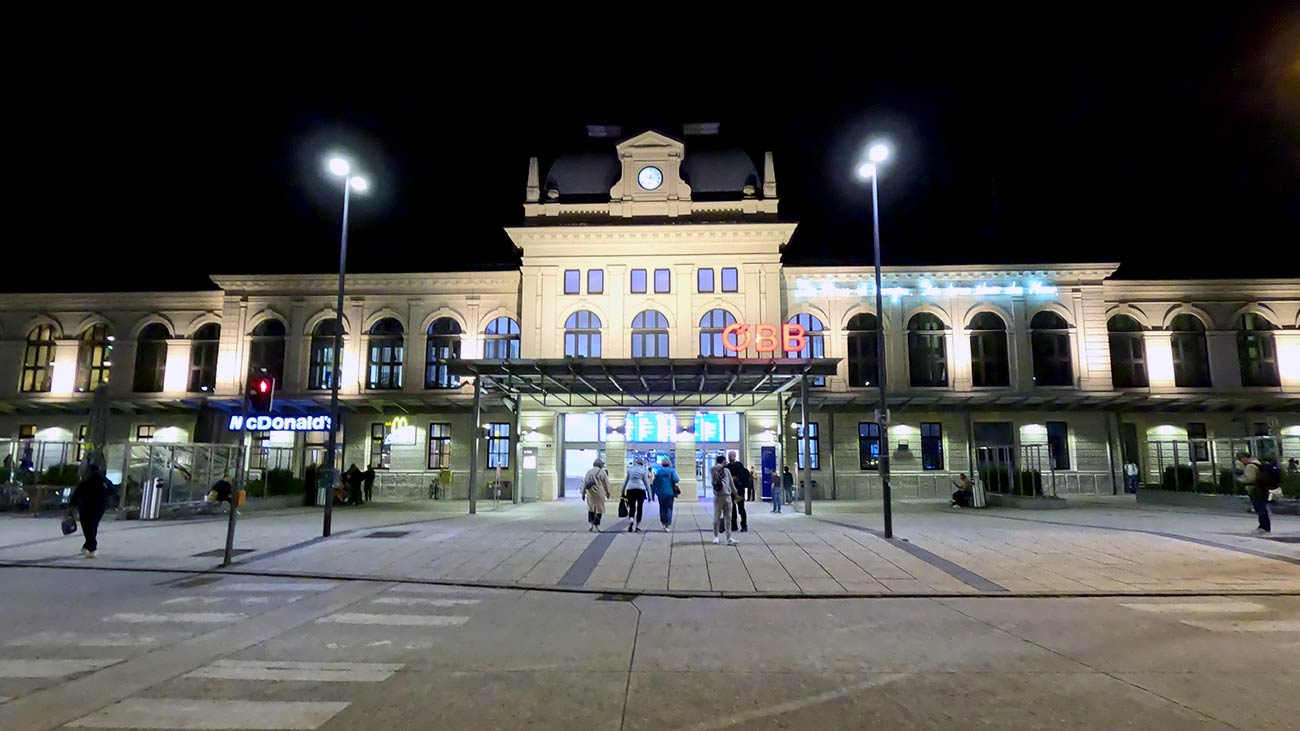
Arriving at St. Pölten Hauptbahnhof
St. Pölten's main railway station sits a short walk or bike ride from the centre of the old town, with Rathausplatz, Domplatz, and the Franciscan Church all reachable on foot in around ten minutes along flat, pedestrian-friendly streets. The Cultural District, including the Lower Austria Museum and the Klangturm, lies a fifteen-minute walk east of the station and is also served by the LUP city bus. The compact scale of both the historic centre and the Cultural District means most travellers explore on foot once they arrive. Cycling infrastructure in and around the city is good, and bike racks are available at the station for shorter stops. For onward travel, the same station connects back toward Krems an der Donau and the wider Danube region, as well as east toward Vienna and west toward Linz, so St. Pölten works equally well as a half-day excursion or as an overnight detour from the EuroVelo 6.