Nitra
Reading time: 15 minutes
NITRA, NITRA REGION, SLOVAKIA
The Mother of Slovak Towns Under Zobor Hill
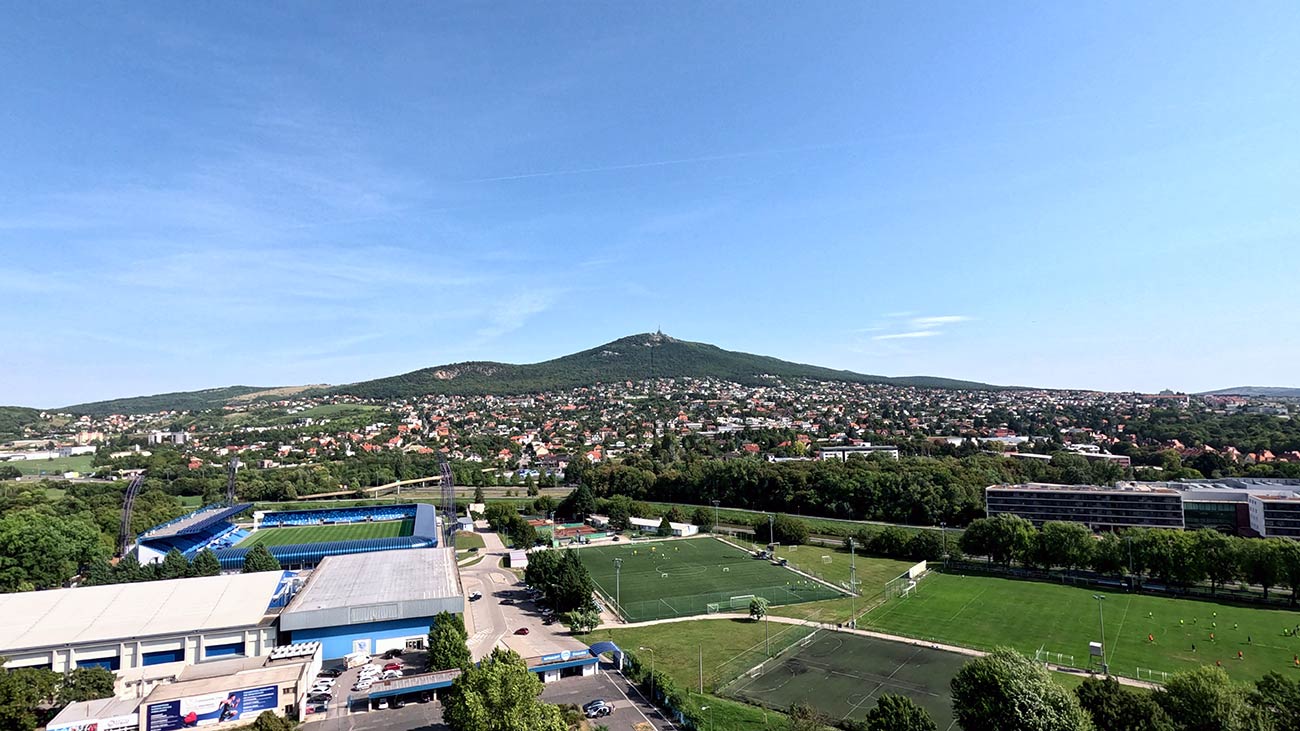
In the gentle, slightly hilly country of southwestern Slovakia, where the open lowlands of the Danubian basin meet the first wooded slopes of the Tribeč mountains, lies one of the oldest cities in the country and the symbolic cradle of Slovak history. Nitra spreads across seven green hills along the river of the same name, watched over by the long forested ridge of Zobor hill to the north and crowned at its centre by a still-working medieval castle and cathedral complex. With around 75,000 inhabitants, it is the fifth largest city in Slovakia, and it has been the seat of a bishop for more than a thousand years, longer than almost any other place in the country.
The roots of Nitra reach far deeper than the medieval kingdom. The hills were already inhabited in the prehistoric period, with archaeological finds dating back roughly thirty thousand years, and the first written mention of the city dates from 871–873 in the Latin chronicle Conversio Bagoariorum et Carantanorum. By the ninth century, Nitra was one of the largest settlement clusters anywhere in central Europe, the seat of the Principality of Nitra that later joined Moravia to form Great Moravia, the first major Slavic state. The famous Byzantine missionaries Cyril and Methodius worked in this region in the 860s, and the first Christian church in Slovakia is traditionally said to have been consecrated nearby. Modern Nitra is often called the Mother of Slovak Towns (Matka miest slovenských), a title earned across more than a millennium of religious, political, and cultural life.
For cyclists exploring the Danube along the EuroVelo 6, Nitra is a straightforward inland detour from the Slovak stretch of the route. The city lies around 95 kilometres east of Bratislava in the Nitra Region, reached either by a direct ZSSK regional express train or by intercity bus. A day spent moving between the castle hill, the historic upper and lower towns, the Calvary pilgrimage path, and the slopes of Zobor offers an unusually concentrated experience of how Slovak history works: from prehistoric settlement to medieval kingdom, from Slavic Christianity to a thoroughly modern regional capital.
CastleCalvaryHistoryZobor
A Castle Hill, a Living Cathedral, and the Heritage of Cyril and Methodius
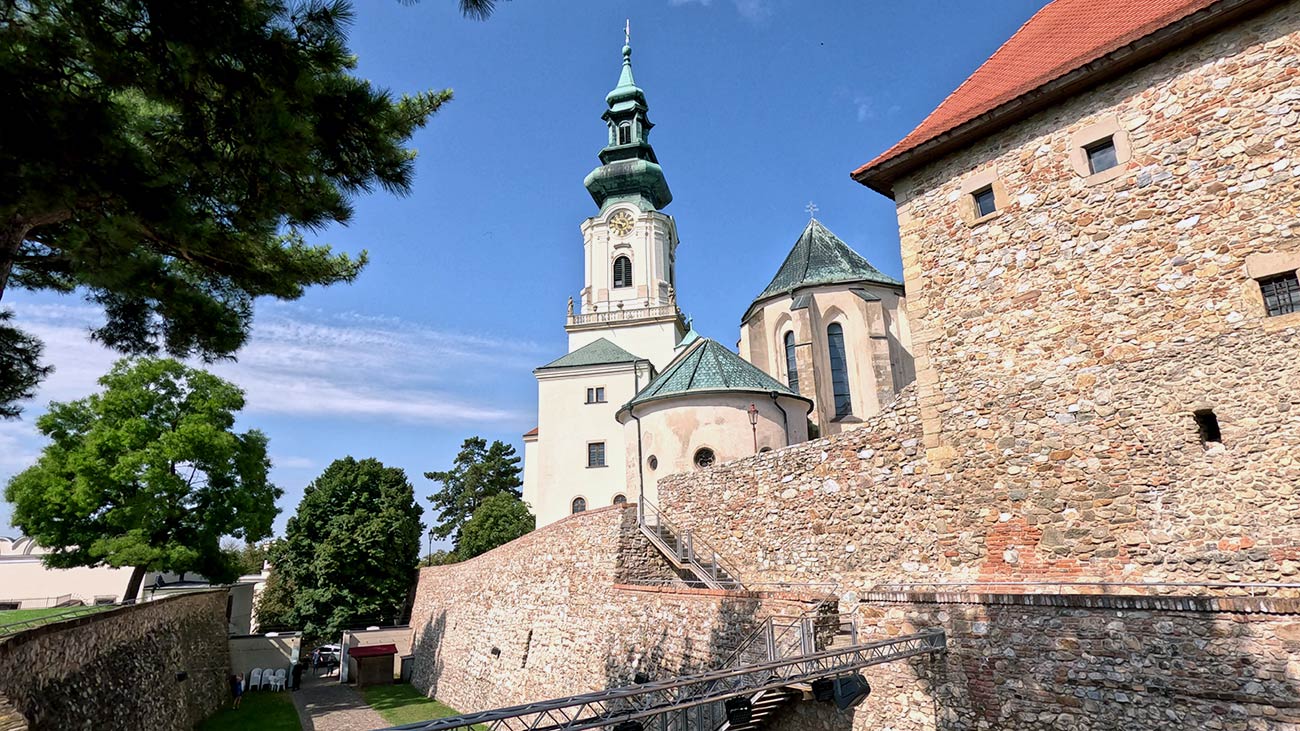
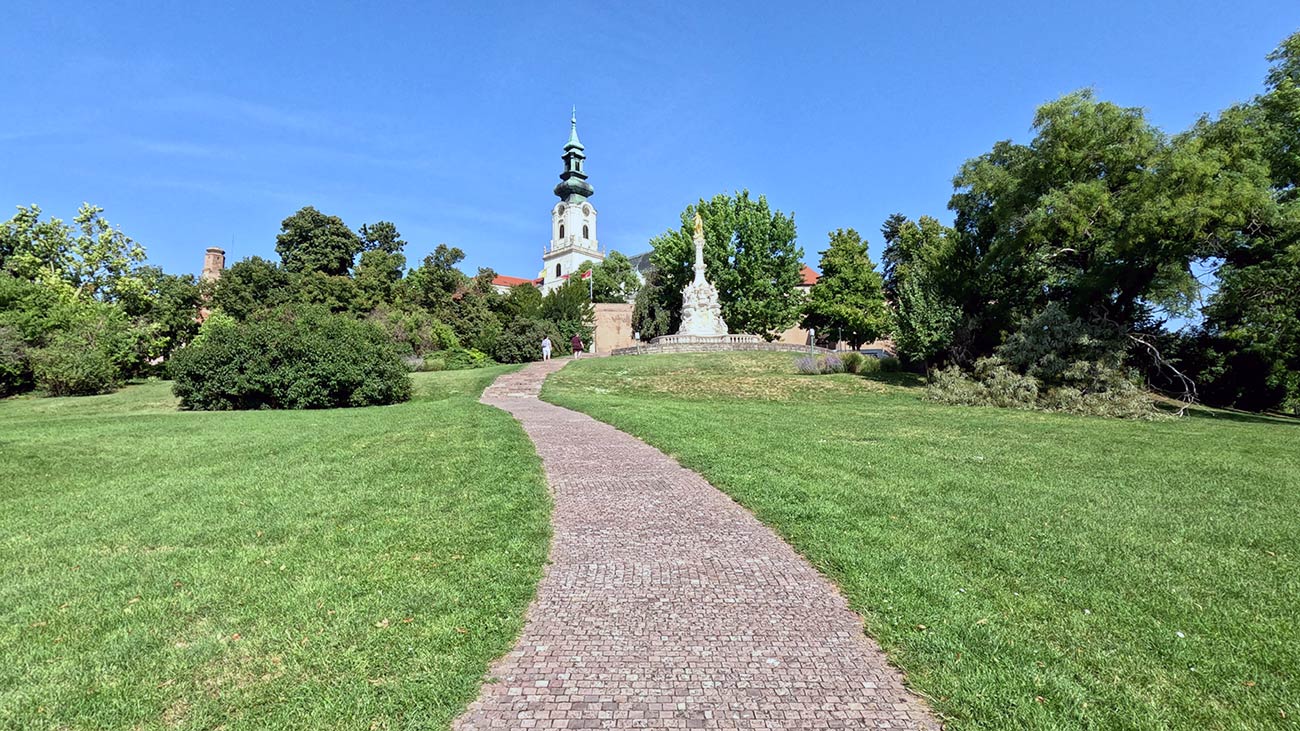
The most prominent landmark of the city is Nitra Castle (Nitriansky hrad), perched on a small hill in the very heart of Nitra and visible from almost every direction. The complex stands above the river on an ancient site that has been fortified for more than 1,500 years, with the first stone constructions traceable to the ninth century during the Principality of Nitra and the Great Moravian period. Inside its walls rises the Cathedral of St Emeram (Bazilika svätého Emeráma), the seat of the Bishopric of Nitra, one of the oldest active bishoprics anywhere in central Europe with continuous activity since 880. The cathedral is in fact a complex of three churches built in different eras and joined together over the centuries: a small Romanesque church, a Gothic upper church, and a lower church added in the early seventeenth century. The interior is rich in Baroque painting, gilded altars, and historic relics, and the castle gates, ramparts, and bishop’s residence form a single picturesque complex around it. The castle entrance is free, and the views from the bastions stretch across the old town, the Nitra Hradby gardens, and the long green ridge of Zobor on the northern horizon.
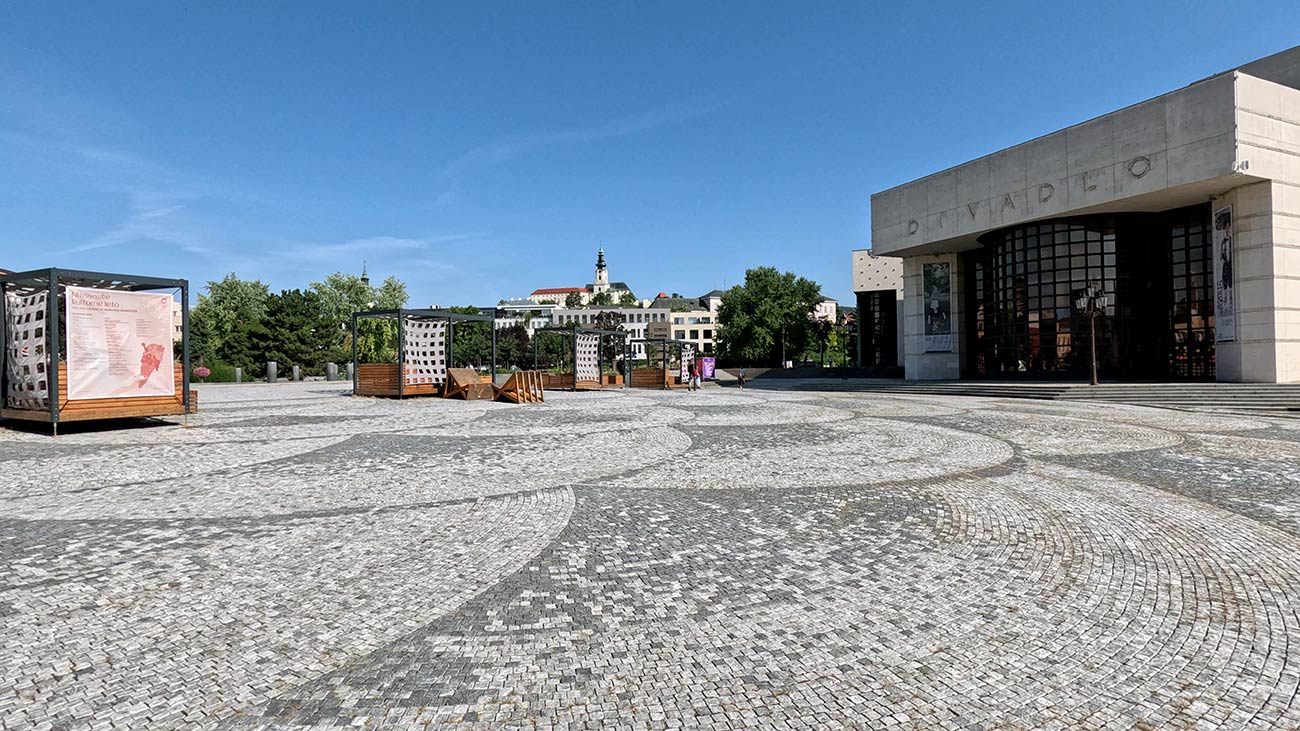
Below the castle hill, the historic centre of Nitra is divided into two distinct parts. The Upper Town (Horné mesto), wrapped around the foot of the castle, is the older and more atmospheric of the two, with cobbled lanes, painted burgher houses, and small squares opening onto views of the cathedral towers above. The Lower Town (Dolné mesto), spreading out along the river toward the modern centre, is built around the broad pedestrianised Svätopluk Square (Svätoplukovo námestie), named after the most famous ruler of Great Moravia, Prince Svätopluk I, whose equestrian statue stands at its centre. The square is lined with cafés, restaurants, and shops, and forms the natural gathering point of the modern city. A short walk away, the long Štefánikova Street runs through the heart of the old commercial district, with two further important religious sites along its course: the Piarist Monastery and Church with its elegant Rococo facade, and the Monastery of Saints Peter and Paul, a Franciscan complex built in the early seventeenth century with one of the most richly decorated cloister cycles in Slovakia. Together with the castle complex, the upper and lower towns make up the Nitra Town Monument Reserve (Mestská pamiatková rezervácia), one of the most carefully protected urban heritage areas in the country.
On the wooded hill of Calvary (Kalvária), just west of the city centre, stands one of the most important religious sites in Slovakia. The Nitra Calvary is both a pilgrimage destination and a place for slow, contemplative walks, with a steep tree-lined path climbing from the foot of the hill past fourteen stations of the cross to the Mission House Church of the Ascension (Misijný dom matky Božej) at the summit. The site has been a place of pilgrimage for centuries, and the wide terraces around the summit church offer some of the best panoramic views of Nitra, with the castle, the old town, and the Zobor ridge all visible from the same vantage point. A small museum on the Calvary is dedicated to the legacy of Saints Cyril and Methodius, the two ninth-century Byzantine missionaries who brought Christianity, the Old Church Slavonic liturgy, and the first Slavic alphabet to the region, and whose memory is still strongly felt in Nitra today.
A short distance north of the city centre, on the lower slopes of Zobor hill, lie the remains of the Zobor Monastery (Zoborský kláštor), traditionally considered the oldest monastery in Slovakia. The monastic community here was first documented in the eleventh century and was associated with the Benedictine order for most of the Middle Ages, playing an important role in medieval education and in copying religious manuscripts before falling into ruin in later centuries. Today the surviving stone walls of the chapter house, the cloister fragments, and the foundations of the church are preserved within a quiet park setting that has become a favourite walking destination for both locals and visitors. From the monastery, marked hiking trails climb further up Zobor hill, leading through oak and beech forest to the Pyramid Lookout Tower at the summit, with panoramic views across the Danubian lowlands all the way to the Tribeč range and the Slovak Eastern Carpathians on a clear day.
A short distance east of the city centre lies one of the more unusual and surprisingly engaging cultural sites in Nitra. The Slovak Agricultural Museum (Slovenské poľnohospodárske múzeum) is the only one of its kind in the country, dedicated to the history of agriculture, farming, and rural craftsmanship in the Slovak lands. The museum is part of the larger Agrokomplex exhibition complex, Slovakia’s biggest fairground, which hosts large-scale trade fairs and cultural events throughout the year. The open-air sections include working windmills and water mills, traditional farm buildings reassembled on site, demonstrations of historical agricultural techniques, and a working steam railway that runs on a narrow-gauge track around the grounds during the season. Together with seasonal demonstrations of folk crafts, the site is a particularly good destination for families and for travellers interested in the rural side of Slovak heritage.
 Useful Links
Mobility for Cyclists
Reaching the area by train with your bike
Nitra can be reached from the EuroVelo 6 by a single direct journey from one of the main cities on the Danube cycle path. The city lies around 95 kilometres east of Bratislava in the Nitra Region, with two practical options for the connection: a direct regional express train introduced in late 2024, or one of several frequent intercity bus services.
The connection
The most practical rail connection from the EuroVelo 6 corridor is from Bratislava, where ZSSK Regional Express (REX) trains run directly from Bratislava-Nové Mesto station to Nitra in around one hour and 37 minutes, with a total of nine pairs of direct trains daily and departures roughly every two hours. The line was introduced in the December 2024 ZSSK timetable specifically to improve connectivity between the Slovak capital and Nitra. Cyclists riding the Slovak stretch of the EuroVelo 6 will find Bratislava the natural transfer point. For travellers who prefer a faster connection, intercity coaches operated by Turancar, FlixBus, and Slovak Lines also run several times a day from the Bratislava bus station and reach Nitra in around one hour and ten minutes, although bike capacity on these services is more limited and should be reserved in advance. Nitra also combines naturally with a stop at Trnava, Smolenice Castle, or Senec on a longer Slovak itinerary, with each of these reachable from Bratislava on parallel rail or bus routes.
Slovak Trains
The rail network in Slovakia is operated mainly by Železničná spoločnosť Slovensko (Slovak Railway Company, commonly known as ZSSK), the national passenger railway operator and by far the largest carrier in the country. ZSSK runs most long-distance services as well as a large share of regional connections, including the InterCity and EuroCity trains on the main east–west corridor and the dense network of regional and suburban Os and REX services that branch out into the Slovak countryside. Tickets, timetables, and bicycle reservations can be planned and booked through the ZSSK website and the IDS ZSSK app, which together serve as the central tools for travel across the system. Alongside ZSSK, the private operator RegioJet runs a smaller number of long-distance trains on selected routes, although its bicycle transport capacity is limited and depends on the specific train and route. A further private operator, Leo Express, does not serve the routes covered by this guide. For travellers leaving the EuroVelo 6 along the Slovak stretch of the Danube, the natural rail gateway is Bratislava, the country’s capital, where two regional railway branches run north into the surrounding region: one west and north toward Trenčín along the Váh valley, and one east toward Nitra. Both corridors are served by frequent ZSSK regional trains throughout the day, making short detours from the Danube cycle path quick and easy to organise.
Taking your bike
Slovakia is generally very bike-friendly when it comes to rail transport, especially on regional services operated by ZSSK, which form the core of mobility for cycle touring along the Danube and its connecting corridors. On regional and local trains (the Os and REX categories), bicycles can be taken on board for an additional fee, with no advance reservation possible and a first-come, first-served allocation of space. Bicycle tickets are sold as single trips or as affordable daily, weekly, or monthly passes, valid across the regional network. On long-distance services such as R (fast), Ex (express), EC, IC, and RJX trains, an advance reservation for the bicycle is mandatory, with the bike spaces located in dedicated zones in second-class carriages or in mobile luggage compartments. The private operator RegioJet runs a smaller number of long-distance trains on selected Slovak routes and also accepts bicycles on some of these, but the capacity is more limited than on ZSSK trains and an advance reservation is required. Leo Express, a further private operator, is fully bike-friendly on its train services and allows up to four bicycles per train with advance reservation, although its routes do not cover the detours in this guide and are mainly relevant for cyclists travelling between the Czech Republic and other parts of Slovakia. Folding bikes are carried free of charge as hand luggage on all three operators, provided they fit in the luggage racks. Overall, the Slovak rail system is well adapted to cycle tourism and offers a flexible combination of train and bike that makes it easy to leave the EuroVelo 6 route in either direction for short or extended detours.
Bikes on Buses
Long-distance bus services in Slovakia are primarily operated by FlixBus, complemented by RegioJet and Slovak Lines on selected routes, alongside a smaller number of regional and private coach operators. As in many central European countries, the long-distance bus market in Slovakia is less developed than the wider rail network, and many domestic connections that would otherwise be served by intercity coaches are instead handled by ZSSK trains. FlixBus is generally the most practical option for cyclists, with bicycle transport available on certain connections, either via external bike racks or in the luggage compartment, although it is not consistently guaranteed across the network and depends on the specific vehicle type and route configuration. Where available, bicycle transport must be reserved in advance and capacity is limited, making it less flexible compared to rail services. RegioJet also runs long-distance coaches alongside its trains, and Slovak Lines operates a network of domestic and international routes from Bratislava, but the bicycle-carrying options on both operators are limited and not guaranteed on the routes relevant to the detours in this guide. As a result, buses are generally used as a secondary option for cyclists, mainly for longer-distance repositioning between major cities rather than as a core part of cycling itineraries along the Danube region. While useful in specific cases where rail connections are less convenient, they are less predictable and less standardised for bicycle transport, so advance planning is essential.
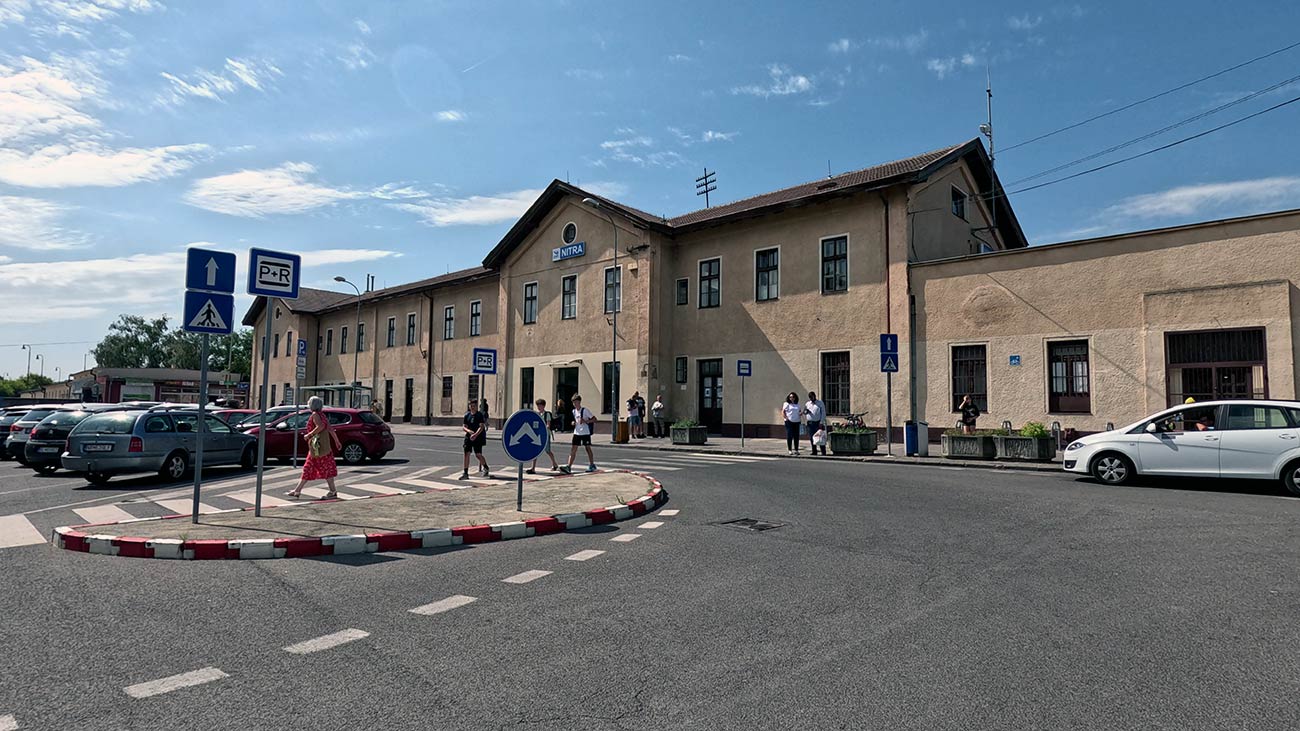
Arriving at Nitra Station
Nitra railway station sits just south of the city centre, with the castle, the Cathedral of St Emeram, Svätoplukovo Square, and the start of the Calvary path all reachable on foot or by bike in around fifteen minutes. The historic core is compact and entirely walkable, with the climb up to the castle best done on foot from the main square. Cycling infrastructure across the central city is reasonable, and a network of marked cycle routes leads out from Nitra toward the surrounding wine villages, the Tribeč range, and the long-distance Eurovelo 6 connection routes. Bike racks are available at the station and at several points around the centre. For onward travel, the same ZSSK line connects back toward Bratislava and the wider Danube region, as well as further east toward the Hron valley and the Slovak interior, so Nitra works equally well as a one-day excursion, a one-night detour, or a longer base for exploring this corner of western Slovakia.