Royal Palace of Gödöllő
Reading time: 14 minutes
GÖDÖLLŐ, PEST COUNTY, HUNGARY
Where Queen Sisi Came Home
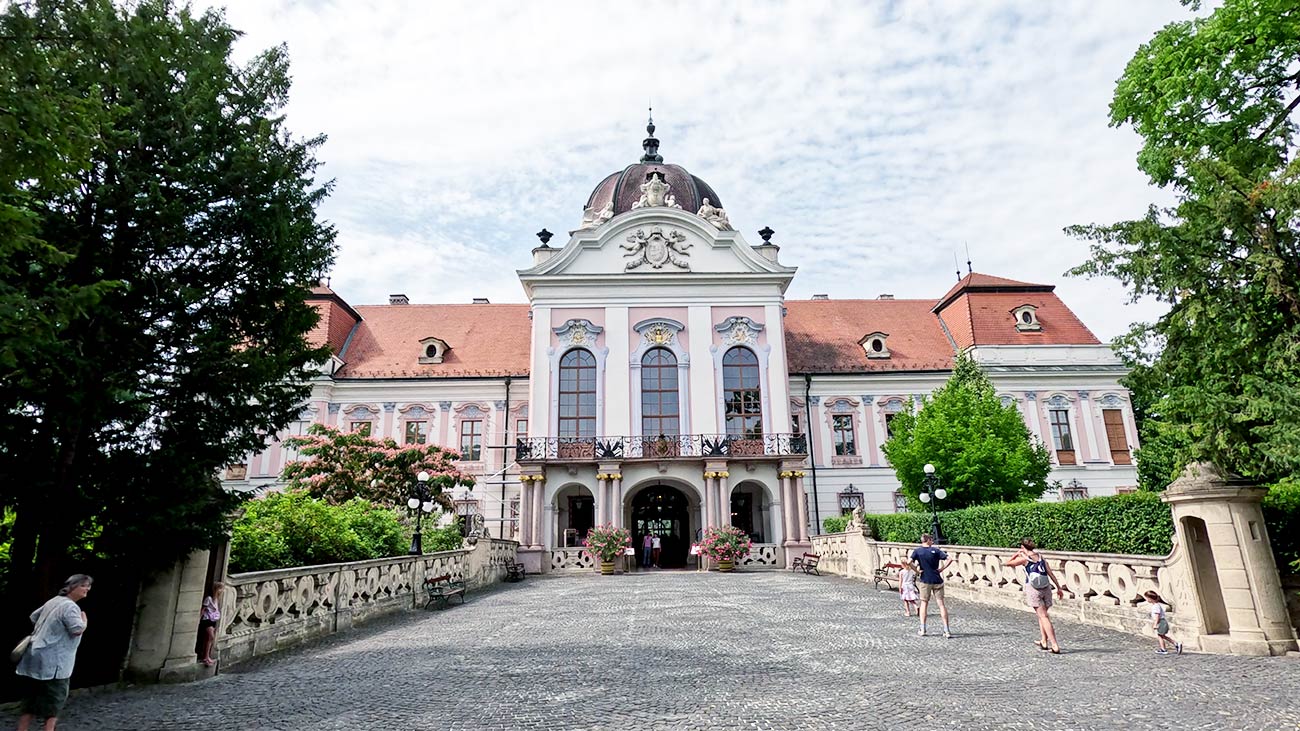
Just thirty kilometres north-east of Budapest, where the wide plain of central Hungary rises into the wooded hills toward the Carpathian foothills, lies one of the most important Baroque ensembles in central Europe. The Royal Palace of Gödöllő (Gödöllői Királyi Kastély), sometimes still known by its original family name as the Grassalkovich Palace, is the largest Baroque palace in Hungary and one of the most beloved cultural sites in the country. Its long pale-yellow facades, double-courtyard plan, and ornamental garden front stretch across more than 17,000 square metres of built space, set within a 26-hectare park that has been a place of royal recreation for more than two and a half centuries.
The palace owes its existence to Count Antal Grassalkovich I (1694–1771), one of the most powerful Hungarian nobles of the eighteenth century, who began building his country residence here around 1735. The result became a model of Central and Eastern European Baroque palace architecture, hosting Maria Theresa and a long list of distinguished guests across its first century. The defining chapter, however, began in 1867, when the Hungarian government bought the palace and presented it as a coronation gift to the new King of Hungary, Emperor Franz Joseph, and his wife Empress Elisabeth of Austria, who became known throughout Hungary by her affectionate nickname Sisi. Elisabeth fell deeply in love with the palace, the park, and the surrounding country, and Gödöllő became her favourite Hungarian residence over the next three decades.
For cyclists exploring the Danube along the EuroVelo 6, Gödöllő is a straightforward cultural detour from Budapest, which sits on the river corridor. The palace is reached by a single direct ride on the HÉV H8 suburban railway in around 50 minutes from central Pest, or by an even faster MÁV train from Budapest’s Keleti railway terminus. A day or half-day spent moving between the state rooms, the Baroque Theatre, the Palm House, and the long garden axis of the palace park gives an unusually complete window into the Hungarian Belle Époque, when this quiet town outside the capital briefly became the favourite home of the most romantic queen in central European history.
PalaceSisiRoomsPark
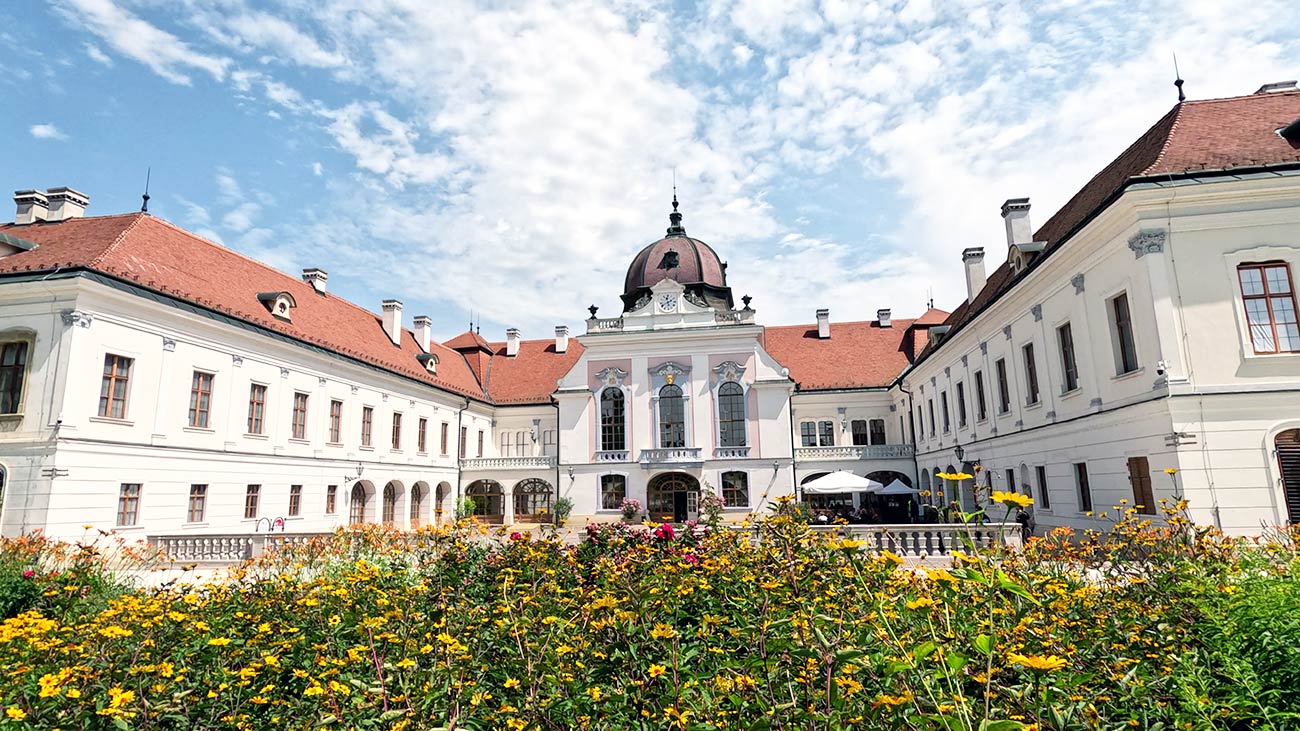
A Hungarian Versailles and the Favourite Residence of Empress Sisi
Construction of the palace began around 1735 under Count Antal Grassalkovich I, a confidant of Empress Maria Theresa and one of the most ambitious patrons of his era, who chose this site in the hills outside the small town of Gödöllő for his country seat. The Grassalkovich family extended and enriched the palace across three generations, creating the elegant double-U-shaped layout that visitors still see today, the central ceremonial courtyard, the long wings of ground-floor state rooms, the Baroque chapel, and the formal gardens running away to the south. After the male line of the family died out in the early nineteenth century, the palace passed through several private hands before being purchased by the Hungarian government in 1867 as a coronation gift for the new royal couple. The state rooms of the visitor route follow the rhythm of this story, from the early-Baroque chapel and the Grassalkovich family apartments through the ornate reception halls to the carefully recreated private apartments of Sisi and Franz Joseph, with the famous Ceremonial Hall at the centre.
The defining personality of the palace, then and now, is Queen Elisabeth of Austria-Hungary (1837–1898), the wife of Emperor Franz Joseph and the queen who became known across Hungary as Sisi. Elisabeth first arrived in Gödöllő on 11 May 1867, immediately after her coronation in Budapest, and from that summer the palace became her favoured Hungarian residence. She found in Gödöllő a private world to which she could retreat from the rigid protocol of the Viennese court, riding daily in the surrounding parks, learning Hungarian, and spending long hours in the company of her favourite Hungarian friends and ladies-in-waiting. Her own apartments, including her famous violet bedchamber, her dressing room, her writing room, her private garden, and her veranda overlooking the park, have been carefully restored using period photographs and surviving inventories, and they remain the most-visited part of the palace today. A permanent exhibition dedicated to her life, My Sisi, traces her unusual personality and her deep connection to Gödöllő across both political and personal dimensions.
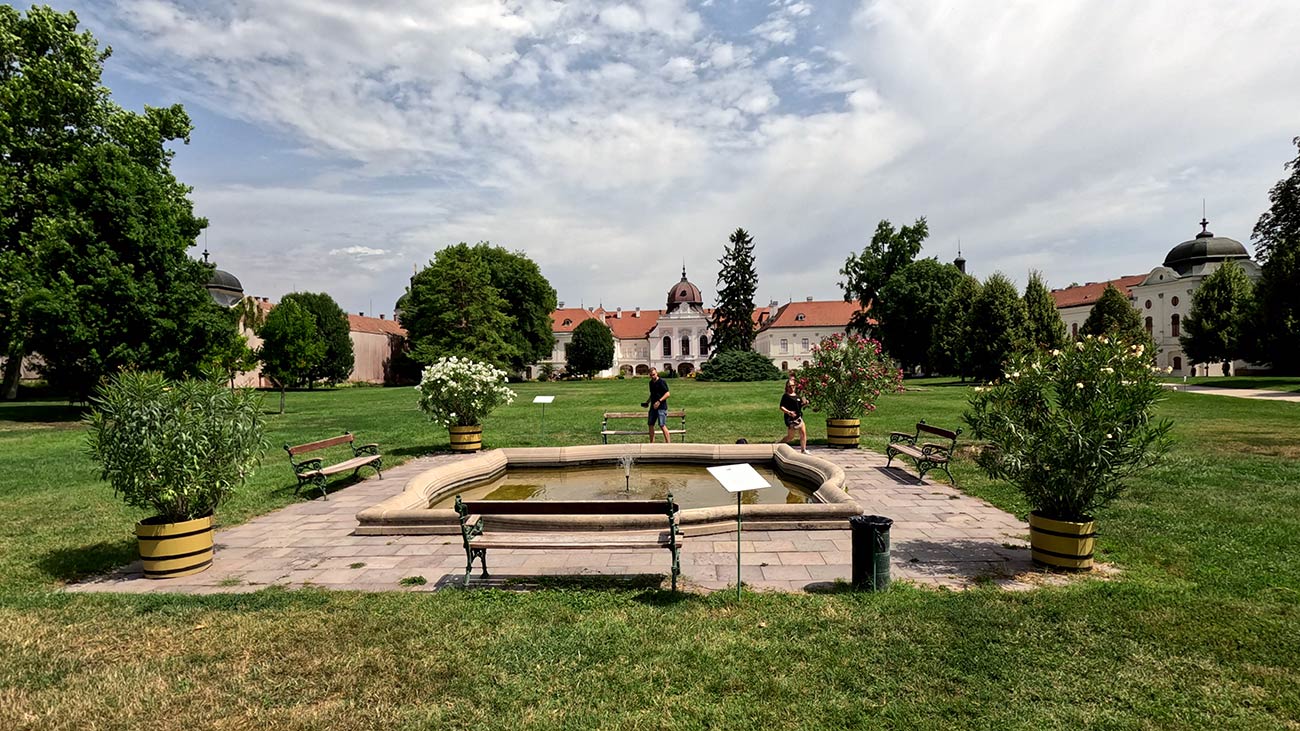
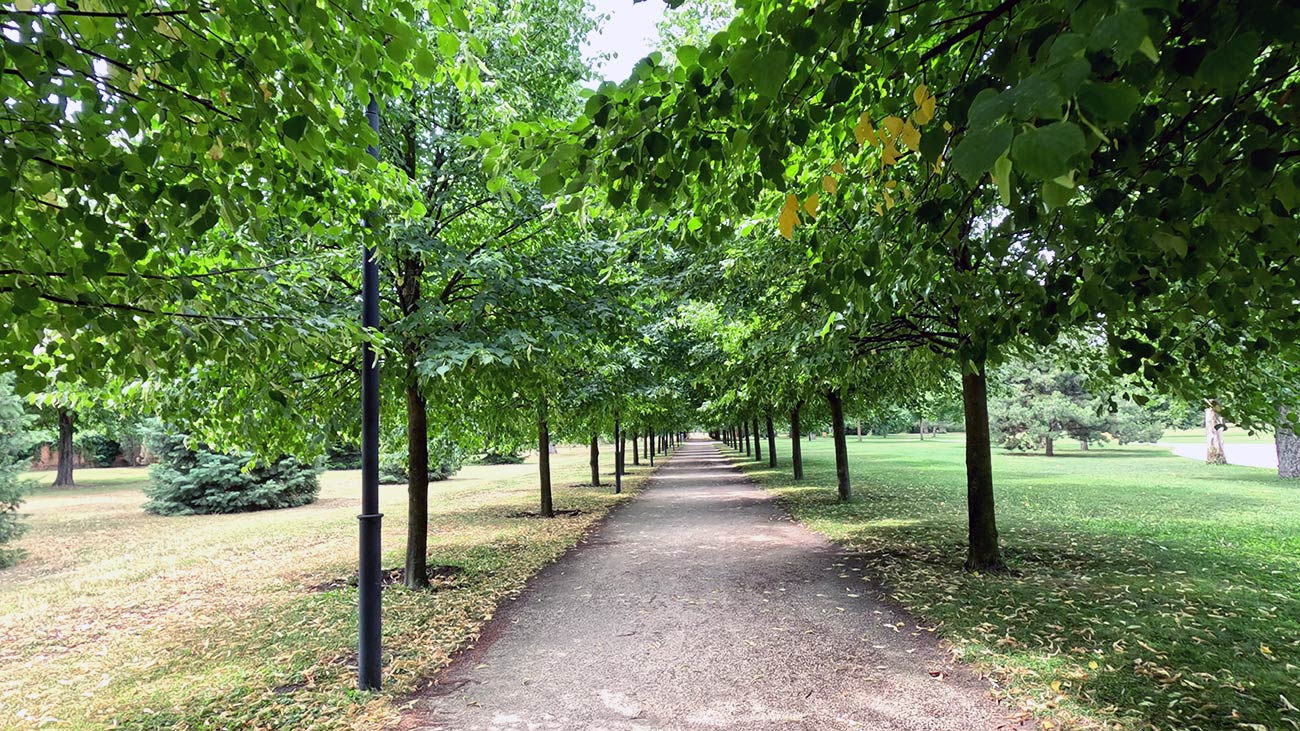
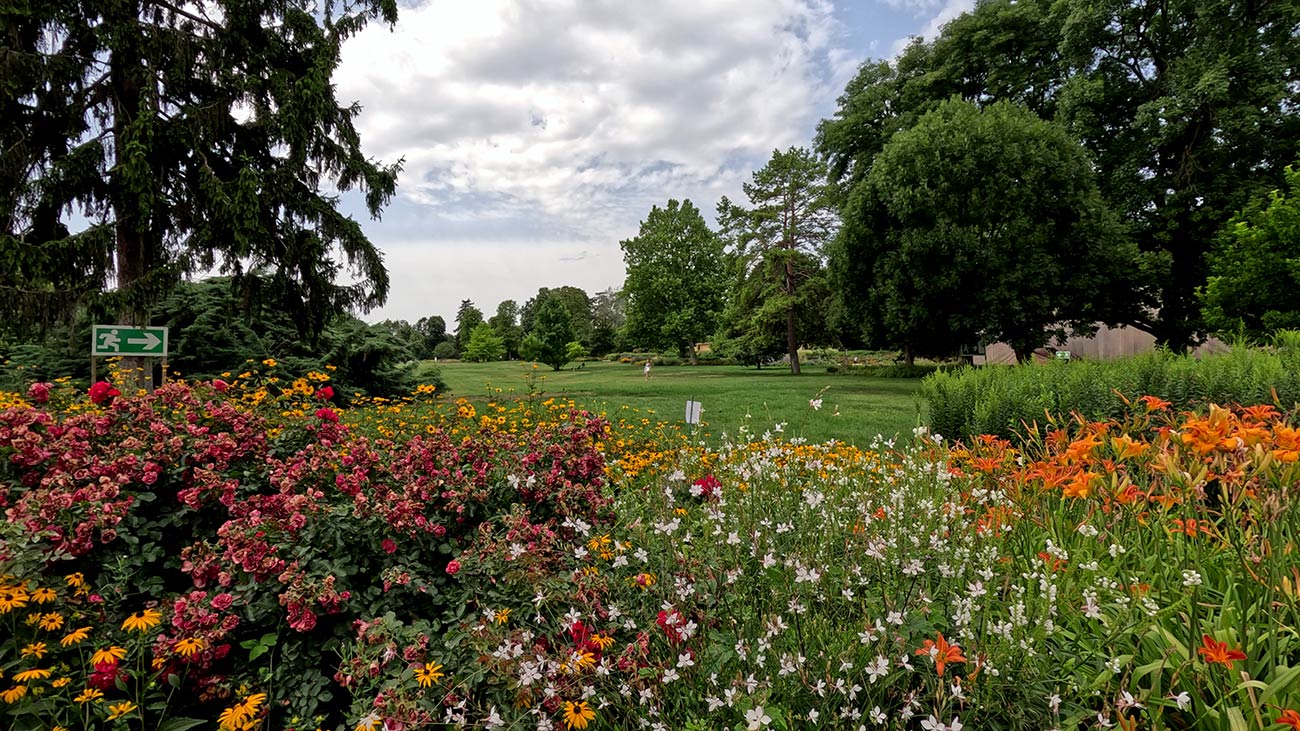
The Palace Park opens out behind the main facade as a 26-hectare landscape garden, originally laid out as a French Baroque parterre and later softened into a more naturalistic English-style park in the early nineteenth century. Long tree-lined paths, ornamental flowerbeds, fountains, statues, and quiet wooded sections give the park the feel of a small kingdom within a kingdom, with most of the original Baroque planting still recognisable across the layout. Within the park, a sequence of secondary buildings adds further layers to the visit. The Palm House (Pálmaház), built in the nineteenth century as a winter garden for the queen, has been recently restored with exotic plants and a small café. The Kinghill Pavilion (Kiráyi-domb), a small ornamental garden building on the highest natural rise in the park, was a favourite resting place during royal walks. The historic Riding Hall and adjoining stables, once home to the royal horses, are now used as a major concert and events venue. A small monument in the park also marks one of the more surprising afterlives of the palace: Horthy’s Bunker, a Second World War underground shelter built beneath the gardens for the wartime Hungarian regent Miklós Horthy, now open to visitors as a small Cold War-era museum.
Inside the palace, the cultural calendar revolves around the Baroque Theatre (Barokk Színház), one of the very few surviving eighteenth-century court theatres in central Europe. The theatre was created in the 1780s under the Grassalkovich family, fitted with original-period scenery, hand-operated stage machinery, and a small auditorium that retains the intimate scale of a private noble theatre. After decades of disuse, it has been carefully restored as an active performance venue, and today it hosts a regular programme of historically informed operas, chamber music, and theatrical works performed in conditions remarkably close to those of its original audiences. The palace also functions as one of Hungary’s leading conference and cultural event venues, with weddings, gala dinners, concerts, and seasonal exhibitions held throughout the year in the Ceremonial Hall, the Riding Hall, and the ceremonial yard. In 2025, the palace and its events welcomed around 350,000 visitors, with the surrounding park drawing another 800,000 to 900,000 guests across the season.
 Useful Links
Mobility for Cyclists
Reaching the area by train with your bike
The Royal Palace of Gödöllő can be reached from the EuroVelo 6 by a single direct journey from Budapest, which sits on the Danube cycle path. The palace lies around 30 kilometres north-east of central Budapest in Pest County, and the connection is one of the most straightforward of any cultural detour on the entire Hungarian section of the route.
The connection
The most practical connection from the EuroVelo 6 corridor is from Budapest. The fastest direct option is the HÉV H8 suburban railway, which runs every 15 to 20 minutes from Örs vezér tere in eastern Pest to Gödöllő Szabadság tér, with a journey time of around 50 minutes and the palace just a few minutes’ walk from the terminus. An alternative is the MÁV-START intercity train service from Budapest-Keleti railway station, which reaches Gödöllő in 25 to 40 minutes depending on the service. The HÉV is generally the easier option for visitors coming from the centre of Pest, while the MÁV trains are useful for travellers arriving from further afield, including by long-distance services. Cyclists riding the Hungarian stretch of the EuroVelo 6 will find Budapest the natural transfer point, and the trip fits comfortably into a half-day or full-day excursion.
Hungarian Trains
The rail network in Hungary is operated mainly by MÁV-START, the passenger arm of the Hungarian State Railways (Magyar Államvasutak), which runs most long-distance services and a large share of regional connections across the country. Alongside MÁV-START, the private operator GySEV / Raaberbahn (Győr-Sopron-Ebenfurti Vasút) runs cross-border lines in the western part of the country toward Austria, while a smaller number of regional operators run local and feeder lines on selected routes. All operators are fully integrated into the national rail system, so transfers between them are straightforward. The Hungarian rail network is organised around Budapest, with high-frequency InterCity and EuroCity services radiating out from the capital toward Lake Balaton, the Croatian border, the Carpathian foothills, and the eastern plains, alongside a dense network of regional and local services. The Danube region in Hungary is particularly well served by rail, with the main north-south corridor running close to the river from the Slovak border through Budapest and onward toward Mohács, and several east-west lines branching out to inland destinations. The MÁV app is the central tool for planning journeys, checking timetables, and purchasing tickets across all services, including both regional and long-distance trains.
Taking your bike
Hungary is generally very bike-friendly when it comes to rail transport, especially on regional services operated by MÁV-START, which form the core of mobility for cycle touring along the Danube and its connecting corridors. On regional and local trains, bicycles can be taken on board for an additional fee, with no advance reservation possible and a first-come, first-served allocation of space. Bicycle tickets are sold as single trips or as affordable daily or weekly passes, valid across the regional network. On long-distance services such as InterCity and EuroCity trains, an advance reservation for the bicycle is mandatory, with the bike spaces located in dedicated zones in second-class carriages. The private operator GySEV / Raaberbahn, which runs cross-border services in the western part of the country, also accepts bicycles on board with broadly similar rules. Folding bikes are carried free of charge as hand luggage on all operators, provided they fit in the luggage racks. Overall, the Hungarian rail system is well adapted to cycle tourism and offers a flexible combination of train and bike that makes it easy to leave the EuroVelo 6 route in either direction for short or extended detours.
Bikes on Buses
Long-distance bus services in Hungary are primarily operated by Volánbusz, the national coach operator now consolidated under the MÁV group, alongside FlixBus and a smaller number of regional and private operators on selected international and domestic routes. The long-distance bus network is unusually well developed by central European standards, with frequent connections from Budapest to all the major regional centres and a dense web of services across the countryside that complement and sometimes overlap with the rail network. Bicycle transport is available on certain FlixBus connections, either via external bike racks or in the luggage compartment, but it is not consistently guaranteed across the network and depends on the specific vehicle type and route configuration. Where available, bicycle transport must be reserved in advance and capacity is limited, making it less flexible compared to rail services. Volánbusz coaches generally do not carry assembled bicycles, although folded or packed bikes may be accepted as luggage on a case-by-case basis. As a result, buses are generally used as a secondary option for cyclists, mainly for longer-distance repositioning between major cities rather than as a core part of cycling itineraries along the Danube region. While useful in specific cases where rail connections are less convenient, they are less predictable and less standardised for bicycle transport, so advance planning is essential.
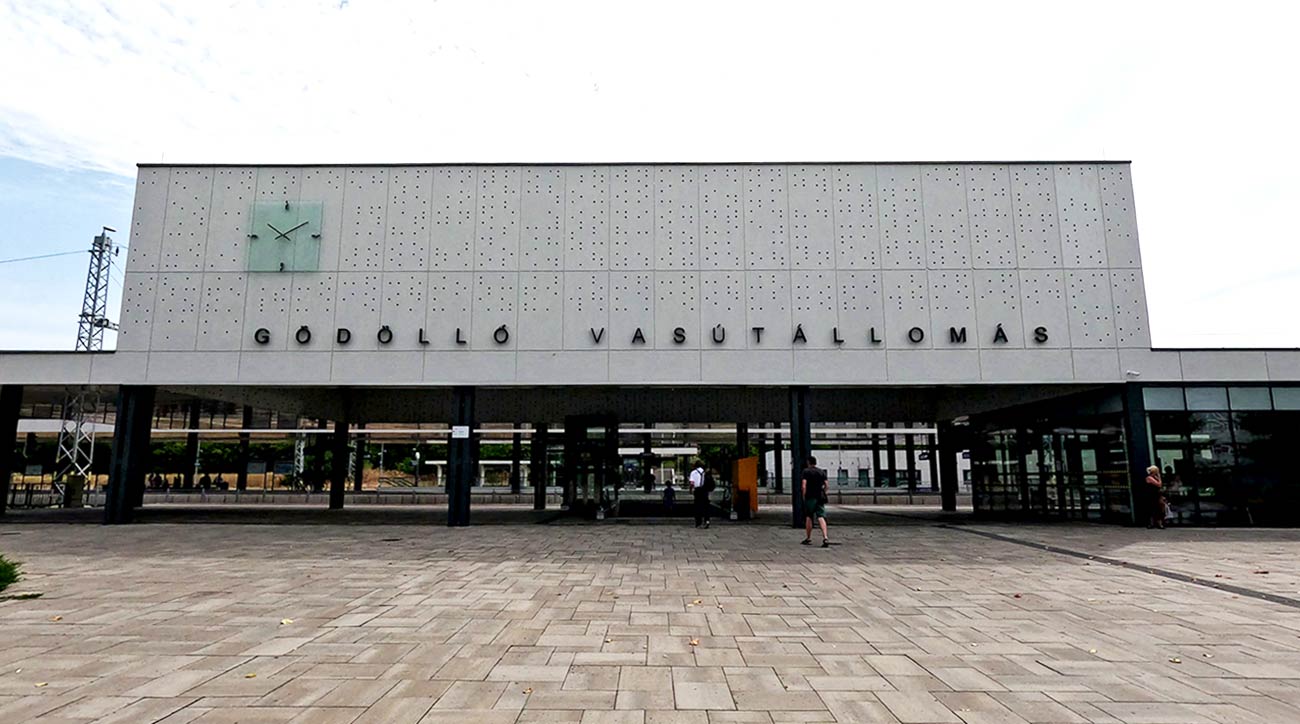
Arriving at Gödöllő Station
Gödöllő’s main HÉV station, Szabadság tér, sits directly opposite the palace, on the far side of the broad ceremonial yard. The walk from the HÉV station to the palace entrance takes less than five minutes along level streets. Travellers arriving by the faster MÁV train disembark at the main Gödöllő railway station, which lies on the southern edge of town around ten to fifteen minutes from the palace on foot or under five minutes by bike along largely flat, signposted streets. From either station, the palace, the park, and the secondary buildings such as the Palm House, the Kinghill Pavilion, the Baroque Theatre, and Horthy’s Bunker are all within easy walking distance of each other once on the grounds. Cycling infrastructure across the town of Gödöllő is reasonable, and the surrounding hills are crossed by marked cycle and hiking trails for travellers wanting to extend the visit further. Bike racks are available at both the HÉV and MÁV stations and at the palace. For onward travel, the same HÉV and MÁV services connect back toward Budapest and the wider Danube corridor, so Gödöllő works equally well as a half-day excursion, a full-day visit, or a relaxed overnight stop on the way out of the capital.