Esterhazy Palace and Fertő Lake
Reading time: 13 minutes
FERTŐD AND LAKE FERTŐ, GYŐR-MOSON-SOPRON COUNTY, HUNGARY
Hungary’s Versailles on the Shore of a Steppe Lake
In the far north-western corner of Hungary, where the last gentle hills before the Austrian border give way to a wide, reed-fringed steppe lake, two very different kinds of grandeur sit only a short distance apart. Esterházy Palace in Fertőd is the largest Baroque-Rococo building complex in Hungary, a princely residence built to rival Versailles itself, while Lake Fertő (known on the Austrian side as the Neusiedlersee) is one of the most ecologically significant lakes in central Europe, a shallow steppe lake whose surrounding landscape has been shaped by eight thousand years of continuous human settlement. Together, palace and lake form a single UNESCO World Heritage Cultural Landscape that straddles the Austrian-Hungarian border, recognised in 2001 for the rare harmony between aristocratic architecture, traditional village life, and an unusually rich natural environment.
The palace itself rose on the site of a smaller seventeenth-century hunting lodge, transformed over nearly two decades in the late eighteenth century by Prince Miklós Esterházy, known to history as Miklós the Magnificent. Under his patronage, between 1768 and 1790, Fertőd became one of the principal cultural centres of Hungary, a place where the composer Joseph Haydn served as court musical director and where members of the Habsburg court, including Empress Maria Theresa herself, came to attend the lavish musical life of the estate. A few kilometres away, the lake that gives the region its character has supported vineyards, grazing herds, and reed harvesting in roughly unchanged forms for centuries, while sheltering one of the richest bird populations anywhere in Europe within its reed belt.
For cyclists exploring the Danube along the EuroVelo 6, Fertőd and Lake Fertő sit a short distance inland from the river but are easily reached from Sopron or Győr, both connected by GySEV cross-border rail services. A day or two spent moving between the palace’s Rococo halls and gardens and the open water, reed channels, and bird hides of the lake offers a genuinely complementary pairing: the refined court culture of the late Habsburg era set directly against the much older, slower rhythms of a steppe lake landscape that predates it by millennia.
LakeUNESCOWater SportsPalace
A Princely Estate and the Steppe Lake That Surrounds It
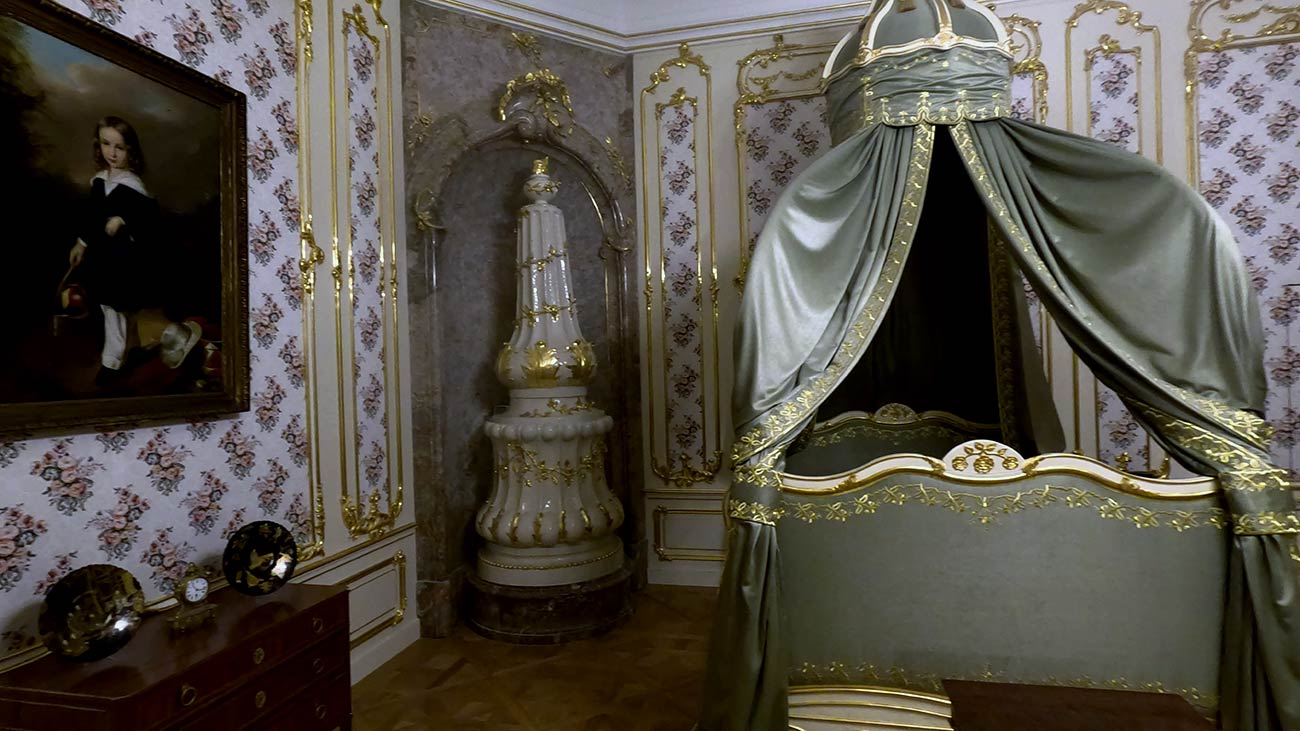
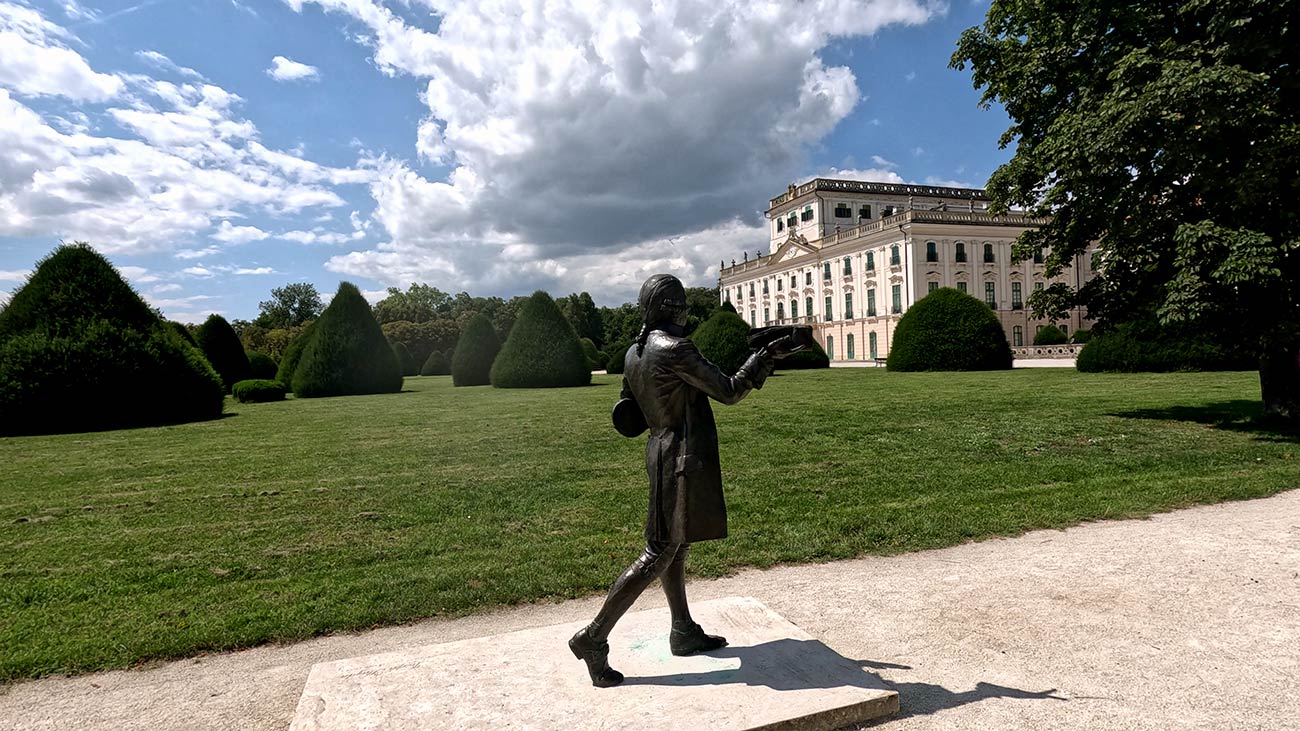
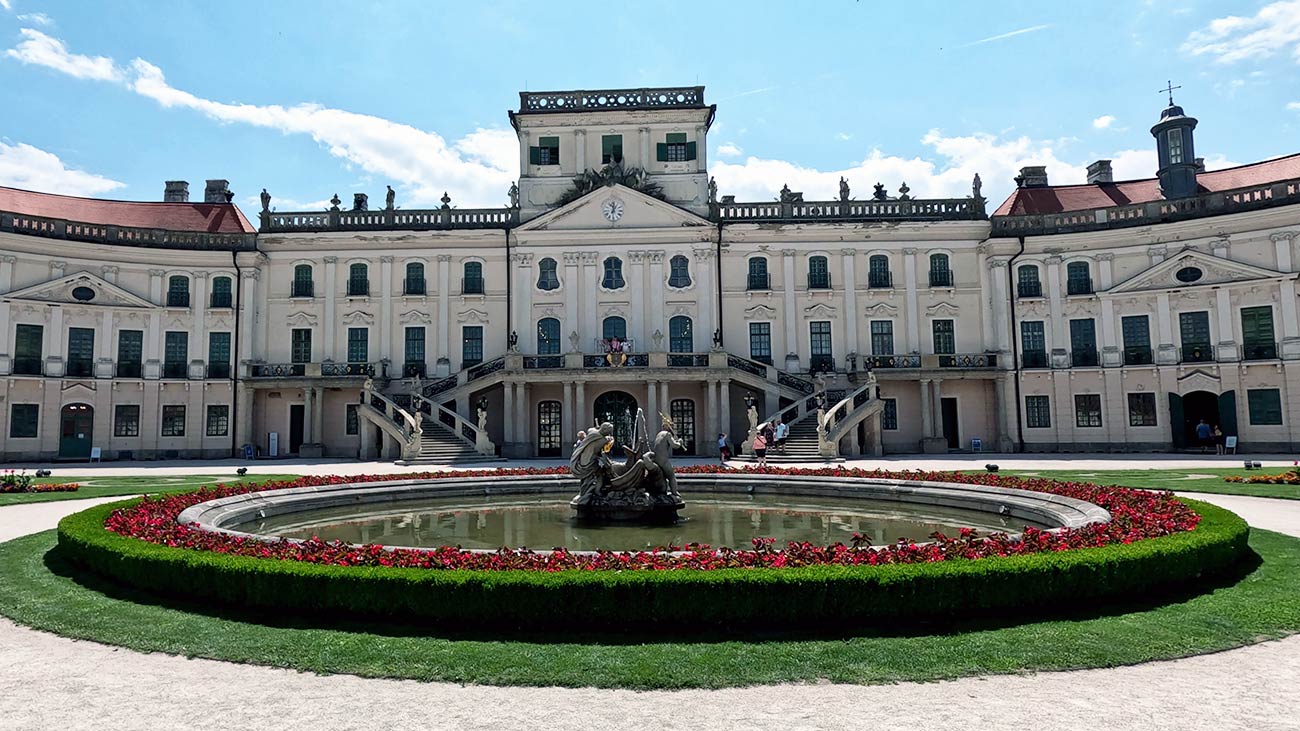
The story of Esterházy Palace (Eszterháza) begins with a far more modest building: a U-shaped hunting lodge built in 1720 on land belonging to the powerful Esterházy family, whose members across the seventeenth and eighteenth centuries included an archduke, an archbishop, a chief justice, and a prime minister. The transformation into a princely residence came under Prince Miklós Esterházy, who commissioned the grand Baroque-Rococo complex that took nearly two decades to complete in its present form. Often nicknamed the Hungarian Versailles, the palace is considered a worthy match for Schönbrunn in Vienna or Versailles itself, and its glory years between 1768 and 1790 made it one of the leading cultural centres anywhere in the Habsburg lands. The complex holds 126 rooms decorated in Rococo style, centred on an opulent upstairs banquet and music hall divided by ionic half-pilasters, with a summer dining room below connecting the building to the Baroque garden, a library, and the east wing’s famous Esterházy Gallery, which once held more than 300 paintings.
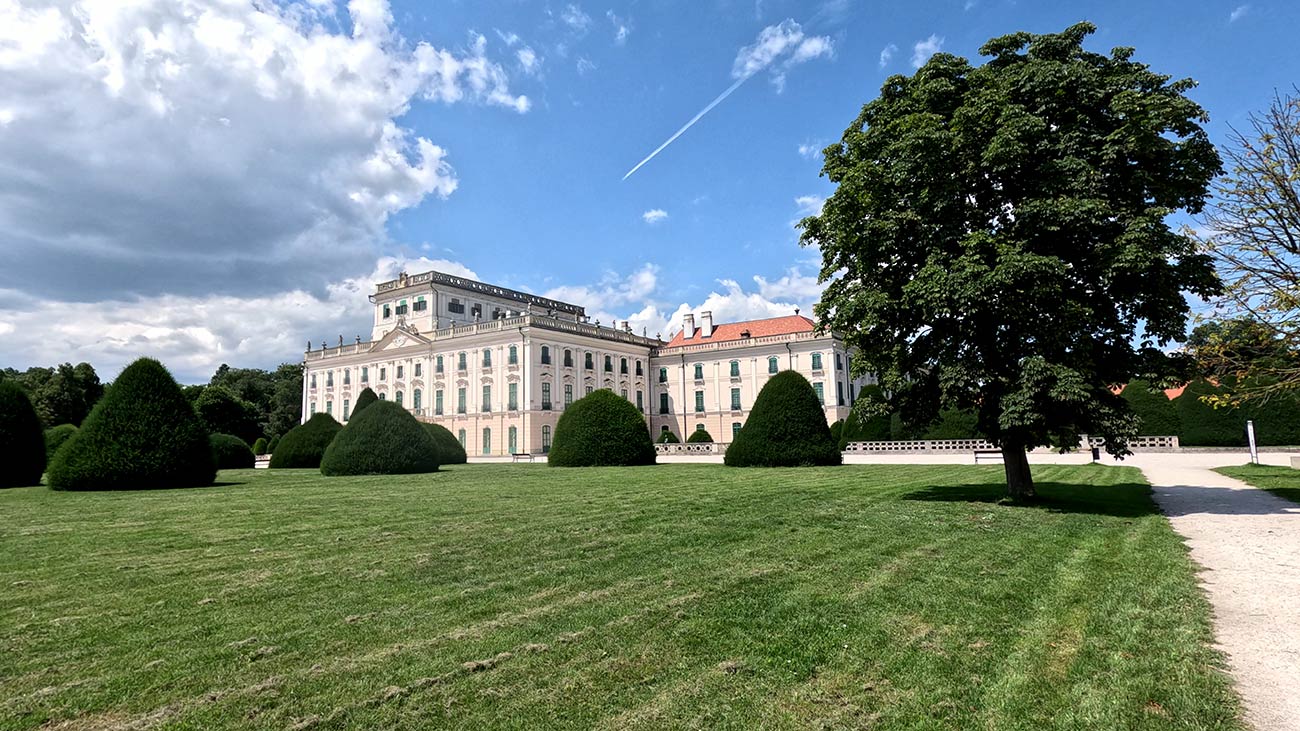
The palace’s musical reputation rested above all on Joseph Haydn, who served as musical director here and made Fertőd’s concert life famous across Europe. It was within these walls, in 1772, that Haydn premiered his celebrated Farewell Symphony, the piece in which musicians extinguish their candles and leave the stage one by one until only the composer remains, a gentle protest at being kept too long away from their families that the prince is said to have taken in good humour. Habsburg court members and Empress Maria Theresa herself were regular visitors to the palace’s musical programmes during this period. Surrounding the building, a 300-hectare French garden, modelled directly on Versailles, was laid out with avenues, clearings, statues, and small pavilions; in the nineteenth century it was reworked into a more naturalistic English-style park, closer to what visitors stroll through today. The palace chapel, restored in 2001, received the Europa Nostra prize for its conservation, and between June and September the restored Marionette Theatre once again hosts classical music concerts, continuing a tradition of musical performance that has run almost continuously since Haydn’s day. A dedicated exhibition inside the music hall presents Haydn’s life and the palace’s musical heritage to visitors.
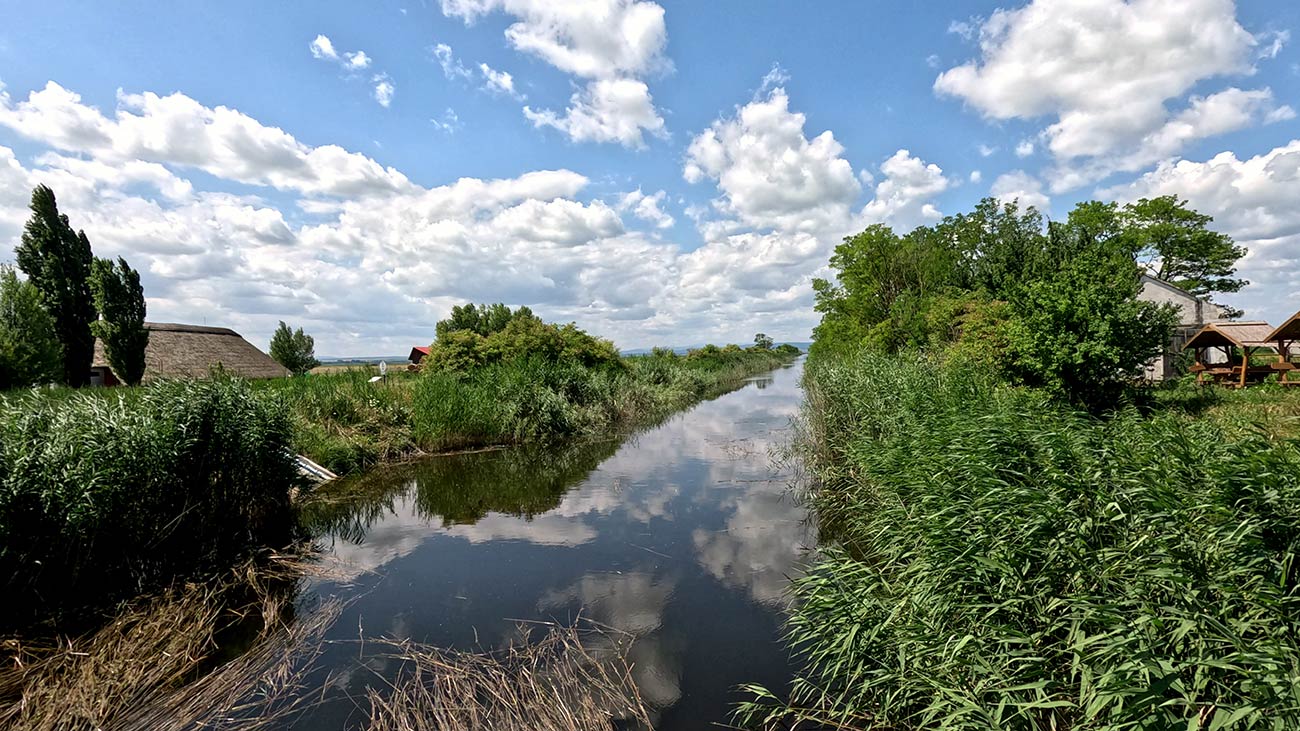
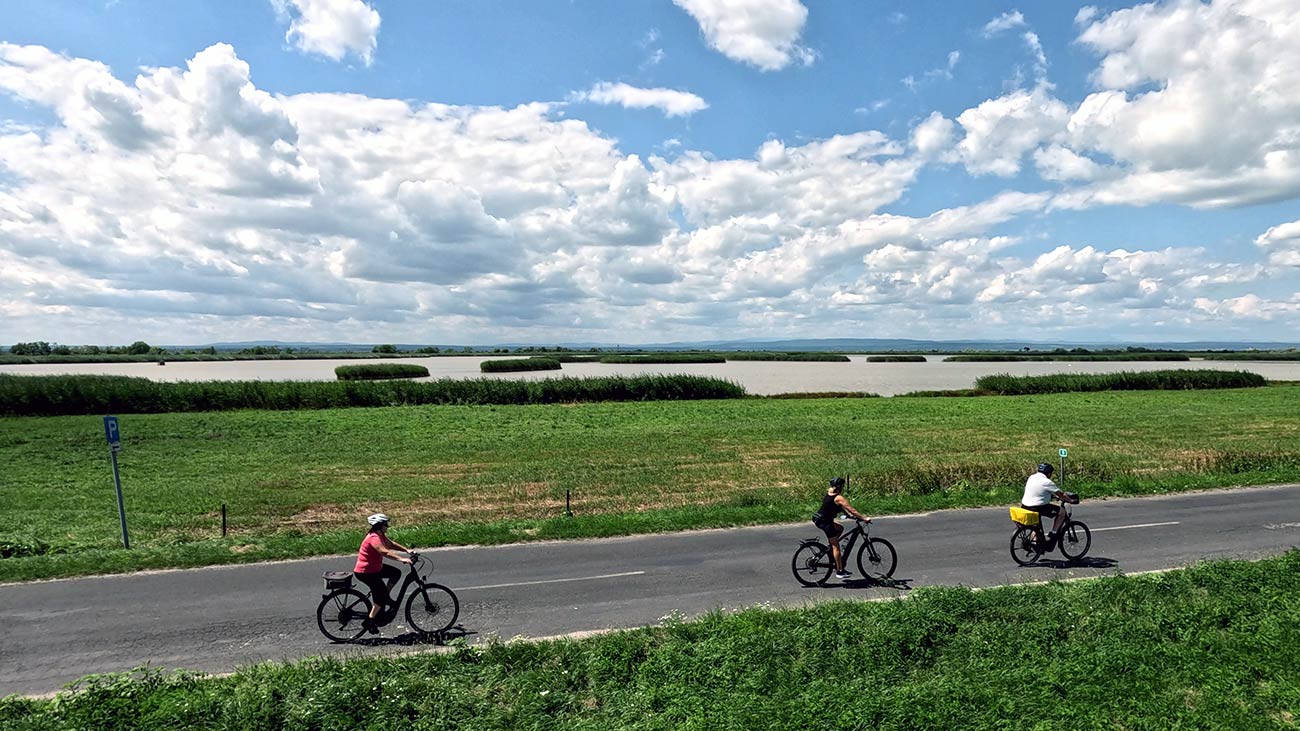
A short distance to the west, Lake Fertő (Fertő tó, called the Neusiedlersee on the Austrian side) opens out into the westernmost steppe lake in Eurasia, a body of water whose character could hardly differ more from the manicured gardens of the palace. The lake and its surrounding landscape form part of the Fertő-Hanság National Park, established on the Hungarian side in 1991 and joined in 1994 with the Austrian Neusiedler See-Seewinkel National Park to create the first transboundary national park in Hungary’s history. On the Hungarian shore, dense reed marshes stretch for kilometres, interrupted only by small inner lakes and a network of channels, sheltering tall sedges, wet meadows, and rare invertebrate and amphibian populations. The bird life is the lake’s most celebrated natural asset: some 700 pairs of great egrets breed here, alongside large numbers of greylag geese, purple herons, spoonbills, bitterns, and the rare ferruginous duck, while tens of thousands of migrating birds, including garganey and Eurasian teal, pass through the reed belt each spring and autumn. The drier saline grasslands along the lake’s eastern shore, grazed by Hungarian Grey Cattle, Racka sheep, and water buffalo, turn pink with sea aster blossom in autumn, and a string of shallow saline lakes nearby, including Cikes and Borsodi, draws large concentrations of wading birds that can be observed from purpose-built watchtowers.
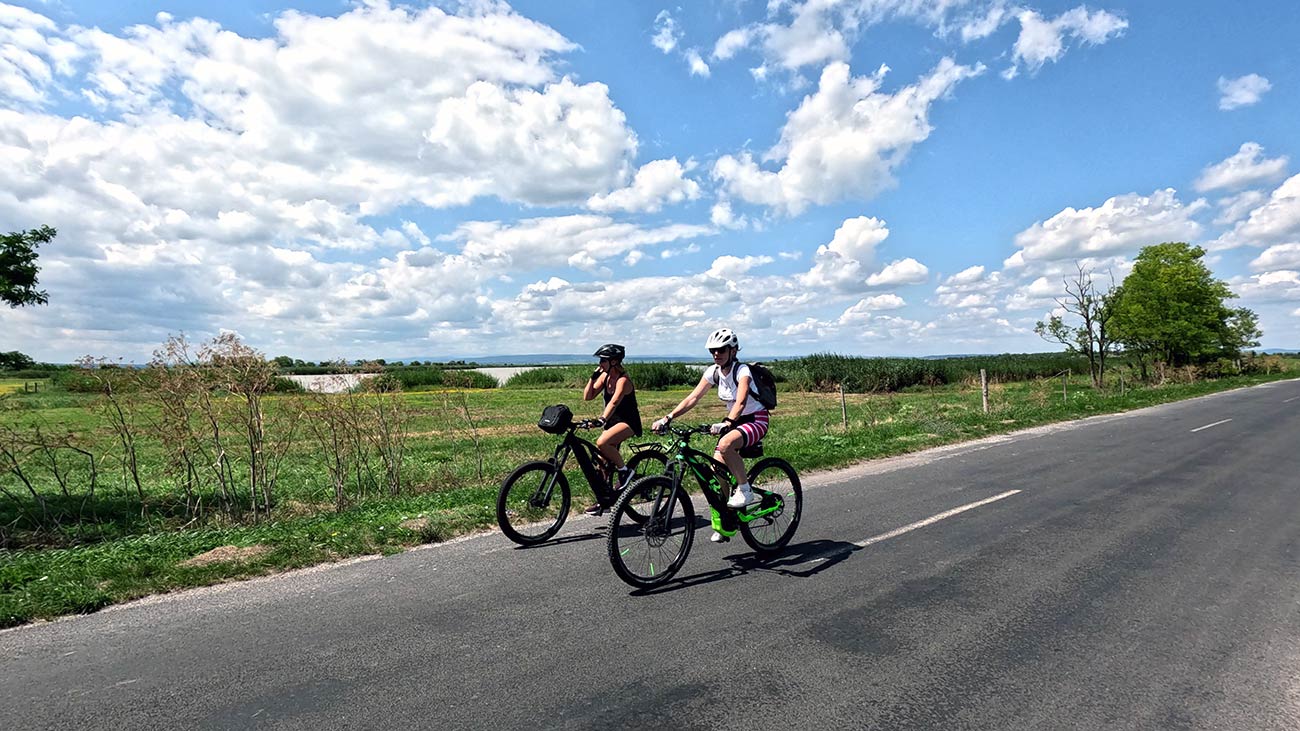
Together, the palace and the lake were jointly inscribed as the Fertő/Neusiedlersee Cultural Landscape on the UNESCO World Heritage List in 2001, recognised for the way human activity and natural environment have shaped one another here continuously for around eight millennia. The inscription covers not only the palace and the lake itself but also the traditional rural architecture of the sixteen settlements that ring the lake’s inner shore, the historic free town of Rust on the Austrian side, and Fertőrákos on the Hungarian side, both protected for their well-preserved historic centres. For travellers with time to explore beyond Fertőd itself, the lake’s bicycle paths, the Agárd harbour boat trips on the Hungarian shore’s Austrian counterpart, and the quiet villages of the Fertő region all extend naturally from a visit to the palace.
 Useful Links
Mobility for Cyclists
The connection
The most practical connection from the EuroVelo 6 corridor is from Sopron or Győr, both served by GySEV regional trains running to Fertőszéplak-Fertőd, the railway stop closest to the palace, with regular departures throughout the day. Volánbusz regional bus services also connect Sopron directly with Fertőd and the surrounding lakeside villages. Cyclists riding the Hungarian stretch of the EuroVelo 6 will find Sopron the more convenient transfer point given its position close to the Austrian border and the lake itself, while Győr offers a useful alternative for travellers approaching from further along the Danube. The visit also combines naturally with a stop in Sopron itself, one of the most architecturally rich small towns in Hungary, or with a crossing into Austria to explore the Neusiedlersee shore on the opposite side of the lake.
Hungarian Trains
The rail network in Hungary is operated mainly by MÁV-START, the passenger arm of the Hungarian State Railways (Magyar Államvasutak), which runs most long-distance services and a large share of regional connections across the country. Alongside MÁV-START, the private operator GySEV / Raaberbahn (Győr-Sopron-Ebenfurti Vasút) runs cross-border lines in the western part of the country toward Austria, while a smaller number of regional operators run local and feeder lines on selected routes. All operators are fully integrated into the national rail system, so transfers between them are straightforward. The Hungarian rail network is organised around Budapest, with high-frequency InterCity and EuroCity services radiating out from the capital toward Lake Balaton, the Croatian border, the Carpathian foothills, and the eastern plains, alongside a dense network of regional and local services. The Danube region in Hungary is particularly well served by rail, with the main north-south corridor running close to the river from the Slovak border through Budapest and onward toward Mohács, and several east-west lines branching out to inland destinations. The MÁV app is the central tool for planning journeys, checking timetables, and purchasing tickets across all services, including both regional and long-distance trains.
Taking your bike
Hungary is generally very bike-friendly when it comes to rail transport, especially on regional services operated by MÁV-START, which form the core of mobility for cycle touring along the Danube and its connecting corridors. On regional and local trains, bicycles can be taken on board for an additional fee, with no advance reservation possible and a first-come, first-served allocation of space. Bicycle tickets are sold as single trips or as affordable daily or weekly passes, valid across the regional network. On long-distance services such as InterCity and EuroCity trains, an advance reservation for the bicycle is mandatory, with the bike spaces located in dedicated zones in second-class carriages. The private operator GySEV / Raaberbahn, which runs cross-border services in the western part of the country, also accepts bicycles on board with broadly similar rules. Folding bikes are carried free of charge as hand luggage on all operators, provided they fit in the luggage racks. Overall, the Hungarian rail system is well adapted to cycle tourism and offers a flexible combination of train and bike that makes it easy to leave the EuroVelo 6 route in either direction for short or extended detours.
Bikes on Buses
Long-distance bus services in Hungary are primarily operated by Volánbusz, the national coach operator now consolidated under the MÁV group, alongside FlixBus and a smaller number of regional and private operators on selected international and domestic routes. The long-distance bus network is unusually well developed by central European standards, with frequent connections from Budapest to all the major regional centres and a dense web of services across the countryside that complement and sometimes overlap with the rail network. Bicycle transport is available on certain FlixBus connections, either via external bike racks or in the luggage compartment, but it is not consistently guaranteed across the network and depends on the specific vehicle type and route configuration. Where available, bicycle transport must be reserved in advance and capacity is limited, making it less flexible compared to rail services. Volánbusz coaches generally do not carry assembled bicycles, although folded or packed bikes may be accepted as luggage on a case-by-case basis. As a result, buses are generally used as a secondary option for cyclists, mainly for longer-distance repositioning between major cities rather than as a core part of cycling itineraries along the Danube region. While useful in specific cases where rail connections are less convenient, they are less predictable and less standardised for bicycle transport, so advance planning is essential.
Arriving at Fertőszéplak-Fertőd and Continuing to the Palace and the Lake
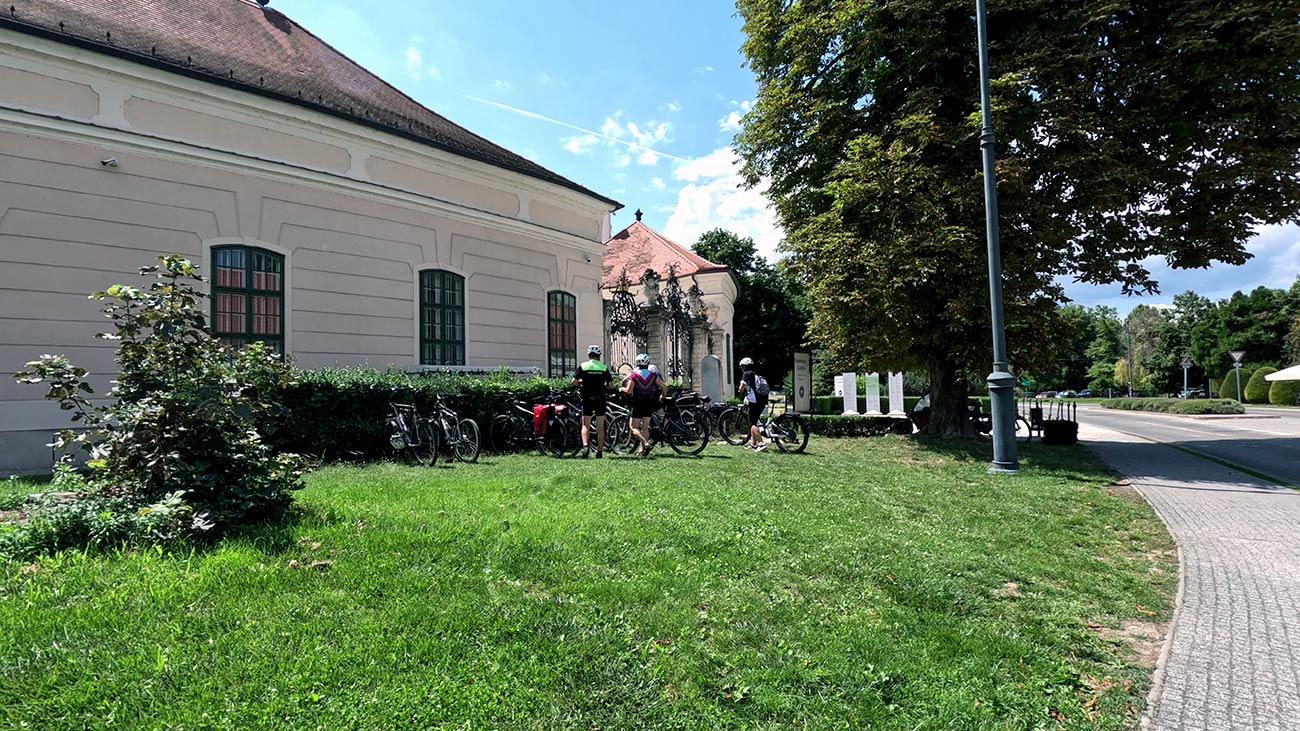
From the Fertőszéplak-Fertőd railway stop, the palace lies within a short ride or walk through the town of Fertőd, with the entrance gates and the surrounding gardens easily reached on foot or by bike. Bike racks are available at the palace grounds. For travellers continuing on to the lake itself, the Fertő-Hanság National Park’s visitor facilities, watchtowers, and reed-belt boardwalks are spread around the shore, with the lakeside village of Fertőrákos and its historic quarry caves a popular further stop on the Hungarian side. The surrounding countryside is flat and well suited to cycling, with marked routes connecting the palace, the national park, and the wider lake region. For onward travel, the same GySEV line connects back toward Sopron and Győr and across the border toward Wiener Neustadt and Vienna, so a visit to Fertőd and Lake Fertő works equally well as a one-day excursion or as a longer cross-border detour combining Hungarian and Austrian stretches of the EuroVelo 6.