Sremska Mitrovica
Reading time: 11 minutes
SREMSKA MITROVICA, SREM DISTRICT, SERBIA
A Roman Imperial Capital Beneath a Serbian Town
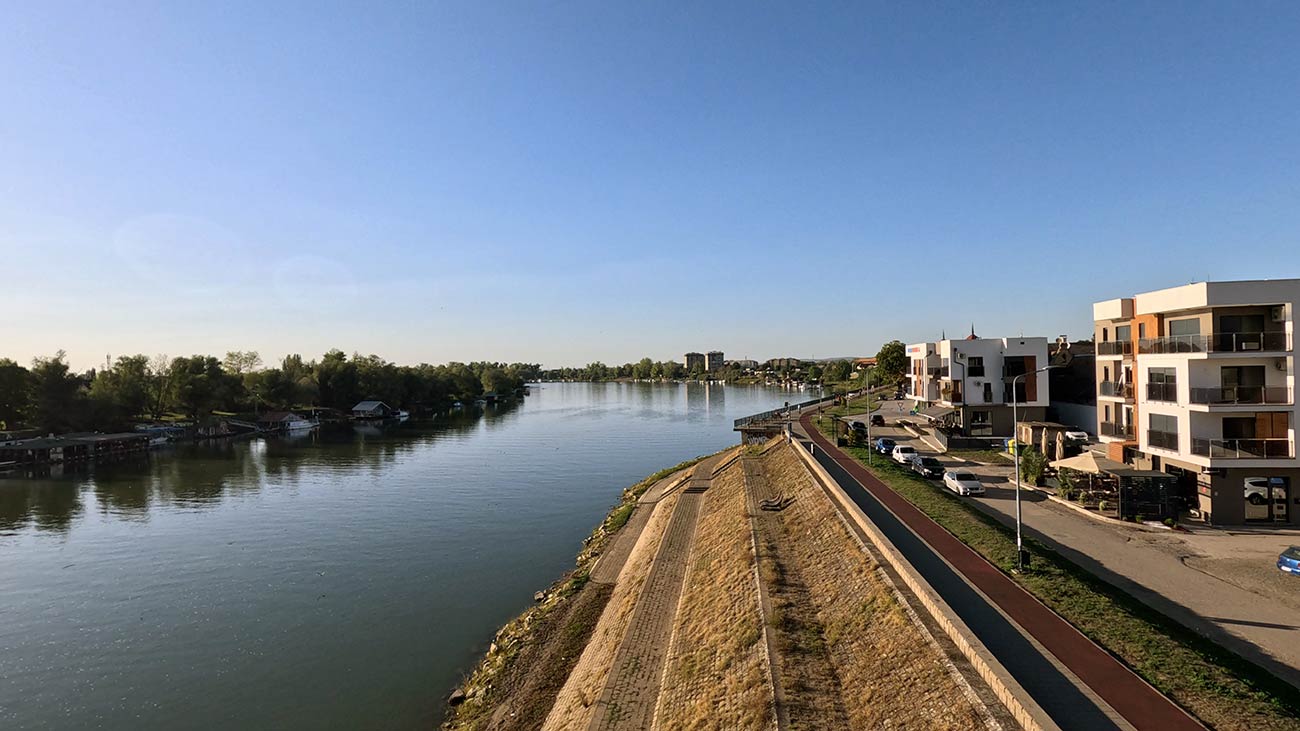
On the left bank of the Sava River, in the fertile lowlands of Srem, lies a city whose modern streets sit directly on top of one of the most important capitals of the late Roman Empire. Sremska Mitrovica occupies the site of ancient Sirmium, founded in the first century BC and elevated by the end of the third century AD to the status of one of the empire’s four official capitals under the Tetrarchy, the system of shared rule devised by Emperor Diocletian. The Roman historian Ammianus Marcellinus called it the “glorious mother of cities,” and the description was not exaggerated: Sirmium rivalled the great urban centres of its day, with an imperial palace, a hippodrome, monumental baths, and a population to match.
Few cities anywhere in Europe can claim to have produced so many rulers of the ancient world. Sirmium was the birthplace of at least five Roman emperors, including Trajan Decius, Aurelian, Probus, and Maximianus Herculius, and hosted many more, among them Marcus Aurelius, Septimius Severus, and Constantine the Great, who is known to have resided in the city’s palace. The Roman city met its end in 582 AD, when it fell to the Avars, but its name survived in altered form, fused over the centuries with that of Saint Demetrius, the city’s patron, into the modern name Sremska Mitrovica, Mitrovica deriving directly from Dimitrovica.
For cyclists exploring the Danube along the EuroVelo 6, Sremska Mitrovica is a rewarding inland detour from the Serbian stretch of the route. The city lies a direct train ride from Belgrade, the country’s capital and the natural EuroVelo 6 gateway in this part of Serbia, with a journey of around an hour and a half through the flat Srem countryside. A half day or full day spent moving between the excavated imperial palace, the Museum of Srem, and the scattered Roman remains woven into the modern streets offers one of the more substantial archaeological experiences anywhere along the Serbian Danube corridor.
Walking Through an Imperial Capital Hidden Beneath a Modern City
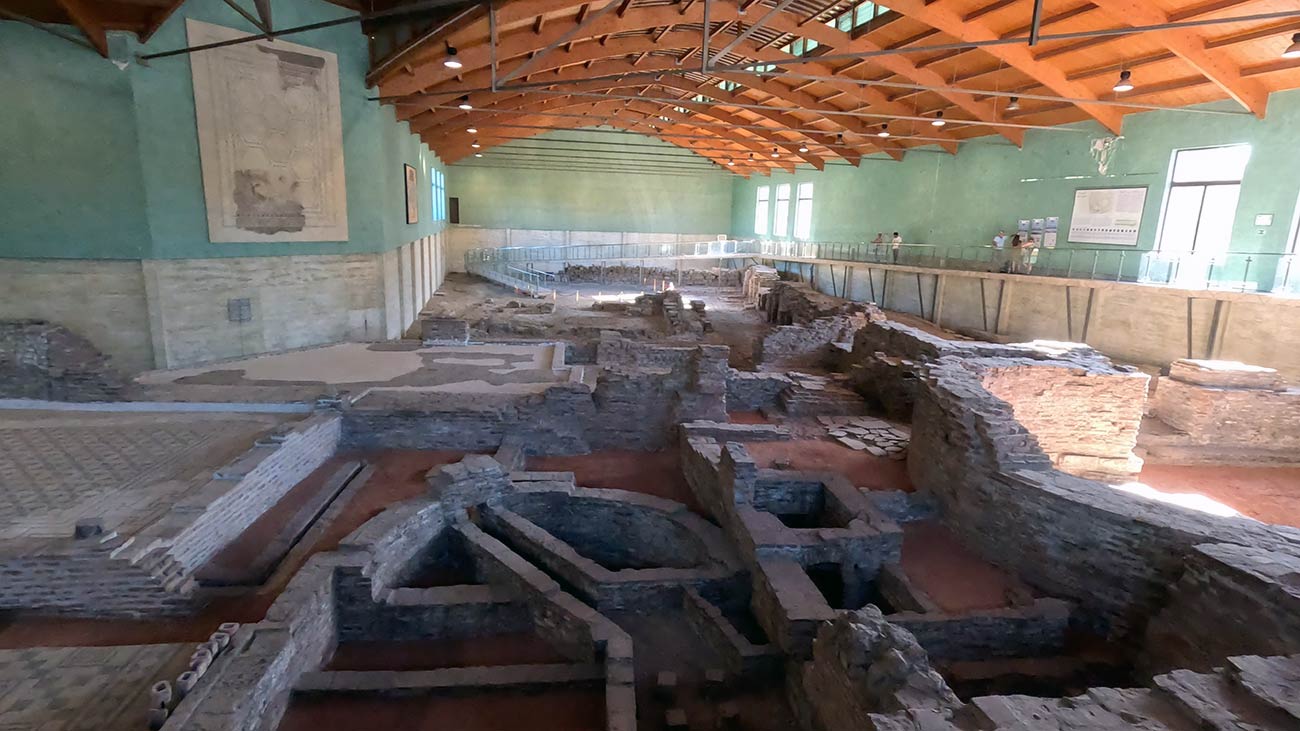
The centrepiece of any visit is the Imperial Palace of Sirmium (Carska palata), the excavated remains of a grand palace-and-circus complex built at the end of the third or beginning of the fourth century AD in the elite, south-eastern quarter of the ancient city, along the bank of the Sava. The complex combined the emperor’s formal administrative quarters with private residential spaces, all protected by their own dedicated defensive wall, and beside it ran a circus, a horse-racing track used for the ceremonial public appearances of the ruler before his subjects. This is, remarkably, the only Roman circus discovered anywhere in Serbia to date. Today the palace ruins are sheltered beneath a modern visitor centre, with raised platforms allowing visitors to look down across mosaic floors, the remains of heating systems, and sections of monumental masonry. A self-guided visit typically takes only twenty to thirty minutes, though an illuminated scale model of ancient Sirmium on display helps visitors picture the full scale of the city that once surrounded these few preserved rooms.
A short walk from the palace, a cluster of freestanding Roman columns stands in the middle of a roundabout, a quiet, almost casual reminder of just how much Roman material lies beneath the modern streets here. Close by rises the Museum of Srem (Muzej Srema), the city’s principal archaeological museum, where a large Roman mosaic likely dating from the reign of Emperor Maximian, Diocletian’s co-emperor, is displayed in a back room, and an upstairs lapidarium presents an unusually wide-ranging collection of inscribed stones and sculpture, including a Roman sundial decorated with figures of Atlas, Hercules, and Hercules’s half-brother Iphicles. Excavations continue in the open ground just outside the museum, and the building itself incorporates the remains of an ancient Roman urban villa within its own lapidarium, allowing visitors to see Roman architecture not as an isolated exhibit but as something genuinely fused into the fabric of the modern city around it.
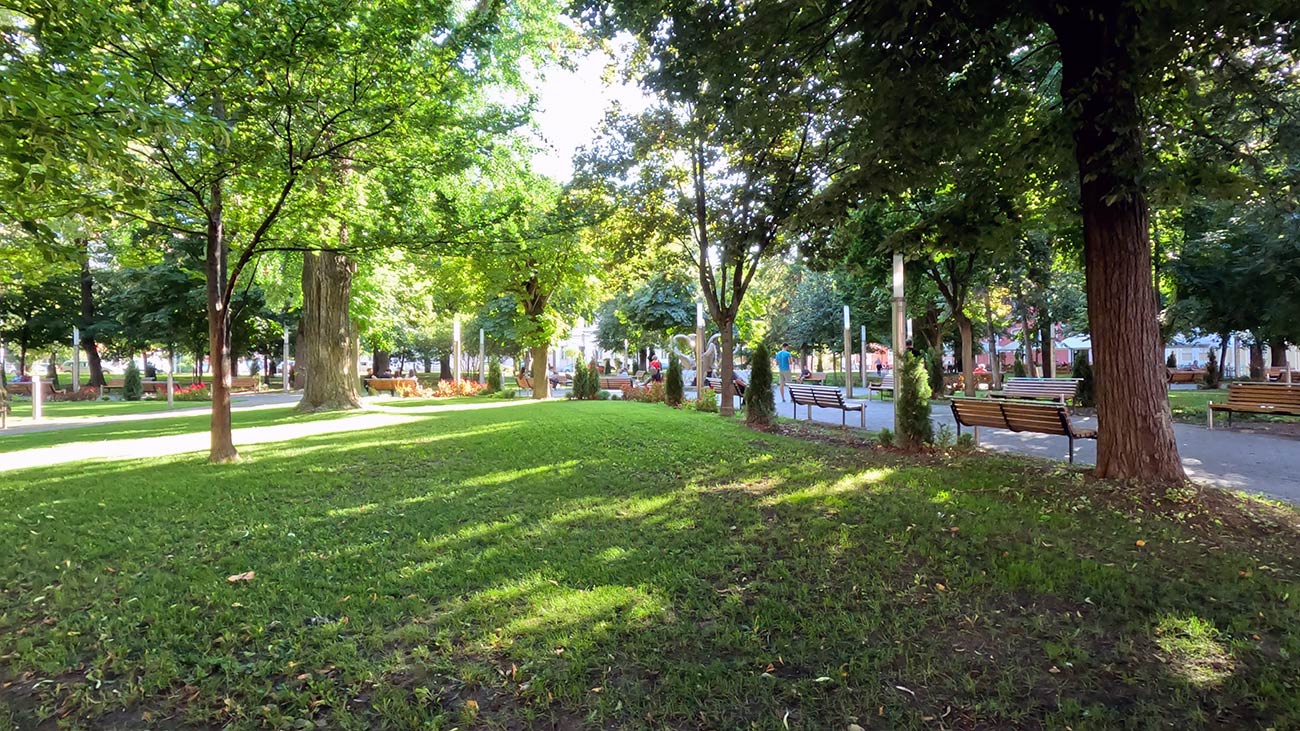
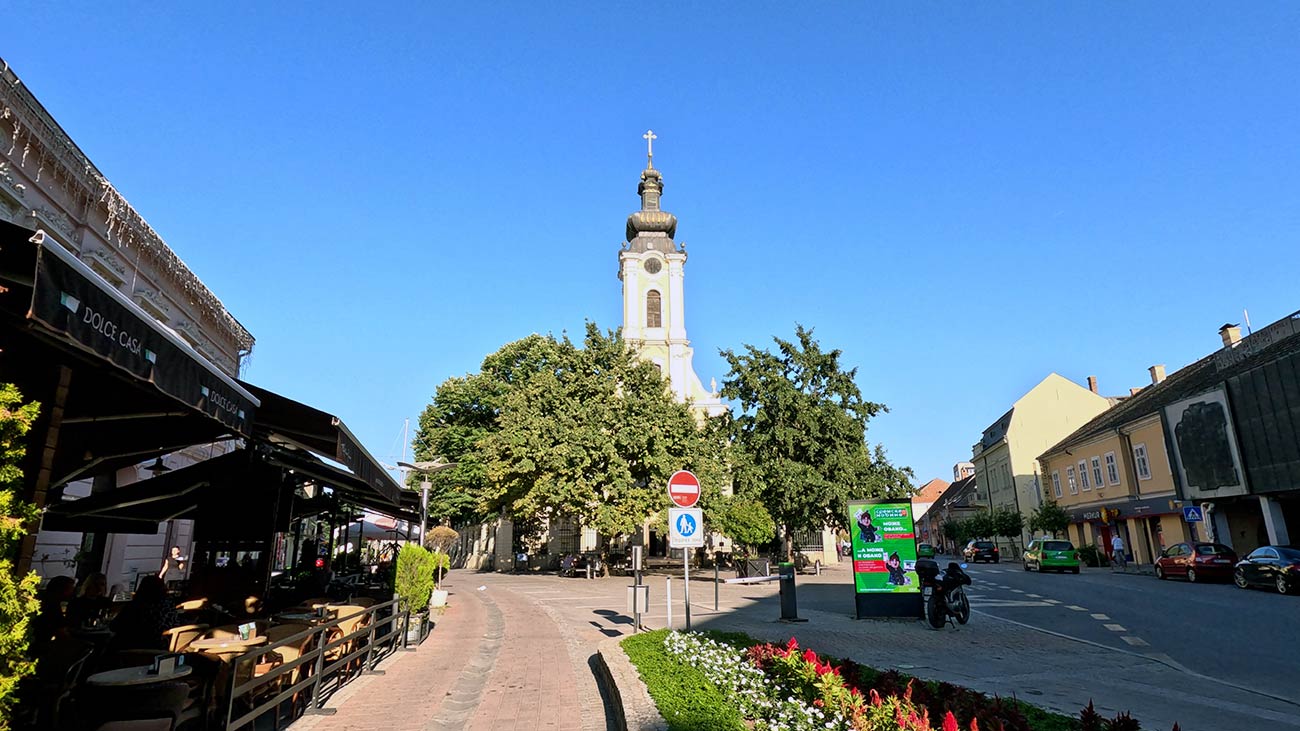
Beyond its Roman core, Sremska Mitrovica preserves further traces of the long centuries that followed Sirmium’s fall, including the Church of St. Demetrius and the Cathedral Basilica of St. Demetrius, both dedicated to the city’s patron saint, alongside the more modest Church of the Ascension of the Lord. The old Military-Border Building, a legacy of the Habsburg-era Military Frontier that once ran along this stretch of the Sava, and the City Gallery add further layers to a town centre that rewards an unhurried wander as much as a focused archaeological visit. According to Christian tradition, Sirmium was also the site of the founding of one of the very first Christian churches, established as early as 39 AD, a claim that, true or not, speaks to how seriously this small Vojvodina city has always taken its place in the deeper currents of European history.
 Useful Links
Mobility for Cyclists
The connection
The most practical connection from the EuroVelo 6 corridor is from Belgrade, where Srbija Voz runs a direct regional train to Sremska Mitrovica roughly every four hours throughout the day, with a journey time of around 1 hour 30 minutes. Cyclists riding the Serbian stretch of the EuroVelo 6 will find Belgrade the natural transfer point, and the relatively limited frequency of the service makes it worth checking departure times in advance and planning the day’s itinerary around them.
Serbian Trains
The rail network in Serbia is operated mainly by Srbija Voz, the national passenger rail operator, which runs both regional and InterCity services across the country. For much of the network, the system has historically been considerably less developed than rail networks in neighbouring central European countries, with ageing rolling stock, single-track lines, and journey times that often lag well behind road travel over the same distance. Against this backdrop, the modernised Belgrade-Novi Sad-Subotica corridor stands out as a genuine exception. Upgraded with new high-speed Soko electric trains and a parallel InterRegio service, this stretch has been transformed into one of the fastest and most reliable rail journeys anywhere in the region, with frequent departures running roughly every one-two hours throughout the day and journey times that now comfortably compete with, and often beat, the equivalent bus or car trip. Stops along this corridor include Novi Beograd, Petrovaradin (serving Novi Sad), Vrbas, Bačka Topola, and Subotica on the Soko line, with several additional stops served by the InterRegio service. Away from this modernised corridor, Serbian regional rail tends to be slower and less frequent, and for many shorter regional hops, buses remain the faster and more practical option. The Srbija Voz website and app are the main tools for checking timetables and buying tickets, and the app in particular is useful since not every station along the network, including some stops on the modernised corridor itself, has a staffed ticket counter. Tickets are normally purchased in advance through the website or app, but where no ticket counter is available at the departure station, tickets can simply be bought directly on board the train from the conductor, with no extra fee charged for doing so. This makes the system fairly forgiving for visitors unfamiliar with Serbian rail, since a missing ticket counter at a small rural station is not an obstacle to travel.
Taking your bike
Cycling support on Serbian trains follows clear rules set out by Srbija Voz, though capacity varies considerably by train type. On diesel-engine trains, bicycles are loaded through doors marked with a bicycle symbol and secured on built-in bike racks, of which there are only two per train set, located near the folding seats; bikes cannot be left in front of the wheelchair space or the toilets. On electric multiple-unit trains, bicycles are again loaded through marked doors and placed beside the folding seats near the entrance and toilets, though these carriages have no fixed racks, so the rider should stay close by to steady the bike; up to three bicycles can generally be carried if the multipurpose space is free, at the conductor’s discretion and depending on wheelchair users, prams, or large luggage already on board. The modern Soko electric trains on the upgraded Belgrade-Subotica corridor offer the most generous capacity, with dedicated bicycle space in every carriage near the luggage racks (the lower shelf folds down to free the space), allowing up to eight bicycles per train under normal conditions, again at the conductor’s discretion. On all train types, bicycles may be refused if the train is already at full capacity on a given stretch. On any other Serbian train not covered by these specific rules, and on all international services, a bicycle can still be carried as ordinary luggage if it is folded and packed so that it fits within the same compartment as its owner. Srbija Voz accepts no liability for damage or loss of bicycles carried on board. Given this patchwork of rules, the modernised Soko service remains the most reliable option for cyclists travelling with an assembled touring bike, while a folded or disassembled bike packed as luggage travels reliably on any service.
Bikes on Buses
Long-distance bus services in Serbia are extensive and, on most routes away from the main modernised rail corridor, faster and more frequent than the equivalent train journey. The network is operated by a large number of carriers, with Lasta among the largest national operators, alongside numerous regional companies such as Niš-Ekspres and Banat Trans, and the international operator FlixBus on selected routes. Bicycle transport on Serbian buses is not standardised across operators: bikes are typically carried in the luggage compartment beneath the bus when space allows, but capacity is not guaranteed, and advance reservation or direct confirmation with the specific operator is recommended, especially for an assembled touring bike. As a result, buses are best used by cyclists as a secondary, flexible option for repositioning between towns, particularly where rail connections are slow, infrequent, or simply don’t exist on a given route, while a packed or folded bike travels far more reliably as ordinary luggage than an assembled one.
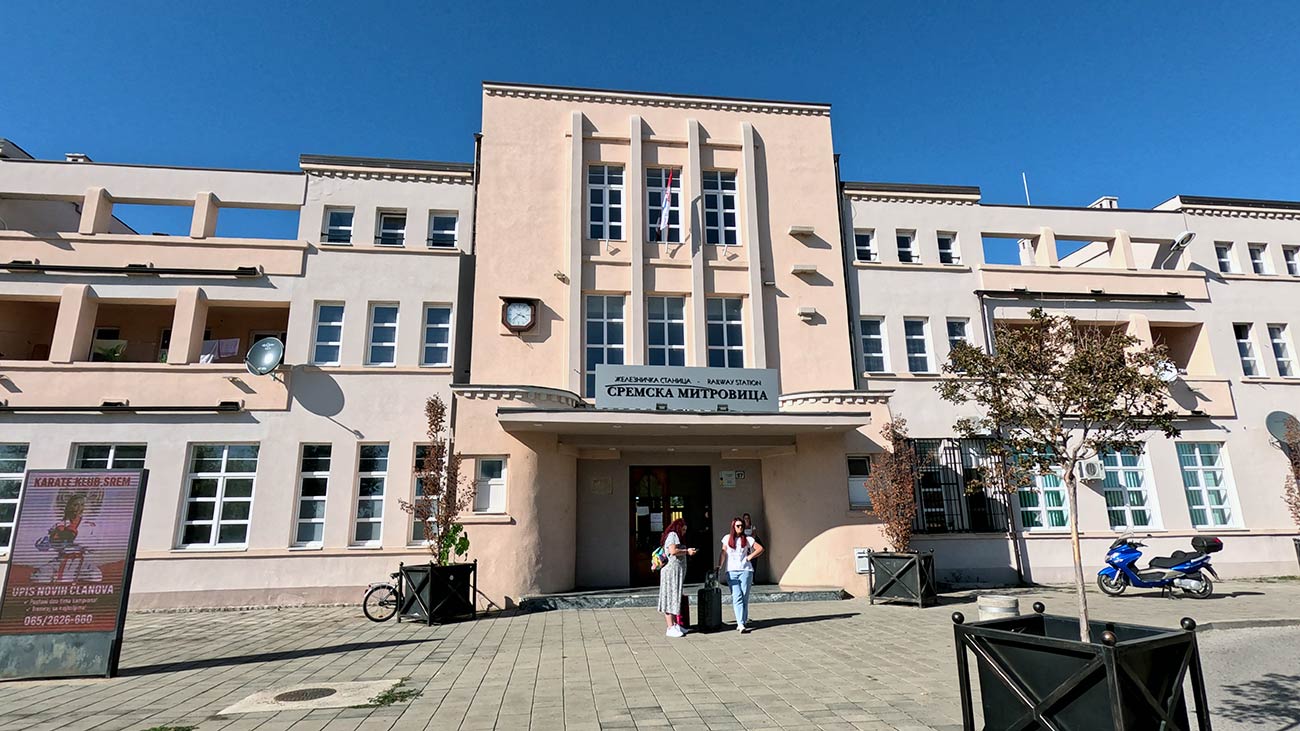
Arriving at Sremska Mitrovica Station
Sremska Mitrovica’s railway station sits within easy reach of the historic centre, with the Imperial Palace of Sirmium, the Museum of Srem, and the cluster of churches all reachable on foot in around fifteen minutes along flat, well-signposted streets, or considerably faster by bike. The town centre itself is compact and walkable, with the main archaeological sites and the museum clustered close together. Bike racks are available near the museum and around the central squares. For onward travel, the same line connects back toward Belgrade and the wider Danube region, so Sremska Mitrovica works equally well as a half-day excursion or as a longer stop combined with the surrounding Srem region.