Comana Nature Park
Reading time: 12 minutes
COMANA NATURE PARK, GIURGIU COUNTY, ROMANIA
The Delta at Bucharest’s Doorstep
Halfway between Bucharest and the Danube at Giurgiu, where the slow, meandering Neajlov River widens into a maze of reed beds, marshes, and shallow channels, lies one of the most important wetlands in Romania. Comana Nature Park spreads across some 25,000 hectares of the southern Romanian plain, protecting a landscape of floodplain forest, open water, and marsh so rich in birdlife that it is often called the Delta near Bucharest. After the Danube Delta itself, Comana is widely regarded as the second most important area in Romania for biodiversity, and the third largest wetland in the country, a startling concentration of nature sitting just beyond the edge of the capital’s suburbs.
The park owes its richness to its position at a natural crossroads of habitats, where central European deciduous forest meets the drier forest-steppe of the south. The result is an unusual overlap of species from very different ecological worlds: more than 1,150 plant species, over 200 species of birds (around half of Romania’s entire recorded birdlife), and a long list of fish, amphibians, reptiles, and mammals, including endemic species found nowhere else. The park’s two small science reserves protect the wild Romanian peony (Paeonia peregrina), which carpets a forest clearing in deep red each spring, and the Mediterranean butcher’s broom (Ruscus aculeatus) at the northern edge of its range. Layered onto all this natural wealth is a thread of medieval history, anchored by the fortified Comana Monastery, founded by Vlad the Impaler in the fifteenth century and increasingly believed by historians to be his actual burial place.
For cyclists exploring the Danube along the EuroVelo 6, Comana is one of the most accessible and rewarding natural detours on the Romanian stretch of the route. The park sits only around 7 kilometres from the Danube and is reached directly by train from Giurgiu, the river town on the EuroVelo 6 corridor, on the same regional line that runs north toward Bucharest. A half day or full day spent among the boardwalks, the monastery, the peony reserve, and the channels of the Neajlov Delta offers a complete change of register from the river road: quiet, green, full of birdsong, and steeped in one of Romania’s most enduring historical legends.
A Wetland Delta, a Dracula Monastery, and Forests Full of Peonies
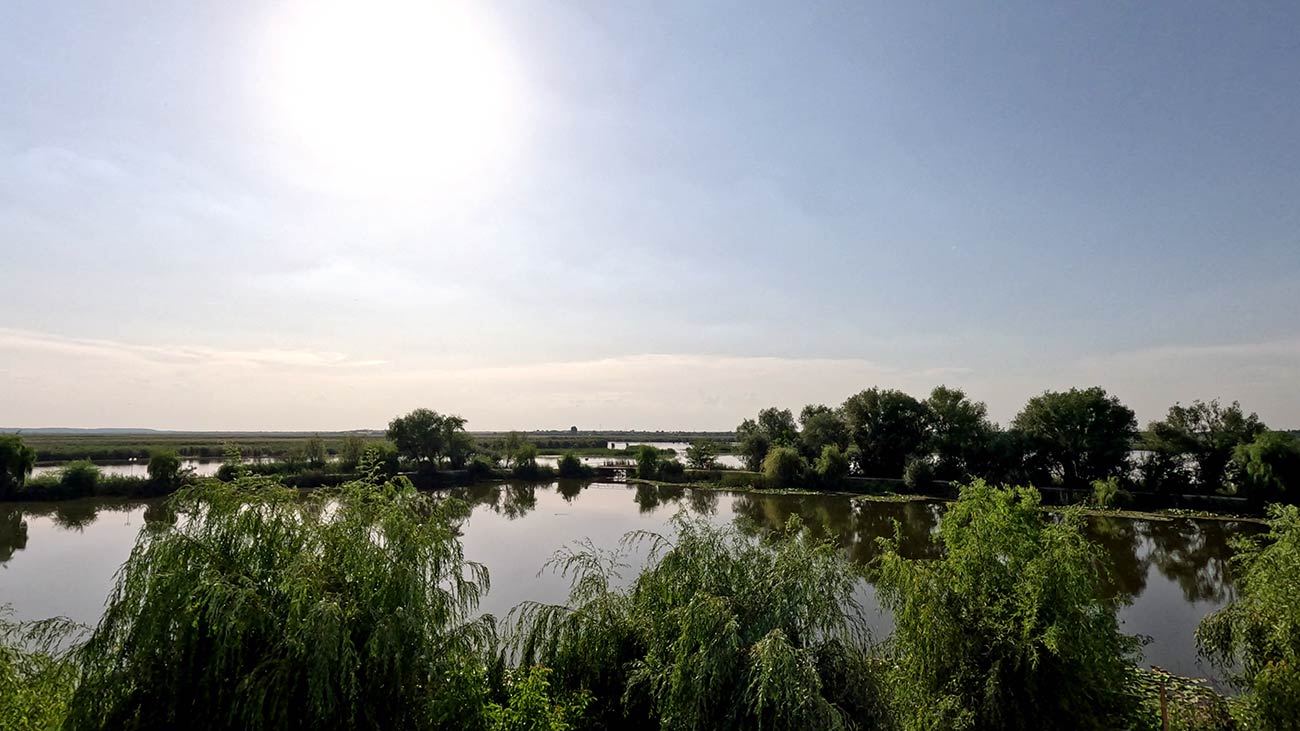
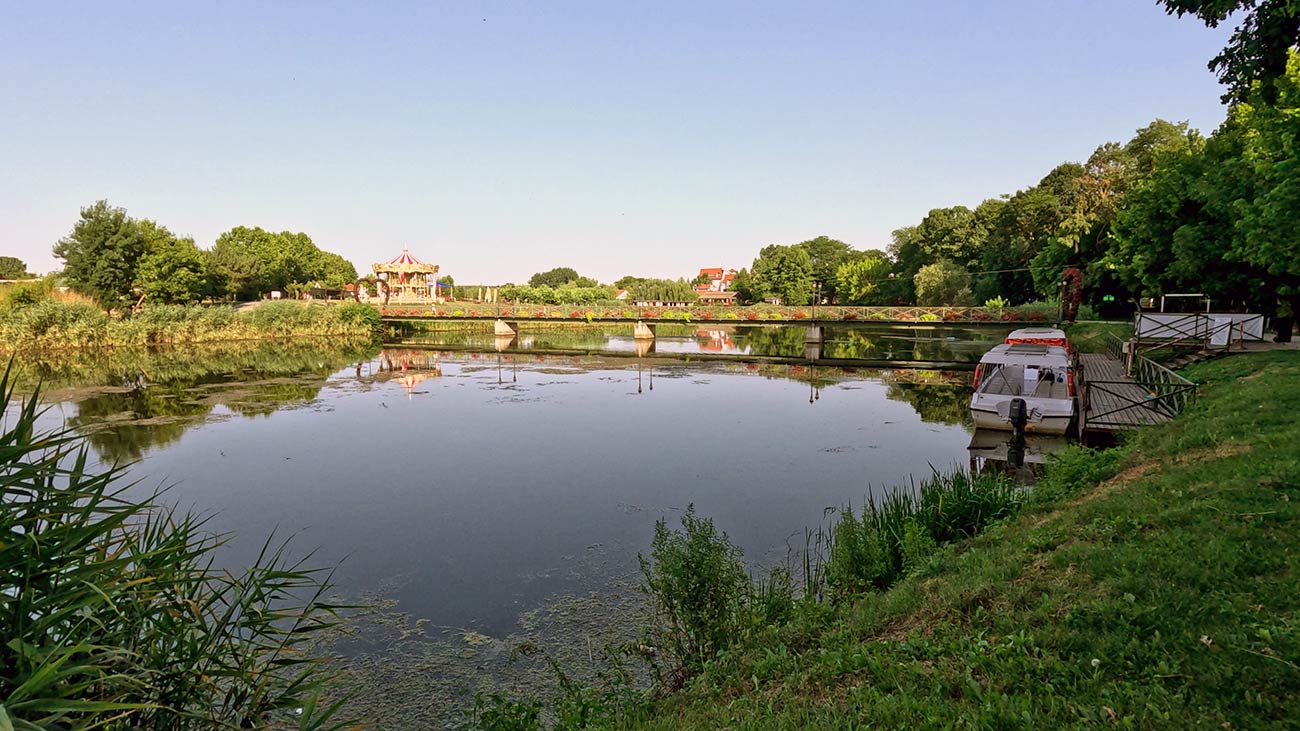
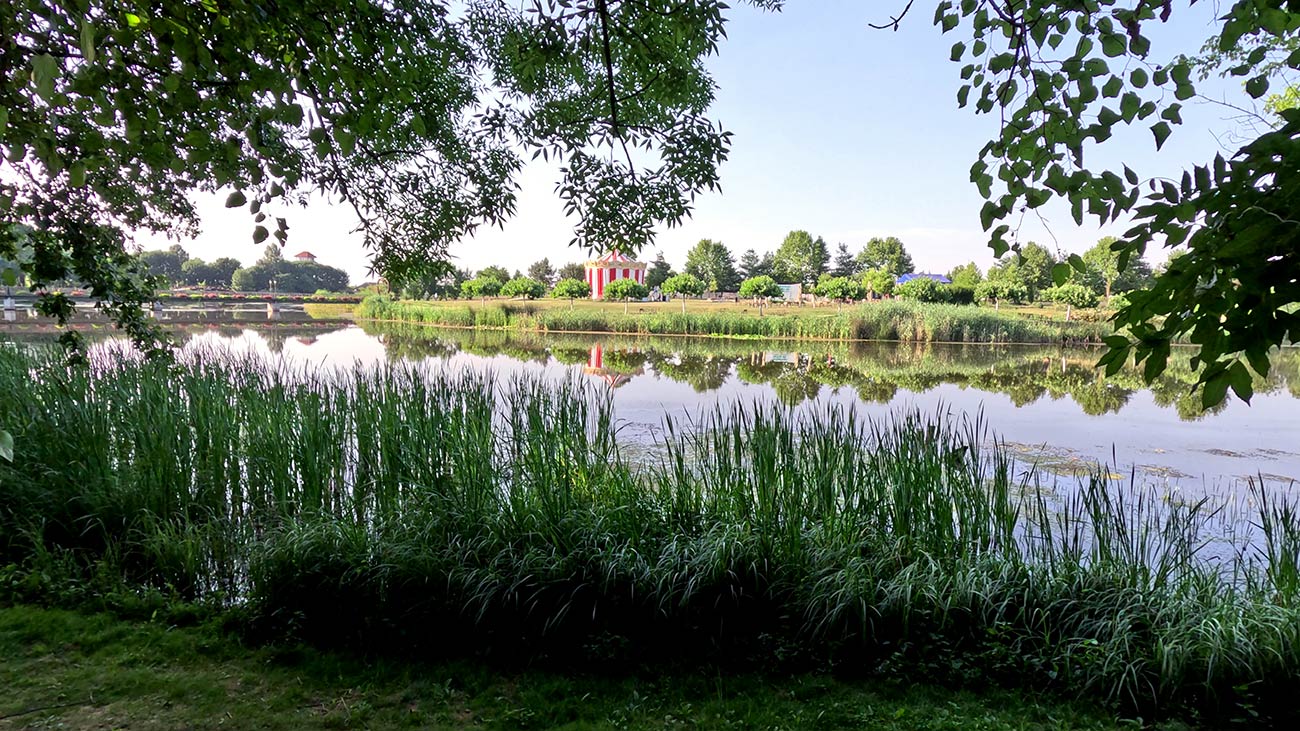
The natural heart of Comana is the Neajlov Delta (Balta Comana), the vast wetland formed where the meandering Neajlov River spreads out near its confluence with the Argeș, creating a labyrinth of slow-flowing channels, stagnant pools, reed beds, and marshy ridges. Often described as Romania’s little delta, it ranks as the third most important wetland in the country and the second for biodiversity after the Danube Delta itself, and it has been recognised internationally as a Ramsar wetland site and a Natura 2000 protected area. The delta is a paradise for birdwatchers: white and yellow water lilies and irises fill the shallows, while otters move through the channels and more than 200 bird species have been recorded across the park, including white and the rarer, shyer black storks, herons, egrets, cormorants, and the glossy ibis. On weekends through the warmer months, the park administration runs scheduled boat trips through the reed-fringed channels of the delta, gliding silently into areas that no road can reach, one of the most memorable ways to experience the wetland’s quiet.
The cultural anchor of the park is the Comana Monastery (Mănăstirea Comana), one of the most atmospheric and historically intriguing religious sites in southern Romania. The monastery was founded around 1461 by Vlad III Țepeș, better known as Vlad the Impaler or Dracula, originally as a fortified monastery guarding the surrounding marshland, and it was rebuilt in later centuries into the imposing walled complex that stands today. While popular legend has long placed Vlad’s tomb at Snagov, near Bucharest, contemporary historians increasingly regard Comana as the more probable burial site, since Vlad is thought to have been killed in battle nearby in the winter of 1476-77, and excavations on the monastery grounds in the twentieth century reportedly uncovered a headless body, a detail that fits the accounts of his death. Whether or not the monastery truly holds his remains, the combination of thick defensive walls, a quiet churchyard, a small museum, and the surrounding wetland gives the place a powerful, slightly haunting atmosphere, and it remains an active monastic community to this day.
The park’s forests and meadows hold their own seasonal treasures. Each spring, the Peony Reserve (Rezervația de bujori) bursts into bloom as the wild Romanian peony carpets a clearing in the forest with deep red flowers, an event timed each year to the early May holidays and drawing visitors from across the region; a separate small reserve protects the Mediterranean butcher’s broom at the northern limit of its natural range. Across the wider park, around 8,000 hectares of oak, lime, acacia, and elm forest shelter deer, wild boar, foxes, hares, and pheasants, threaded by flat dirt roads and marked trails that are easy to walk or cycle. A network of wooden boardwalks and footbridges crosses the marshes near the main entrance, including the picturesque Wish Bridge (Pasarela Dorințelor) and the Bridge of the Kiss, leading to bird observation points and quiet viewpoints over the water. Near the old park office, built in 1889, the Walnut Tree Spring (Fântâna cu nuc) marks the spot where local legend holds that Vlad the Impaler met his end.
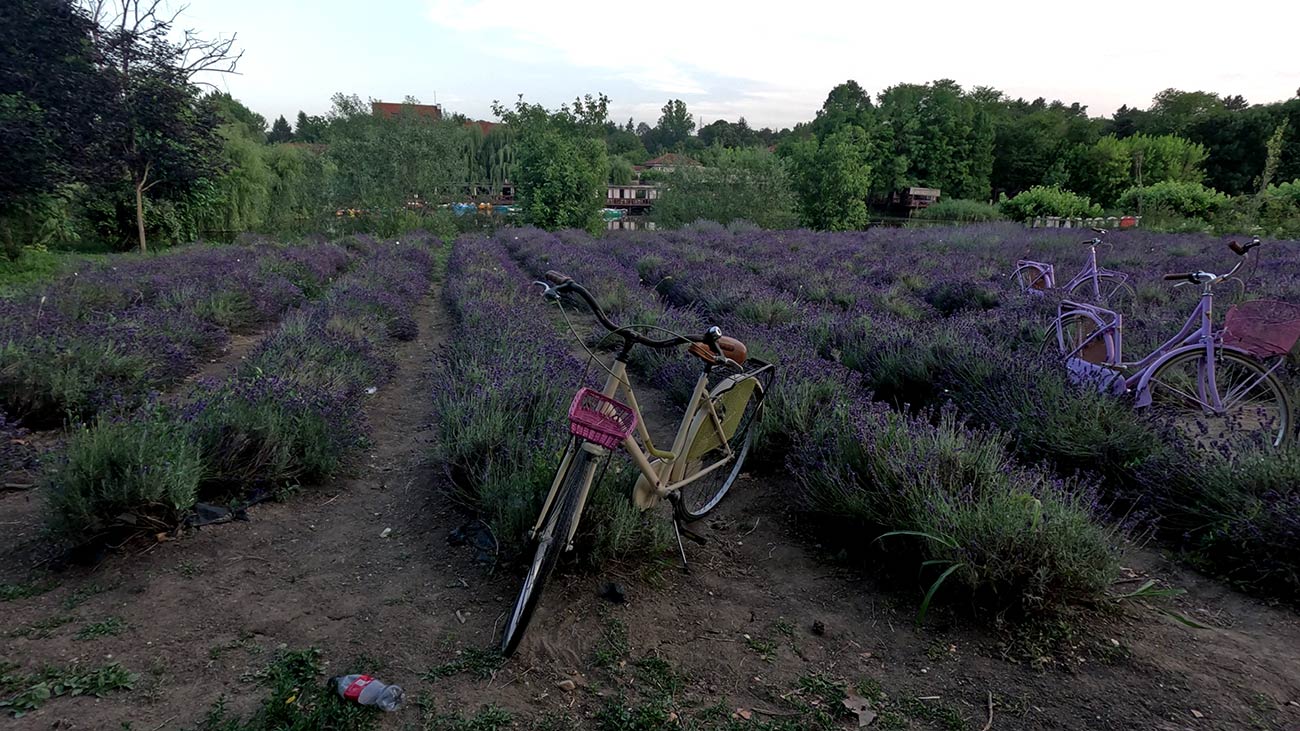
For visitors with more time, especially families, Comana offers several additional draws clustered near the village and park entrance. The Comana Adventure Park provides zip lines, rope courses, tree-top platforms, climbing walls, and archery across a range of trails suited to both children and adults. A garden of herbs and spices and the small Paper Mill (Moara de hârtie), a passionate local project reviving traditional handmade papermaking and old crafts, round out the cultural offerings, while the village itself rewards a slow walk and a meal at one of its guesthouses or restaurants. Bicycles, kayaks, and boats can all be rented locally, making it easy to explore the park at whatever pace suits the day, whether that means a gentle stroll across the boardwalks or a longer ride out to the forest peony meadows and the ornithological observation post.
 Useful Links
Mobility for Cyclists
The connection
The most practical connection from the EuroVelo 6 corridor is from Giurgiu, the river town directly on the route, which sits on the recently reopened regional rail line running north toward Bucharest. Trains on this line stop at Comana en route, with the journey from Giurgiu taking around 30 minutes. Cyclists riding the Romanian stretch of the EuroVelo 6 will find Giurgiu the natural transfer point. The same line continues north toward București Progresu and Bucharest, so Comana can also be combined naturally with a visit to the capital on a longer itinerary, since both lie on the same route.
Romanian Trains
The rail network in Romania is operated mainly by CFR Călători (Căile Ferate Române), the national passenger rail company, which runs the large majority of routes across the country on what is, by track length, the fourth-largest railway network in Europe. Alongside CFR, several smaller private operators run on selected routes, including Regio Călători, InterRegional Călători, Transferoviar Călători, Softrans, and Astra Trans Carpatic, each covering a limited set of lines; in places CFR doesn’t reach, one of these operators usually fills the gap. Trains come in three main categories: Regio (R), the slowest, stopping at every station; InterRegio (IR), faster medium- and long-distance services with both first and second class, free wifi, and on longer routes sleeping cars and dining cars; and InterCity (IC), the fastest and most comfortable category, reintroduced in December 2023. Private operators often don’t have ticket offices at smaller stations, so tickets can usually be bought directly on board the train without penalty. The CFR Călători website and app, along with the independent Infofer journey planner, are the most useful tools for checking timetables across all operators and purchasing tickets in advance.
Taking your bike
Romania is moderately bike-friendly when it comes to rail transport, though the rules vary by operator and are worth checking before each journey. On CFR Călători trains, non-folding bicycles can only be carried on Regio, InterRegio, and InterCity services that are specifically marked with a bicycle icon in the online timetable, where a bicycle ticket must be purchased at the ticket office or on board, priced according to distance. Folding bicycles, by contrast, are carried free of charge as hand luggage on any CFR train, in first or second class, provided they fit within the space available for hand luggage and don’t inconvenience other passengers; bicycles with one or both wheels removed do not count as folding bikes and are instead charged as bulky luggage. Among the private operators, rules and fees differ: Regio Călători, InterRegional Călători, Transferoviar Călători, and Softrans each charge a small separate bicycle fee, while Astra Trans Carpatic does not allow bicycle transport on its trains at all. Given this patchwork of policies, the most reliable approach for cycle touring in Romania is to check the bicycle icon on the specific train in the CFR or Infofer timetable in advance, or to travel with a genuinely foldable bike, which sidesteps the issue entirely.
Bikes on Buses
Long-distance bus services in Romania are extensive and, for many domestic routes, faster and more comfortable than the equivalent train journey, particularly since FlixBus expanded into the Romanian domestic market and now connects more than 50 cities across the country, alongside its existing international routes. Outside the larger FlixBus coaches, much of Romania’s internal bus network runs through smaller regional operators using minibuses and shuttle vans, which can be considerably less comfortable but are frequent, reliable, and inexpensive; tickets for these can typically be checked through aggregator sites such as Autogari.ro. Bicycle transport on Romanian buses is not standardised and depends heavily on the specific operator and vehicle. FlixBus routes operated within Romania have, in practice, proven inconsistent for cyclists, with some drivers accepting only fully folded or bagged bicycles regardless of what is shown on international booking pages, and smaller regional minibus operators rarely have any dedicated luggage space for an assembled bike at all. As a result, buses are best treated by cyclists as a flexible but unreliable backup option in Romania, while a bicycle that is genuinely foldable, or fully disassembled and bagged, travels far more predictably than an assembled touring bike on any bus service in the country.
Arriving at Comana
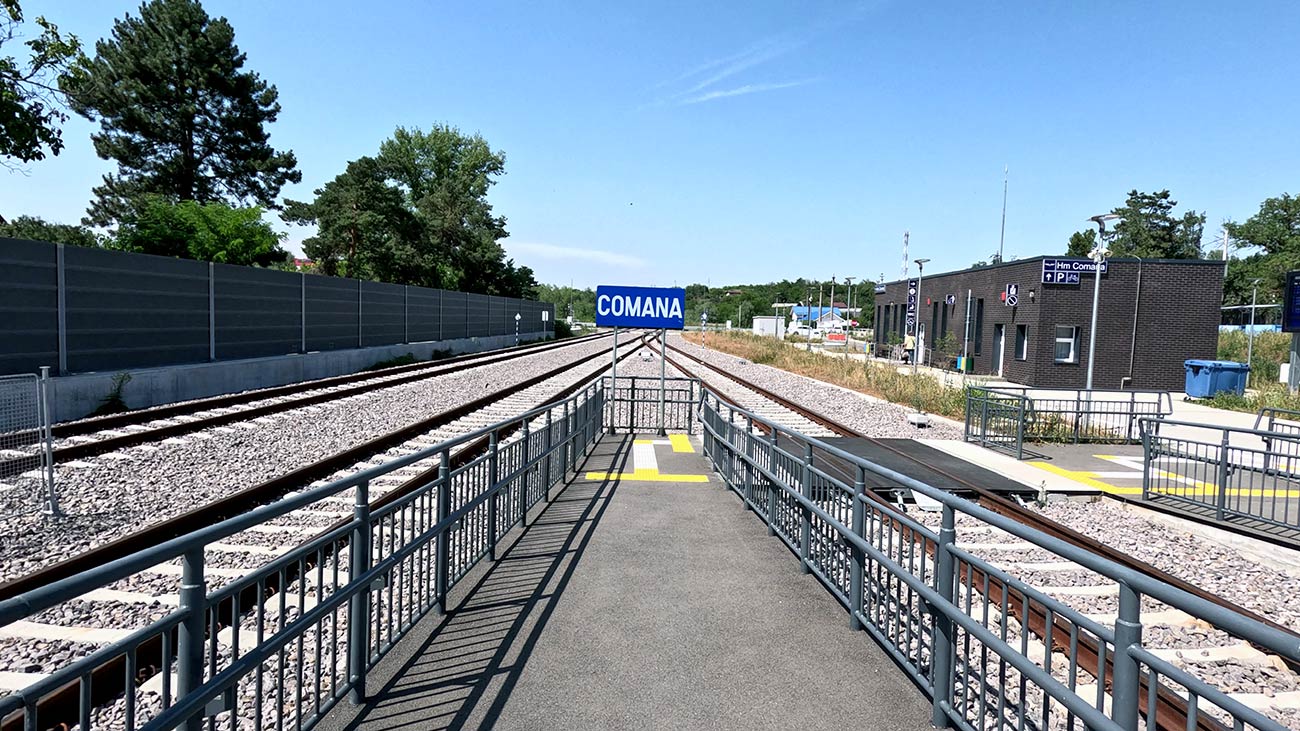
From Comana’s railway station, the village, the park entrance, the monastery, and the start of the wetland boardwalks are all within easy reach by bike or on foot, and the park’s main points of interest are clustered close enough together to be explored without a car. The terrain throughout the park is flat, with level dirt roads and marked trails connecting the monastery, the peony reserve, the boardwalks, and the forest, making it especially well suited to cycling. Bicycles, as well as kayaks and boats, can be rented locally for exploring the delta and the wider park. Bike racks are available at the main entrance and visitor facilities. For onward travel, the same rail line connects back toward Giurgiu and the Danube corridor, as well as north toward Bucharest, so Comana works well as a half-day or full-day excursion, or as a green stop on the way between the river and the capital.