Baden bei Wien
Reading time: 14 minutes
BADEN BEI WIEN, LOWER AUSTRIA, AUSTRIA
An Imperial Spa Town at the Edge of the Vienna Woods
Twenty-five kilometres south of Vienna, where the eastern slopes of the Vienna Woods meet the warm sulphur-rich aquifers of the Pannonian basin, lies one of the most distinguished spa towns of central Europe. Baden bei Wien has been built around its fourteen warm sulphur springs, which still rise to the surface at around 36 degrees Celsius, just as the Romans first noted them when they called the settlement Aquae almost two thousand years ago. The town has been a place to take the waters for so long that nearly every era of European cultural history has left a layer of its own here, from Roman thermal baths to Baroque columns, from Biedermeier villas to grand fin-de-siècle bathing palaces.
The decisive transformation came in the late eighteenth and early nineteenth centuries, when Emperor Franz I made Baden his summer residence and brought the whole imperial court with him. Composers, writers, generals, and bankers followed, and over a long century of imperial patronage Baden grew into one of the most elegant spa resorts in the Habsburg Empire. Beethoven came here repeatedly to seek relief from his deafness in the sulphur baths, Mozart composed some of his last music in town, and the streets around the Kurpark filled with classical concerts that still echo in the bandstand programmes today. In 2021, the entire historic centre was inscribed by UNESCO as part of the Great Spa Towns of Europe World Heritage Site, in recognition of this unusually well-preserved spa-town heritage.
For cyclists exploring the Danube along the EuroVelo 6, Baden makes for a straightforward cultural detour from Vienna, which lies on the river corridor. A direct regional train from Vienna Hauptbahnhof reaches Baden in around half an hour, and a heritage light railway, the Badner Bahn, links the Vienna State Opera with the centre of Baden in about an hour. Once in town, the historic core is compact and walkable, and a day spent moving between the thermal baths, the rose gardens, the spa park, and the elegant main square gives an unusually complete picture of the kind of small spa town that once defined the imperial summer.
SpaMusicRosesCasino
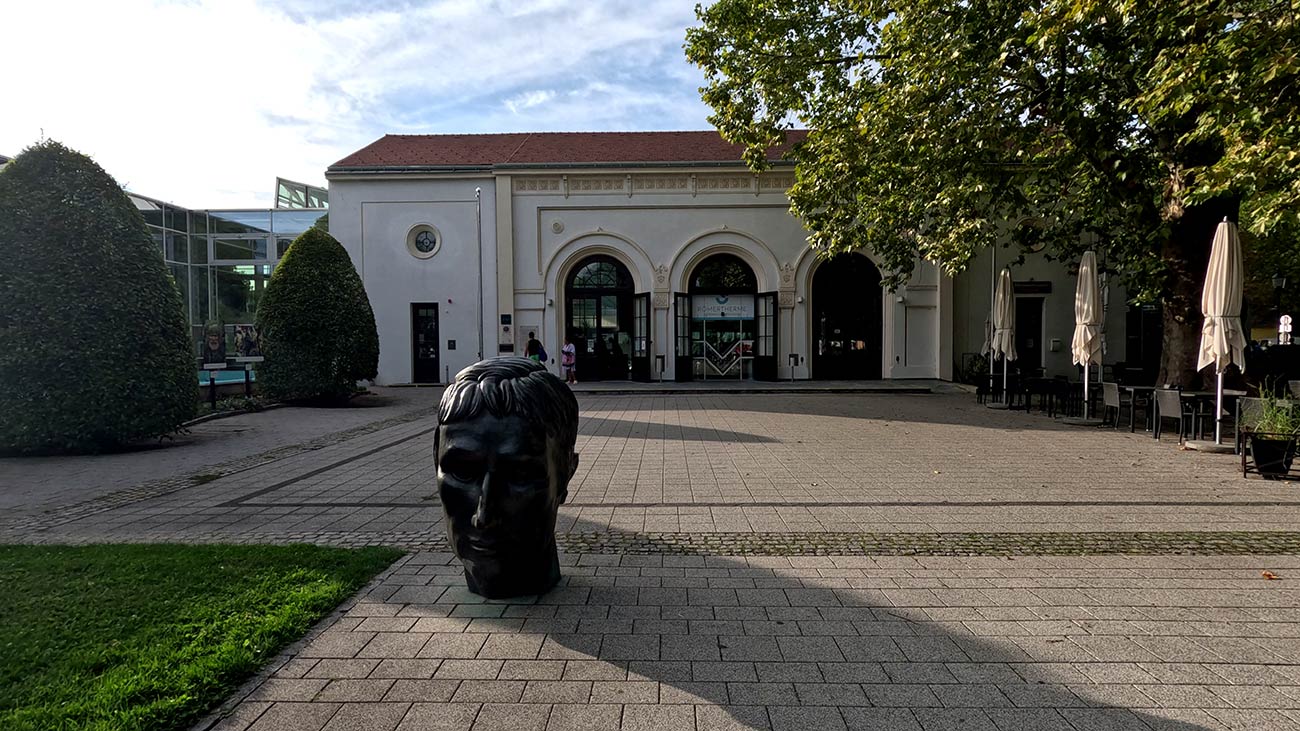
Römertherme Baden
The largest modern thermal bath in the town carries its Roman name with deliberate intent. Opened in 1999 and named after the ancient bathing tradition that goes back to Aquae, the Römertherme Baden stretches across around 3,500 square metres of pools and wellness facilities, including a separate sulphur outdoor pool fed directly from the local springs. The most distinctive architectural feature is the central swimming hall, covered by what is reported to be the largest free-hanging glass roof in Europe, which floods the indoor pools with daylight throughout the year. The water itself comes from the Marienquelle, drawn from a depth of around 1,000 metres and emerging naturally at a temperature of around 35.3 degrees Celsius. A whirlpool, attraction pool, sports pool, and dedicated children’s pool round out the indoor offer, while the sauna and steam bath area includes a Finnish sauna, an outdoor pine sauna, a Roman steam bath, and a bio sauna with colour therapy.
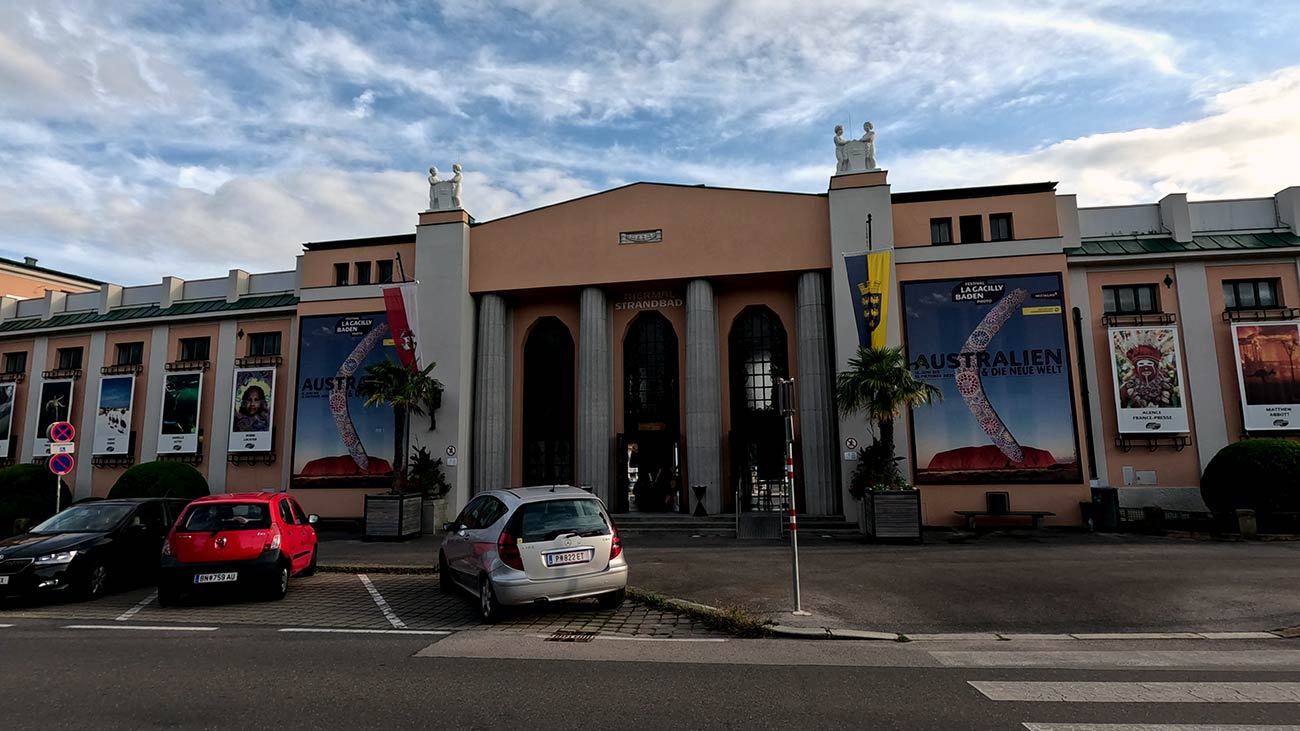
Thermalstrandbad Baden
A few minutes’ walk from the Römertherme stands one of the most distinctive spa buildings in Lower Austria. The Thermalstrandbad Baden is an Art Nouveau bathing complex that opened in 1926 to combine elegant architecture with the open-air bathing culture that became fashionable in the early twentieth century. The building combines indoor and outdoor pools, a wave pool, sulphur-fed thermal water, and one of the largest sand beaches at any inland bath in central Europe, all set within the carefully composed framework of a Wiener Werkstätte-style complex. The site forms part of the wider UNESCO designation of Baden as one of the Great Spa Towns of Europe, and the nostalgic feel of the changing cabins, deck chairs, and shaded pavilions still gives the place a quietly cinematic atmosphere on warm summer days.
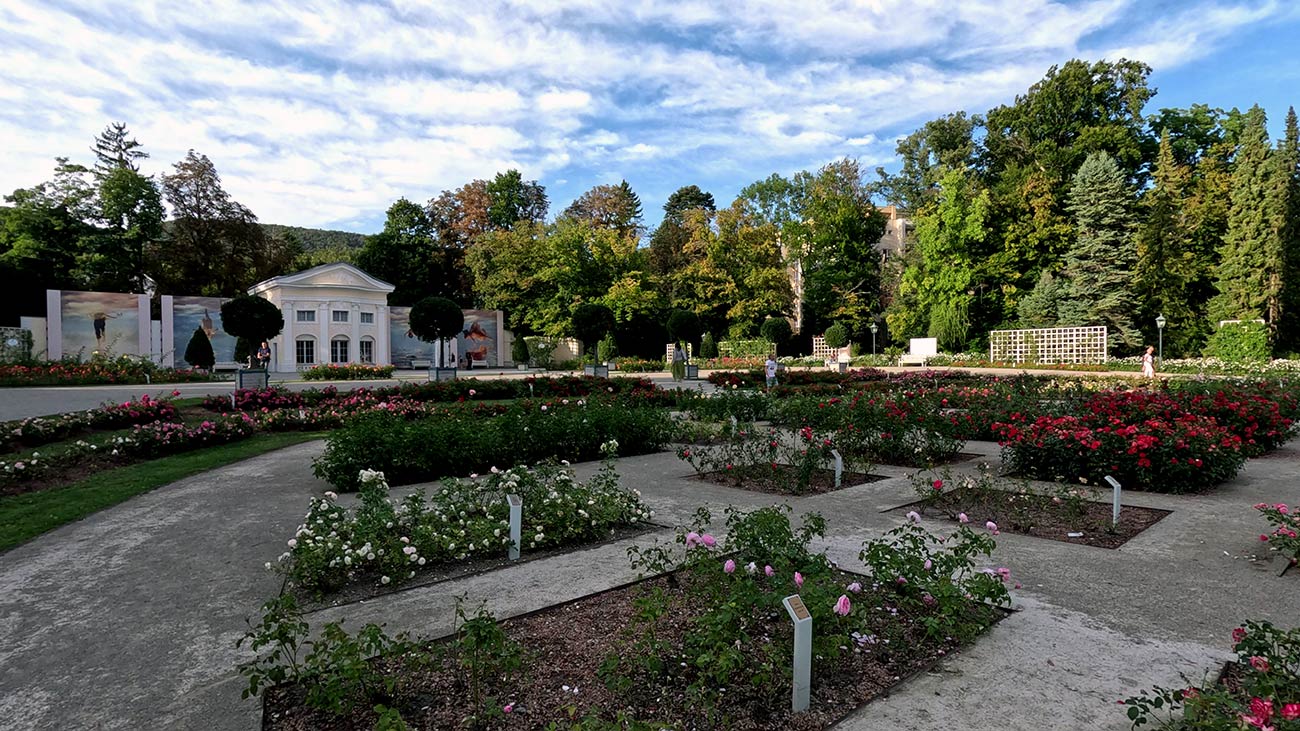
Doblhoffpark and the Rosarium
A short walk west of the Kurpark, the gentle slope of Doblhoffpark opens out into a separate landscape garden built around a small lake, a Baroque villa, and a remarkable rose collection. At its centre lies the Rosarium Baden, one of the largest rose gardens in Europe, with around 30,000 individual rose plants representing more than 800 different varieties. The main bloom falls between mid-May and late June, when the parterres glow in countless shades of red, pink, apricot, yellow, and white, all carefully labelled for visitors interested in the history of rose cultivation. The annual Baden Rose Days (Badener Rosentage) in June and the autumn rose festival together draw enthusiasts from across central Europe. The lakeside paths and the surrounding villa park offer a quieter, more contemplative counterpoint to the busier corners of the spa centre.
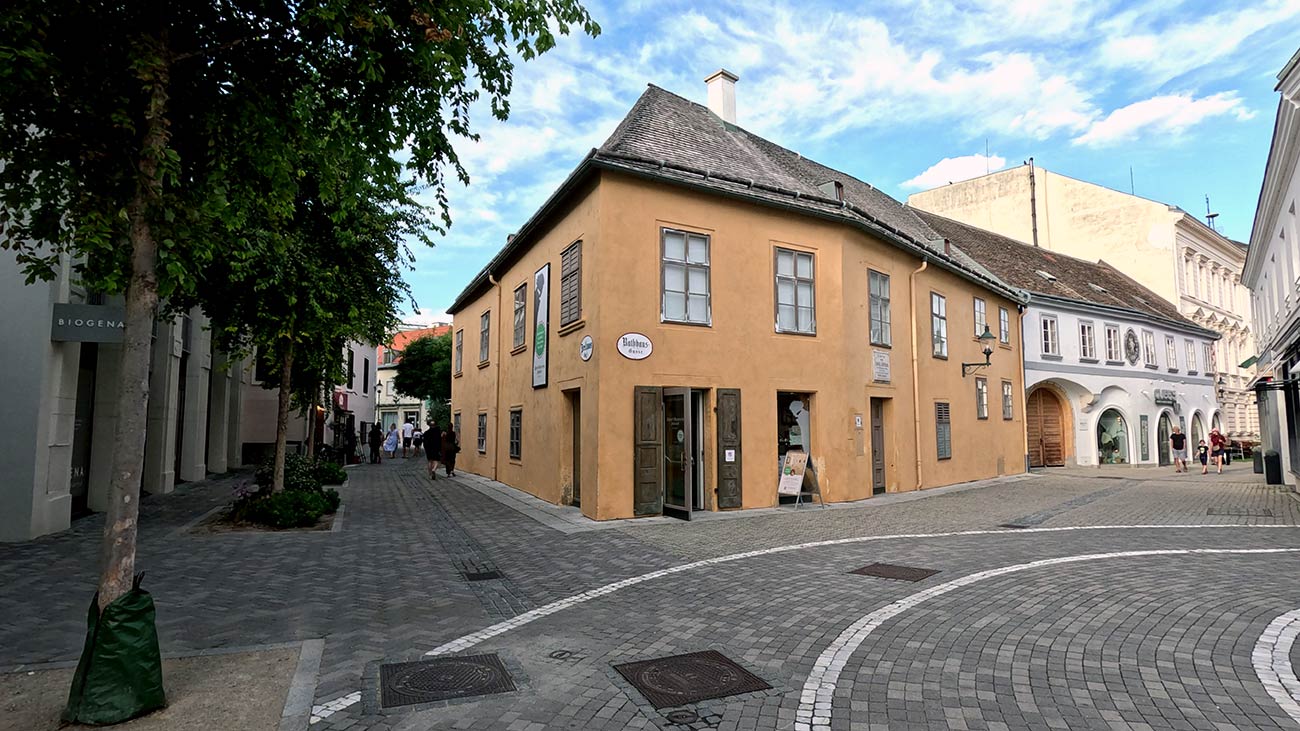
Beethoven House
Tucked into a quiet residential street in the centre of Baden stands one of the most evocative musical pilgrimage sites in Austria. Beethoven House (Beethovenhaus Baden) is the house in which the composer spent his summers in 1821, 1822, and 1823 while completing what would become the Ninth Symphony, including the Ode to Joy finale. Beethoven came to Baden repeatedly across the last decade of his life in the hope that the local sulphur baths would help his worsening deafness, and the rooms of the house have been thoughtfully restored as a museum dedicated to those summers. The exhibition combines original objects, period interiors, and modern multimedia presentations that explore his life in the town. Among the surviving Beethoven traces in his own handwriting is the quietly affectionate line, I would never have thought that I could be as lazy as I am here, written in a letter from Baden, which has since become almost a motto of the town.
Kurpark and Casino
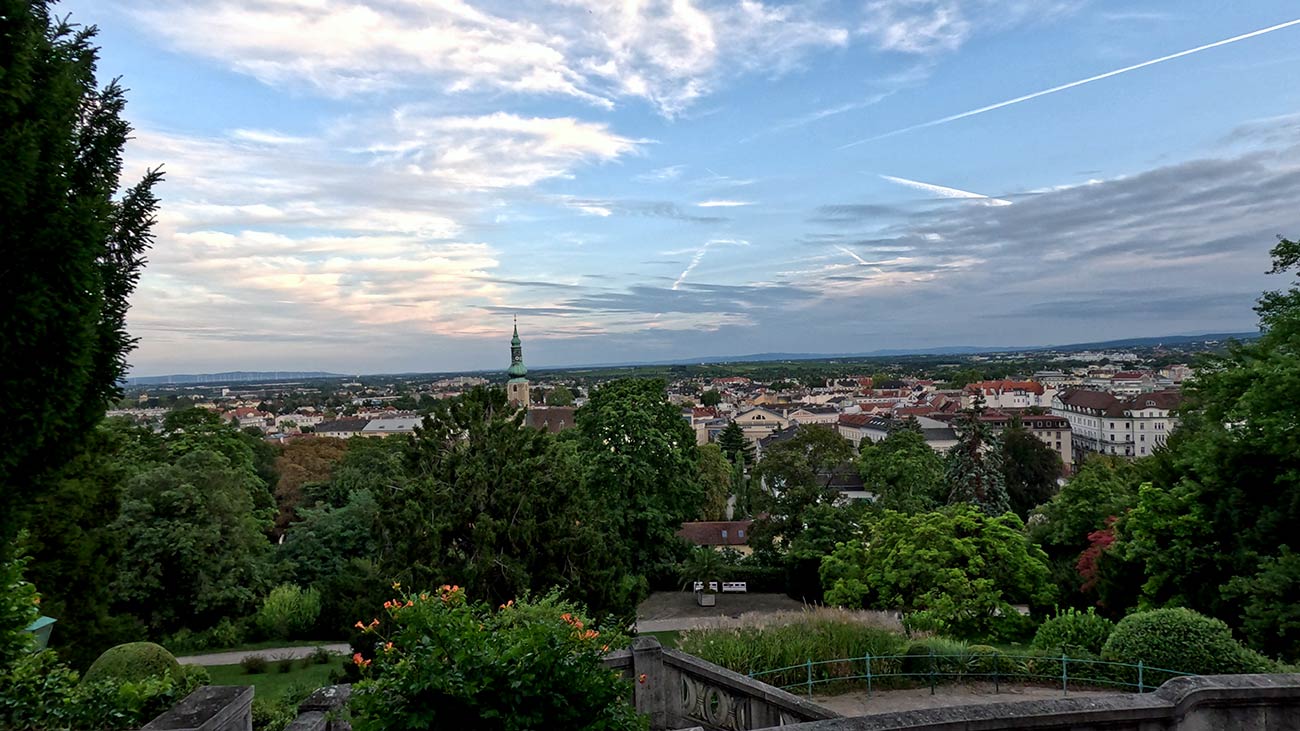
The civic and cultural heart of the spa town is the Kurpark Baden, the wide spa garden that climbs gently up the slope above the centre. Long walking paths wind past a delicate music pavilion, ornamental flowerbeds, classical sculptures, towering plane and chestnut trees, and the Beethoven Temple, a small classicist rotunda that looks out across the rooftops of the town. The summer concert season at the music pavilion is one of the longest running open-air programmes of its kind anywhere in Austria. At the foot of the park, the Casino Baden occupies the imposing former Trinkhalle, a Drinking Hall building from 1886 originally built for spa guests to take the waters. The site of the building stands above one of the strongest sulphur springs in town, and the elegant interiors have been converted, since the early twentieth century, into what is today the largest casino in Austria, with roulette, blackjack, poker, slots, a fine-dining restaurant, and a programme of evening galas, balls, and cabaret throughout the year.
 Useful Links
Mobility for Cyclists
Reaching the area by train with your bike
Baden bei Wien can be reached from the EuroVelo 6 by a single direct rail journey from one of the main cities on the Danube cycle path. The town lies around 25 kilometres south of Vienna in the eastern Vienna Woods, on a frequent regional line operated by ÖBB, the Austrian Federal Railways, with an additional connection provided by the historic Badner Bahn light rail directly from the centre of Vienna.
The connection
The most practical connection from the EuroVelo 6 corridor is from Vienna, where ÖBB regional trains run directly from Vienna Hauptbahnhof to Baden Bahnhof in around 30 minutes, with frequent departures throughout the day. An alternative is the Badner Bahn, a historic light-rail line that runs every 15 minutes between Vienna’s State Opera and Baden Josefsplatz, with a total journey time of around one hour. The Badner Bahn is part-train, part-tram, and is itself a small heritage experience that passes through a string of wine villages on its way out of the city. Cyclists riding the Danube stretch of the route will find Vienna the natural transfer point, and either option fits comfortably into a single travel day. Baden can also be combined with a stop at Esterházy Palace in Eisenstadt or at Neusiedl am See on a longer Burgenland and Vienna Woods itinerary.
Austrian trains
The rail network in Austria is operated mainly by ÖBB (Österreichische Bundesbahnen), the Austrian Federal Railways, which runs most long-distance services and a large share of regional connections across the country. Alongside ÖBB, the private operator Westbahn provides competing long-distance services on the main east-west corridor between Vienna, Salzburg, and onward to Munich. Several smaller regional operators run local and feeder lines on secondary routes, but they are fully integrated into the national rail system, so transfers between operators are straightforward. The Danube region in Austria is particularly well served by rail: the main east-west line links Vienna with Krems, Linz, Wels, Salzburg, and the German border at Passau, closely paralleling the river for much of its length and forming one of the busiest and most reliable rail axes in central Europe. From the main cities along this corridor, dense networks of regional and S-Bahn lines branch out both north and south of the Danube, with frequent departures throughout the day that make inland detours easy to organise without long waiting times or complicated changes. The ÖBB app is the central tool for planning journeys, checking timetables, and purchasing tickets across all services, including both regional and long-distance trains.
Taking your bike
Austria is generally very bike-friendly when it comes to rail transport, especially on regional services operated by ÖBB, which form the core of mobility for cycle touring along the Danube and its connecting corridors. On regional and S-Bahn trains, bicycles can be taken on board for an additional fee, with no advance reservation possible and a first-come, first-served allocation of space. Bicycle tickets are sold as single trips or as affordable daily, weekly, or monthly passes, and the Klimaticket Austria annual pass includes free bicycle transport on regional trains in several federal states. On long-distance services such as Railjet, Intercity, Eurocity, and Nightjet trains, an advance reservation for the bicycle is mandatory, with the bike zones located in second-class carriages. The private operator Westbahn, which runs frequent services along the main east-west corridor between Vienna, Linz, and Salzburg, also accepts bicycles, but only with an advance reservation. Folding bikes are carried free of charge as hand luggage on both ÖBB and Westbahn trains. Overall, the Austrian system is well adapted to cycle tourism and offers a flexible combination of train and bike that makes it easy to leave the EuroVelo 6 route in either direction for short or extended detours.
Bikes on Buses
Long-distance bus services in Austria are primarily operated by FlixBus and by ÖBB-Postbus, the long-distance coach arm of the Austrian Federal Railways, complemented by a smaller number of regional and private coach operators on selected routes. The long-distance bus market in Austria is less developed than in neighbouring countries, as the wider rail network covers most of the country efficiently and many connections that would otherwise be served by intercity coaches are instead handled by train. Bicycle transport is available on certain FlixBus connections, either via external bike racks or in the luggage compartment, but it is not consistently guaranteed across the network and depends on the specific vehicle type and route configuration. Where available, bicycle transport must be reserved in advance and capacity is limited, making it less flexible compared to rail services. ÖBB-Postbus also operates seasonal bicycle and hiking buses in cooperation with regional tourism boards, designed specifically to bring cyclists and hikers to popular starting points along trails and bike paths, although these services run on selected routes only and outside the main long-distance network. As a result, buses are generally used as a secondary option for cyclists, mainly for longer-distance repositioning between major cities rather than as a core part of cycling itineraries along the Danube region. While useful in specific cases where rail connections are less convenient, they are less predictable and less standardised for bicycle transport, so advance planning is essential.
Arriving at Baden Bahnhof or Josefsplatz
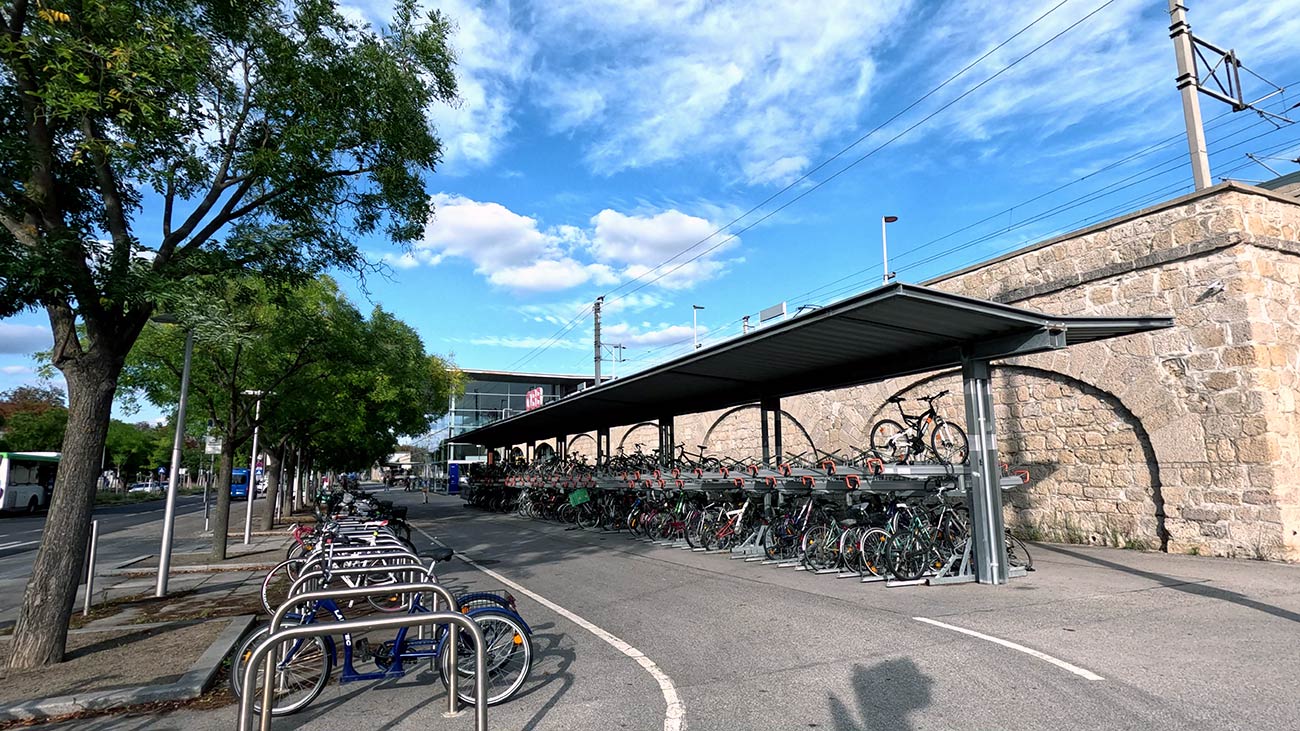
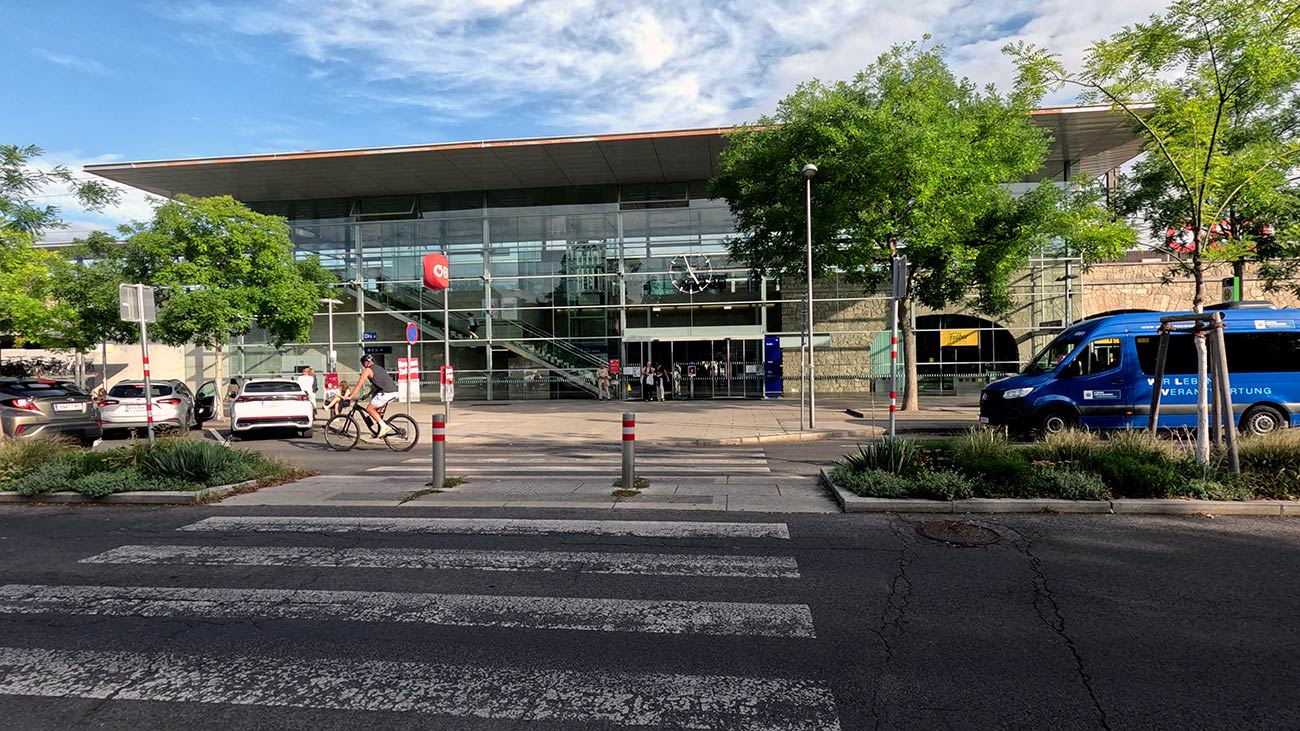
Baden’s main railway station sits about ten to fifteen minutes’ walk east of the historic centre, with the Hauptplatz, the Kurpark, the Casino, the Römertherme, and the Beethoven House all reachable on foot or by bike along largely flat, well-signposted streets. The Badner Bahn terminus at Josefsplatz is even more convenient, only three to five minutes on foot from the pedestrian zone. The historic centre is small, mostly pedestrianised, and easy to navigate, and the climb up through the Kurpark to the Beethoven Temple is gentle and walkable. Bike racks are available at the main station and along the central squares. Cycling infrastructure in and around the town is good, and the surrounding wine villages of the Thermenregion Vienna Woods are connected by signposted cycle paths for travellers wanting to extend their visit with a wine-region ride. For onward travel, the same lines connect back toward Vienna and the wider Danube region, so Baden works equally well as a one-day excursion or as a longer overnight detour from the EuroVelo 6.