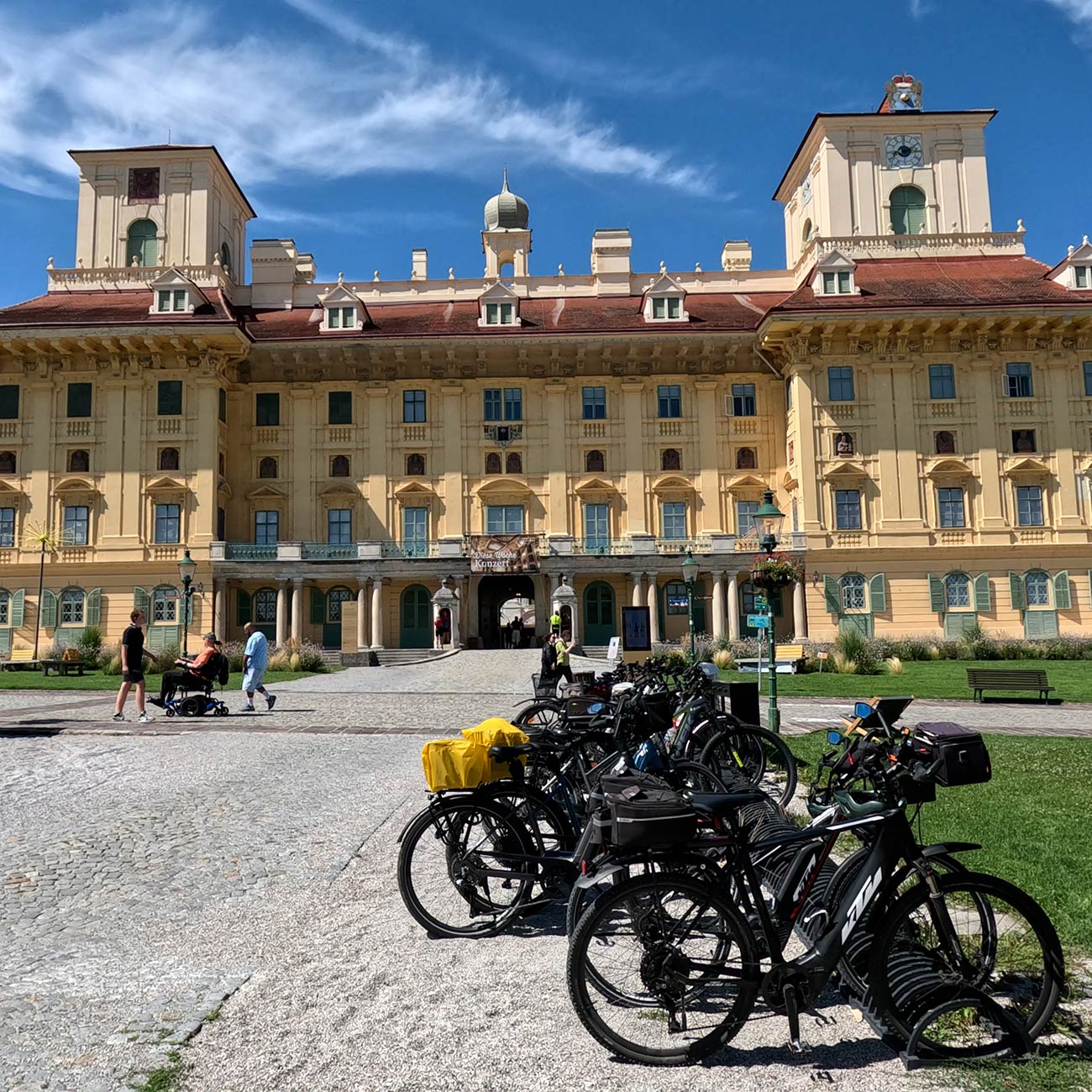
Esterházy Palace, Eisenstadt
Reading time: 13 minutes
ESTERHÁZY PALACE, BURGENLAND, AUSTRIA
A Princely Palace at the Edge of the Pannonian Plain
At the eastern edge of Austria, where the Alps finally give way to the wide grasslands of the Pannonian Plain, lies the small capital of the country's youngest federal province. Eisenstadt grew up around a great Baroque palace, and the silhouette of Esterházy Palace, painted in the warm ochre that has become its trademark, still dominates the centre of the town as it has for centuries. The building looks out over a small square at the foot of the gentle Leitha Hills, with vineyards rolling away into the distance and the long shadow of Hungarian cultural influence never quite far from the surface.
The palace tells the story of the Esterházy princes, one of the wealthiest and most influential noble families of the Habsburg Empire, whose name was tied to this corner of Hungary, and later Austria, for nearly five centuries. From a medieval castle dating back to the thirteenth or fourteenth century, the palace was transformed into a Baroque residence in the late seventeenth century and partly reshaped in early Neoclassical style in the early nineteenth. The full ambition of those rebuildings was never quite completed, slowed by the Napoleonic Wars and family finances, but enough survives to make Eisenstadt one of the most concentrated experiences of princely court life anywhere in Austria.
For cyclists exploring the Danube along the EuroVelo 6, Esterházy Palace is a straightforward cultural detour from the Austrian capital. The palace lies around 50 kilometres south-east of Vienna in the gentle landscape of Burgenland, easily reached by an hourly ÖBB train of just over an hour from Vienna Hauptbahnhof. A day spent moving between the Baroque rooms, the famous Haydn Hall, the palace park, and the surrounding wine-growing landscape offers a clear contrast to the river itself, and a small but rewarding window onto a different chapter of Habsburg cultural history.
PalaceMuseumPrinceWine
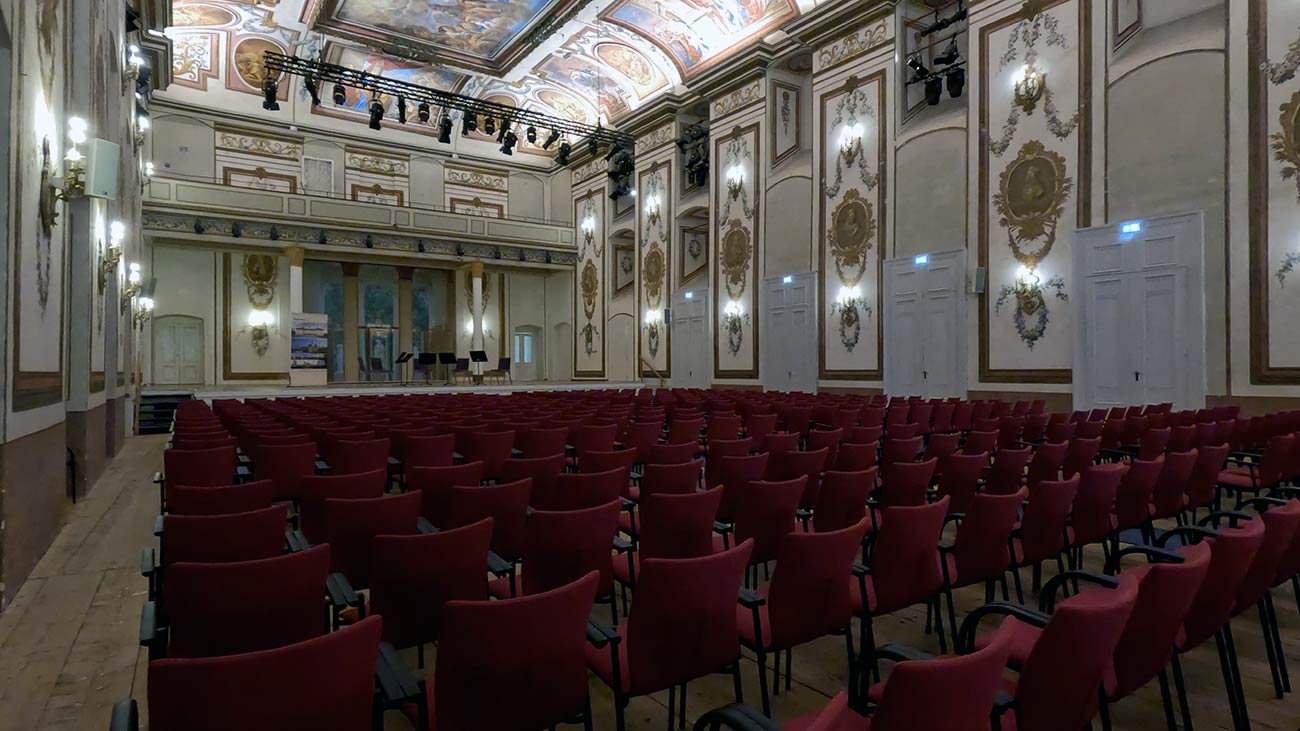
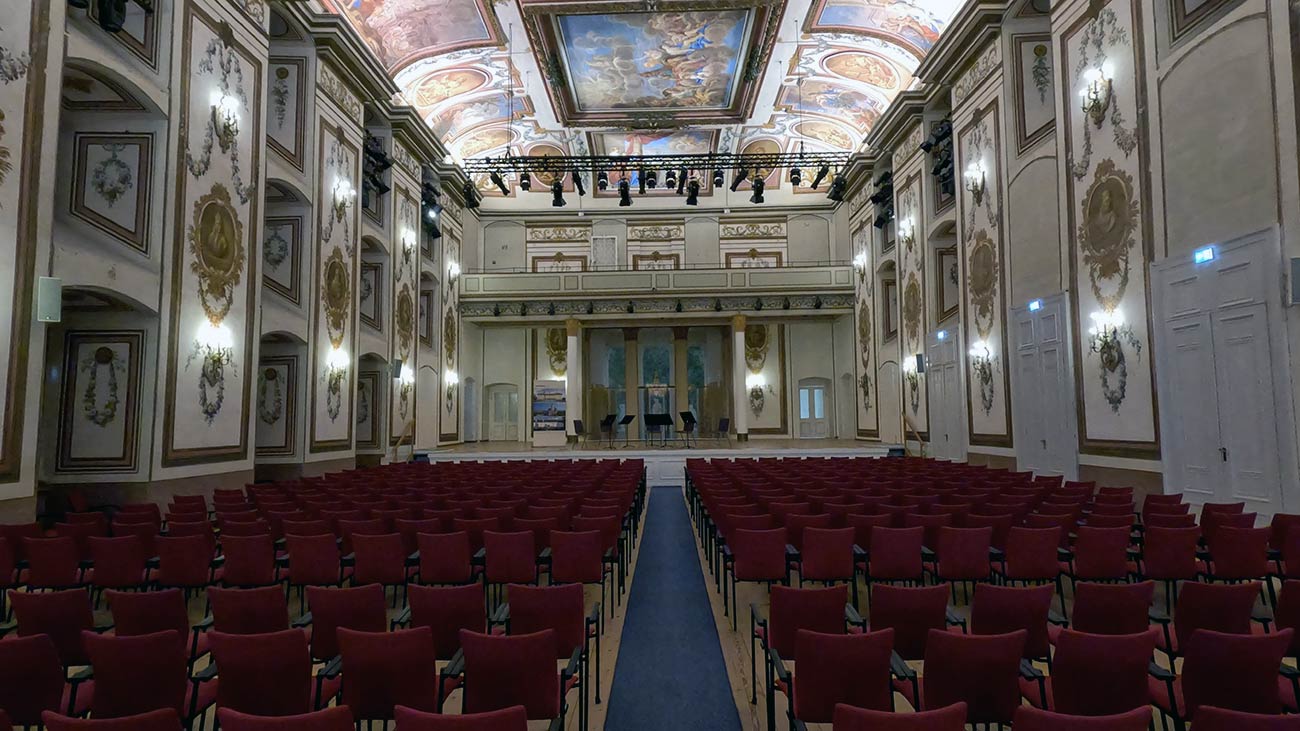
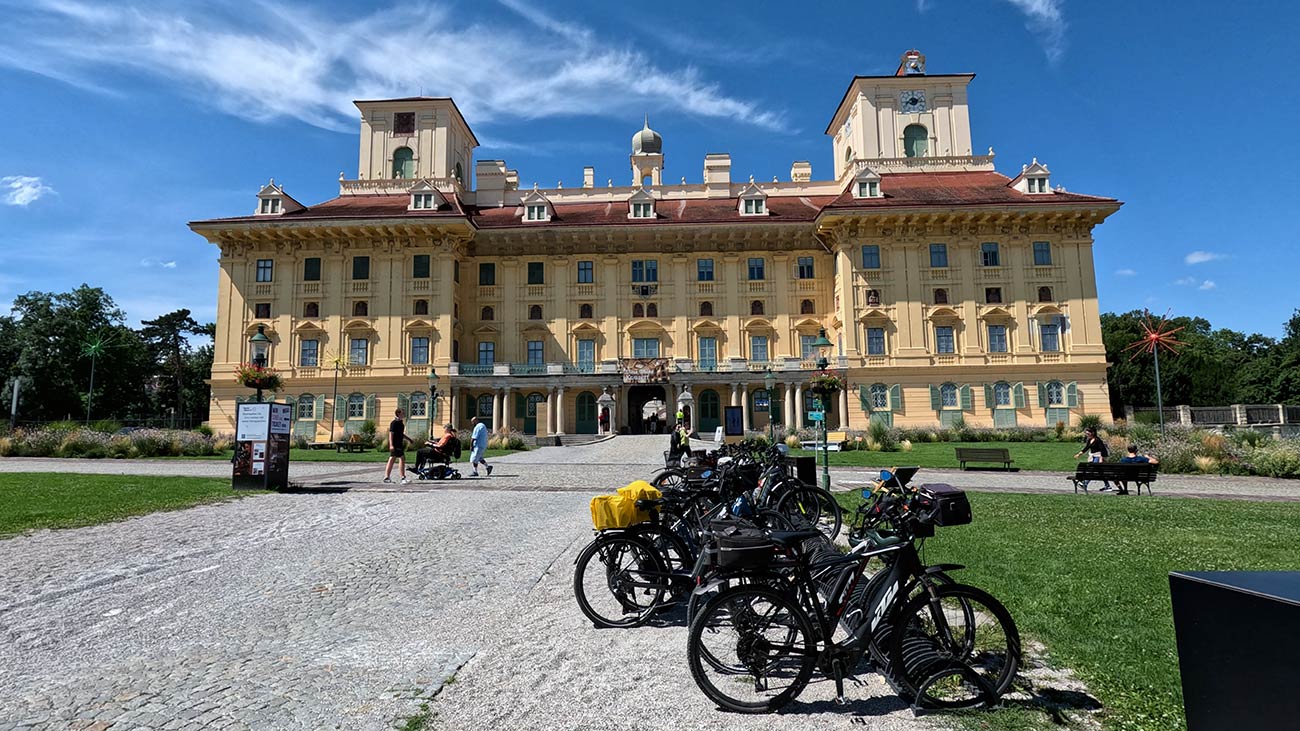
A Baroque Palace, the Haydn Hall, and the Story of the Esterházy Princes
The story of Esterházy Palace begins in the medieval period, when a fortified residence stood on this site under various noble families. The building entered its present chapter in the seventeenth century, when it passed into the hands of the Esterházy princes, one of the wealthiest noble dynasties in the Habsburg lands. Between 1663 and 1672, under Prince Paul I Esterházy, the medieval structure was thoroughly transformed into a generous Baroque palace by the Italian architect Carlo Martino Carlone. A century and a half later, Prince Nicholas II commissioned the French architect Charles de Moreau to add a Neoclassical layer to the building. Moreau's grand plans were never fully realised, however, slowed by the Napoleonic Wars and family finances, and the palace as it stands today is best read as a layered ensemble of Baroque core and partial Neoclassical additions, all wrapped in the ochre yellow that has come to define the Esterházy estates across the region.
The palace has around 256 rooms in total, of which roughly 25 are open to visitors as part of the museum route. Themed tours and free walks explore the state rooms in different combinations, with each itinerary giving its own perspective on the lives of the princes, their guests, and their staff. The interiors preserve original furniture, porcelain, and family portraits across multiple eras of taste, including richly furnished apartments, ceremonial halls, and quiet private spaces that show how the family used the building both for daily life and for the impressive social and political functions that filled its calendar each year.
The undisputed centrepiece of the palace is the Haydn Hall (Haydnsaal), the great ceremonial hall that runs through most of the north wing across three floors. The hall takes its name from the composer Joseph Haydn, who served the Esterházy family for nearly forty years between 1761 and 1790, first as deputy musical director and later as Kapellmeister, and who composed many of his most celebrated works in Eisenstadt. He conducted orchestras here on what would have been a near-nightly basis during his time at court, and the room remains an active concert venue today. The hall is internationally regarded as one of the finest acoustic spaces in the world for classical music. Its ceiling carries an elaborate cycle of frescoes depicting scenes from Greek and Roman mythology, and the walls are richly worked in stucco, with the result that the Haydn Hall reads at once as a celebration of family power and as a deliberate architectural setting for the music that gave Esterházy court life its distinctive character.
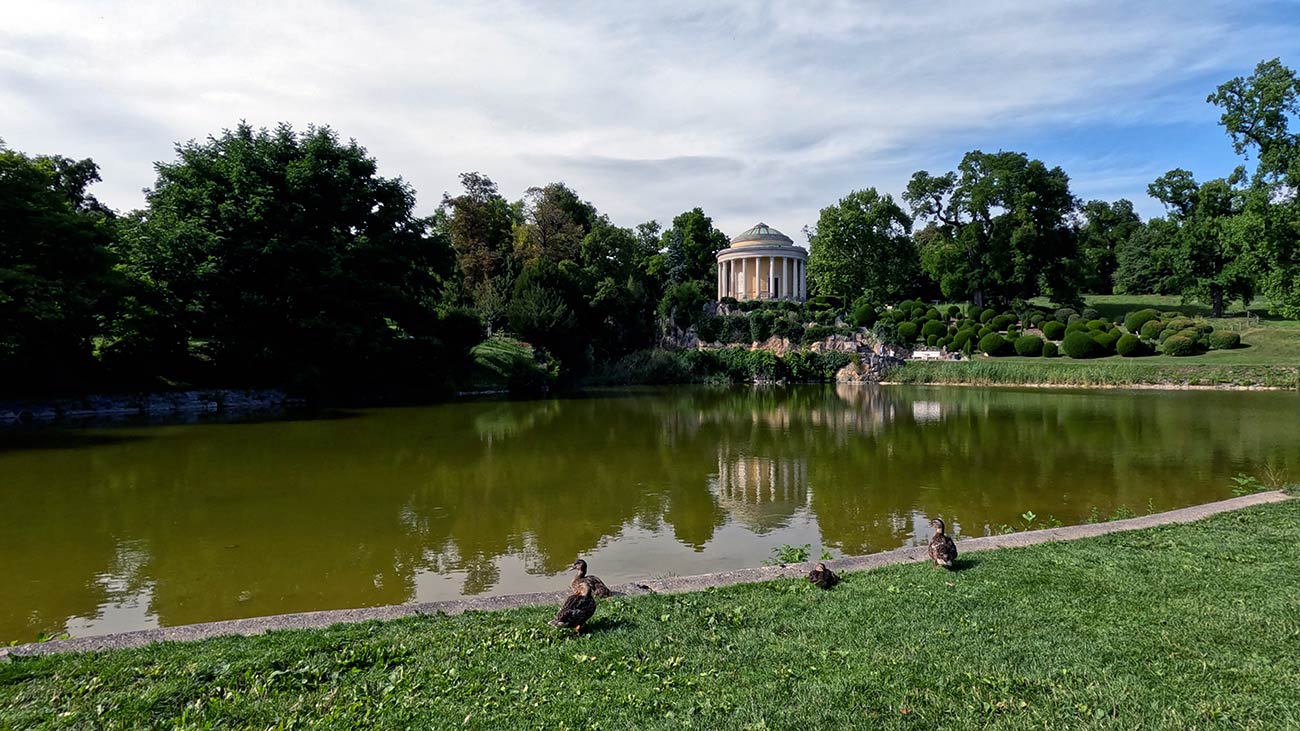
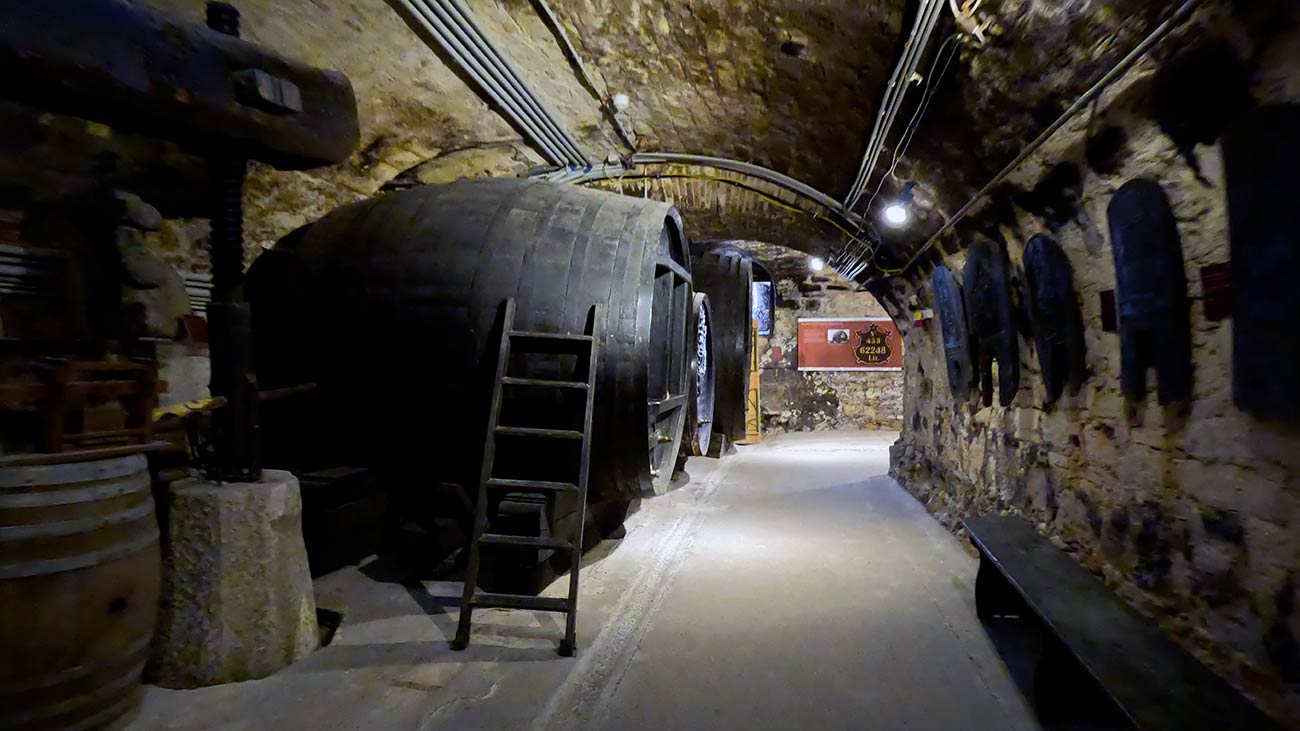
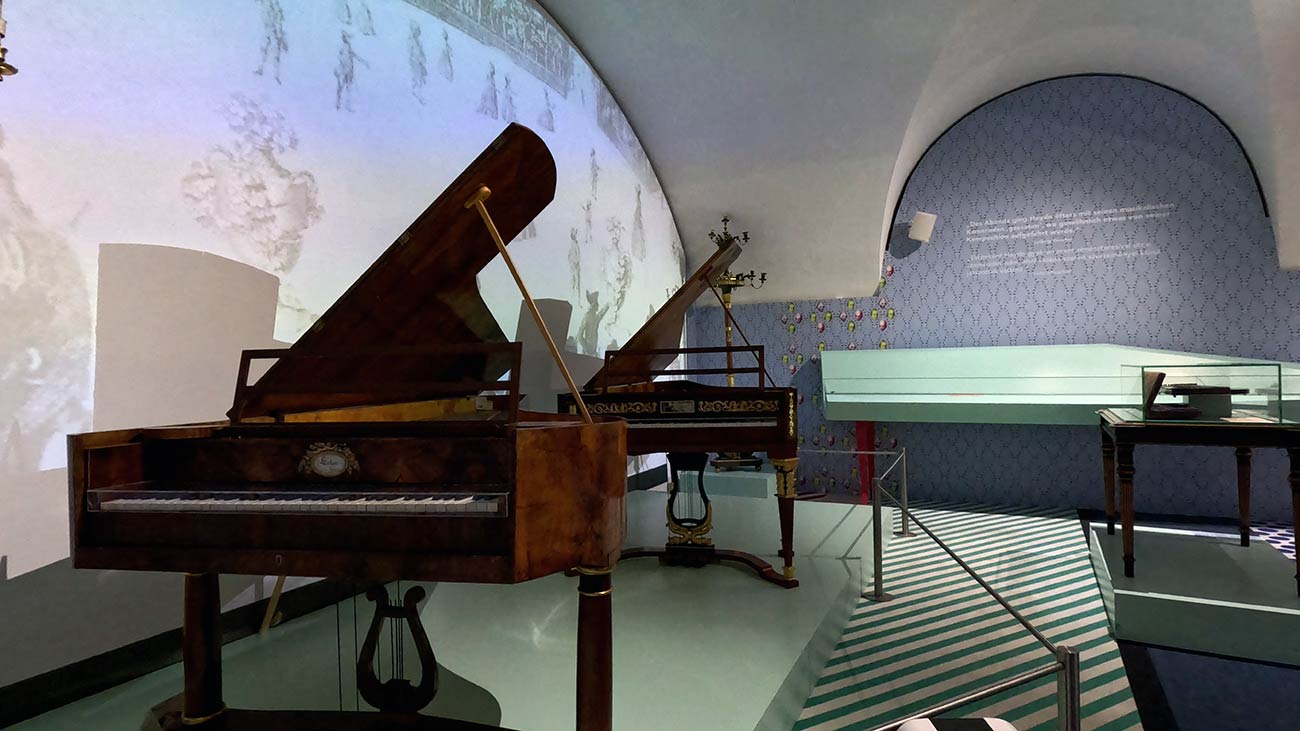
A separate exhibition titled Haydn Explosive, set within the palace itself, presents some of the composer's personal belongings, original musical instruments, and the wider story of his life at court. Other parts of the palace are devoted to the broader history of the Esterházy family, with its collections of art, ceremonial objects, and historical documents brought together in newly conceived exhibitions across the year. A separate small Wine Museum on the palace grounds traces the long tradition of viticulture in Burgenland, a region whose Pannonian climate has long made it one of Austria's most distinctive wine landscapes. The surrounding Palace Park opens out at the back of the building into a generous landscape garden, with shaded paths, fountains, the elegant Orangery, and the small Neoclassical Leopoldine Temple, all reachable on foot from the main palace courtyard.
The wider Palace Quarter continues the experience beyond the main building. The former court stables across the square have been converted into the Henrici restaurant, serving Levantine cuisine with a new Pannonian twist, while the neighbouring Selektion Vinothek Burgenland offers a tasting selection of the leading wines of the region. Every September, the HERBSTGOLD Festival takes over the Haydn Hall and the surrounding palace spaces for around two weeks, combining classical music, jazz, and Balkan and Roma traditions with regional food and wine. The palace is today owned and managed by the private Esterházy Foundation, set up by the late Princess Melinda Esterházy, herself a former Hungarian prima ballerina, before her death in 2014. Her vision was to keep the palace in active cultural use rather than turn it into a static museum, and the result is that the building still functions, three and a half centuries after the Baroque rebuilding began, as the working cultural heart of Eisenstadt and of the entire Esterházy estate.
 Useful Links
Mobility for Cyclists
Reaching the area by train with your bike
Esterházy Palace can be reached from the EuroVelo 6 by a single direct rail journey from one of the main cities on the Danube cycle path. The palace lies around 50 kilometres south-east of Vienna in the gentle landscape of Burgenland, on a frequent regional line operated by ÖBB, the Austrian Federal Railways, which makes the connection both quick and well served throughout the day.
The connection
The most practical connection from the EuroVelo 6 corridor is from Vienna, where ÖBB regional trains run directly from Vienna Hauptbahnhof to Eisenstadt Bahnhof in around one hour, with hourly departures throughout the day and around 33 direct trains daily. No change is required, and the line crosses the gentle landscape between the eastern Alps and the Neusiedl See basin. Cyclists riding the Danube stretch of the route will find Vienna the natural transfer point, and the journey fits comfortably into a single travel day with plenty of time to explore the palace and the surrounding town on arrival.
Austrian trains
The rail network in Austria is operated mainly by ÖBB (Österreichische Bundesbahnen), the Austrian Federal Railways, which runs most long-distance services and a large share of regional connections across the country. Alongside ÖBB, the private operator Westbahn provides competing long-distance services on the main east-west corridor between Vienna, Salzburg, and onward to Munich. Several smaller regional operators run local and feeder lines on secondary routes, but they are fully integrated into the national rail system, so transfers between operators are straightforward. The Danube region in Austria is particularly well served by rail: the main east-west line links Vienna with Krems, Linz, Wels, Salzburg, and the German border at Passau, closely paralleling the river for much of its length and forming one of the busiest and most reliable rail axes in central Europe. From the main cities along this corridor, dense networks of regional and S-Bahn lines branch out both north and south of the Danube, with frequent departures throughout the day that make inland detours easy to organise without long waiting times or complicated changes. The ÖBB app is the central tool for planning journeys, checking timetables, and purchasing tickets across all services, including both regional and long-distance trains.
Taking your bike
Austria is generally very bike-friendly when it comes to rail transport, especially on regional services operated by ÖBB, which form the core of mobility for cycle touring along the Danube and its connecting corridors. On regional and S-Bahn trains, bicycles can be taken on board for an additional fee, with no advance reservation possible and a first-come, first-served allocation of space. Bicycle tickets are sold as single trips or as affordable daily, weekly, or monthly passes, and the Klimaticket Austria annual pass includes free bicycle transport on regional trains in several federal states. On long-distance services such as Railjet, Intercity, Eurocity, and Nightjet trains, an advance reservation for the bicycle is mandatory, with the bike zones located in second-class carriages. The private operator Westbahn, which runs frequent services along the main east-west corridor between Vienna, Linz, and Salzburg, also accepts bicycles, but only with an advance reservation. Folding bikes are carried free of charge as hand luggage on both ÖBB and Westbahn trains. Overall, the Austrian system is well adapted to cycle tourism and offers a flexible combination of train and bike that makes it easy to leave the EuroVelo 6 route in either direction for short or extended detours.
Bikes on Buses
Long-distance bus services in Austria are primarily operated by FlixBus and by ÖBB-Postbus, the long-distance coach arm of the Austrian Federal Railways, complemented by a smaller number of regional and private coach operators on selected routes. The long-distance bus market in Austria is less developed than in neighbouring countries, as the wider rail network covers most of the country efficiently and many connections that would otherwise be served by intercity coaches are instead handled by train. Bicycle transport is available on certain FlixBus connections, either via external bike racks or in the luggage compartment, but it is not consistently guaranteed across the network and depends on the specific vehicle type and route configuration. Where available, bicycle transport must be reserved in advance and capacity is limited, making it less flexible compared to rail services. ÖBB-Postbus also operates seasonal bicycle and hiking buses in cooperation with regional tourism boards, designed specifically to bring cyclists and hikers to popular starting points along trails and bike paths, although these services run on selected routes only and outside the main long-distance network. As a result, buses are generally used as a secondary option for cyclists, mainly for longer-distance repositioning between major cities rather than as a core part of cycling itineraries along the Danube region. While useful in specific cases where rail connections are less convenient, they are less predictable and less standardised for bicycle transport, so advance planning is essential.
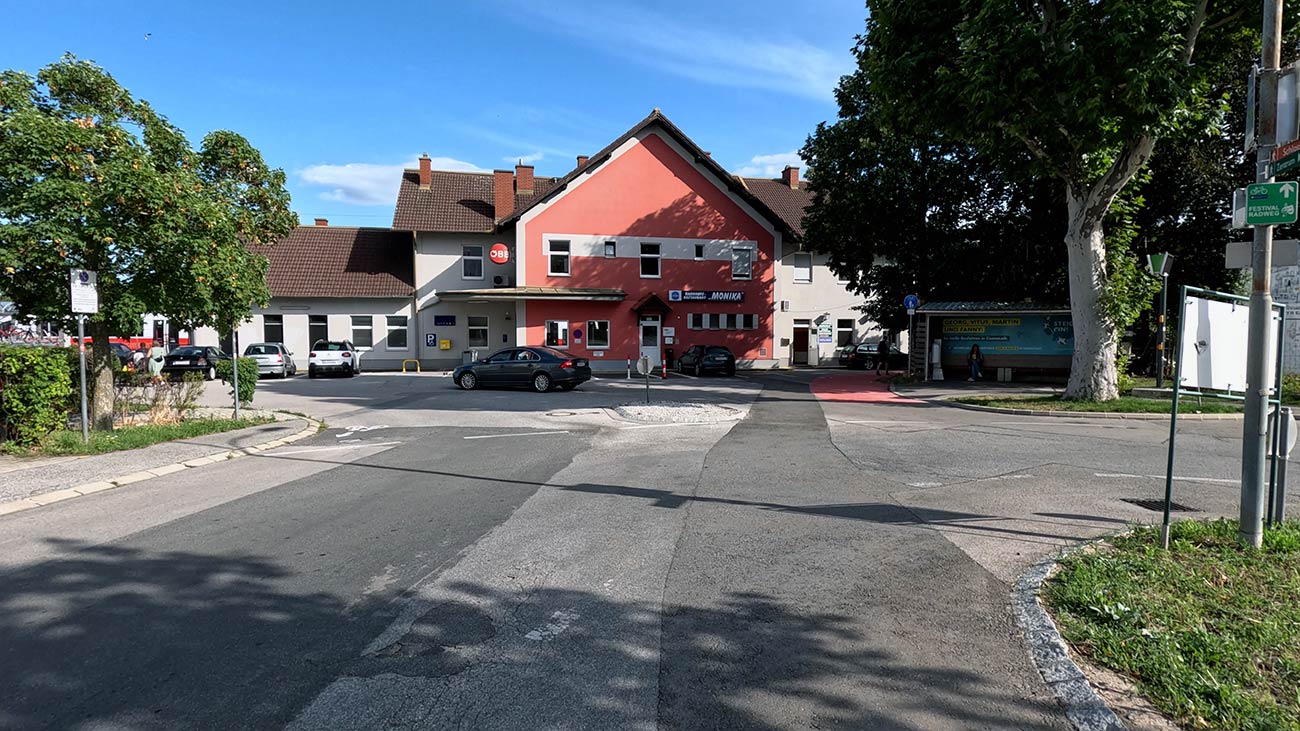
Arriving at Eisenstadt Bahnhof
Eisenstadt's main railway station sits just under a kilometre from the centre of the old town, with Esterházy Palace, the palace park, the old town squares, and the Bergkirche church reachable on foot or by bike in well under fifteen minutes along largely flat, well-signposted streets. The historic centre is compact, mostly pedestrianised, and easy to navigate on foot once you arrive, with the palace, Henrici restaurant, Selektion Vinothek, and the rest of the Palace Quarter all clustered around Esterházyplatz. Cycling infrastructure in and around the town is good, and the surrounding countryside is laced with marked cycle paths through vineyards and along the foothills of the Leitha Hills, making longer rides easy to extend. Bike racks are available at the station for shorter stops. For onward travel, the same line connects back toward Vienna and the wider Danube region, so Esterházy Palace works equally well as a half-day excursion or as an overnight detour from the EuroVelo 6.