Forchtenstein Castle
Reading time: 14 minutes
FORCHTENSTEIN CASTLE, BURGENLAND, AUSTRIA
A Fortress That Was Never Captured
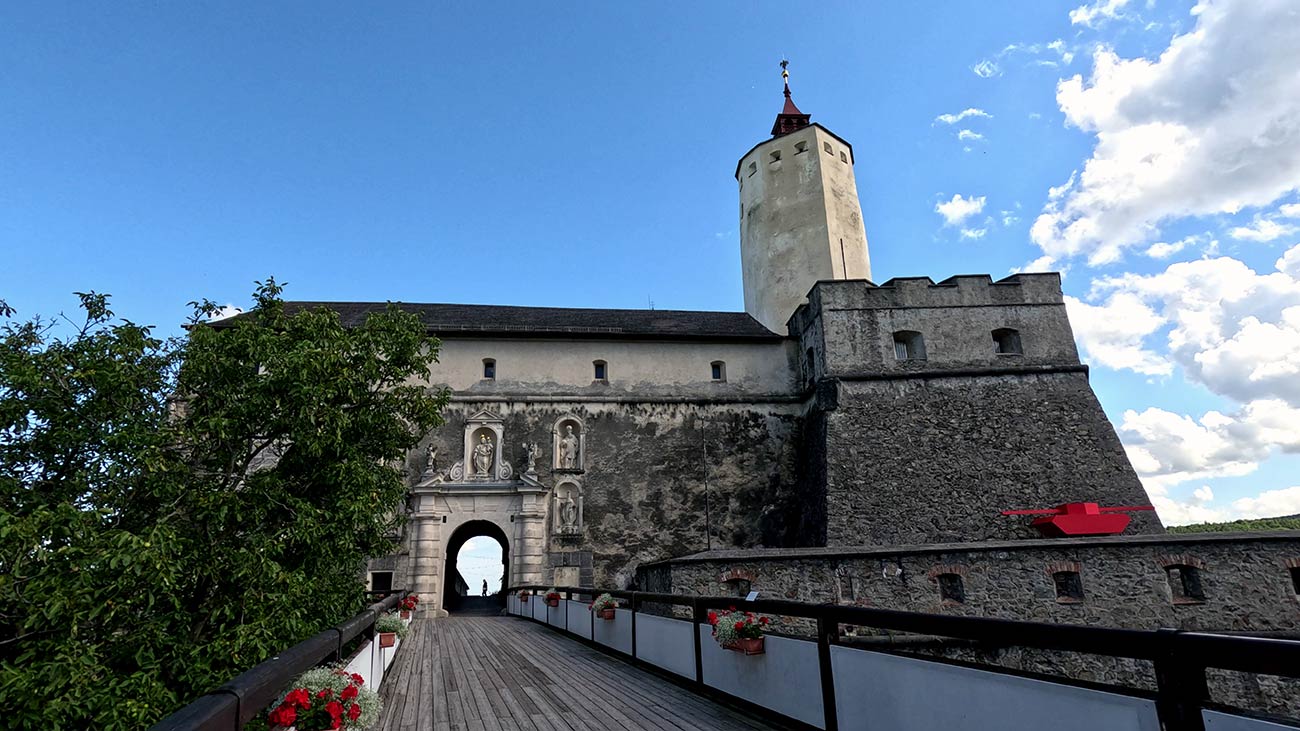
In northern Burgenland, where the gentle wine country between Vienna and Lake Neusiedl gives way to the wooded foothills of the Rosaliengebirge mountain range, a vast fortress rises 511 metres above sea level on a steep dolomite cliff. Forchtenstein Castle has watched over the surrounding plain for more than six centuries, and its pale walls and red roofs are visible from far across the surrounding country. The setting itself is enough to make the place memorable, but the real distinction of Forchtenstein lies in what its location made possible. Built in the early fifteenth century by the local lords of Mattersdorf, it stood on its rock through wave after wave of conflict and never once fell to a besieging army.
That military record turned Forchtenstein into something quite different from a princely residence. In 1622, Emperor Ferdinand II granted the castle, then partly in ruins, to Nikolaus Esterházy, along with the title of count, and the family has held it ever since. Nikolaus brought in Italian stonemasons to rebuild the defences, and his son Paul I added Baroque elements to the interiors. By the late seventeenth century, however, the family had begun to use Forchtenstein less as a home and more as the secure vault for the entire western branch of the House of Esterházy. Treasures, art, weapons, archives, and curiosities were brought up the hill and stored behind the impregnable walls, and the castle became one of the oldest museum sites in continuous existence anywhere in Europe.
For cyclists exploring the Danube along the EuroVelo 6, Forchtenstein is one of the more demanding but rewarding cultural detours from the Austrian stretch of the route. The castle lies around 75 kilometres south of Vienna, the natural transfer point on the river, and is reached by a single direct train to Mattersburg followed by a short road ride up to the castle gates. The final approach is uphill and best suited to those willing either to leave the bike at the station and continue another way, or to climb the road on the way up and freewheel down again. A day spent on the dolomite rock offers a more concentrated taste of seventeenth-century princely culture than most palaces in central Europe can provide.
CastleHillViewsRide
A Dolomite Rock, a Princely Vault, and the Curiosities of the Esterházy Family
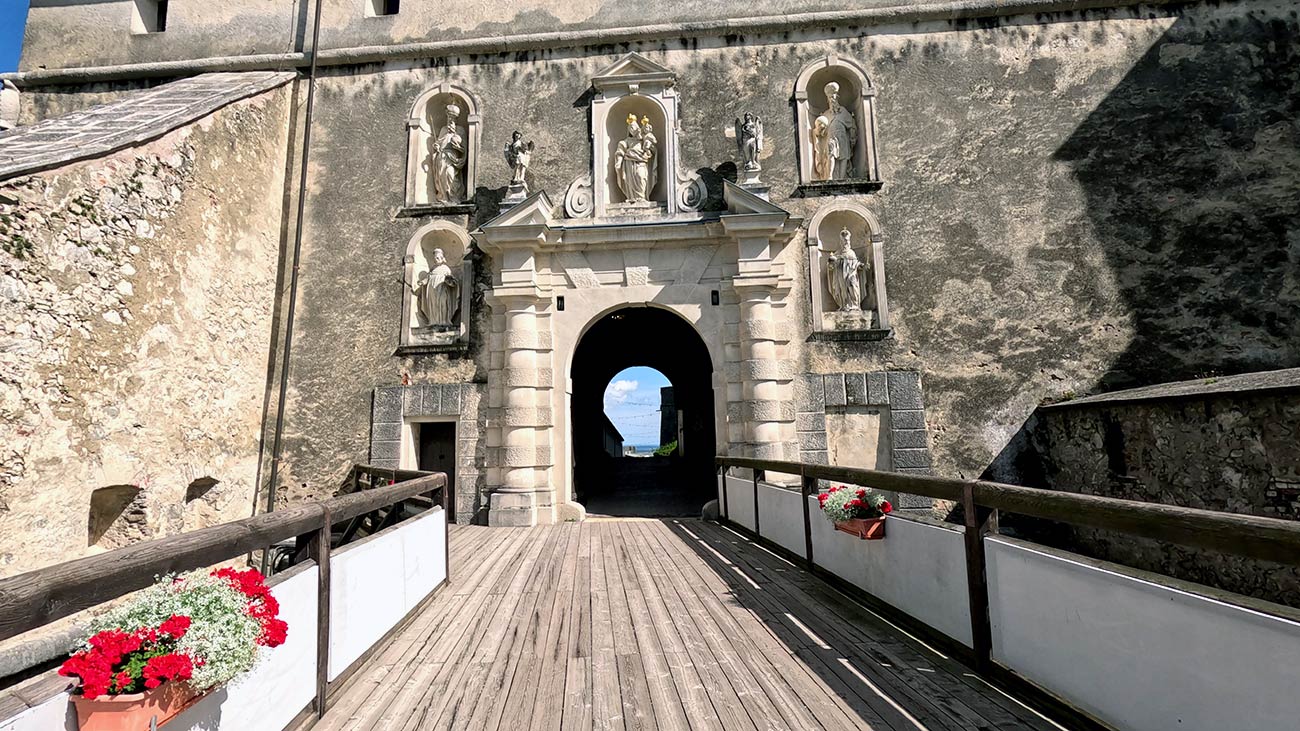
The first thing most visitors notice is the silhouette. Forchtenstein Castle stands on a single steep block of dolomite rising from the surrounding valley, and the structure is moulded so closely to the rock that the lower walls seem to grow directly out of the cliff. The castle was built in the early fifteenth century by the Lords of Mattersdorf, who took the name of Lords of Forchtenstein as their seat grew in importance. After their family line died out, the castle passed to the Habsburgs and was leased out for around a century and a half before Emperor Ferdinand II handed the partly ruined fortress over to Nikolaus Esterházy in 1622. The family has held it without interruption ever since, and the building today serves both as a museum and as a working seat of the Esterházy princes’ cultural foundations.
The interior tour begins in the long sequence of rooms that once housed the apartments of Prince Paul I. Here visitors walk past ancestral portraits, ornamented ceilings, and the curated collections of one of the most powerful Hungarian and Austrian aristocratic families. The gallery of family ancestors is one of the most curious parts of the visit: alongside the genuine forebears of the Esterházy, the prince commissioned full-length portraits of figures such as Attila the Hun, Vlad the Impaler, and Charlemagne, attaching them to the family tree as imagined ancestors in a deliberate display of dynastic ambition. The intention was clear: to suggest that the Esterházy had sprung from the deepest roots of European greatness, whether or not the genealogy quite supported the claim.
The single most remarkable space of the castle is the historical treasury (Schatzkammer), set on the second floor of the main keep. Forchtenstein’s treasury is one of the oldest privately preserved princely treasuries in Europe, with rooms whose original glass-paned cabinets are themselves regarded as works of art. Inside are gold and silver objects, precious furniture, exotic curiosities, and works of art collected by Paul I and his successors across the seventeenth century. The collection includes one of the largest and oldest surviving collections of silver furniture in Europe, centred on a fully silver-covered ceremonial table. Among the most photographed pieces are the Bacchus automaton, a moving figure made for princely entertainments, and an elaborate elephant clock that combines astronomical mechanisms with a model elephant in precious materials. Because of conservation requirements, the treasury can only be visited by a small group at a time, usually on a guided Treasure Chamber tour that has to be booked in advance.
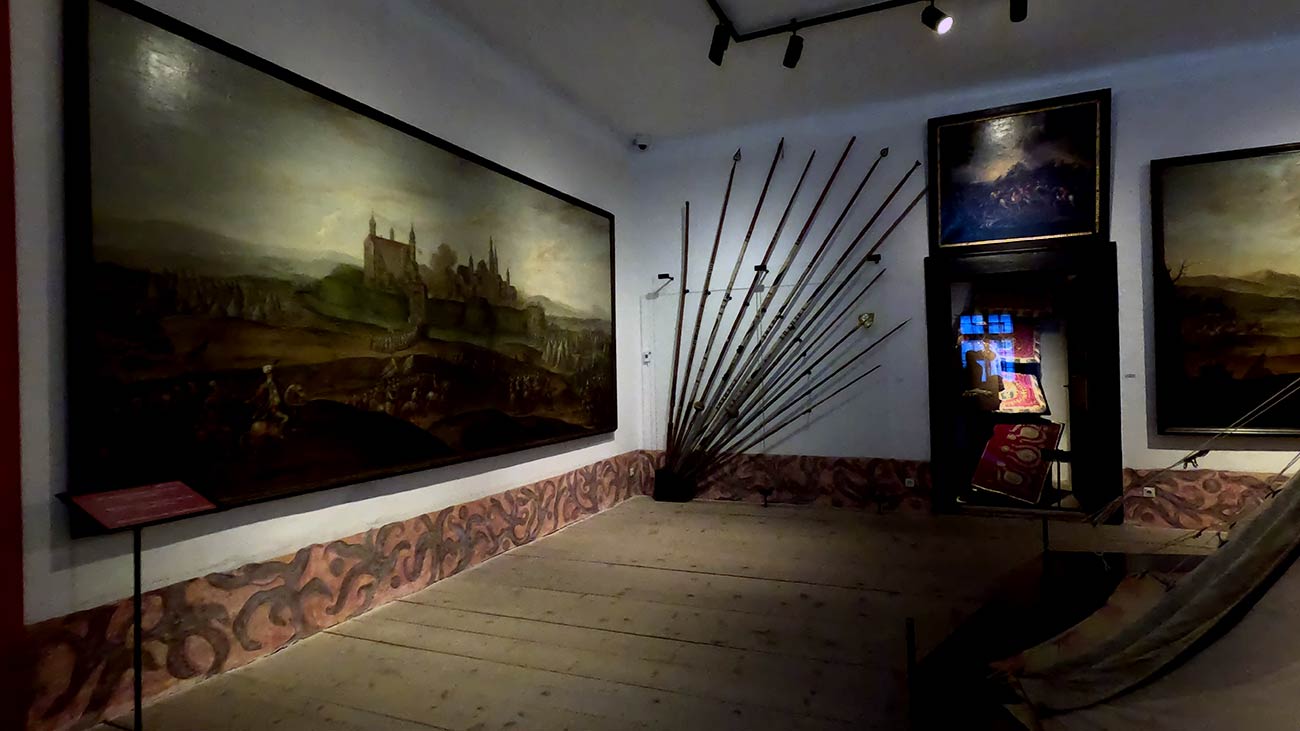
A separate wing of the castle preserves the historical arsenal (Rüstkammer), one of the largest privately held weapon collections in central Europe. The collection includes weapons from the Turkish Wars, the Napoleonic Wars, and the various private military campaigns of the Esterházy regiment, alongside armour, banners, and military insignia gathered across four centuries. Many of the weapons were actually carried in the field by Esterházy soldiers in the seventeenth and nineteenth centuries, which gives the arsenal an unusual sense of being a working military depot frozen in time rather than a curated display. The fact that Forchtenstein was never captured meant that its arsenal was never plundered, and the treasury also survived the Second World War undiscovered and intact, an extraordinary stroke of luck given how much of central Europe’s princely heritage was scattered or destroyed in the same years.
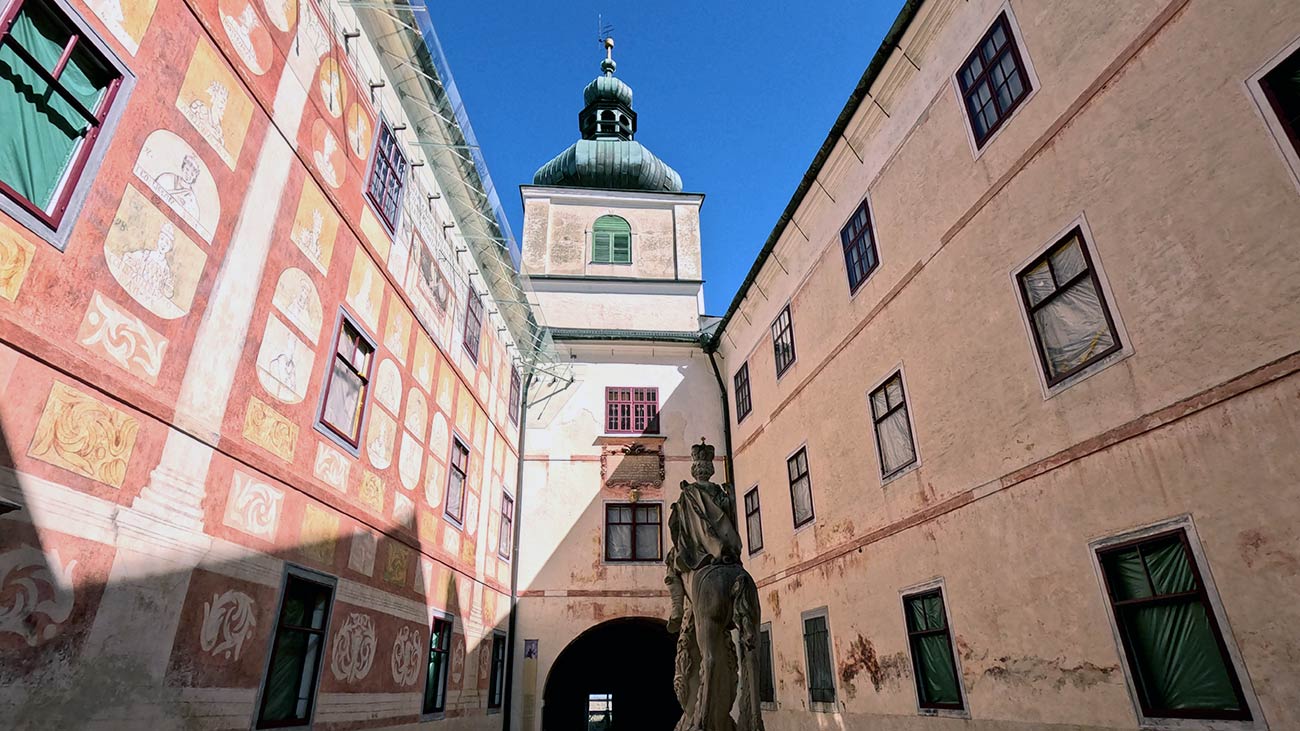
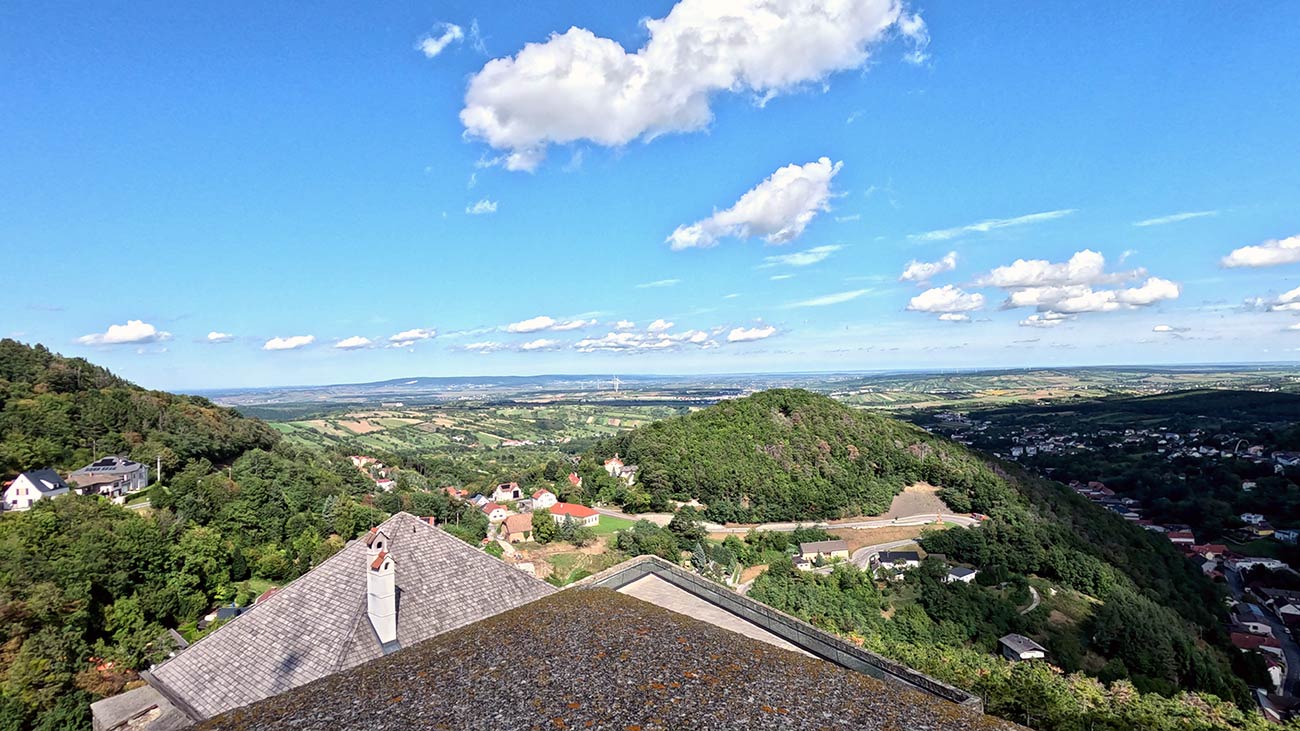
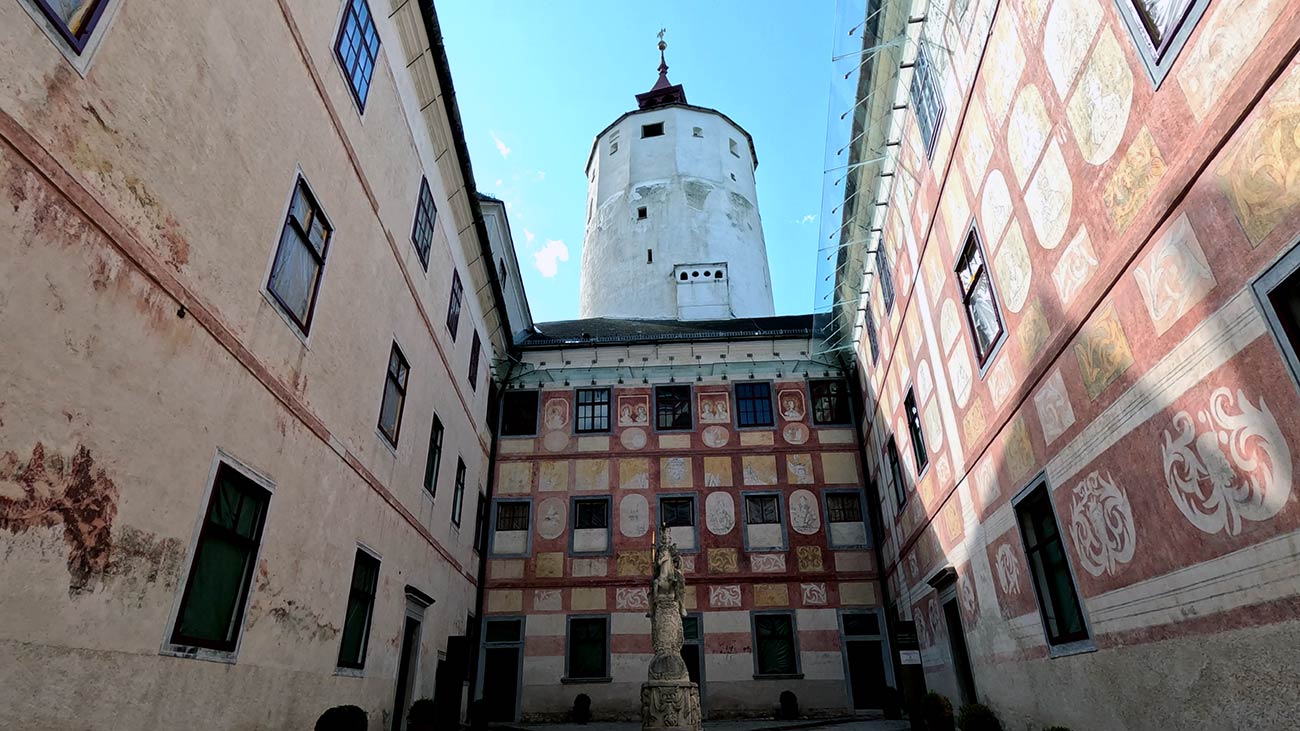
The castle’s inner courtyard holds a surprise of its own. The walls are covered by the largest secco wall paintings north of the Alps, a sweeping cycle of military and allegorical scenes painted directly onto dry plaster in the seventeenth century. From the courtyard, narrow stairways lead up to the watchtower and to the ramparts, from where on clear days the view stretches across the Wulkatal valley and the Rosalia mountains all the way back toward Vienna. The castle also offers a regular programme of themed visits, including a particularly atmospheric Night Watch tour in which the figure of Franciscus Fabiankovich, the castle commander of 1683, appears in period costume to lead visitors through the building after dark. Audio guides in German, English, and Hungarian are available throughout the castle, and the Burgenland Card offers free admission, which makes Forchtenstein a natural anchor for a longer cycling and cultural tour through the surrounding region.
 Useful Links
Mobility for Cyclists
Reaching the area by train with your bike
Forchtenstein Castle can be reached from the EuroVelo 6 by a single direct rail journey from one of the main cities on the Danube cycle path, followed by a short uphill connection from the nearest railway town. The castle lies in northern Burgenland, around 75 kilometres south of Vienna, on a high dolomite rock in the foothills of the Rosaliengebirge.
The connection
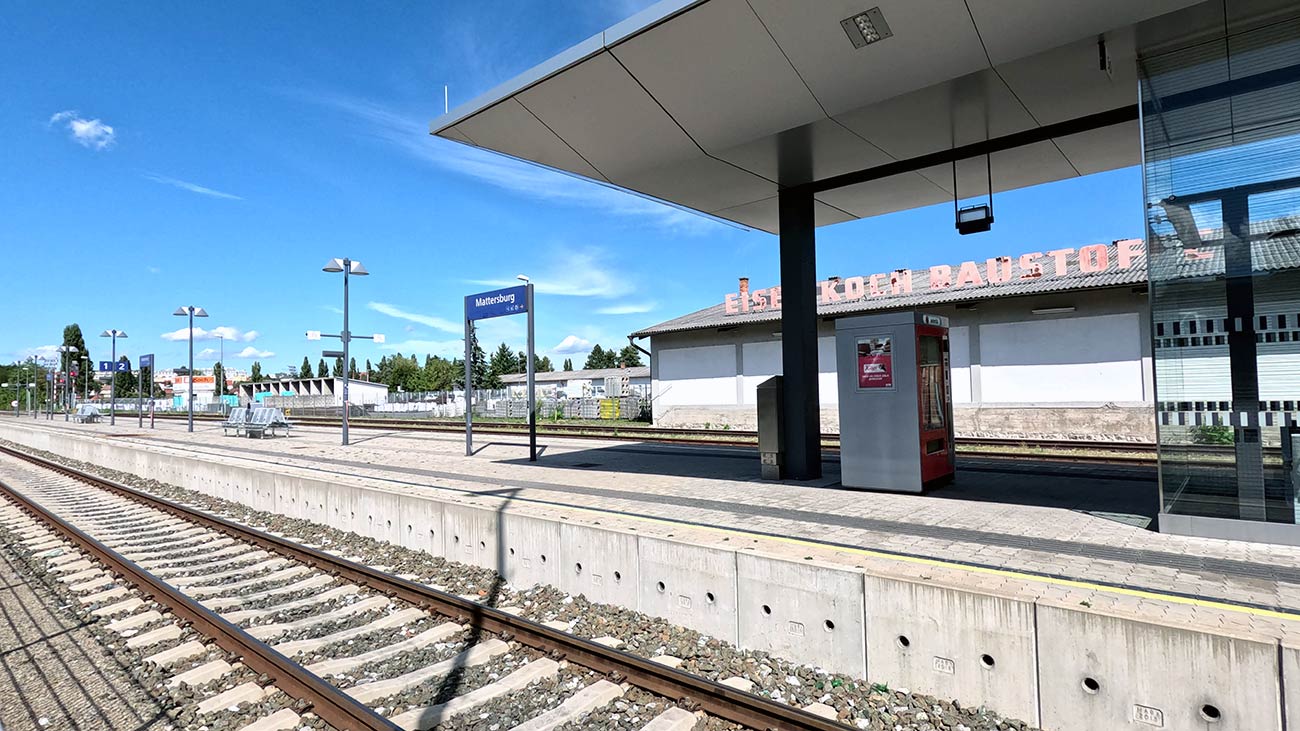
The most practical connection from the EuroVelo 6 corridor is from Vienna, where ÖBB Regional Express trains run directly to Mattersburg in around 54 minutes from Vienna Hauptbahnhof, with hourly departures throughout the day. Mattersburg is the nearest railway station to the castle and the natural arrival point for travellers using public transport. Cyclists riding the Danube stretch of the route will find Vienna the easiest transfer point, and the trip fits comfortably into a single travel day with plenty of time on the castle hill itself. Forchtenstein can also be combined with Esterházy Palace in Eisenstadt on a longer Burgenland itinerary, since both sites belong to the same family foundation and lie within easy reach of each other.
Austrian trains
The rail network in Austria is operated mainly by ÖBB (Österreichische Bundesbahnen), the Austrian Federal Railways, which runs most long-distance services and a large share of regional connections across the country. Alongside ÖBB, the private operator Westbahn provides competing long-distance services on the main east-west corridor between Vienna, Salzburg, and onward to Munich. Several smaller regional operators run local and feeder lines on secondary routes, but they are fully integrated into the national rail system, so transfers between operators are straightforward. The Danube region in Austria is particularly well served by rail: the main east-west line links Vienna with Krems, Linz, Wels, Salzburg, and the German border at Passau, closely paralleling the river for much of its length and forming one of the busiest and most reliable rail axes in central Europe. From the main cities along this corridor, dense networks of regional and S-Bahn lines branch out both north and south of the Danube, with frequent departures throughout the day that make inland detours easy to organise without long waiting times or complicated changes. The ÖBB app is the central tool for planning journeys, checking timetables, and purchasing tickets across all services, including both regional and long-distance trains.
Taking your bike
Austria is generally very bike-friendly when it comes to rail transport, especially on regional services operated by ÖBB, which form the core of mobility for cycle touring along the Danube and its connecting corridors. On regional and S-Bahn trains, bicycles can be taken on board for an additional fee, with no advance reservation possible and a first-come, first-served allocation of space. Bicycle tickets are sold as single trips or as affordable daily, weekly, or monthly passes, and the Klimaticket Austria annual pass includes free bicycle transport on regional trains in several federal states. On long-distance services such as Railjet, Intercity, Eurocity, and Nightjet trains, an advance reservation for the bicycle is mandatory, with the bike zones located in second-class carriages. The private operator Westbahn, which runs frequent services along the main east-west corridor between Vienna, Linz, and Salzburg, also accepts bicycles, but only with an advance reservation. Folding bikes are carried free of charge as hand luggage on both ÖBB and Westbahn trains. Overall, the Austrian system is well adapted to cycle tourism and offers a flexible combination of train and bike that makes it easy to leave the EuroVelo 6 route in either direction for short or extended detours.
Bikes on Buses
Long-distance bus services in Austria are primarily operated by FlixBus and by ÖBB-Postbus, the long-distance coach arm of the Austrian Federal Railways, complemented by a smaller number of regional and private coach operators on selected routes. The long-distance bus market in Austria is less developed than in neighbouring countries, as the wider rail network covers most of the country efficiently and many connections that would otherwise be served by intercity coaches are instead handled by train. Bicycle transport is available on certain FlixBus connections, either via external bike racks or in the luggage compartment, but it is not consistently guaranteed across the network and depends on the specific vehicle type and route configuration. Where available, bicycle transport must be reserved in advance and capacity is limited, making it less flexible compared to rail services. ÖBB-Postbus also operates seasonal bicycle and hiking buses in cooperation with regional tourism boards, designed specifically to bring cyclists and hikers to popular starting points along trails and bike paths, although these services run on selected routes only and outside the main long-distance network. As a result, buses are generally used as a secondary option for cyclists, mainly for longer-distance repositioning between major cities rather than as a core part of cycling itineraries along the Danube region. While useful in specific cases where rail connections are less convenient, they are less predictable and less standardised for bicycle transport, so advance planning is essential.
Arriving at Mattersburg Station and Continuing to the Castle
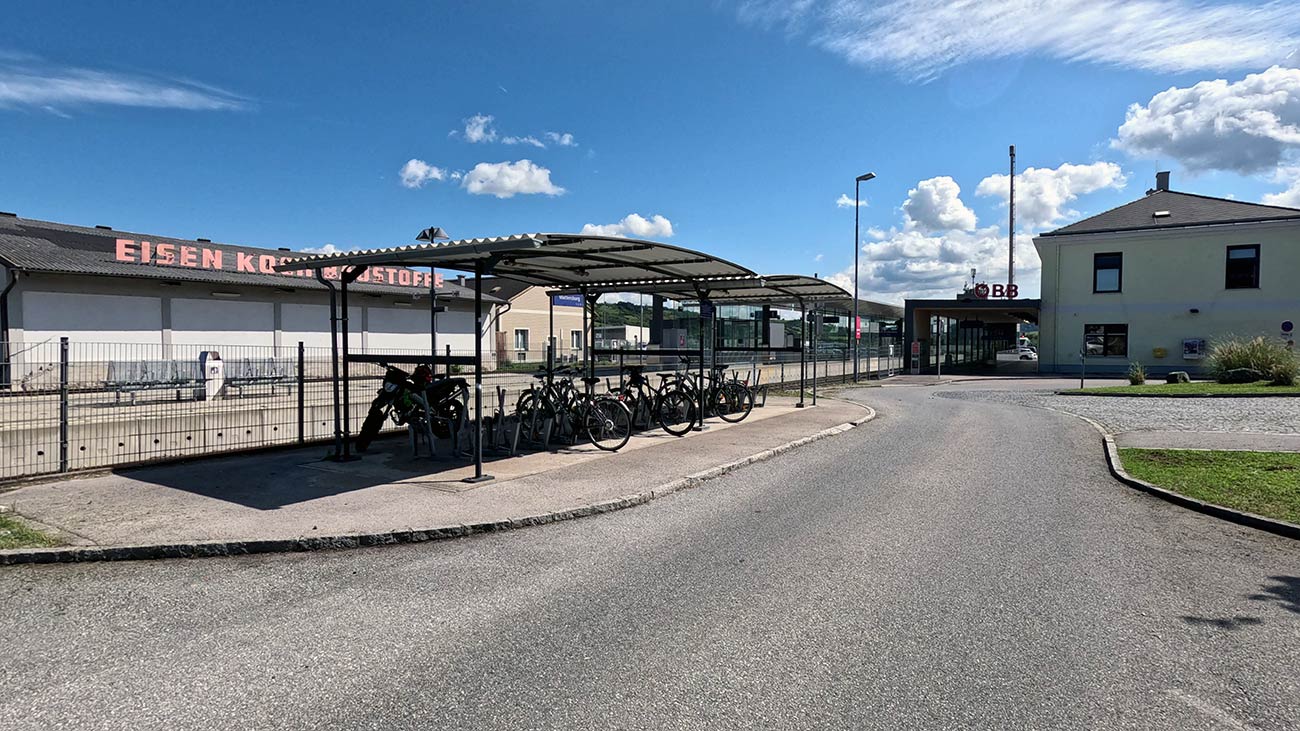
The final stretch from Mattersburg to the castle is the part that most cyclists need to plan for in advance. The road distance is around eight kilometres, with a noticeable uphill section toward the end as the route climbs up the dolomite ridge to the castle gates. Including this climb, the full ride takes around 40 minutes for a touring cyclist, with the last section requiring some effort on a loaded bike. Travellers who would prefer not to ride uphill have two practical alternatives: leaving the bike at Mattersburg station for the day and continuing by the local Verkehrsbetriebe Burgenland bus, with line 7993 covering the connection in about seven minutes on weekdays, or taking the direct bus B25 from Vienna, which runs the route Wien–Bad Sauerbrunn–Mattersburg–Forchtenstein and reaches the village itself. Travellers who do ride to the castle will find dedicated bike parking at the entrance, where bikes can be left safely for the duration of the visit. For onward travel, the same train line connects back toward Vienna and the wider Danube region, so Forchtenstein works equally well as a one-day excursion or as part of a longer overnight stop combined with Eisenstadt and the wider Burgenland heritage.