Gmunden
Reading time: 14 minutes
GMUNDEN, UPPER AUSTRIA, AUSTRIA
A Lakeside Town of Castles, Ceramics, and Mountain Views
At the northern end of one of the deepest lakes in Austria, where the Salzkammergut begins to open out toward the gentle hills of Upper Austria, lies a small lakeside town that has been welcoming summer visitors for nearly two centuries. Gmunden sits on the shore of Lake Traunsee, with the dramatic limestone wedge of the Traunstein mountain rising directly out of the water on the opposite side and the wooded slope of the Grünberg climbing immediately above the town. The combination of mountain, lake, and an unhurried civic centre has shaped Gmunden’s identity since the early nineteenth century, when emperors, kings, and the cultural figures of Habsburg Austria began to choose it as their preferred lakeside resort.
The town’s character was built on three older trades, each of which still leaves its mark today. The salt that gave the Salzkammergut its name was once stored and shipped from the lakefront warehouses of Gmunden, the lake itself supplied the fishing tradition that still flavours local restaurants, and the local clay produced the famous Gmundner Keramik, the ceramics that have been made here since 1492 and that are recognised throughout central Europe by their distinctive green-flamed pattern. The town’s old town hall still wears that decoration on a ceramic carillon, the lakeside promenade still carries chestnut trees and swans, and the silhouette of an island castle in the lake remains one of the most photographed sights in Austria.
For cyclists exploring the Danube along the EuroVelo 6, Gmunden offers a complete change of register from the river corridor. The town is reached by a direct regional train from Linz in just under an hour, with a single change at Attnang-Puchheim, and the entire visit can be filled comfortably in a long day or extended into an unhurried overnight stop. From the lakefront promenade you can reach the historic town hall on foot in minutes, the cable car within a fifteen-minute walk or short ride, and the island castle along the same quiet shore that the Habsburgs once kept for themselves.
Old TownLakeCastle
A Walk Around the Lake, the Town Hall, and the Mountain Above
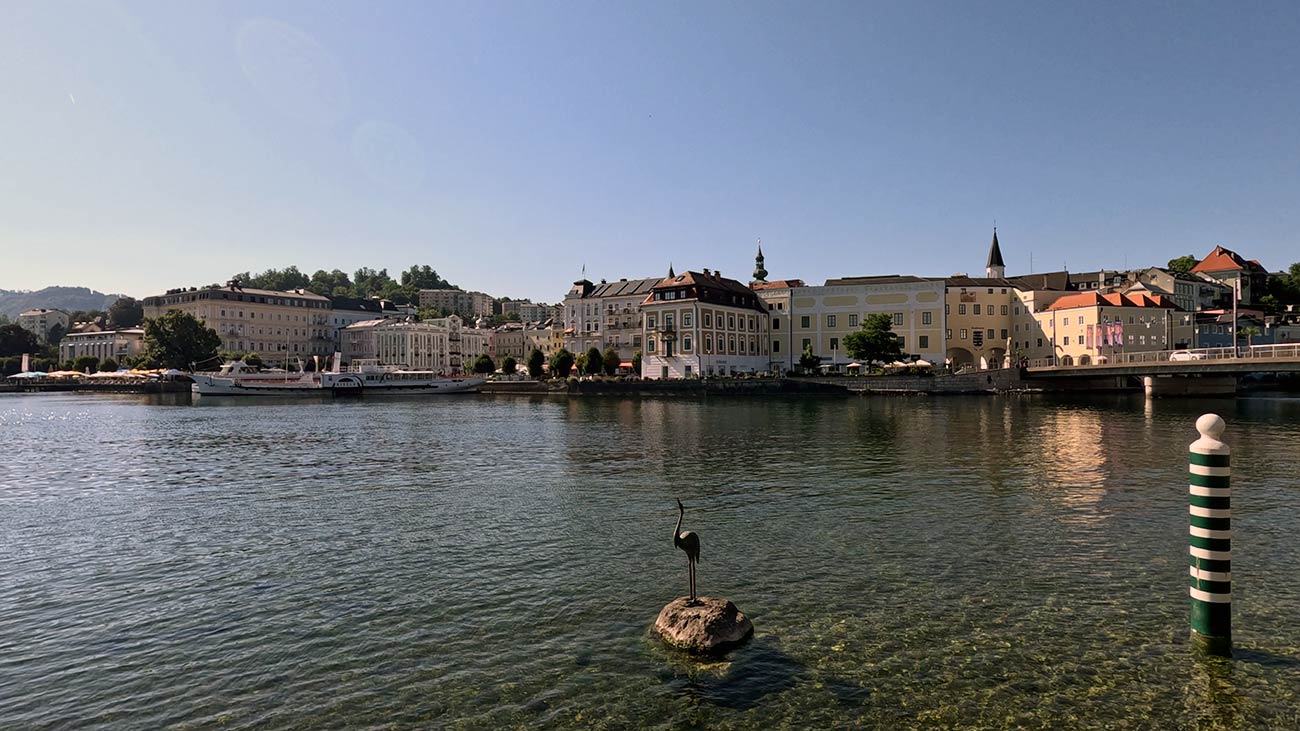
Lake Traunsee is the natural centrepiece of any visit. With a maximum depth of around 191 metres, it is one of the deepest lakes in Austria, and on calm mornings its dark green water doubles every detail of the surrounding mountains. The town itself spreads along the northern shore in a long, gentle curve, with painted facades, lakeside hotels, and the railway tracks of the historic Traunsee Tram (Traunseetram) running between the buildings and the water. The tram has connected the town centre with the lakeside since 1894 and, after recent extensions, now runs all the way across the river to link up with the Traunsee railway. Boat connections on the lake itself are equally part of the experience: a fleet of historic ships, including the paddle steamer Gisela, the oldest passenger ship still in regular service in Austria, leaves the lakeside station at the Seebahnhof for slow cruises along the steep Traunstein cliffs.
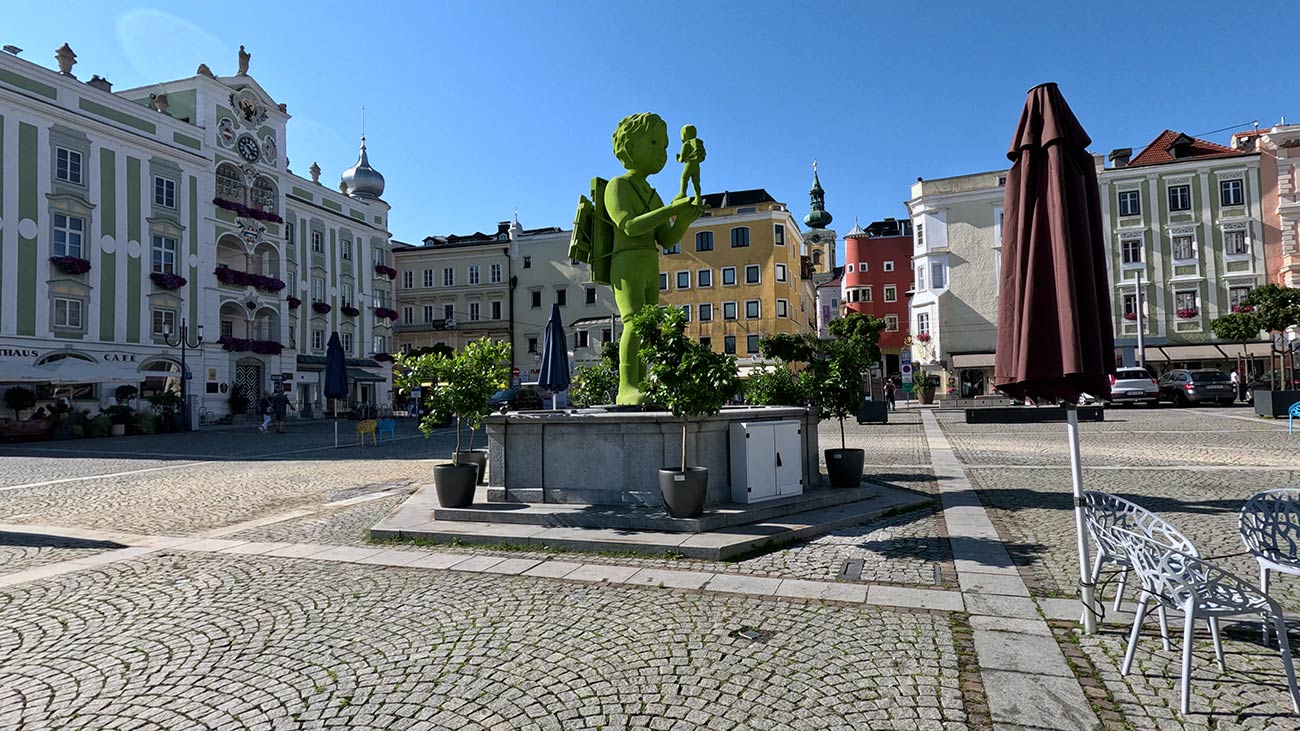
The civic heart of the town is Rathausplatz, the long lakeside town hall square framed by painted Renaissance and Baroque facades. The Town Hall (Rathaus) itself dates from between 1574 and 1577, the prosperous years of the salt trade, and is recognisable from far across the square by its arcaded ground floor, its painted Renaissance facade, and a slender bell turret rising above its central axis. The single most distinctive feature, however, is the Ceramic Carillon (Keramisches Glockenspiel), installed in the upper loggia of the facade in 1959 and made up of 24 bells. Because the local Gmunden ceramics turned out to be unsuitable for casting bells, the instrument itself was actually produced at the Meissen porcelain factory in Saxony and then hand-painted with Gmunden’s signature green-flamed decor. The bells chime several times a day, at 10, 12, 14, 16, and 19 o’clock, playing folk tunes along with the title melody of the popular Austrian television series Schlosshotel Orth, which was filmed in the town in the 1990s.
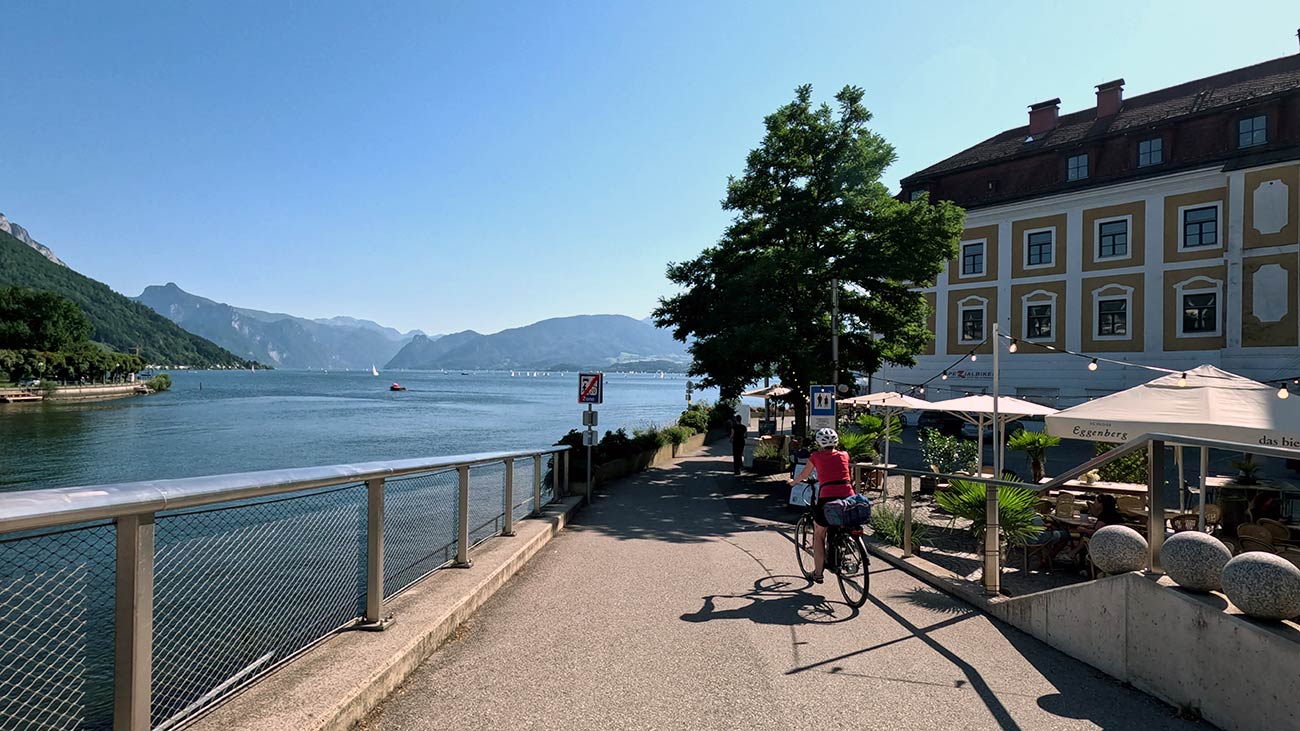
From the Rathausplatz, the long traffic-free Lakeside Promenade (Esplanade) curves away along the water toward the lakeside beach. Lined with rows of chestnut trees, lakeside benches, painted villas, and a series of ceramic art installations along its full length, it has been Gmunden’s social and architectural showpiece for almost two hundred years. Generations of cultural figures walked here as part of their summer routine, including the composers Franz Schubert and Johannes Brahms and the dramatist Friedrich Hebbel, alongside the royal houses of Württemberg, Hannover, and the wider Habsburg dynasty. Today the promenade is the place where the town comes together in the evening, with cafés, ice-cream stalls, and the small fish counters at the Lehenaufsatz at the far end of the path offering some of the freshest Traunsee fish anywhere in the Salzkammergut.
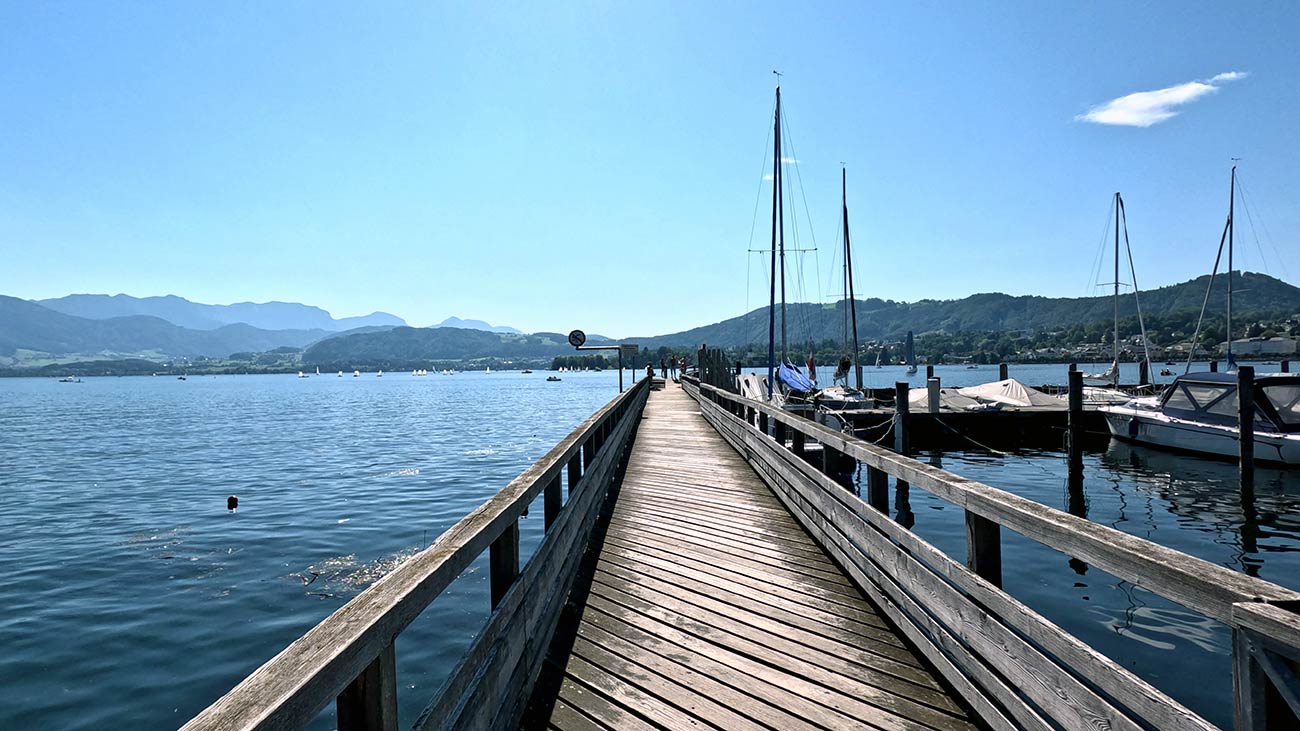
A short walk from the western end of the promenade, the silhouette of Ort Castle (Schloss Ort) appears on a small island in the lake, connected to the mainland by a graceful 123-metre wooden footbridge. The castle has two distinct parts: the Lake Castle (Seeschloss) on the island itself, and the Land Castle (Landschloss) on the shore, both founded in the tenth and eleventh centuries and rebuilt many times since. The Seeschloss became internationally familiar through the popular 1990s television series Schlosshotel Orth, which was filmed largely on location here, and the castle today is used for weddings, classical concerts, and a regular programme of cultural events throughout the year. The walk across the wooden bridge, especially in the early evening when the sun catches the courtyard, is one of the most photographed views in Austria.
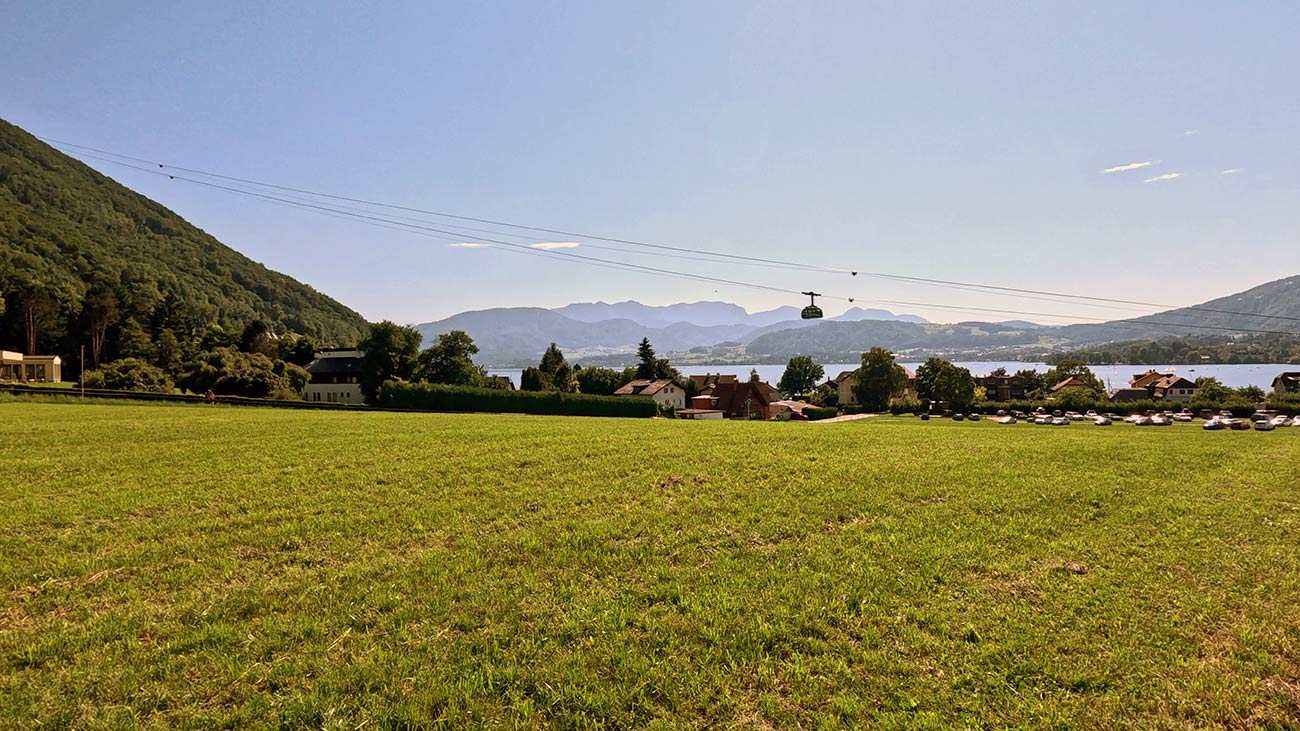
Above the town, on a green wooded ridge, the Grünberg Cable Car (Grünbergseilbahn) climbs to 984 metres in just a few minutes. The cable car was originally built in 1957 and was completely rebuilt in 2014, and from its upper terminus the view stretches across the entire Traunsee, the Traunstein, and the long line of the Höllengebirge mountains. The summit is the starting point for the Treetop Walk Salzkammergut (Baumwipfelpfad Salzkammergut), a 1,400-metre wooden walkway that winds through the upper canopy of the surrounding forest and ends at a 39-metre observation tower with a 75-metre tunnel slide back down for children. Around 20 kilometres of marked hiking trails branch out across the upper plateau, ranging from the easy circular path around the Grünberg Alm and the Laudachsee lake to longer climbs toward the Traunstein. For travellers who would prefer to skip the ascent on foot, the cable car alone is the easiest and most rewarding way to take in the lake from above.
 Useful Links
Mobility for Cyclists
Reaching the area by train with your bike
Gmunden can be reached from the EuroVelo 6 by a single rail journey from one of the main cities on the Danube cycle path. The town lies around 70 kilometres south-west of the Danube in the Salzkammergut, on a frequent regional line operated by ÖBB, the Austrian Federal Railways, which makes the connection straightforward and well served throughout the day.
The connection
The most practical connection from the EuroVelo 6 corridor is from Linz, where ÖBB regional trains run to Gmunden Hauptbahnhof in around 50 minutes to one hour, with a single change at the major junction of Attnang-Puchheim. Departures are frequent throughout the day, with around 28 trains per day on the route. Cyclists riding the Danube stretch will find Linz the natural transfer point, and the journey fits comfortably into a single travel day with plenty of time to settle in before exploring. Gmunden can also be combined easily with a stop at neighbouring Salzkammergut towns on the same regional network, including Bad Ischl and Hallstatt, for travellers wanting to extend the visit into a longer lake itinerary.
Austrian trains
The rail network in Austria is operated mainly by ÖBB (Österreichische Bundesbahnen), the Austrian Federal Railways, which runs most long-distance services and a large share of regional connections across the country. Alongside ÖBB, the private operator Westbahn provides competing long-distance services on the main east-west corridor between Vienna, Salzburg, and onward to Munich. Several smaller regional operators run local and feeder lines on secondary routes, but they are fully integrated into the national rail system, so transfers between operators are straightforward. The Danube region in Austria is particularly well served by rail: the main east-west line links Vienna with Krems, Linz, Wels, Salzburg, and the German border at Passau, closely paralleling the river for much of its length and forming one of the busiest and most reliable rail axes in central Europe. From the main cities along this corridor, dense networks of regional and S-Bahn lines branch out both north and south of the Danube, with frequent departures throughout the day that make inland detours easy to organise without long waiting times or complicated changes. The ÖBB app is the central tool for planning journeys, checking timetables, and purchasing tickets across all services, including both regional and long-distance trains.
Taking your bike
Austria is generally very bike-friendly when it comes to rail transport, especially on regional services operated by ÖBB, which form the core of mobility for cycle touring along the Danube and its connecting corridors. On regional and S-Bahn trains, bicycles can be taken on board for an additional fee, with no advance reservation possible and a first-come, first-served allocation of space. Bicycle tickets are sold as single trips or as affordable daily, weekly, or monthly passes, and the Klimaticket Austria annual pass includes free bicycle transport on regional trains in several federal states. On long-distance services such as Railjet, Intercity, Eurocity, and Nightjet trains, an advance reservation for the bicycle is mandatory, with the bike zones located in second-class carriages. The private operator Westbahn, which runs frequent services along the main east-west corridor between Vienna, Linz, and Salzburg, also accepts bicycles, but only with an advance reservation. Folding bikes are carried free of charge as hand luggage on both ÖBB and Westbahn trains. Overall, the Austrian system is well adapted to cycle tourism and offers a flexible combination of train and bike that makes it easy to leave the EuroVelo 6 route in either direction for short or extended detours.
Bikes on Buses
Long-distance bus services in Austria are primarily operated by FlixBus and by ÖBB-Postbus, the long-distance coach arm of the Austrian Federal Railways, complemented by a smaller number of regional and private coach operators on selected routes. The long-distance bus market in Austria is less developed than in neighbouring countries, as the wider rail network covers most of the country efficiently and many connections that would otherwise be served by intercity coaches are instead handled by train. Bicycle transport is available on certain FlixBus connections, either via external bike racks or in the luggage compartment, but it is not consistently guaranteed across the network and depends on the specific vehicle type and route configuration. Where available, bicycle transport must be reserved in advance and capacity is limited, making it less flexible compared to rail services. ÖBB-Postbus also operates seasonal bicycle and hiking buses in cooperation with regional tourism boards, designed specifically to bring cyclists and hikers to popular starting points along trails and bike paths, although these services run on selected routes only and outside the main long-distance network. As a result, buses are generally used as a secondary option for cyclists, mainly for longer-distance repositioning between major cities rather than as a core part of cycling itineraries along the Danube region. While useful in specific cases where rail connections are less convenient, they are less predictable and less standardised for bicycle transport, so advance planning is essential.
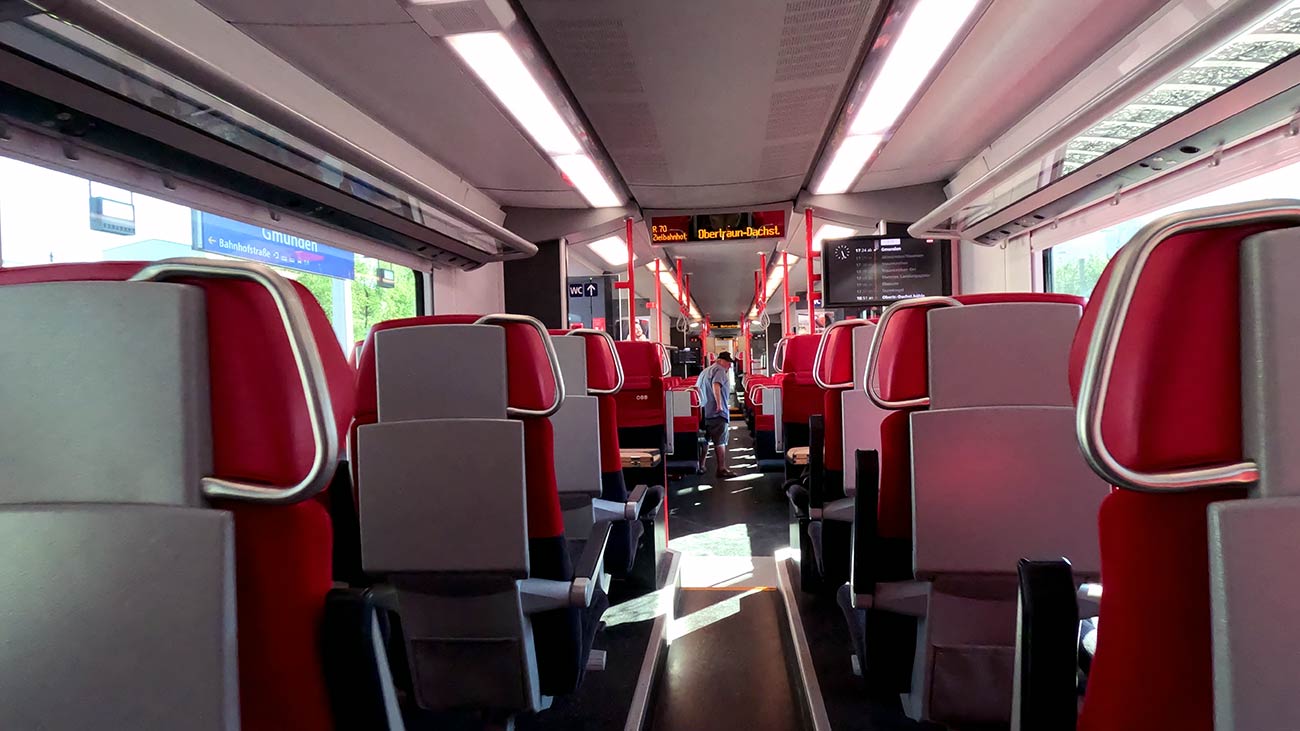
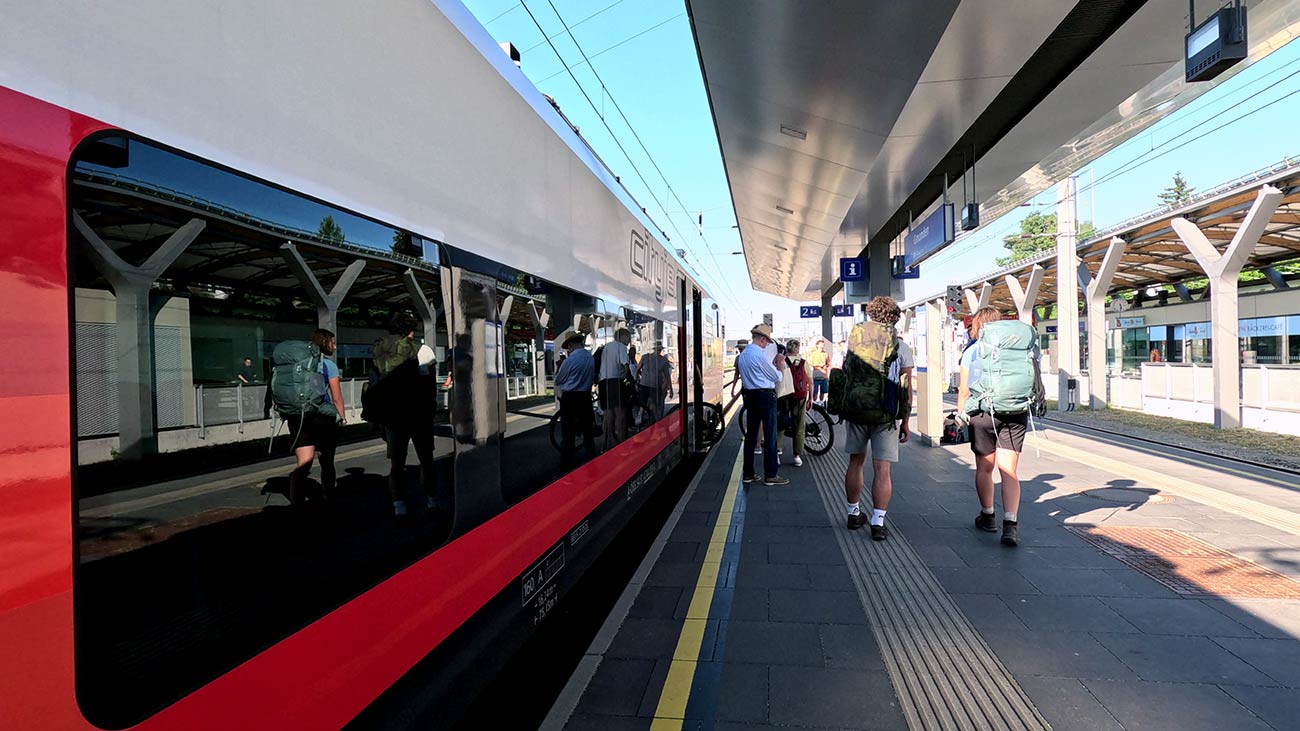
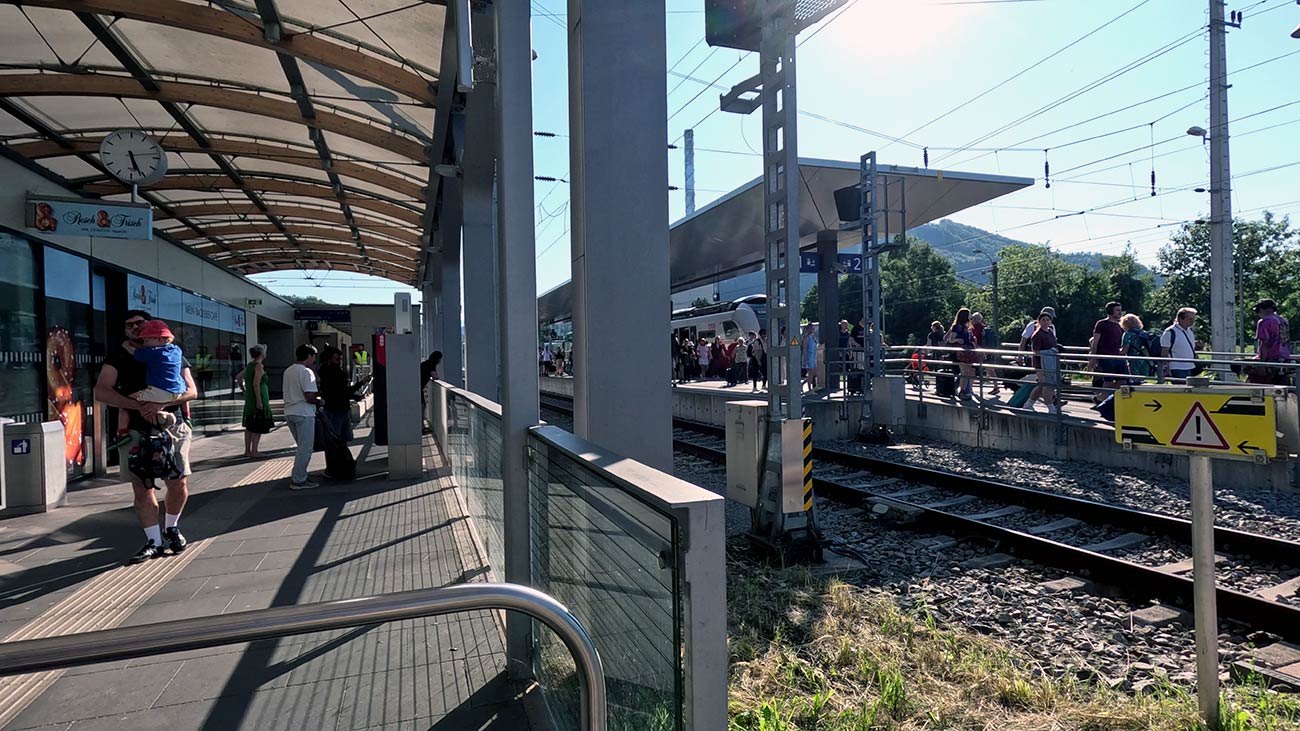
Arriving at Gmunden Hauptbahnhof and Continuing into Town
Gmunden’s main railway station sits at the western edge of the town, around two kilometres from the historic centre and Rathausplatz. The most enjoyable way to bridge the distance is the historic Gmunden Tram (Traunseetram), which has been running between the main station and the lakeside since 1894 and is one of the oldest electric tramways in the world. The tram now continues across the river to the Klosterplatz and links up with the Traunsee Tram for connections further around the lake. By bike, the same route can be covered in around ten minutes along flat, signposted streets. Once in the centre, Rathausplatz, the Esplanade, the bridge to Ort Castle, and the valley station of the Grünberg cable car are all within easy walking distance of each other. Bike racks are available at the main station for shorter stops, and the entire lakeshore is criss-crossed by signposted cycle paths for travellers wanting to extend the visit by bike along the lake. For onward travel, the same line connects back toward Linz and the wider Danube region, so Gmunden works equally well as a one-day excursion or as a longer overnight detour from the EuroVelo 6.