Devetashka Cave
Reading time: 5 minutes
DEVETASHKA CAVE · Northern Bulgaria
A Vast Natural Cathedral Carved into Stone
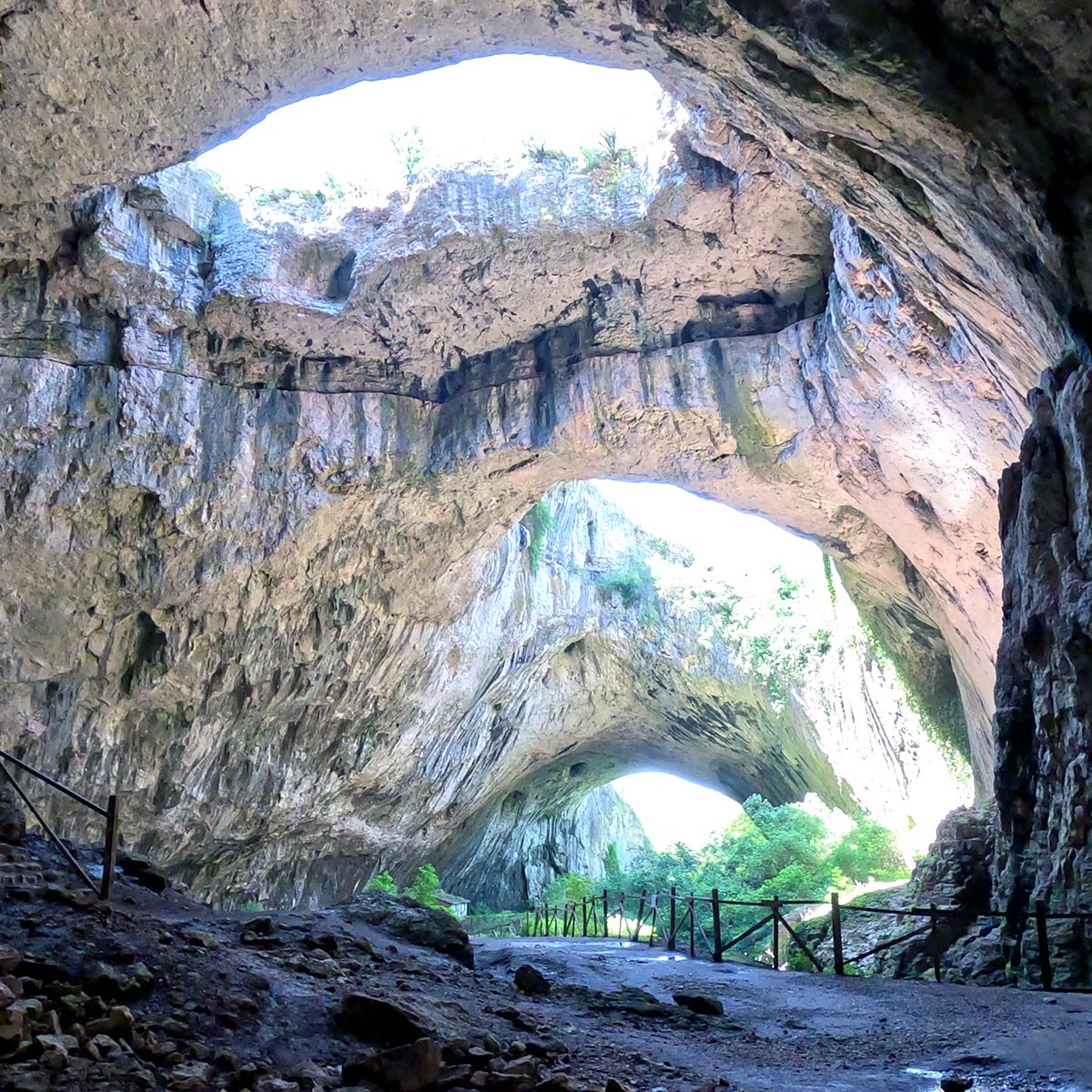
Set in the limestone region near the village of Devetaki in northern Bulgaria, Devetashka Cave is one of the largest and most accessible cave systems in the country. A wide natural entrance opens directly into a vast interior hall, where daylight still reaches deep inside through several ceiling openings, making it feel surprisingly open compared to most underground caves.
The cave is also known for its large colony of bats, which use the space as a seasonal shelter. Depending on the time of year, thousands of them can be present inside, adding a distinct natural rhythm to the experience and influencing access to certain areas during sensitive periods.
Walking through Devetashka is straightforward and grounded in its scale rather than complexity. The space is raw and impressive, with uneven rock surfaces, scattered pools of water, and massive chambers that emphasize how powerful natural erosion can be. It’s less about mystery and more about direct contact with a very living geological environment.
For the best viewing experience and full understanding of the story, please turn on Closed Captions (CC)
About Devetashka Cave
Let’s start with a fun fact — The Expendables 2 used Devetashka Cave as one of its filming locations, with the enormous natural interior serving as a ready-made movie set that required very little additional staging. Despite this brief moment in the global spotlight, the cave remains first and foremost a protected natural site rather than a commercial attraction.
One of the cave’s most remarkable features is its importance for bat conservation. Devetashka Cave is considered one of the three most important winter bat hibernation sites in Europe. During the colder months, more than 35,000 bats from four different species spend the winter inside the cave, occupying its darker and quieter sections. Because of this, certain areas are periodically closed to visitors during sensitive periods such as breeding and hibernation in order to protect the animals and preserve the ecosystem.
Bulgaria itself is exceptionally rich in bat diversity. Of the 35 bat species recorded across Europe, 33 can be found in the country, making it one of the continent’s most important habitats for these mammals. All bat species in Bulgaria are protected under national legislation.
Unlike many cave systems that descend deep underground, Devetashka is relatively “shallow” in terms of visitor access. The main experience is concentrated in a single vast, high chamber close to the entrance, without an extensive network of narrow or deep passages. This gives the cave a very different atmosphere — more like a gigantic natural cathedral open to daylight than a traditional underground maze.
An unusual piece of trivia is that a single gummy bear weighs roughly the same as an average Bumblebee Bat, one of the smallest mammals in the world.
Outside the entrance, especially during the tourist season, small stalls are often set up selling local products such as honey, drinks, and regional specialties. These simple, informal stands add a local rural touch to the visit and reflect the cave’s setting within a quiet, largely uncommercialized landscape.
Mobility for Cyclists
Reaching Devetashka Cave by train with your bike
If you are cycling along the EuroVelo 6 Danube route, this inland detour can be reached by train with your bicycle, though it requires a bit of planning and coordination. It offers a rewarding extension to your journey beyond the main cycling corridor, with practical rail connections and key transport details provided below.
The connection
From Svishtov, the journey continues by regional train with a change in Levski, before reaching the small stop of Doyrentsi, the most practical access point for continuing by bicycle. Then, it is a 4–5 km ride along a regional road with generally light traffic, suitable for touring and trekking bikes. After passing through open rural landscapes, the route turns off to the right, crosses the Osam River, and leads towards the cave entrance area where tickets are sold.
There is no dedicated cycling infrastructure or official bike parking at the site, so bicycles are usually left in informal, improvised spots near the entrance. The visit itself is relatively short, typically taking around 30 minutes to one hour, making it suitable as a stop on a longer cycling itinerary.
Due to limited train frequency and the required transfer in Levski, it is often practical to combine this detour with a visit to nearby Lovech, which works well as a cultural extension to the trip.