Veliko Tarnovo
Reading time: 6 minutes
veliko tarnovo · Northern Bulgaria
A Medieval Capital Carved into the Hills
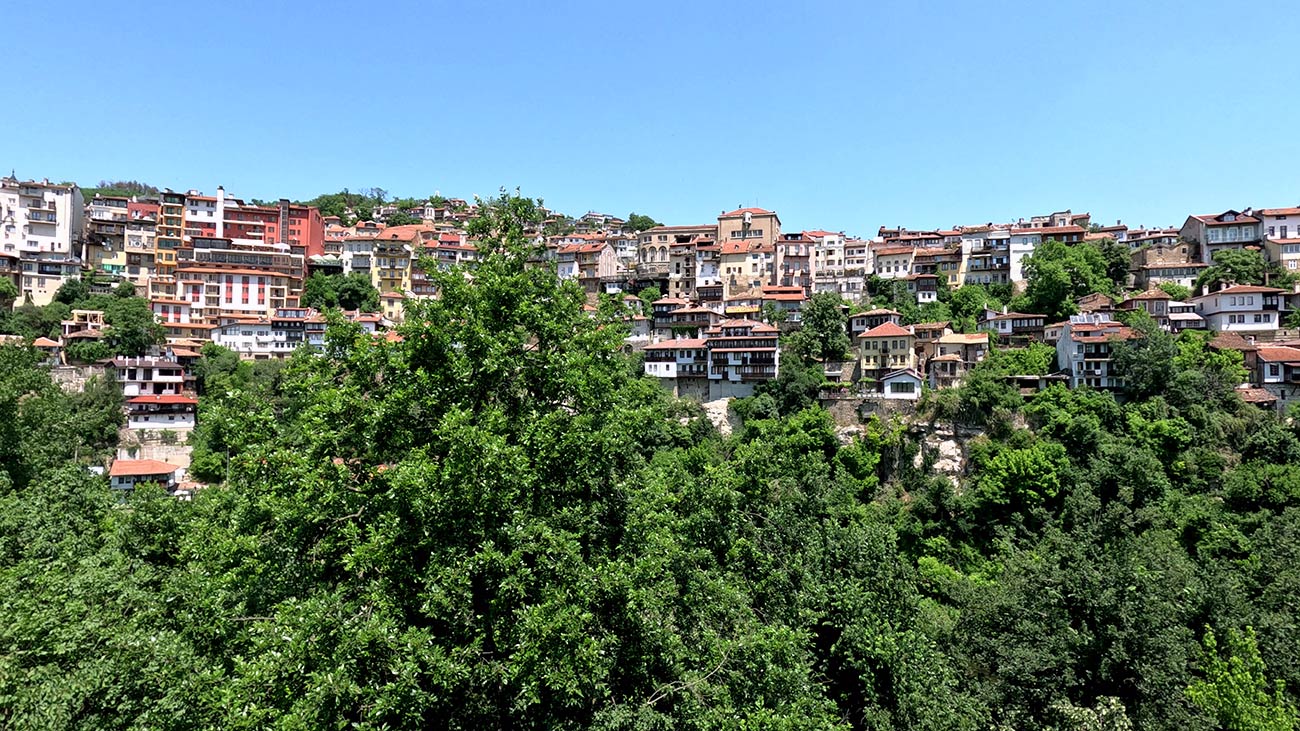
Few towns in Europe feel as theatrically arranged as Veliko Tarnovo. Stone houses cling to steep slopes above the Yantra River, their wooden balconies cantilevered over the gorge, and from almost every street corner the view drops away into a tangle of red rooftops, church domes and forested ridges. The town does not so much sit in the landscape as grow out of it.
This is one of the oldest inhabited places in Bulgaria, with archaeological traces reaching back more than five thousand years. Its great moment, however, came between 1185 and 1393, when Veliko Tarnovo served as the capital of the Second Bulgarian Empire. From the fortified hill of Tsarevets, Bulgarian tsars and patriarchs ruled a state that stretched across much of the Balkans, and the town became the political, spiritual and intellectual heart of the medieval Bulgarian world.
What remains today is a layered, walkable place where empire, revival-era architecture and everyday Bulgarian life share the same narrow lanes. For a cyclist stepping off the Danube for a couple of days, Veliko Tarnovo offers something the river route cannot: altitude, density, and the slow unfolding of a city built almost entirely on the vertical.
Stone housesMedieval cityTsarevetsYantra River
For the best viewing experience and full understanding of the story, please turn on Closed Captions (CC)
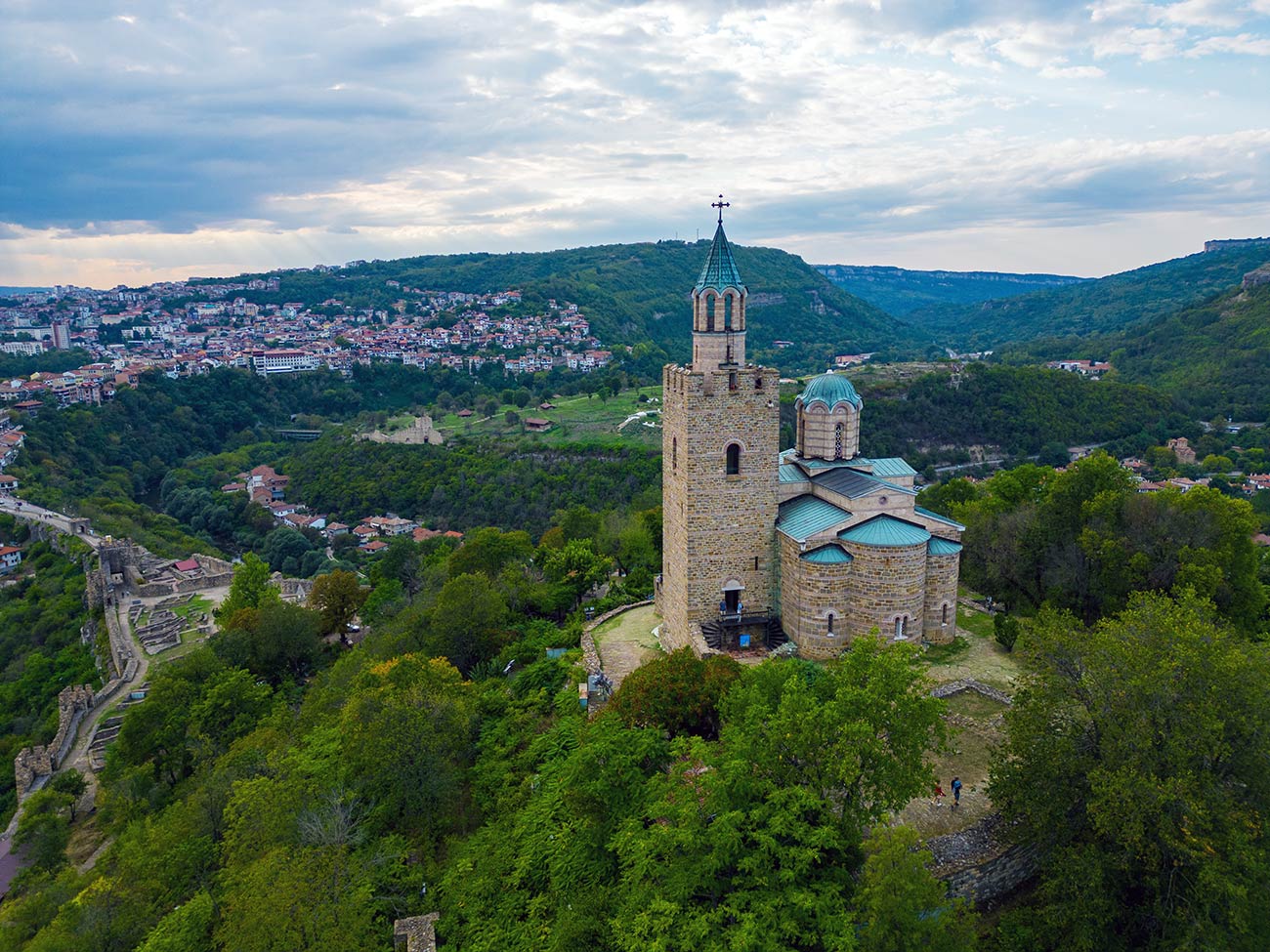
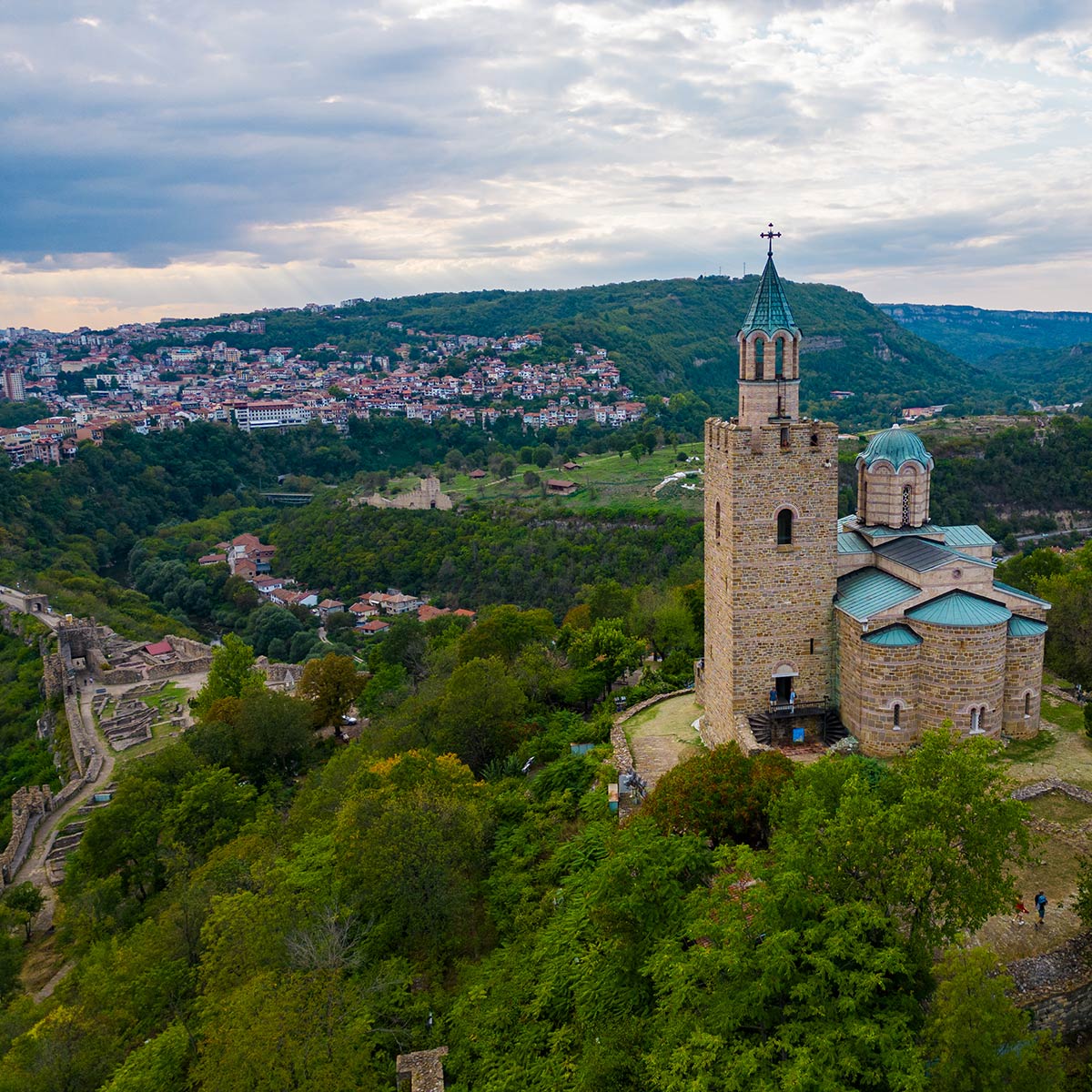
Tsarevets Hill & Fortress
Tsarevets is the symbolic heart of Veliko Tarnovo and the reason most travellers come. Set on a rocky peak almost entirely encircled by the Yantra, it once held the royal palace, the patriarch’s residence, churches, towers and a small medieval town within its walls. Today the fortified hill is an open-air archaeological reserve, and the climb up its restored ramparts gives some of the widest views over the city, the gorge and the surrounding ridges. On summer evenings, the hill hosts the “Sound and Light” audiovisual performance, which retells the dramatic history of the medieval Bulgarian state through music, lasers and church bells.
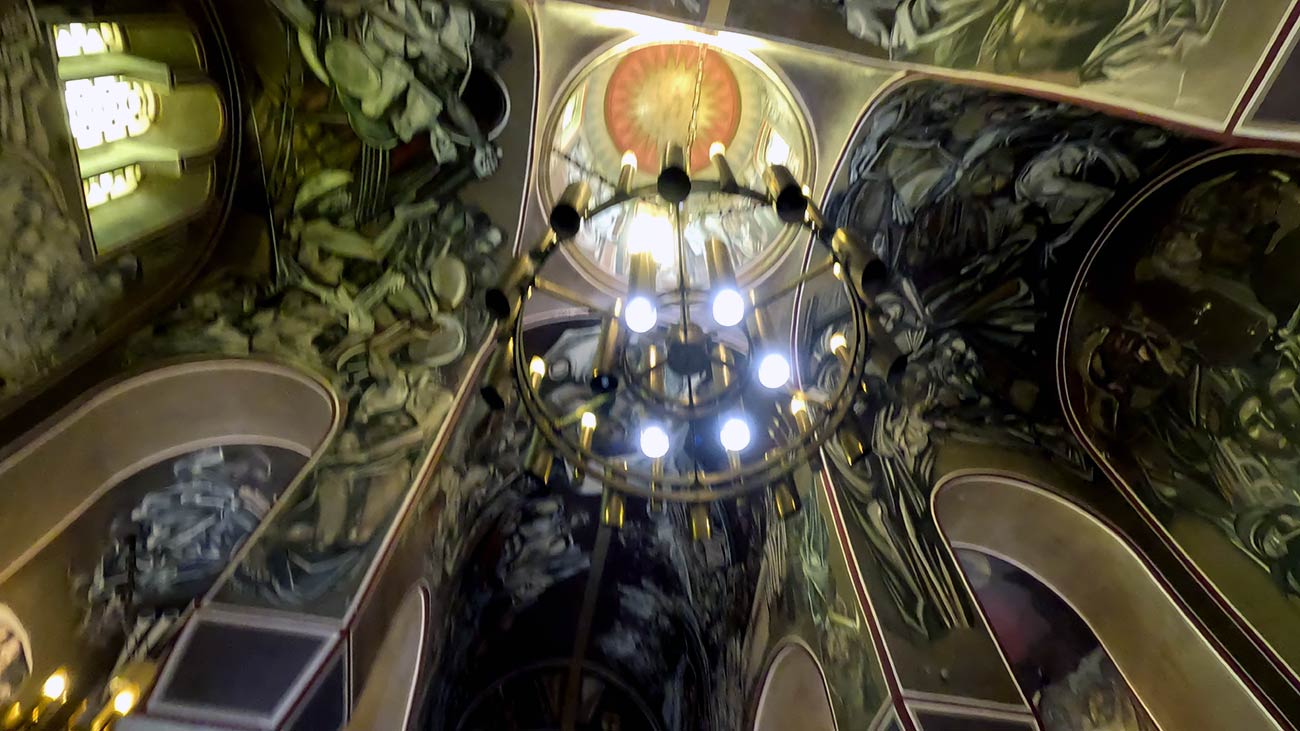
Patriarchal Cathedral of the Holy Ascension
At the very top of Tsarevets stands the reconstructed Patriarchal Cathedral, once the seat of the Bulgarian Patriarch during the Second Empire. The interior is unusual for an Orthodox church: instead of traditional iconography, it is decorated with bold, modernist frescoes painted in the 1980s, which depict Bulgarian history in stark, almost graphic style. Climb to the bell tower for the highest viewpoint in the city — a full panorama of the Yantra meanders, the old town clinging to the opposite slopes and the green hills rolling away towards the Balkan Mountains.
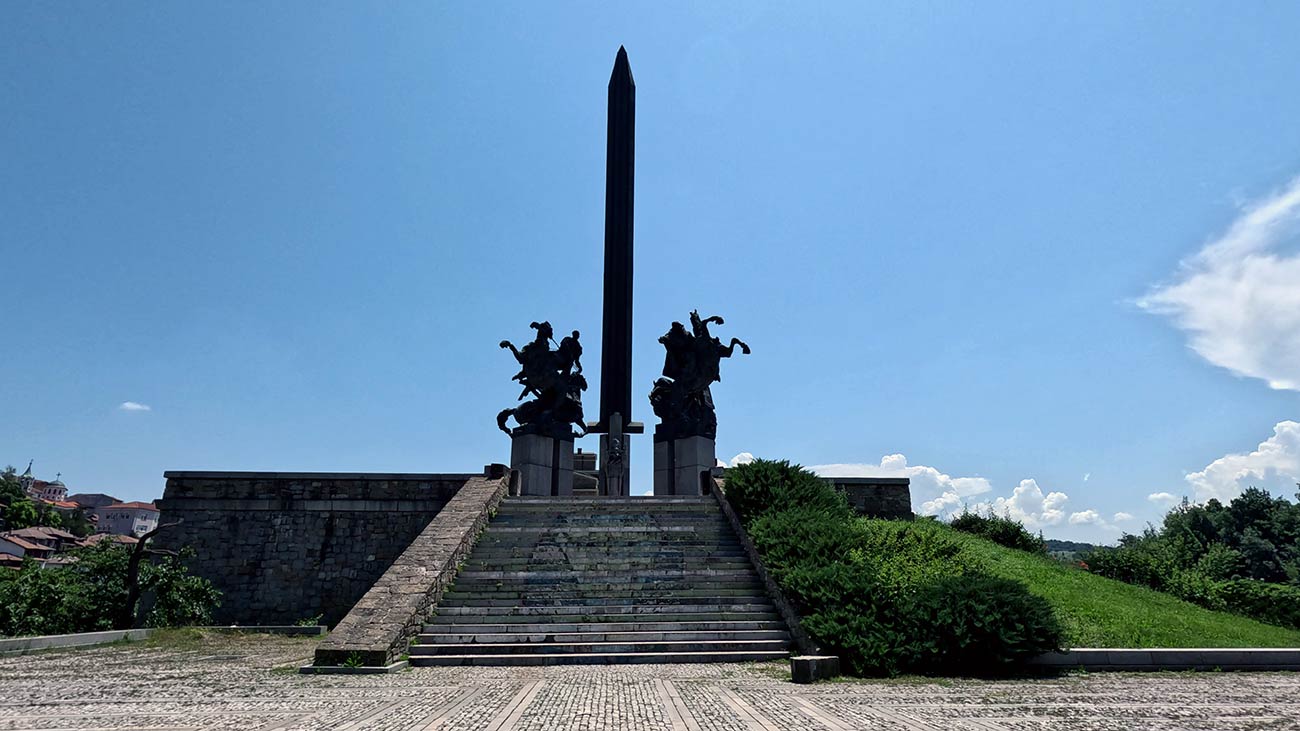
Monument to the Asen Dynasty
Across the river, on a small terrace above the gorge, four bronze horsemen rise around a tall stone sword. The Monument to the Assen Dynasty honours the brothers Asen and Petar, who declared independence from Byzantium in 1185 and made Veliko Tarnovo the capital of the restored Bulgarian state, together with later rulers Kaloyan and Ivan Asen II. The approach itself is part of the experience: as you walk across the bridge towards the monument, the old town reveals itself in one long, cinematic sweep, with houses stacked above the river and Tsarevets crowning the far end of the panorama.
Gurko Street
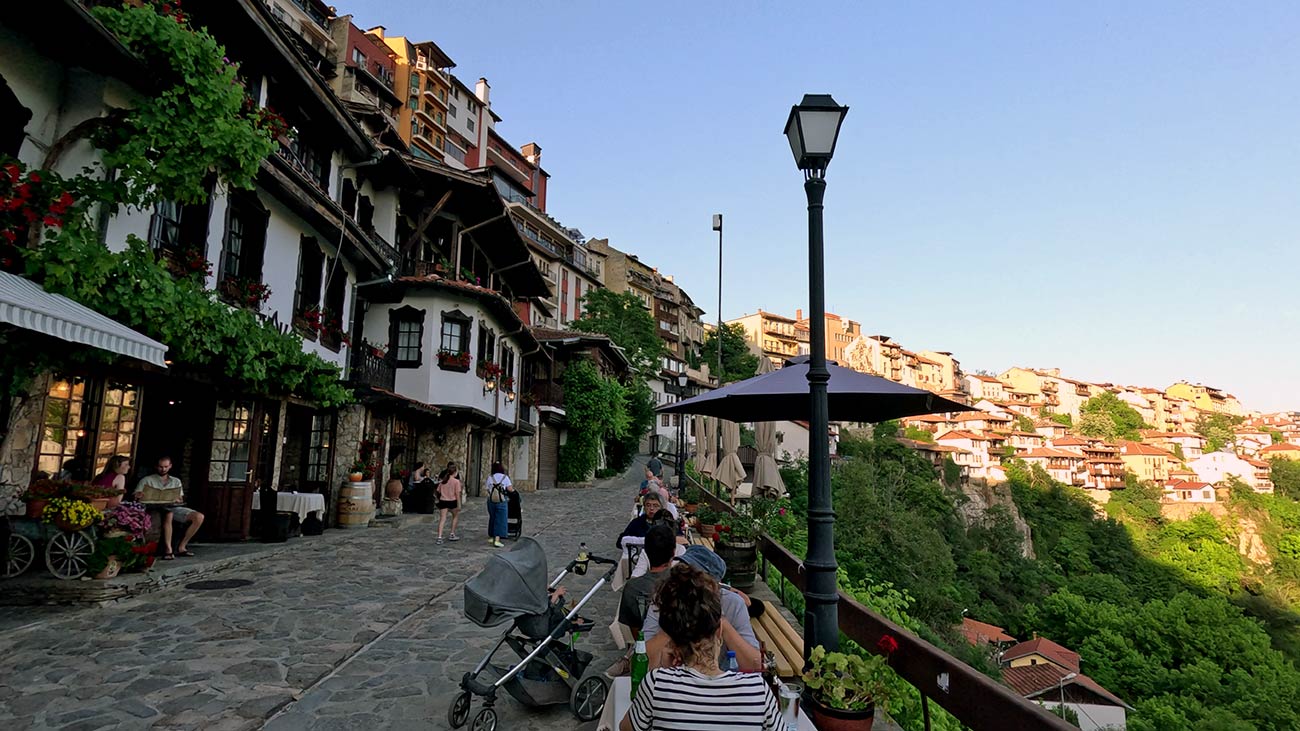
Gurko Street is the most photographed lane in the city, and rightly so. It runs along the steep slope above the Yantra, lined with revival-era houses whose stone foundations, whitewashed walls and timber upper storeys lean out over the river. Many of the buildings are more than two hundred years old, and the street has kept much of its 19th-century character. It is best walked slowly, with frequent stops at the small openings between houses where the gorge suddenly appears below.
Samovodska Charshia and the Old Town
A short walk from Gurko leads into Samovodska Charshia, the old crafts market quarter. This is where weavers, potters, coppersmiths and bakers traditionally had their workshops, and a number of them still do, alongside small galleries and family-run cafés. The wider old town is a network of cobbled lanes, stairways and tiny squares — easy to wander without a plan, and full of revival-era houses, small Orthodox churches and quiet courtyards filled with vines and flowers.
Mobility for Cyclists
Reaching Veliko Tarnovo by train with your bike
If you are riding the EuroVelo 6 along the Danube, this inland detour can be reached comfortably by train with your bike, making it an easy addition to your cycling journey with practical travel connections and useful transport information available below.
The connection
The natural starting point for a Veliko Tarnovo detour is Ruse, the largest Bulgarian city on the Danube and a key town on the EuroVelo 6 route. From Ruse, trains run south across the Danubian Plain to Gorna Oryahovitsa, the main railway junction for the region, with a typical journey time of around two hours. Gorna Oryahovitsa is where almost all long-distance trains from Sofia, Varna and the Danube line meet, so connections are frequent throughout the day. From Gorna Oryahovitsa, a short local train or a short ride covers the remaining ten kilometres into Veliko Tarnovo in about thirty minutes. The full door-to-door journey from Ruse takes roughly three hours, which makes the city a realistic day-or-two detour from the main cycling corridor.
Railway Station(s)
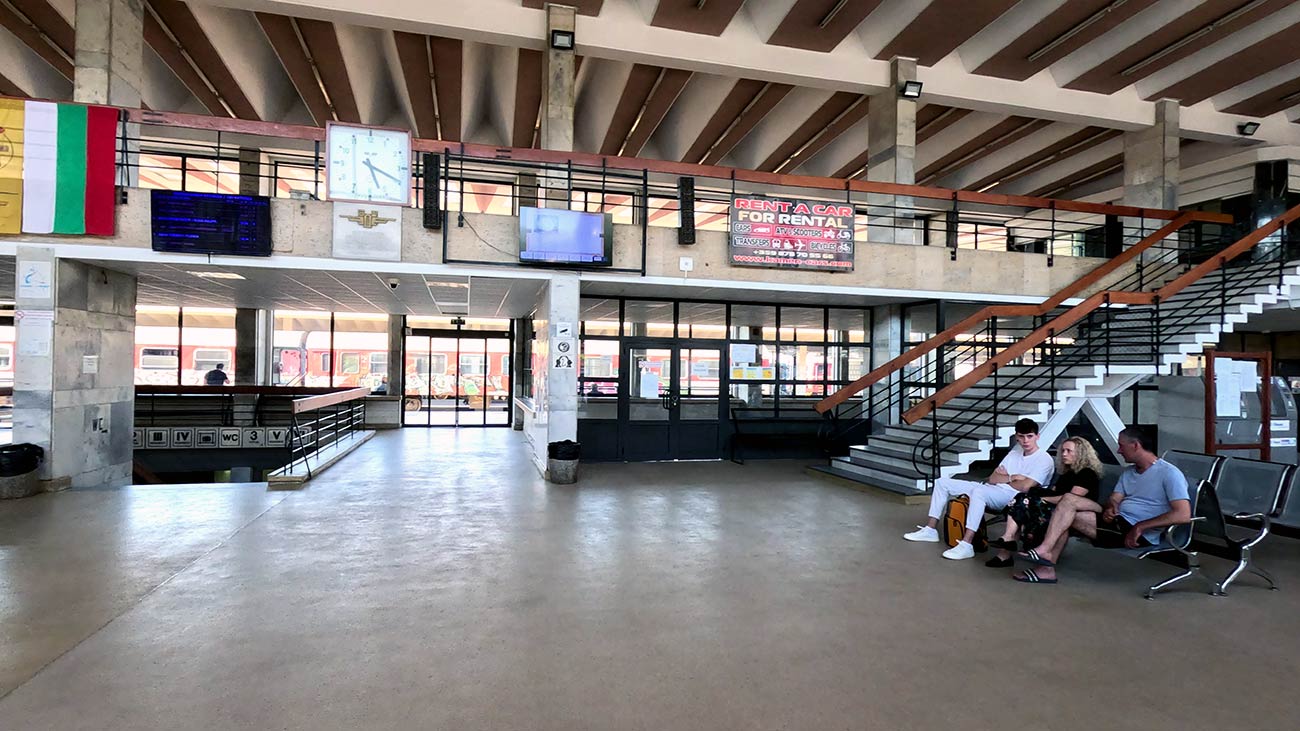
Veliko Tarnovo has its own small in-town station, but most travellers arrive via Gorna Oryahovitsa station, the regional hub ten kilometres north of the city. The station is well connected to the centre by frequent buses and shuttle trains, and taxis are readily available outside the main entrance. Once in the city, the old town, Tsarevets and the Asenevtsi Monument are all within walking distance of each other, though the terrain is steep — comfortable shoes matter more here than in most Danube towns. Cyclists who want to keep their bikes with them will find the old town largely unsuitable for riding, but the city makes an excellent place to leave the saddle behind for a couple of days and explore entirely on foot.