Đakovo
Reading time: 10 minutes
ĐAKOVO, OSIJEK-BARANJA COUNTY, CROATIA
A Cathedral Town with White Horses
In the fertile heart of the Slavonian plain, where the land lies flat and rich enough to have supported settlement since Roman times, two slender red-brick towers rise so high above the surrounding fields that they guide visitors into Đakovo long before any other part of the town comes into view. First mentioned in written records in 1239, Đakovo grew over the centuries into the seat of a Catholic diocese, and its skyline has been dominated since the late nineteenth century by one of the most celebrated cathedrals in this part of Europe, described by Pope John XXIII as the most beautiful between Venice and Istanbul.
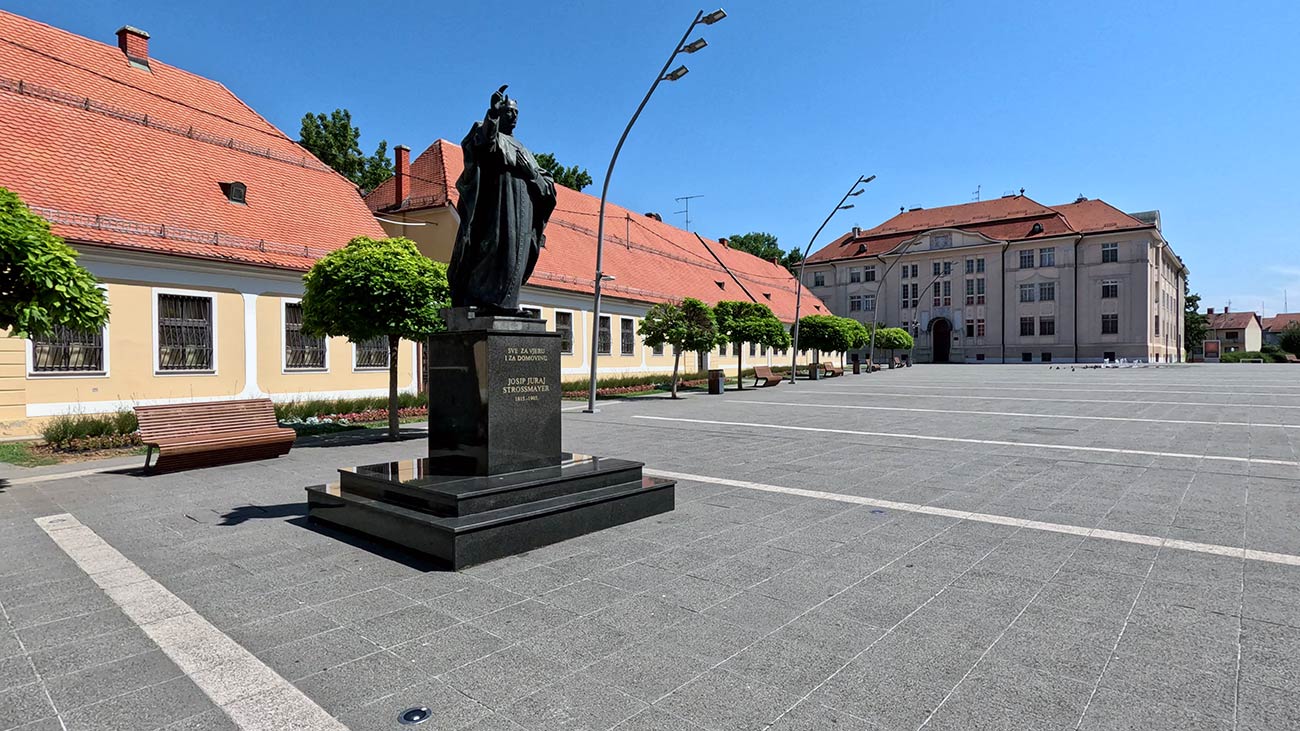
The town’s modern character owes a great deal to one man, Bishop Josip Juraj Strossmayer, the influential nineteenth-century Croatian churchman, politician, and patron of the arts who transformed the modest episcopal estate into a place of genuine cultural ambition. Under his patronage, Đakovo gained not only its grand new cathedral but also numerous churches and public buildings, all reflecting the confident historicist taste of the late Habsburg era. Đakovo’s other defining feature, the breeding of pure white Lipizzaner horses, reaches back even further, to a stud farm tradition that began in the early sixteenth century and continues, almost unbroken, to this day.
For cyclists exploring the Danube along the EuroVelo 6, Đakovo makes for a rewarding inland detour from the Croatian stretch of the route. The town lies around 36 kilometres south-west of Osijek, the natural EuroVelo 6 gateway in this part of Slavonia, reached by a direct train in well under 40 minutes or a similarly quick regional bus. A half day or full day spent moving between the cathedral, the bishop’s grounds, and the stud farm’s stables offers a memorable combination of architecture and living equestrian heritage in one of eastern Croatia’s most distinctive small towns.
A Red-Brick Cathedral and Five Centuries of Lipizzaner Horses
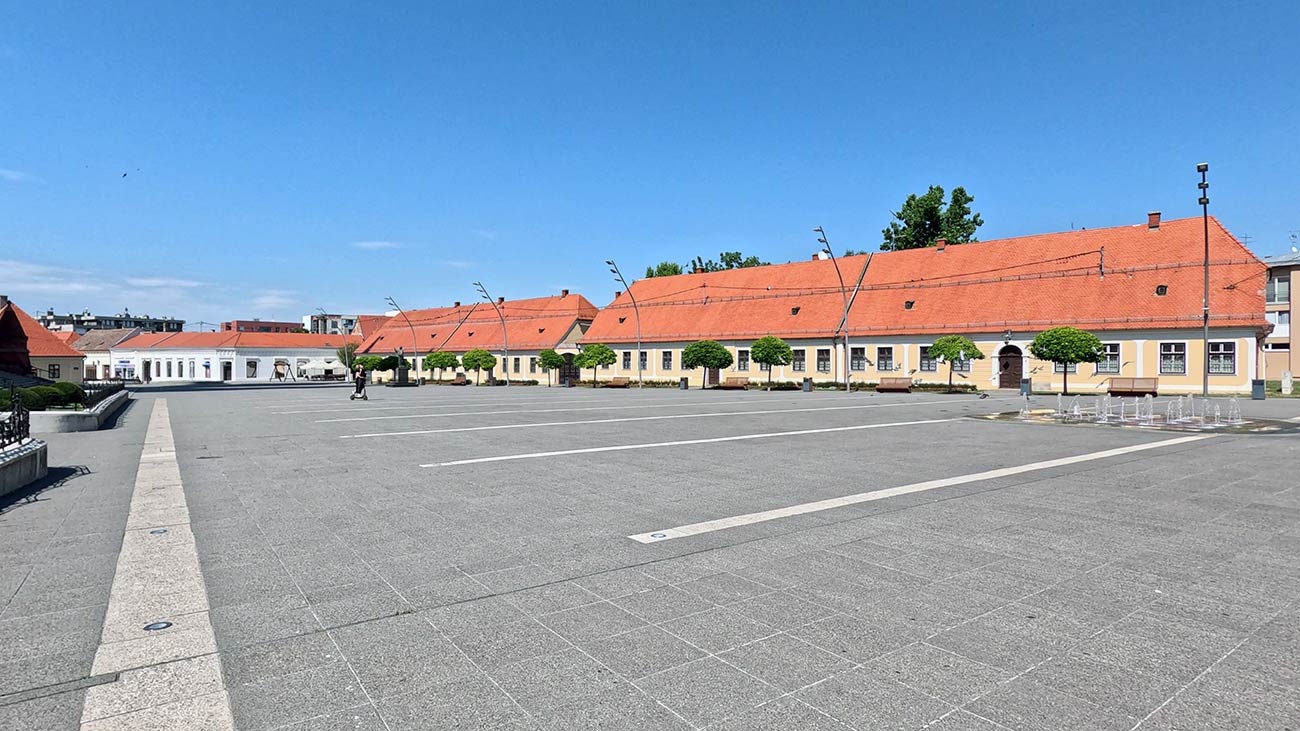
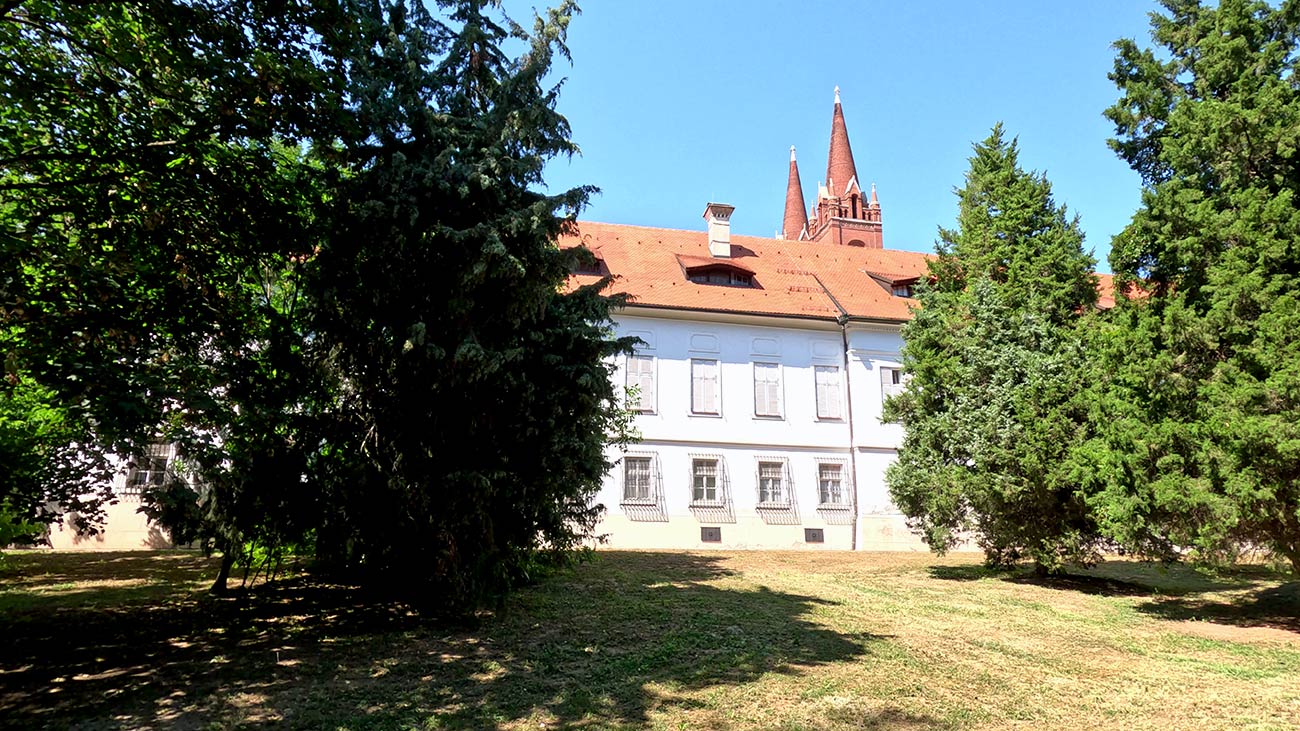
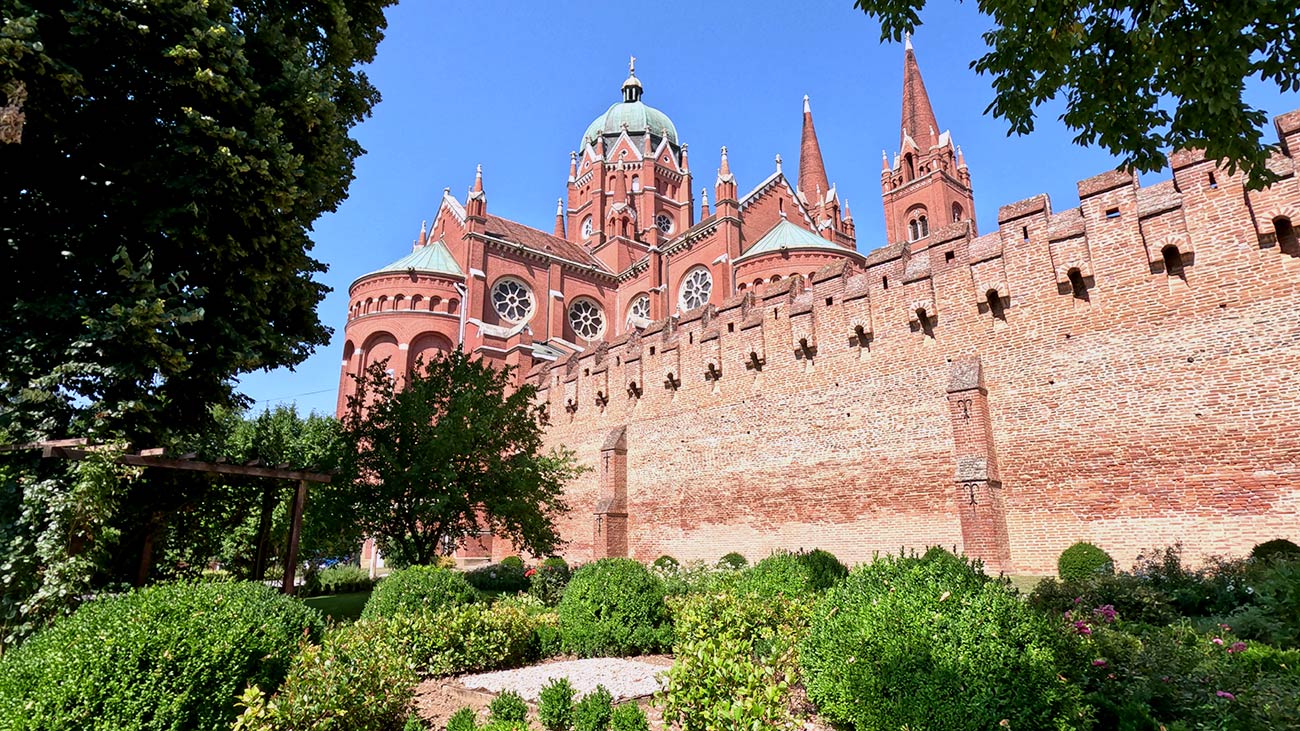
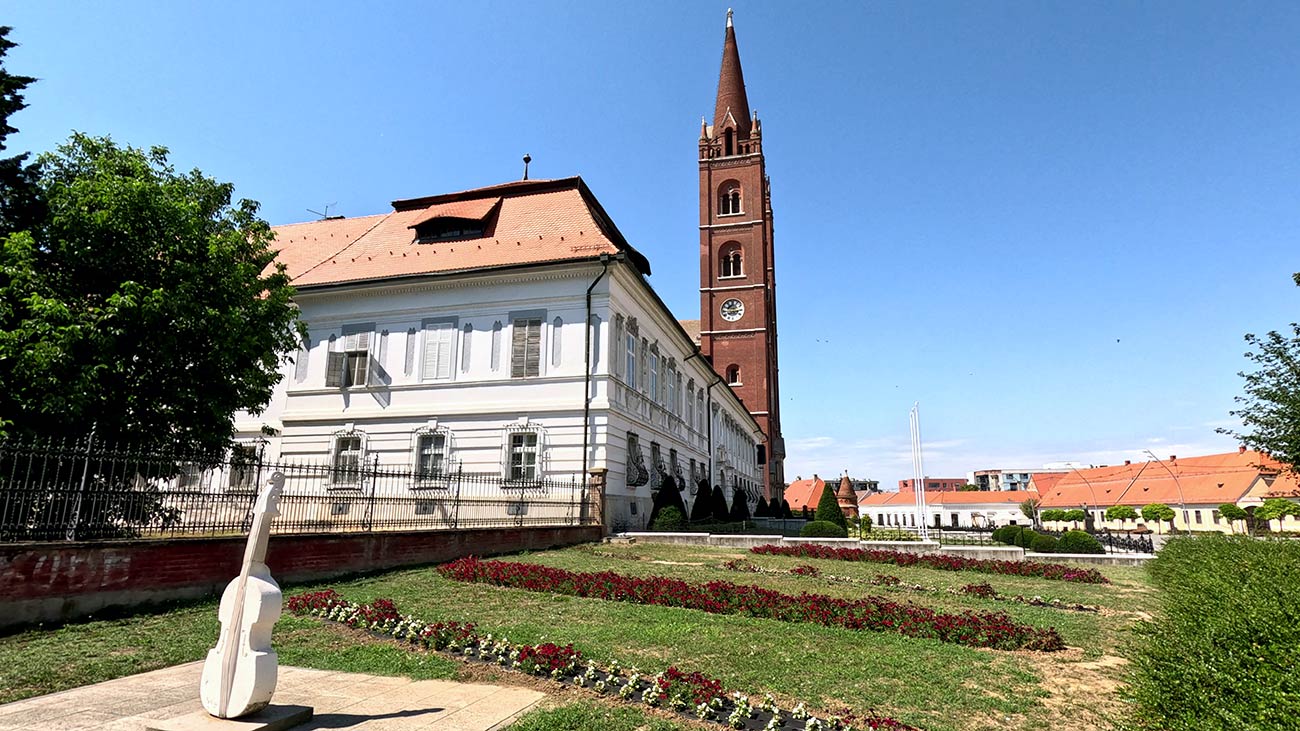
The unmissable centrepiece of any visit is the Cathedral of St. Peter (Katedrala svetog Petra), whose twin 84-metre towers and green dome announce Đakovo from every direction long before the town itself comes into view. Built between 1866 and 1882 under the direction of Bishop Josip Juraj Strossmayer on the site of an earlier cathedral, the building is constructed from close to seven million red bricks in a confident neo-Romanesque and neo-Gothic style, and its interior is no less ambitious than its exterior: 43 frescoes covering scenes from the Old and New Testaments, seven richly decorated altars, and a main altar rising some fifteen metres inside the nave. The cathedral has hosted two popes and two English queens across its history, an unusual record for a town of Đakovo’s modest size, and it remains the working seat of the Đakovo-Osijek Archdiocese to this day. Around its base, the Bishop’s Palace, the old seminary buildings, and the leafy Strossmayer Park together frame the central square that opens onto Đakovo’s historicist old town, with the fourteenth-century Church of All Saints standing nearby as one of the oldest surviving religious buildings in the area.
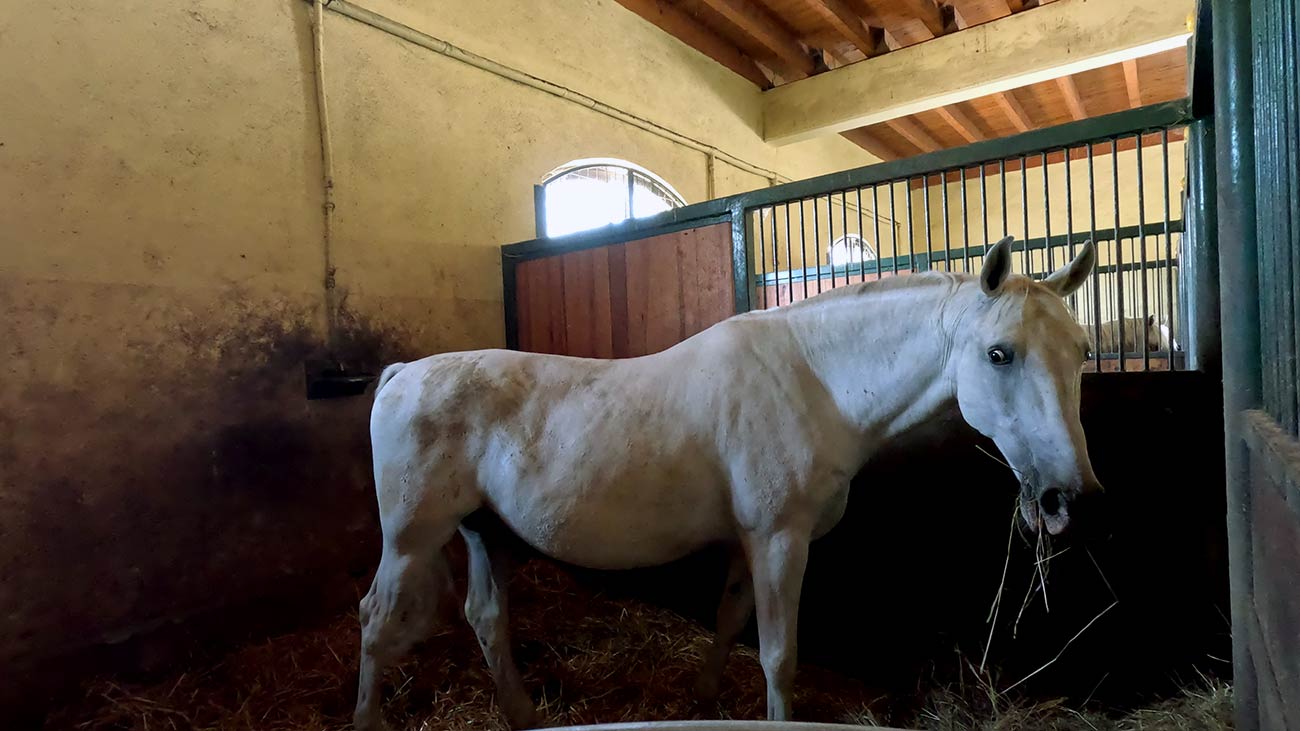
A short walk from the cathedral, along Gupčeva Street, leads to the town’s other great institution: the State Stud Farm Đakovo (Državna ergela Đakovo), one of the oldest horse-breeding establishments in Europe. Horse breeding on this estate is documented as far back as 1374 under Bishop Bakić, and the stud farm itself was formally founded in 1506 with a grant of ten Arabian horses and a stallion, making it one of the oldest continuously operating institutions of its kind on the continent. Lipizzaner breeding specifically began here in the early nineteenth century, and the farm’s gleaming white horses have since carried the name of Đakovo to equestrian circles well beyond Croatia, drawing the attention of Queen Elizabeth II, among other distinguished visitors, after a memorable Đakovo Lipizzaner performance at an Olympic Games opening ceremony. The stud farm today operates across two sites, the main Stallion Stud in town and the Ivandvor estate nearby, and visitors can tour the stables, watch training and dressage sessions, and learn about the careful breeding programmes that keep this rare, elegant breed going. The farm’s cultural calendar includes a festive Lipizzaner Christmas Ball each December, complete with equestrian theatrical performances, and the farm’s horses, along with the cathedral, are the centrepiece of the Đakovo Embroidery Festival (Đakovački vezovi) each July, one of Croatia’s most important folklore celebrations, when the cathedral surroundings fill with traditional Slavonian costume, folk choirs, and a parade of horse-drawn wedding wagons.
 Useful Links
Mobility for Cyclists
The connection
The most practical connection from the EuroVelo 6 corridor is from Osijek, where HŽPP regional trains run directly to Đakovo in around 38 minutes, with around five departures a day in each direction. Regional buses operated by Autotrans, Arriva Croatia, and other carriers cover the same route in around 40 to 50 minutes, offering a useful alternative when train timings don’t align with the rest of a day’s plans. Cyclists riding the Croatian stretch of the EuroVelo 6 will find Osijek the natural transfer point. The visit also combines naturally with Našice, another notable Slavonian town reachable from Osijek on a parallel regional line, for travellers wanting to extend their stay in this part of the country.
Croatian Trains
The rail network in Croatia is operated mainly by HŽPP (HŽ Putnički prijevoz, Croatian Railways Passenger Transport), the state-owned passenger operator that runs both regional and InterCity services across the country. Regional trains (putnički vlak) serve smaller towns with frequent stops, while a smaller number of InterCity services connect the main cities with fewer stops and faster journey times; seat reservation is compulsory on some InterCity routes, including the Zagreb-Osijek line. Croatia’s rail network is considerably less developed than its road network, and trains generally take longer than buses for the same journey, which makes rail the more practical option mainly for shorter regional hops rather than long-distance travel. The Danube region in Croatia, including the Slavonia and Srijem areas near Vukovar and Vinkovci, is served by regional lines connecting the smaller towns of the area to the main Zagreb-Osijek-Vinkovci corridor. The HŽPP app and website (hzpp.hr) are the central tools for planning journeys, checking timetables, and purchasing tickets.
Taking your bike
Croatia is moderately bike-friendly when it comes to rail transport. On Croatian trains, bicycles can generally be carried as luggage on all services, provided they are disassembled and packaged so they fit within the passenger compartment or a designated luggage area; newer regional and InterCity trains increasingly offer dedicated bicycle storage areas with space for up to ten bikes, while older rolling stock may not. The bicycle transport fee on domestic routes is around 2 euros regardless of distance, and around 5 euros on international and cross-border services, where a separate bicycle ticket and, on some routes, a bicycle seat reservation are required. Because not every train has a designated bicycle area, it is advisable to check directly with HŽPP before travelling with an assembled bike, particularly during the busy summer season. Folding or fully disassembled and bagged bicycles travel more reliably as ordinary luggage on any service. Overall, Croatian rail can be used for short cycle-touring detours, but buses remain the more flexible and frequent option for most domestic journeys.
Bikes on Buses
Long-distance bus services in Croatia are the dominant mode of intercity travel, generally faster and more frequent than the equivalent train journey. The network is operated by a large number of regional and national carriers, including FlixBus, Autotrans, and a range of smaller local operators such as Polet Vinkovci, which serves many of the shorter routes within Slavonia and Srijem. Bicycle transport on Croatian buses is possible but not standardised across operators: FlixBus and several other carriers will carry bicycles in the luggage compartment when space allows, generally for a small additional fee, but capacity is limited and advance booking or confirmation with the operator is recommended. Most regional and local bus operators do not guarantee bicycle space and should be contacted directly before travelling with an assembled bike. As a result, buses are best used by cyclists as a secondary option for longer-distance repositioning between towns, particularly where rail connections are slow or infrequent, while advance planning remains essential for anyone travelling with a bicycle.
Arriving in Đakovo
Đakovo’s railway and bus stations sit within easy walking distance of the town centre, with the cathedral, Strossmayer Park, and the surrounding old town reachable on foot in around ten minutes along flat, well-signposted streets. The State Stud Farm lies a short further walk along Gupčeva Street, easily combined with a visit to the cathedral in the same outing. The compact, mostly flat layout of the town centre makes it easy to explore on foot or by bike. Bike racks are available near the main square. For onward travel, the same train and bus connections run back toward Osijek and the wider Danube region, so Đakovo works equally well as a half-day excursion or as a longer stop combined with neighbouring Slavonian towns.