Našice
Reading time: 11 minutes
NAŠICE, OSIJEK-BARANJA COUNTY, CROATIA
A Noble Family’s Slavonian Retreat
In the gently rolling hills where the flat Slavonian plain begins to rise toward the wooded slopes of the Krndija mountains, lies a small town that has passed through an unusually long line of owners. First mentioned in a document in 1229 under the name Nekche, Našice has belonged in turn to the Knights Templar, Franciscan monks, the Ottoman Turks, and finally, from the late eighteenth century onward, the Croatian noble family Pejačević, whose name is still stamped across the town’s two finest buildings and its largest park. Each layer of ownership left something behind, and the result today is a quiet provincial centre built almost entirely around the legacy of a single aristocratic family.
The Pejačević era transformed Našice from a modest market town into a genuine centre of regional culture. Count Vincencije Ljudevit Pejačević had the main castle built in 1811-1812, and successive generations of the family expanded and refined both it and the surrounding English-style park across the rest of the nineteenth century. The family’s most celebrated member, the composer Dora Pejačević, grew up partly within these walls and is remembered today as the first modern Croatian composer, whose chamber and orchestral works are still performed internationally. The family’s long association with the Catholic Church, going back to the Knights Templar who first settled the area in the thirteenth century, also gave the town its other major landmark, the Baroque Franciscan church at its centre.
For cyclists exploring the Danube along the EuroVelo 6, Našice is a worthwhile inland detour from the Croatian stretch of the route. The town lies around 45 kilometres south-west of Osijek, the natural EuroVelo 6 gateway on this part of the route, reached by a regional bus in well under an hour or a slightly longer train journey. A half day or full day spent moving between the castle museum, the church, and the quiet paths of the surrounding park offers an unhurried glimpse of Slavonian aristocratic life, a world away from the river itself.
A Castle, a Church, and an English Park Built by the Pejačević Family
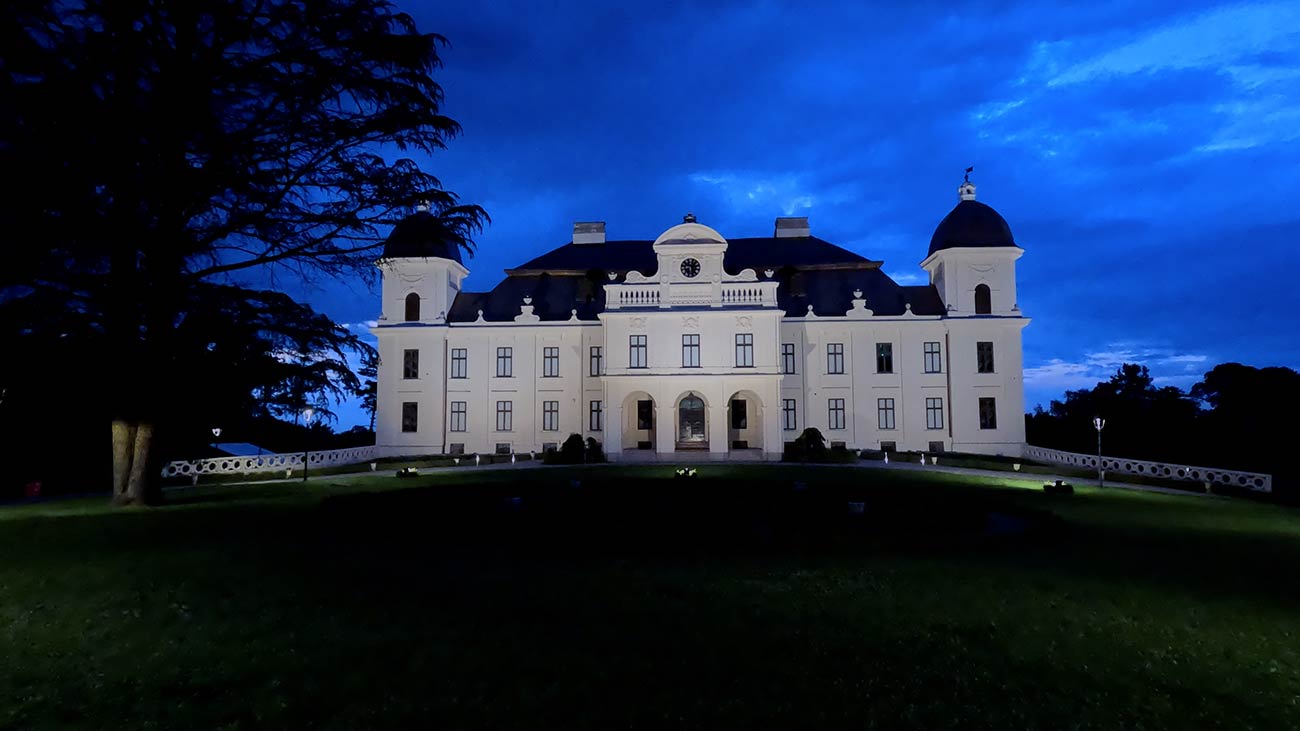
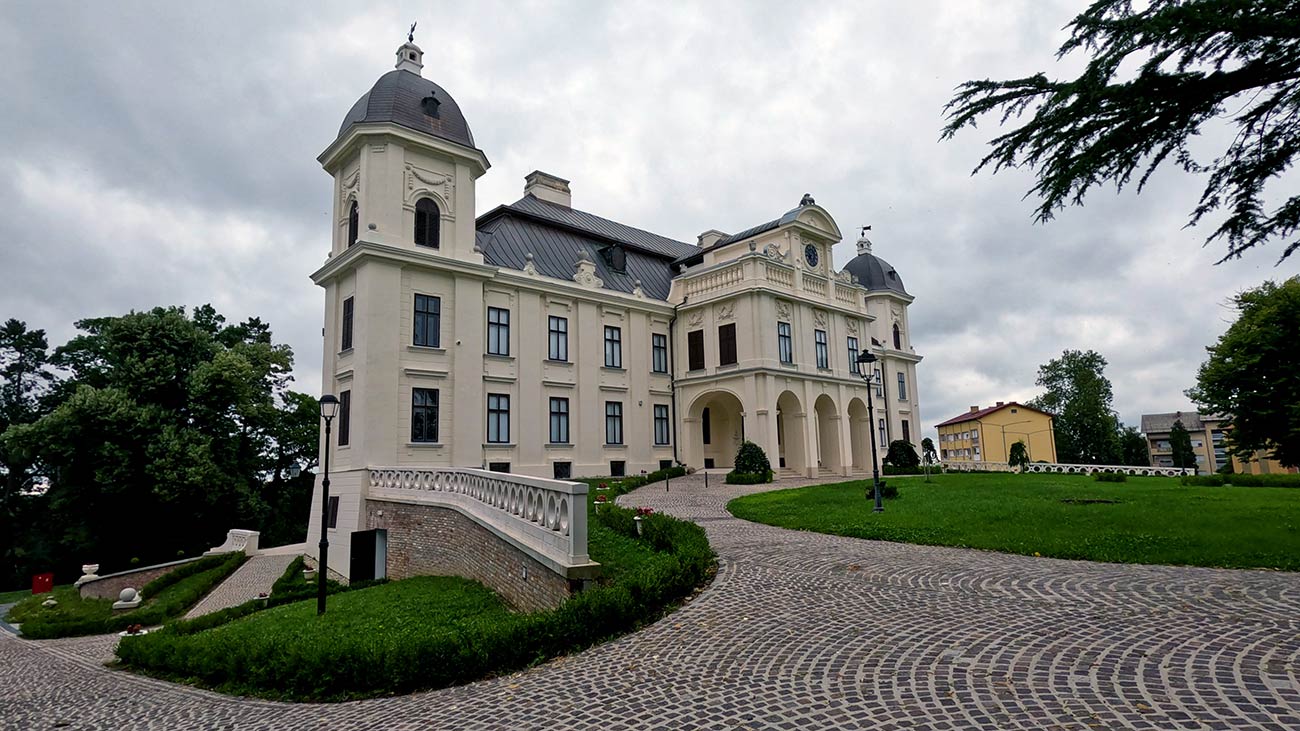
The undisputed centrepiece of Našice is Pejačević Castle (Dvorac Pejačević), a Baroque-Classicist building completed in 1811-1812 by Count Vincencije Ljudevit Pejačević, who had inherited the Našice estate from his father, Karlo III Ferdinand. Set atop a low rise within a vast English-style landscape park, the castle was significantly enlarged in 1865, when the rounded corner towers that give it its present silhouette were added, and the building took on most of its current appearance around 1850 under Count Ladislav Pejačević. The castle today houses the Town Museum (Zavičajni muzej Našice), with a recently renovated permanent exhibition that traces the history of the town and the noble family who shaped it. Walking through the castle’s halls and the surrounding grounds, visitors follow in the footsteps of the family’s most famous member, the composer Dora Pejačević (1885-1923), widely regarded as the first modern Croatian composer, whose intricate piano, violin, and cello sonatas, written partly during her years in Našice, remain among the treasured works of Croatian musical heritage.
A short walk through the park leads to the Small Pejačević Manor, a more modest Neoclassical Revival building, sometimes called the hunting house, built in the early twentieth century with geometric box-hedge gardens of its own. The manor is a quietly remarkable piece of engineering for its time, built on a reinforced concrete trough specifically designed to protect the structure from the high groundwater typical of the surrounding Slavonian plain, an early and pioneering solution for a problem that affects many buildings in this low-lying region. Today the building serves as a school, though its gardens remain part of the wider visitor circuit through the park.
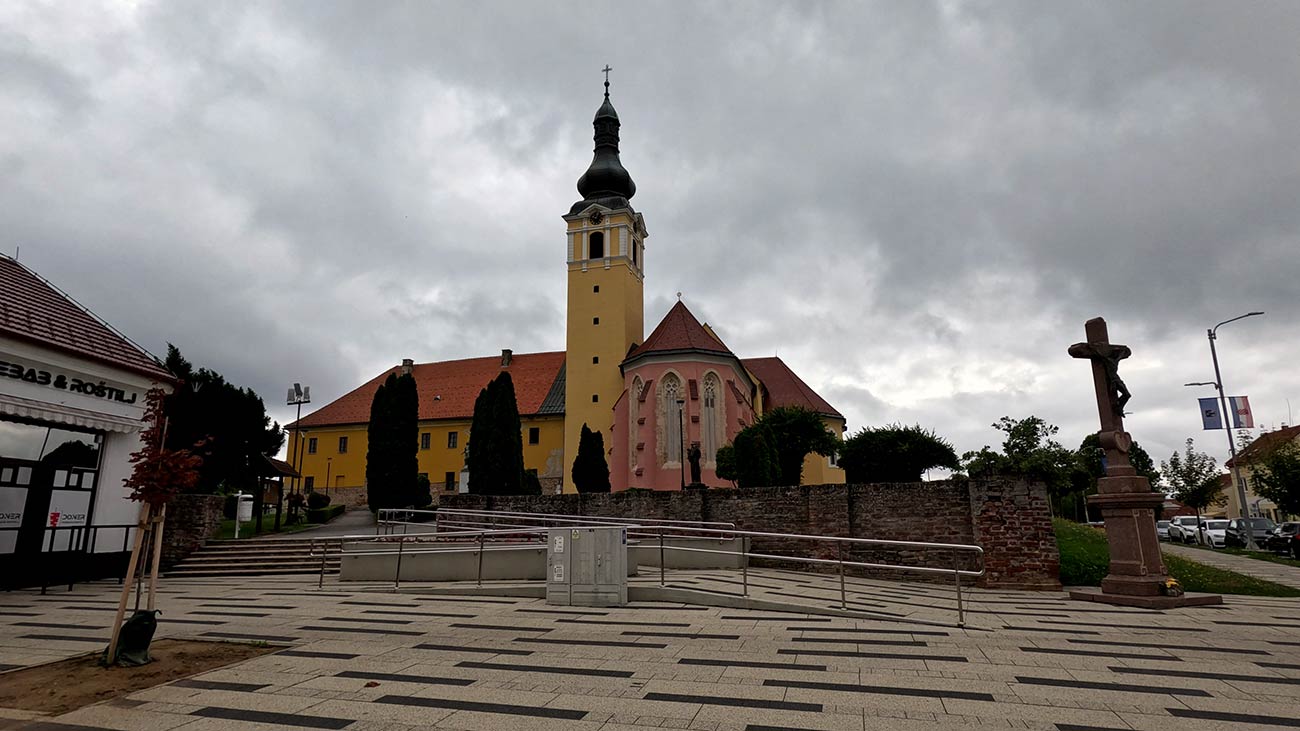
In the centre of town stands St. Anthony’s Franciscan Church (Franjevačka crkva sv. Ante Padovanskog), an eighteenth-century Baroque church whose vivid yellow tower has become one of the most recognisable landmarks of Našice. The church stands on ground with a much older religious history: the Knights Templar first established a presence here in the thirteenth century, before the site passed to the Franciscans, who built the present church and an adjoining monastery whose library still holds a small number of historic early printed books. The church remains an active parish today, its bright tower visible from much of the town centre, and a beloved statue of St. Anthony stands in the nearby town square, a popular gathering point for evening strolls and the local café culture that gives Našice’s centre its quiet, sociable atmosphere even on a misty winter evening.
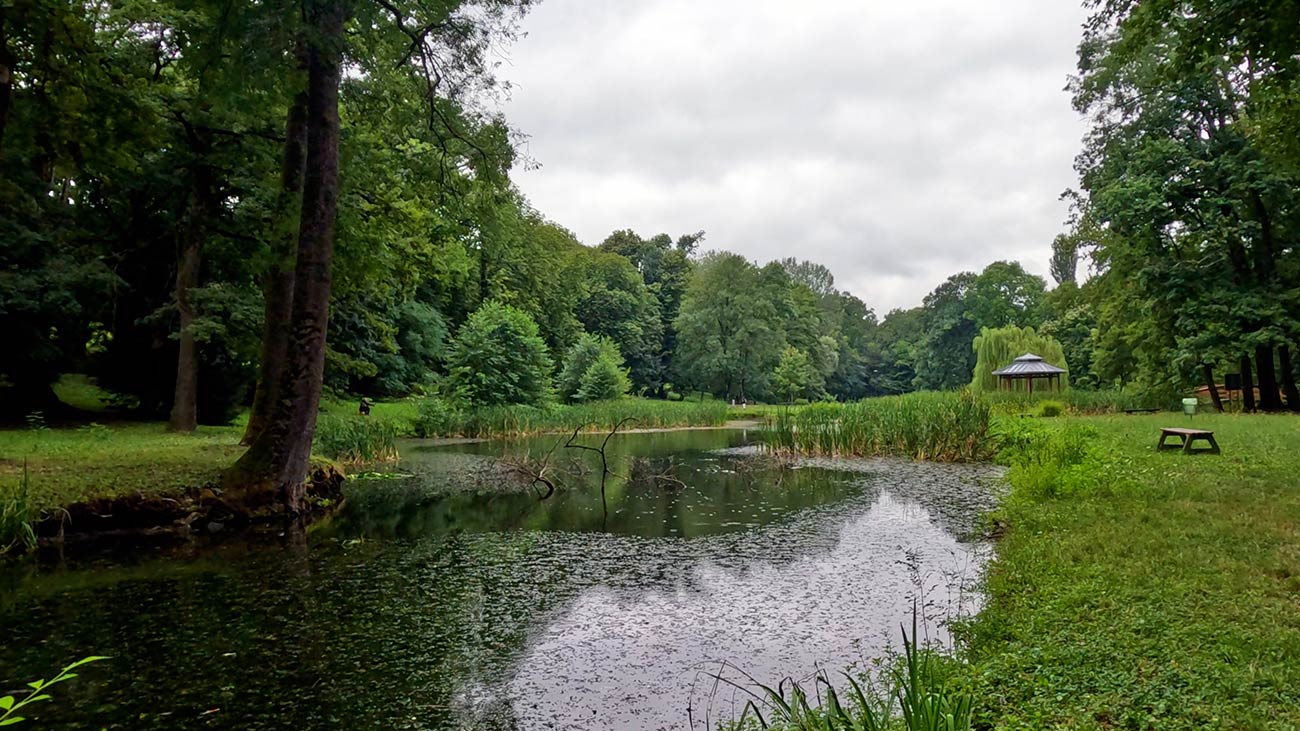
The largest single attraction in Našice, however, may simply be the Pejačević Park (Park Pejačević) itself, one of Croatia’s most celebrated landscape parks and the green setting that ties the castle, the manor, and the town together. Laid out originally as part of the Pejačević family’s nineteenth-century estate, the park combines a tranquil ornamental pond, centuries-old oak trees, winding shaded paths, and a cascading garden that changes character completely with the seasons, from the lush green of summer to the golden colours of autumn and the frost-covered stillness of winter. For travellers with a little more time, the park alone is worth an unhurried hour, whether for a quiet walk, a rest beside the pond, or simply to take in one of the better-preserved aristocratic landscapes of eastern Croatia.
 Useful Links
Mobility for Cyclists
The connection
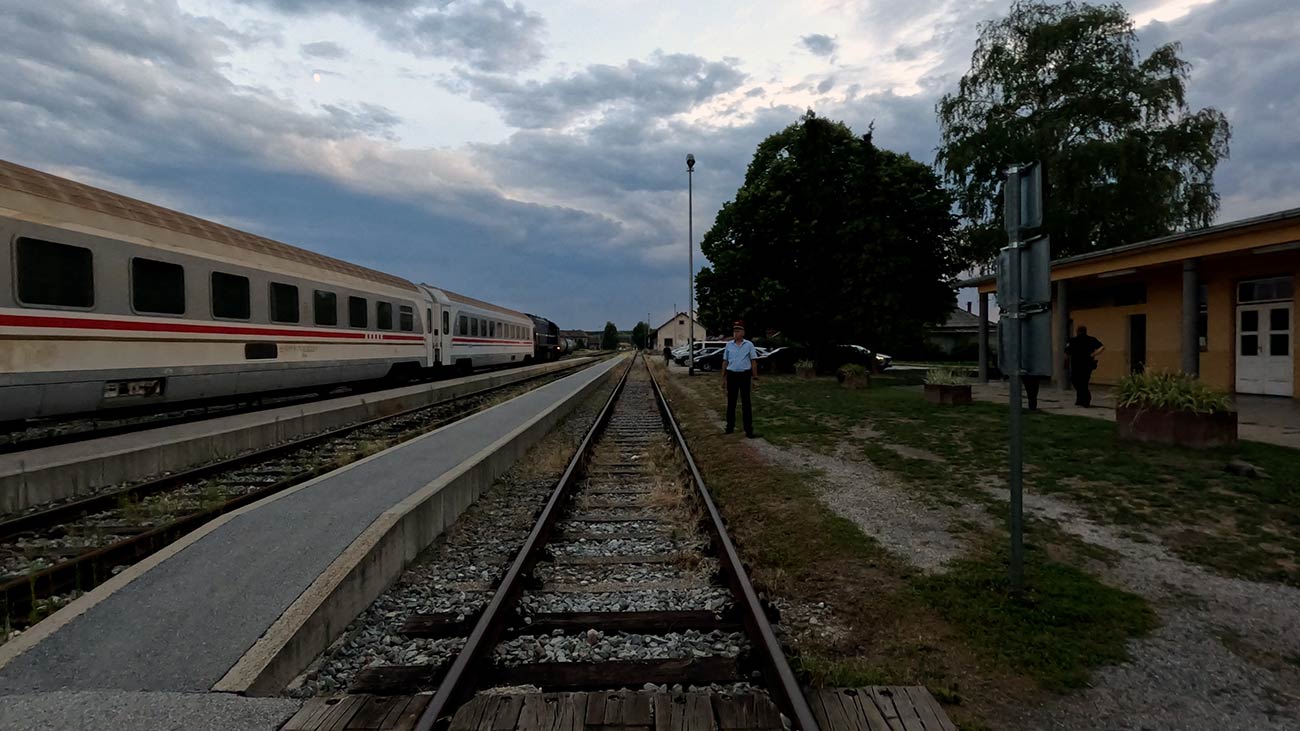
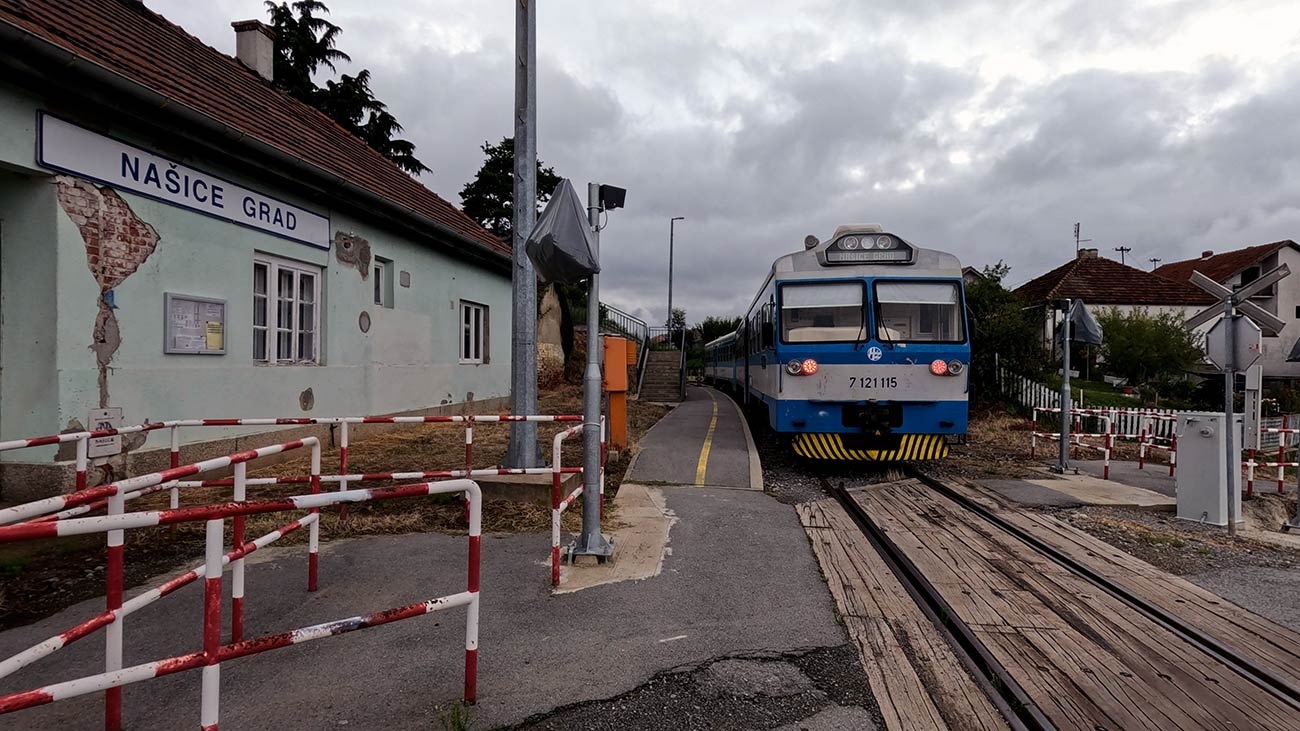
The most practical connection from the EuroVelo 6 corridor is from Osijek, where HŽPP regional trains run directly to Našice in around 53 minutes to 1.5 hours depending on the specific service, with several departures throughout the day. Cyclists riding the Croatian stretch of the EuroVelo 6 will find Osijek the natural transfer point. Našice is served by two stations: Našice Grad, the smaller stop closer to the town centre, and the main Našice station, a short distance further out, which has more frequent connections and is the better choice when timetables don’t align with the closer stop. The visit can also be combined naturally with Đakovo, another notable Slavonian town reachable from Osijek on the same regional network.
Croatian Trains
The rail network in Croatia is operated mainly by HŽPP (HŽ Putnički prijevoz, Croatian Railways Passenger Transport), the state-owned passenger operator that runs both regional and InterCity services across the country. Regional trains (putnički vlak) serve smaller towns with frequent stops, while a smaller number of InterCity services connect the main cities with fewer stops and faster journey times; seat reservation is compulsory on some InterCity routes, including the Zagreb-Osijek line. Croatia’s rail network is considerably less developed than its road network, and trains generally take longer than buses for the same journey, which makes rail the more practical option mainly for shorter regional hops rather than long-distance travel. The Danube region in Croatia, including the Slavonia and Srijem areas near Vukovar and Vinkovci, is served by regional lines connecting the smaller towns of the area to the main Zagreb-Osijek-Vinkovci corridor. The HŽPP app and website (hzpp.hr) are the central tools for planning journeys, checking timetables, and purchasing tickets.
Taking your bike
Croatia is moderately bike-friendly when it comes to rail transport. On Croatian trains, bicycles can generally be carried as luggage on all services, provided they are disassembled and packaged so they fit within the passenger compartment or a designated luggage area; newer regional and InterCity trains increasingly offer dedicated bicycle storage areas with space for up to ten bikes, while older rolling stock may not. The bicycle transport fee on domestic routes is around 2 euros regardless of distance, and around 5 euros on international and cross-border services, where a separate bicycle ticket and, on some routes, a bicycle seat reservation are required. Because not every train has a designated bicycle area, it is advisable to check directly with HŽPP before travelling with an assembled bike, particularly during the busy summer season. Folding or fully disassembled and bagged bicycles travel more reliably as ordinary luggage on any service. Overall, Croatian rail can be used for short cycle-touring detours, but buses remain the more flexible and frequent option for most domestic journeys.
Bikes on Buses
Long-distance bus services in Croatia are the dominant mode of intercity travel, generally faster and more frequent than the equivalent train journey. The network is operated by a large number of regional and national carriers, including FlixBus, Autotrans, and a range of smaller local operators such as Polet Vinkovci, which serves many of the shorter routes within Slavonia and Srijem. Bicycle transport on Croatian buses is possible but not standardised across operators: FlixBus and several other carriers will carry bicycles in the luggage compartment when space allows, generally for a small additional fee, but capacity is limited and advance booking or confirmation with the operator is recommended. Most regional and local bus operators do not guarantee bicycle space and should be contacted directly before travelling with an assembled bike. As a result, buses are best used by cyclists as a secondary option for longer-distance repositioning between towns, particularly where rail connections are slow or infrequent, while advance planning remains essential for anyone travelling with a bicycle.
Arriving in Našice
The Našice Grad station sits closest to the centre, with Pejačević Castle, the Franciscan church, and the surrounding park all reachable on foot in around ten to fifteen minutes along flat, well-signposted streets. Travellers arriving at the main Našice station, a short distance further out, can cover the remaining stretch into town in about fifteen to twenty minutes on foot or a few minutes by bike. The historic core itself is compact and easy to navigate, with the castle and its park forming a single connected green space at the heart of the town. Bike racks are available near the main town square. For onward travel, the same rail connections run back toward Osijek and the wider Danube region, so Našice works equally well as a half-day excursion or as a longer stop combined with neighbouring Slavonian towns.