Bad Waldsee
Reading time: 10 minutes
BAD WALDSEE, BADEN-WÜRTTEMBERG, GERMANY
A Quiet Spa Town Between Two Lakes
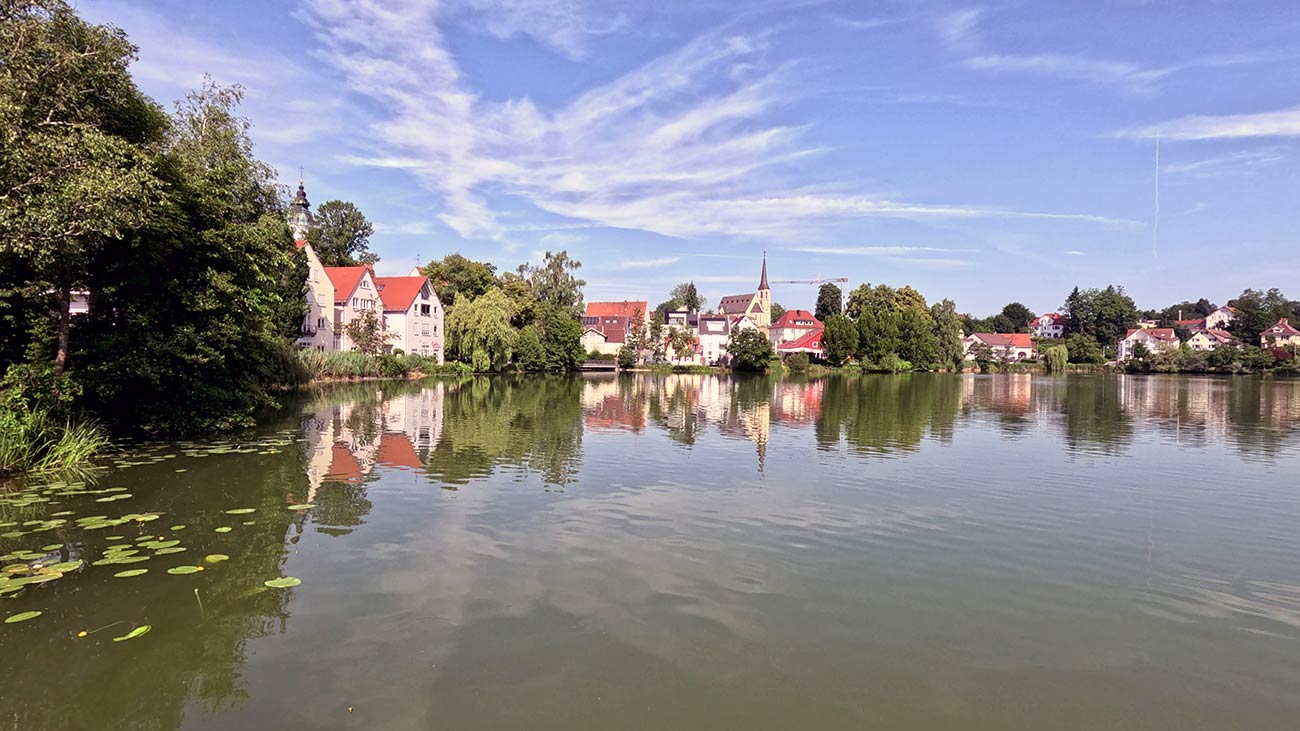
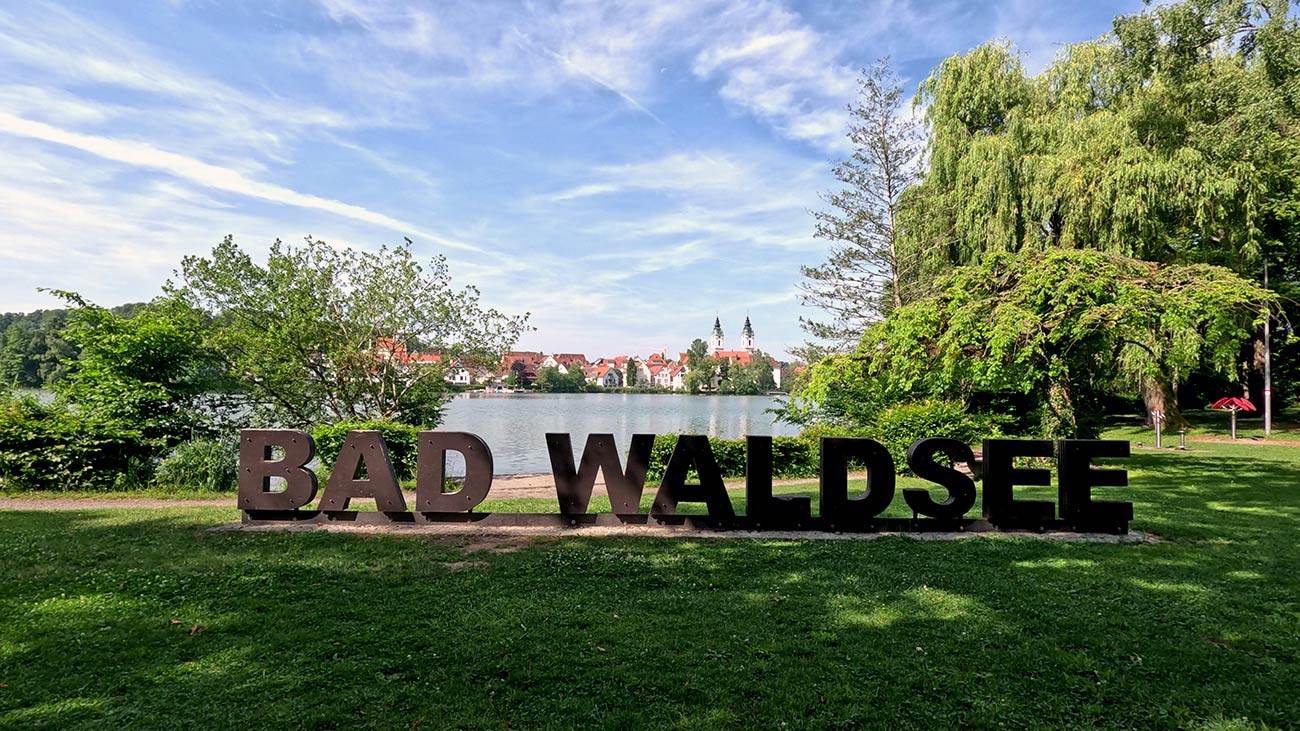
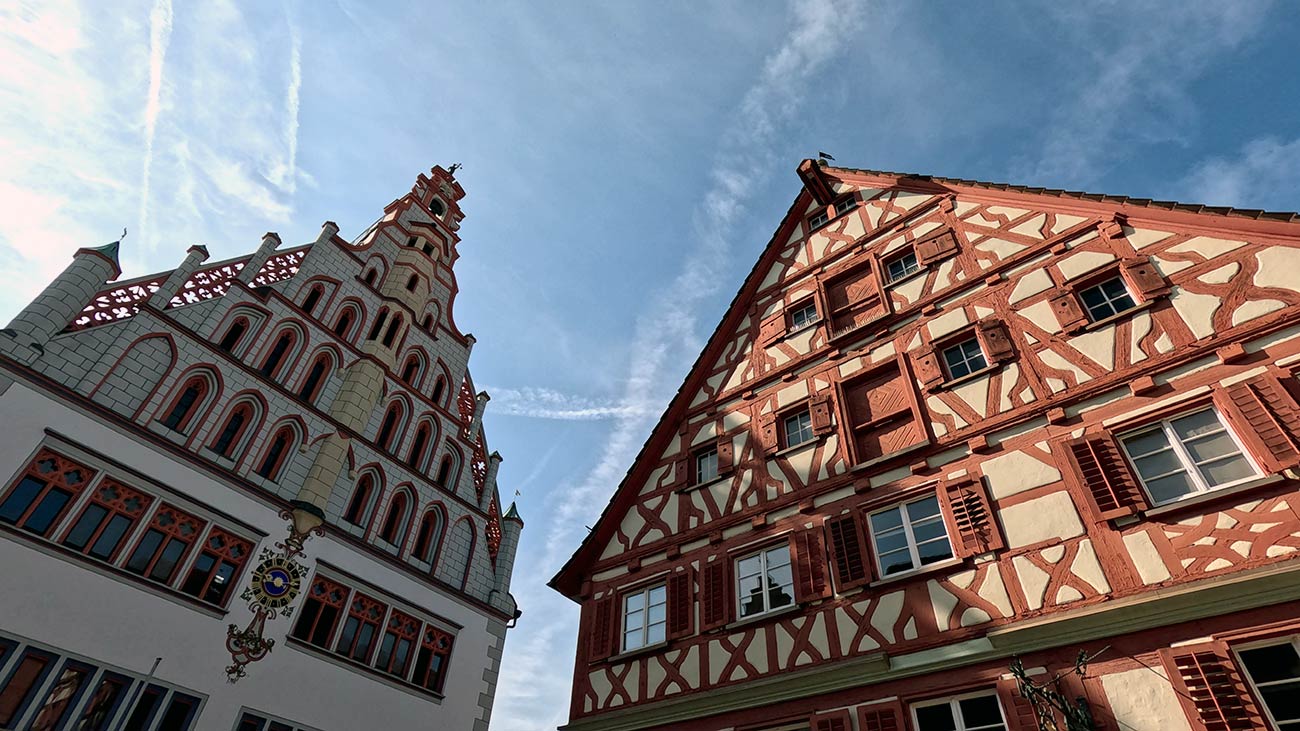
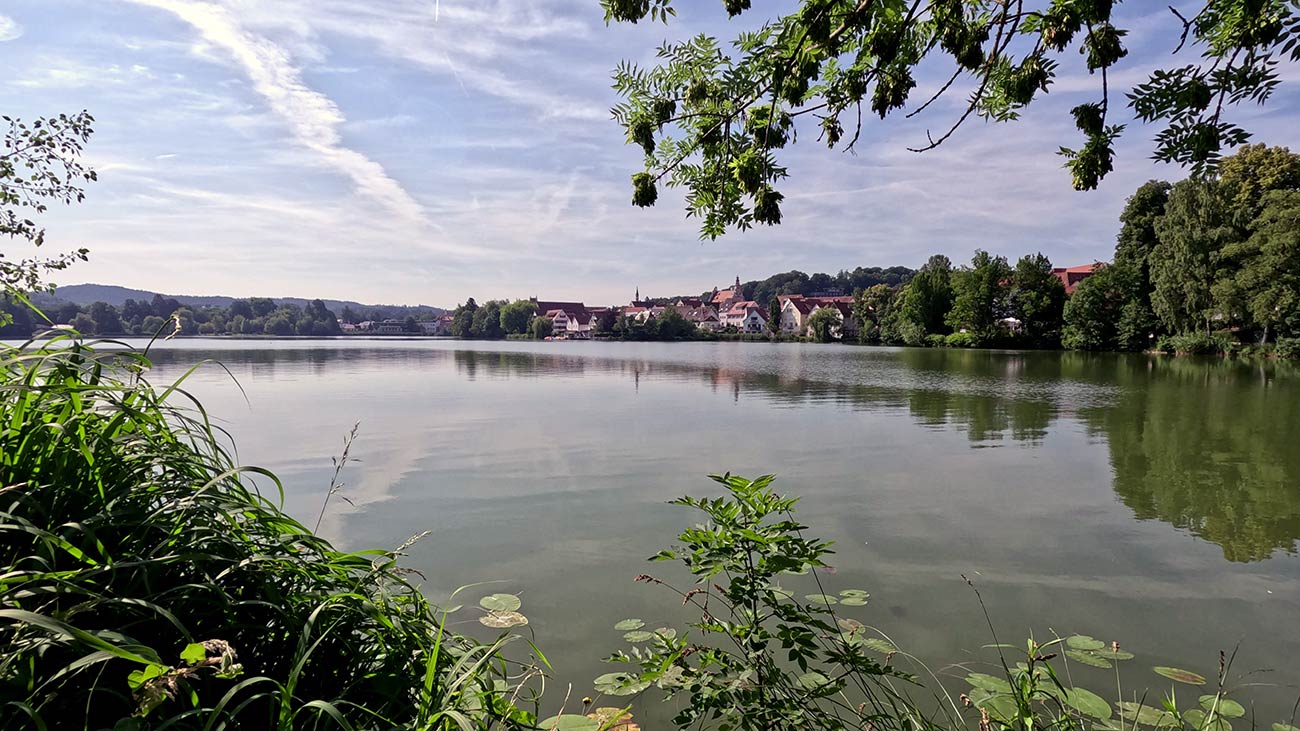
In the gently rolling landscape of Upper Swabia, where small lakes are scattered among forests and farmland, lies a town that has spent centuries quietly perfecting the art of slowing down. Bad Waldsee is a place built around water in its most restorative form, set on a narrow strip of land between the Stadtsee and the Schlosssee, two lakes that reflect its old town from both sides. The historic centre seems almost to float on the water, with painted gabled houses, a Gothic parish church, and a small Baroque palace rising directly from the shoreline.
The town’s official name carries its identity in its first syllable. Bad, the German prefix for a state-recognised spa town, has belonged to Waldsee since 1956, when its thermal and mud-cure traditions earned it the formal title. Today it is one of the few places in Germany to combine three different recognised therapies in a single location, with certified mud baths, thermal springs, and Kneipp hydrotherapy all practised alongside each other. The hottest spring in Upper Swabia, rich in fluoride and sulphur, rises here at just under 65 degrees Celsius, feeding the Waldsee-Therme and giving the town an unhurried rhythm built around long mornings in warm water and slow afternoons on the lakeshore.
For cyclists on the EuroVelo 6, Bad Waldsee is one of the quieter and more genuinely restful detours along the entire route. The old town is small enough to be walked in an hour, the lakeshore paths are flat and signposted, and the wider landscape of Upper Swabia is exactly the kind of softly undulating countryside that rewards a slower pace. After several days of long riding days along the Danube, few detours offer such a complete change of register.
SPALakeMud bathsWalks
A Town Built Around Water and Rest
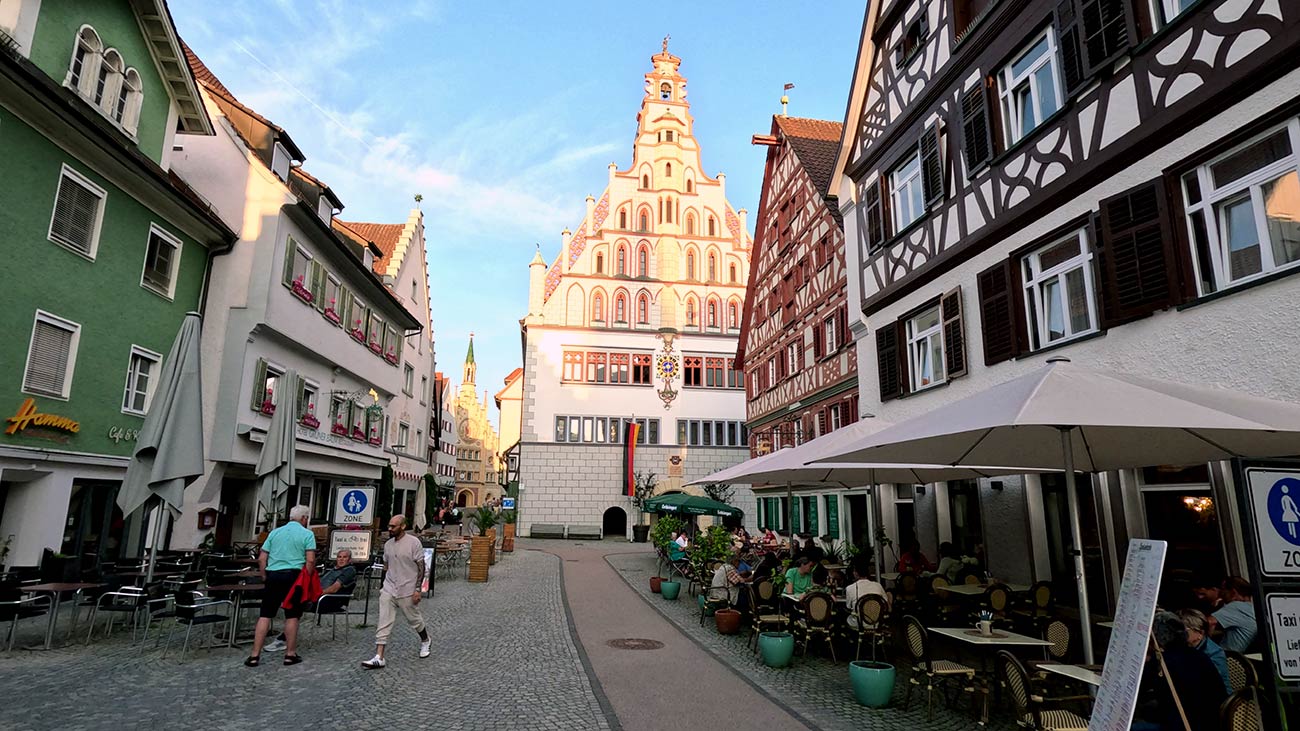
The heart of Bad Waldsee is its compact medieval old town, set on a narrow strip of land that almost separates the Stadtsee from the Schlosssee. From most points in the centre, you are only a few minutes’ walk from one lake or the other, and the town’s silhouette of stepped gables, towers, and red-tile roofs is reflected in the water from nearly every direction. The main square, the Marktplatz, is lined with painted Renaissance and Baroque facades and dominated by the Rathaus, the town hall, with its distinctive corner oriel. A short walk away, the late-Gothic Stiftskirche St Peter, built in the fifteenth century, holds finely carved choir stalls and one of the most atmospheric church interiors in Upper Swabia.
On the western side of the old town, the Schloss Waldsee rises directly above the Schlosssee, its pale walls mirrored in the water below. The palace has been the seat of the Princes of Waldburg-Wolfegg-Waldsee for centuries and remains in private family ownership, though parts of the grounds and the lakeside path beneath the palace walls are freely accessible. The combination of palace, church, and town hall arranged around such a small core gives Bad Waldsee a sense of architectural concentration that is rare for a town of its size, and one of the reasons that it has long been considered one of the most picturesque towns in this corner of Germany.
The town’s identity, however, has been shaped above all by its water. Bad Waldsee is a fully certified spa town offering three different recognised therapies in a single location: thermal cures from its hot spring, traditional mud baths drawn from the local moor, and Kneipp hydrotherapy based on the cold-water methods of Sebastian Kneipp. The Waldsee-Therme, a treatment and rehabilitation centre on the edge of the old town, draws on what is the hottest natural spring in Upper Swabia, rising at just under 65 degrees Celsius and rich in fluoride and sulphur. The bath complex combines indoor and outdoor pools, saunas, steam rooms, and quiet relaxation areas, and is open to visitors as well as to guests of the local clinics. After several days of cycling, the deep warm water of the thermal pool is one of the most genuinely restorative experiences along the entire EuroVelo 6.
The two lakes give the town its slow outdoor rhythm. A lakeshore path of around three kilometres runs around the Stadtsee, with marked sections suitable for both walking and cycling, and benches placed at intervals where the view opens out over the water toward the old town. The Schlosssee, smaller and quieter, has its own loop and is fringed with reeds and old willows. Both lakes are linked by short paths through the town, so that a full circuit of both takes well under two hours at an easy pace. In summer, small swimming areas open along the shore, and rowing boats can be hired by the hour. The wider landscape of Upper Swabia stretches out from there into low hills, small lakes, and Baroque pilgrimage churches, much of it linked by quiet country lanes and dedicated cycle paths.
Beyond the water, the rest of the town reveals itself slowly. The Stadtmuseum im Kornhaus, set in a former granary, traces the long history of Waldsee from its medieval origins to its modern role as a spa town. The streets behind the Marktplatz are dotted with small cafés, traditional Swabian restaurants, and a handful of quiet shops that have nothing to do with tourism, all set in buildings that have housed similar trades for centuries. Bad Waldsee is also the home town of the Erwin Hymer Group, one of Europe’s largest manufacturers of motorhomes and caravans, and the small Erwin Hymer Museum on the edge of town is one of the most thoughtfully presented design museums in the region, tracing more than a century of mobile travel through restored vehicles and full-scale reconstructions.
For travellers arriving from the EuroVelo 6, Bad Waldsee is best understood not as a place with a single great monument but as a town where the experience itself is the attraction. A slow morning walk around one of the lakes, a long afternoon in the thermal baths, an unhurried dinner on a quiet square, and a second easy day exploring the gentle landscape of Upper Swabia together form one of the most genuinely restful interludes available along the Danube corridor.
ℹ️ Useful Contacts
Mobility for Cyclists
Reaching Bad Waldsee by train with your bike
If you are riding the EuroVelo 6 along the Danube, Bad Waldsee makes for one of the most restful detours along the route. The town lies south of the river in the gentle landscape of Upper Swabia, close enough to reach comfortably by train with your bike and far enough to feel like a complete change of pace.
The connection
The most practical connection from the EuroVelo 6 corridor is from Ulm, where regional trains run south toward the Bodensee region with a single change in Aulendorf for the local line to Bad Waldsee. The total travel time is around one hour, with frequent departures throughout the day, and the route passes through the open landscape of Upper Swabia with views of distant Alpine foothills on clear days. Trains run regularly enough that the journey fits comfortably into a single travel day, leaving plenty of time to settle in before exploring.
German trains
The rail network in this part of Germany is operated mainly by Deutsche Bahn (DB), which runs most long-distance services and a large share of regional connections across the area. Alongside DB, several regional operators run local and feeder lines, particularly on secondary routes, but they are fully integrated into the national rail system. This creates a highly coordinated transport network where transfers between different operators are seamless and require no separate tickets. The DB Navigator app is the central tool for planning journeys, checking timetables, and purchasing tickets across all services, including both regional and long-distance trains. During the main holiday season, special bike-friendly trains with expanded capacity for bicycles also run on selected regional routes, making travel with a bike across the region noticeably easier.
Taking your bike
This part of Germany is generally very bike-friendly when it comes to rail transport, especially on regional trains, which form the core of mobility for cycle touring along the Danube and its connecting corridors. Most regional services allow bicycle transport without mandatory reservation, although space is limited and operates on a first-come, first-served basis. A separate bicycle ticket is typically required during weekday morning peak hours, or it can be purchased as an affordable regional day pass, while outside peak periods and on weekends bicycle transport is often free across large parts of the region. Long-distance trains such as IC and ICE require advance bicycle reservations and have limited capacity, so early planning is important for intercity travel. Overall, the system is well adapted to cycle tourism, offering strong flexibility and occasional dedicated bicycle-friendly or seasonal train services that further improve connectivity for travellers leaving the EuroVelo 6 route.
Bikes on Buses
Long-distance bus services in this part of Germany are primarily operated by FlixBus, complemented by a smaller number of regional and private coach operators on selected routes. Bicycle transport is available on certain intercity connections, either via external bike racks or in the luggage compartment, but it is not consistently guaranteed across the network and depends on the specific vehicle type and route configuration. Where available, bicycle transport must be reserved in advance and capacity is limited, making it less flexible compared to rail services. As a result, buses are generally used as a secondary option for cyclists, mainly for longer-distance repositioning between major cities rather than as a core part of cycling itineraries along the Danube region. While useful in specific cases where rail connections are less convenient, they are less predictable and less standardized for bicycle transport, so advance planning is essential.
Arriving at Bad Waldsee Bahnhof
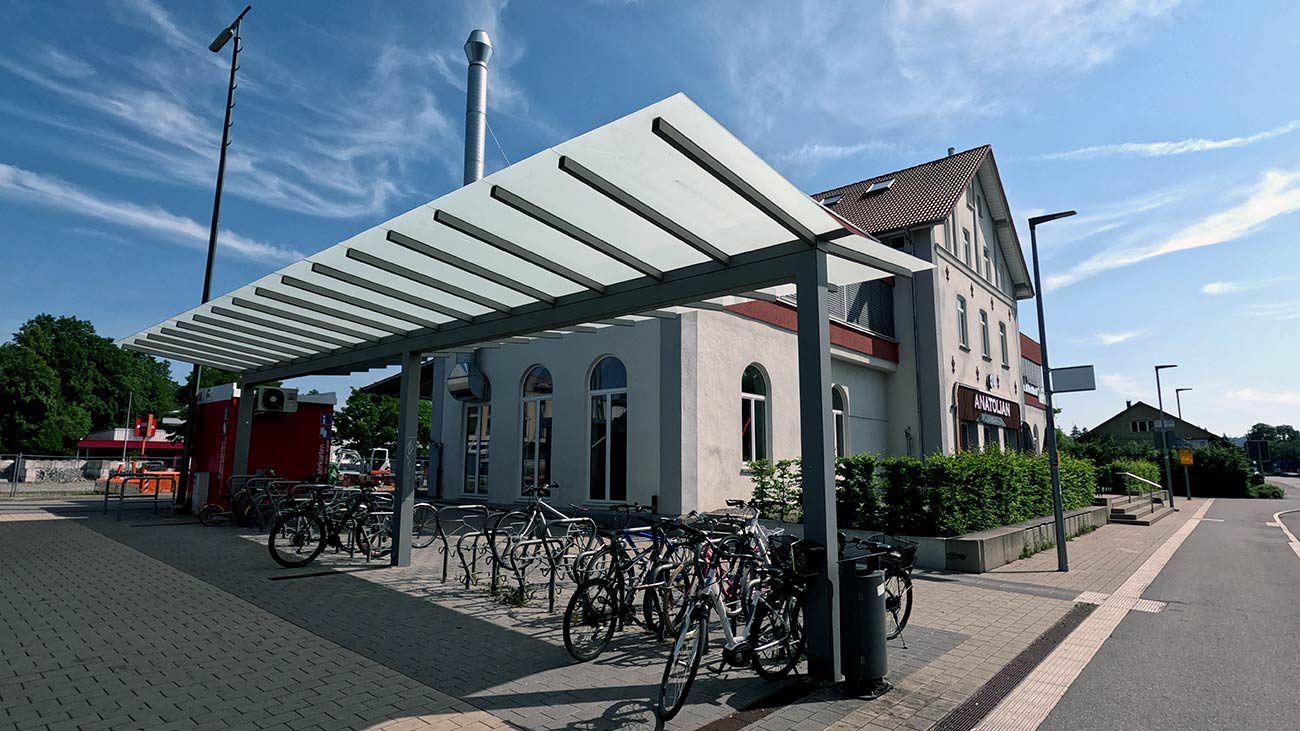
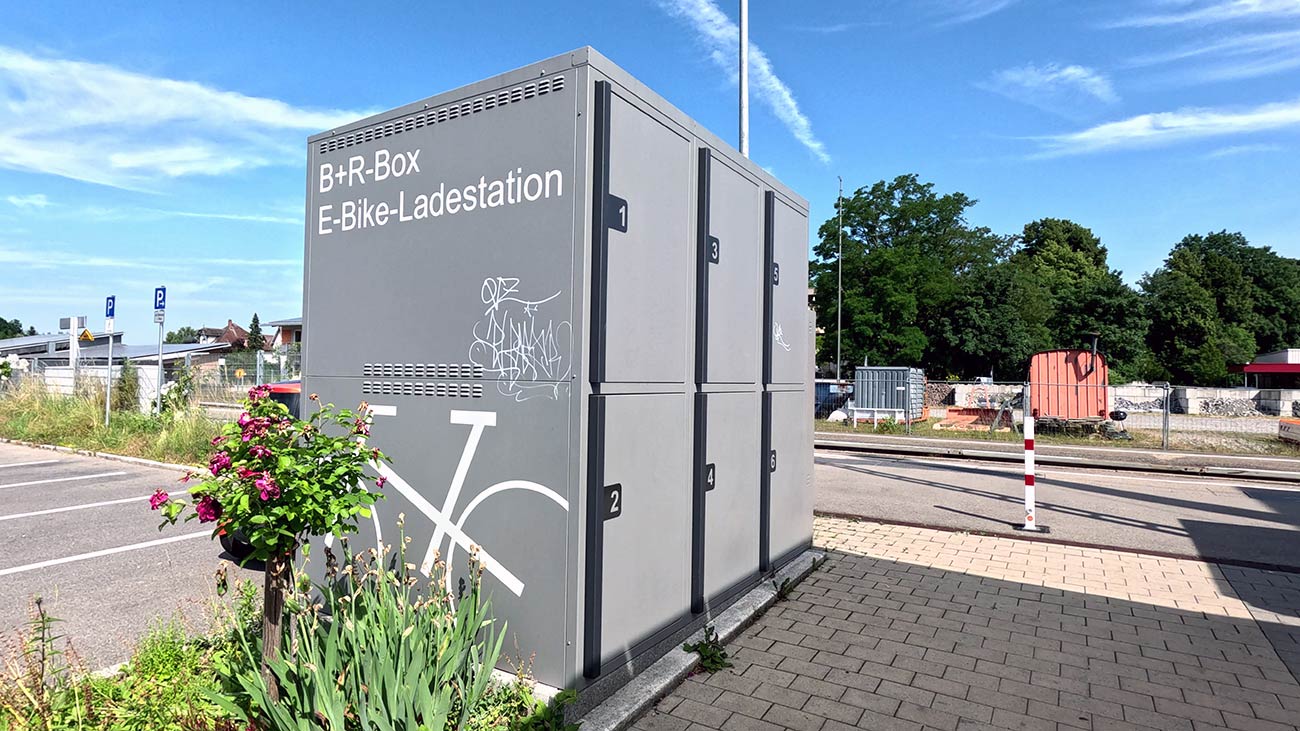
Bad Waldsee’s railway station is a small regional stop on the edge of the town, well within easy reach of the old town centre and the lakes. The historic core, the Stadtsee, and the Waldsee-Therme are all reachable by bike in under ten minutes along flat, well-signposted streets. Cycling infrastructure in and around the town is generally good, and the gentle terrain of Upper Swabia makes moving between the lakes and the centre easy by bike.