Constance and Mainau Island
Reading time: 15 minutes
CONSTANCE AND MAINAU ISLAND, BADEN-WÜRTTEMBERG, GERMANY
A Medieval Lakeside City and Its Flowering Island Neighbour
On the southwestern shore of Lake Constance, where the lake narrows into the river Rhine and the borders of Germany, Switzerland, and Austria almost meet, lies one of the most striking lakeside cities in Europe. Constance, known in German as Konstanz, is the largest city on the lake and a place that has carried unusual historical weight for its modest size. For four years in the early fifteenth century it was the centre of the Christian world, and today it still wears that legacy lightly across an almost entirely preserved medieval old town, a long lakeside promenade, and a harbour overlooked by one of the most provocative public sculptures anywhere in Germany.
Just a few kilometres up the shore, a small wooded island floats in a quiet bay surrounded by clear water and reed beds. Mainau, sometimes called the Flower Island, has been transformed over more than a century into one of the most beautiful botanical estates in central Europe, with a Baroque palace, rose gardens, palm and butterfly houses, and tens of thousands of plants flowering in carefully composed sequences from early spring to late autumn. The island and the city belong to the same lakeside landscape and the same family of attractions, and one of the great pleasures of a visit to Constance is that the journey between them is itself part of the experience.
This page combines the two because they are almost universally visited together. Mainau lies only around eight kilometres from the centre of Constance and is reached in roughly twenty minutes by bike along a flat, signposted cycle path that runs along the lakeshore for most of the way. A full day spent moving between the medieval streets of Constance, the harbour and promenade, and the gardens of Mainau is one of the most varied and rewarding cultural detours from the EuroVelo 6 along this entire stretch of the route, and the kind of contrast in atmosphere that a single destination rarely manages to offer on its own.
LakeFlowersImperiaButterflies
For the best viewing experience and full understanding of the story, please turn on Closed Captions (CC)
The Old Town of Constance
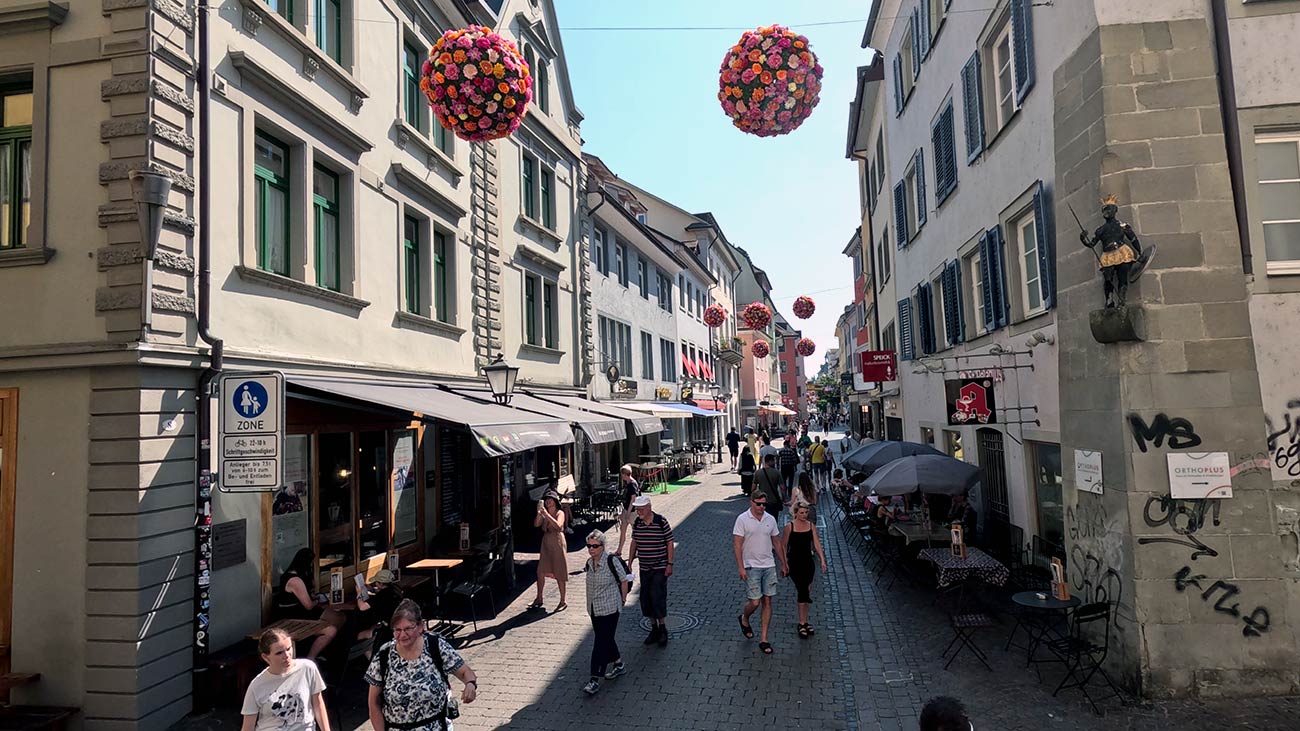
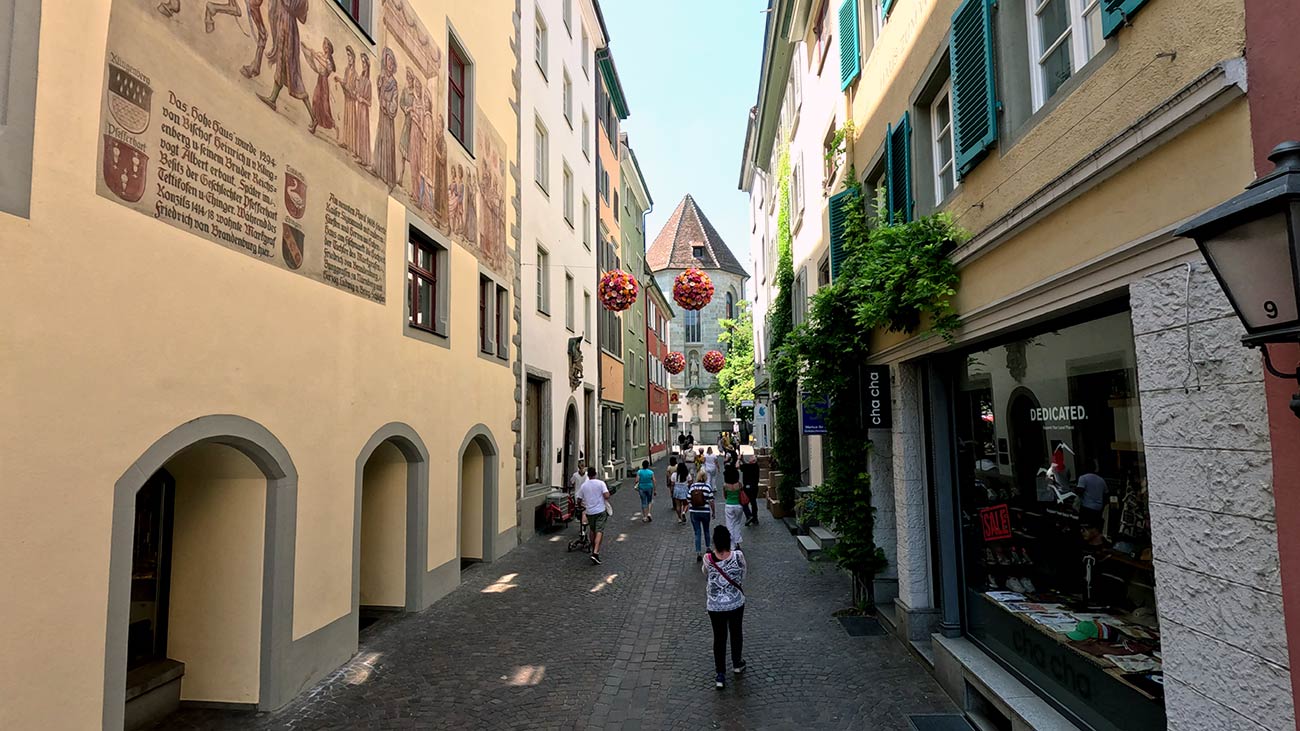
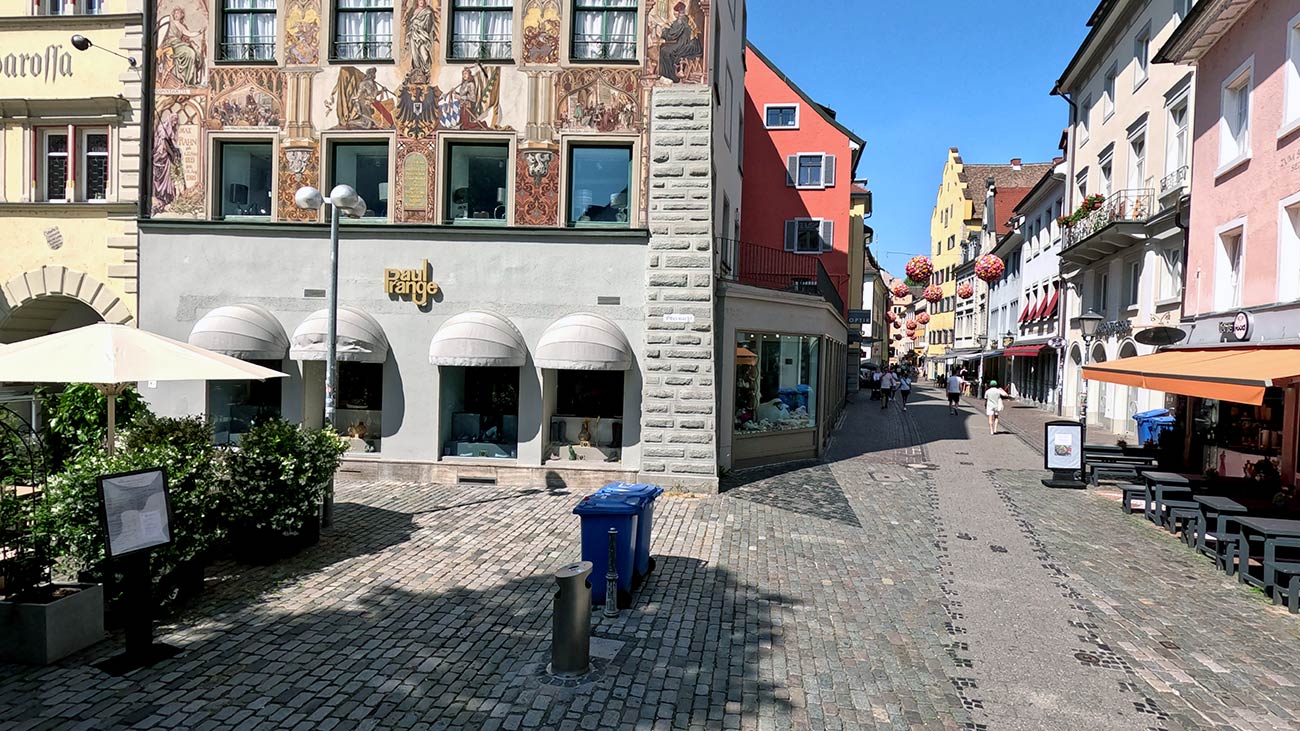
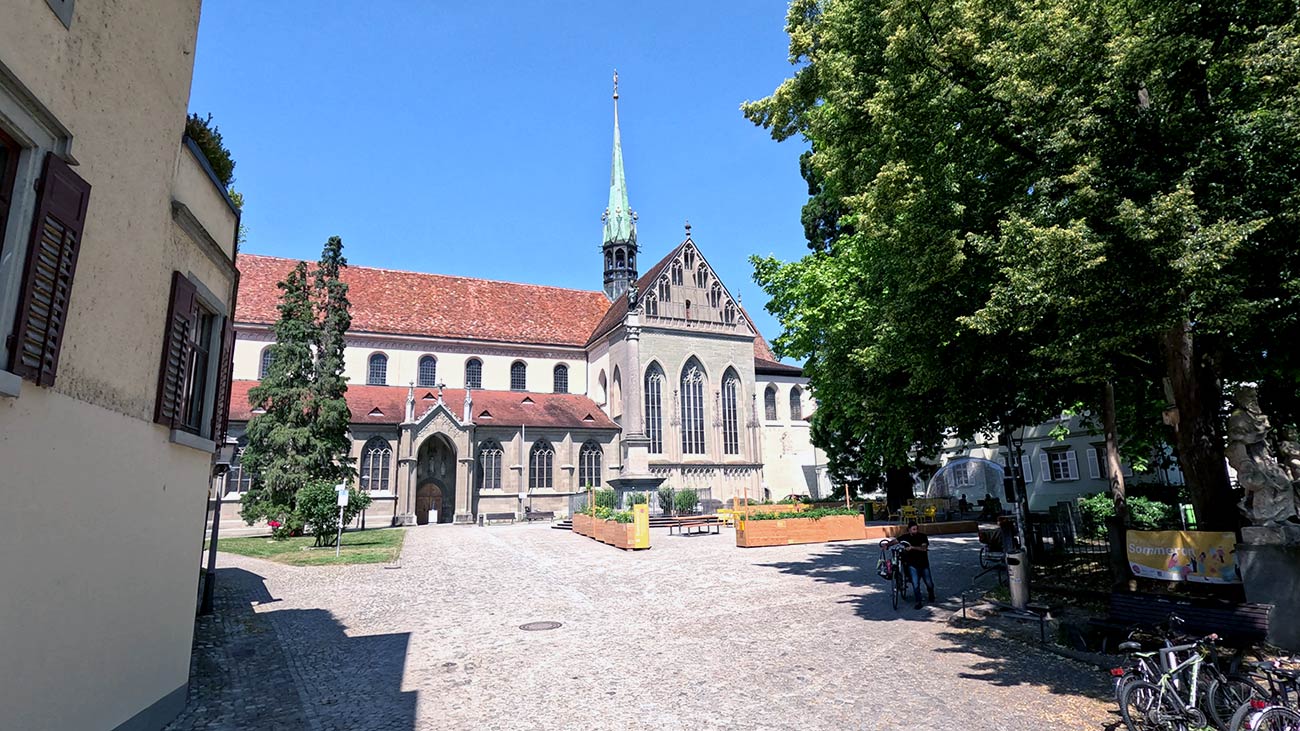
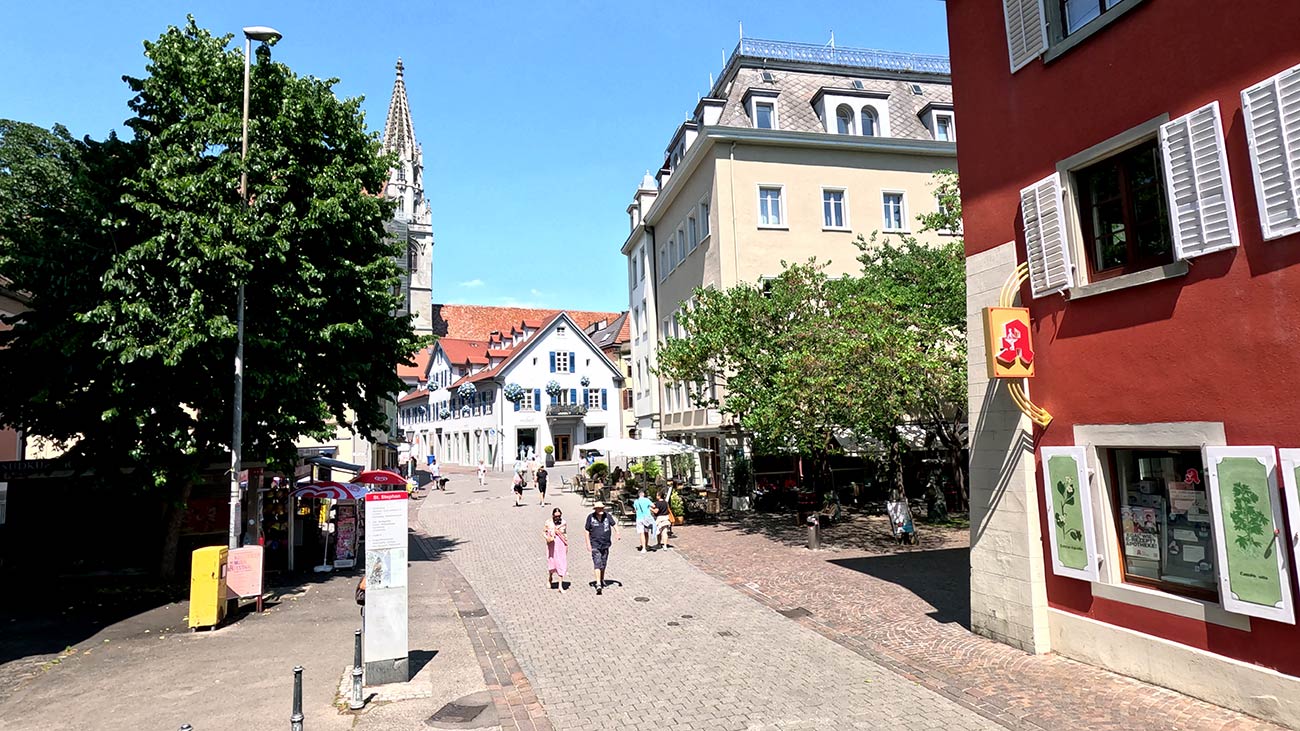
The historic centre of Constance is one of the best-preserved medieval old towns on Lake Constance, with cobbled lanes, painted facades, and quiet inner courtyards arranged around the cathedral and the harbour. The town survived the Second World War undamaged thanks to its unusual position on the Swiss border, and many of the buildings standing today were already trading houses, inns, and guildhouses during the late Middle Ages. Wine taverns, artisan workshops, fashion boutiques, and small cafés have taken over many of the slightly leaning old buildings, and the network of small squares and alleys rewards an unhurried half-day on foot. The town has been a university city since 1966, which gives the historic streets a lived-in, year-round energy quite different from the more strictly seasonal feel of the smaller lakeside towns nearby.
The Cathedral of Our Lady
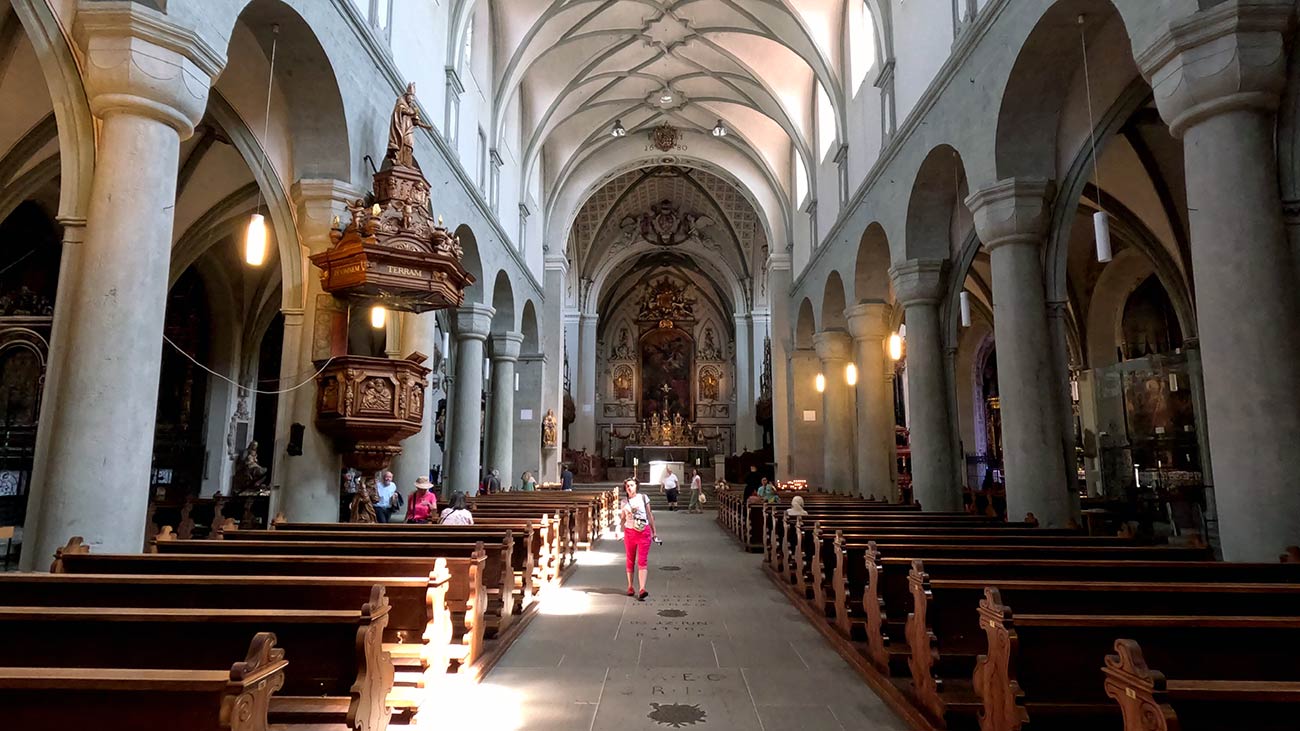
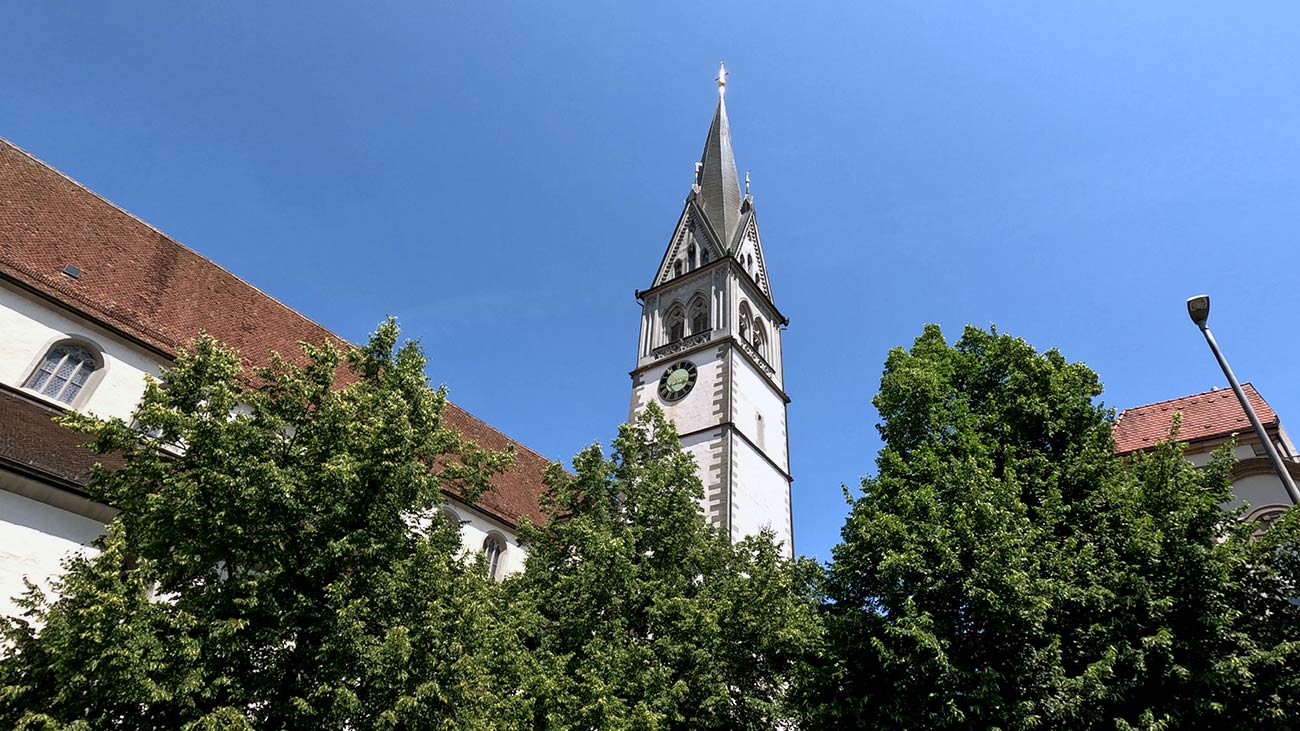
At the centre of the old town rises the Cathedral of Our Lady (Münster Unserer Lieben Frau), a Romanesque and late-Gothic building whose origins reach back to the early Middle Ages. The cathedral served as the seat of the Bishop of Constance for over a thousand years and stood at the heart of the great Council of Constance held here between 1414 and 1418, the largest religious gathering of the medieval world. The interior preserves a remarkable cycle of decoration from many centuries, including a striking spiral staircase, a Romanesque crypt, and intricate Gothic vaulting. A short walk away, the medieval Church of St Stephen and the elegant Lutheran Church of St Augustine add further architectural layers, while the surrounding lanes are dotted with smaller chapels and monastic buildings that recall the city’s long ecclesiastical past.
The Council Building and the Promenade
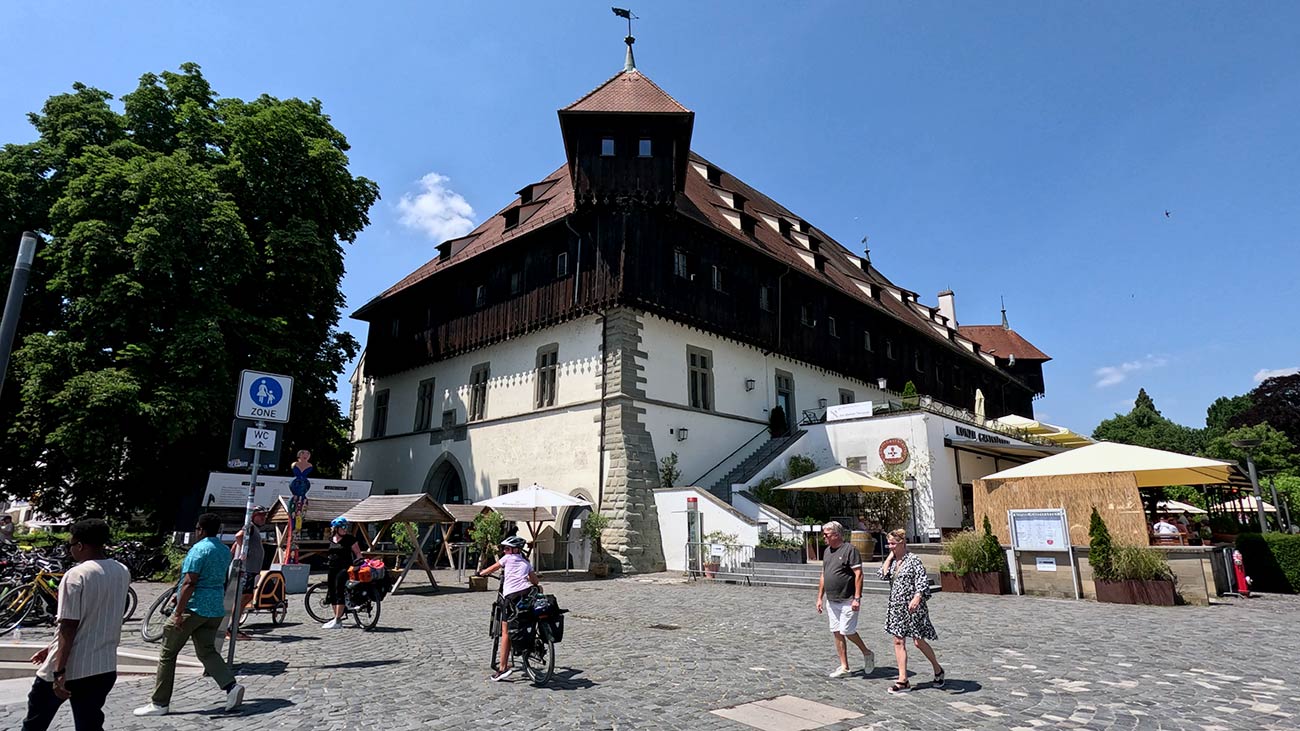
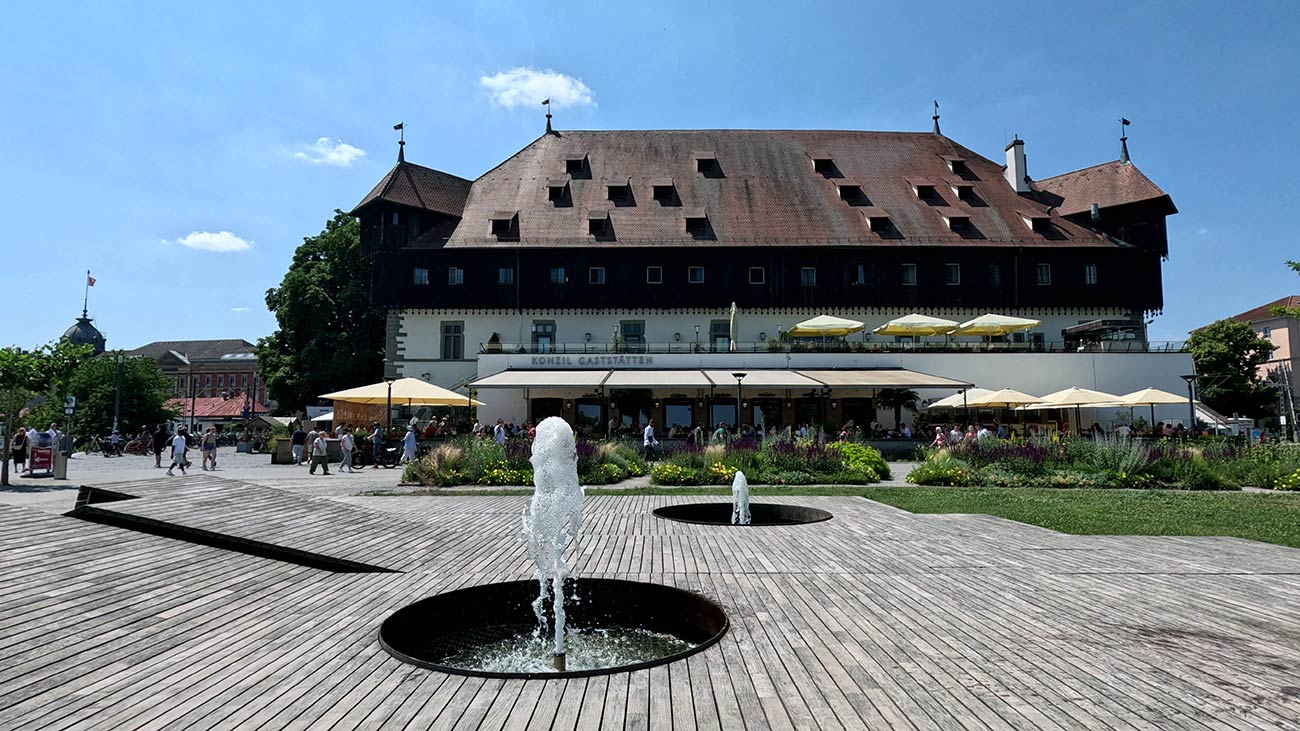
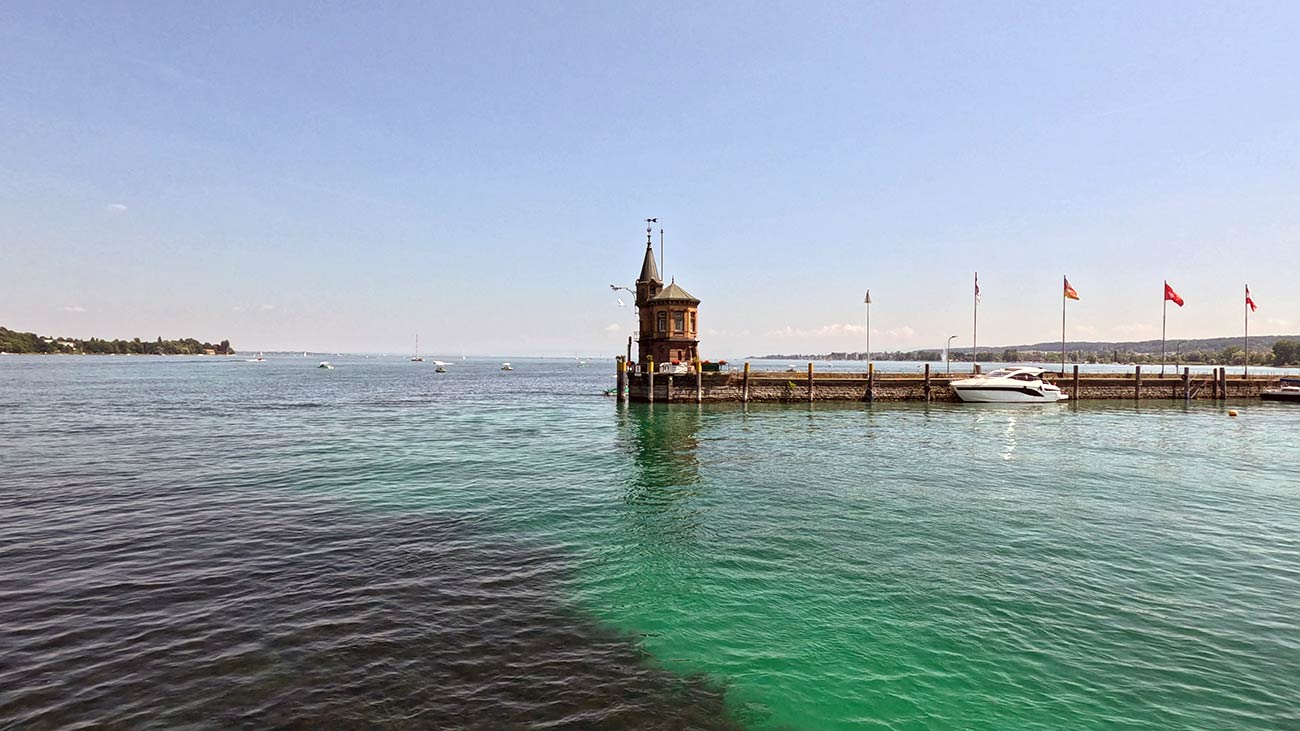
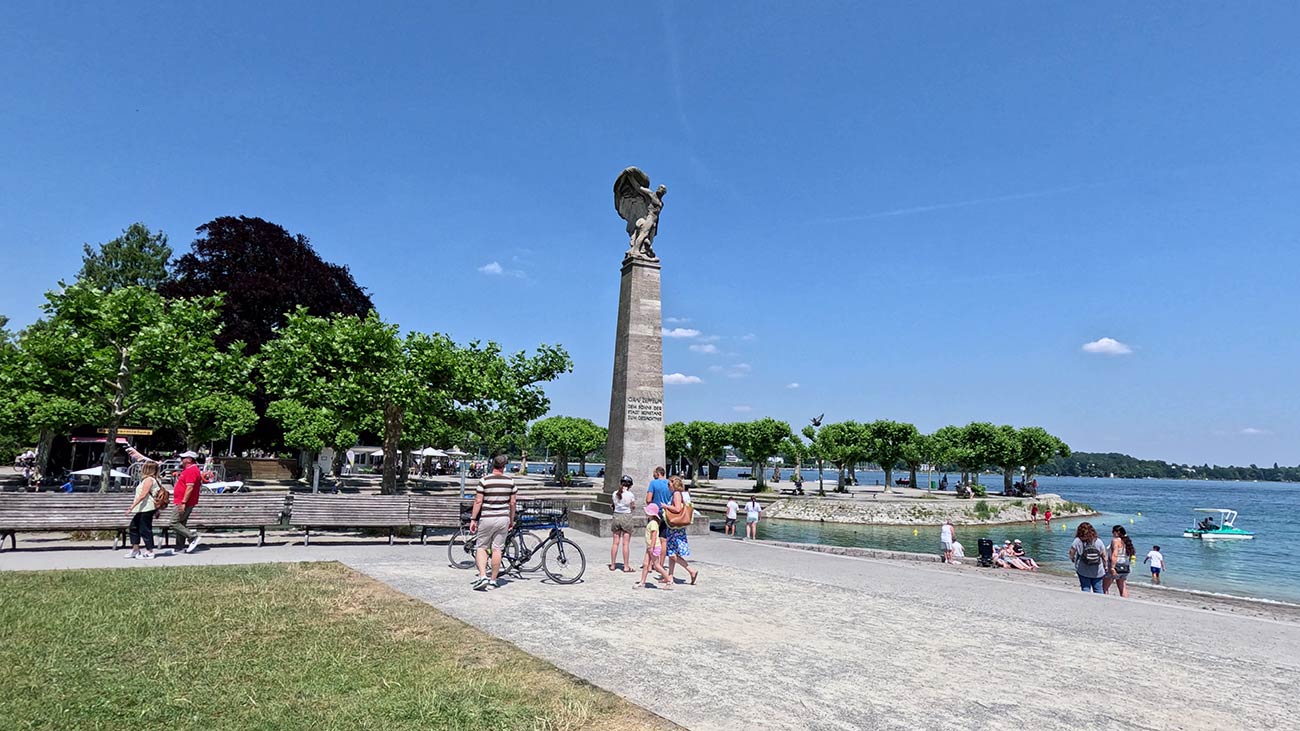
Down by the harbour stands the Konzilgebäude, the Council Building, a long stone warehouse from 1388 that gave the Council of Constance its meeting space for the conclave that elected Pope Martin V in 1417. The building still anchors the lakeside skyline and now serves as a cultural venue, while the surrounding Seepromenade stretches in both directions along the water. The promenade is lined with public gardens, lakeside benches, sculpted hedges, and small piers where ferries arrive and depart for towns across Germany, Switzerland, and Austria. A short walk further along the lakefront, the Sea Life Constance aquarium offers a more compact lake-themed family attraction, with displays focused on the freshwater ecosystems of Lake Constance and the Rhine alongside tropical marine tanks.
Imperia at the Harbour Entrance
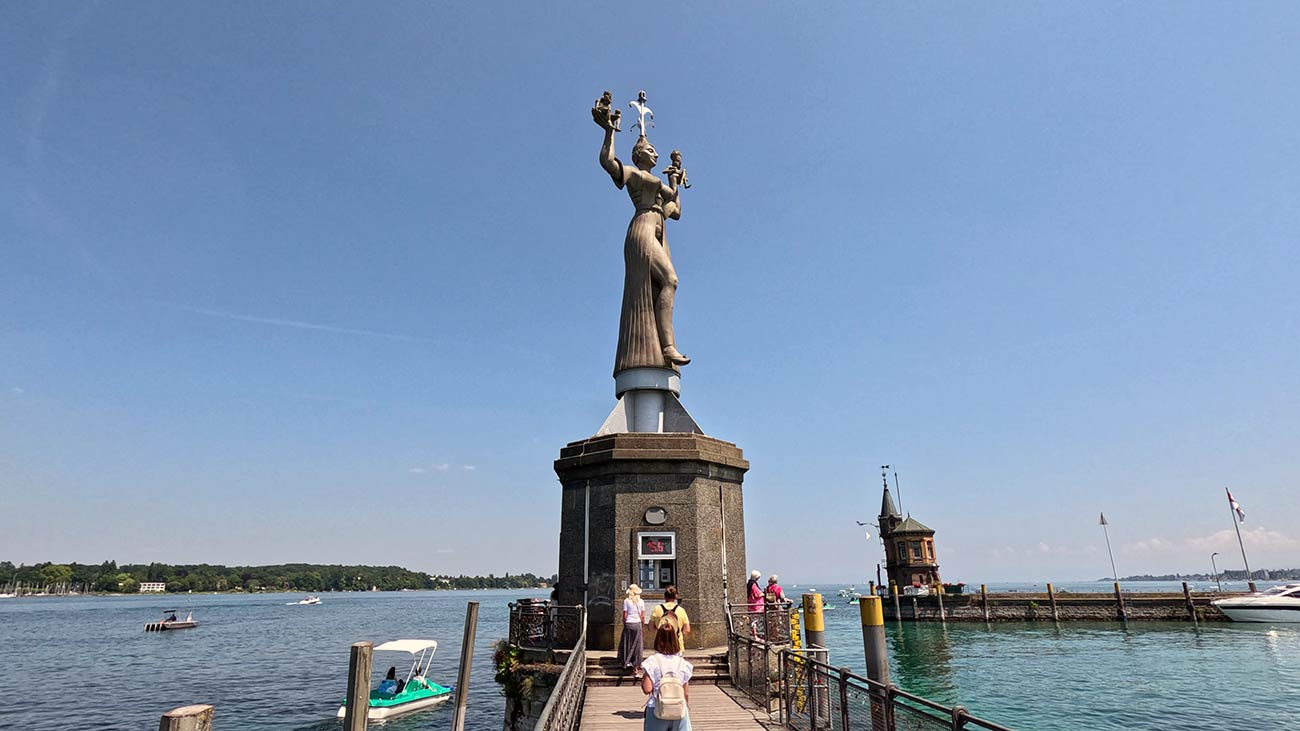
At the very entrance to the harbour, on a small stone pedestal that rotates slowly through a full circle every four minutes, stands one of the most unusual public sculptures in Germany. Imperia, designed by the Bodensee sculptor Peter Lenk and installed in 1993, is a nine-metre concrete figure of a richly dressed courtesan holding two tiny naked men in the palms of her outstretched hands: one wearing a papal tiara, the other an imperial crown. The work is a satirical commentary on the morals of the Council of Constance, when Europe’s most powerful clerics and rulers gathered here for four years to end a schism in the church. The statue was controversial when it appeared and was put up without official approval, but it has since become the most photographed landmark in the city and a symbol of the lakeside character of Constance itself, where history is taken seriously but never reverently.
Mainau Palace and the Palace Church
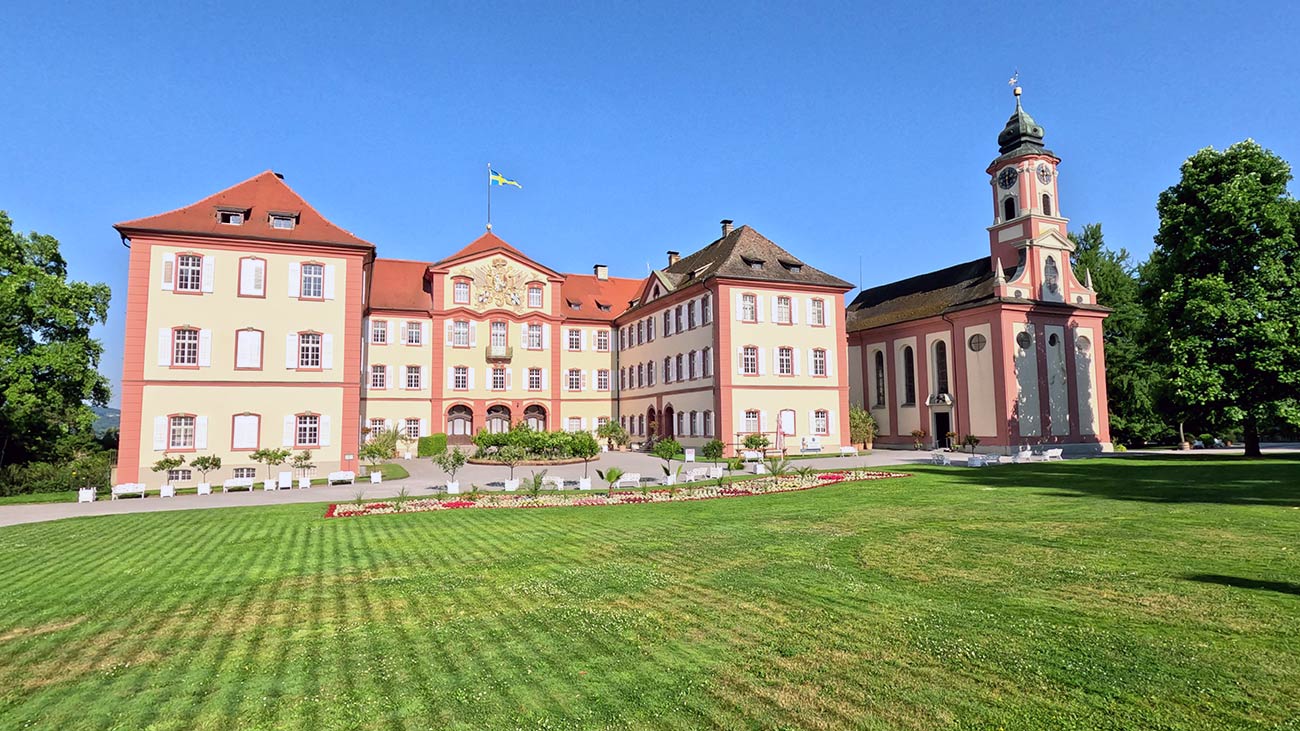
At the heart of Mainau Island stands a graceful Baroque palace built in the eighteenth century for the Teutonic Order of Knights, who held the island as a regional commandery for more than five hundred years. The palace rises above the treetops on the highest part of the island and is visible from far across the lake, its pale facade and elegant gables echoed in the smaller Palace Church of Saint Mary beside it. The church is one of the finest examples of southern German Baroque ecclesiastical architecture, with painted ceilings, stucco work, and an unusual harmony of scale that suits its garden setting. The island has been in the hands of the Bernadotte family, descended from the Swedish royal house, since the late nineteenth century, when Grand Duke Frederick I of Baden married into the family and began the long process of transforming the estate into a public botanical garden.
The Italian Rose Garden
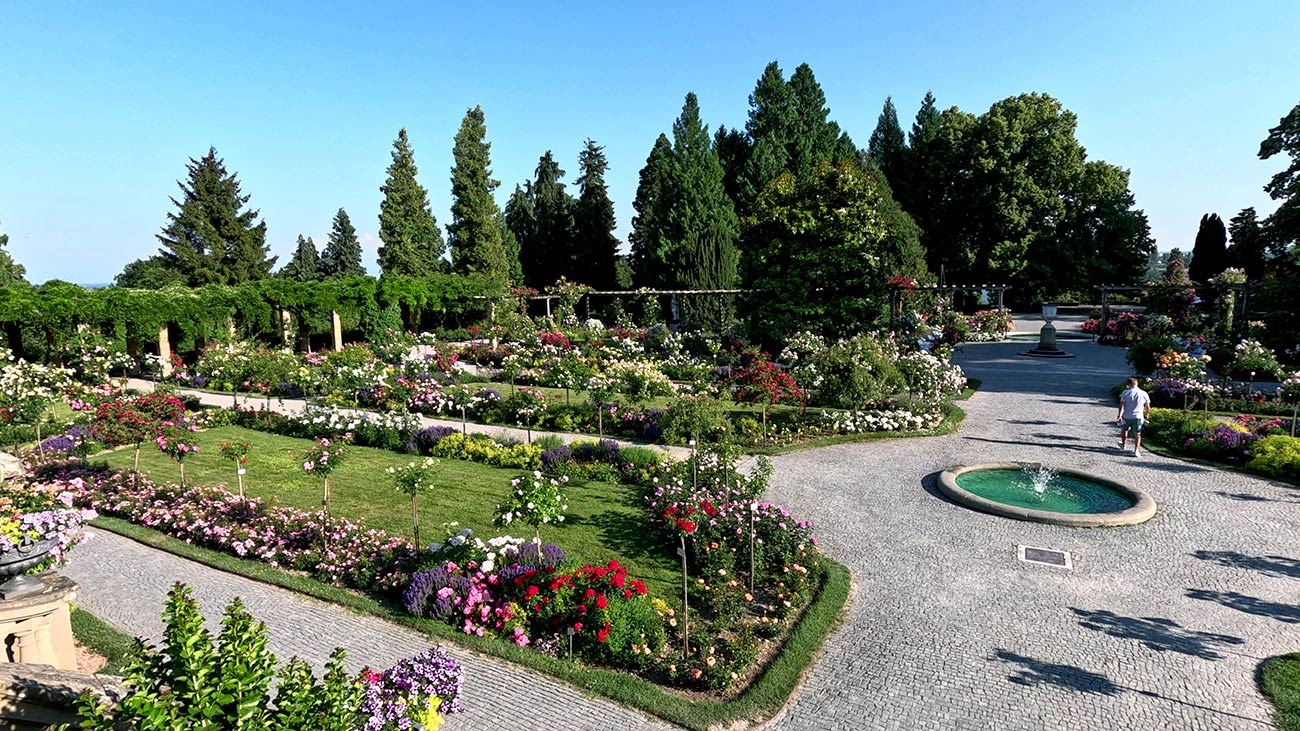
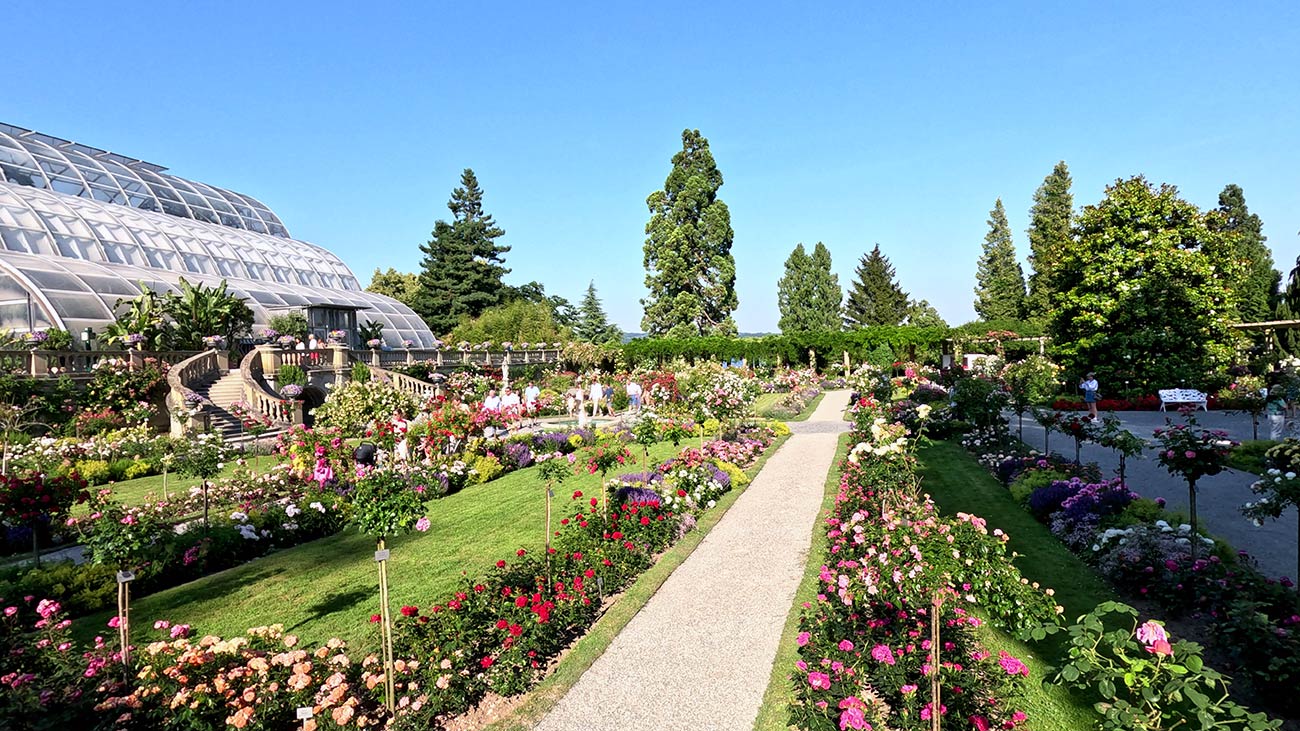
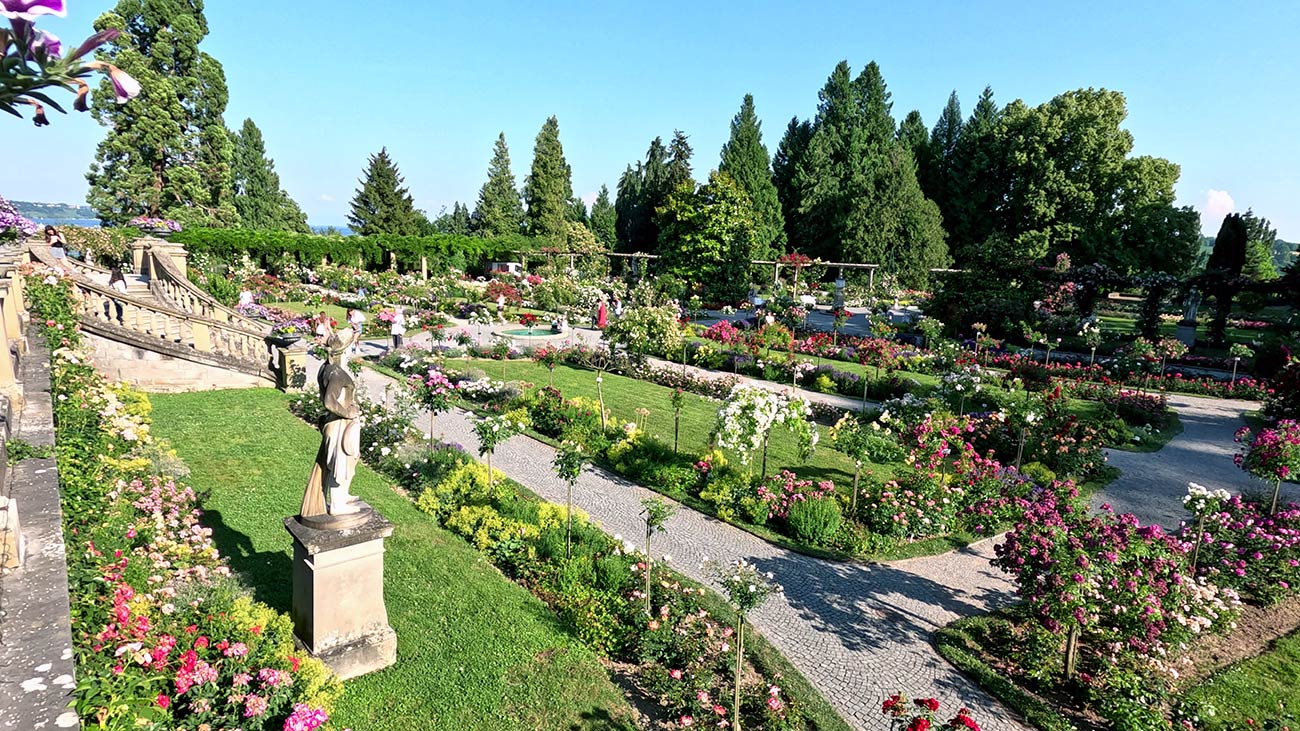
Below the palace terrace, on a gentle southern slope facing the lake, the Italian Rose Garden opens out as one of the most photographed corners of Mainau. The garden was laid out in 1871 under Grand Duke Frederick I, with geometrical parterres, fountains, and pergolas arranged around a central axis in the Italian Renaissance style. Roughly nine thousand rose plants flower across the island between June and August, in colours that range from deep crimson and apricot to soft pinks and pure whites. Old climbing varieties, modern English roses, and rare historical cultivars are grown side by side, with information panels explaining each one for visitors with a serious interest in the subject.
The Butterfly House
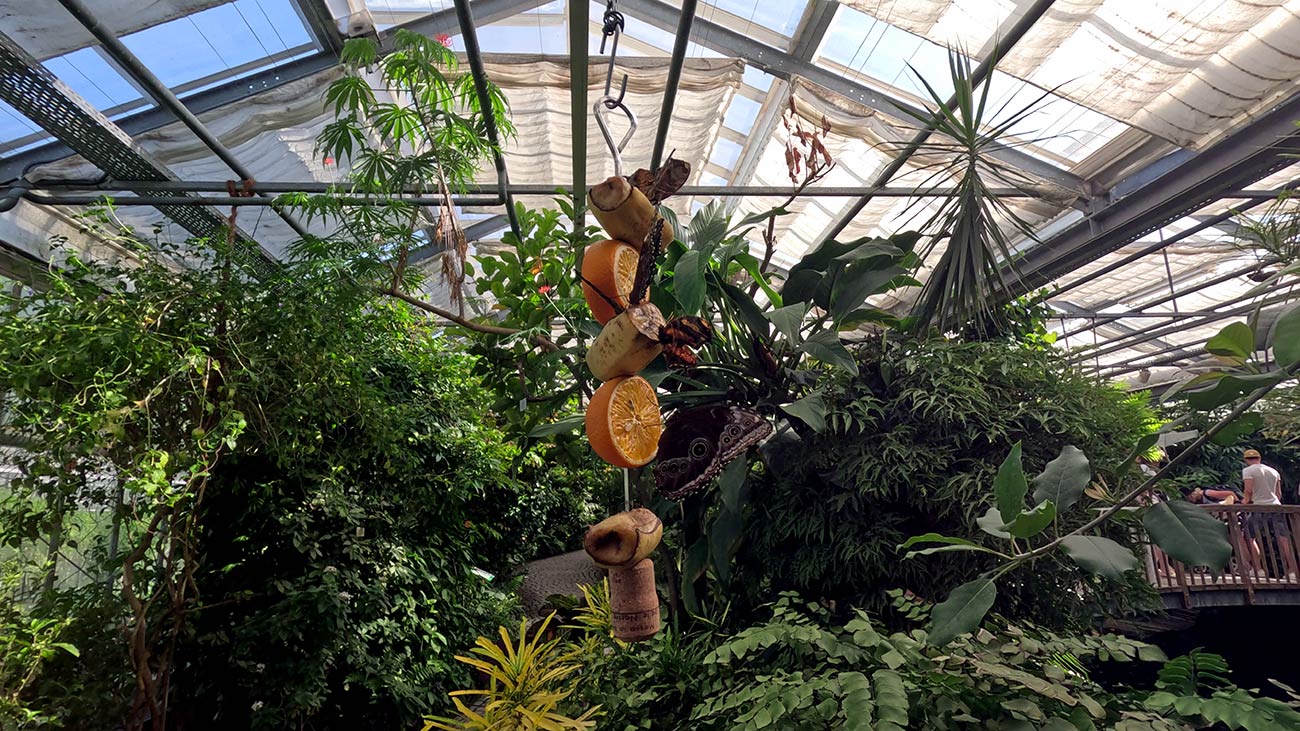
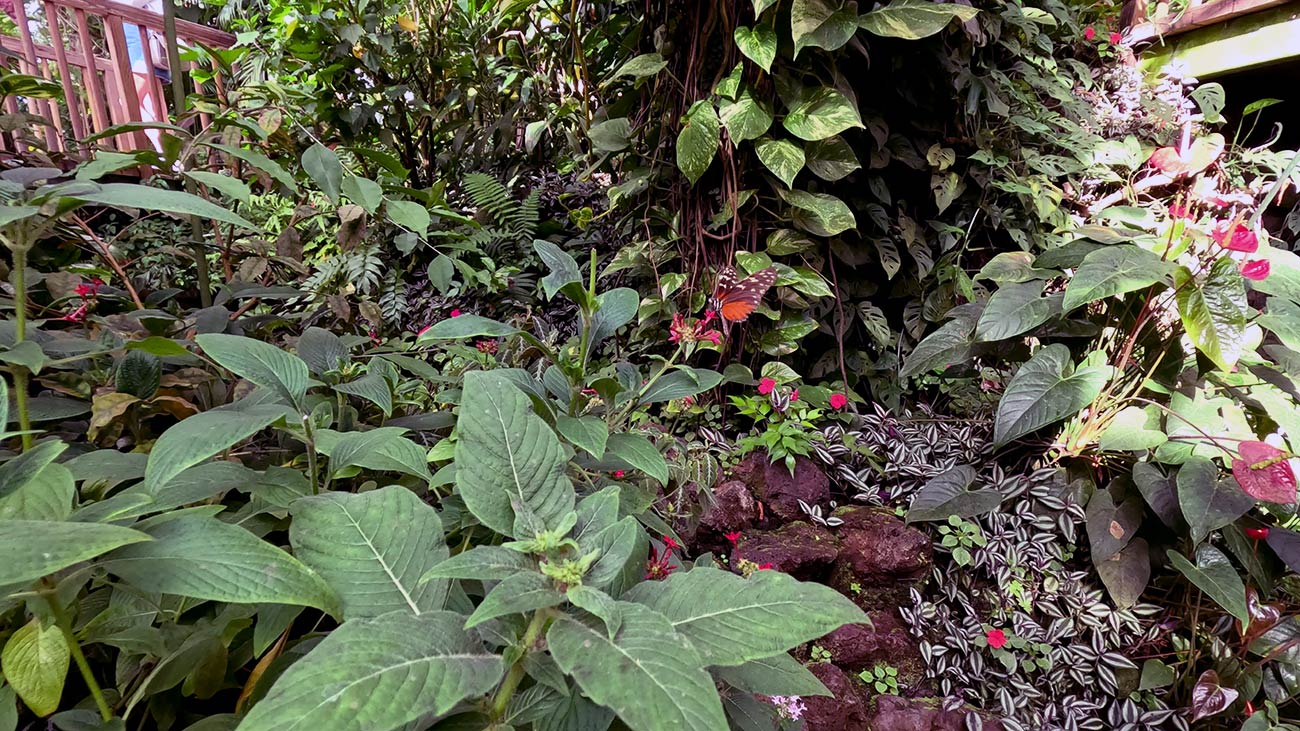
On the southern edge of the island stands the largest butterfly house in Germany, a tropical greenhouse home to over a thousand free-flying butterflies of around eighty different species. Visitors walk along a winding path through a recreated tropical landscape of ferns, orchids, and small streams, with butterflies emerging from cocoons in a glass display case and feeding on slices of fruit set out along the route. A short walk away, the Palm House holds a collection of around 1,200 orchids alongside palms and exotic plants, and during the cooler months the same building hosts seasonal exhibitions of citrus trees, lilies, and other rotating thematic displays.
The Italian Water Cascade
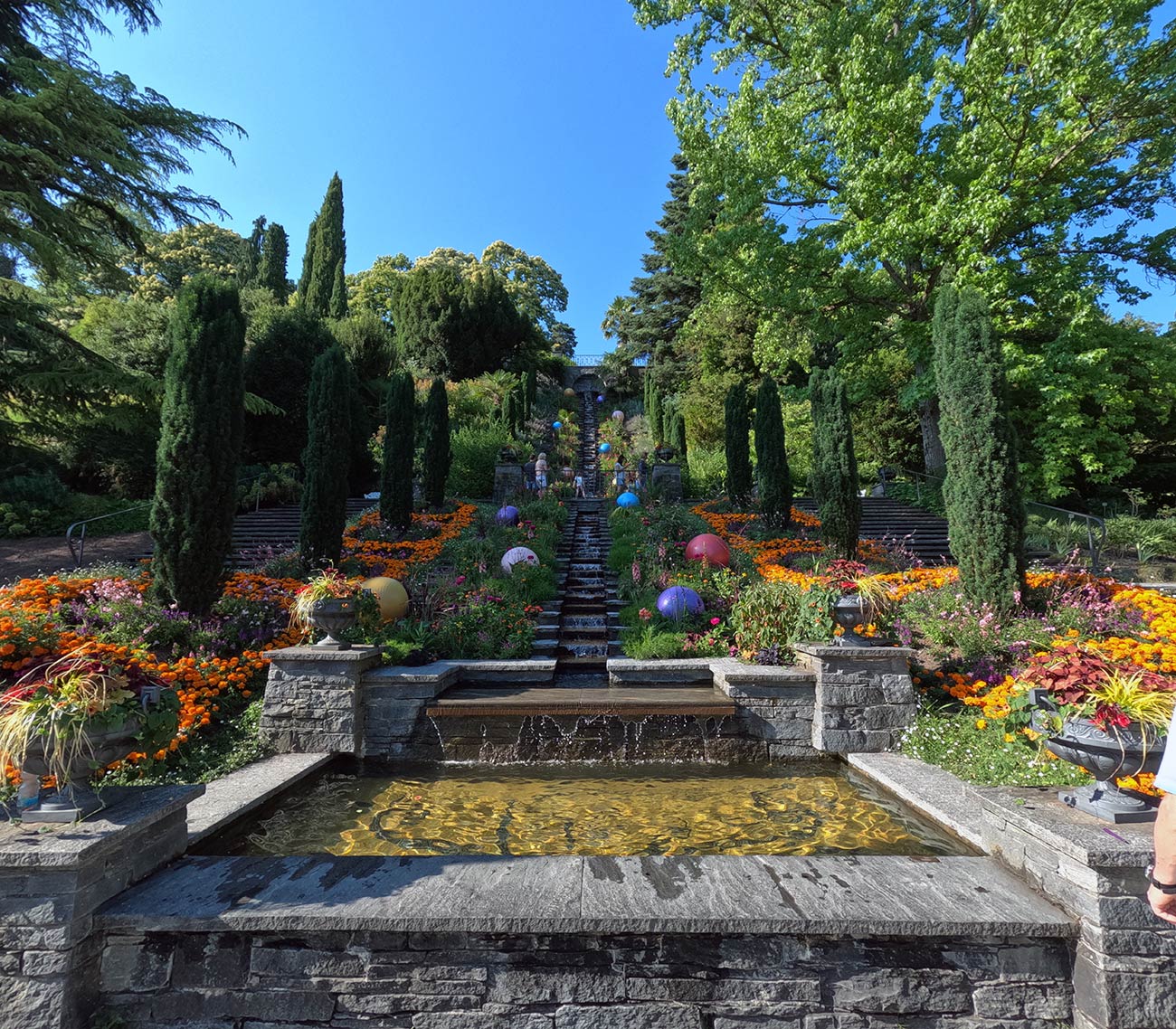
A short walk from the rose garden, the Italian Water Cascade descends in a long stepped flow of water from the upper terraces of the gardens toward the lake. The cascade is framed by Mediterranean planting, including palm trees, olive trees, lemon and orange trees, and giant sequoias, all of which thrive in the unusually mild lakeside climate. The composition draws on the great Italian Renaissance garden tradition of Tivoli and the Villa d’Este, scaled down for the island and adapted to the cooler northern light. In summer the surrounding terraces are filled with thousands of seasonal flowering plants, and in autumn the same beds are replanted with the famous Mainau dahlia displays, which have become a destination in their own right.
Bringing a Bike to Mainau Island
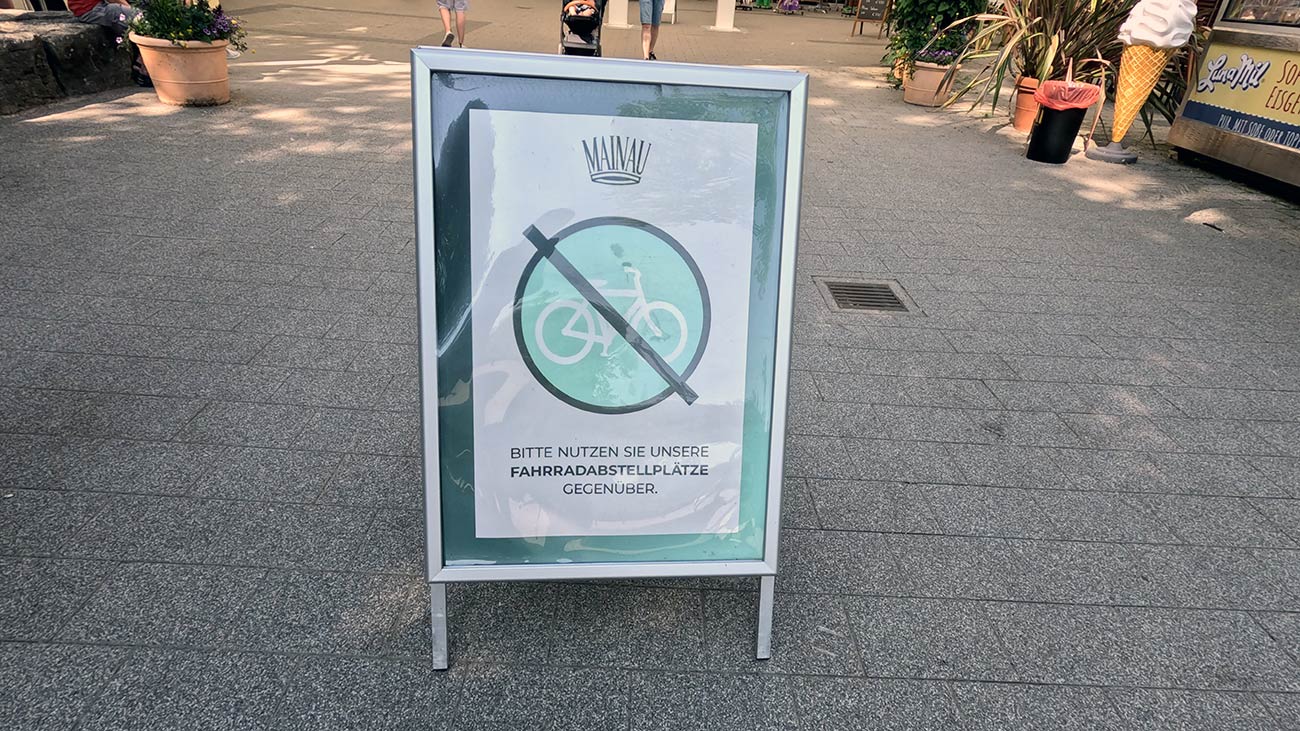
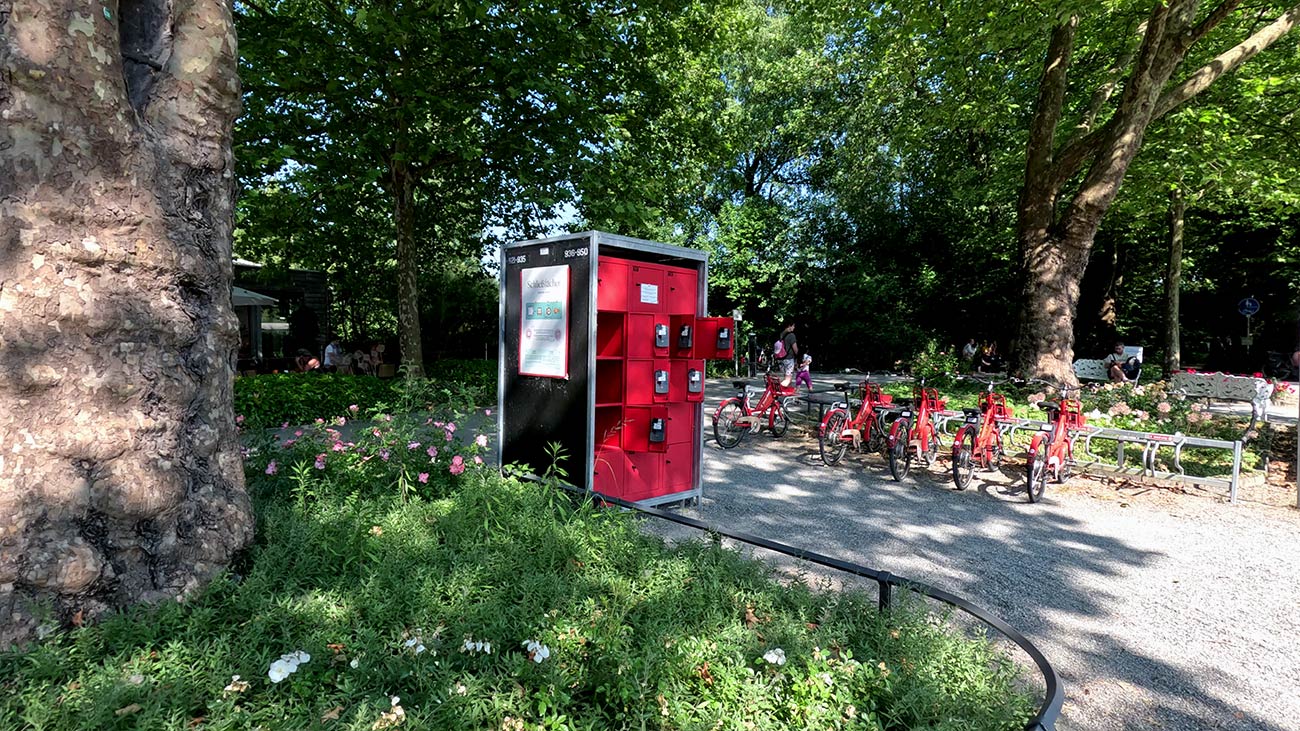
Bicycles are not permitted on Mainau Island itself, which is reserved entirely for pedestrians once visitors cross the bridge or arrive by boat. Secure bike parking and lockers are available at the entrance to the island, on the mainland side of the connecting footbridge, where bikes can be left for the duration of the visit. The island is small enough to be explored entirely on foot, with most of the main attractions reachable within a thirty-minute walk of each other along marked paths. Comfortable walking shoes are recommended, particularly for visitors planning to combine the gardens, the palace, the butterfly house, and the lakeside terraces in a single half-day or full-day visit.
ℹ️ Useful Contacts
Mobility for Cyclists
Reaching the area by train with your bike
Constance and Mainau Island can be reached from the EuroVelo 6 in two different ways, depending on which part of the route you are travelling. The most direct option is from the official EuroVelo 6 line that runs along the western shore of Lake Constance, only a short rail journey from the city. Cyclists riding the longer popular variant of the route along the Danube River reach the city by a regional rail journey across the watershed between the Danube basin and the lake.
The connection
The shortest connection is from Radolfzell, a town on the official EuroVelo 6 corridor on the western side of Lake Constance, where regional trains run directly to Constance in around fifteen minutes. The line follows the shoreline and offers one of the most pleasant short rail journeys in the region. For travellers riding the Danube stretch of the route, the most practical access point is Tuttlingen, where regional trains run to Constance in around one hour and forty-five minutes, with the option of a single change along the way. From further east along the Danube, Sigmaringen can also be used as a starting point, with connections via Tuttlingen. All three options run regularly throughout the day and fit comfortably into a single travel day.
A further option that fits naturally into a longer EuroVelo 6 itinerary is to arrive at Constance or Mainau by boat. Both stops are served year-round by the Lake Constance White Fleet (Bodensee-Schiffsbetriebe), whose ships carry bicycles on board and connect Constance and Mainau with other lakeside towns including Überlingen, Friedrichshafen, Meersburg, and Lindau on the German side, as well as with destinations in Switzerland and Austria. For travellers combining multiple detours along the lake, the boats are often more enjoyable and just as practical as the train.
German trains
The rail network in this part of Germany is operated mainly by Deutsche Bahn (DB), which runs most long-distance services and a large share of regional connections across the area. Alongside DB, several regional operators run local and feeder lines, particularly on secondary routes, but they are fully integrated into the national rail system. This creates a highly coordinated transport network where transfers between different operators are seamless and require no separate tickets. The DB Navigator app is the central tool for planning journeys, checking timetables, and purchasing tickets across all services, including both regional and long-distance trains. During the main holiday season, special bike-friendly trains with expanded capacity for bicycles also run on selected regional routes, making travel with a bike across the region noticeably easier.
Taking your bike
This part of Germany is generally very bike-friendly when it comes to rail transport, especially on regional trains, which form the core of mobility for cycle touring along the Danube and its connecting corridors. Most regional services allow bicycle transport without mandatory reservation, although space is limited and operates on a first-come, first-served basis. A separate bicycle ticket is typically required during weekday morning peak hours, or it can be purchased as an affordable regional day pass, while outside peak periods and on weekends bicycle transport is often free across large parts of the region. Long-distance trains such as IC and ICE require advance bicycle reservations and have limited capacity, so early planning is important for intercity travel. Overall, the system is well adapted to cycle tourism, offering strong flexibility and occasional dedicated bicycle-friendly or seasonal train services that further improve connectivity for travellers leaving the EuroVelo 6 route.
Bikes on Buses
Long-distance bus services in this part of Germany are primarily operated by FlixBus, complemented by a smaller number of regional and private coach operators on selected routes. Bicycle transport is available on certain intercity connections, either via external bike racks or in the luggage compartment, but it is not consistently guaranteed across the network and depends on the specific vehicle type and route configuration. Where available, bicycle transport must be reserved in advance and capacity is limited, making it less flexible compared to rail services. As a result, buses are generally used as a secondary option for cyclists, mainly for longer-distance repositioning between major cities rather than as a core part of cycling itineraries along the Danube region. While useful in specific cases where rail connections are less convenient, they are less predictable and less standardized for bicycle transport, so advance planning is essential.
Arriving at Constance Station and Continuing to Mainau
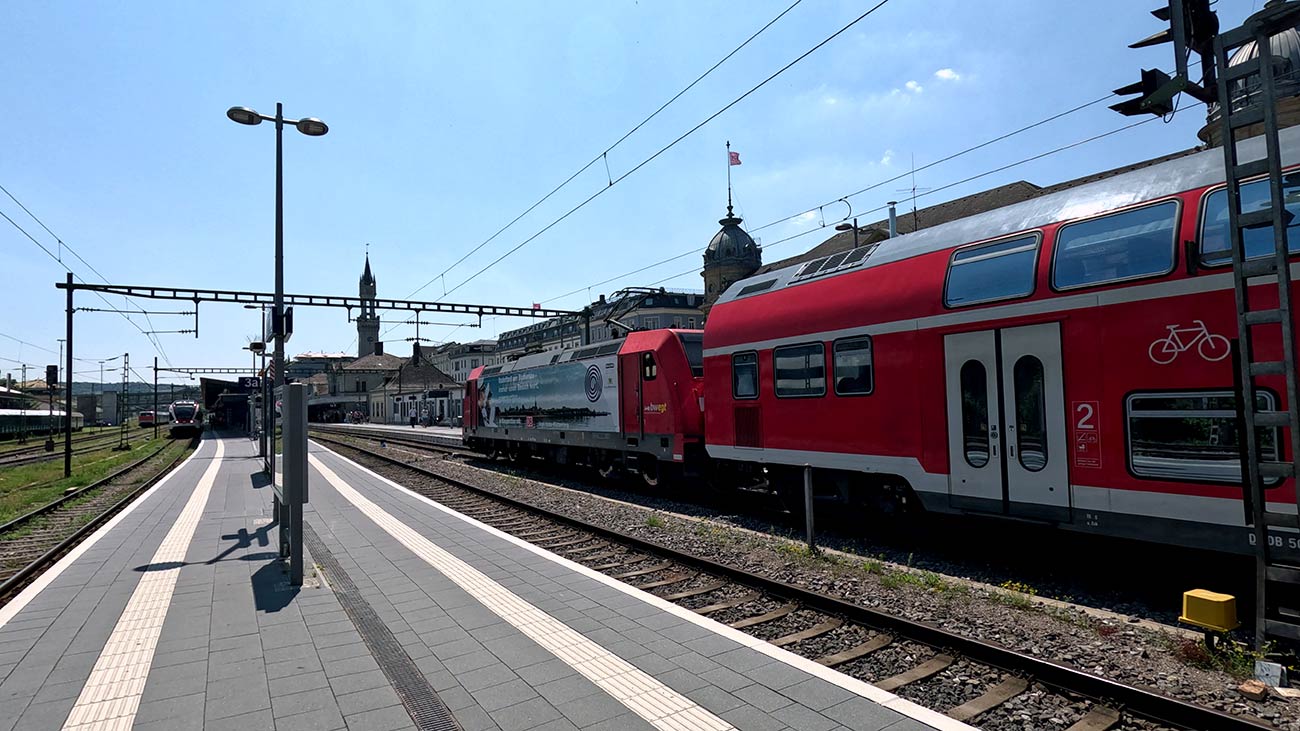
Constance’s main railway station sits directly beside the harbour at the edge of the old town, with the cathedral, the Council Building, the lakeside promenade, and the Imperia statue all reachable on foot or by bike in under ten minutes. Cycling infrastructure in and around the city is excellent, and the lakeside promenade itself doubles as a long, flat cycle route that connects easily with the wider Lake Constance Cycle Path (Bodensee-Radweg). Bike racks and bike parking are available at the station for shorter or longer stops.
For Mainau Island, the most pleasant way to continue from Constance is by bike, with a flat ride of around twenty minutes along the lakeshore that follows signposted cycle paths through the suburbs of Staad and on toward the island bridge. The same route can also be covered by local bus or by boat from the harbour, with regular sailings during the main season. As bicycles are not permitted on Mainau itself, visitors arriving by bike leave their machines at the secure parking area on the mainland side of the bridge before crossing on foot. For onward travel, the same rail and boat connections link Constance back toward Radolfzell, Tuttlingen, Überlingen, Friedrichshafen, and the wider Danube and Lake Constance corridors, so the city and the island together work equally well as a one-day excursion or as a longer two-night base.