Donaueschingen
Reading time: 10 minutes
DONAUESCHINGEN, BADEN-WÜRTTEMBERG, GERMANY
Where a Great River Quietly Begins
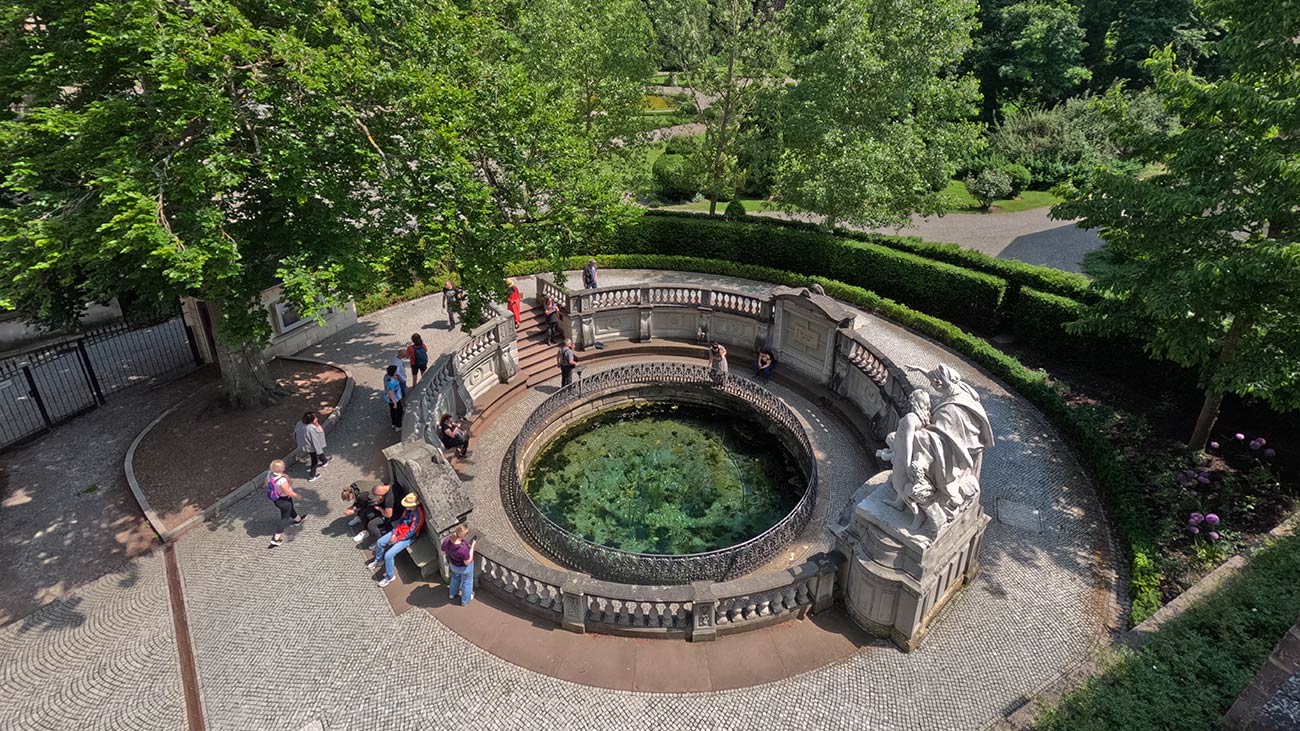
In a quiet corner of a palace park, surrounded by old trees and the soft sound of running water, the Danube begins. There are no thundering waterfalls here, no dramatic gorges, just a small circular pool of clear blue water enclosed by an ornate wrought-iron railing, watched over by two allegorical statues. From this unassuming spring, the symbolic source known as the Donauquelle, the river that will eventually pass through ten countries and reach the Black Sea sets off on its journey. For many cyclists, this is where the long ride along the Danube either starts or ends, and standing beside the pool is one of those rare travel moments where geography suddenly feels personal.
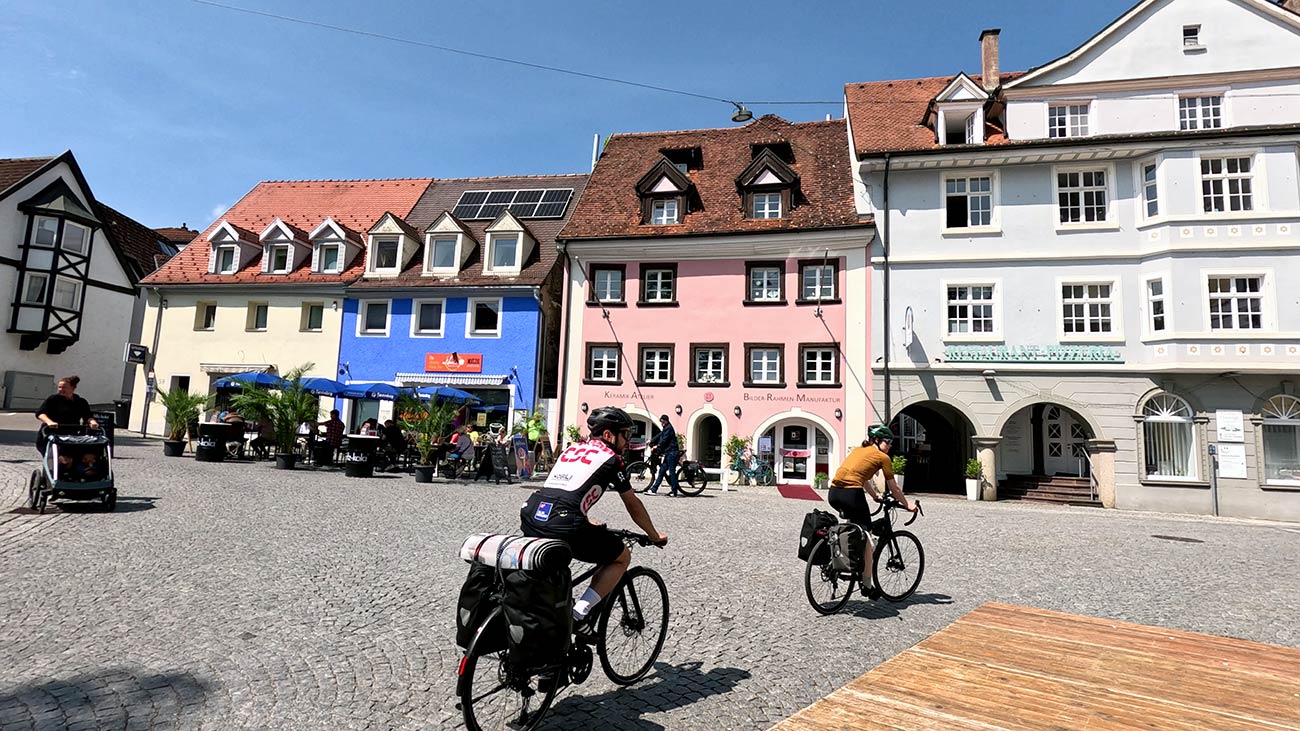
Donaueschingen itself is a small, dignified town on the Baar plateau, set between the eastern edge of the Black Forest and the upper reaches of the Swabian Alb. It owes much of its character to the House of Fürstenberg, the princely family that made Donaueschingen its residence town in the early eighteenth century and whose Baroque palace still stands at the heart of the old centre. There are no great museums or famous landmarks beyond the source, but the streets are pleasant to wander, the park is a quiet pleasure, and the surrounding landscape has the gentle, open quality of a place that has never quite become a tourist destination.
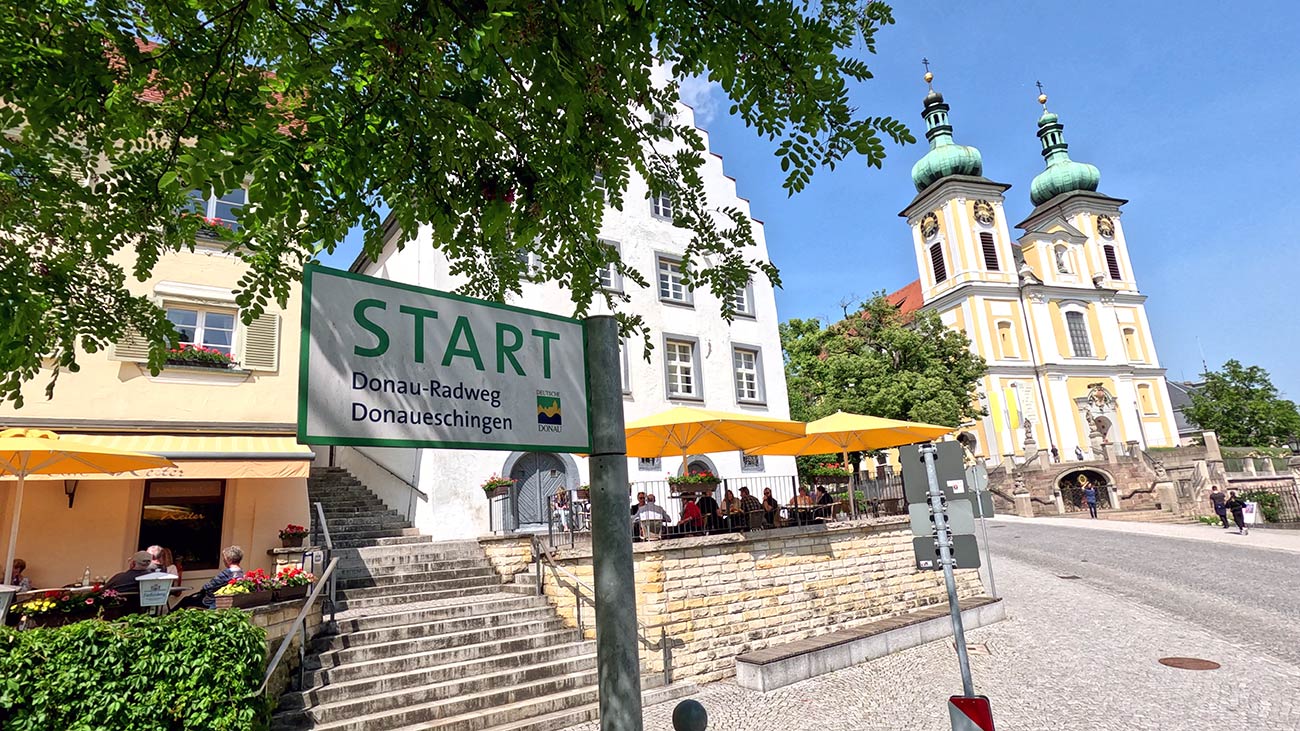
For travellers on the EuroVelo 6, Donaueschingen has a special status. It is the official starting point of the Donauradweg, the German section of the Danube cycle route, and as such it marks either the very first kilometre of a long journey east or the final stamp on one already completed. Whichever direction you arrive from, the town offers a quiet, low-key welcome and an ideal place to pause before continuing along the river that takes its name from this small spring in the park.
CastleSourceStartCalm
A Quiet Town at the Beginning of a Great River
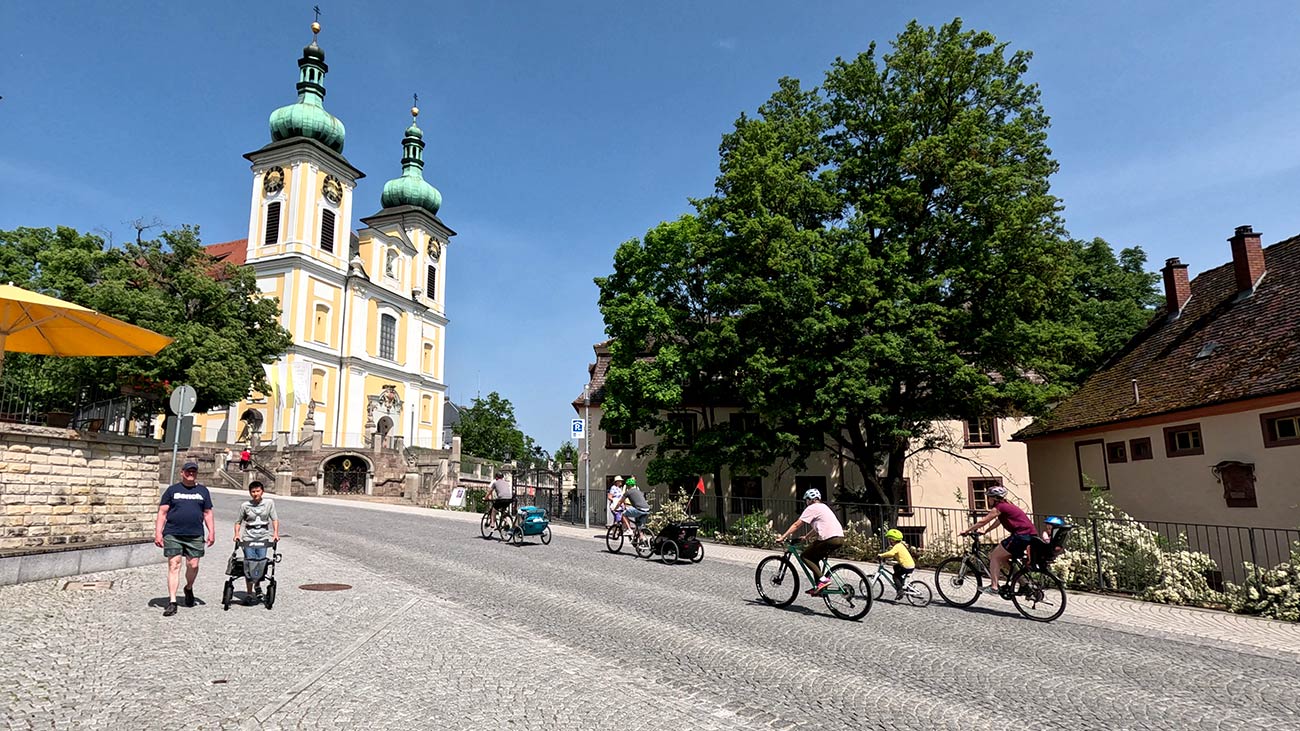
The Donauquelle, the symbolic source of the Danube, lies in the park of the Fürstenberg Palace in the centre of Donaueschingen, just behind the Church of St John. It takes the form of a round stone pool of clear spring water, enclosed by a wrought-iron railing and surrounded by allegorical sculptures designed by Adolf Heer in 1895. The composition shows the Baar, the limestone plateau on which the town sits, as a mother figure pointing the young Danube on her way to the sea. The water itself feeds a small stream called the Donaubach, which runs underground through the park and emerges near the so-called Danube Temple before joining the Brigach a short distance away. It is a modest, almost intimate sight, and that is precisely the charm of it.
The site has been considered the source of the Danube since Roman times, though the title has been the subject of one of the more unusual geographical disputes in Europe. Hydrologically, the longer and higher of the two streams that form the Danube is the Breg, which rises near Furtwangen in the Black Forest, about forty kilometres to the northwest. For decades, Furtwangen and Donaueschingen contested the right to call themselves the river’s birthplace, until in 1981 the state government of Baden-Württemberg formally recognised Donaueschingen’s pool as the official Donauquelle. Furtwangen is often described today as the scientific source, while Donaueschingen holds the symbolic one — and for travellers, it is the symbolic source that has the statues, the park, and the history.
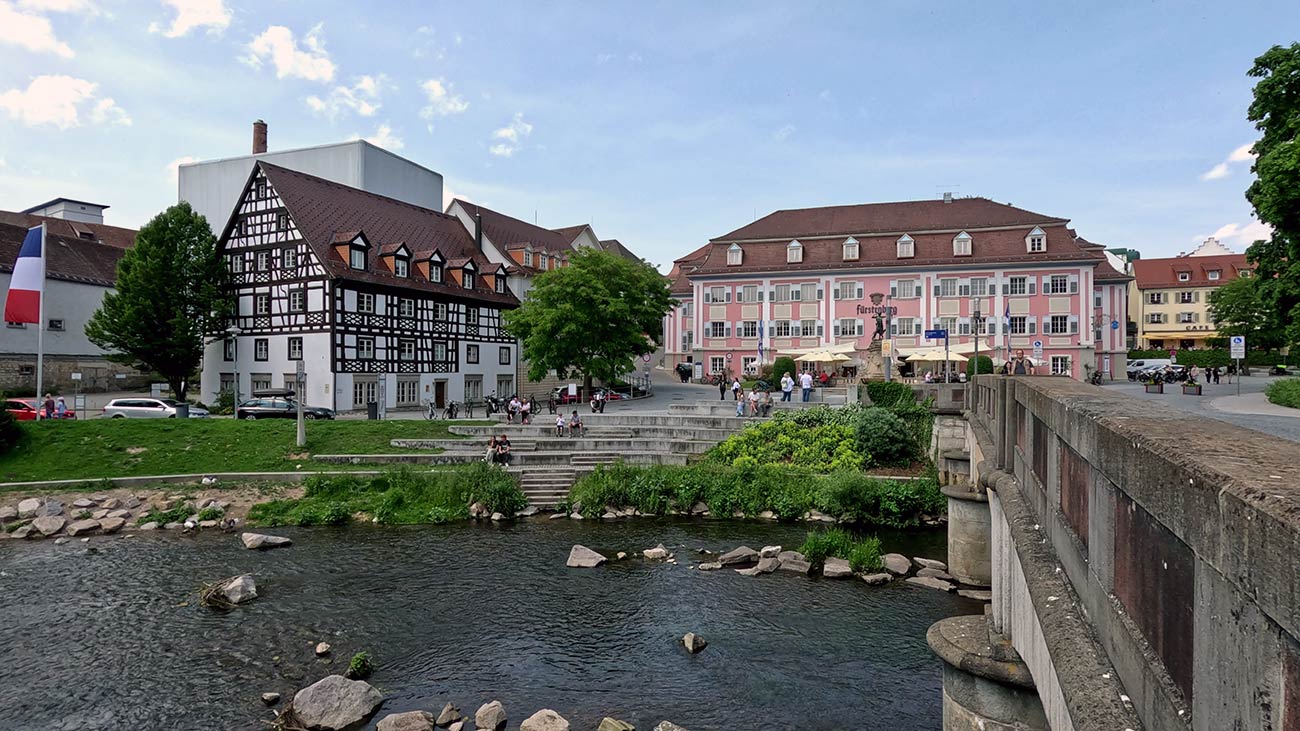
A short walk east of the town centre, the two small rivers Brigach and Breg finally meet in a quiet meadow, and from that confluence the river is called the Danube for the first time. The spot is marked but deliberately understated, with paths along both banks that make it easy to reach by foot or by bike. There is a German rhyme that locals still repeat to children, Brigach und Breg bringen die Donau zuweg — Brigach and Breg bring forth the Danube — and standing at the meeting of the two streams it is hard not to feel the weight of what begins there. From this point the river flows almost 2,800 kilometres east through ten countries to the Black Sea.
The town around the source is shaped above all by the House of Fürstenberg, one of the great noble families of southwestern Germany. In 1723, Prince Joseph Wilhelm Ernst moved his court here and laid the foundation for the Baroque residence that still stands today. The present appearance of the palace dates largely from a thorough rebuilding between 1892 and 1896 under Prince Karl Egon IV, who gave the façade its central projection and dome in a French Baroque Revival style. The palace remains in private ownership and is still inhabited by members of the family, though parts of it can be visited on guided tours during the warmer months, alongside the Princely Fürstenberg Collections of art and historical furnishings.
Beyond the source and the palace, Donaueschingen is also known for a few cultural traditions that punctuate its quiet year. The Donaueschinger Musiktage, held every October since 1921, is one of the oldest and most respected festivals of contemporary classical music in the world and draws composers and audiences from across Europe. In late summer, the CHI Donaueschingen international equestrian tournament brings a very different kind of crowd to the parklands around the palace. The Fürstenberg Brewery, with roots reaching back to 1283, still produces beer in the town and operates a tavern within walking distance of the source, which makes for a fitting place to raise a glass either at the beginning or the end of a long ride along the Danube.
ℹ️ Useful Links
Mobility for Cyclists
Reaching Donaueschingen by train with your bike
If you are riding the EuroVelo 6 along the Danube, Donaueschingen makes for one of the most meaningful detours along the route. The town lies just off the official EuroVelo 6 corridor but holds a special status as the western terminus of the Donauradweg, the German section of the Danube cycle path, where for many cyclists the entire river-long journey either begins or ends.
The connection
The fastest connection from the EuroVelo 6 corridor is from Tuttlingen, where regional trains run directly to Donaueschingen in around twenty minutes. The route climbs gently along the upper Danube valley as the river grows smaller and younger, which makes the short journey a fitting prelude to seeing the source. Trains run regularly throughout the day, and the trip fits comfortably into a half-day excursion with plenty of time to explore the park, the palace, and the Donauquelle itself.
German trains
The rail network in this part of Germany is operated mainly by Deutsche Bahn (DB), which runs most long-distance services and a large share of regional connections across the area. Alongside DB, several regional operators run local and feeder lines, particularly on secondary routes through the Swabian Alb and the Neckar valley, but they are fully integrated into the national rail system. This creates a highly coordinated transport network where transfers between different operators are seamless and require no separate tickets. The DB Navigator app is the central tool for planning journeys, checking timetables, and purchasing tickets across all services, including both regional and long-distance trains. During the main holiday season, special bike-friendly trains with expanded capacity for bicycles also run on selected regional routes, making travel with a bike across the region noticeably easier.
Taking your bike
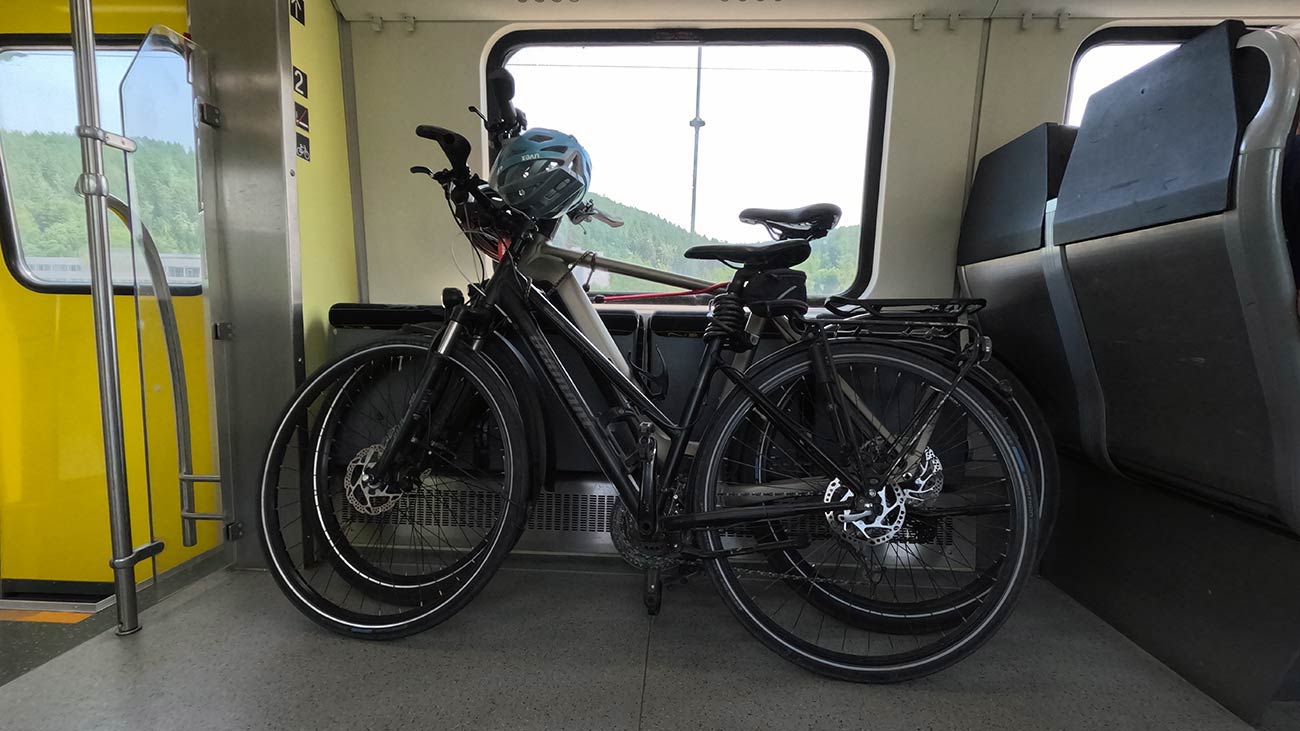
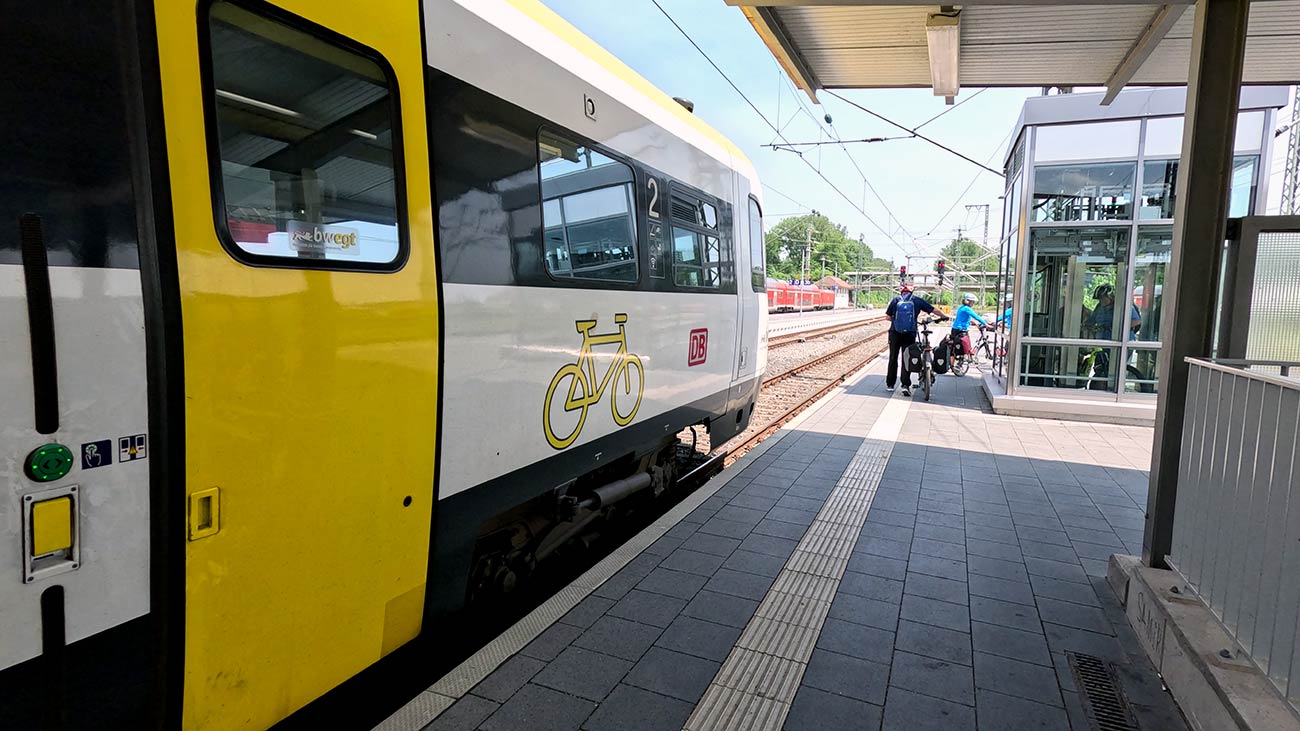
This part of Germany is generally very bike-friendly when it comes to rail transport, especially on regional trains, which form the core of mobility for cycle touring along the Danube and Neckar corridors. Most regional services allow bicycle transport without mandatory reservation, although space is limited and operates on a first-come, first-served basis. A separate bicycle ticket is typically required during weekday morning peak hours, or it can be purchased as an affordable regional day pass, while outside peak periods and on weekends bicycle transport is often free across large parts of Baden-Württemberg. Long-distance trains such as IC and ICE require advance bicycle reservations and have limited capacity, so early planning is important for intercity travel. Overall, the system is well adapted to cycle tourism, offering strong flexibility and occasional dedicated bicycle-friendly or seasonal train services that further improve connectivity for travellers leaving the EuroVelo 6 route.
Bikes on Buses
Long-distance bus services in southern Germany are primarily operated by FlixBus, complemented by a smaller number of regional and private coach operators on selected routes. Bicycle transport is available on certain intercity connections, either via external bike racks or in the luggage compartment, but it is not consistently guaranteed across the network and depends on the specific vehicle type and route configuration. Where available, bicycle transport must be reserved in advance and capacity is limited, making it less flexible compared to rail services. As a result, buses are generally used as a secondary option for cyclists, mainly for longer-distance repositioning between major cities rather than as a core part of cycling itineraries along the Danube region. While useful in specific cases where rail connections are less convenient, they are less predictable and less standardized for bicycle transport, so advance planning is essential.
Donaueschingen Bahnhof
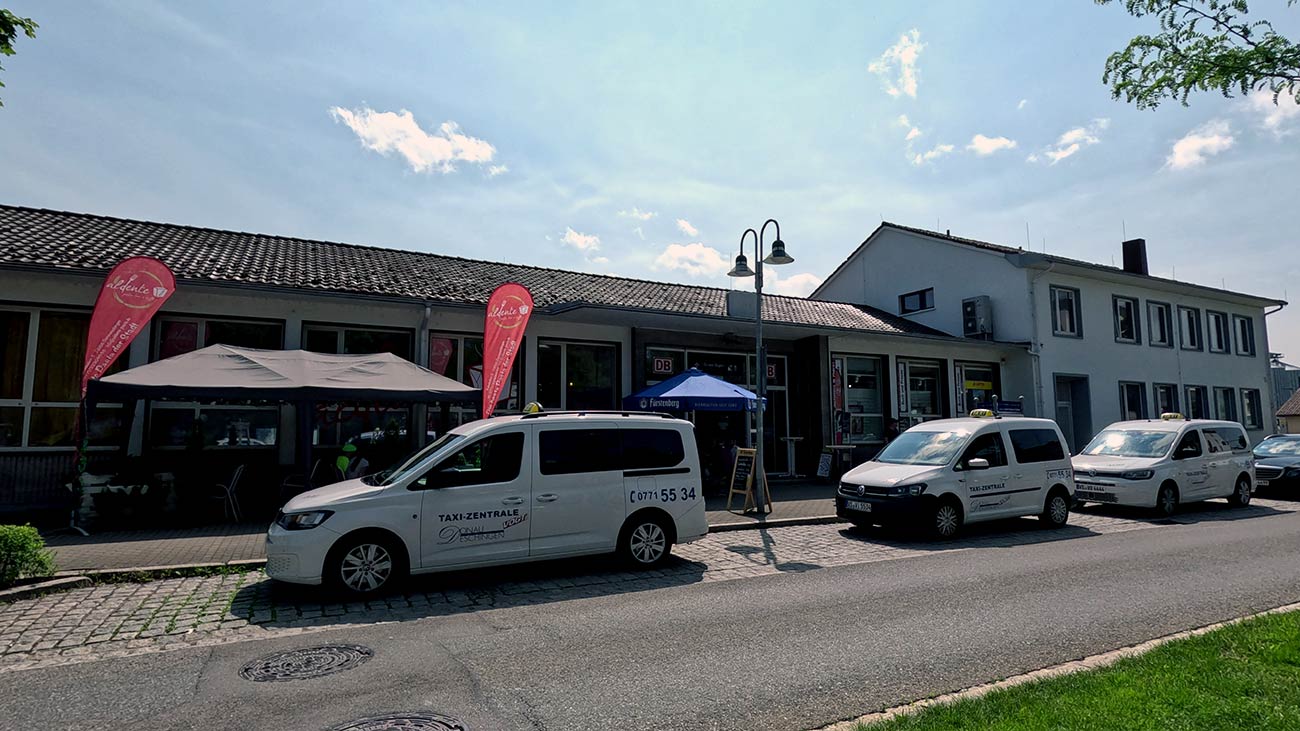
Donaueschingen’s main station is small but sits within easy reach of the town centre, with the Fürstenberg Palace, the park, and the Donauquelle all a short ride away. Cycling infrastructure in the town is generally good, and the flat terrain makes moving between the station, the park, and the source straightforward.