Kempten
Reading time: 11 minutes
KEMPTEN, BAVARIA, GERMANY
The Oldest City in Germany at the Foot of the Alps
In the heart of the Allgäu, where the gentle hills of southern Bavaria begin to rise toward the white peaks of the Alps, lies a city that has been telling its own story for more than two thousand years. Kempten is named in writing by the Greek geographer Strabo around 50 BC, which makes it the oldest city in Germany ever recorded by name, and the layers of that long history are still visible in its streets today. Roman foundations, a Baroque prince-abbot’s residence, a free imperial town hall, and a fast-flowing alpine river all share the same compact city centre, often within a short walk of each other.
The city’s character is shaped by a long historical curiosity. For centuries, two rival Kemptens stood side by side on the banks of the river Iller, the Catholic monastery town ruled by a prince-abbot and the Protestant free imperial city, each with its own laws, its own market, and its own loyalties. The two were finally unified only under Bavarian rule in the early nineteenth century, and the result is a city that still feels architecturally and atmospherically split between its two halves, with the prince-abbot’s Baroque ensemble on one side and the medieval imperial town hall on the other.
For cyclists exploring the Danube along the EuroVelo 6, Kempten sits south of the river in the alpine foothills, reached by a single regional rail journey from Ulm. The detour offers a complete change of landscape from the broad horizontal of the Danube to the steeper, fresher world of the Allgäu, and a city that is large enough to fill a full day of exploration while small enough to be walked entirely on foot.
AlpsIllerOld TownReligious
The Archaeological Park Cambodunum
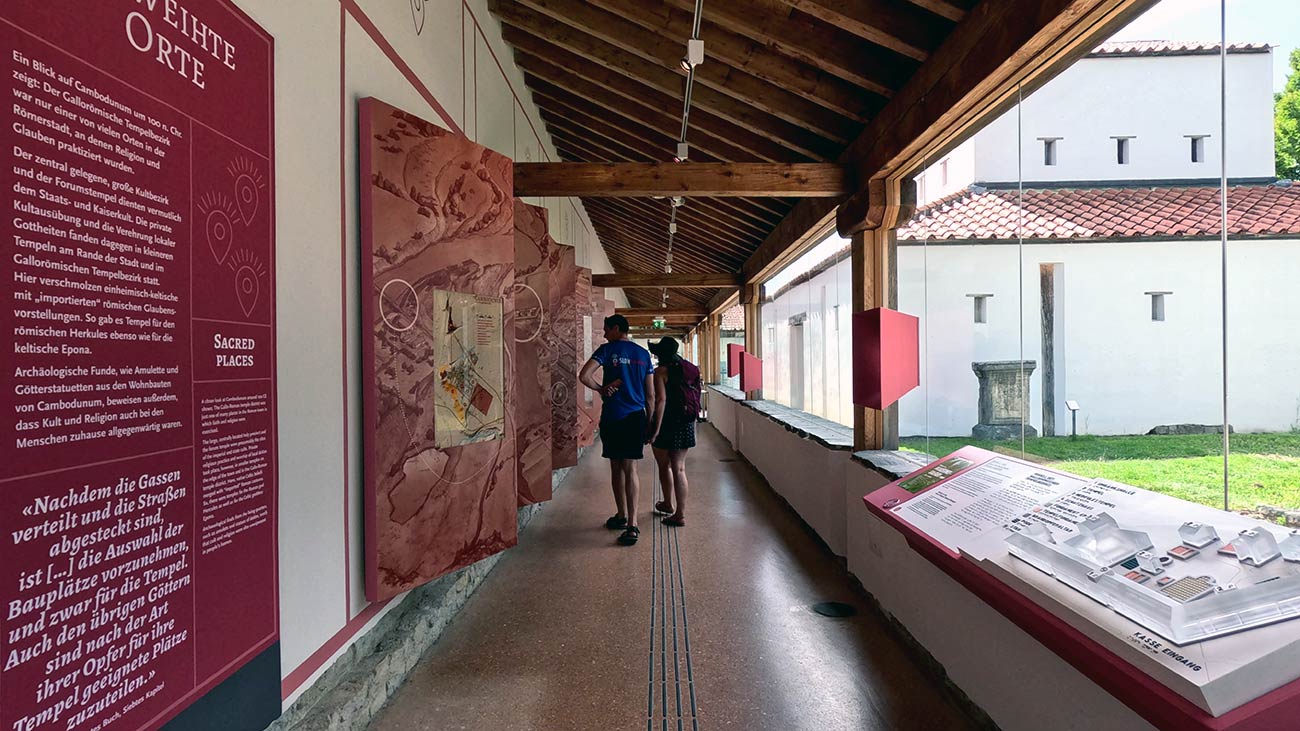
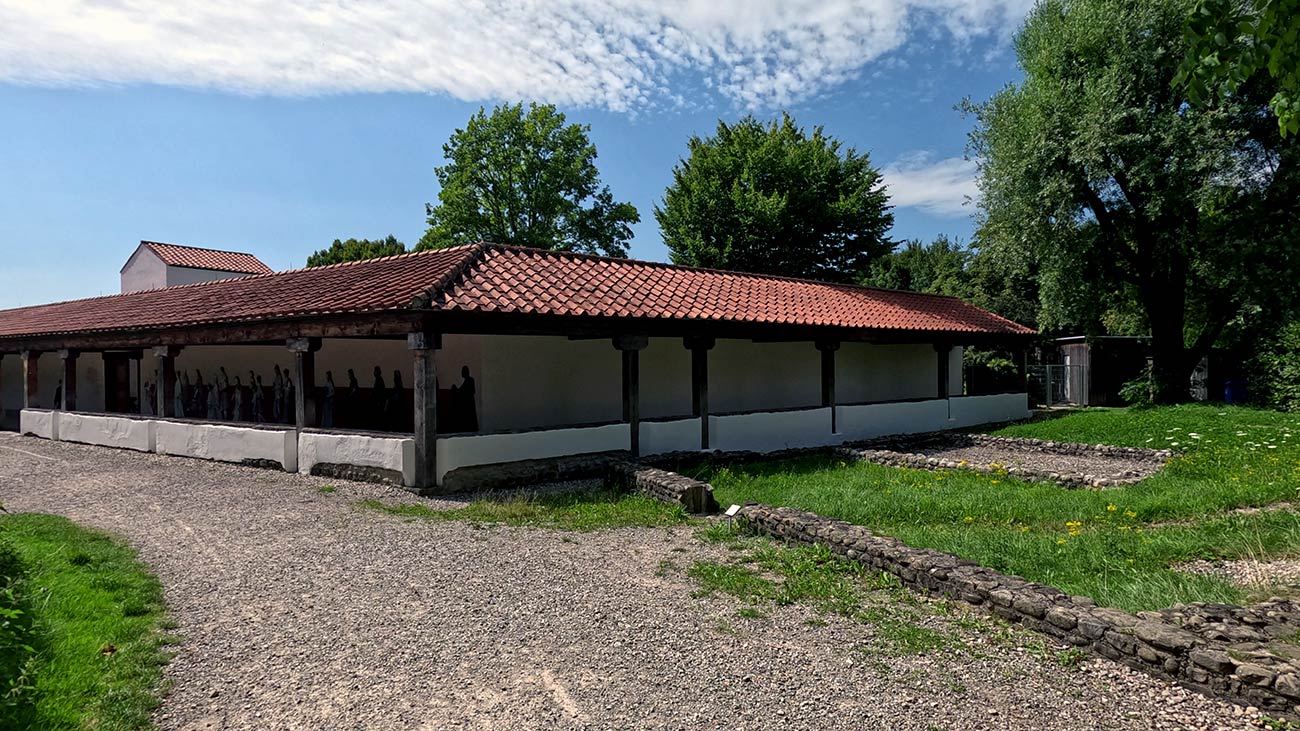
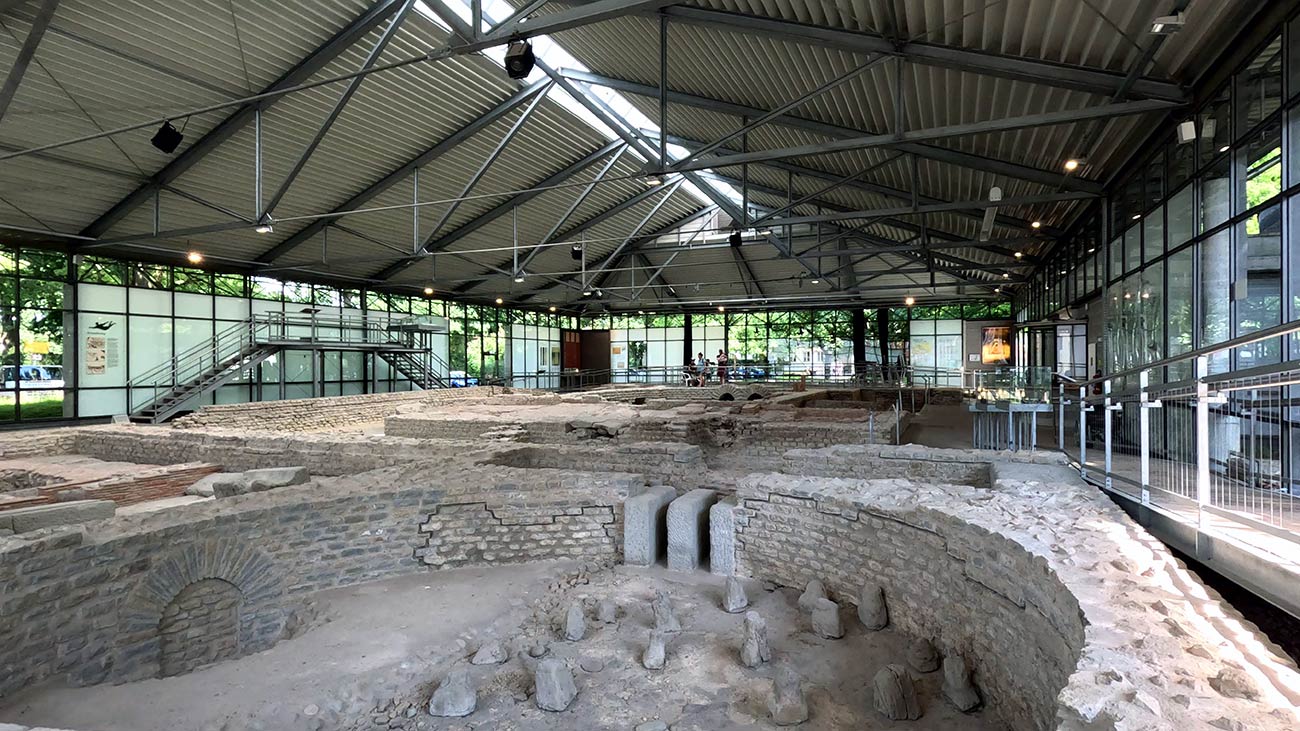
On the eastern bank of the river Iller, just outside the modern city centre, lies one of the most important open-air Roman sites in southern Germany. The Archaeological Park Cambodunum preserves the remains of the city of Cambodunum, founded by the Romans under Emperor Augustus around the turn of the era and developed into the first administrative centre of the province of Raetia before that role later passed to Augsburg. The park is divided into three areas that visitors can explore in sequence: the Gallo-Roman Temple District, with reconstructed altars, temples, and a double hall; the Small Thermal Baths, originally the private bathhouse of the Roman governor, now sheltered inside a protective building with an accompanying exhibition; and the Forum and Basilica, the open civic centre where markets, public meetings, and law courts once gathered. Open since 1983 after more than a century of archaeological work, the park has become the largest Roman archaeological park in southern Germany and uses an interactive app, virtual reality stations, and live history days to bring the city of Cambodunum back to life across the year.
The Town Hall and the Imperial Old Town
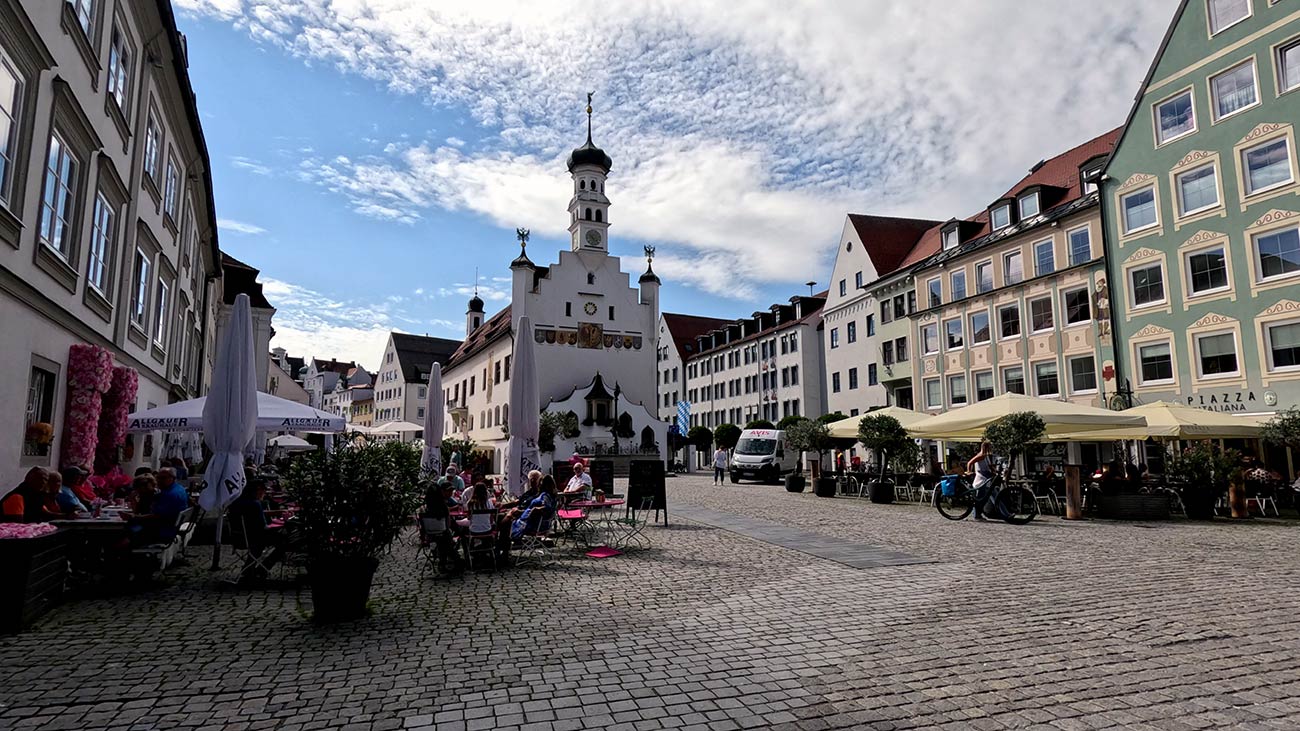
A short walk east of the Residence lies the other historic centre of Kempten, the medieval Town Hall (Rathaus) and its surrounding square. The town hall is a richly decorated building with a stepped gable, painted facade, and the figure of an imperial eagle as a reminder that this part of Kempten was once a free imperial city, answering directly to the emperor rather than to the prince-abbot. The square in front of it has been the civic heart of the imperial city for centuries and still hosts markets, festivals, and open-air events throughout the year. The streets around the square are lined with merchant houses, narrow alleys, and quiet inner courtyards, and a short walk away the late-Gothic Church of St Magnus rises with its sixty-six-metre tower, the former parish church of the Protestant imperial city. Together, the Rathaus square and the surrounding old town form a complete civic ensemble that stands in deliberate contrast to the ecclesiastical grandeur of the Residence on the opposite side of the centre, a layout that still tells the story of Kempten as a city of two histories.
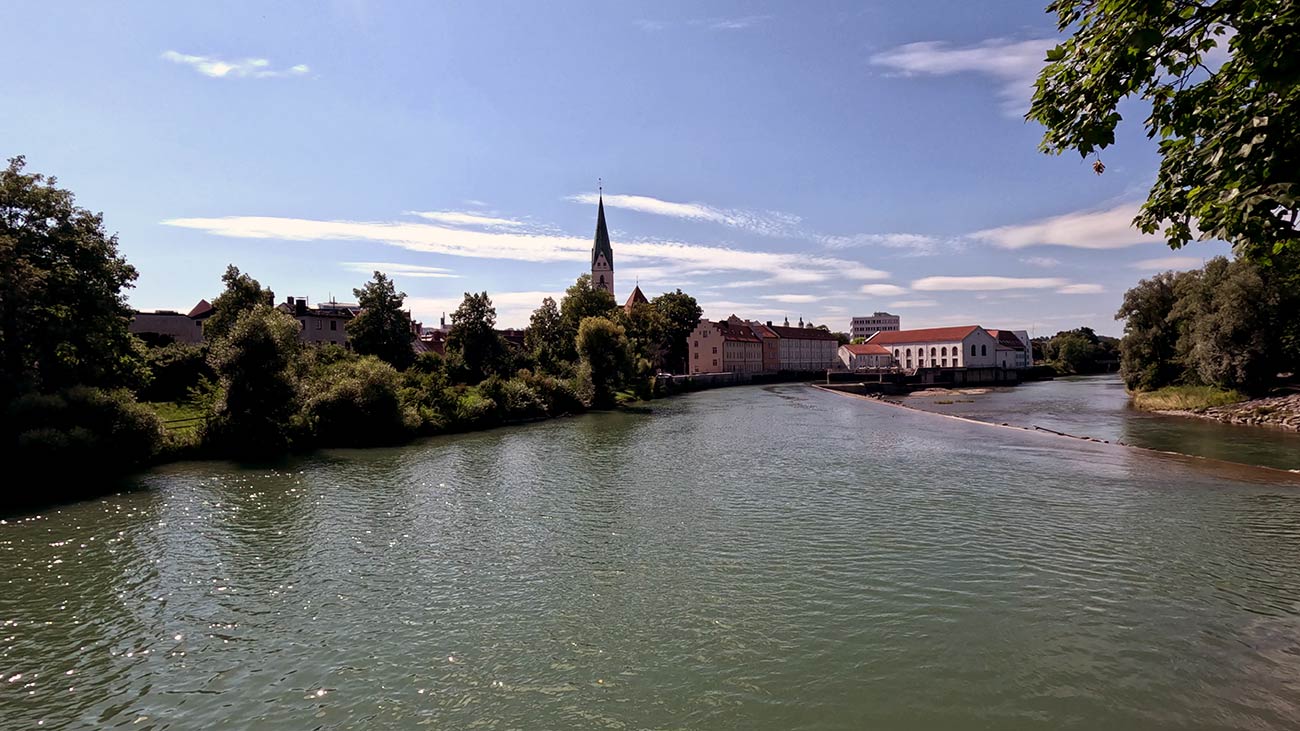
The River Iller
The River Iller rises in the high Allgäu Alps and flows north through Kempten on its way toward the Danube, which it eventually joins near Ulm. The river divides the historic city in two, with the Baroque Residence and the imperial old town on the western bank and the Archaeological Park Cambodunum and quieter residential districts on the eastern side. A long riverside path follows the Iller through the centre of the city, offering one of the most pleasant short walks in Kempten and giving a clear sense of why the Romans chose this site in the first place: a navigable river, easy access to the Alpine passes, and a natural crossroads of trade routes between Italy, the Rhine, and the Danube. Today the riverbanks are lined with parks, footbridges, and shaded benches, and a network of well-marked cycle paths extends both upstream into the alpine foothills and downstream toward the Danube valley, giving travellers a chance to combine an afternoon in the old town with a peaceful walk or short bike ride along the water.
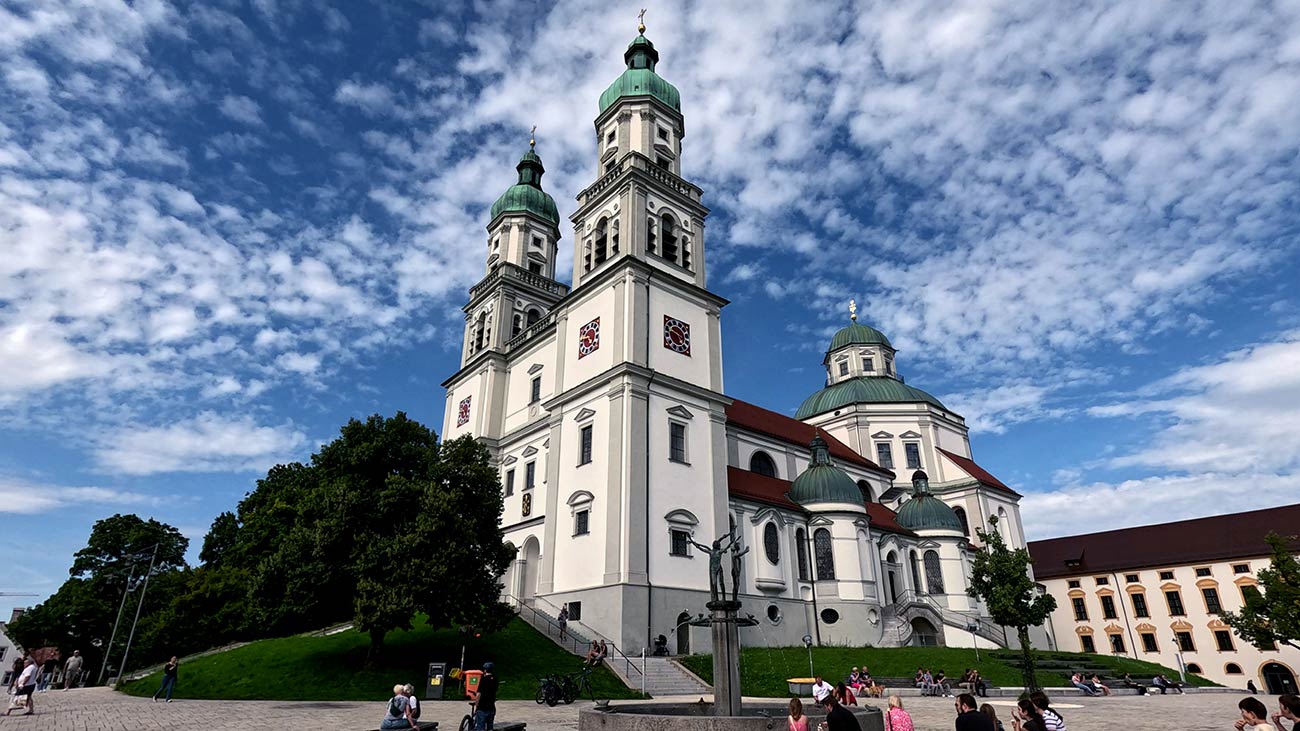
The Basilica of St Lorenz and the Prince-Abbot’s Residence
On the western side of the old town stands one of the most important Baroque ensembles in southern Germany, built by the prince-abbots of Kempten in the years after the Thirty Years’ War. The Basilica of St Lorenz is a twin-towered Baroque church begun in 1652 under Prince-Abbot Roman Giel von Gielsberg, designed by the Vorarlberg master builder Michael Beer and finished from 1670 onwards by Johann Serro of Graubünden. It was one of the first large churches built in Germany after the war and was conceived from the beginning as a double church, with a domed central choir for the monastic community and a long nave for the parish, an unusual layout that reflects its dual role as a monastery and town church. Attached to the basilica is the Prince-Abbot’s Residence (Fürstäbtliche Residenz), a double-courtyard palace begun in 1651 and given its full Baroque interior splendour in the eighteenth century. The State Rooms of the Residence (Prunkräume) can be visited today, with painted ceilings, stucco, and gilded woodwork that recall the wealth and authority of the prince-abbots who once ruled the Catholic half of the city as a small ecclesiastical state within the Holy Roman Empire.
ℹ️ Useful Contacts
Mobility for Cyclists
Reaching the area by train with your bike
Kempten can be reached from the EuroVelo 6 by a single regional rail journey from one of the main cities on the Danube cycle path. The city lies south of the Danube in the Allgäu foothills, just before the landscape begins to rise toward the Alps, and is connected to the river corridor by a direct line that runs hourly throughout the day.
The connection
The most practical connection from the EuroVelo 6 corridor is from Ulm, where the regional RE 75 service runs directly to Kempten (Allgäu) Hauptbahnhof in around one hour. Departures are hourly throughout the day, and the line follows the valley of the river Iller upstream from its confluence with the Danube into the gentler hills of the Allgäu. Cyclists riding the Danube stretch of the route will find Ulm the natural transfer point, and the trip fits comfortably into a single travel day with plenty of time to explore the old town on arrival.
German trains
The rail network in this part of Germany is operated mainly by Deutsche Bahn (DB), which runs most long-distance services and a large share of regional connections across the area. Alongside DB, several regional operators run local and feeder lines, particularly on secondary routes, but they are fully integrated into the national rail system. This creates a highly coordinated transport network where transfers between different operators are seamless and require no separate tickets. The DB Navigator app is the central tool for planning journeys, checking timetables, and purchasing tickets across all services, including both regional and long-distance trains. During the main holiday season, special bike-friendly trains with expanded capacity for bicycles also run on selected regional routes, making travel with a bike across the region noticeably easier.
Taking your bike
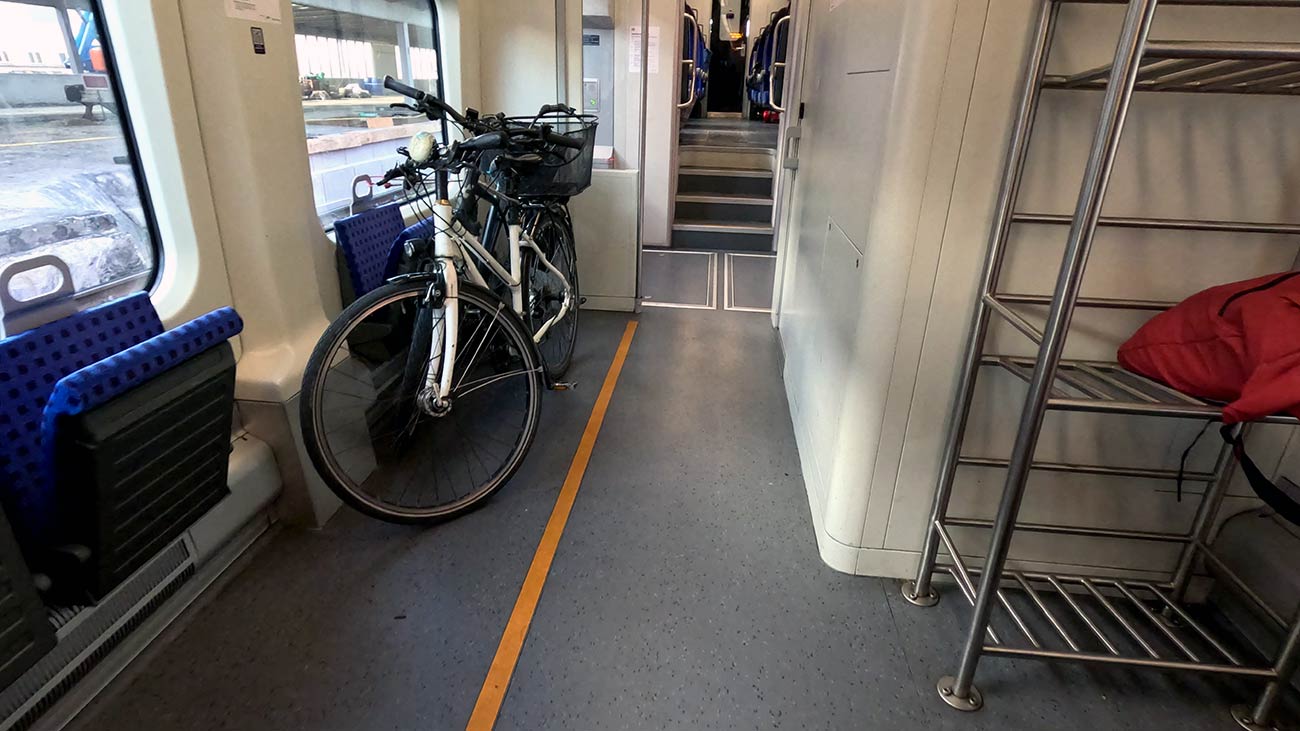
This part of Germany is generally very bike-friendly when it comes to rail transport, especially on regional trains, which form the core of mobility for cycle touring along the Danube and its connecting corridors. Most regional services allow bicycle transport without mandatory reservation, although space is limited and operates on a first-come, first-served basis. A separate bicycle ticket is typically required during weekday morning peak hours, or it can be purchased as an affordable regional day pass, while outside peak periods and on weekends bicycle transport is often free across large parts of the region. Long-distance trains such as IC and ICE require advance bicycle reservations and have limited capacity, so early planning is important for intercity travel. Overall, the system is well adapted to cycle tourism, offering strong flexibility and occasional dedicated bicycle-friendly or seasonal train services that further improve connectivity for travellers leaving the EuroVelo 6 route.
Bikes on Buses
Long-distance bus services in this part of Germany are primarily operated by FlixBus, complemented by a smaller number of regional and private coach operators on selected routes. Bicycle transport is available on certain intercity connections, either via external bike racks or in the luggage compartment, but it is not consistently guaranteed across the network and depends on the specific vehicle type and route configuration. Where available, bicycle transport must be reserved in advance and capacity is limited, making it less flexible compared to rail services. As a result, buses are generally used as a secondary option for cyclists, mainly for longer-distance repositioning between major cities rather than as a core part of cycling itineraries along the Danube region. While useful in specific cases where rail connections are less convenient, they are less predictable and less standardized for bicycle transport, so advance planning is essential.
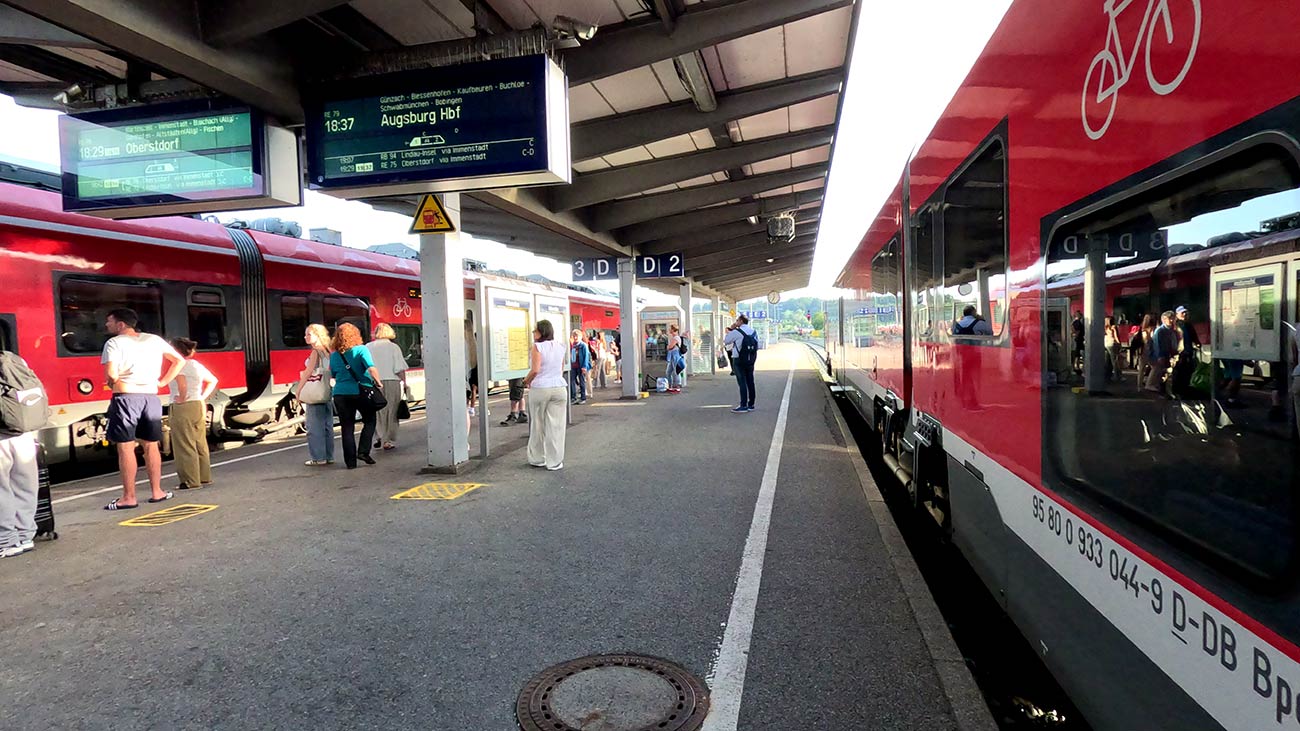
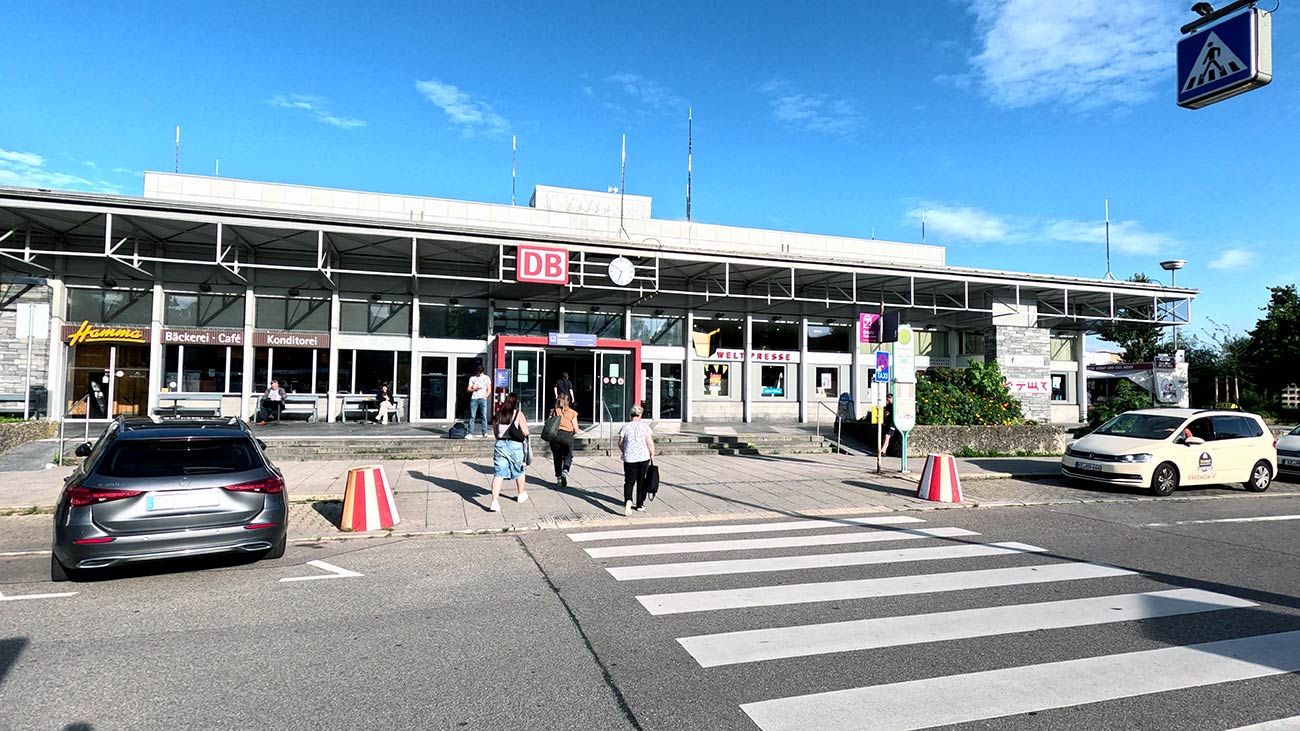
Arriving at Kempten (Allgäu) Hauptbahnhof
Kempten’s main railway station sits a short ride from the centre of the old town, with the Rathaus, the Basilica of St Lorenz, the Prince-Abbot’s Residence, and the Archaeological Park Cambodunum all reachable on foot or by bike in under fifteen minutes along flat, well-signposted streets. Cycling infrastructure in and around the city is good, and the riverside paths along the Iller offer an easy way to move between the historic centre and the Roman park without crossing busy roads. Bike racks and bike parking are available at the station for shorter or longer stops. For onward travel, the same line connects back toward Ulm and the wider Danube region, so Kempten works equally well as a one-day excursion or as an overnight detour from the EuroVelo 6.