Ravensburg
Reading time: 12 minutes
RAVENSBURG, BADEN-WÜRTTEMBERG, GERMANY
The City of Towers and the Birthplace of a Famous Blue Triangle
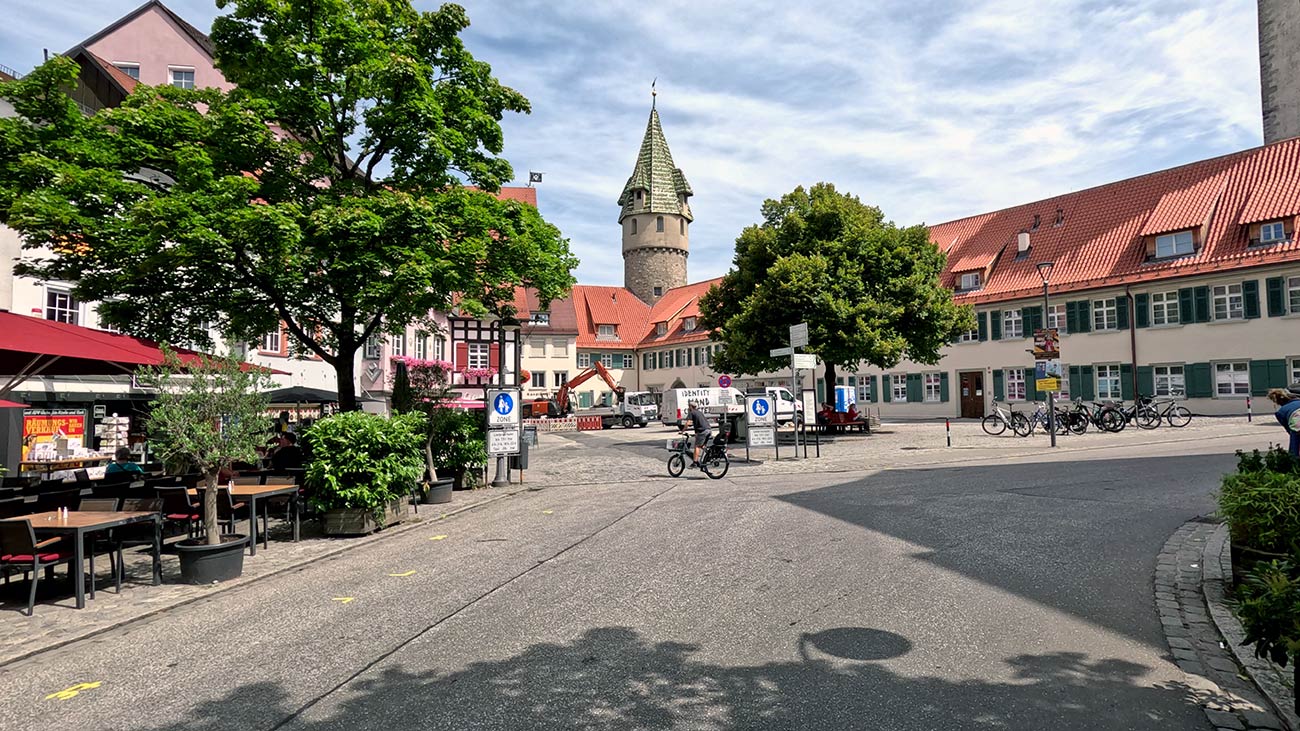
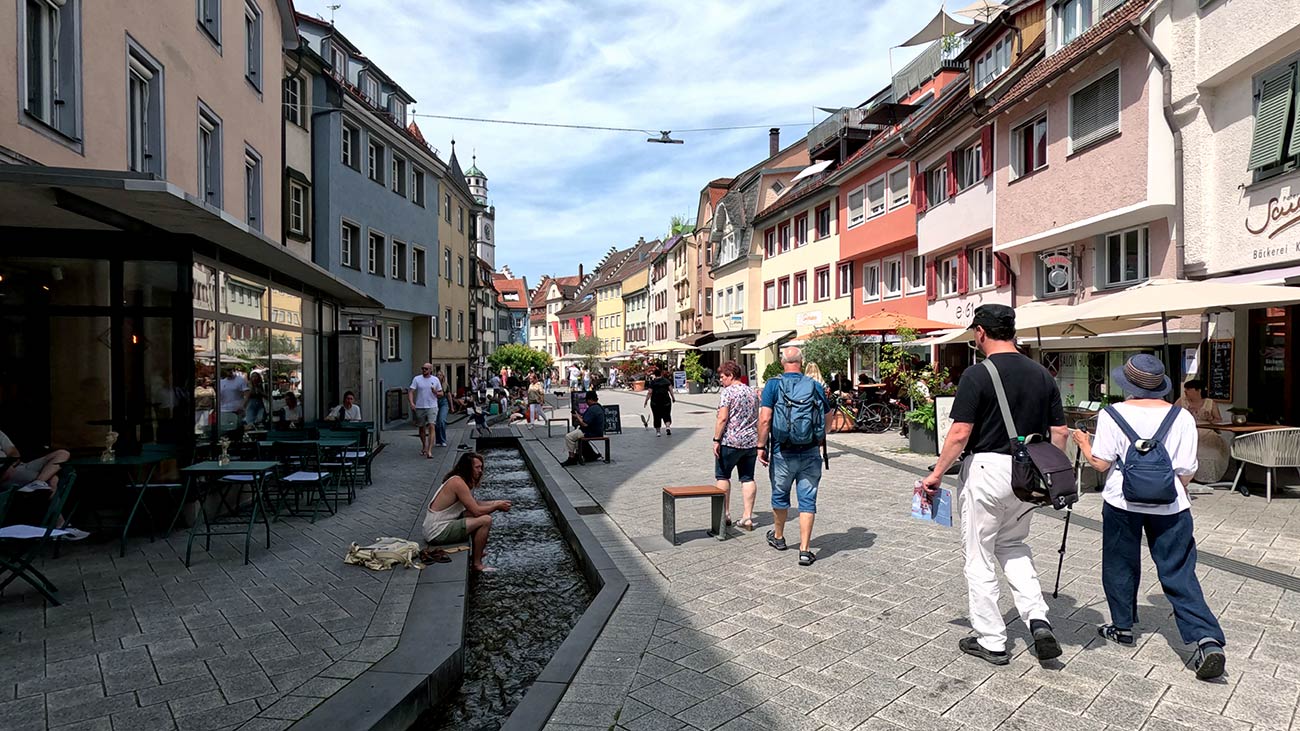
Seen from a distance, Ravensburg looks almost theatrical. A cluster of medieval towers rises from the gentle hills of Upper Swabia, with red rooftops, painted gables, and a hilltop castle behind, the whole image preserved as if a fifteenth-century artist had been asked to design the perfect German trading town. The nickname City of Towers and Gates is not an exaggeration: seventeen towers and gates still stand from the medieval fortifications, more than in almost any other town of its size in southern Germany, and the result is one of the most photogenic skylines in the country.
The reason for so much stone is straightforward. In the fourteenth and fifteenth centuries, Ravensburg sat at the intersection of two major international trade routes between Italy, the Rhine, and Lake Constance, and the Great Ravensburg Trading Society, founded in 1380, became one of the most powerful merchant companies of late medieval Europe. The wealth those merchants built into their walls, churches, and town houses is still legible today in a remarkably intact old town, which escaped both the Reformation wars and the bombing campaigns of the twentieth century almost untouched.
For cyclists exploring the Danube along the EuroVelo 6, Ravensburg is a rewarding cultural detour. A direct train from Ulm brings you into the old town in under an hour, and the city is compact enough to be explored in a single full day, with four museums clustered in a small museum quarter, a medieval merchant house turned into one of the finest city museums in the region, and a steep wooded climb to a hilltop castle that is, in a literal sense, where the whole town's story began.
TowersPuzzleMuseumRoofs
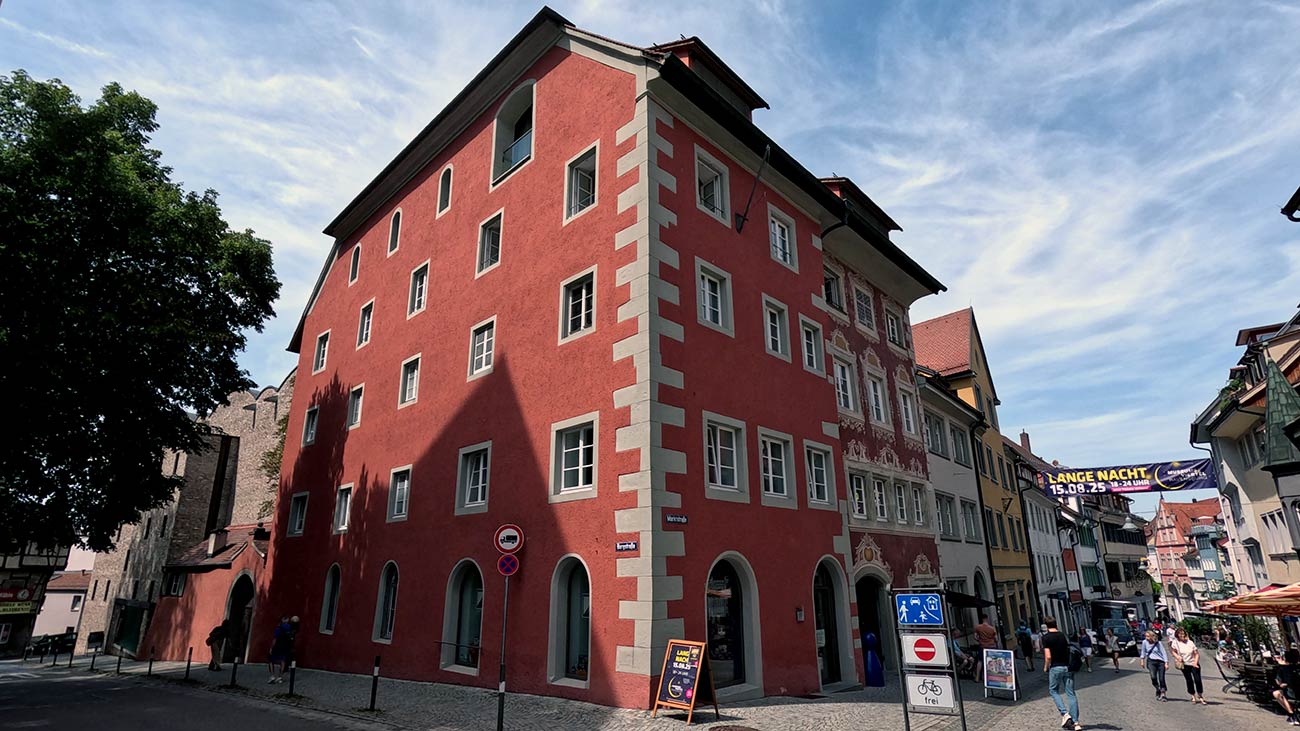
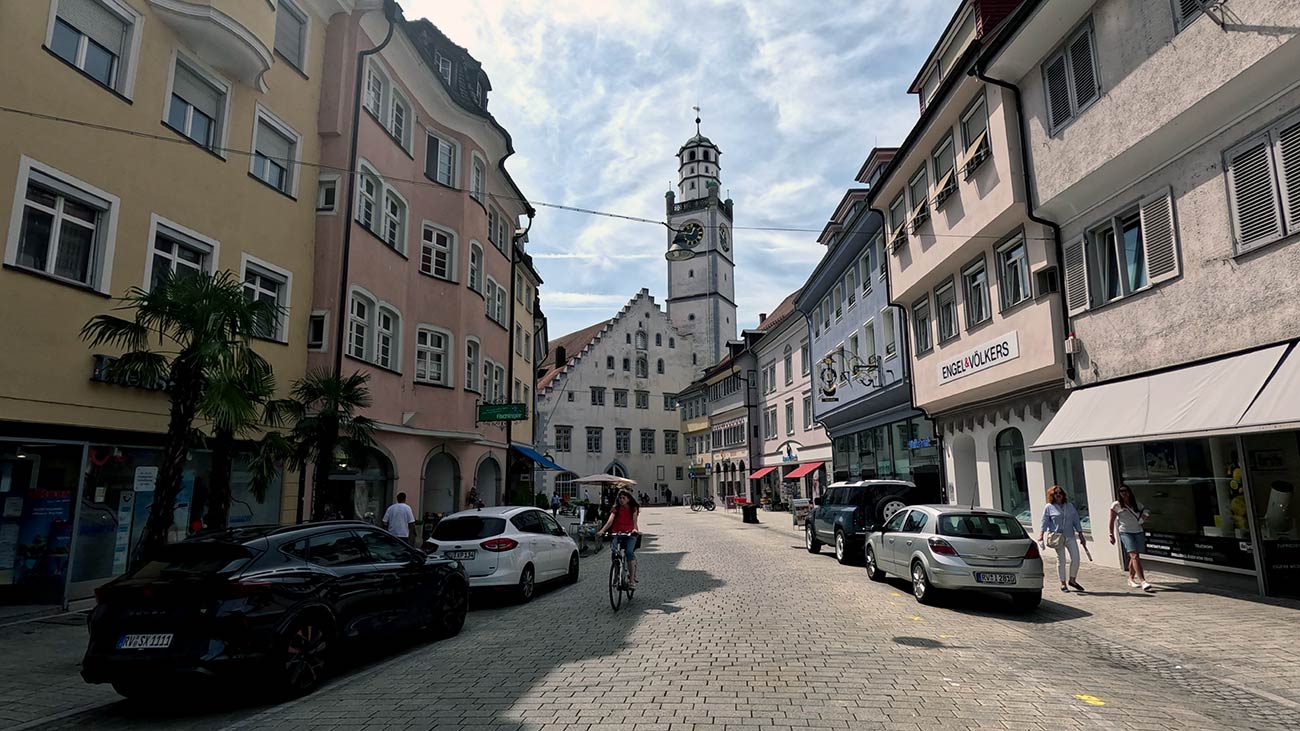
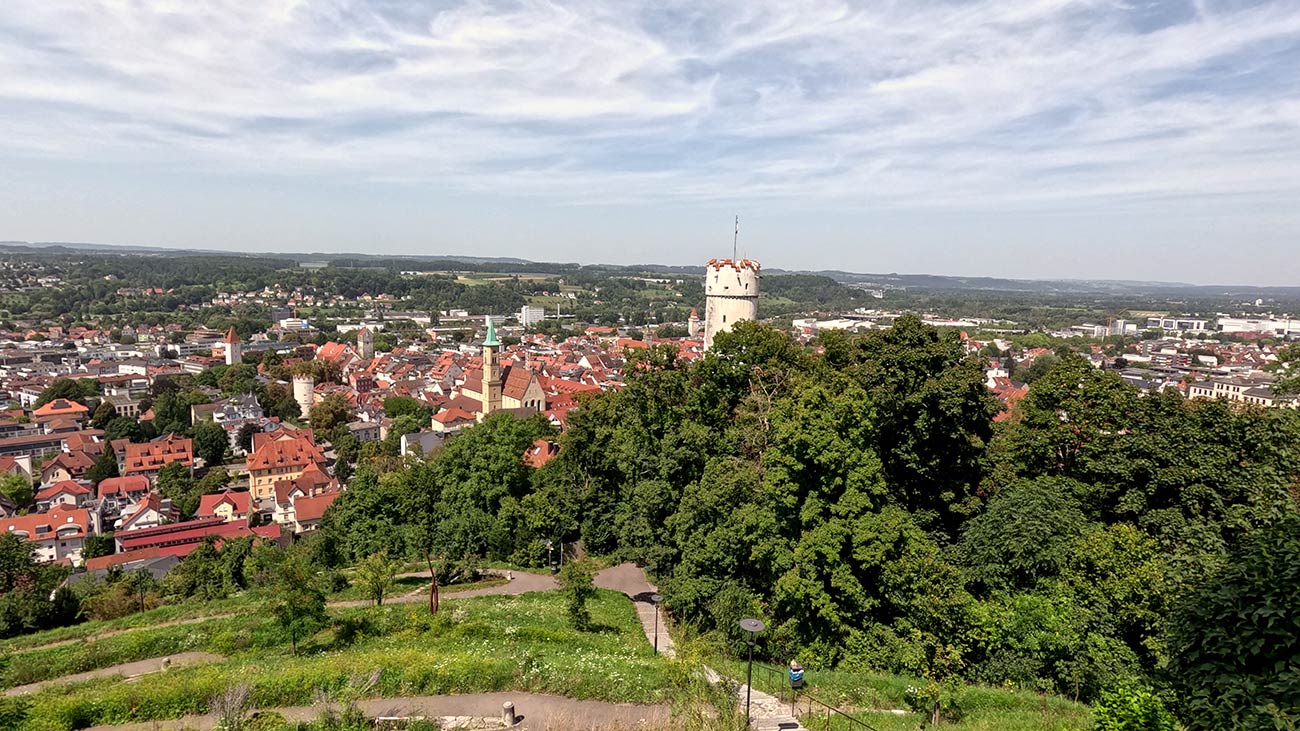
A Medieval Trading City Beneath a Hilltop Castle
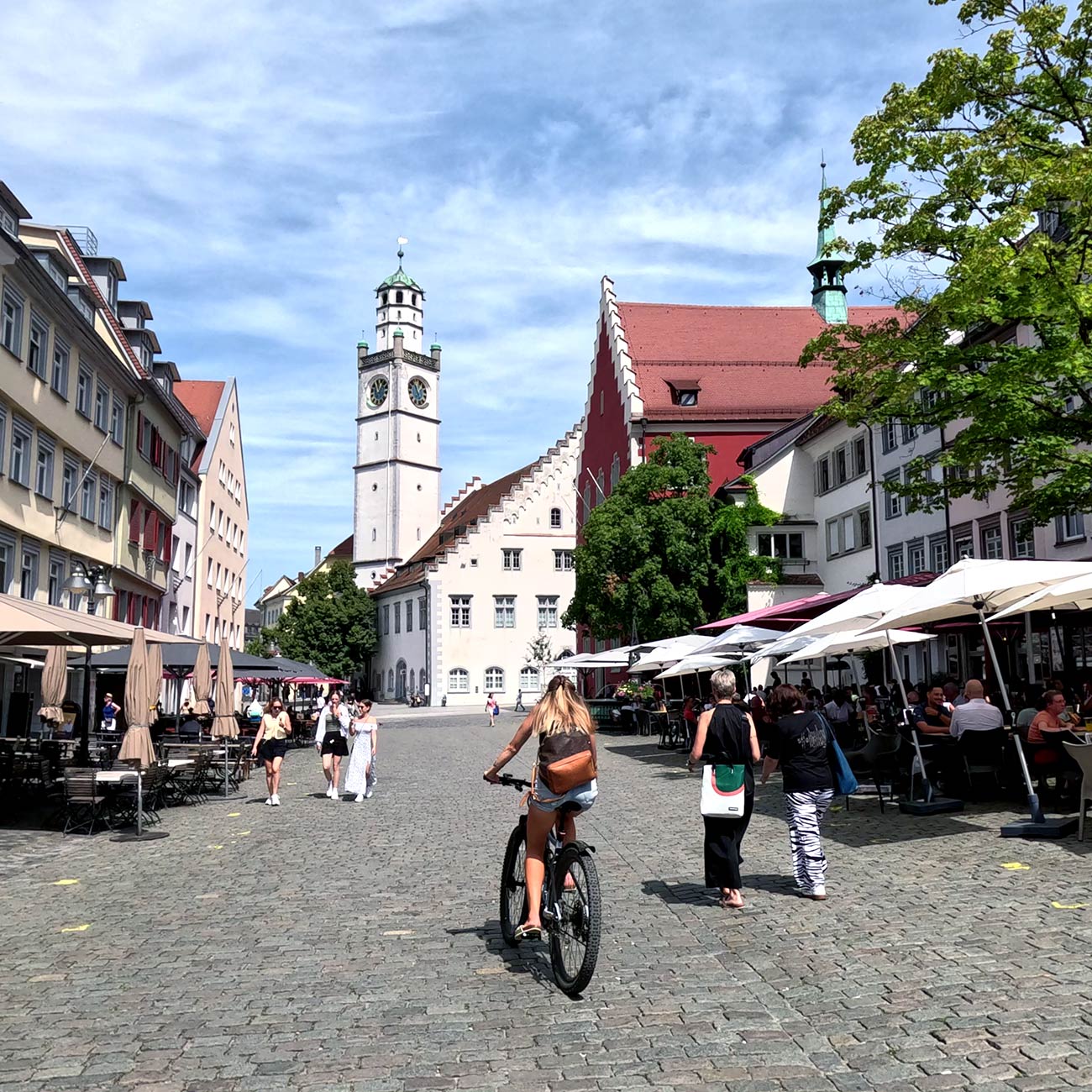
The central landmark of Ravensburg is the Blaserturm, the Trumpeter's Tower, which rises 51 metres above the central market square known as Marienplatz. The tower dates from the fourteenth century and was originally part of an inner ring of fortifications before the town outgrew its first walls. Its name comes from the tower watchman who once lived in the upper chamber and signalled the hours of the day with a trumpet, while also keeping watch for fires and approaching enemies. The 212 steps to the lookout platform can be climbed during the warmer months from April to September, and the reward is one of the finest panoramic views in Upper Swabia, looking south across the rooftops toward Lake Constance and, on clear days, all the way to the snowcapped Alps. Together with the slightly taller Mehlsack, a strikingly white round tower at the southern edge of the old town, the Blaserturm gives Ravensburg the distinctive double skyline that has become its trademark.
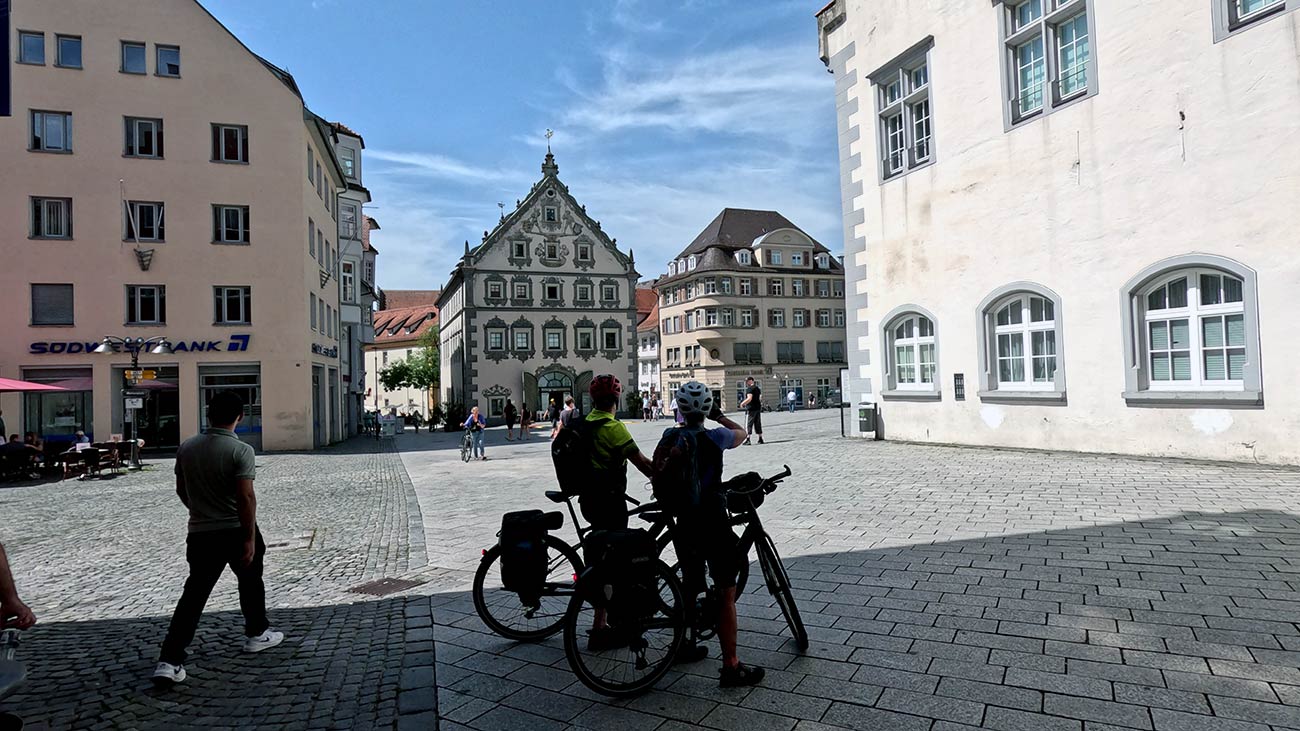
A short walk from Marienplatz lies one of the most remarkable surviving medieval residential quarters in southern Germany. The Humpis-Quartier, named after the wealthy merchant family that once lived there, is a tightly packed cluster of seven late-medieval houses arranged around an inner courtyard. Since 2009 the entire ensemble has functioned as the City Museum of Ravensburg, taking visitors on a journey through one thousand years of urban life, from the eleventh century to the present day. The architectural highlight is a glass-roofed inner courtyard linking the old houses, but the real fascination lies in the rooms themselves, including a late-medieval timber-clad merchant's parlour preserved almost entirely in its original 1435 state. The Humpis family, as co-founders of the Great Ravensburg Trading Society, helped shape the politics and economy of the imperial city for generations, and the museum tells their story alongside the broader history of the town through richly staged interiors and well-translated exhibits.
The Humpis-Quartier forms the heart of the Museum Quarter (Museumsviertel), a small cluster of four museums set within a hundred metres of each other in the upper part of the old town. The Kunstmuseum Ravensburg opened in 2013 in a remarkable new building clad in 200-year-old bricks salvaged from a demolished Belgian monastery. Designed by the Stuttgart architects Lederer Ragnarsdóttir Oei, it has the distinction of being the world's first museum built to passive house standard, with a low-energy envelope that has been widely studied by architects ever since. Its permanent collection is built around the Selinka Collection, one of the most important private collections of twentieth and twenty-first century art in southern Germany, complemented by changing exhibitions across the year.
A short walk away, the Museum Ravensburger tells a quite different and much more playful story: that of the global games and puzzles company Ravensburger AG, founded in this town in 1883 by Otto Maier. Set across three floors of a historic building, the museum's interactive exhibition uses around 1,000 square metres to trace the history of the famous blue triangle brand, from its earliest educational books and parlour games through the invention of mass-produced jigsaw puzzles to the modern world of board games and family entertainment. Hands-on stations, oversized puzzles, and original game prototypes make it an unusually engaging stop for families, while design and branding enthusiasts will recognise the museum as one of the most well-curated corporate museums in Germany. A small fourth museum, the Wirtschaftsmuseum, completes the museum quarter with displays on the regional economic history of Upper Swabia.
Above the old town, the wooded hill known as the Burgberg carries the silent ruins of Veitsburg, the castle that gave Ravensburg both its name and its earliest history. Founded in the eleventh century by the powerful Welf dynasty, the original Ravensburg castle was for several generations one of the most important seats of Welf power in southern Germany. Tradition holds that Henry the Lion, Duke of Bavaria and Saxony and one of the most influential figures of twelfth-century Europe, may have been born here around 1129. In 1178 the castle passed by inheritance to the Hohenstaufen emperor Frederick Barbarossa, after which it served for centuries as an administrative seat for the imperial bailiwick of Swabia. Over time, to avoid confusion with the growing town below, the castle came to be known by a different name, taken from its chapel dedicated to Saint Vitus, and so the medieval Ravensburg became Veitsburg, while the town below kept the original name for itself. Today only fragments of the medieval fortress survive, but the wooded plateau is reached by a steep, atmospheric serpentine path through the upper old town, and the views from the top across the rooftops and the Schussen valley make the climb one of the most memorable short walks in any Upper Swabian town.
ℹ️ Useful Links
Mobility for Cyclists
Reaching the town by train with your bike
Ravensburg can be reached from the EuroVelo 6 by a single direct rail journey from one of the main cities on the Danube cycle path. The town lies in Upper Swabia, between the Danube and Lake Constance, on the busy and frequent Ulm–Friedrichshafen line, which makes the connection both quick and well served throughout the day.
The connection
The most practical connection from the EuroVelo 6 corridor is from Ulm, where regional trains run directly to Ravensburg in around 50 minutes, with departures roughly every half hour throughout the day. The line crosses the open landscape of Upper Swabia, with farmland, small lakes, and views of the Alps in the distance on clear days. No change is needed on the direct services. Cyclists riding the Danube stretch of the route will find Ulm the natural transfer point, and the journey fits comfortably into a single travel day. Ravensburg can also be combined easily with Bad Schussenried and Bad Waldsee, both on the same line further north, for travellers wanting to spend a longer day exploring the Upper Swabian Baroque Route and its market towns.
German trains
The rail network in this part of Germany is operated mainly by Deutsche Bahn (DB), which runs most long-distance services and a large share of regional connections across the area. Alongside DB, several regional operators run local and feeder lines, particularly on secondary routes through the Swabian Alb and the Neckar valley, but they are fully integrated into the national rail system. This creates a highly coordinated transport network where transfers between different operators are seamless and require no separate tickets. The DB Navigator app is the central tool for planning journeys, checking timetables, and purchasing tickets across all services, including both regional and long-distance trains. During the main holiday season, special bike-friendly trains with expanded capacity for bicycles also run on selected regional routes, making travel with a bike across the region noticeably easier.
Taking your bike
This part of Germany is generally very bike-friendly when it comes to rail transport, especially on regional trains, which form the core of mobility for cycle touring along the Danube and Neckar corridors. Most regional services allow bicycle transport without mandatory reservation, although space is limited and operates on a first-come, first-served basis. A separate bicycle ticket is typically required during weekday morning peak hours, or it can be purchased as an affordable regional day pass, while outside peak periods and on weekends bicycle transport is often free across large parts of Baden-Württemberg. Long-distance trains such as IC and ICE require advance bicycle reservations and have limited capacity, so early planning is important for intercity travel. Overall, the system is well adapted to cycle tourism, offering strong flexibility and occasional dedicated bicycle-friendly or seasonal train services that further improve connectivity for travellers leaving the EuroVelo 6 route.
Bikes on Buses
Long-distance bus services in southern Germany are primarily operated by FlixBus, complemented by a smaller number of regional and private coach operators on selected routes. Bicycle transport is available on certain intercity connections, either via external bike racks or in the luggage compartment, but it is not consistently guaranteed across the network and depends on the specific vehicle type and route configuration. Where available, bicycle transport must be reserved in advance and capacity is limited, making it less flexible compared to rail services. As a result, buses are generally used as a secondary option for cyclists, mainly for longer-distance repositioning between major cities rather than as a core part of cycling itineraries along the Danube region. While useful in specific cases where rail connections are less convenient, they are less predictable and less standardized for bicycle transport, so advance planning is essential.
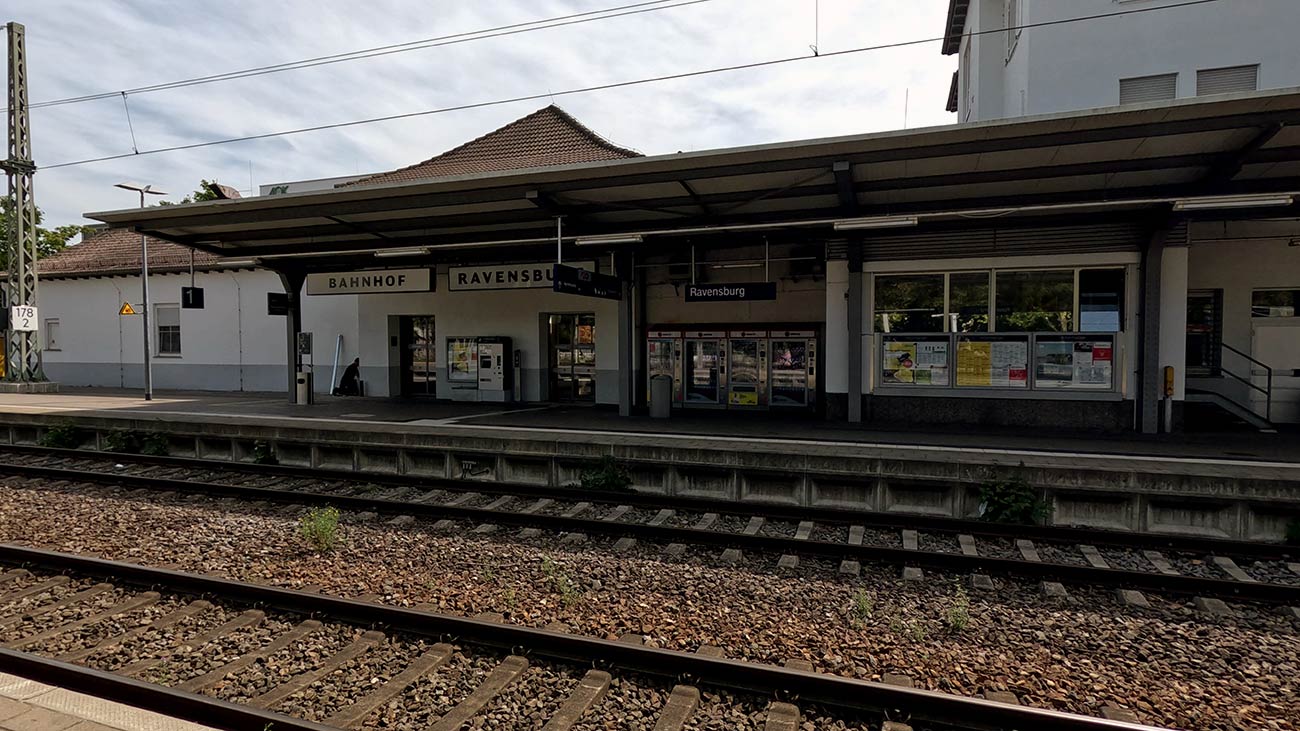
Arriving at Ravensburg Station
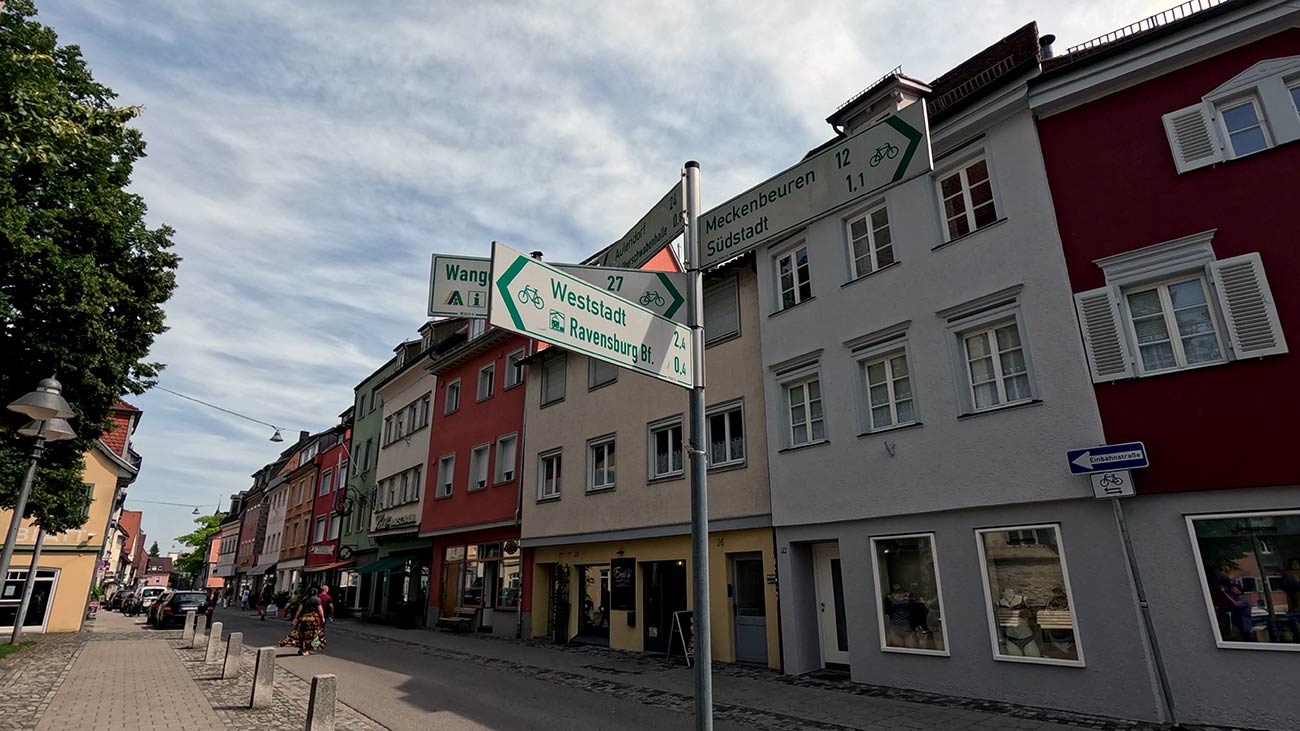
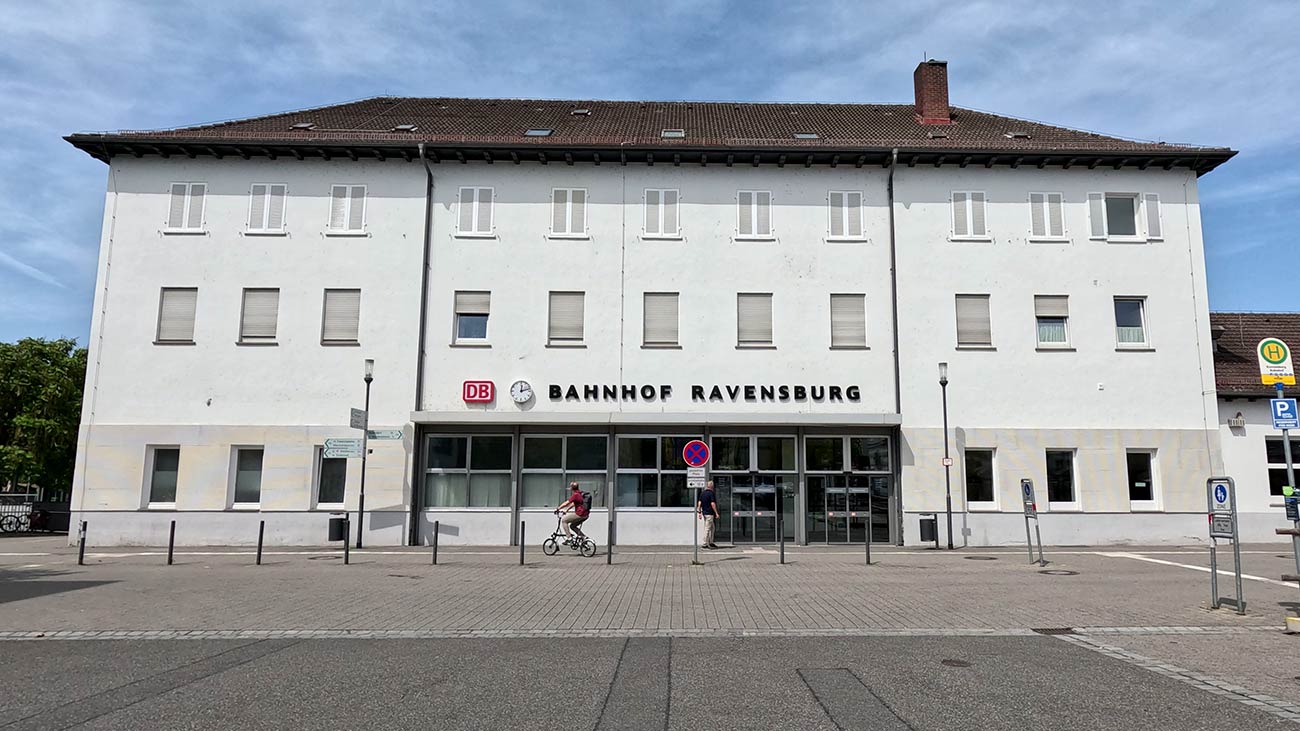
Ravensburg's railway station sits at the western edge of the old town, only a few minutes' walk or ride from Marienplatz, the Humpis-Quartier, and the rest of the Museum Quarter. The historic core is compact and largely flat, and most travellers explore on foot once they arrive, leaving their bikes at the accommodation or at the station. The climb up to Veitsburg is steep and is best done on foot, either up the serpentine path through the upper old town or via the long covered stairway. Cycling infrastructure at the station has been significantly expanded in recent years, and around 80 modern bike-and-ride racks, both open-air and covered, are available free of charge directly outside the station for shorter stays. A separate fully automated bike storage tower called the Radhaus also stands next to the station with 120 secure indoor stalls, but its access is tied to a long-term rental contract and so it is generally not useful for short-term visitors. Inside the main station hall, short-term luggage lockers can be used to drop off panniers, gear, or backpacks during a day in the city. For onward travel, the same line connects back toward Ulm and the wider Danube region, as well as south toward Lake Constance, so Ravensburg works equally well as a one-day excursion or as an overnight detour from the EuroVelo 6.