Tübingen
Reading time: 11 minutes
TÜBINGEN, BADEN-WÜRTTEMBERG, GERMANY
A Half-Timbered Town Where Science Meets the Neckar
Tucked into the gentle hills of Baden-Württemberg, Tübingen feels like a place that has quietly kept its secrets for centuries. Half-timbered houses lean over cobblestone lanes, students cycle past Gothic gables on their way to lectures, and the Neckar River curves around a slender wooded island that has become the town’s living room. There is no rush here, only the steady rhythm of a small city where the past has never quite given way to the present.
What makes Tübingen unusual is that its medieval core has survived almost completely intact. Walking through the old town today means walking through streets that look much as they did several centuries ago, with painted facades, narrow stairways, and small squares that open unexpectedly between the houses. The effect is not that of a museum, but of a town genuinely lived in, where bakeries, bookshops, and student cafés occupy buildings older than most countries.
Above it all rises Schloss Hohentübingen, the Renaissance castle that gives the town its skyline and, as it turns out, a surprising place in the history of modern science. Below the castle, wooden punting boats drift along the river, the botanic garden hides behind quiet walls, and the voice of a young university keeps the whole place from ever feeling frozen in time. For a cyclist leaving the Danube for a day or two, Tübingen offers a different kind of landscape, intimate, scholarly, and full of small discoveries.
CastleUniversityPuntsBeer
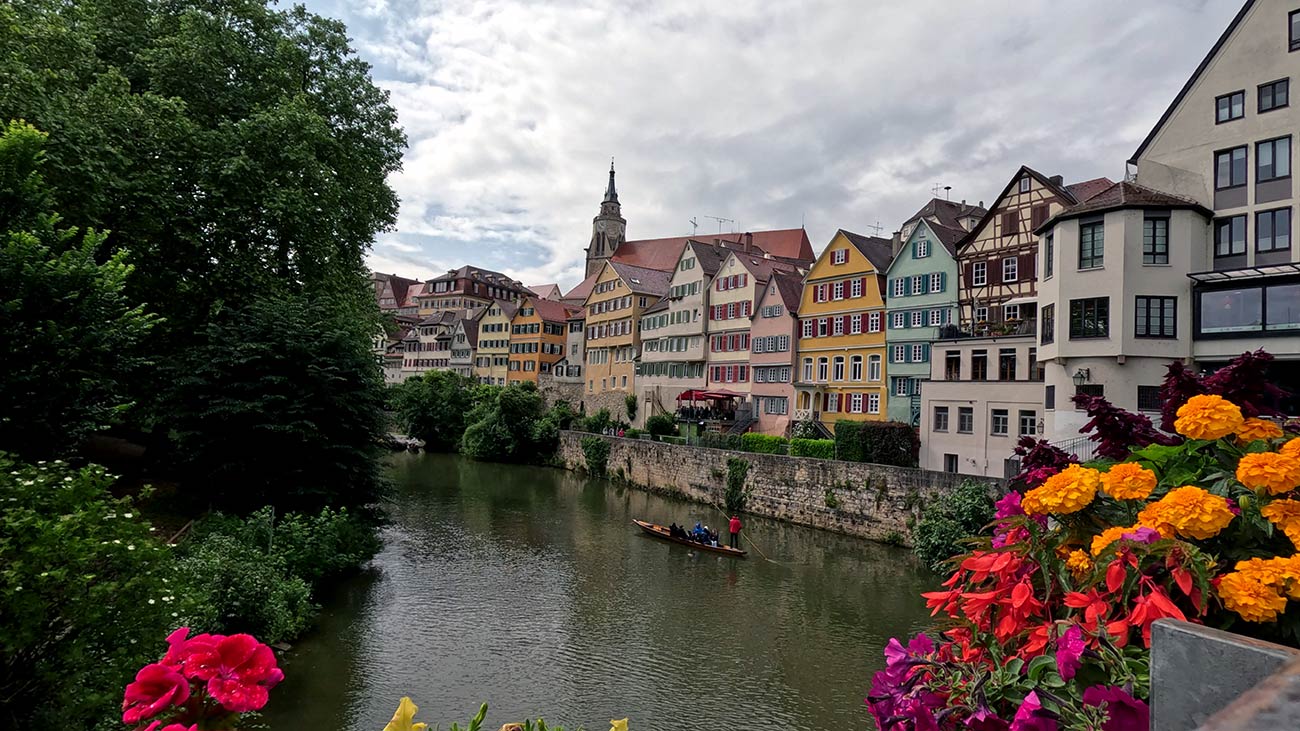
The Hölderlin Tower and the Painted Houses by the River
Few views of Tübingen are as photographed as the row of ochre, pink, and pale yellow houses reflected in the Neckar, with the round Hölderlinturm at their centre. The poet Friedrich Hölderlin, one of the most important figures in German Romantic literature, lived in this riverside tower for the last thirty-six years of his life under the care of a local carpenter’s family. Today the tower is a small but atmospheric museum dedicated to his work and his troubled later years. Even without stepping inside, the riverfront here is one of the loveliest places in town to pause, especially in late afternoon light.
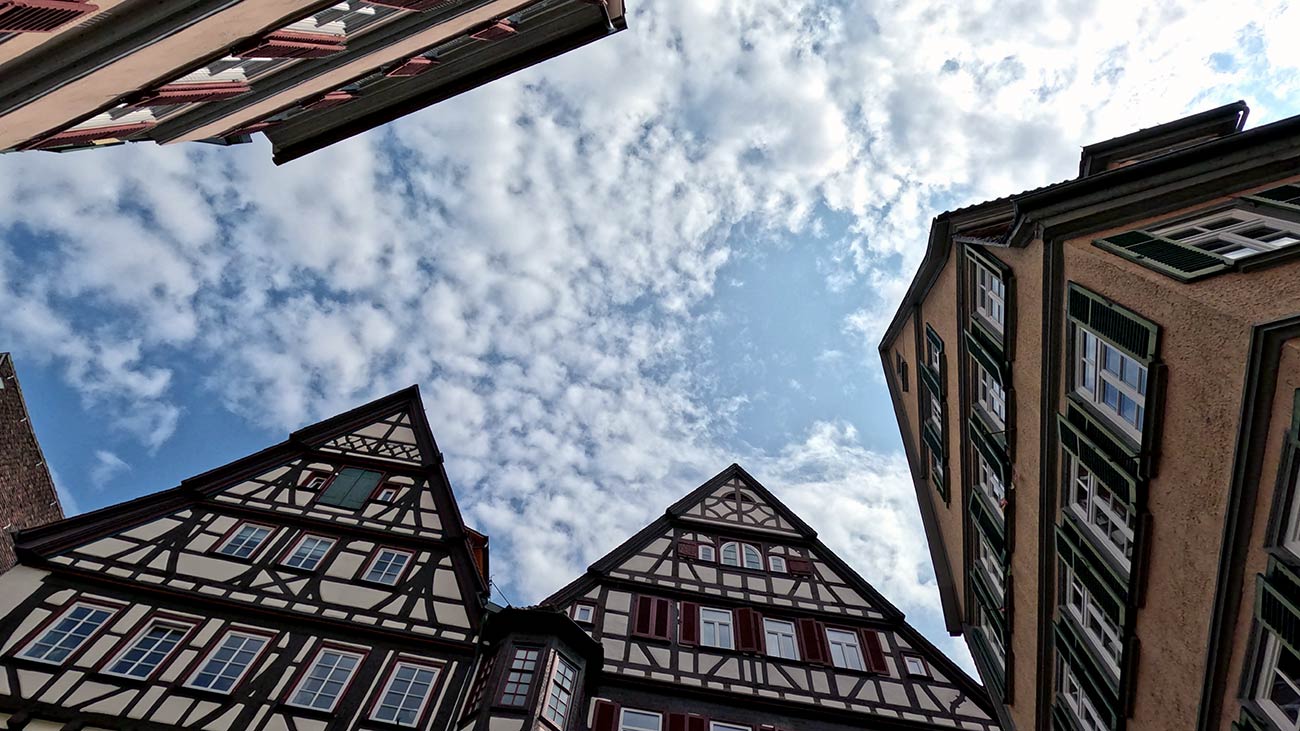
The Old Town and Its Half-Timbered Houses
Tübingen’s old town is one of the most complete medieval ensembles in southern Germany, with steep cobblestone lanes, painted facades, and ornate timber frames that have stood for centuries. Unlike many German cities, the historic core here is entirely authentic, with no postwar reconstruction breaking the rhythm of its streets. Wandering through narrow alleys like Haaggasse or climbing the stairs around Holzmarkt feels less like sightseeing and more like stepping into a living open-air gallery. Small details reward slow walking: carved beams, hand-painted signs, and hidden courtyards tucked behind heavy wooden doors.
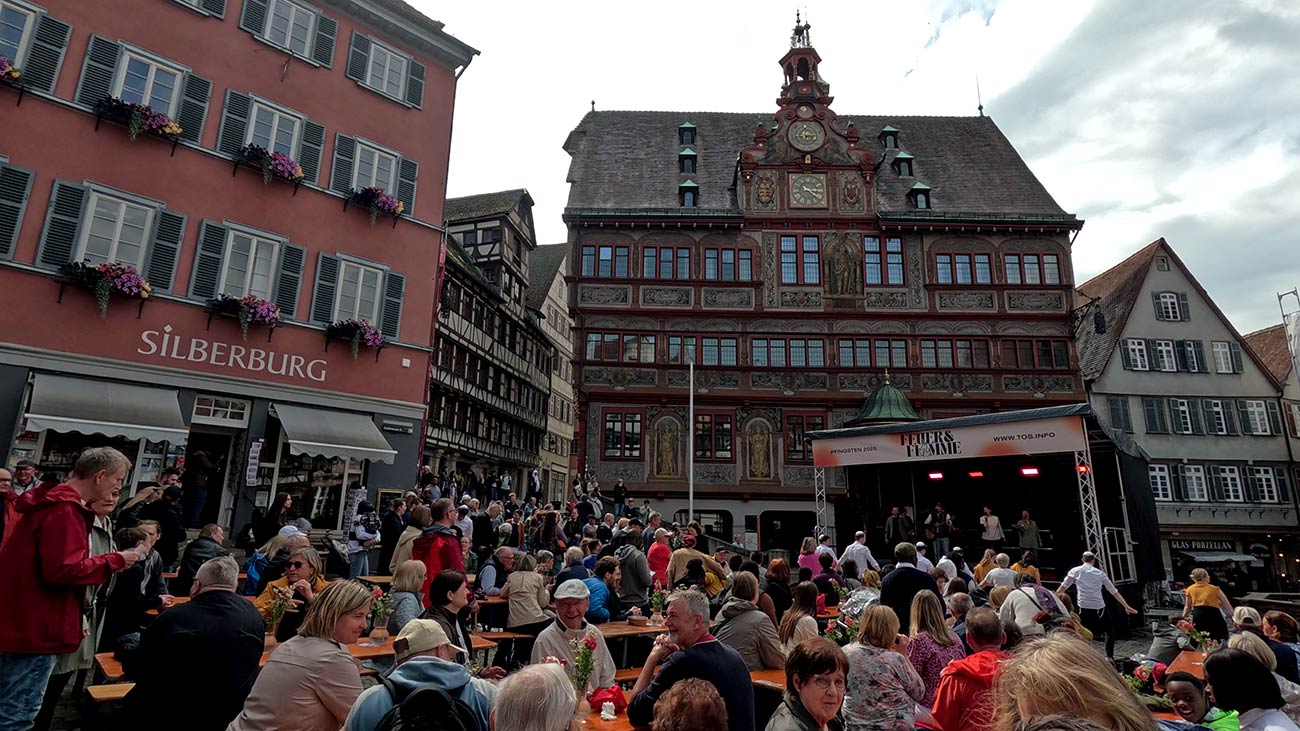
Market Square and the Rathaus
At the heart of the old town lies the Marktplatz, framed by colourful gabled houses and dominated by the richly decorated Rathaus, the town hall whose ornate astronomical clock and painted facade date back to the fifteenth century. On Mondays, Wednesdays, and Fridays, the square fills with a traditional market selling regional cheeses, breads, flowers, and produce from the surrounding countryside. The Neptune Fountain at its centre has been a meeting point for students and townspeople for generations. It is the kind of square where it is worth simply sitting on a bench and watching the small theatre of daily life unfold.
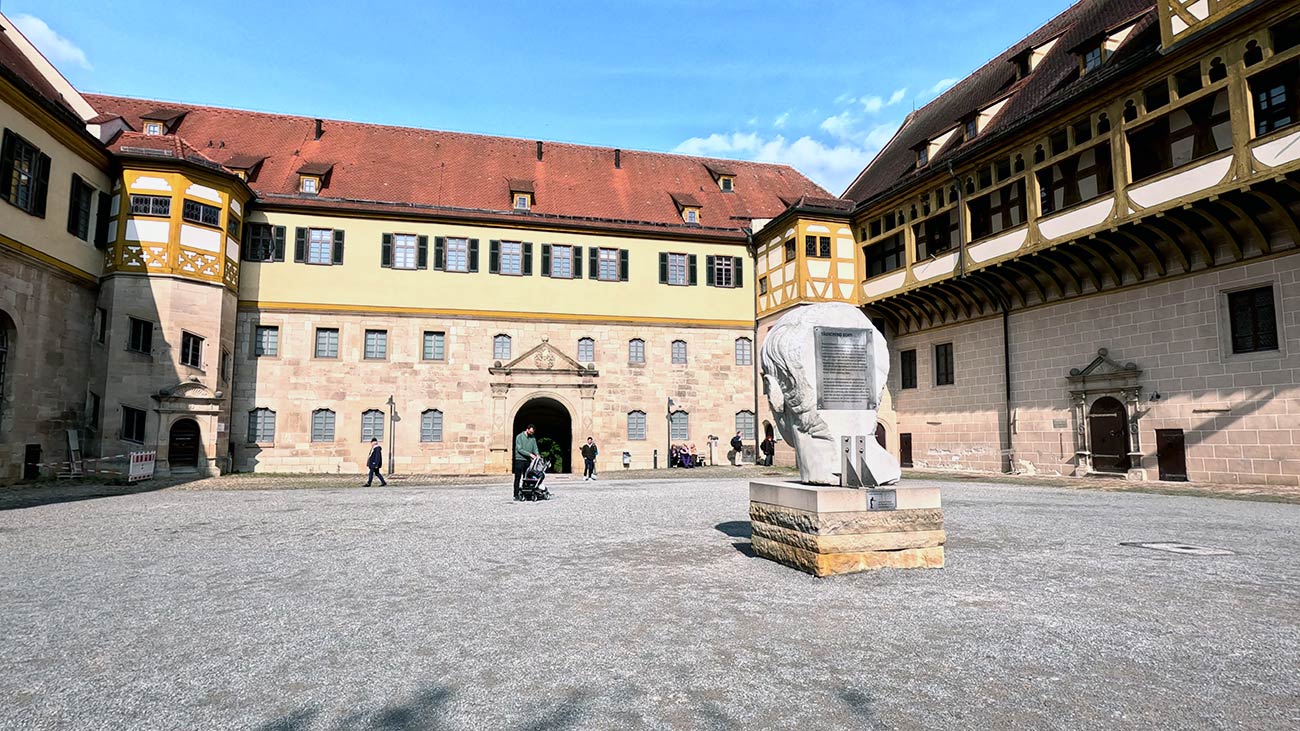
Schloss Hohentübingen and the Birthplace of DNA
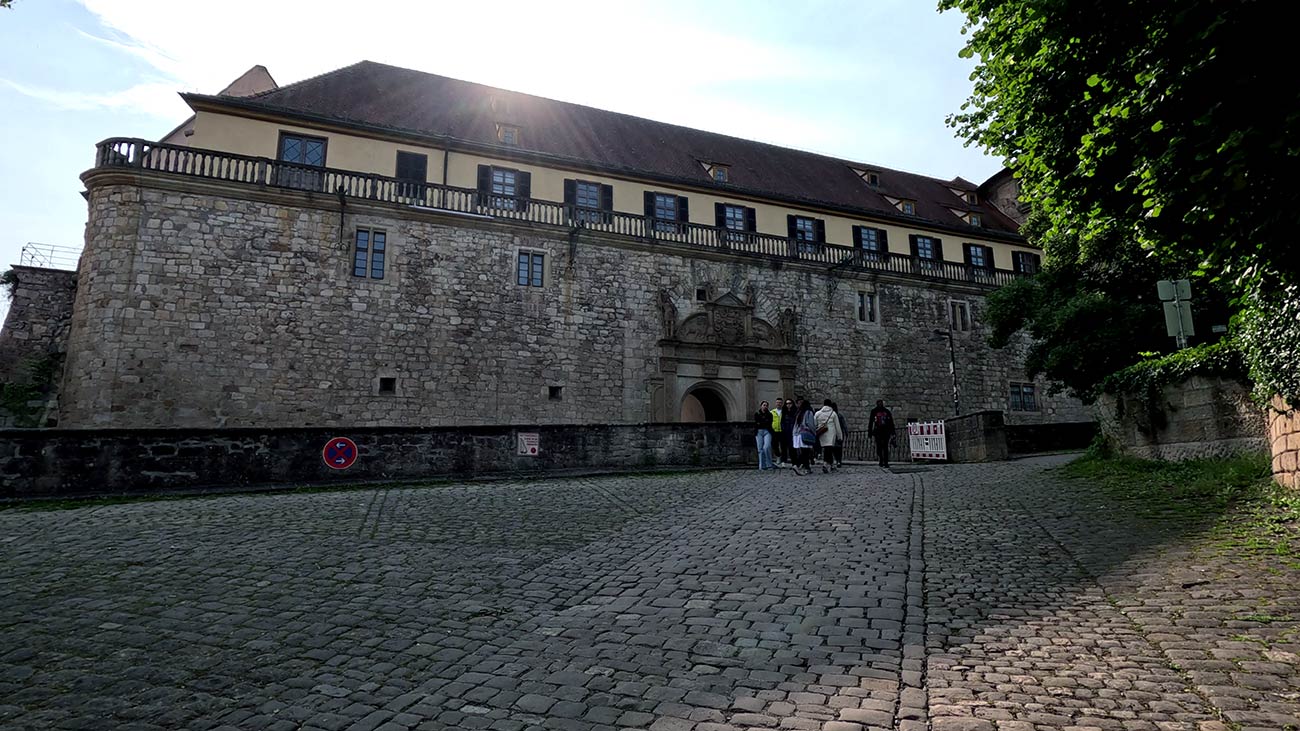
Perched on a wooded hill above the town, Schloss Hohentübingen offers sweeping views over the rooftops and out toward the Swabian Alb. The Renaissance castle houses university museums with collections ranging from ancient Egyptian artefacts to prehistoric finds, but its most remarkable claim is scientific rather than archaeological. In 1869, Swiss physician Friedrich Miescher discovered DNA, which he originally called nuclein, while working in a laboratory inside these castle walls. A large sculpture of the DNA double helix now stands in the castle courtyard, a quiet tribute to a discovery that would reshape modern biology more than a century later.
Stocherkähne, the Punts of the Neckar
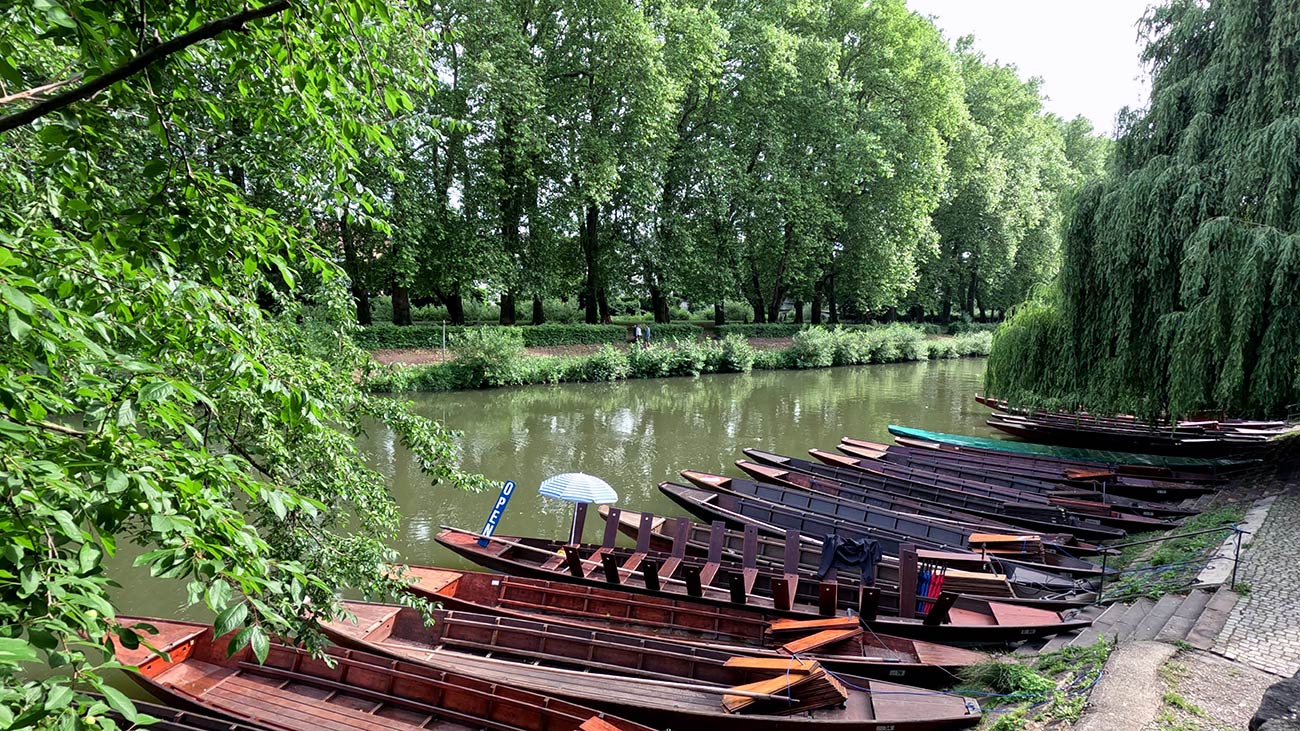
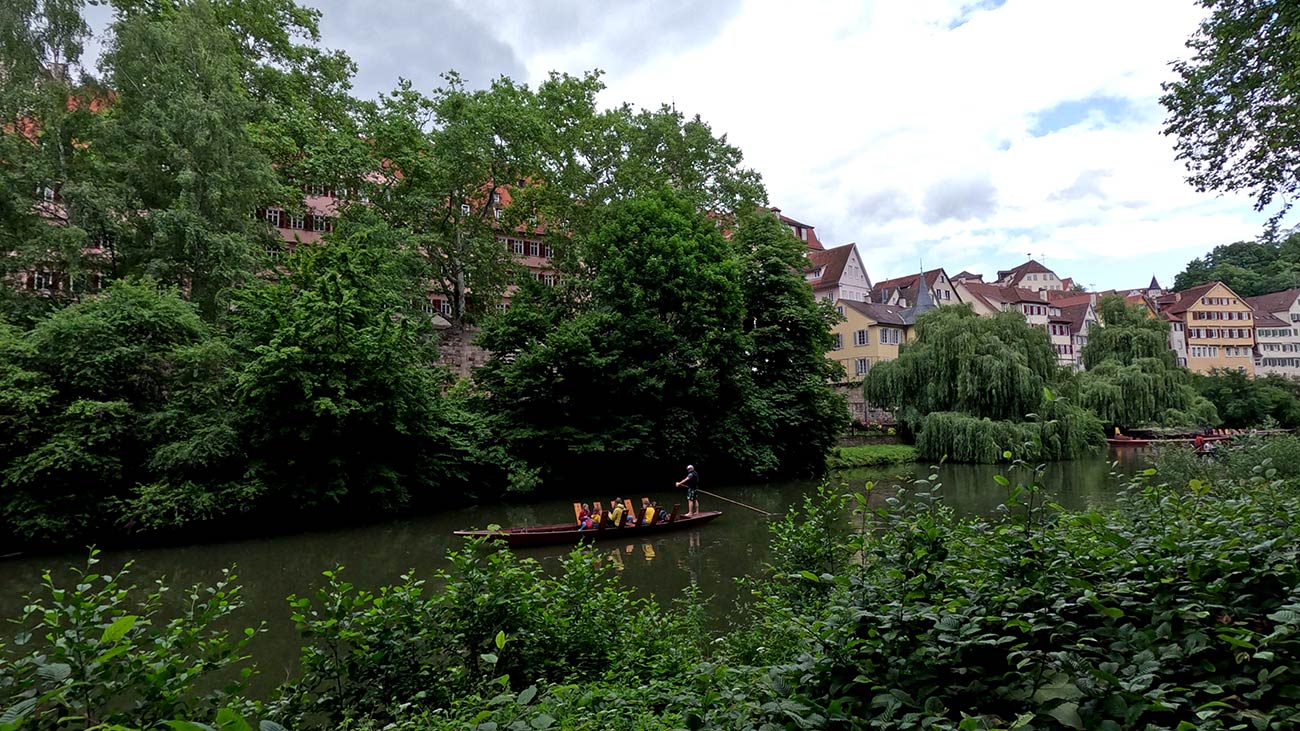
Long, flat wooden boats called Stocherkähne glide along the Neckar between the old town and the wooded Neckarinsel, propelled by students standing at the stern with a long pole. Similar in spirit to Venetian gondolas, these punts are unique to Tübingen and are largely owned and operated by the university’s student fraternities. Every year in early summer, the town holds the legendary Stocherkahnrennen, a heavily costumed punt race around the island that draws thousands of spectators. The losing team faces a peculiar punishment: a half-litre of beer followed by a shot of cod liver oil, a tradition that says a great deal about Tübingen’s particular sense of humour.
Neckarinsel and the Botanic Garden
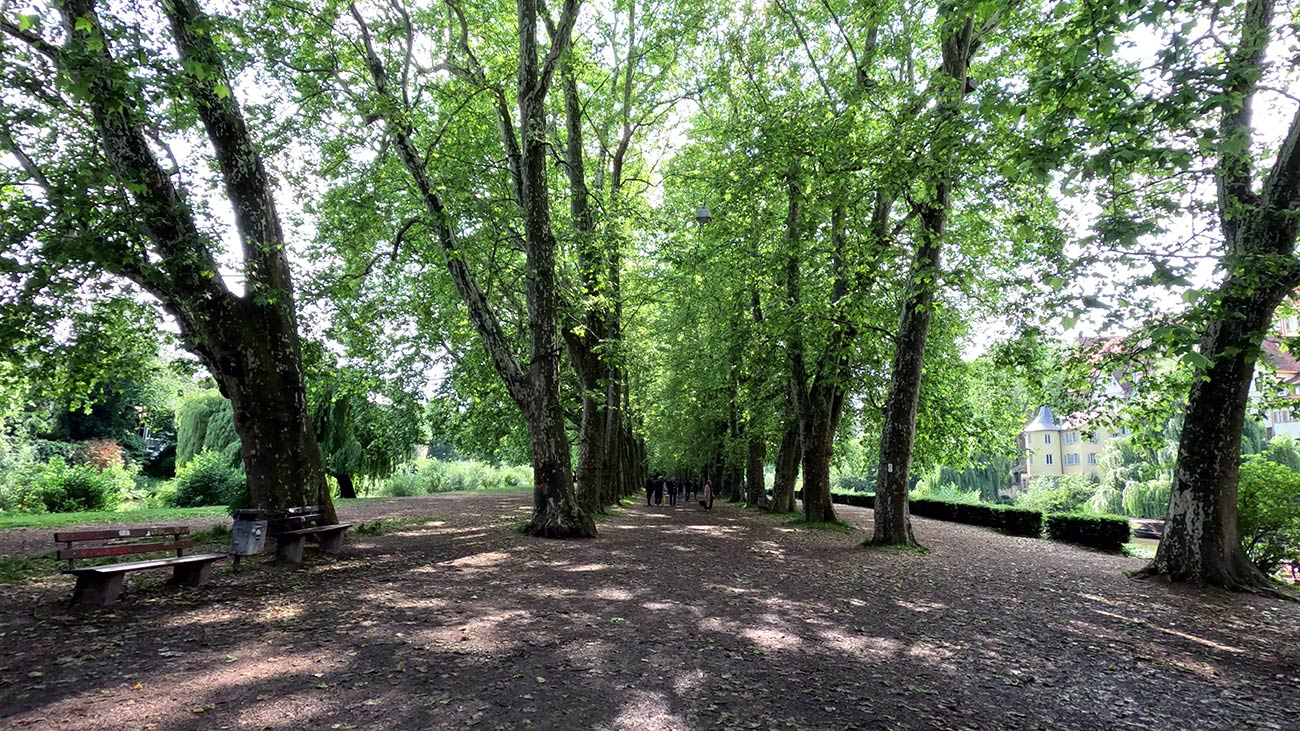
The Neckarinsel is a long, narrow island in the middle of the river, lined with tall plane trees and a single shaded promenade that has been a favourite walk since the nineteenth century. In summer it becomes an open-air stage for small concerts, picnics, and quiet reading on the grass, all to the soundtrack of punts passing on either side. A short walk away, the Botanischer Garten of the University of Tübingen offers a more structured kind of greenery, with glasshouses, an alpine garden, and themed sections covering plants from around the world. Together they make a gentle counterpoint to the density of the old town, and a welcome stretch of green for travellers arriving by bike.
ℹ️ Useful Contacts
Mobility for Cyclists
Reaching Tübingen by train with your bike
If you are riding the EuroVelo 6 along the Danube, Tübingen makes for one of the most rewarding inland detours along the route. The town sits just beyond the watershed that separates the Danube basin from the Neckar valley, close enough to reach comfortably by train with your bike and far enough to feel like a genuine change of landscape. Regional rail connections from the Danube corridor are frequent and straightforward, with a few practical options depending on where you are along the route.
The connection
The fastest connection from the EuroVelo 6 corridor is from Sigmaringen, where regional trains run directly along the scenic Swabian Alb line to Tübingen Hauptbahnhof in just under seventy minutes. The route follows the upper Danube valley before crossing into the Neckar basin, making it a pleasant journey in its own right. If you are cycling upstream along the Danube, Ulm is the first major town from which Tübingen becomes easily reachable, with trains connecting via Wendlingen and arriving at Tübingen Hauptbahnhof in around eighty minutes. Both options run frequently throughout the day and fit comfortably into a single travel day with time to settle in before evening.
German trains
The rail network in this part of Germany is operated mainly by Deutsche Bahn (DB), which runs most long-distance services and a large share of regional connections across the area. Alongside DB, several regional operators run local and feeder lines, particularly on secondary routes through the Swabian Alb and the Neckar valley, but they are fully integrated into the national rail system. This creates a highly coordinated transport network where transfers between different operators are seamless and require no separate tickets. The DB Navigator app is the central tool for planning journeys, checking timetables, and purchasing tickets across all services, including both regional and long-distance trains. During the main holiday season, special bike-friendly trains with expanded capacity for bicycles also run on selected regional routes, making travel with a bike across the region noticeably easier.
Taking your bike
This part of Germany is generally very bike-friendly when it comes to rail transport, especially on regional trains, which form the core of mobility for cycle touring along the Danube and Neckar corridors. Most regional services allow bicycle transport without mandatory reservation, although space is limited and operates on a first-come, first-served basis. A separate bicycle ticket is typically required during weekday morning peak hours, or it can be purchased as an affordable regional day pass, while outside peak periods and on weekends bicycle transport is often free across large parts of Baden-Württemberg. Long-distance trains such as IC and ICE require advance bicycle reservations and have limited capacity, so early planning is important for intercity travel. Overall, the system is well adapted to cycle tourism, offering strong flexibility and occasional dedicated bicycle-friendly or seasonal train services that further improve connectivity for travellers leaving the EuroVelo 6 route.
Bikes on Buses
Long-distance bus services in southern Germany are primarily operated by FlixBus, complemented by a smaller number of regional and private coach operators on selected routes. Bicycle transport is available on certain intercity connections, either via external bike racks or in the luggage compartment, but it is not consistently guaranteed across the network and depends on the specific vehicle type and route configuration. Where available, bicycle transport must be reserved in advance and capacity is limited, making it less flexible compared to rail services. The central bus station, which serves FlixBus and other long-distance coach operators, is located directly in front of Tübingen Hauptbahnhof, making transfers between train and bus straightforward.
As a result, buses are generally used as a secondary option for cyclists, mainly for longer-distance repositioning between major cities rather than as a core part of cycling itineraries along the Danube region. While useful in specific cases where rail connections are less convenient, they are less predictable and less standardized for bicycle transport, so advance planning is essential.
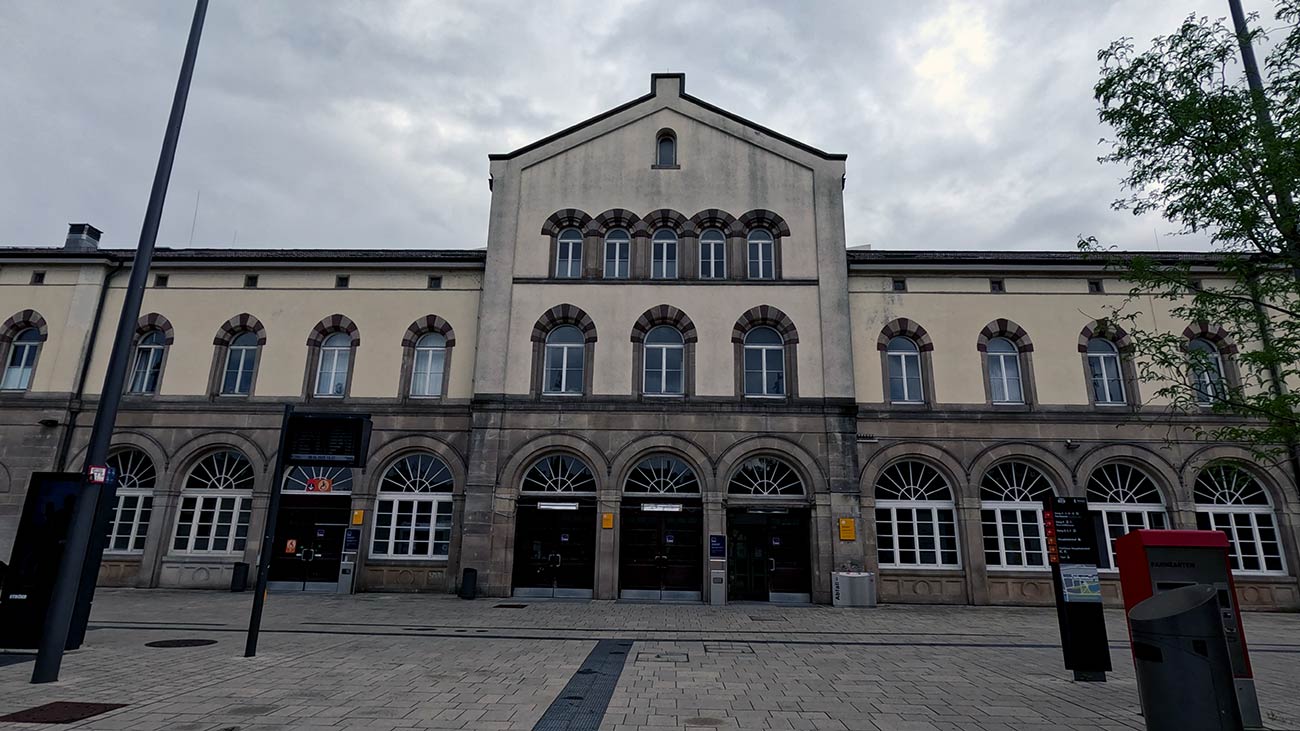
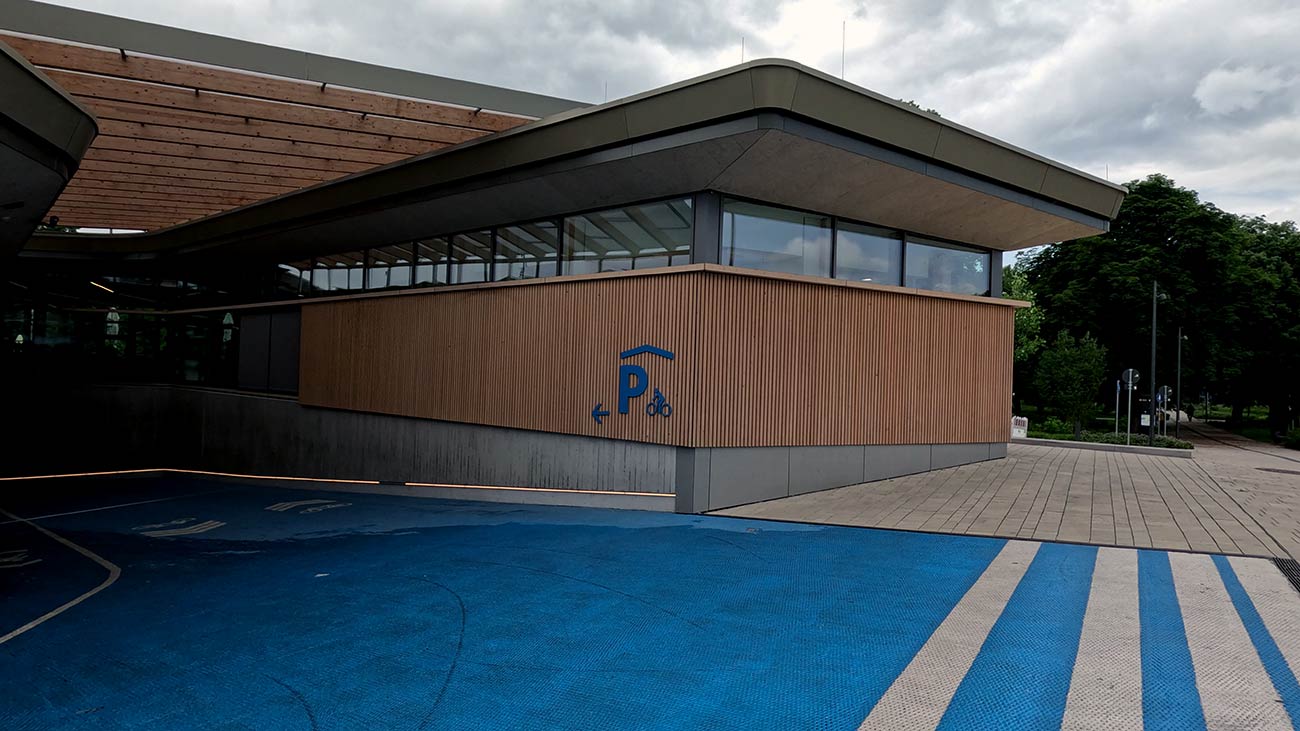
Tübingen Hauptbahnhof
Tübingen’s main station sits just south of the Neckar, only a few minutes’ ride from the old town across one of the river bridges. The historic centre, the riverfront, and the climb up to Schloss Hohentübingen are all easily reachable by bike, and the compact scale of the town means most travellers leave their bicycles parked at the accommodation and explore on foot. Cycling infrastructure around the station is excellent, with a large bike parking facility offering around 1,100 spaces directly at the Hauptbahnhof, including covered and secured options for longer stays. The immediate area around the station is flat and bike-friendly, making the transition from train to town effortless. For onward travel, the same station connects back toward Sigmaringen, Ulm, and the wider Danube region, so Tübingen works equally well as an overnight detour or a longer base for exploring the surrounding countryside.