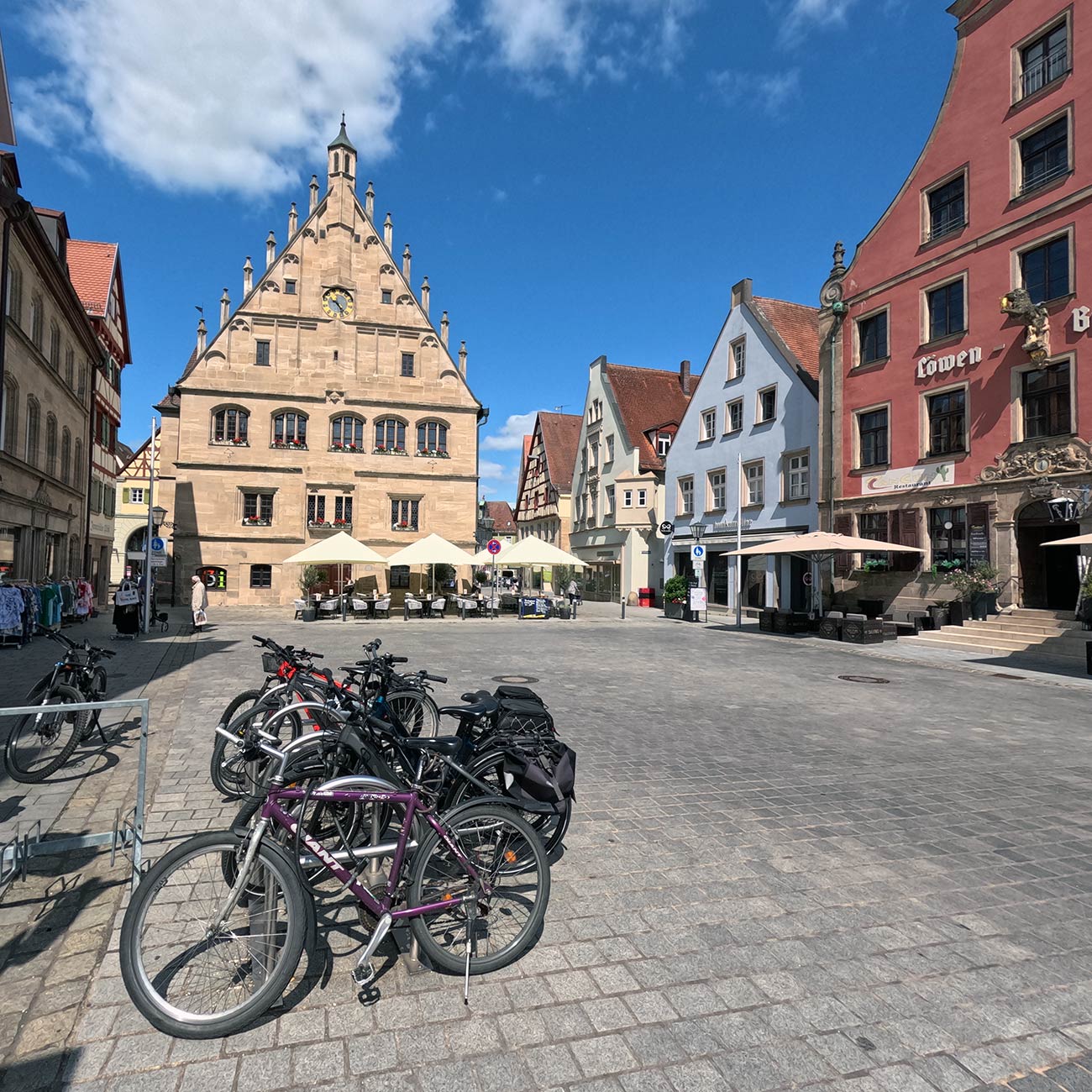
Weissenburg in Bayern
Reading time: 12 minutes
WEISSENBURG IN BAYERN, BAVARIA, GERMANY
A Roman Frontier Town Wrapped in Half-Timber
Some towns wear their history quietly. Weissenburg, in the gentle hills of Middle Franconia between the Altmühl Valley and the Franconian Lake District, is not one of them. Roman gateways stand at the edge of the modern streets, the foundations of a thermal bathhouse from the second century lie under a protective hall, and a small museum at the heart of the old town holds one of the most extraordinary Roman finds ever discovered north of the Alps. To walk through Weissenburg is to step through several layers of European history at once, and to find that each of them has been carefully preserved without ever feeling sealed behind glass.
For about a hundred and fifty years, this was the northern edge of the Roman Empire. The frontier known as the Raetian Limes ran just north of the town, and a cavalry fort called Biriciana stood here from around 100 to 250 AD, garrisoned by five hundred horsemen and surrounded by a small civilian settlement of inns, workshops, and bathhouses. When the empire eventually withdrew to the Danube, the fort fell into ruin and grass slowly covered the foundations. Centuries later, a medieval town grew up beside the old Roman remains and went on to become a free imperial city, answering only to the emperor for almost five hundred years.
For cyclists exploring the eastern stretches of the EuroVelo 6 along the Danube, Weissenburg offers a rare combination: a Roman site, a complete medieval old town, and a Renaissance fortress on a hill above, all within walking distance of each other. The town is small enough to be explored slowly on foot, surrounded by an almost fully intact ring of walls and moats, and connected to the Danube cycle path by a short rail journey from Ingolstadt. It is one of the most rewarding cultural detours along the entire German Danube.
Roman eraOld townRoman SpaMuseums
A Roman Frontier, an Imperial City, and a Hilltop Fortress
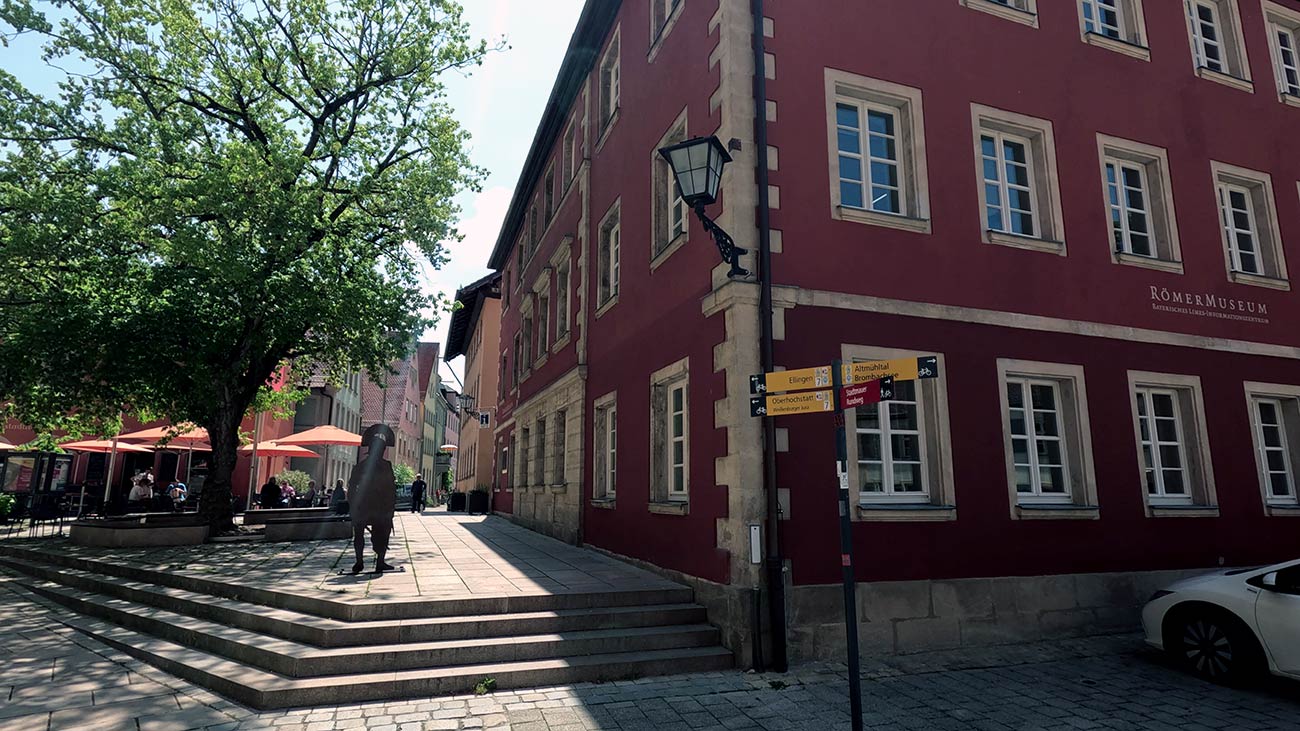
The natural starting point in Weissenburg is the Roman Museum, housed in a former half-timbered building near the centre of the old town. The museum brings together civilian and military artefacts from the wider Limes region, but its centrepiece is one of the most remarkable Roman finds ever made in Germany: the so-called Roman Treasure, a hoard of one hundred and fourteen bronze objects unearthed in 1979 by a local resident enlarging his asparagus bed. The collection includes three uncannily expressive equestrian masks, seventeen finely worked statuettes of Roman gods and goddesses, silver votive tablets, and a wide range of everyday objects from wine jugs to an iron folding chair. The presentation is intimate and beautifully lit, and even visitors who would not normally seek out antiquities tend to leave with the sense of having met something genuinely extraordinary.
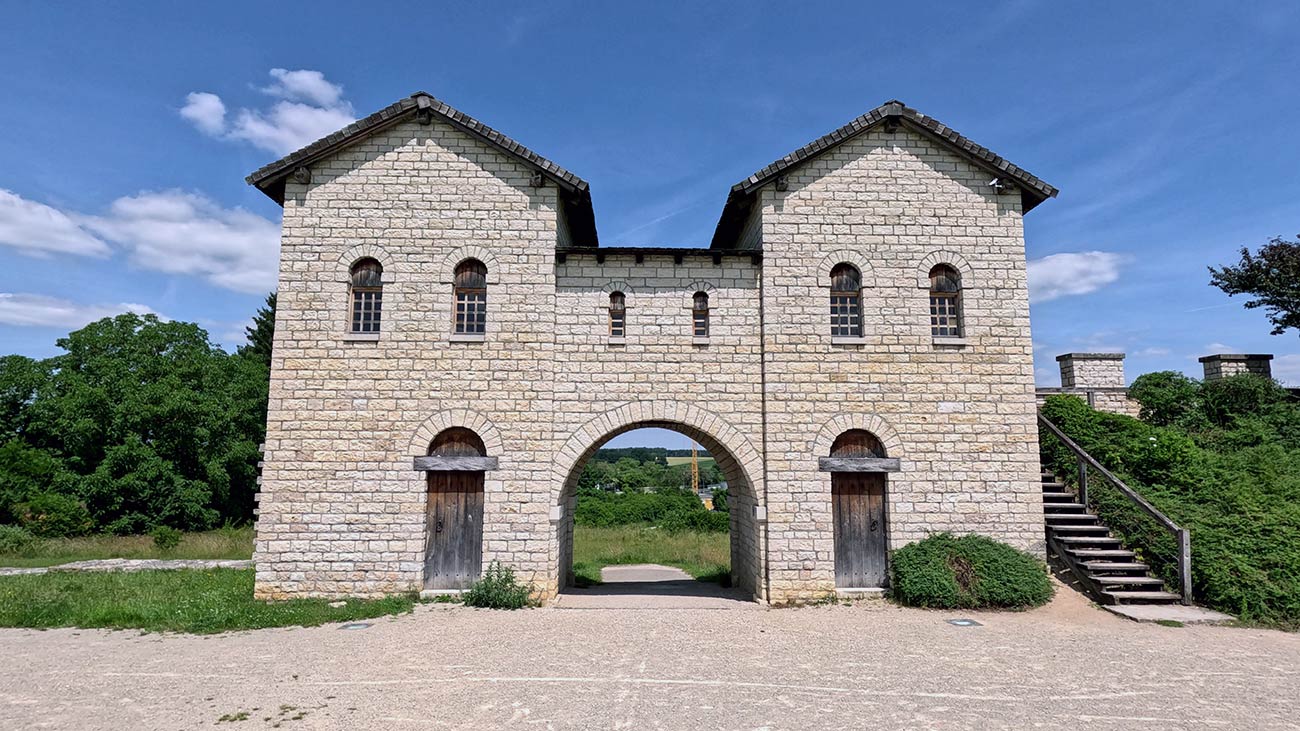
A short walk from the museum lies the second piece of Weissenburg's Roman story, the Castrum Biriciana, the reconstructed cavalry fort that gave the place its earliest identity. The fort itself existed from around 100 to 250 AD, garrisoned by a five-hundred-man cavalry unit drawn from across the empire, including soldiers of Celtic and Spanish origin. Today an archaeological park preserves the outline of the original walls, and the reconstructed North Gate, the porta decumana, has been rebuilt to its original scale, complete with wooden battlements and stone foundations. Standing in the gateway and looking out over the open ground beyond gives a surprisingly clear sense of what these isolated frontier garrisons must have felt like at the edge of an unknown continent. Every couple of years the site hosts a Roman festival with re-enactors, workshops, and demonstrations, but even on quiet days it is one of the most evocative Roman places in southern Germany.
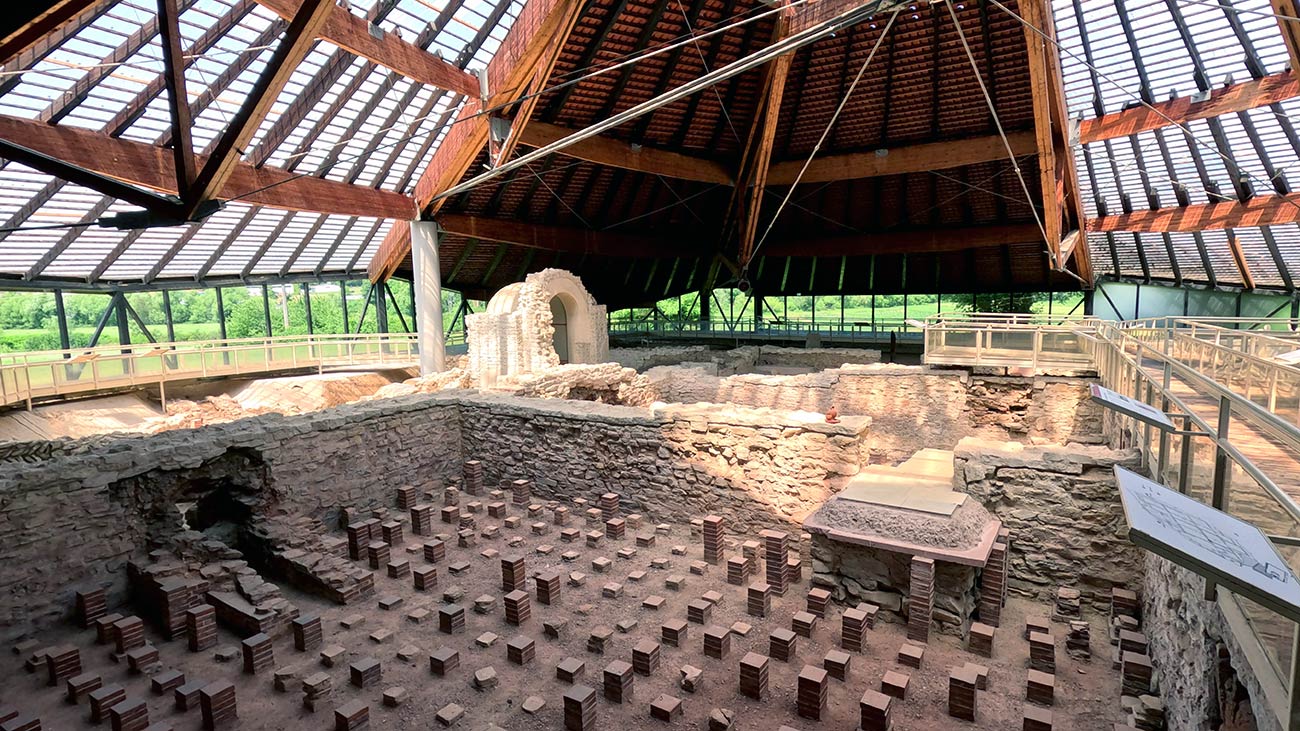
Between the museum and the fort, a third site rounds out the Roman trio. The Roman Baths, set just outside the old town in a covered protective hall, preserve the unusually well-preserved foundations of the public bathhouse that once served the soldiers of Biriciana and the civilians of the surrounding settlement. The layout of changing rooms, warm pools, hot pools, and underfloor heating systems is clearly visible, and information panels and short videos explain how the daily ritual of the Roman bath worked in practice. After centuries of grass and earth, the small thermal complex feels both modest and curiously modern, and it makes a fitting third stop in a half-day Roman tour of the town.
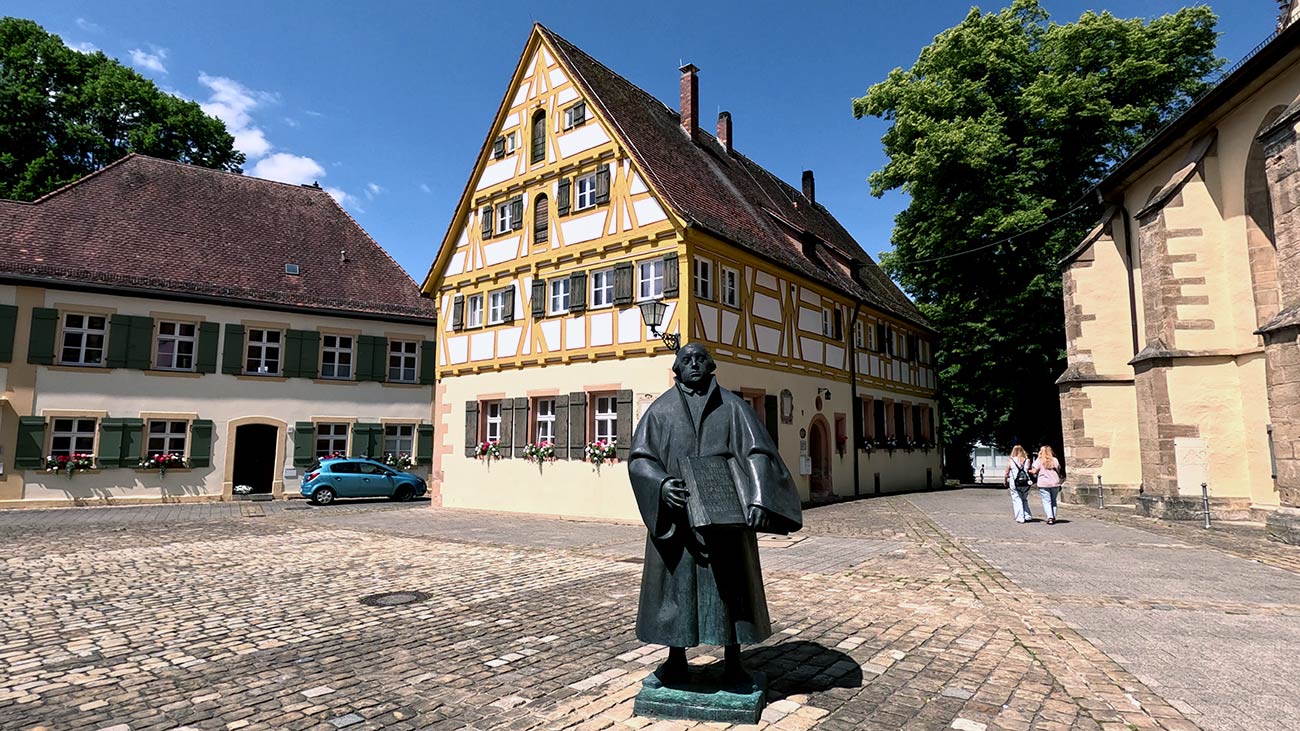
The medieval and early modern layers of Weissenburg are no less complete. The name first appears in 867 as the Carolingian royal court of Uuizzinburg, and in 1338 the town was granted the status of a free imperial city, a privilege it kept until 1802. The old town today is wrapped in an almost fully intact ring of walls, gates, and moats, and a complete circuit on foot takes only about an hour. The most distinctive of the surviving gates is the Ellingen Gate, with its ornate carved coats of arms and its setting beside the only stretch of moat still filled with water. Inside the walls, the streets curve between richly painted half-timbered houses, ironwork shop signs hang above doorways in the shapes of pretzels, crowns, roses, and bells, and the Gothic Old Town Hall of the late fifteenth century dominates the Market Square. A short walk away, the small Imperial City Museum brings together everyday objects, documents, and treasures that trace Weissenburg's long centuries of autonomy under the emperor.
Above the town, on the highest hill in the southern Franconian Alps, stands the Wülzburg Fortress, one of the best-preserved Renaissance fortresses in Germany. Built between 1588 and 1608 by Margrave Georg Friedrich the Elder of Brandenburg-Ansbach, the fortress is laid out as a five-pointed star with bastioned corners, the most advanced military design of its day. Despite its formidable appearance, its actual military value was always doubtful, and over the centuries it served instead as a prison, a prisoner-of-war camp, and after 1945 as a refugee camp that housed more than ten thousand displaced people. Today the inner courtyard is open daily, with guided tours of the interior from May to October. Highlights include a 143-metre-deep well, classicist rainwater cisterns added under King Ludwig I, and panoramic views from the Kaltes Eck bastion across the town and the surrounding countryside. The fortress is also an important sanctuary for bats, whose colonies hibernate each winter in the same vaulted cellars where prisoners once languished.
The town's living culture is the final layer. A handful of small museums, including a charming Pharmacy Museum with antique pill mortars, opium scales, and old prescriptions, sit alongside lively traditional inns serving Franconian classics like Schäufele and home-brewed beers. Local specialities range from elderberry preserves and Altmühl Valley pasta to handcrafted Elisen gingerbread, baked locally with a high proportion of nuts and a closely guarded mix of spices, available in the run-up to Christmas each year. After a day spent moving between Roman foundations, half-timbered streets, and a star-shaped Renaissance fortress, an evening in one of Weissenburg's old taverns is one of the most genuinely Franconian experiences along the entire Danube corridor.
ℹ️ Useful Links
Mobility for Cyclists
Reaching the town by train with your bike
If you are riding the EuroVelo 6 along the Danube, Weissenburg makes for one of the most layered cultural detours within easy reach of the route. The town lies north of the Danube in the gentle landscape of Middle Franconia, just a short rail journey from the river corridor, and the connection itself is straightforward enough to fit into half a travel day.
The connection
The most practical connection from the EuroVelo 6 corridor is from Ingolstadt, where regional trains run directly to Weissenburg in Bayern in around one hour, with no change required on the fastest services. The line crosses the open landscape between the Danube valley and the southern edge of the Franconian Alps, and trains run regularly enough throughout the day to make the trip easy to organise. For cyclists travelling east along the Danube, Ingolstadt is the natural transfer point, and the total time door-to-door allows for an unhurried morning departure and a full afternoon and evening in the town. For longer stays, the same line offers an easy return back toward Ingolstadt and the wider Danube corridor.
German trains
The rail network in this part of Germany is operated mainly by Deutsche Bahn (DB), which runs most long-distance services and a large share of regional connections across the area. Alongside DB, several regional operators run local and feeder lines, particularly on secondary routes through the Swabian Alb and the Neckar valley, but they are fully integrated into the national rail system. This creates a highly coordinated transport network where transfers between different operators are seamless and require no separate tickets. The DB Navigator app is the central tool for planning journeys, checking timetables, and purchasing tickets across all services, including both regional and long-distance trains. During the main holiday season, special bike-friendly trains with expanded capacity for bicycles also run on selected regional routes, making travel with a bike across the region noticeably easier.
Taking your bike
This part of Germany is generally very bike-friendly when it comes to rail transport, especially on regional trains, which form the core of mobility for cycle touring along the Danube and Neckar corridors. Most regional services allow bicycle transport without mandatory reservation, although space is limited and operates on a first-come, first-served basis. A separate bicycle ticket is typically required during weekday morning peak hours, or it can be purchased as an affordable regional day pass, while outside peak periods and on weekends bicycle transport is often free across large parts of Baden-Württemberg. Long-distance trains such as IC and ICE require advance bicycle reservations and have limited capacity, so early planning is important for intercity travel. Overall, the system is well adapted to cycle tourism, offering strong flexibility and occasional dedicated bicycle-friendly or seasonal train services that further improve connectivity for travellers leaving the EuroVelo 6 route.
Bikes on Buses
Long-distance bus services in southern Germany are primarily operated by FlixBus, complemented by a smaller number of regional and private coach operators on selected routes. Bicycle transport is available on certain intercity connections, either via external bike racks or in the luggage compartment, but it is not consistently guaranteed across the network and depends on the specific vehicle type and route configuration. Where available, bicycle transport must be reserved in advance and capacity is limited, making it less flexible compared to rail services. As a result, buses are generally used as a secondary option for cyclists, mainly for longer-distance repositioning between major cities rather than as a core part of cycling itineraries along the Danube region. While useful in specific cases where rail connections are less convenient, they are less predictable and less standardized for bicycle transport, so advance planning is essential.
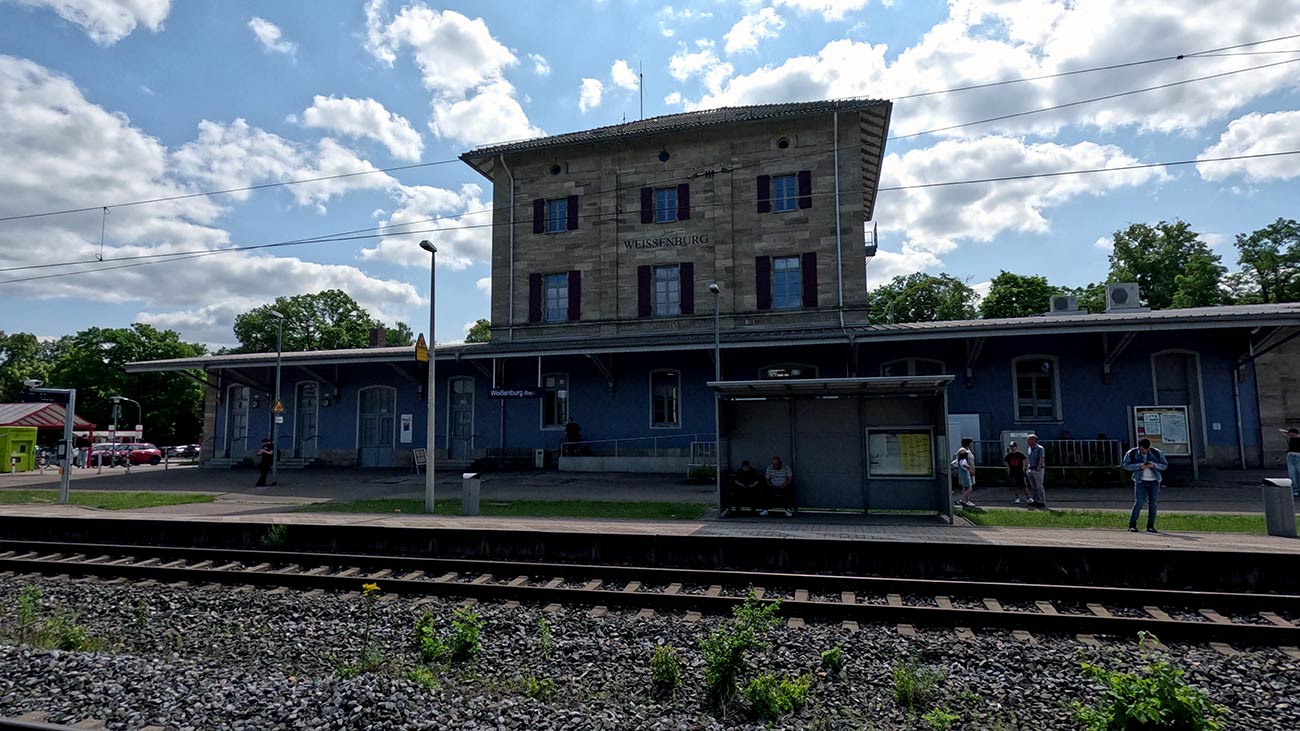
Arriving at Weissenburg (Bay) Station
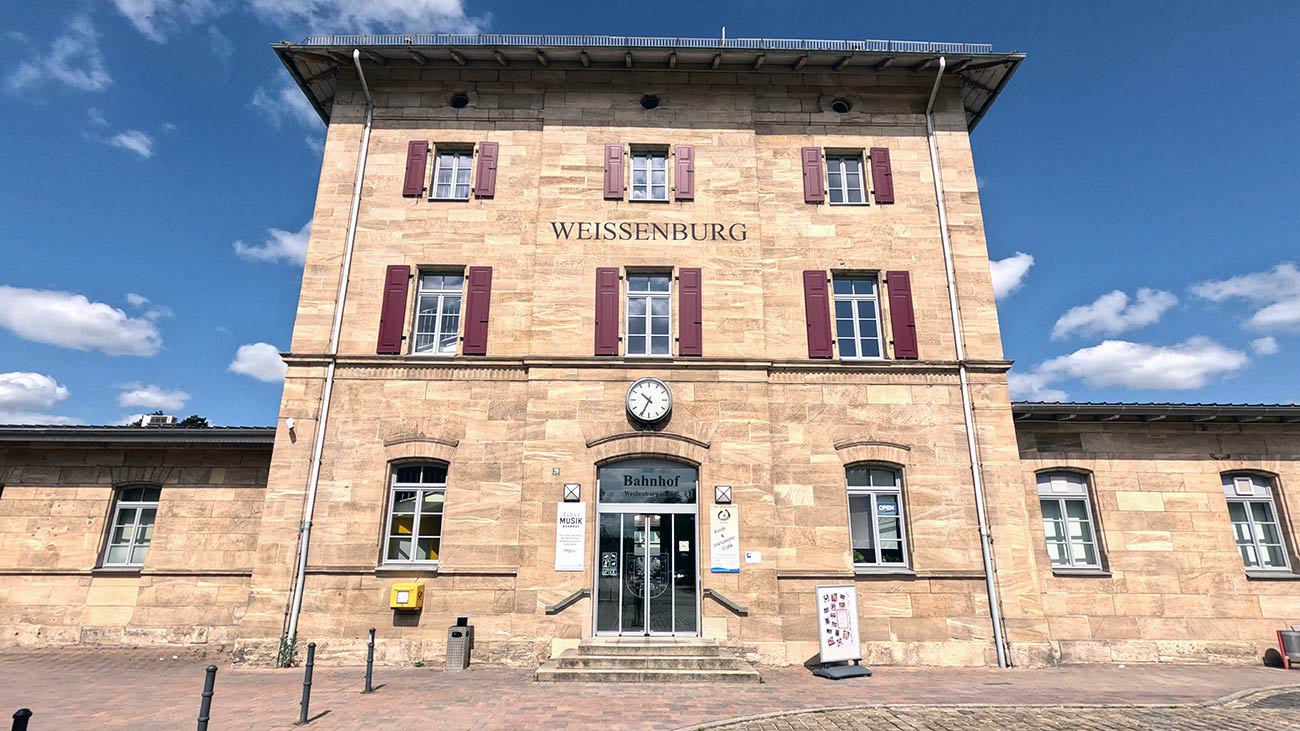
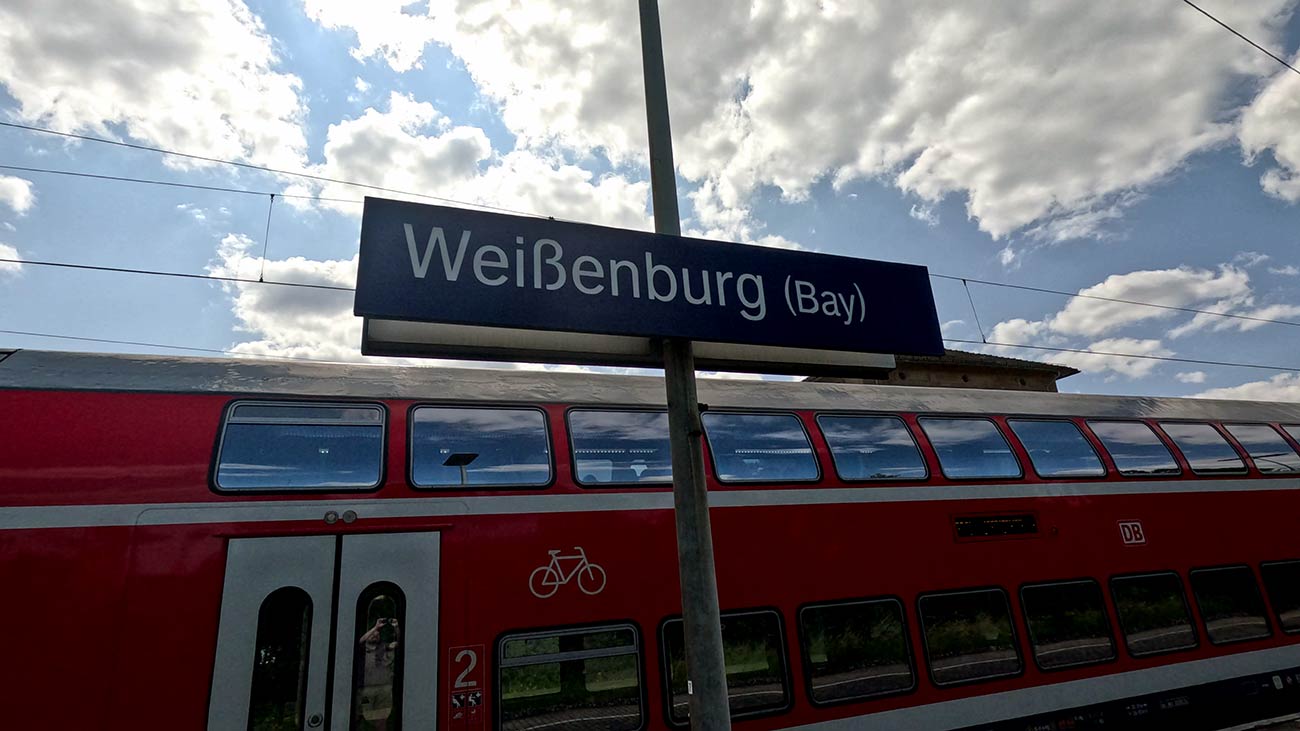
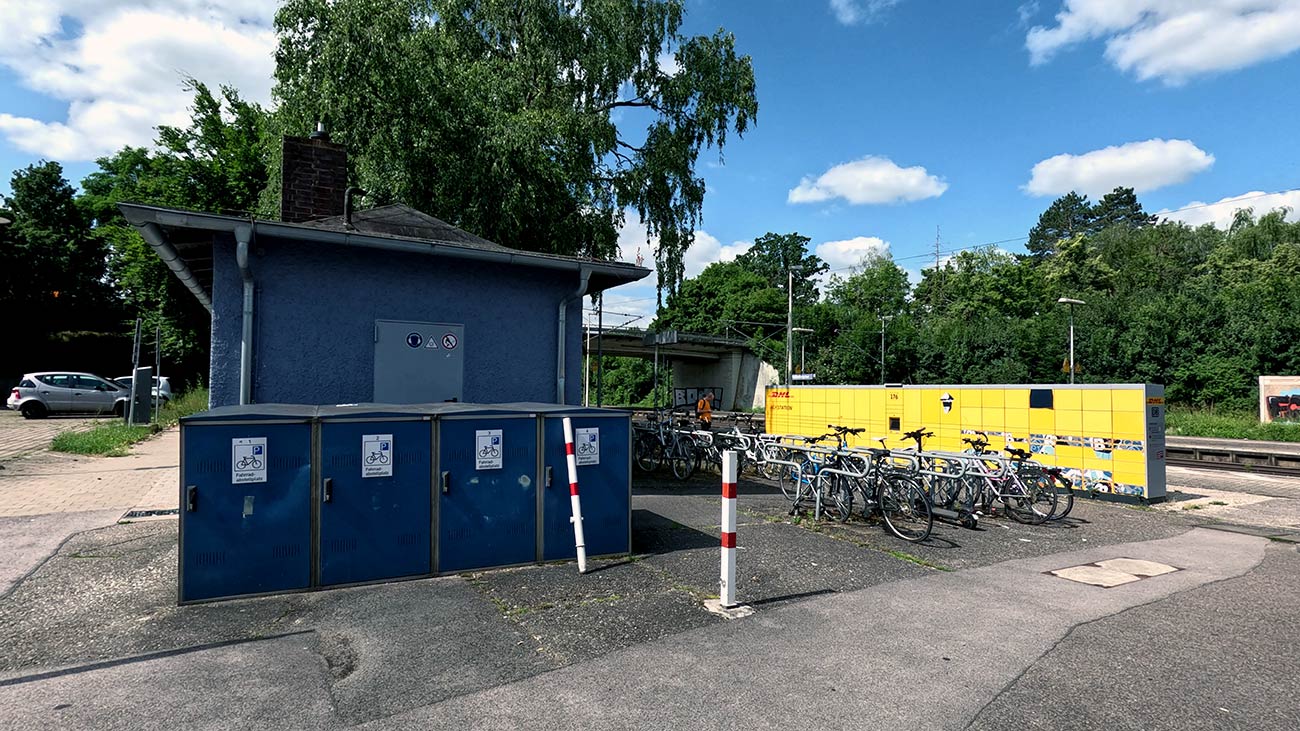
Weissenburg's railway station sits a short ride from the centre of the old town, well within reach of the Roman Museum, the market square, and the Ellingen Gate by bike or on foot. The station has bicycle parking on site, along with basic facilities for shorter or longer stops, although it is unstaffed for advice and assistance. Cycling infrastructure in and around the town is generally good, the streets inside the old walls are largely flat, and the surrounding countryside is well suited to easy day rides for travellers staying a second night. The reconstructed Roman fort lies about a kilometre north of the centre, the Roman Baths a similar distance to the south, and the Wülzburg Fortress around three kilometres east on a steeper hillside road that is best approached on foot or by very gentle pedalling. For onward travel, the station connects back toward Ingolstadt and the wider Danube region, making Weissenburg a comfortable one or two-night detour from the EuroVelo 6.