Brunszvik Castle
Reading time: 11 minutes
MARTONVÁSÁR, FEJÉR COUNTY, HUNGARY
Where the Brunszviks Built a Garden for Beethoven
Martonvásár sits on flat farmland in Fejér County, roughly 30 kilometres southwest of Budapest, a quiet town of about five thousand people. Its centre of gravity is a snow-white castle and the deep green of an old landscaped park, an enclosure of mature trees and a still lake set down in otherwise open country. Step through the gates and the working agricultural town drops away; what remains is a garden built to look like a stretch of the English countryside.
The estate’s story belongs almost entirely to the Brunszvik family, German-born nobles granted the land by Maria Theresa in the eighteenth century. Over four generations they drained a marshy wilderness, planted it, and raised the manor and its garden, and along the way they struck up a friendship with Ludwig van Beethoven that turned Martonvásár into the home of Hungary’s Beethoven cult. The same family shaped the country in another way: Teréz Brunszvik opened the first Hungarian kindergarten, so the town carries a double cultural weight, musical and educational.
Reaching it is straightforward for anyone on the Danube. EuroVelo 6 runs through Budapest along the river, and from the city a suburban train heads southwest to Martonvásár in well under an hour. A day here has a natural rhythm: the castle and the Beethoven exhibition in the morning, a slow loop of the park and its island around midday, then the science centre, the kindergarten museum or the parish church in the afternoon, with a meal before the train back.
The Castle, the Composer and the Park
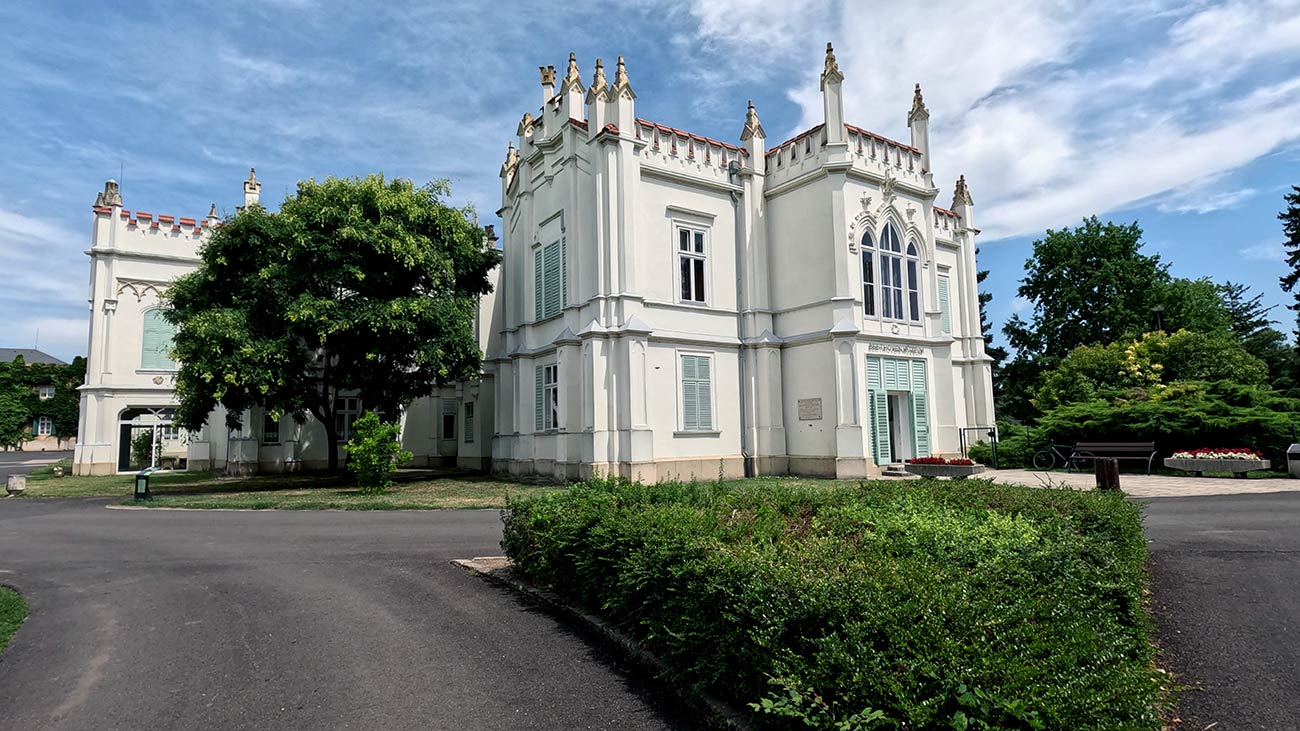
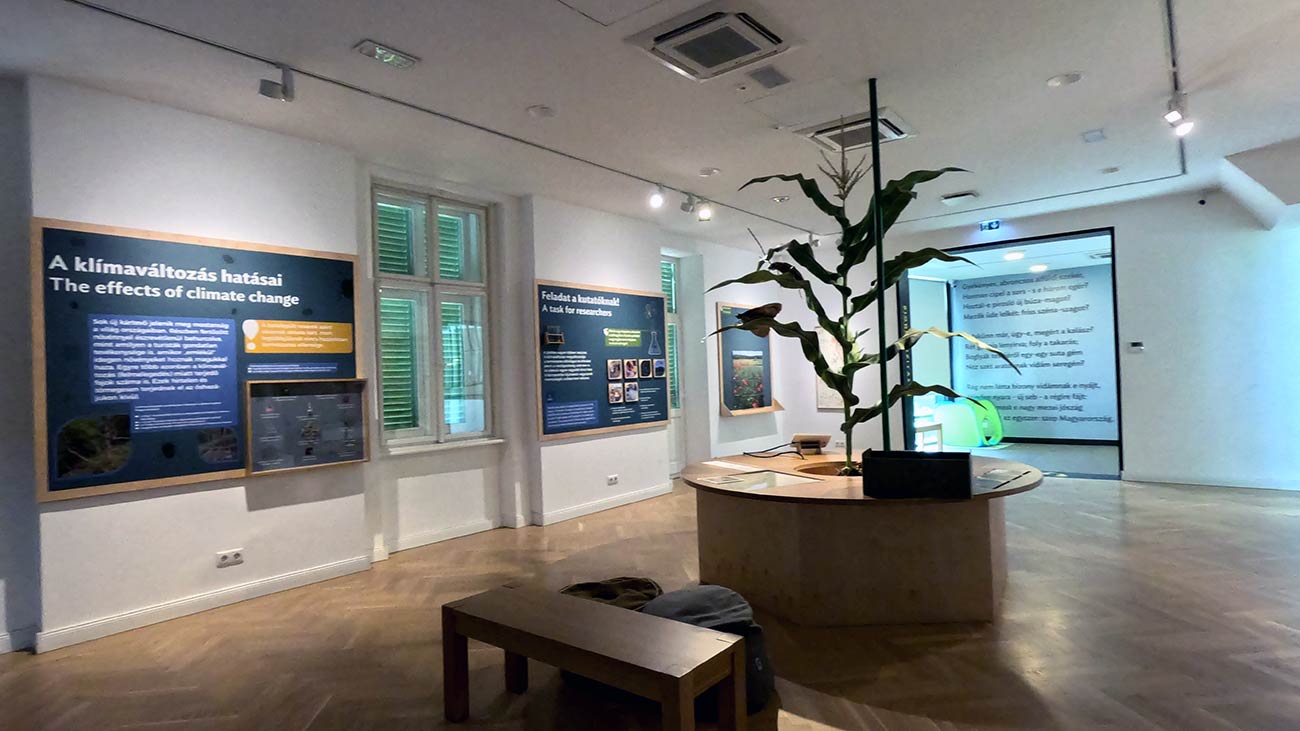
The Brunszvik Castle (Brunszvik-kastély) you see today is a white-walled, neo-Gothic building with pointed windows, often described as English or Tudor in feel. That look is comparatively recent: the manor began as a Baroque house in the 1780s and was rebuilt in neo-Gothic style by Géza Brunszvik in the 1870s. After wartime use as a hospital and years of neglect, it passed to the Hungarian Academy of Sciences in 1953, and the Centre for Agricultural Research still works here, which is why a castle and a crop-genetics institute share the same address.
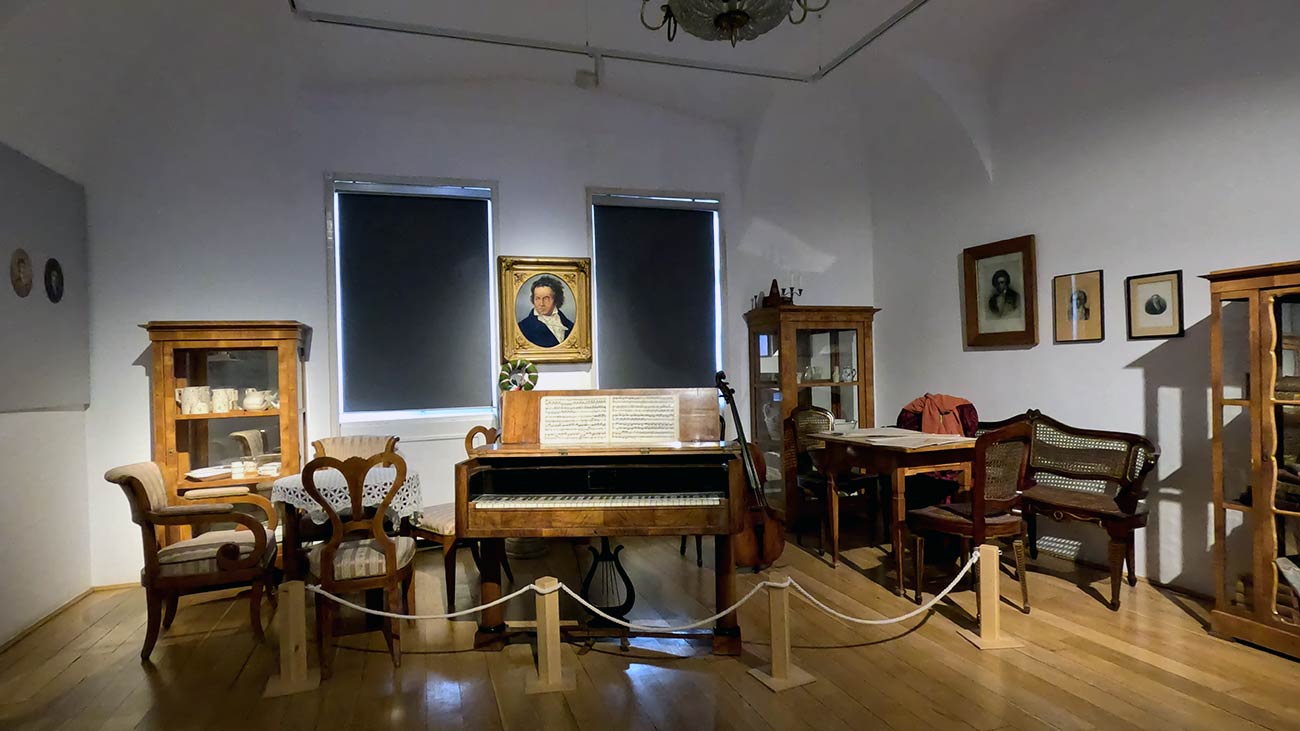
Inside, the Beethoven Memorial Museum sets out the long friendship between the composer and the Brunszviks. Anna Seeberg brought her daughters Therese and Josephine to Vienna for piano lessons in 1799, and through them Beethoven came to know their brother Ferenc, who became a patron and lifelong friend. Beethoven completed the Appassionata (Piano Sonata No. 23, Op. 57) at Martonvásár in 1806 and dedicated it to Ferenc; the Sonata in F-sharp major, Op. 78, went to Therese. The display includes a restored Streicher piano he is associated with, letters exchanged with Josephine, and, more curiously, a small pendant holding a lock of the composer’s hair.
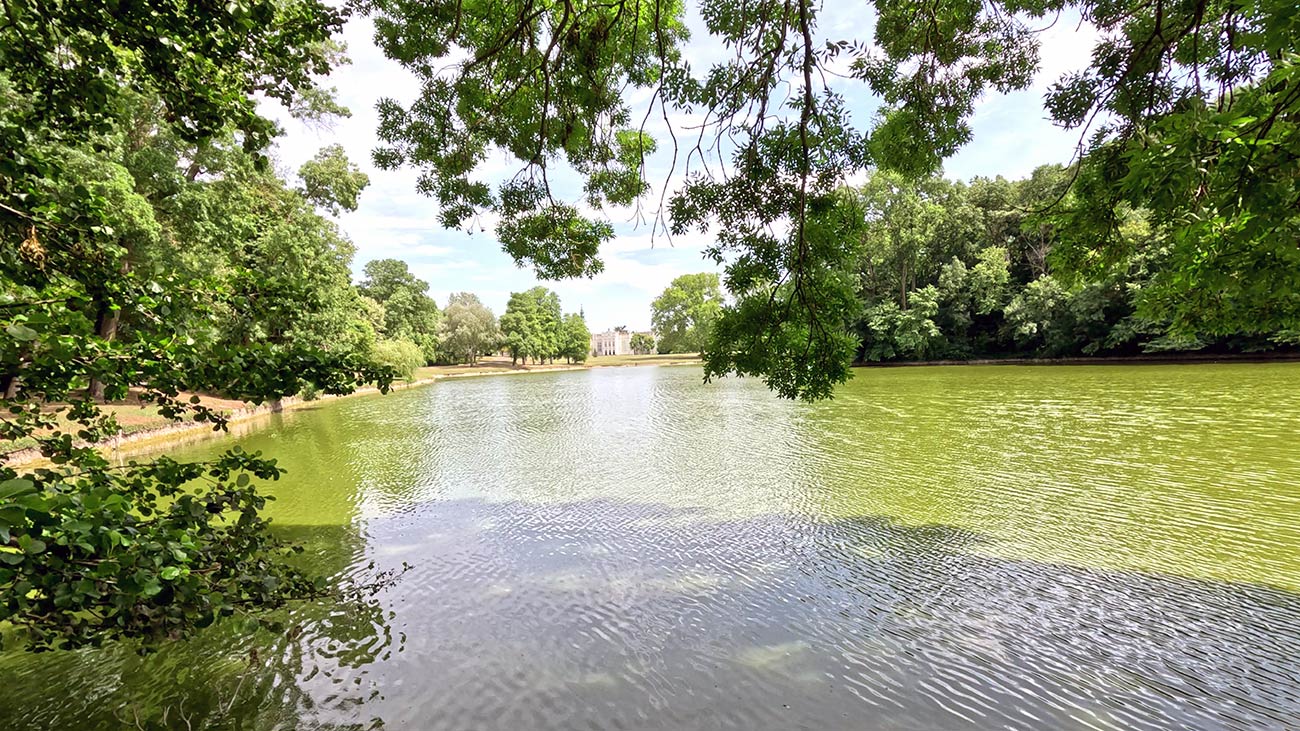
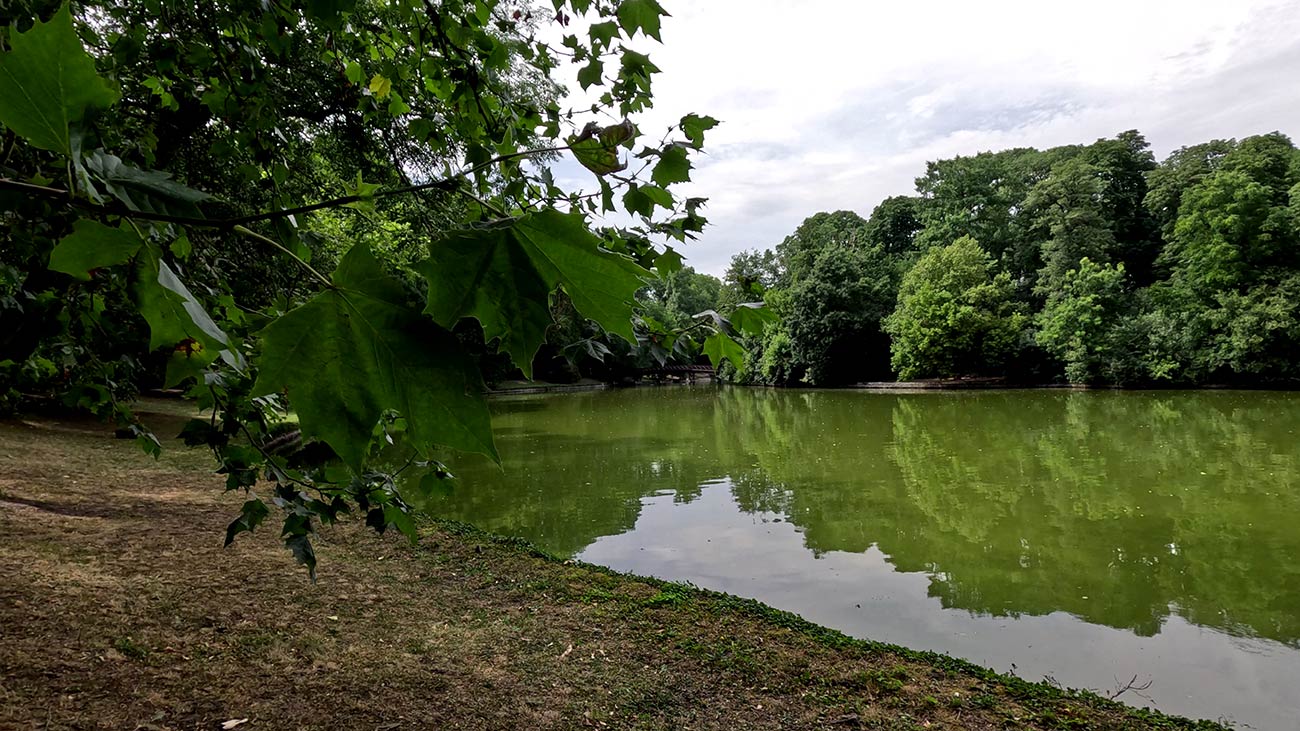
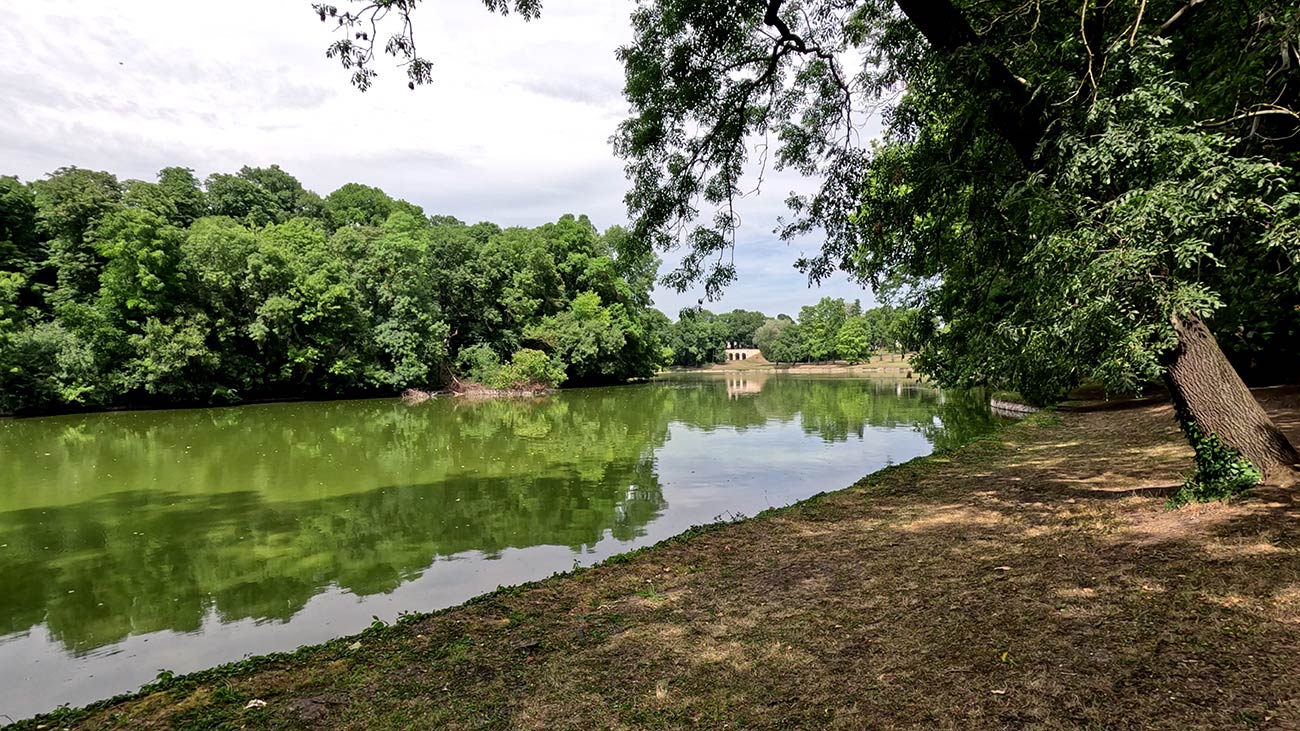
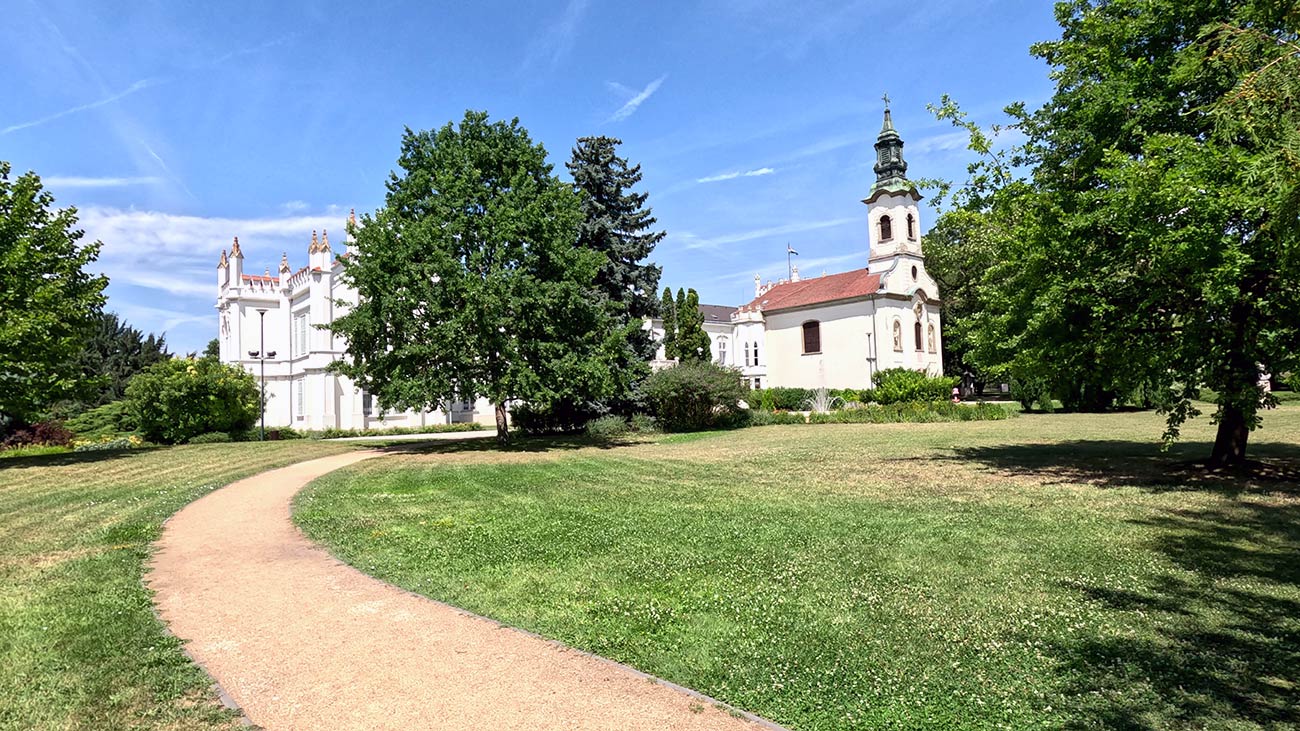
The grounds are the real draw. The Manor Park is a 70-hectare English landscape garden, one of the few genuine examples left in the country, laid out with the help of Heinrich Nebbien, the same gardener behind Budapest’s City Park (Városliget). It has been a protected nature reserve since 1953, and it mixes native oak, ash and small-leaved linden with exotics such as bald cypress, dawn redwood and Atlas cedar, some of them planted in the early 1800s. The Saint László stream was dammed to form a lake, and in the middle of it lies a wooded island reached by a wooden bridge, shaded by old maples and alders and marked by a statue of Beethoven.
That island is also a stage. For decades, open-air Beethoven concerts have been held there through the warmer months, performed in recent years by the Hungarian National Philharmonic and the Budapest Philharmonic Society, so the park is at its liveliest from late spring into summer. The planting was designed to change with the seasons too: spring brings carpets of yellow eranthis and blue scilla in the gallery woods, while autumn turns the canopy through the colours its gardeners intended. Birdsong runs from spring to autumn, and the lake usually has herons or mallards on it.
There is more than the castle to fill an afternoon. The Agroverzum (Agroverzum Tudományos Élményközpont), styled the Centre of Science and Fun, is the visitor centre of the agricultural institute and leans hands-on, with interactive exhibitions on farming and genetics, a biology lab and a scientific playground, which makes it the family-friendly counterweight to the historic rooms. Nearby, the Kindergarten Museum (Óvodamúzeum) traces the history of pre-school education from Teréz Brunszvik’s first institution onward, and the Baroque St. Anne’s Church (Szent Anna templom), built around the time the estate was established, sits within easy reach.
Pacing is forgiving here. The Postakocsi restaurant beside the castle has operated since 1768 and is the usual spot for lunch, and because the whole town is compact and level, you can fit the museums, a long walk by the lake and a meal into roughly half a day before catching a train back to Budapest and the river. It reads comfortably as a single day out from the EuroVelo 6 corridor, or as one stop on a string of them down the same line.
 Useful Links
Mobility for Cyclists
The connection
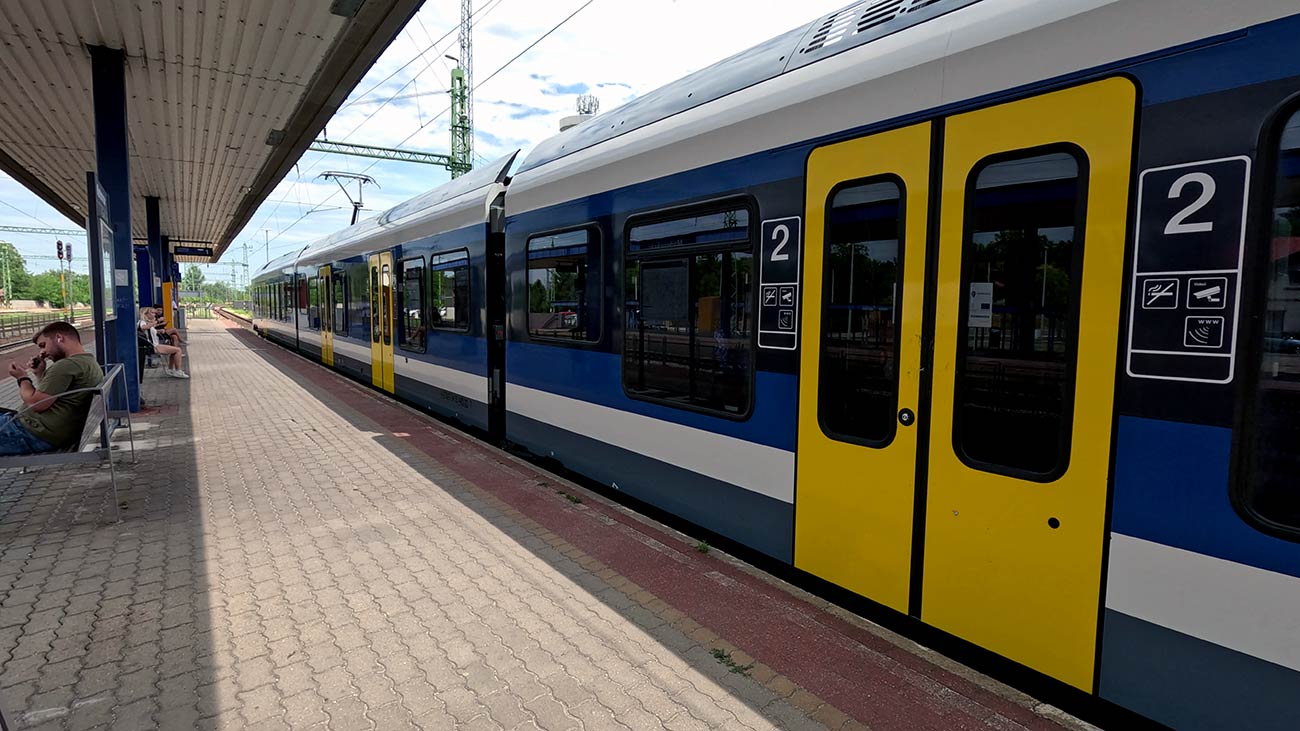
EuroVelo 6 meets the Danube at Budapest, and the town sits on the Budapest–Székesfehérvár line (line 30), operated by MÁV-START. Suburban services (the Z30/S30 trains) leave from Budapest-Déli and call at Kelenföld on the way out, running direct with no transfer and reaching Martonvásár in about 25–30 minutes. They go roughly every half hour on weekdays and hourly at weekends, with a single ticket in the region of 650 HUF. The same line continues to Lake Velence — the stops at Gárdony and Velence open onto a flat, well-used lake circuit — and on to Székesfehérvár, so Martonvásár combines easily with either as a longer day. On these regional trains bikes travel with a bicycle ticket and need no reservation, which is the simpler case; reservations only become an issue on long-distance InterCity services, which this route doesn’t require.
Hungarian Trains
The rail network in Hungary is operated mainly by MÁV-START, the passenger arm of the Hungarian State Railways (Magyar Államvasutak), which runs most long-distance services and a large share of regional connections across the country. Alongside MÁV-START, the private operator GySEV / Raaberbahn (Győr-Sopron-Ebenfurti Vasút) runs cross-border lines in the western part of the country toward Austria, while a smaller number of regional operators run local and feeder lines on selected routes. All operators are fully integrated into the national rail system, so transfers between them are straightforward. The Hungarian rail network is organised around Budapest, with high-frequency InterCity and EuroCity services radiating out from the capital toward Lake Balaton, the Croatian border, the Carpathian foothills, and the eastern plains, alongside a dense network of regional and local services. The Danube region in Hungary is particularly well served by rail, with the main north-south corridor running close to the river from the Slovak border through Budapest and onward toward Mohács, and several east-west lines branching out to inland destinations. The MÁV app is the central tool for planning journeys, checking timetables, and purchasing tickets across all services, including both regional and long-distance trains.
Taking your bike
Hungary is generally very bike-friendly when it comes to rail transport, especially on regional services operated by MÁV-START, which form the core of mobility for cycle touring along the Danube and its connecting corridors. On regional and local trains, bicycles can be taken on board for an additional fee, with no advance reservation possible and a first-come, first-served allocation of space. Bicycle tickets are sold as single trips or as affordable daily or weekly passes, valid across the regional network. On long-distance services such as InterCity and EuroCity trains, an advance reservation for the bicycle is mandatory, with the bike spaces located in dedicated zones in second-class carriages. The private operator GySEV / Raaberbahn, which runs cross-border services in the western part of the country, also accepts bicycles on board with broadly similar rules. Folding bikes are carried free of charge as hand luggage on all operators, provided they fit in the luggage racks. Overall, the Hungarian rail system is well adapted to cycle tourism and offers a flexible combination of train and bike that makes it easy to leave the EuroVelo 6 route in either direction for short or extended detours.
Bikes on Buses
Long-distance bus services in Hungary are primarily operated by Volánbusz, the national coach operator now consolidated under the MÁV group, alongside FlixBus and a smaller number of regional and private operators on selected international and domestic routes. The long-distance bus network is unusually well developed by central European standards, with frequent connections from Budapest to all the major regional centres and a dense web of services across the countryside that complement and sometimes overlap with the rail network. Bicycle transport is available on certain FlixBus connections, either via external bike racks or in the luggage compartment, but it is not consistently guaranteed across the network and depends on the specific vehicle type and route configuration. Where available, bicycle transport must be reserved in advance and capacity is limited, making it less flexible compared to rail services. Volánbusz coaches generally do not carry assembled bicycles, although folded or packed bikes may be accepted as luggage on a case-by-case basis. As a result, buses are generally used as a secondary option for cyclists, mainly for longer-distance repositioning between major cities rather than as a core part of cycling itineraries along the Danube region. While useful in specific cases where rail connections are less convenient, they are less predictable and less standardised for bicycle transport, so advance planning is essential.
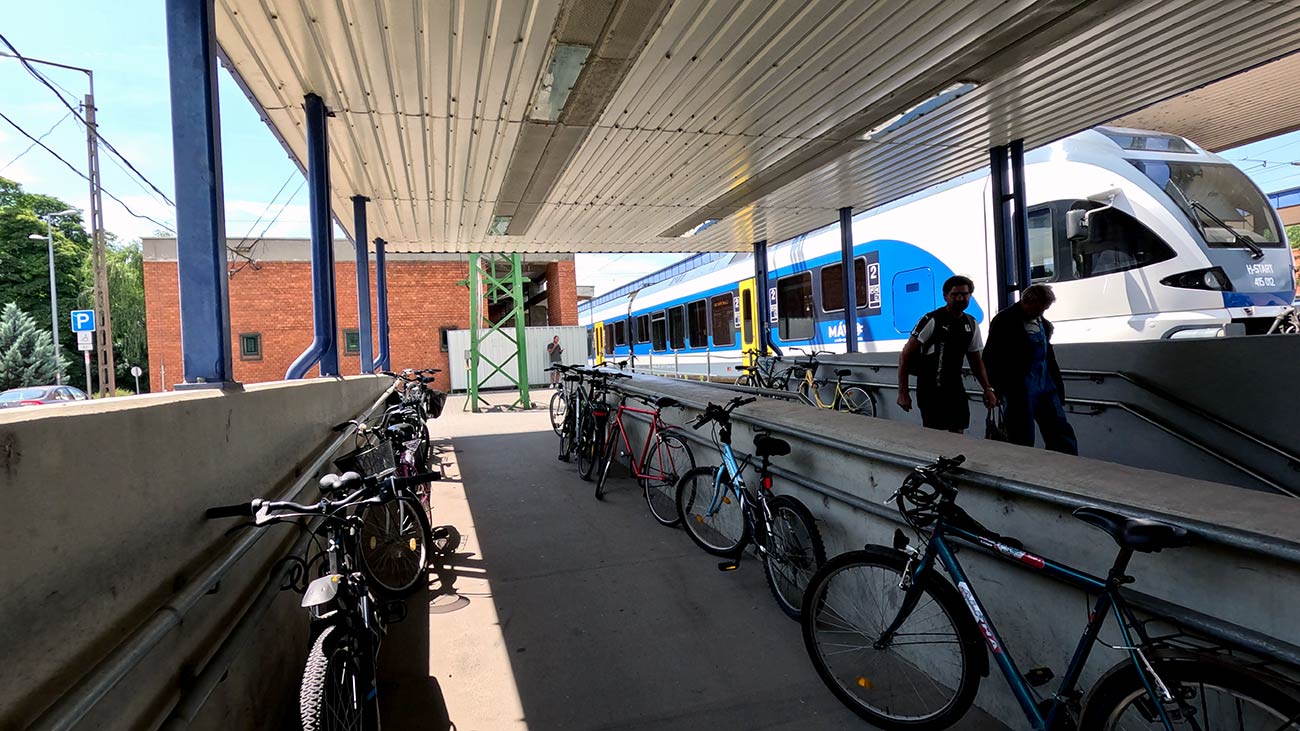
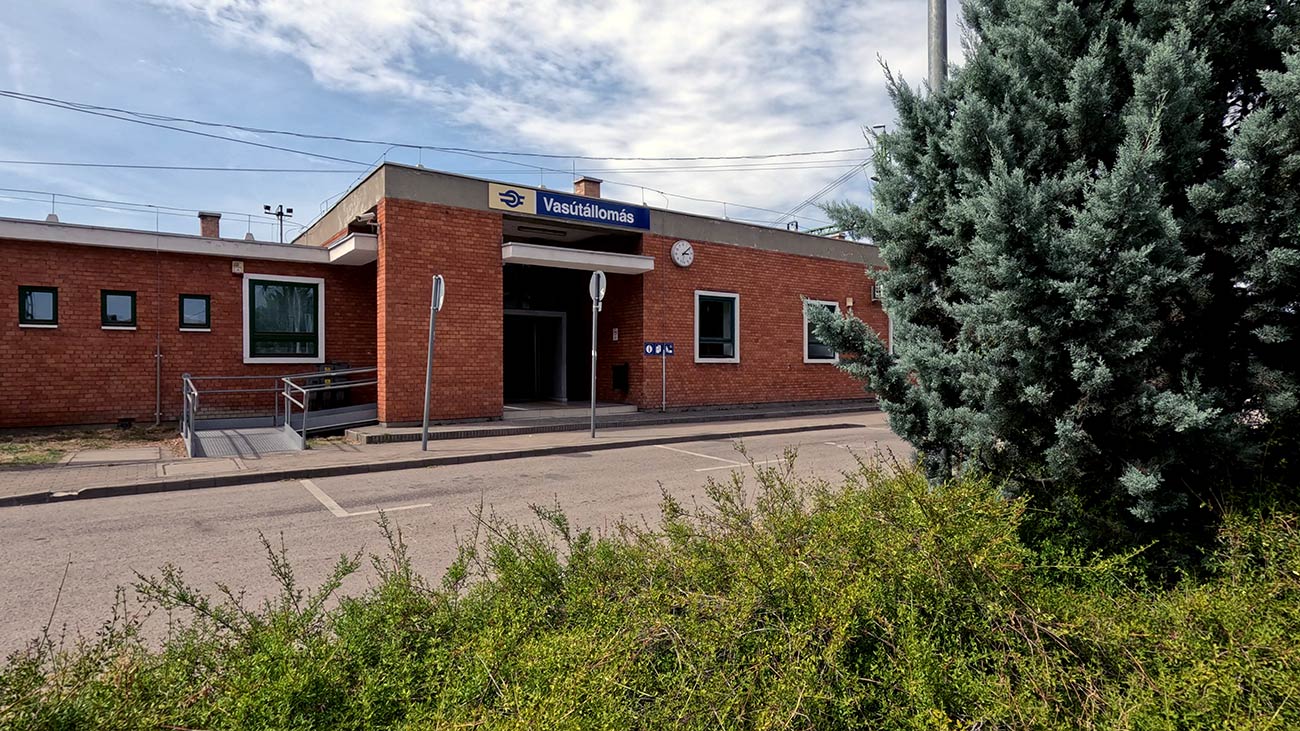
Arriving at Martonvásár Station
The station stands on Brunszvik utca, the same street as the park. From the platforms it’s about an 800-metre ride southeast along the line of the castle-garden fence to the main entrance, all of it flat and signposted, with no uphill at any point. There is free parking beside the station and again near the entrance off Kodály Zoltán utca, and the short, level approach is easy to ride, so a bike brought out from Budapest can be wheeled or pedalled to the gates and secured at the entrance area rather than left behind at the station. For onward travel, you can carry on down line 30 toward Lake Velence or Székesfehérvár, or simply take the next train back to Budapest to rejoin EuroVelo 6 along the river.