Gyöngyös and Matra Region
Reading time: 11 minutes
GYÖNGYÖS, MÁTRA REGION, HUNGARY
A Wine Town and the Hills Above It
Gyöngyös sits at the foot of the Mátra, the point where the flat Hungarian plain gives way to the country's highest range of hills. It's a town of around thirty thousand people in Heves County, built on wine and on its position at the edge of the mountains, with a compact old centre of squares and church towers and a backdrop of forested slopes rising to the north. The Mátra itself is volcanic in origin, green and rounded rather than dramatic, and it carries Kékes, the highest point in Hungary, on its main ridge.
The settlement has been a market town since the Middle Ages — Charles I granted it town rights in 1334 — and grew prosperous on viticulture, sitting at the heart of what is still one of Hungary's larger wine regions. A serious fire in 1917 reshaped the centre, and the reconstruction that followed gave the old town the unified, settled character it has today. Greek and other Orthodox merchants once traded here, and the town kept its role as the natural gateway to the Mátra's spas, ski runs and walking country.
For anyone on the Danube, it makes a straightforward inland detour. EuroVelo 6 runs through Budapest along the river, and from the capital a train reaches Gyöngyös in about an hour and a half. A day here usually starts in town with the church, the treasury and the old square, then moves up into the hills on the narrow-gauge railway, with the lake and lookout tower at Sástó and the climb toward Kékes filling the afternoon. With an overnight stay you can go higher and walk more of the ridge.
Where Nature Meets Tradition
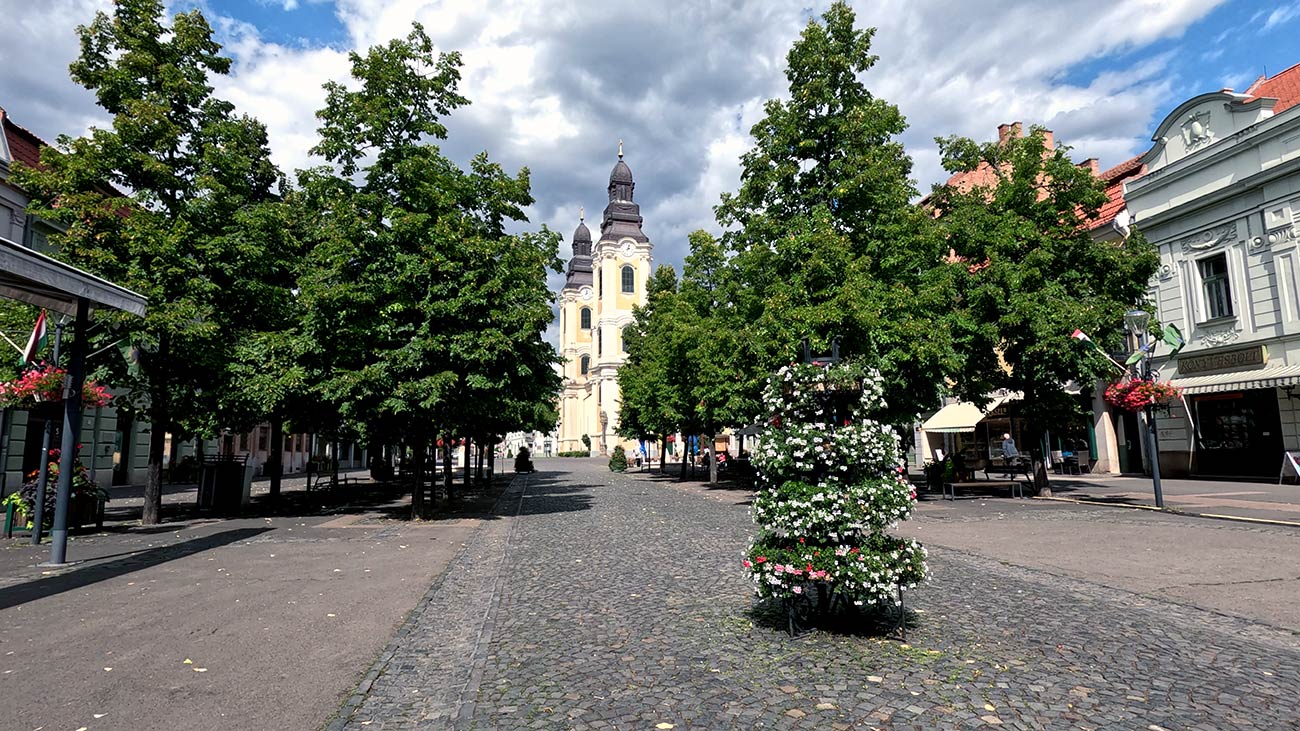
The Saint Bartholomew Church (Szent Bertalan templom), known to locals simply as the "Big Church" (Nagytemplom), stands on the Main Square (Fő tér) with its two towers over the centre of town of Gyöngyös. A church has occupied the spot since the thirteenth century, but the building was enlarged around 1350 and again in the fifteenth century into one of the largest hall churches in medieval Hungary. It was recast in Baroque style between 1746 and 1756, with the towers added later and the upper stages finished in the nineteenth century, so what you see now reads as Baroque despite its Gothic bones. The fire of 1917 did serious damage, and the simpler tower caps date from the repairs that followed. A pair of Gothic twin windows survive at the apse, along with a bronze baptismal font from the fifteenth century. The attached treasury holds what is reckoned the second-richest collection of church goldsmith work and vestments in the country, which is the main reason to step inside rather than just admire the façade.
Beyond the church, the rebuilt Old Town rewards a slow walk, its squares and merchant houses giving the centre a calm, of-a-piece feel that owes a good deal to the post-fire reconstruction. Gyöngyös is the working capital of the Mátra wine region, the vineyards climbing the lower slopes just outside town, and the local output leans to whites — Olaszrizling, Leányka, Muscat Ottonel and the like — which you can taste in the cellars at nearby Farkasmály. The Mátra Museum occupies the neo-classical Orczy mansion and its grounds and holds one of the larger natural-history collections in Hungary, a good wet-weather option. The Franciscan church and friary and the Baroque Grassalkovich house round out the in-town sights, and the square's ornamental well carries the arms of the town's twin cities. None of it takes long, which is part of the appeal: a morning is enough before heading for the hills.
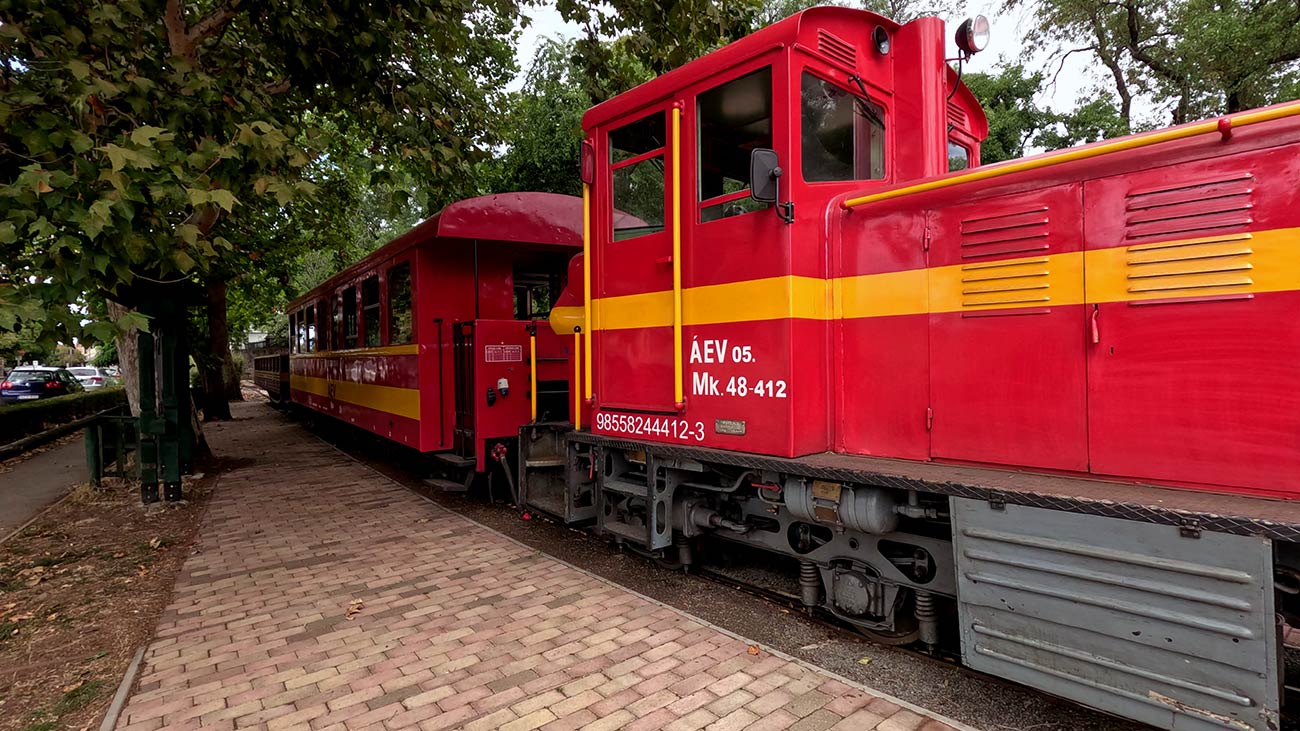
The Mátravasút, the Mátra's narrow-gauge forest railway, has run out of Gyöngyös since 1926 and is one of the better-known lines of its kind in the country. Built to the 760-millimetre gauge and operated today by the state forestry company, it splits into two routes north of town. One climbs gently to Mátrafüred through fields and vineyards, with the bulk of Kékes ahead of you for much of the way; the other turns northwest and follows a stream deep into the forest toward Lajosháza and Szalajkaház, a run of roughly thirteen kilometres. Trains are usually diesel-hauled, with occasional steam outings, and the line keeps a historic engine nicknamed Gyöngyi. From the Mátrafüred terminus it's a short walk to the Kozmáry lookout, the wooded valley of the Bene stream and the Bába Stone. The little railway is squarely a family outing, and it leaves from its own terminus near the main MÁV station on Dobó utca.
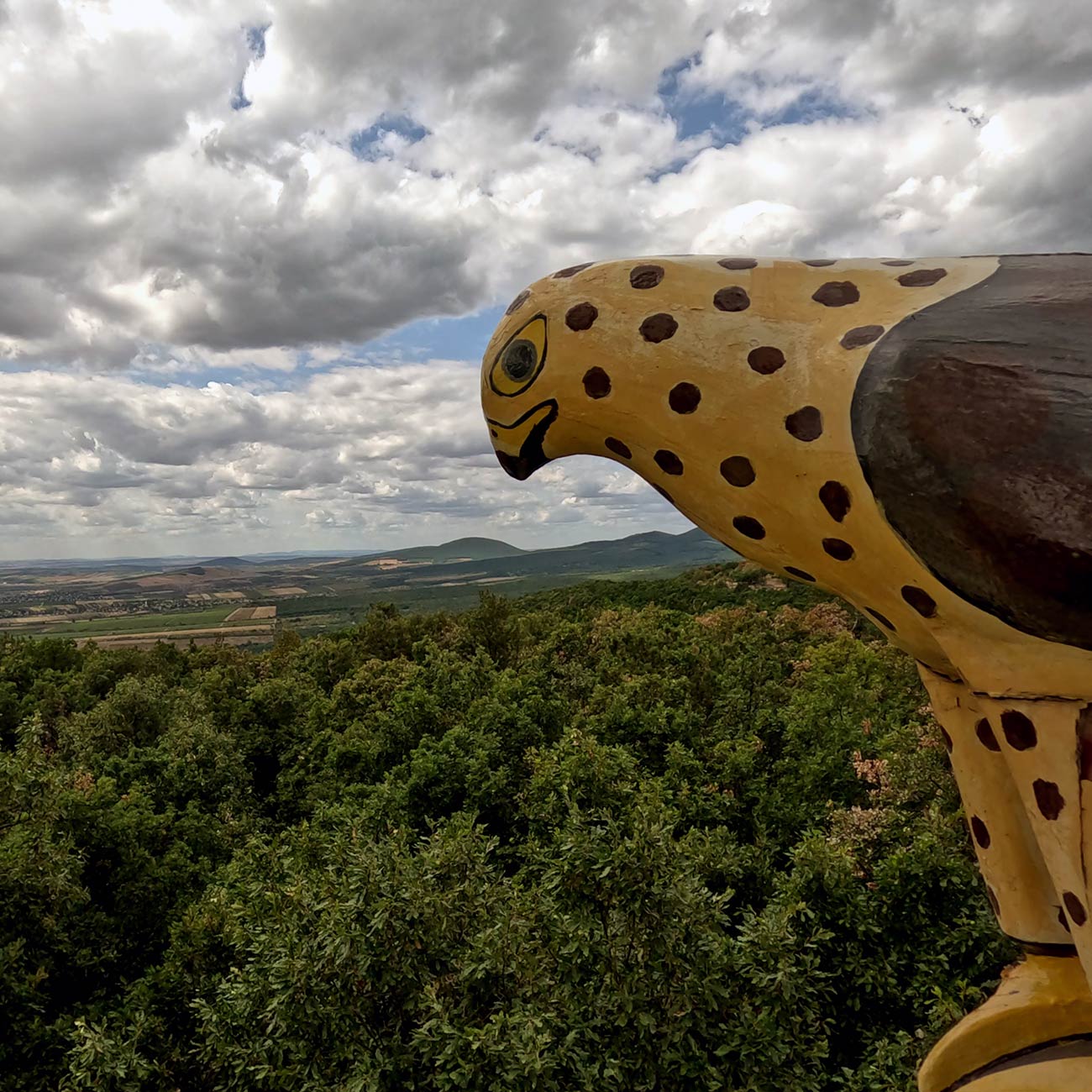
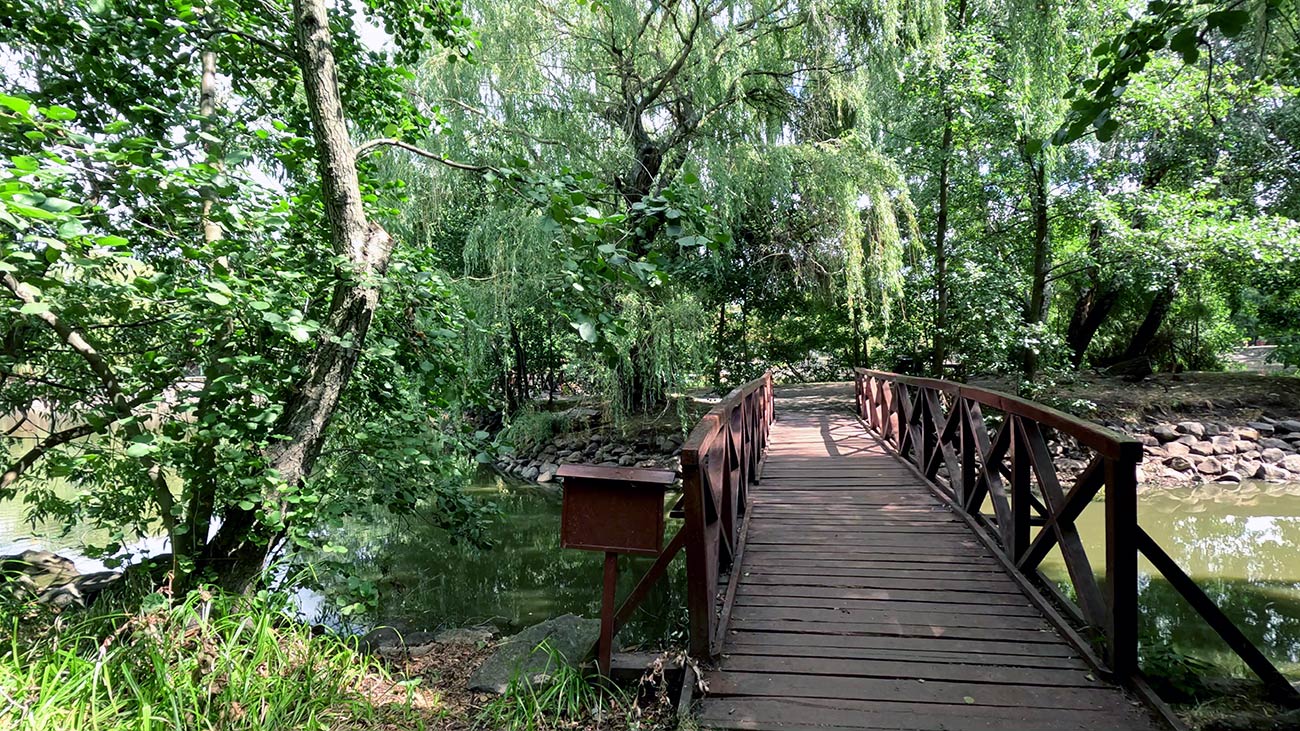
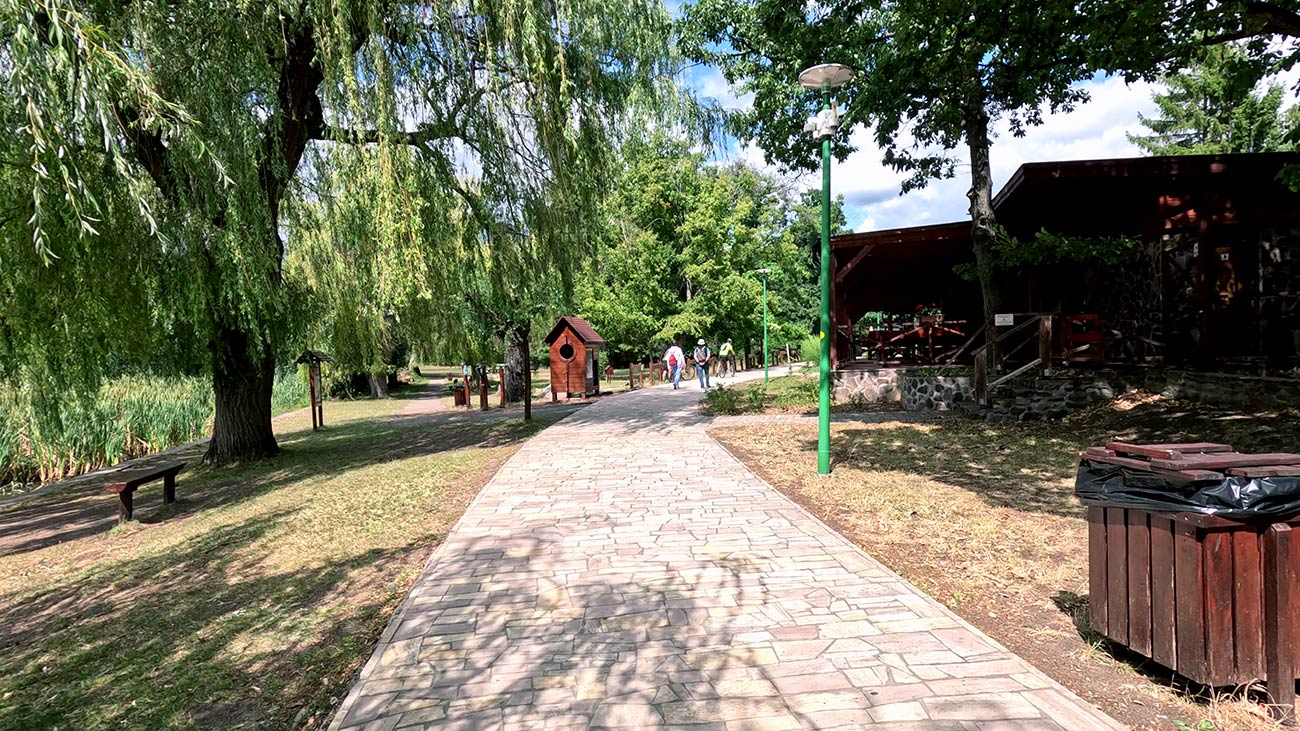
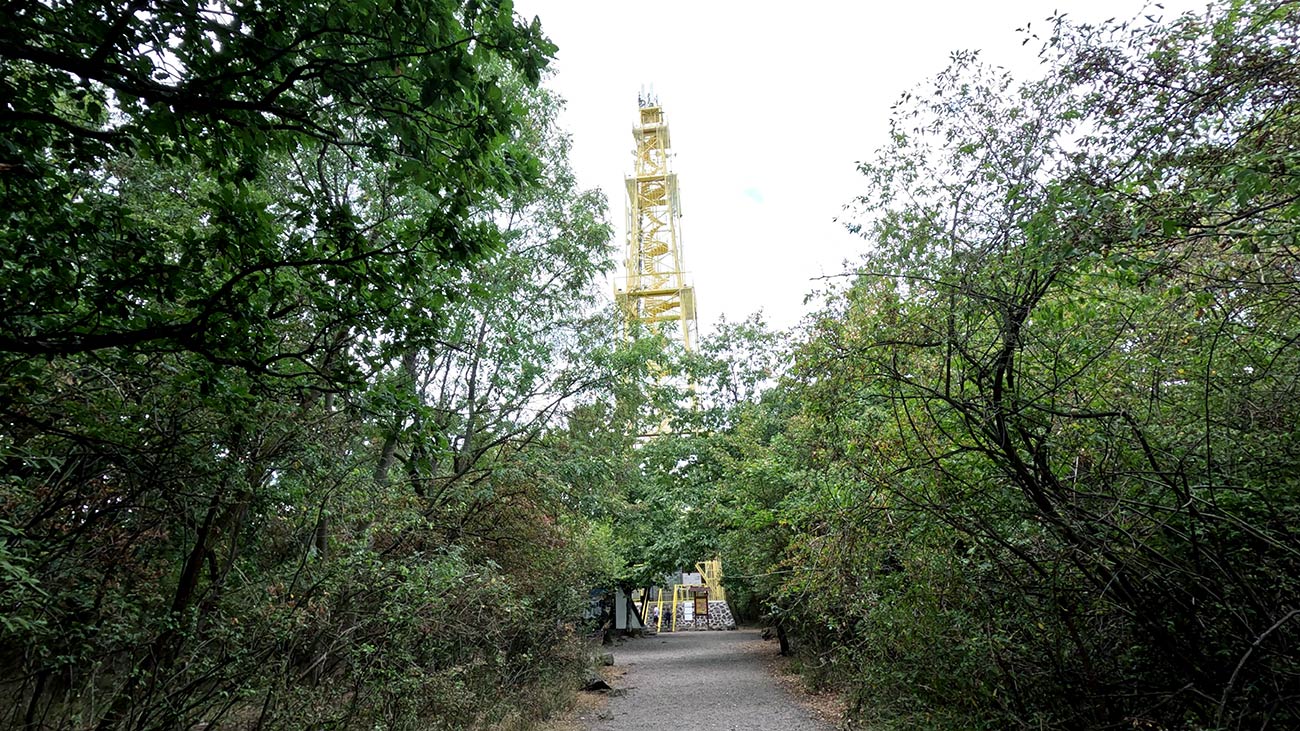
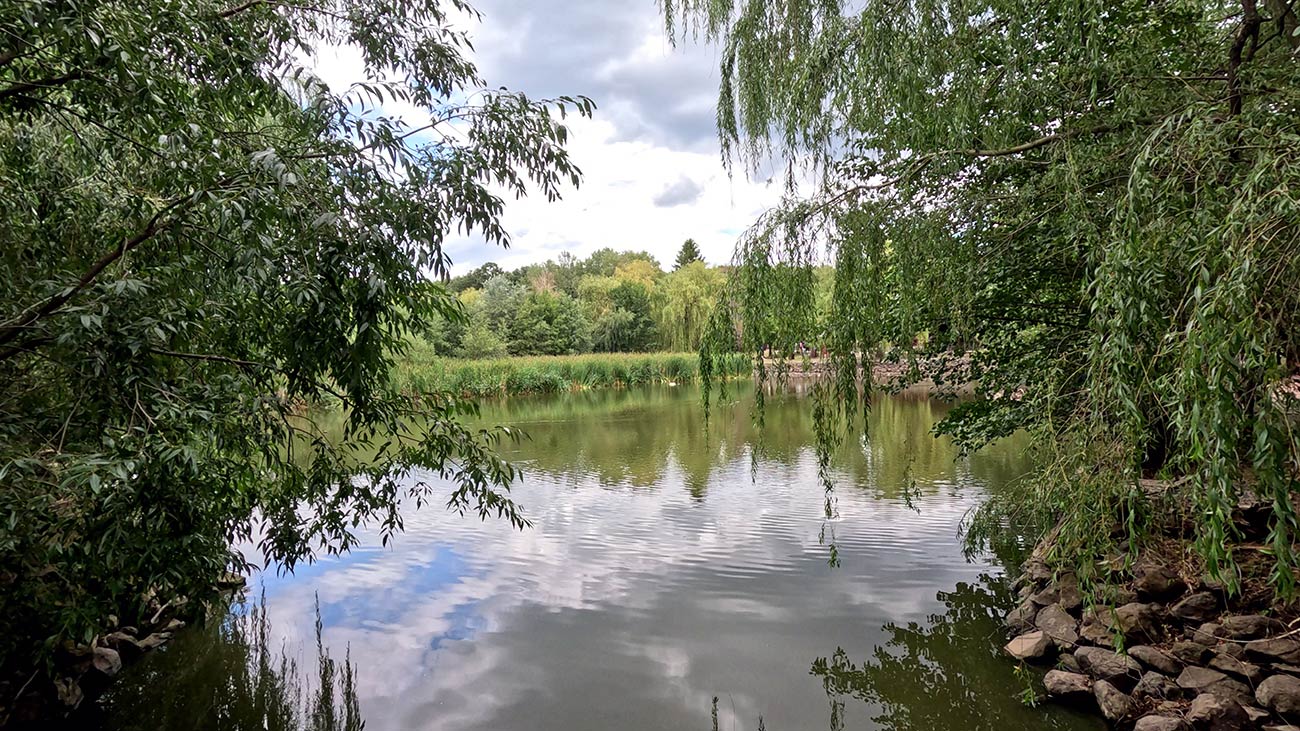
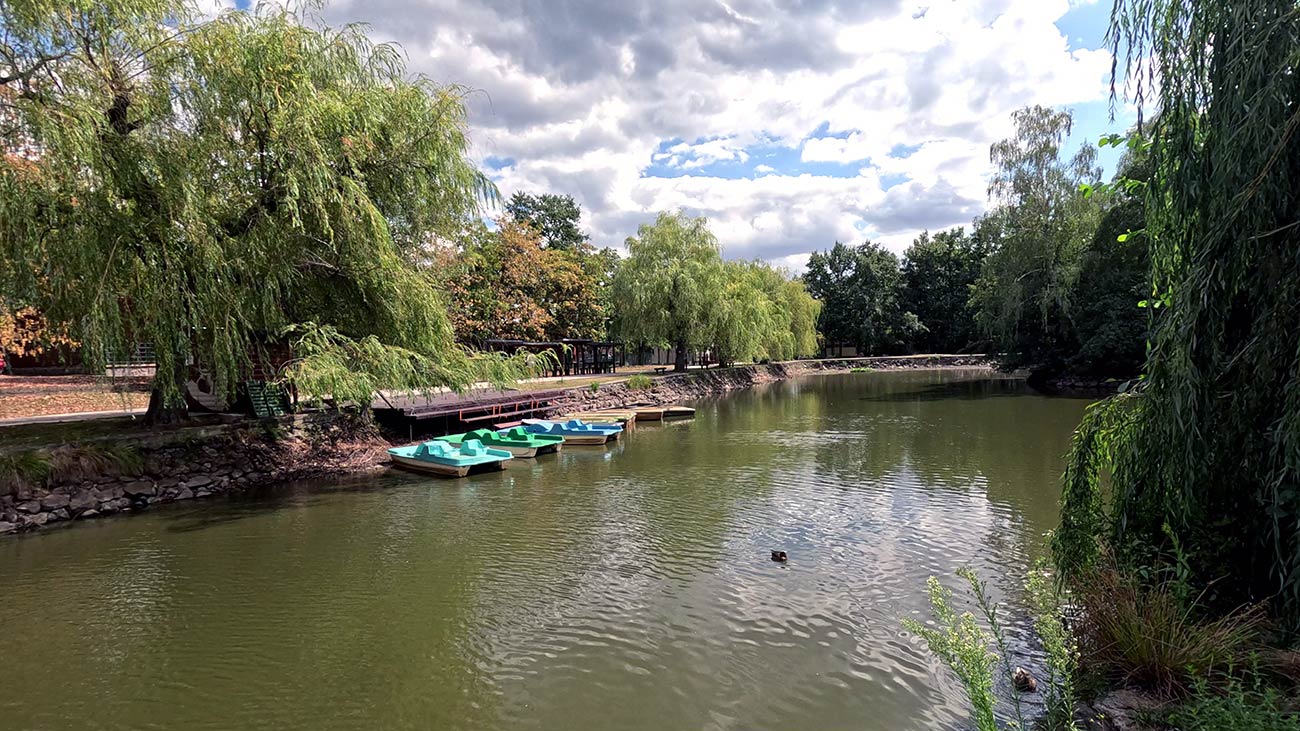
Higher up, on Road 24 between Mátrafüred and Mátraháza, lies Sástó — a small reedy lake that sits higher than any other lake in Hungary. A nature trail loops the water on timber bridges, level enough to be followed in a wheelchair, and the setting is quiet and wooded. The draw here is the Sástó lookout tower, a structure with an unusual past: it began life as an oil derrick on the plain at Algyő and was later re-erected and reshaped into a viewing tower of about fifty-three metres. Climbing it, you can see the tell of its origins — a tube-like gap runs all the way up the centre of the staircase, where the drilling shaft once was — and it takes more than two hundred and fifty steps to reach the top. From there the Mátra spreads out below, and in clear air the view reaches as far as the Buda Hills above the capital and the line of the Tisza out on the Great Plain. The tower is built to keep children climbing, with things to spot on the way up. Road 24 carries on above Sástó to Kékes (Kékestető), at 1,014 metres the highest peak in Hungary, where the television tower doubles as a lookout with a terrace and a snack bar.
 Useful Links
Mobility for Cyclists
The connection
EuroVelo 6 meets the Danube in Budapest, and from there MÁV-START runs direct trains from Budapest-Keleti to Gyöngyös in roughly an hour and twenty-five to an hour and a half, about once an hour. Gyöngyös sits at the end of a short electrified branch off the Budapest–Miskolc main line at Vámosgyörk, so some departures involve a quick change there rather than running straight through; a single fare is in the region of €5–7. On the regional and InterCity trains bikes travel with a bicycle ticket. If you want to pair the trip with Eger, note that it sits on a different line and is better treated as its own day rather than a same-line hop.
Hungarian Trains
The rail network in Hungary is operated mainly by MÁV-START, the passenger arm of the Hungarian State Railways (Magyar Államvasutak), which runs most long-distance services and a large share of regional connections across the country. Alongside MÁV-START, the private operator GySEV / Raaberbahn (Győr-Sopron-Ebenfurti Vasút) runs cross-border lines in the western part of the country toward Austria, while a smaller number of regional operators run local and feeder lines on selected routes. All operators are fully integrated into the national rail system, so transfers between them are straightforward. The Hungarian rail network is organised around Budapest, with high-frequency InterCity and EuroCity services radiating out from the capital toward Lake Balaton, the Croatian border, the Carpathian foothills, and the eastern plains, alongside a dense network of regional and local services. The Danube region in Hungary is particularly well served by rail, with the main north-south corridor running close to the river from the Slovak border through Budapest and onward toward Mohács, and several east-west lines branching out to inland destinations. The MÁV app is the central tool for planning journeys, checking timetables, and purchasing tickets across all services, including both regional and long-distance trains.
Taking your bike
Hungary is generally very bike-friendly when it comes to rail transport, especially on regional services operated by MÁV-START, which form the core of mobility for cycle touring along the Danube and its connecting corridors. On regional and local trains, bicycles can be taken on board for an additional fee, with no advance reservation possible and a first-come, first-served allocation of space. Bicycle tickets are sold as single trips or as affordable daily or weekly passes, valid across the regional network. On long-distance services such as InterCity and EuroCity trains, an advance reservation for the bicycle is mandatory, with the bike spaces located in dedicated zones in second-class carriages. The private operator GySEV / Raaberbahn, which runs cross-border services in the western part of the country, also accepts bicycles on board with broadly similar rules. Folding bikes are carried free of charge as hand luggage on all operators, provided they fit in the luggage racks. Overall, the Hungarian rail system is well adapted to cycle tourism and offers a flexible combination of train and bike that makes it easy to leave the EuroVelo 6 route in either direction for short or extended detours.
Bikes on Buses
Long-distance bus services in Hungary are primarily operated by Volánbusz, the national coach operator now consolidated under the MÁV group, alongside FlixBus and a smaller number of regional and private operators on selected international and domestic routes. The long-distance bus network is unusually well developed by central European standards, with frequent connections from Budapest to all the major regional centres and a dense web of services across the countryside that complement and sometimes overlap with the rail network. Bicycle transport is available on certain FlixBus connections, either via external bike racks or in the luggage compartment, but it is not consistently guaranteed across the network and depends on the specific vehicle type and route configuration. Where available, bicycle transport must be reserved in advance and capacity is limited, making it less flexible compared to rail services. Volánbusz coaches generally do not carry assembled bicycles, although folded or packed bikes may be accepted as luggage on a case-by-case basis. As a result, buses are generally used as a secondary option for cyclists, mainly for longer-distance repositioning between major cities rather than as a core part of cycling itineraries along the Danube region. While useful in specific cases where rail connections are less convenient, they are less predictable and less standardised for bicycle transport, so advance planning is essential.
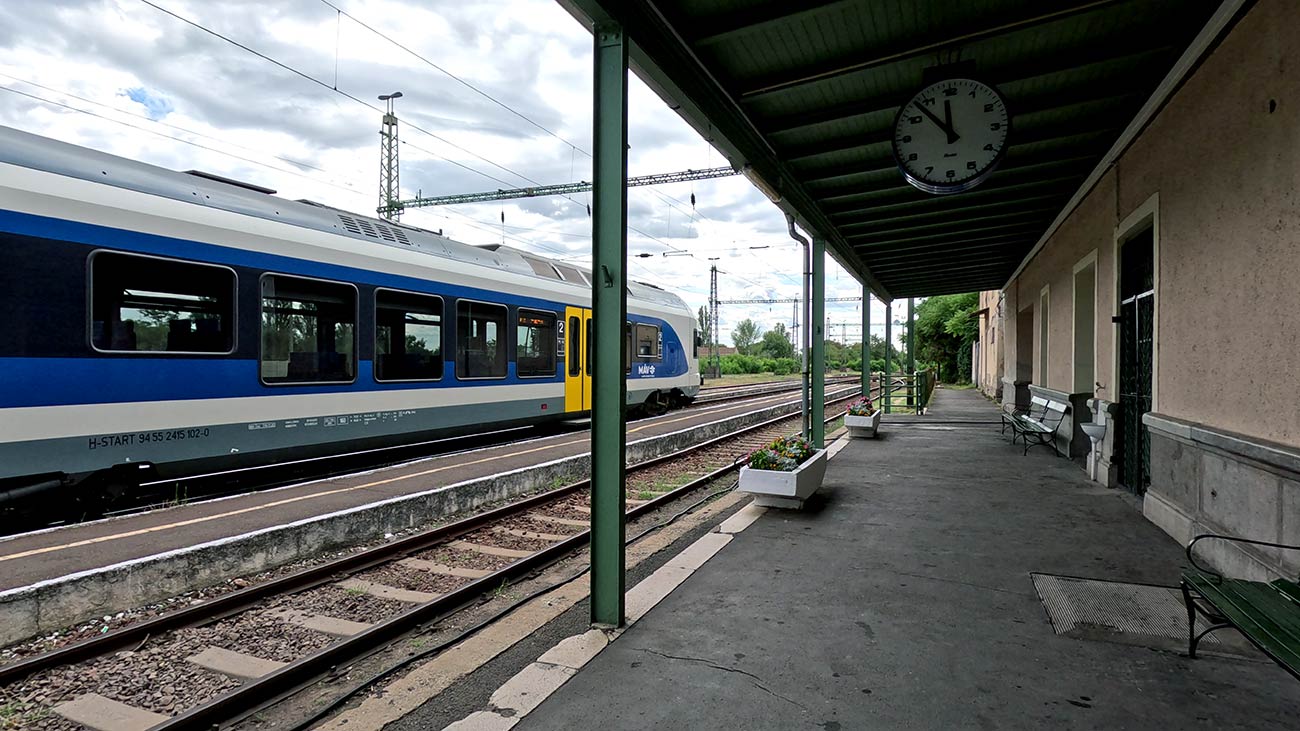
Arriving at Gyöngyös Station
The MÁV station is on the edge of town, about 1.2 kilometres of flat, signposted streets from the Main Square and the church — a quarter-hour walk, or a short, easy ride. The narrow-gauge Mátravasút has its own nearby terminus on Dobó utca, so the two railways connect with little fuss. Getting up into the hills is where the terrain bites: the road from town to Sástó climbs around ten kilometres and gains roughly 300 metres, a genuine ascent rather than a gentle slope, and it continues to rise sharply toward Kékes. Cyclists comfortable with the climb can ride it; otherwise the practical move is to shortcut the first stretch on the narrow-gauge to Mátrafüred and pick up a Volánbusz onward along Road 24 to Sástó and Kékestető. If you're carrying a bike, check ahead, since room on the narrow-gauge depends on the day's carriages. Buses run on up to the summit, and the return to Budapest is the reverse of the morning's journey.