Székesfehérvár and Velence Lake
Reading time: 13 minutes
SZÉKESFEHÉRVÁR AND LAKE VELENCE, FEJÉR COUNTY, HUNGARY
A Royal Coronation City and Hungary’s Warmest Lake
In the rolling country south-west of Budapest, where the last hills of the Bakony foreland give way to the open plain of Fejér County, lies one of the oldest and most historically significant cities in Hungary, paired with one of the country’s most relaxed lakeside escapes just a short ride away. Székesfehérvár, whose name translates as seat of the white castle, was the coronation city of the medieval Kingdom of Hungary, the place where the state itself was effectively born under Saint Stephen around the turn of the first millennium. A few kilometres further south, Lake Velence, the third largest lake in the country, offers an entirely different kind of experience: warm, shallow water, reed-lined shores rich in birdlife, and a chain of small lakeside towns built almost entirely around swimming, cycling, and slow summer afternoons.
Székesfehérvár’s importance in Hungarian history is difficult to overstate. For more than five centuries, from the coronation of King Saint Stephen in 1001 until the Ottoman conquest, the city’s great basilica served as the coronation and burial church of the Hungarian kings, with 38 monarchs crowned here in the Middle Ages and fourteen buried within its walls. Although the medieval basilica was destroyed in a gunpowder explosion in 1601, its excavated foundations, ornamental gardens, and the sarcophagus of Saint Stephen still occupy the historic centre of the city today, alongside a Baroque old town, a richly eccentric private castle, and one of the more unusual mechanical clocks in central Europe. South of the city, Lake Velence picks up the same Fejér County landscape and turns it toward leisure: a shallow, naturally warm lake ringed by beaches, bird reserves, and a flat 30-kilometre cycling loop that takes in geological curiosities, wildlife parks, and small museums along the way.
For cyclists exploring the Danube along the EuroVelo 6, Székesfehérvár and Lake Velence sit somewhat inland from the river corridor but are easily reached from Budapest, with direct trains to Székesfehérvár taking under an hour and continuing on the same line to the lakeside towns of Velence, Gárdony, and Agárd. A day or two spent moving between the coronation ruins, the Baroque squares, and an afternoon swimming or cycling around the lake offers a genuinely varied excursion: medieval Hungarian history paired with one of the country’s most easygoing summer landscapes.
LakeOld TownWater SportsNature
A Coronation City and a Warm Lake Side by Side
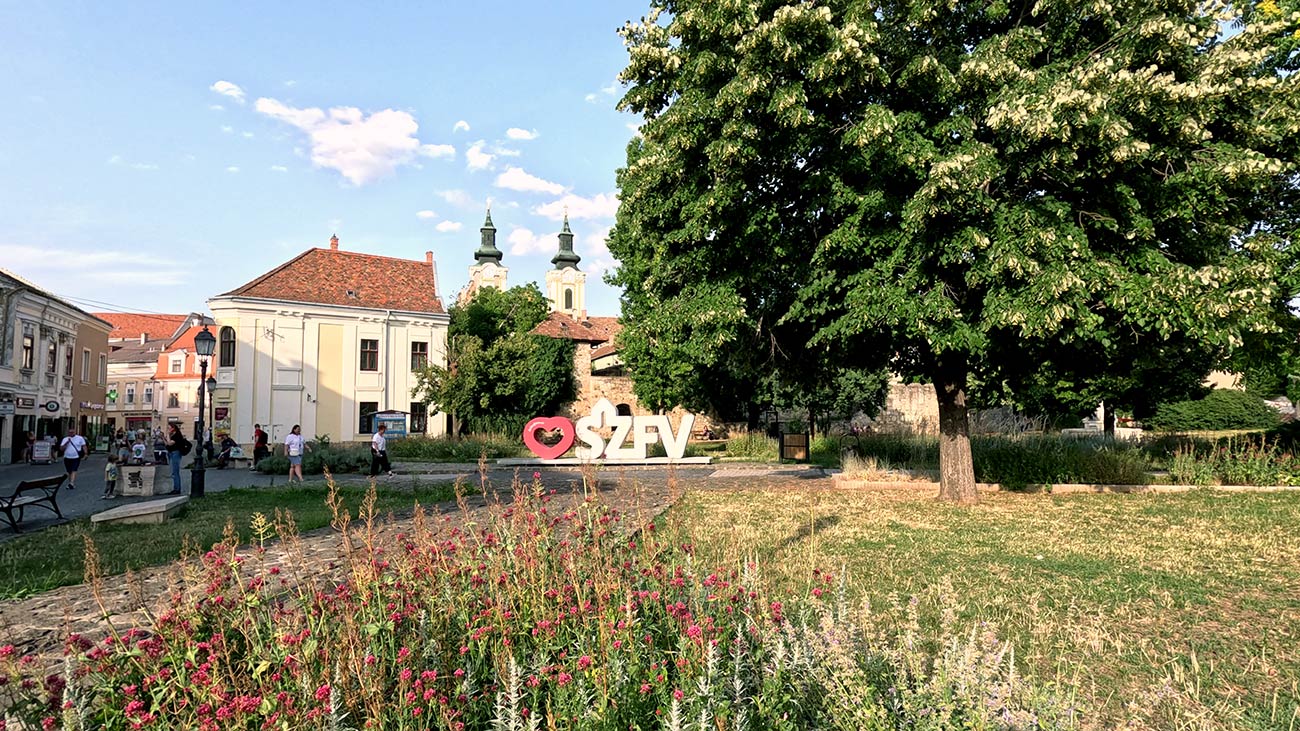
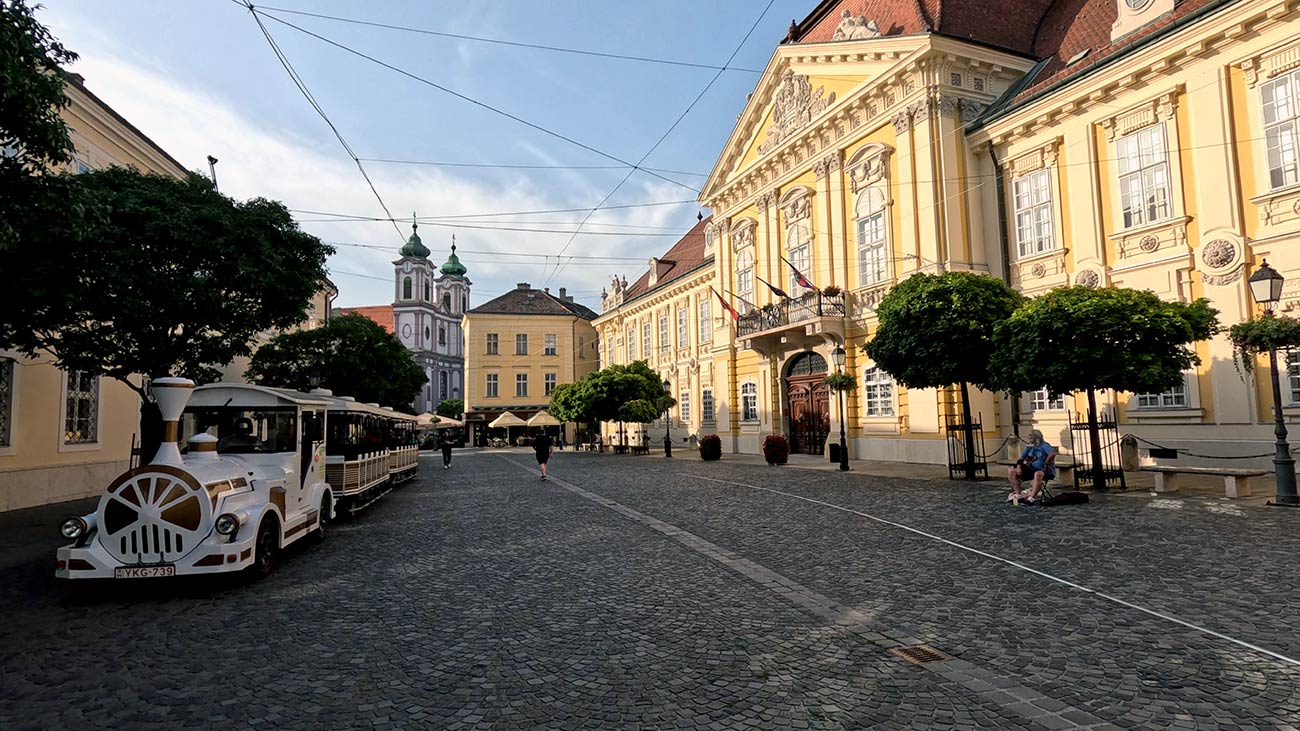
The historic core of Székesfehérvár radiates outward from the Medieval Ruin Garden of the Coronation Basilica (Koronázó Bazilika Romkertje), the excavated foundations of the church first mentioned in 1031, where the early Hungarian kings built their coronation and burial church. Thirty-eight Hungarian kings were crowned within these walls during the Middle Ages, and fourteen monarchs along with members of the royal family were laid to rest here, including Saint Stephen’s son and heir, Saint Emeric, whose sudden and tragic death shaped the early succession crises of the Hungarian crown. The church held the royal throne, the national treasury, the archives, and the regalia of the kingdom until it was destroyed in a gunpowder explosion in 1601; its stones were gradually carried off for other buildings, and ongoing excavations since 1862 have slowly revealed the foundations, the ornate sarcophagus attributed to Saint Stephen, and a memorial archway built to mark the 900th anniversary of his death in 1938. A short walk away, Orb and Town Hall Square (Országalma és Városháza tér) is dominated by the Orb of Fehérvár, a sculpture of one of the Hungarian crown jewels by Béla Ohmann, surrounded by the Bishop’s Palace, the Diocese Museum, and the historic Town Hall, which holds a certified copy of the Holy Crown of Hungary, weighing 1.5 kilograms in gold-covered silver and set with almandine, sapphire, amethyst, turquoise, and pearls.
A short distance from the main square stands the St. Stephen Basilica (Szent István Székesegyház), built between 1758 and 1768 on the site of the city’s first sovereign residence, with frescoes by Johann Cymbal and a crypt containing the sarcophagus of King Béla III and his wife, Anne of Antioch, preserving the imprint of the royal couple’s bodies. Nearby, the Hiemer House (Hiemer-ház), a fusion of three medieval buildings restored with their Baroque frescoes and stucco intact, now houses a wedding hall, a toy museum, and an escape room, while the Clockwork and Clock Museum (Órajáték) on Kossuth Street draws a small daily crowd for its mechanical procession of legendary Hungarian kings and saints, accompanied by carillon music, appearing on the hour from 10 in the morning onward. The city’s most eccentric attraction lies a short distance outside the centre: Bory Castle (Bory vár), an entirely self-built artist’s residence raised by the architect Jenő Bory between 1923 and his death in 1959, with seven towers, dozens of rooms, statues, mosaics, and frescoes created almost single-handedly as what its creator called a giant, livable sculpture. For a quieter cultural detour, the Open Air Museum (Skanzen) on Rác Street preserves the folk architecture and crafts of the old Serbian quarter of Palotaváros, anchored by a small eighteenth-century Serbian Orthodox church.
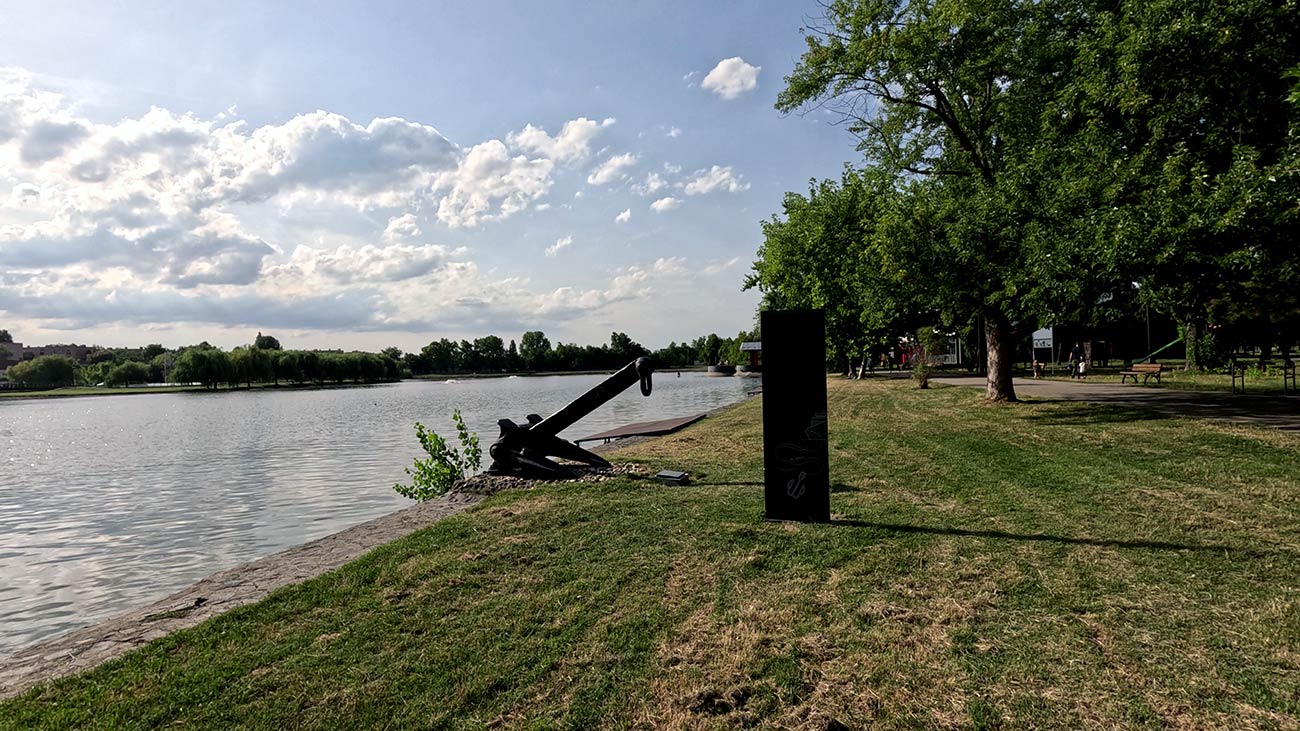
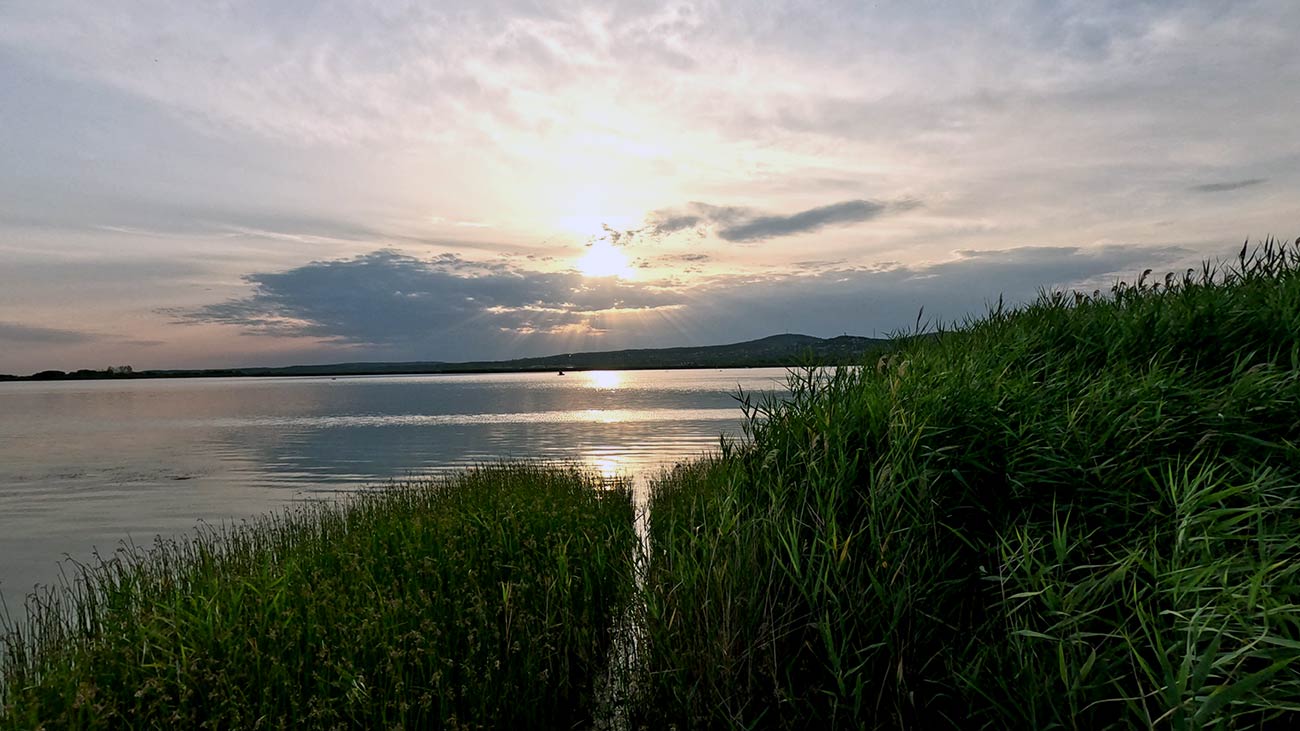
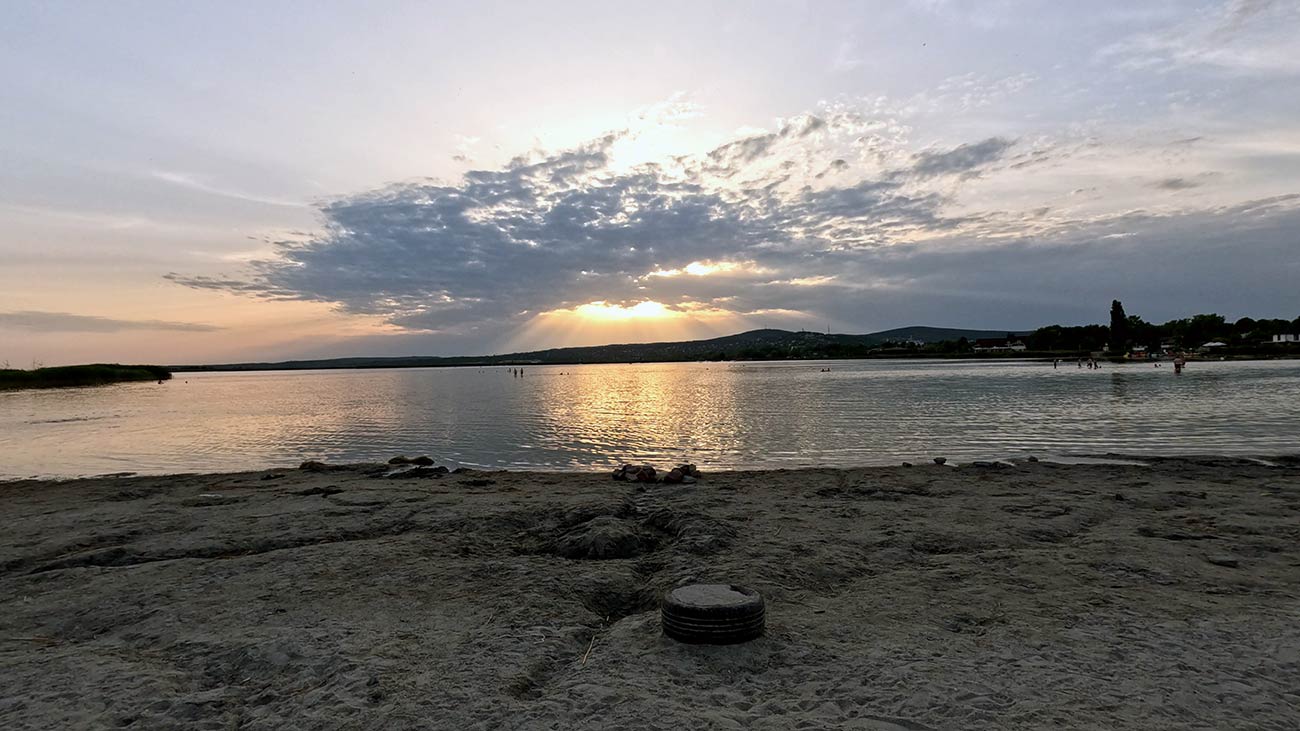
South of the city, Lake Velence opens out into an entirely different landscape: shallow, warm water that ranks among the warmest lakes in Europe, fringed by reed beds and ringed by small towns built almost entirely around the water. The lake’s wilder western shore has been a protected nature reserve since 1958, home to the great egret, the Eurasian spoonbill, and the great crested grebe, all observable from pleasure boats departing Agárd harbour or from quieter hides further along the shore. The lakeside towns of Velence, Gárdony, and Agárd offer a chain of free and paid beaches, thermal and medicinal baths fed by mineral water drawn from a thousand metres below ground, and a wide menu of water sports from windsurfing to dragon-boat tours through the reeds. A flat, roughly 30-kilometre cycling loop circles the entire lake, broken only by a single uphill stretch near Pákozd, and takes in a number of small but genuinely interesting stops along the way: the 20-metre Bence-hegy Lookout, built on the site of a former oil well and resembling either a wind-bent tree or an abstract flower depending on who you ask; the strange, naturally balanced Pákozd Balancing Rocks, geological formations locals call wool bags that have stood near Sukoró and Pákozd since prehistoric times; the Military Memorial Park at Pákozd, commemorating the 1848 Battle of Pákozd on the same ground; and the small Dinnyés Castle Park, a Guinness World Record open-air exhibition of 35 scale-model Hungarian castle ruins built from stone, wood, brick, wicker, and mud. The Hungarian writer Géza Gárdonyi was born in Agárd, and his birthplace, now a memorial house, sits beside a small-scale model of the Castle of Eger evoking scenes from his classic novel Eclipse of the Crescent Moon.
 Useful Links
Mobility for Cyclists
The connection
The most practical connection from the EuroVelo 6 corridor is from Budapest, where MÁV-START trains depart from Budapest-Déli station directly to Székesfehérvár in around 45 to 50 minutes on the fastest services, with departures roughly every 15 to 20 minutes throughout the day. Cyclists riding the Hungarian stretch of the EuroVelo 6 will find Budapest the natural transfer point. The same line continues south-east toward Lake Velence, stopping at Velence, Gárdony, and Agárd, all reachable from Budapest in well under an hour and from Székesfehérvár in a much shorter regional hop, which makes it straightforward to combine both destinations into a single longer day or a relaxed overnight trip.
Hungarian Trains
The rail network in Hungary is operated mainly by MÁV-START, the passenger arm of the Hungarian State Railways (Magyar Államvasutak), which runs most long-distance services and a large share of regional connections across the country. Alongside MÁV-START, the private operator GySEV / Raaberbahn (Győr-Sopron-Ebenfurti Vasút) runs cross-border lines in the western part of the country toward Austria, while a smaller number of regional operators run local and feeder lines on selected routes. All operators are fully integrated into the national rail system, so transfers between them are straightforward. The Hungarian rail network is organised around Budapest, with high-frequency InterCity and EuroCity services radiating out from the capital toward Lake Balaton, the Croatian border, the Carpathian foothills, and the eastern plains, alongside a dense network of regional and local services. The Danube region in Hungary is particularly well served by rail, with the main north-south corridor running close to the river from the Slovak border through Budapest and onward toward Mohács, and several east-west lines branching out to inland destinations. The MÁV app is the central tool for planning journeys, checking timetables, and purchasing tickets across all services, including both regional and long-distance trains.
Taking your bike
Hungary is generally very bike-friendly when it comes to rail transport, especially on regional services operated by MÁV-START, which form the core of mobility for cycle touring along the Danube and its connecting corridors. On regional and local trains, bicycles can be taken on board for an additional fee, with no advance reservation possible and a first-come, first-served allocation of space. Bicycle tickets are sold as single trips or as affordable daily or weekly passes, valid across the regional network. On long-distance services such as InterCity and EuroCity trains, an advance reservation for the bicycle is mandatory, with the bike spaces located in dedicated zones in second-class carriages. The private operator GySEV / Raaberbahn, which runs cross-border services in the western part of the country, also accepts bicycles on board with broadly similar rules. Folding bikes are carried free of charge as hand luggage on all operators, provided they fit in the luggage racks. Overall, the Hungarian rail system is well adapted to cycle tourism and offers a flexible combination of train and bike that makes it easy to leave the EuroVelo 6 route in either direction for short or extended detours.
Bikes on Buses
Long-distance bus services in Hungary are primarily operated by Volánbusz, the national coach operator now consolidated under the MÁV group, alongside FlixBus and a smaller number of regional and private operators on selected international and domestic routes. The long-distance bus network is unusually well developed by central European standards, with frequent connections from Budapest to all the major regional centres and a dense web of services across the countryside that complement and sometimes overlap with the rail network. Bicycle transport is available on certain FlixBus connections, either via external bike racks or in the luggage compartment, but it is not consistently guaranteed across the network and depends on the specific vehicle type and route configuration. Where available, bicycle transport must be reserved in advance and capacity is limited, making it less flexible compared to rail services. Volánbusz coaches generally do not carry assembled bicycles, although folded or packed bikes may be accepted as luggage on a case-by-case basis. As a result, buses are generally used as a secondary option for cyclists, mainly for longer-distance repositioning between major cities rather than as a core part of cycling itineraries along the Danube region. While useful in specific cases where rail connections are less convenient, they are less predictable and less standardised for bicycle transport, so advance planning is essential.
Arriving in Székesfehérvár and Continuing to the Lake
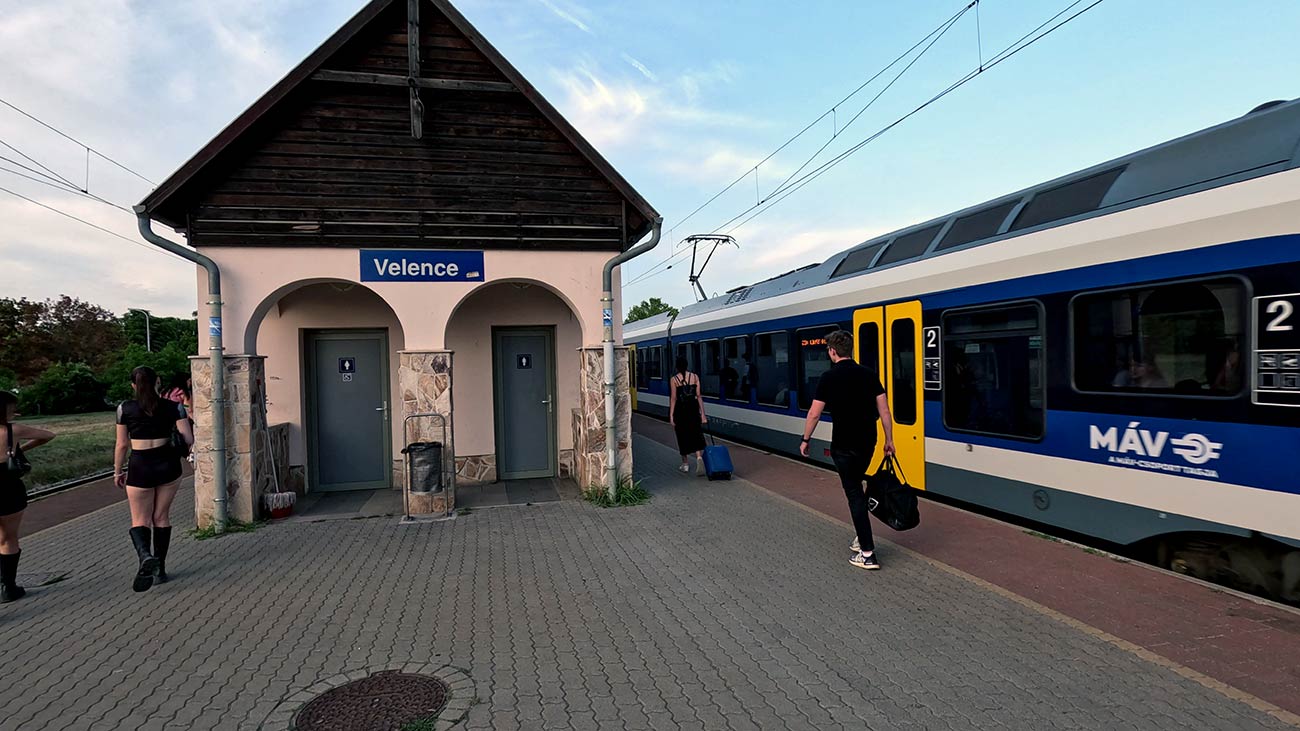
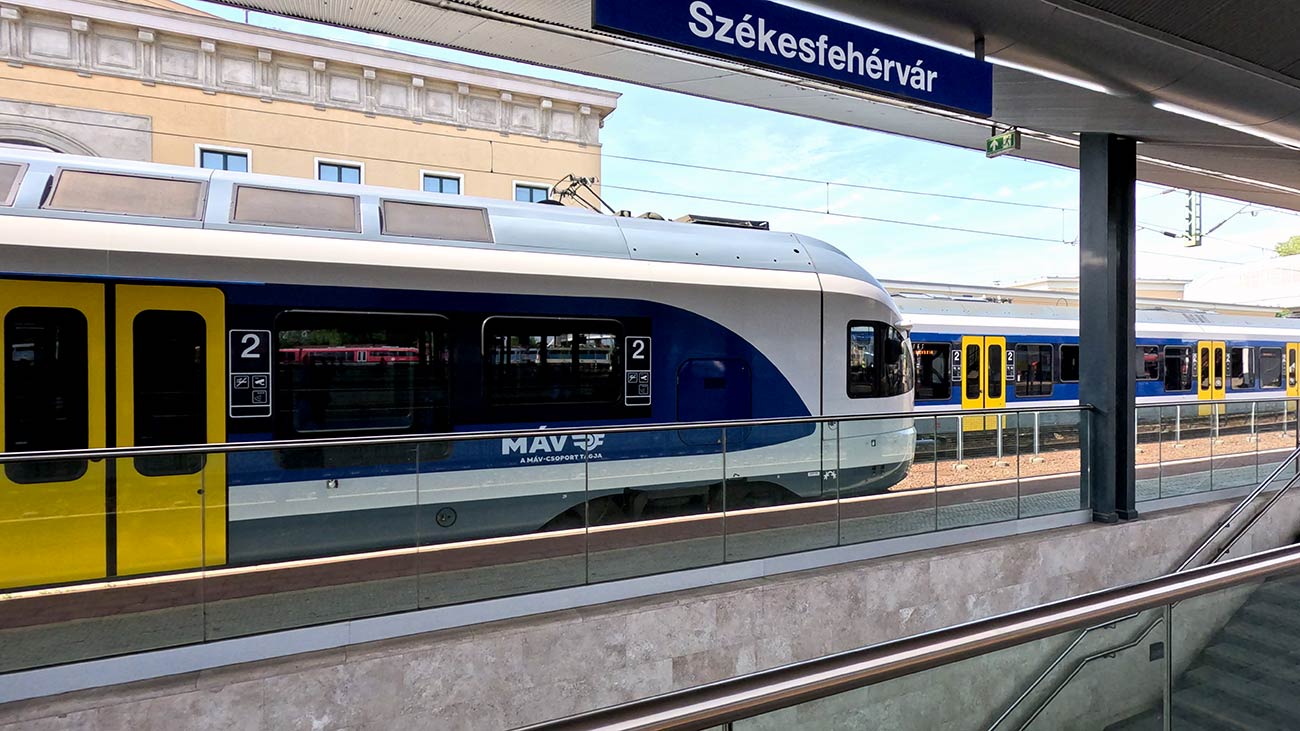
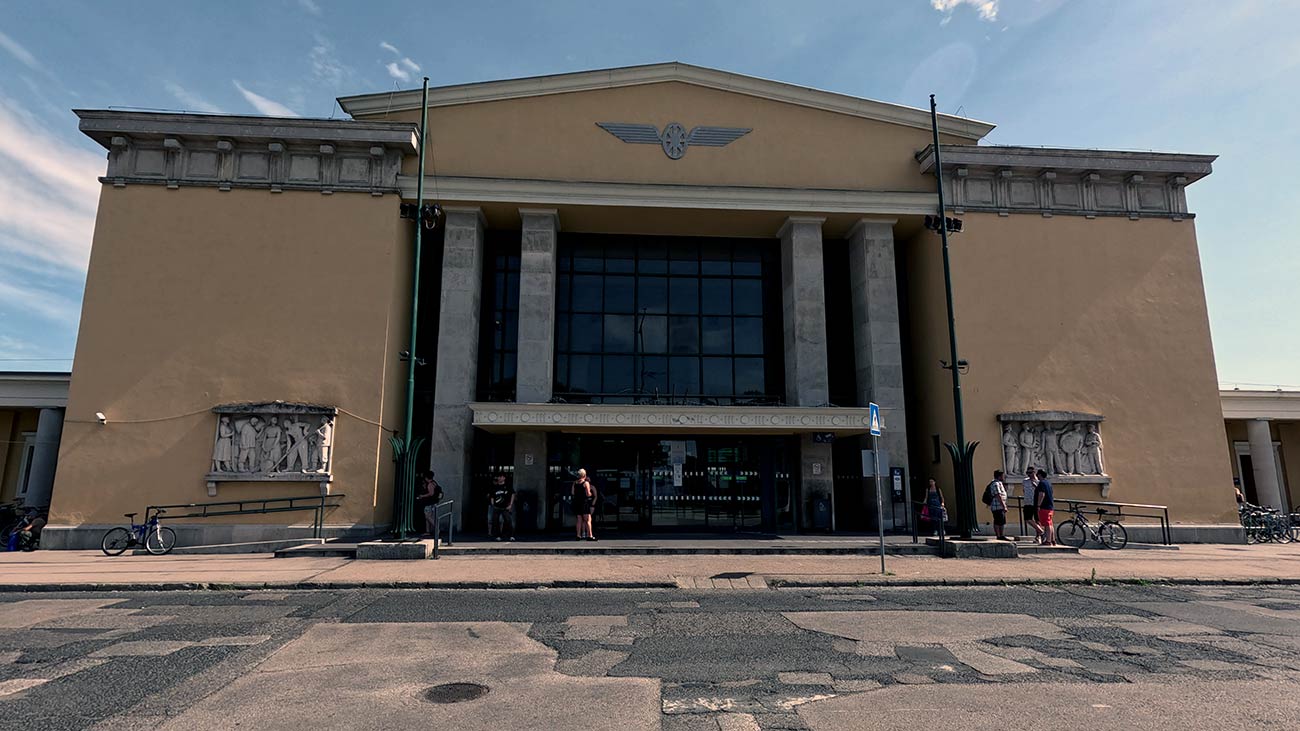
Székesfehérvár’s railway station sits a short walk or ride from the historic centre, with the Coronation Basilica ruins, Town Hall Square, and the surrounding old town all reachable on foot in around fifteen minutes along largely flat, well-signposted streets. Bory Castle lies further out in a quieter residential district and is best reached by bike or local bus. For travellers continuing to Lake Velence, the stations at Velence, Gárdony, and Agárd all sit within a short walk or ride of the lakeshore, beaches, and the start of the flat cycling loop around the lake. Bike racks are available at all of the relevant stations. For onward travel, the same line connects back toward Budapest and the wider Danube region, so a visit to Székesfehérvár and Lake Velence works equally well as a one-day excursion focused on either destination or as a longer two-day trip combining the coronation city with a relaxed afternoon by the water.