Tisza Lake
Reading time: 12 minutes
TISZAFÜRED AND LAKE TISZA, HEVES AND JÁSZ-NAGYKUN-SZOLNOK COUNTIES, HUNGARY
A Water World on the Great Hungarian Plain
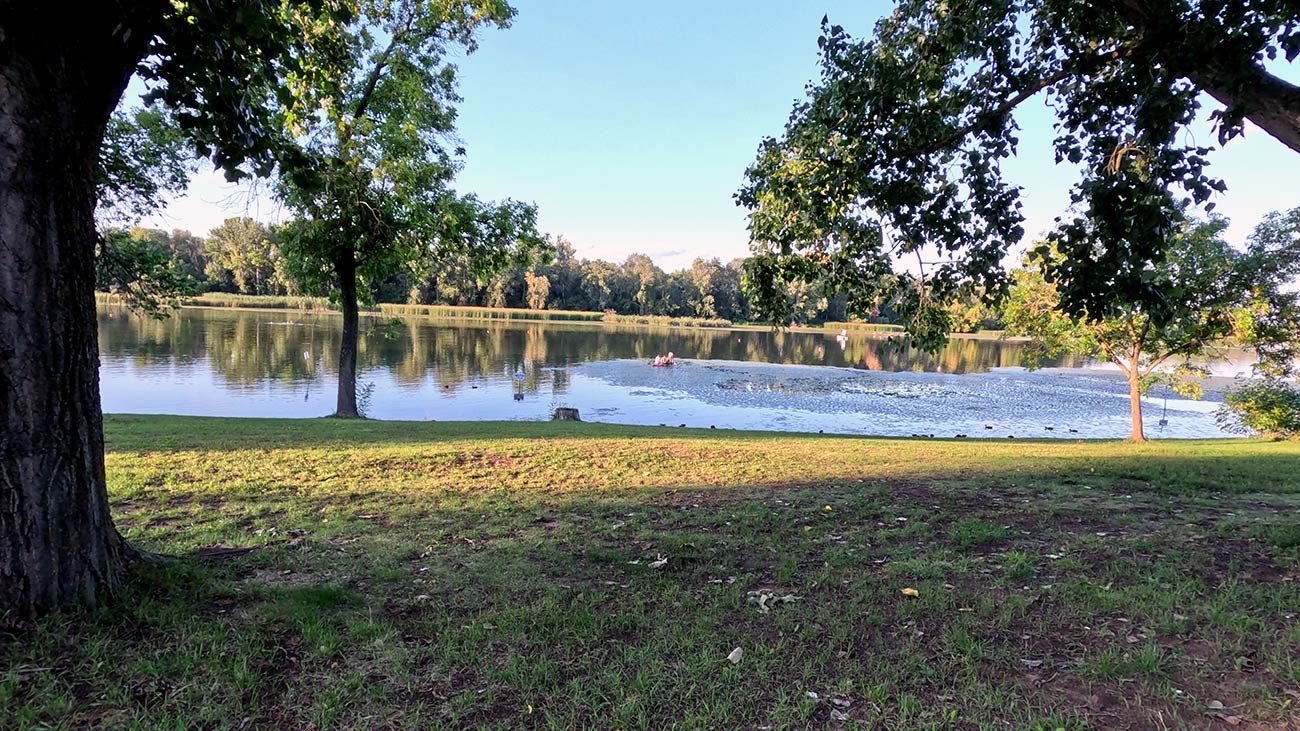
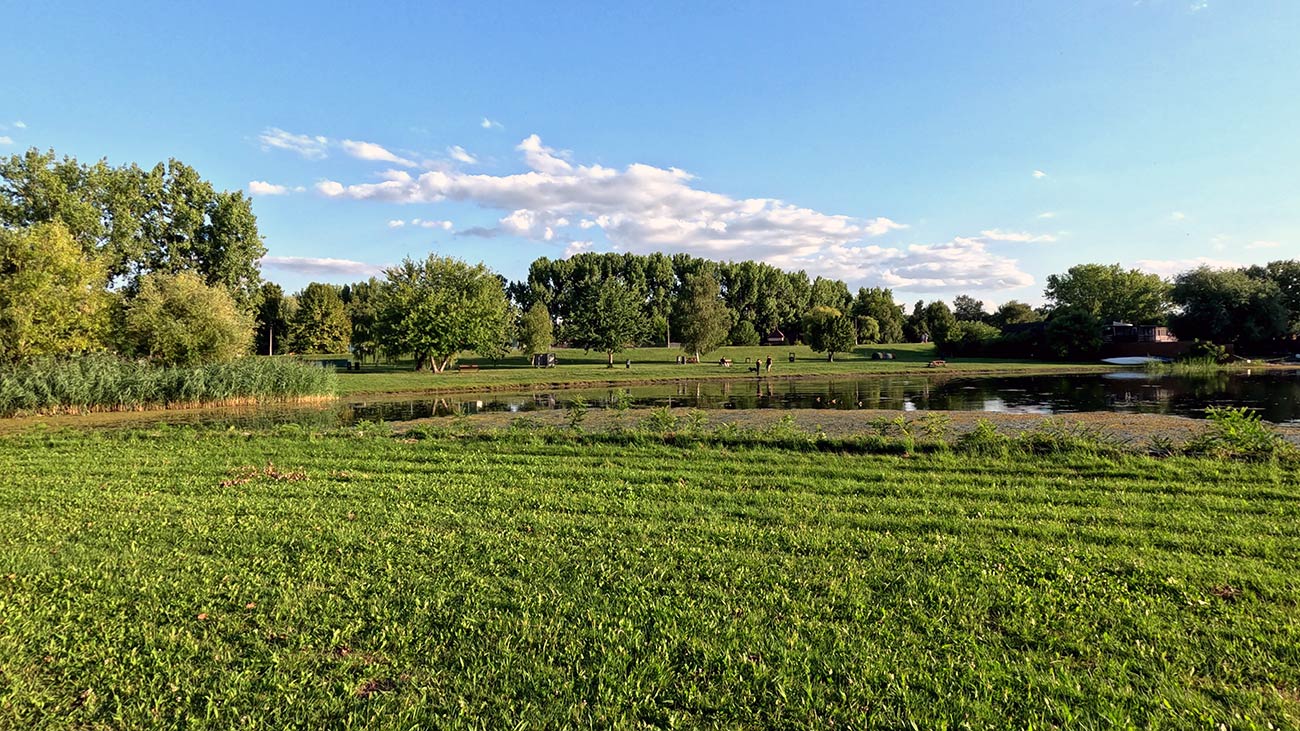
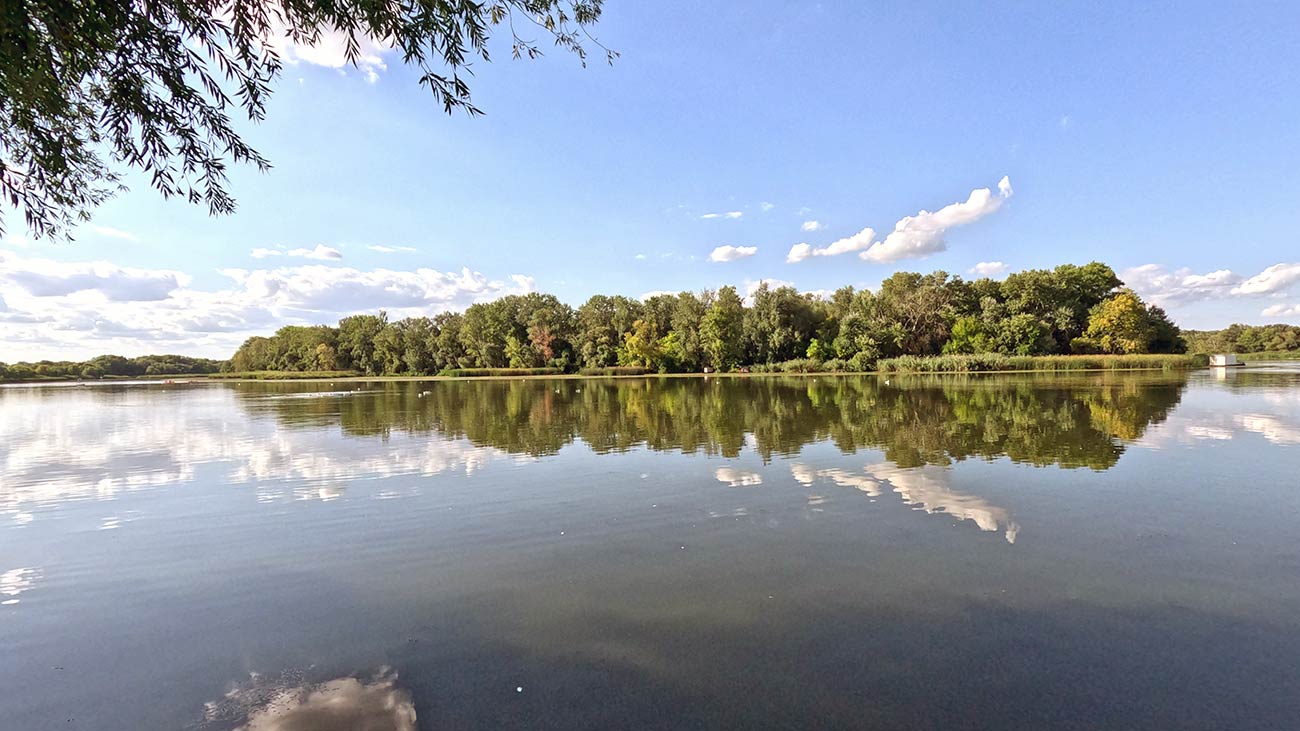
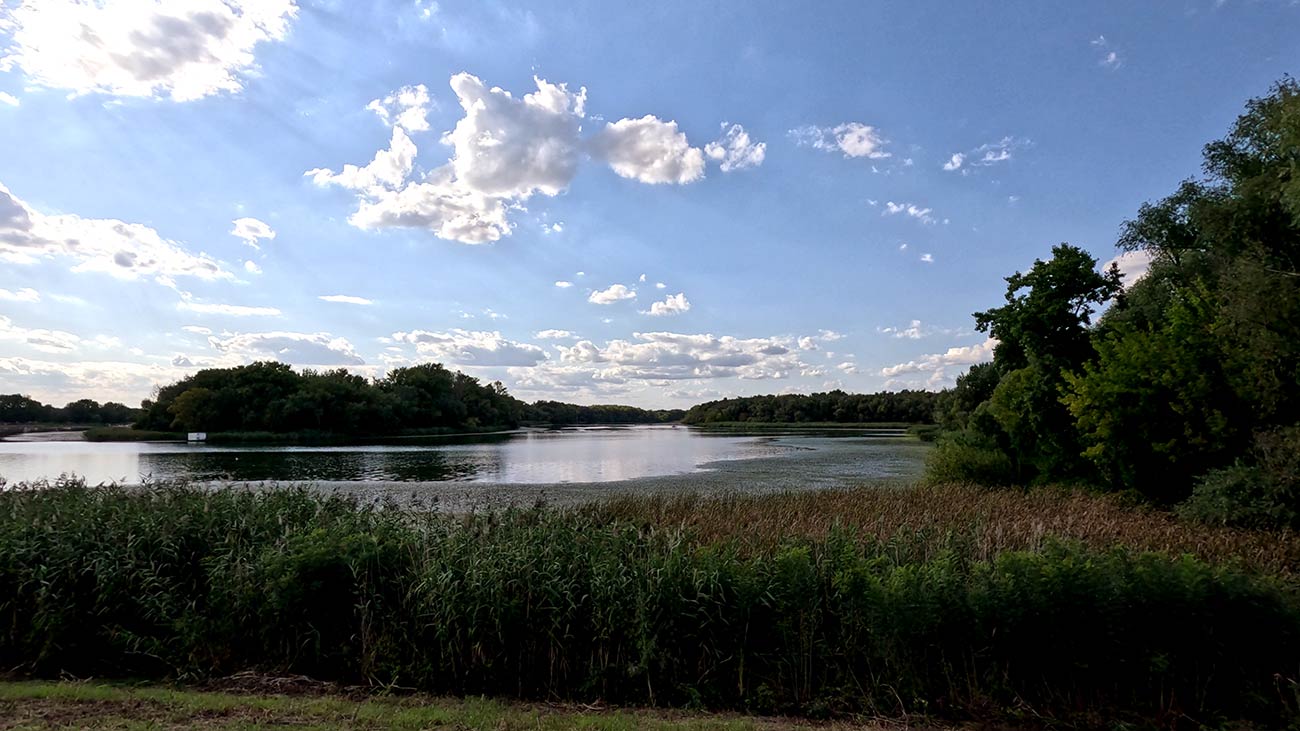
In the wide, flat heart of Hungary, where the Great Plain stretches almost without interruption toward the eastern border, lies a body of water that did not exist before living memory. Lake Tisza (Tisza-tó), the second-largest lake in the country, was created between 1968 and 1973 when the Kisköre Dam was built across the Tisza River for flood control and irrigation, and its slow filling continued into the 1990s. What began as a purely engineering project has since become one of the richest wetland ecosystems in central Europe, a 127-square-kilometre maze of open water, reed beds, backwaters, and small islands that nature has reclaimed with remarkable speed. Today the lake forms part of the Hortobágy National Park and is protected under the Ramsar Convention on wetlands of international importance.
The main town on the lake, Tiszafüred, sits on its eastern shore and has grown into the natural gateway for visitors, with a relaxed small-town atmosphere, lakeside restaurants serving the region’s traditional fish dishes, and a modern visitor centre that introduces the lake’s unusual ecological story. Since the completion of the final missing section of the lake’s cycling path between Poroszló and Tiszafüred in 2020, the entire 27-kilometre length of the lake can now be circled on a continuous, motor-traffic-free route running along the crest of the dam, with the water visible for almost the whole ride. The surrounding area has quietly become one of Hungary’s most popular destinations for cycling, birdwatching, and quiet boat trips through the reeds.
Lake Tisza lies well inland from the Danube, around two and a half hours by train from Budapest, which makes it less a short detour from the EuroVelo 6 than a longer excursion for travellers willing to head deeper into the Hungarian interior. For those with the time, a day or two spent moving between Tiszafüred, the lakeside cycling path, the Poroszló Ecocenter, and the bird reserves offers a genuinely different Hungarian landscape from the river towns of the Danube corridor: flat, watery, reed-fringed, and full of birdlife in a way that few places in the country can match.
LakeWater SportsParksNature
A Reservoir Turned Wetland: Tiszafüred, Its Reserves, and the Dam That Made It All Possible
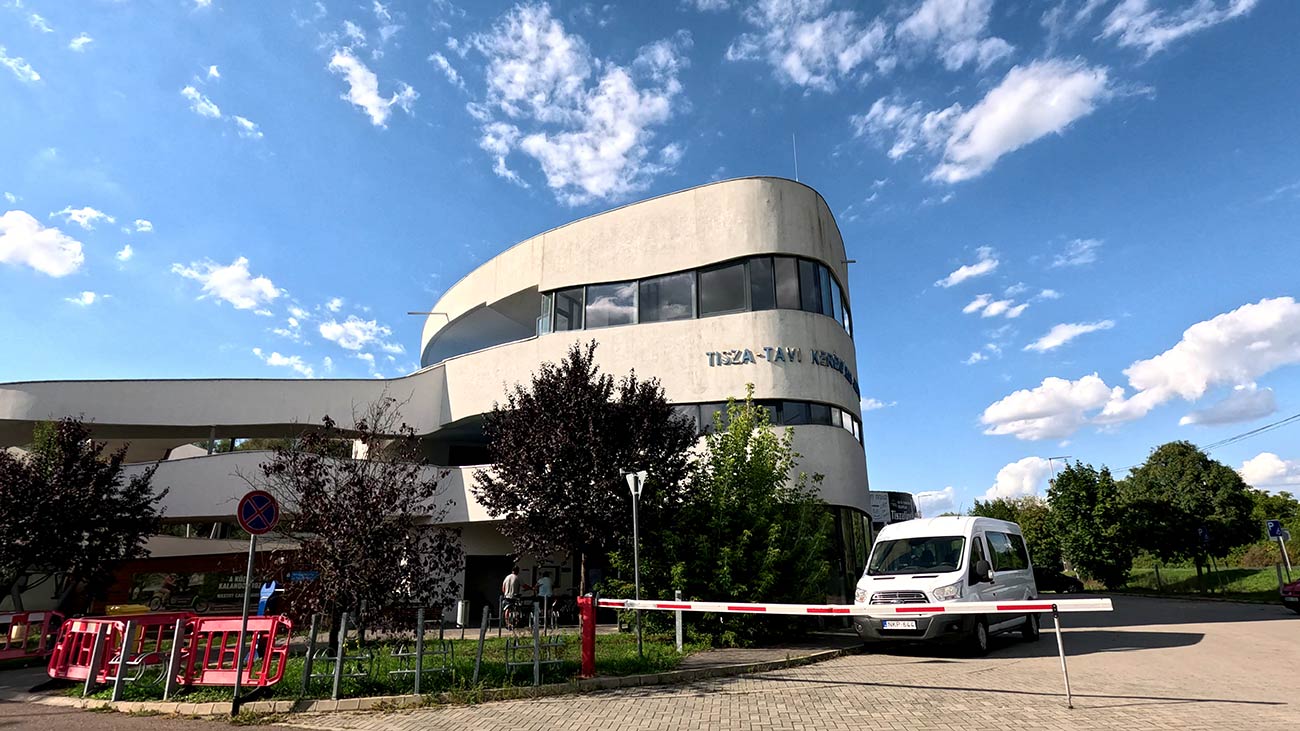
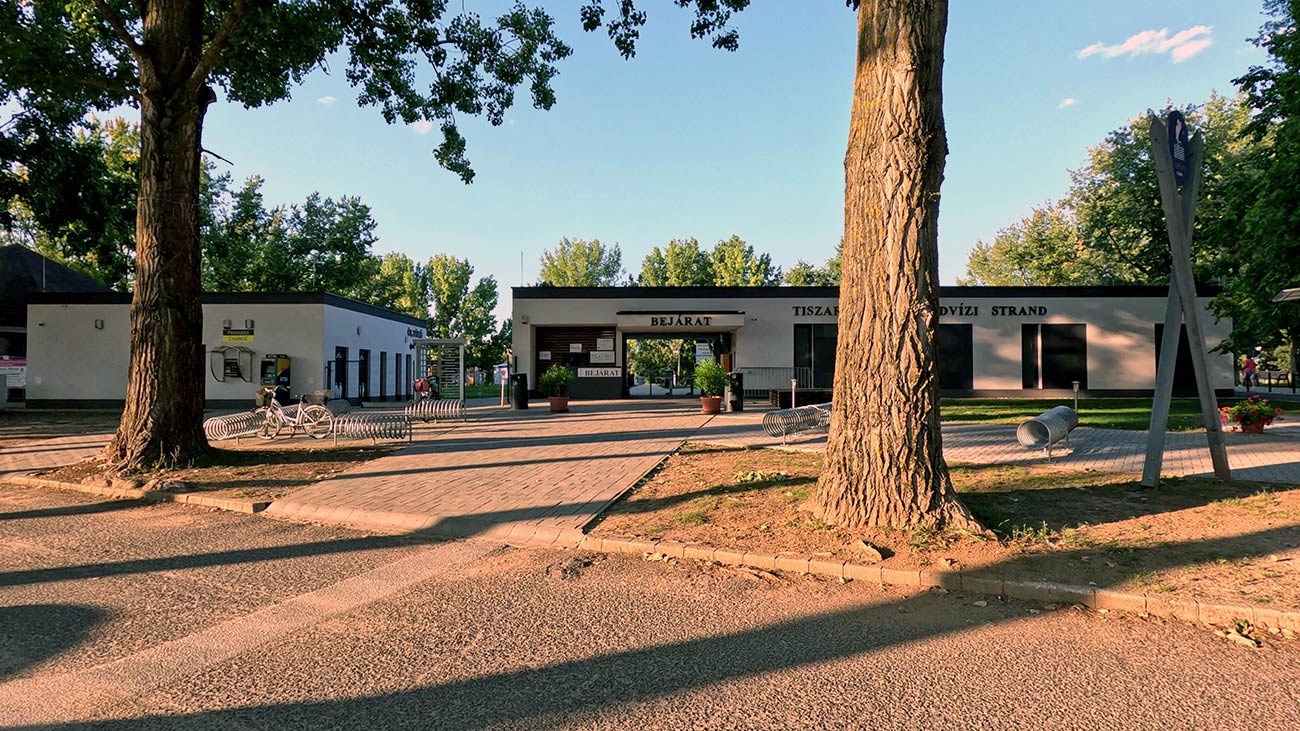
The natural base for exploring the lake is Tiszafüred, a small town on the eastern shore that combines a relaxed lakeside atmosphere with a modern Tisza Lake Visitor Centre, which introduces the lake’s unusual ecological history through exhibitions on its creation, its wildlife, and its present role within the Hortobágy National Park. Around the town, beaches, marinas, and a network of restaurants serving the region’s traditional fish soup (halászlé) and grilled freshwater fish give Tiszafüred the feel of a low-key, family-oriented lake resort, considerably quieter and less developed than Lake Balaton further west. From the town, the Lake Tisza Water Promenade, a long system of wooden walkways and bridges, allows visitors to walk directly out over the reeds and shallow water without needing a boat, with observation towers offering views across the lake’s labyrinth of channels and islands.
On the lake’s southern shore, the Lake Tisza Ecocenter in Poroszló is the single most popular built attraction in the area, centred on Europe’s second-largest freshwater aquarium, which presents the native fish, otters, and aquatic birds of the Tisza basin in large naturalistic tanks. The Ecocenter also serves as the access point to the Lake Tisza Bird Reserve, part of the Hortobágy National Park and one of the most important wetland habitats in the country, with more than 200 recorded bird species including herons, egrets, spoonbills, and the protected white-tailed eagle. Because the most strictly protected sections of the reserve can only be reached by water, a guided boat or kayak tour through the reed-lined channels is the standard way to experience it, with the surrounding silence broken only by birdsong and the gentle movement of the boat. Shorter educational trails, including the Pákász (hunter-gatherer) and Tiszavirág (mayfly) nature paths on the small islands near Tiszaörvény, offer a gentler, land-based alternative for travellers without a boat.
At the lake’s southern end, the Kisköre Dam, completed in 1973, is both the engineering origin of the entire lake and a quietly fascinating technical attraction in its own right. The dam holds back a 26-metre difference in water level between the lake and the river below, and it powers the Kisköre Hydroelectric Power Station, the largest hydroelectric plant in Hungary, which can be toured by appointment in small groups. Beside the dam, the Kisköre Fish Ladder, opened in 2014, is described as the largest ecological fish corridor in central Europe: a nearly 1,400-metre artificial channel of rapids, small waterfalls, and ten semi-natural basins that allows more than forty species of fish, including several strictly protected ones, to move freely between the lake and the river despite the dam’s ten-metre drop. Viewing windows set into the structure let visitors watch the fish pass through at close range, making it one of the more unusual and genuinely educational stops on the lake.
Since the completion of its final section between Poroszló and Tiszafüred in 2020, the cycling path around Lake Tisza has formed a complete, roughly 27-kilometre traffic-free loop running along the crest of the flood dam that encircles the reservoir. The route gives a near-continuous view of the open water and the surrounding reed beds, with small villages, fishing harbours, and beaches breaking up the ride at regular intervals. The lakeside village of Sarud, on the southern shore, is the starting point for short boat trips out to the Bölömbika (great bittern) lookout point, one of three observation platforms on the lake that blend quietly into the landscape and can only be reached by water. For travellers based in Tiszafüred, the full loop or a shorter out-and-back section makes for a relaxed full day on two wheels, entirely separate from any road traffic.
 Useful Links
Mobility for Cyclists
The connection
The most practical connection is from Budapest, where MÁV-START trains run to Tiszafüred in around two and a half hours, either as a direct service or with a single change at Füzesabony, with several departures throughout the day. Cyclists wanting to extend a Danube tour with a deeper excursion into the Hungarian interior should plan for a full day of travel each way, or consider an overnight stay in Tiszafüred to make the most of the journey. The lake area can also be reached by long-distance bus from Budapest, although the train is generally the faster and more comfortable option, particularly for travellers carrying bicycles.
Hungarian Trains
The rail network in Hungary is operated mainly by MÁV-START, the passenger arm of the Hungarian State Railways (Magyar Államvasutak), which runs most long-distance services and a large share of regional connections across the country. Alongside MÁV-START, the private operator GySEV / Raaberbahn (Győr-Sopron-Ebenfurti Vasút) runs cross-border lines in the western part of the country toward Austria, while a smaller number of regional operators run local and feeder lines on selected routes. All operators are fully integrated into the national rail system, so transfers between them are straightforward. The Hungarian rail network is organised around Budapest, with high-frequency InterCity and EuroCity services radiating out from the capital toward Lake Balaton, the Croatian border, the Carpathian foothills, and the eastern plains, alongside a dense network of regional and local services. The Danube region in Hungary is particularly well served by rail, with the main north-south corridor running close to the river from the Slovak border through Budapest and onward toward Mohács, and several east-west lines branching out to inland destinations. The MÁV app is the central tool for planning journeys, checking timetables, and purchasing tickets across all services, including both regional and long-distance trains.
Taking your bike
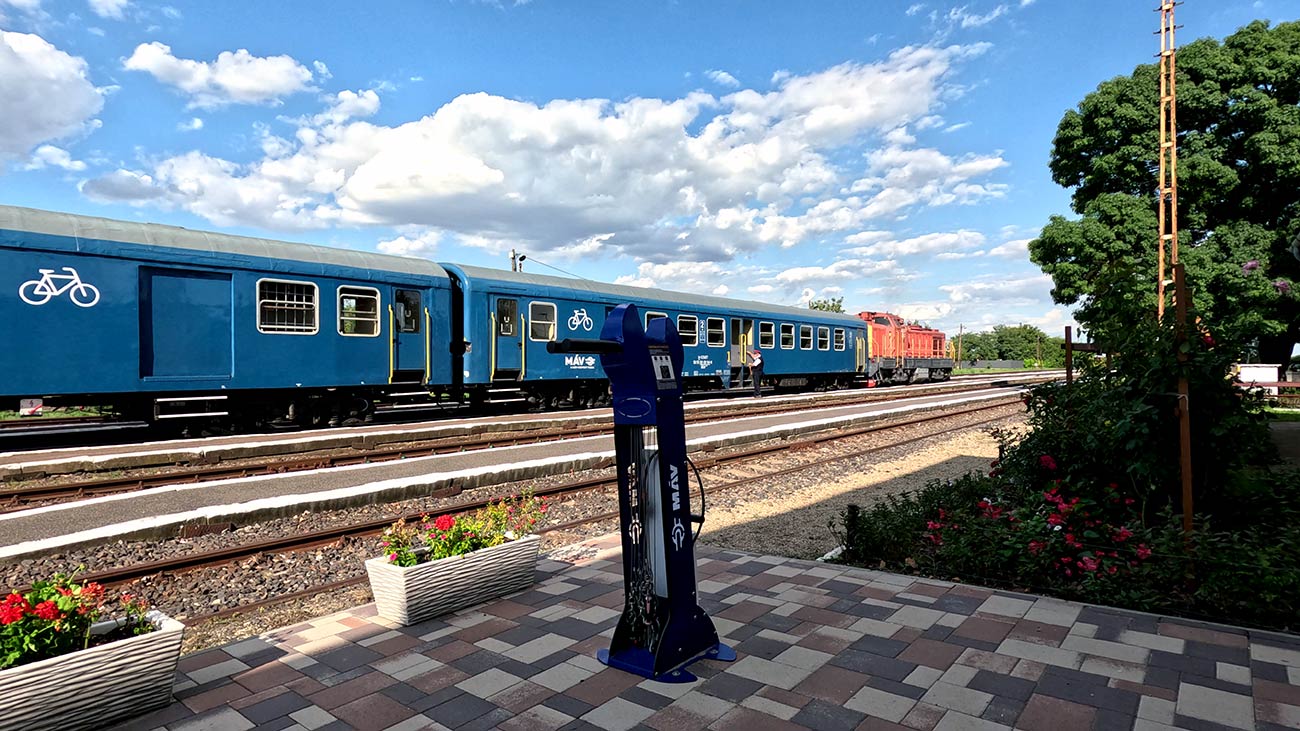
Hungary is generally very bike-friendly when it comes to rail transport, especially on regional services operated by MÁV-START, which form the core of mobility for cycle touring along the Danube and its connecting corridors. On regional and local trains, bicycles can be taken on board for an additional fee, with no advance reservation possible and a first-come, first-served allocation of space. Bicycle tickets are sold as single trips or as affordable daily or weekly passes, valid across the regional network. On long-distance services such as InterCity and EuroCity trains, an advance reservation for the bicycle is mandatory, with the bike spaces located in dedicated zones in second-class carriages. The private operator GySEV / Raaberbahn, which runs cross-border services in the western part of the country, also accepts bicycles on board with broadly similar rules. Folding bikes are carried free of charge as hand luggage on all operators, provided they fit in the luggage racks. Overall, the Hungarian rail system is well adapted to cycle tourism and offers a flexible combination of train and bike that makes it easy to leave the EuroVelo 6 route in either direction for short or extended detours.
Bikes on Buses
Long-distance bus services in Hungary are primarily operated by Volánbusz, the national coach operator now consolidated under the MÁV group, alongside FlixBus and a smaller number of regional and private operators on selected international and domestic routes. The long-distance bus network is unusually well developed by central European standards, with frequent connections from Budapest to all the major regional centres and a dense web of services across the countryside that complement and sometimes overlap with the rail network. Bicycle transport is available on certain FlixBus connections, either via external bike racks or in the luggage compartment, but it is not consistently guaranteed across the network and depends on the specific vehicle type and route configuration. Where available, bicycle transport must be reserved in advance and capacity is limited, making it less flexible compared to rail services. Volánbusz coaches generally do not carry assembled bicycles, although folded or packed bikes may be accepted as luggage on a case-by-case basis. As a result, buses are generally used as a secondary option for cyclists, mainly for longer-distance repositioning between major cities rather than as a core part of cycling itineraries along the Danube region. While useful in specific cases where rail connections are less convenient, they are less predictable and less standardised for bicycle transport, so advance planning is essential.
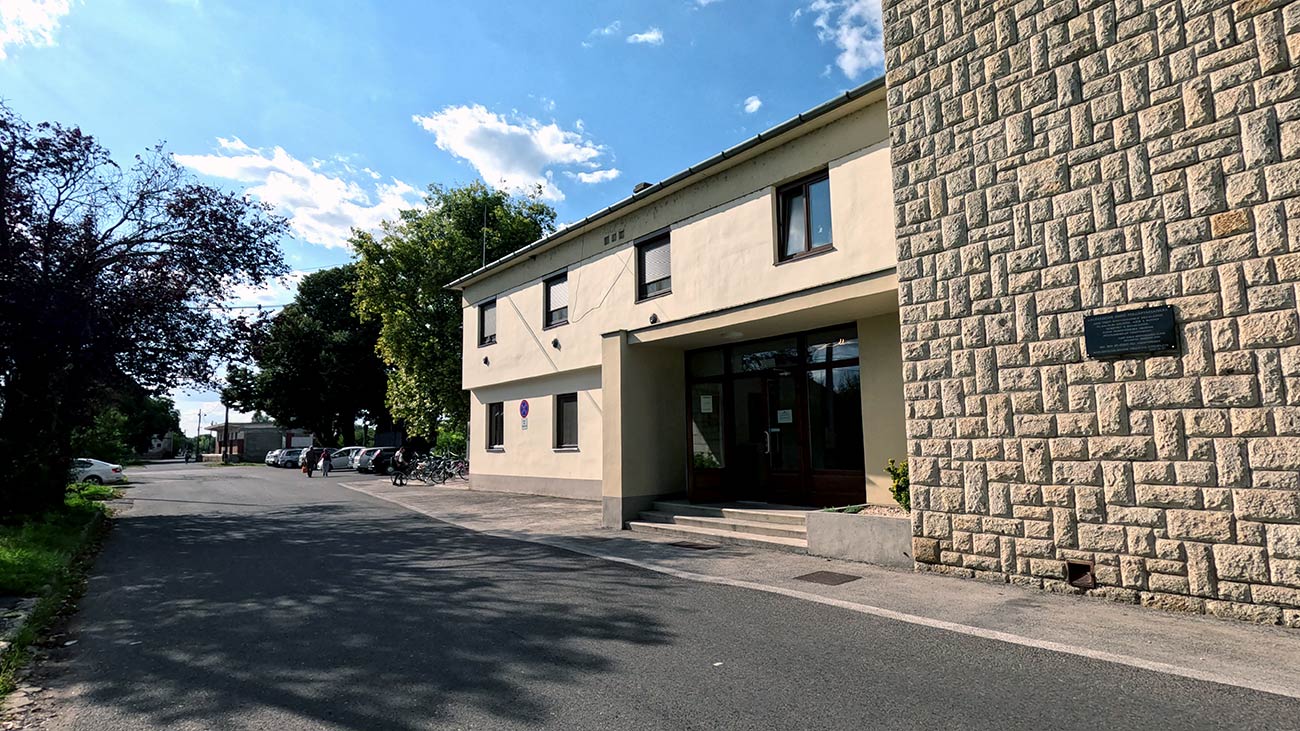
Arriving at Tiszafüred Station and Exploring the Lake
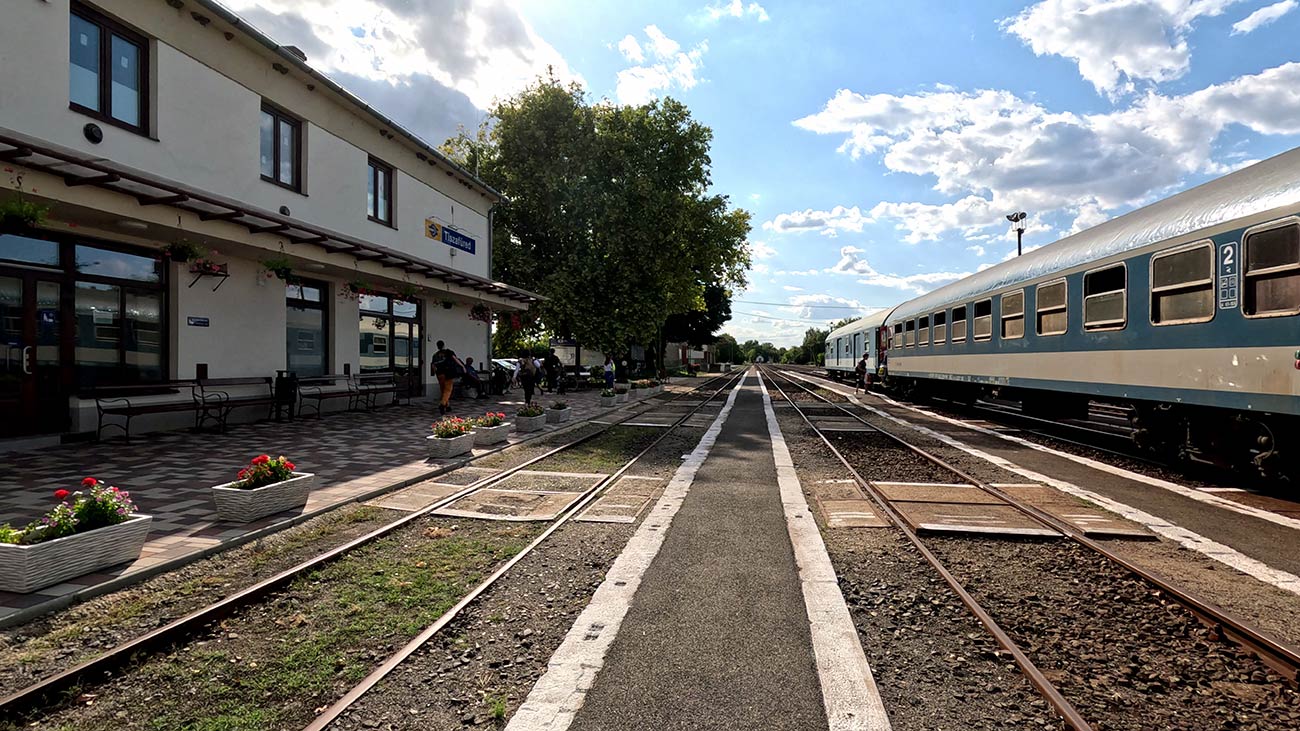
Tiszafüred’s railway station sits a short walk or ride from the town centre and the lakeshore, with the Visitor Centre, the beaches, and the Water Promenade all reachable within fifteen minutes on foot or a few minutes by bike. From Tiszafüred, the traffic-free lakeside cycling path provides an easy and scenic way to reach Poroszló and the Ecocenter on the southern shore, or to continue further around toward Kisköre and the dam. Bike racks are available at the station and at the main visitor facilities around the lake. Boat and kayak rentals are available at most of the lake’s beaches for travellers wanting to explore the protected bird reserve areas that cannot be reached on foot or by bike. For onward travel, the same line connects back toward Füzesabony and Budapest, so Lake Tisza works well either as a single long day trip from the capital or, more comfortably, as an overnight stop combined with a slower exploration of the lake’s cycling path and nature reserves.