Amara Resort
Reading time: 11 minutes
AMARA, IALOMIȚA COUNTY, ROMANIA
A Salt Lake Spa on the Bărăgan Plain
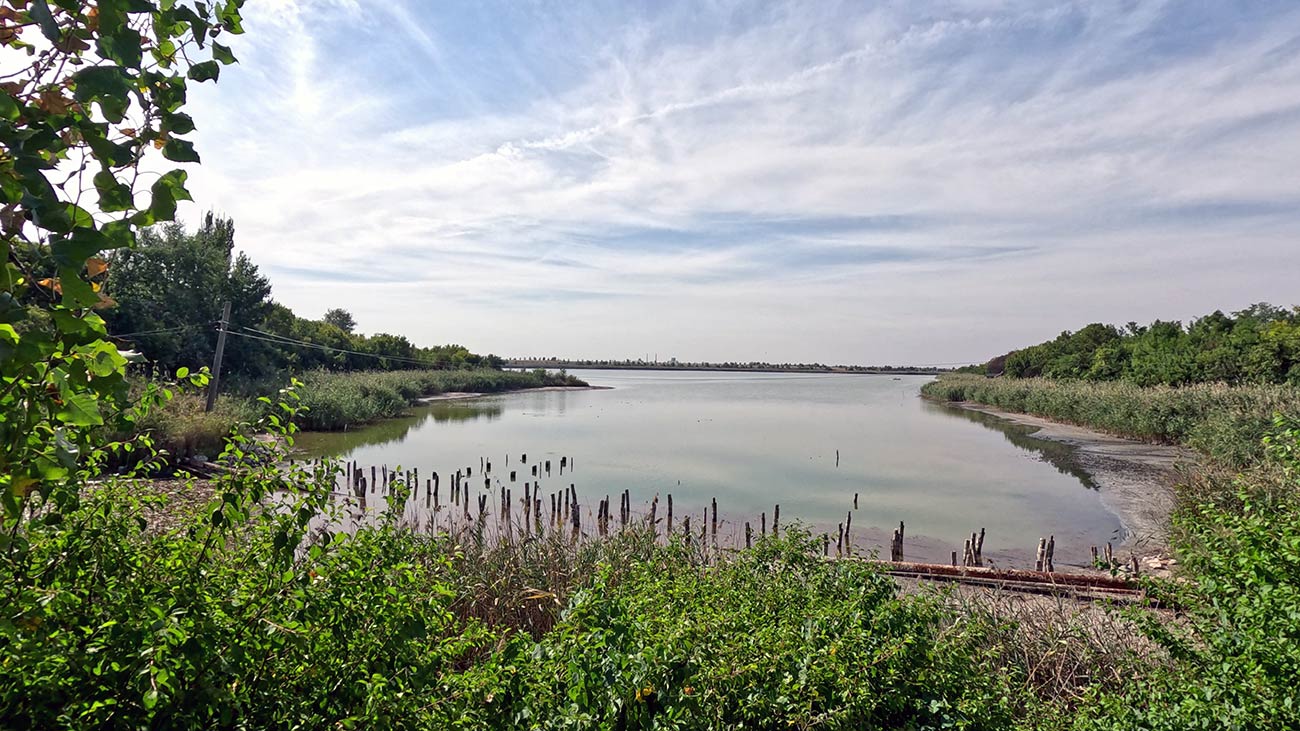
East of Bucharest, where the flat, wide expanse of the Bărăgan Plain stretches out toward the Danube and the Black Sea coast beyond it, lies a small spa town built entirely around one unusual lake. Amara sits on the shore of Lake Amara, a shallow, salty body of water formed in an old abandoned bed of the Ialomița River, locally known as the Crivaia, that filled gradually over the centuries with rainwater and groundwater rich in sodium chloride and sulphates. The lake’s bitter taste gave the town its name: amară is simply the Romanian word for bitter. Beneath the surface lies the real reason people have travelled here for more than a century: roughly 130 hectares of dark, mineral-rich sapropelic mud, formed from organic sediment built up over millennia on the lakebed, prized for its supposed healing properties since the nineteenth century.
The first written mention of the lake’s curative reputation dates to 1847, when the local district doctor petitioned regional authorities to publicise the healing properties of its waters, already known to help with rheumatic and respiratory complaints. The decisive scientific moment came in 1887, when the chemist Petru Poni (1841–1925), a pioneer of chemical education in Romania and member of the Romanian Academy, carried out the first detailed chemical analysis of the lake’s water and mud, identifying significant concentrations of magnesium oxide, sodium, and sulphuric and silicic compounds. Word of the lake’s properties spread quickly: by the early twentieth century thousands of visitors, including many from Bucharest, were arriving each year to bathe and take mud treatments, and small entrepreneurs began building the first wooden bathhouses and pavilions along the shore. Major hotel investment followed in the late 1960s and 1970s under the communist regime, when Amara became a subsidised destination for ordinary workers and trade union members, a role it largely retains today as a modest, unpretentious balneary resort rather than a polished international spa.
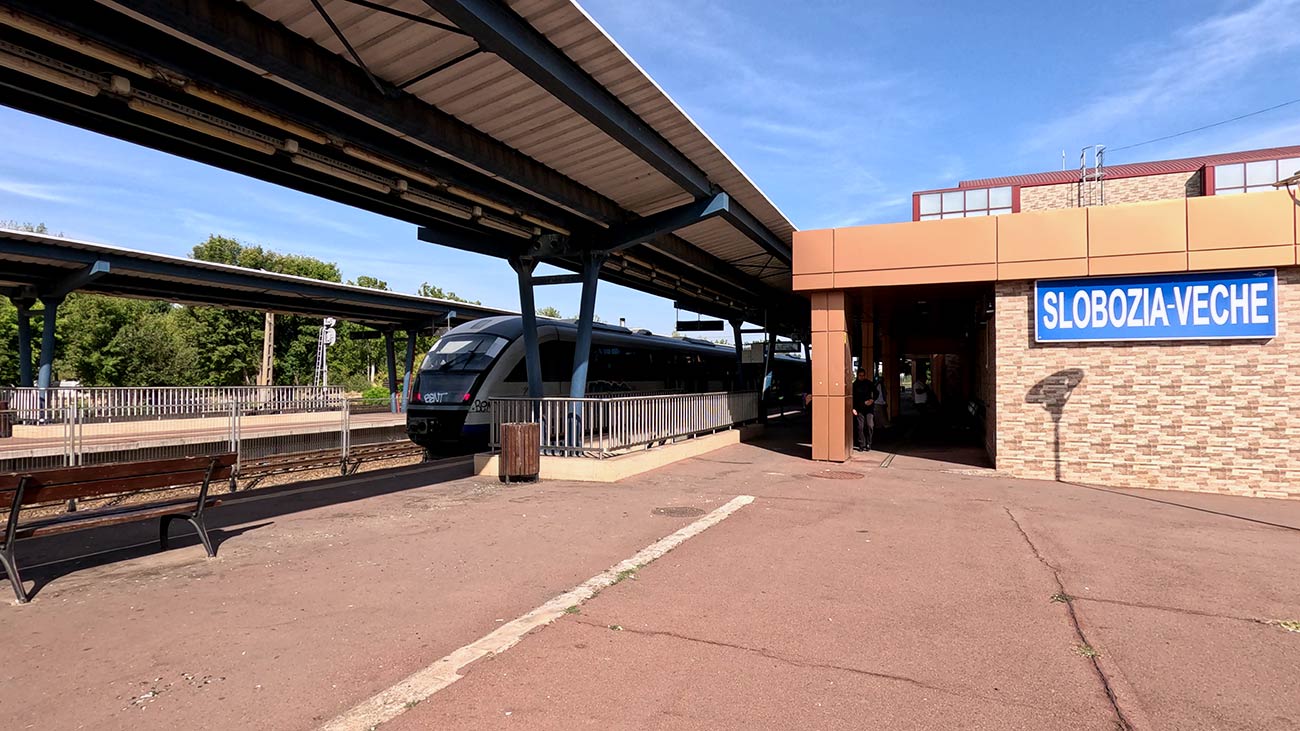
For cyclists exploring the Danube along the EuroVelo 6, Amara is an unusual and quietly rewarding inland detour east of Bucharest. The resort lies a short ride from Slobozia Veche, a small railway halt on the regional line serving this part of the Ialomița plain. A half day or full day spent at the lakeside, the surrounding dendrological park, and the resort’s bathhouses offers a genuinely different kind of stop on this stretch of the route: not castles or cathedrals, but mud, salt water, and the unhurried rhythm of a small Romanian spa town on the open Bărăgan steppe.
A Bitter Lake, a Century of Mud Cures, and an Oak-Shaded Park
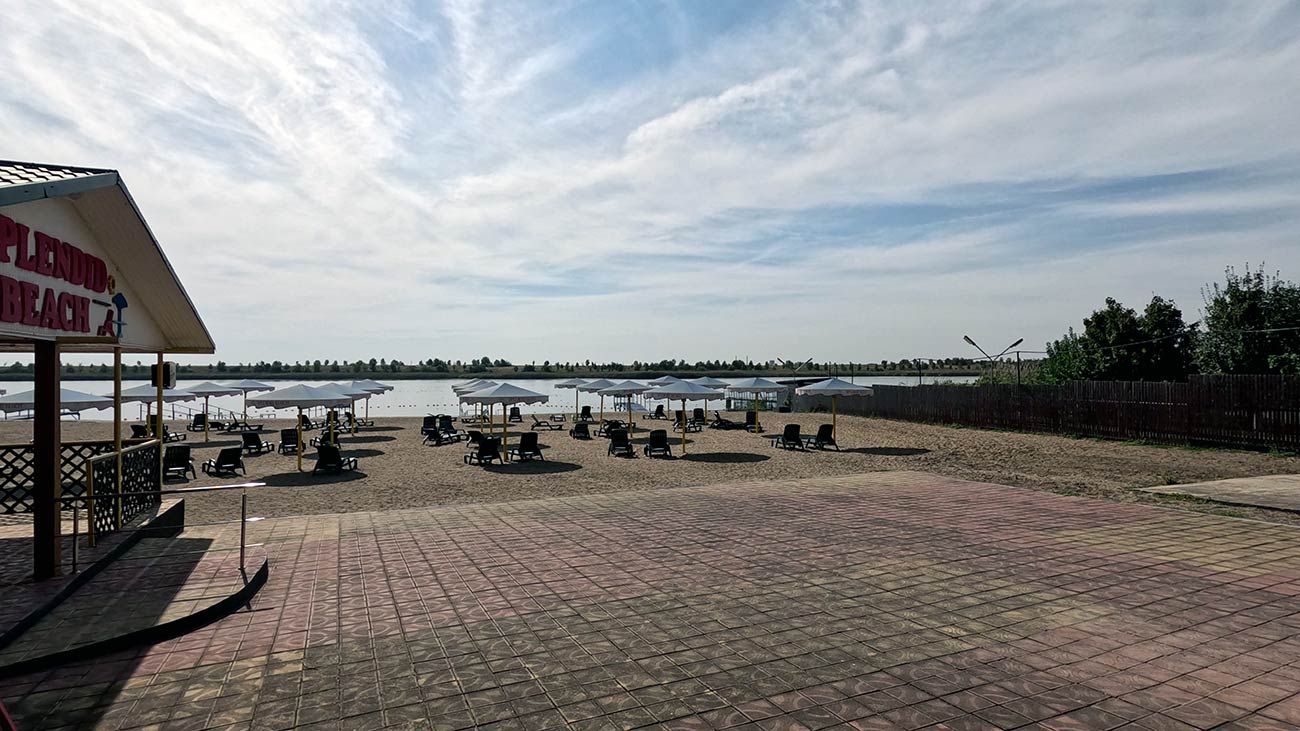
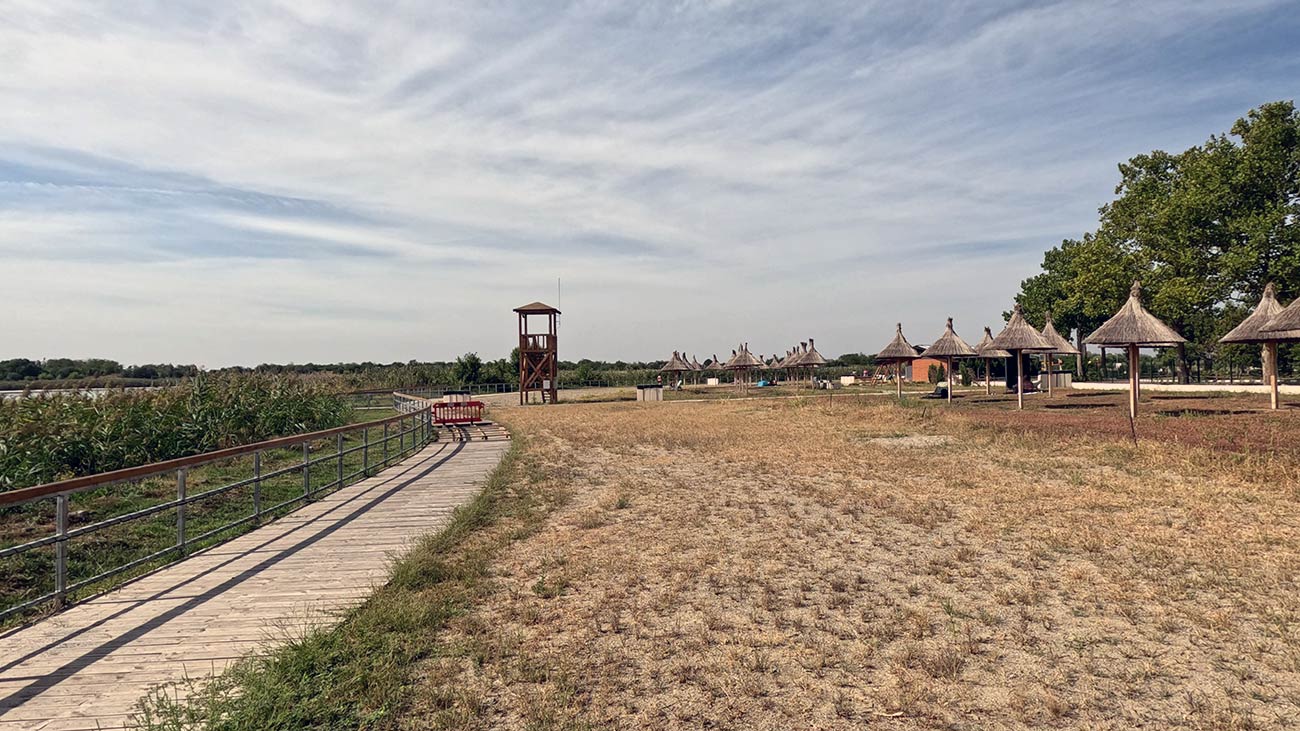
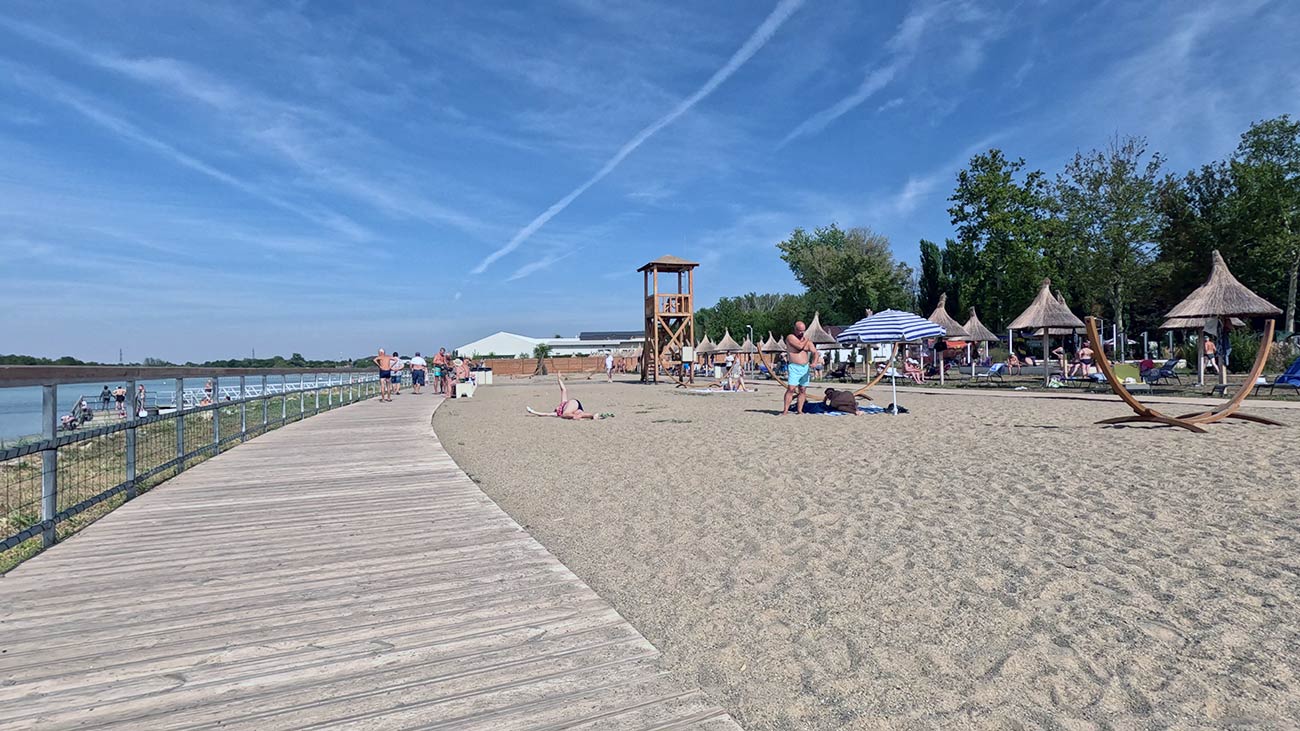
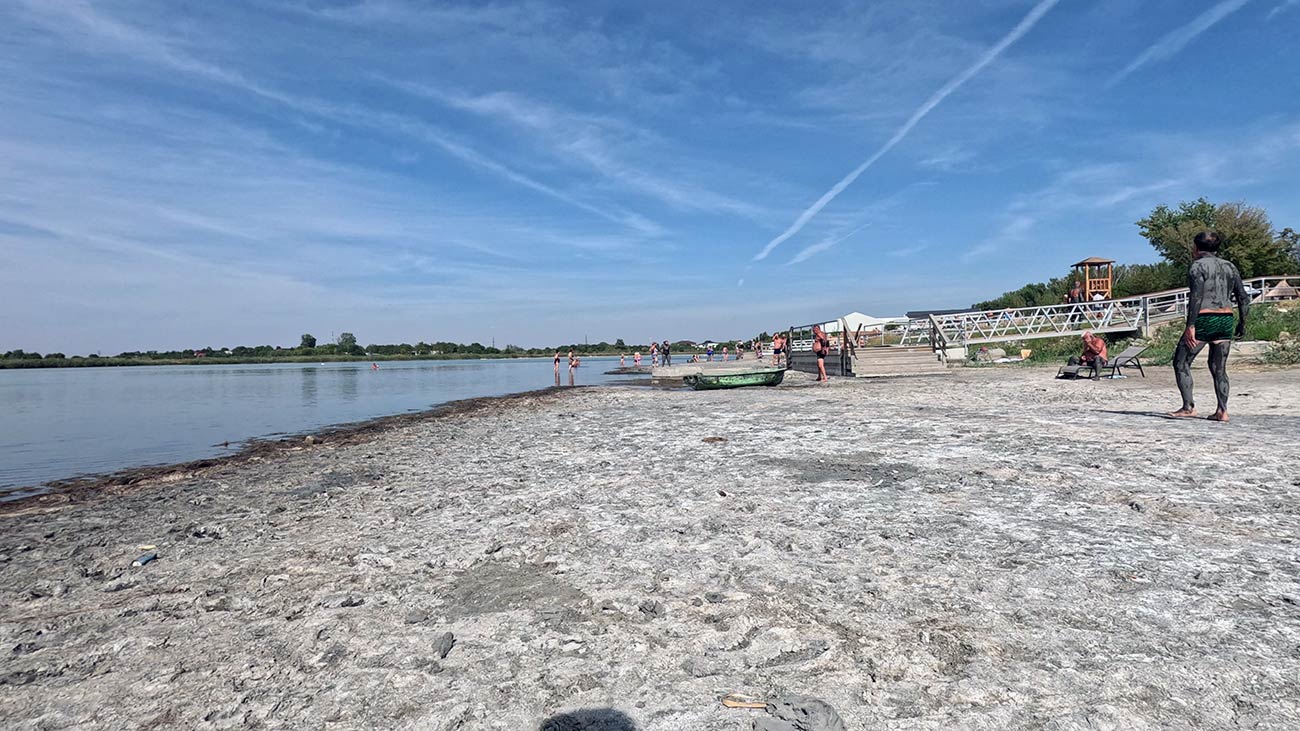
The heart of Amara is, naturally, the lake itself. Lake Amara stretches around four kilometres in length, its surface area having grown roughly fourfold since 1938 as the surrounding depression slowly filled with rain and groundwater, today covering close to 170 hectares. The water carries a high concentration of sodium chloride, sulphates, and magnesium, giving it a distinctly bitter, salty character, while the lakebed holds the resort’s real treasure: a thick, blackish-green sapropelic mud composed of roughly 40 percent organic matter and 40 percent mineral content, the basis of every treatment offered here. A sandy and grassy beach along the shore gives visitors a place to swim directly in the mineral-rich water, while the resort’s treatment centres offer the fuller traditional cure: warm mud baths, full mud wraps, cold mud poultices, mineral water cures, electrotherapy, and hydrotherapy, all aimed primarily at rheumatic, dermatological, gynaecological, and post-traumatic conditions, though the mud itself remains the star of the show, regarded by repeat visitors and longtime staff alike as something close to inexhaustible given how it continues to form on the lakebed.
Around the lake, the Amara Dendrological Park spreads out beneath stands of oak and walnut trees, considered one of the largest of its kind in south-eastern Romania and a pleasant, shaded counterpoint to the open mud baths and sunbathing platforms by the water. A summer garden within the park hosts performances and concerts through the warmer months, including the long-running Trofeul Tineretii light-music festival, held in August and now in its fifth decade as one of the few Romanian music festivals to have run uninterrupted since its founding. Walking paths wind beneath the trees past play areas for children, while swans, gulls, and ducks drift across the lake itself, giving the whole resort an unhurried, faintly nostalgic atmosphere that has remained largely unchanged since its mid-century heyday. A handful of hotels from the same era, several built directly on the lakeshore, still operate their own treatment bases today, and many longtime visitors return to the same room year after year, a small but telling sign of just how deeply Amara’s slow rhythm has settled into Romanian holiday tradition.
 Useful Links
Mobility for Cyclists
The connection
The most practical connection is by train to Slobozia Veche, the small railway halt closest to the resort, served by regional lines running through Țăndărei, Slobozia, and Urziceni. From Slobozia Veche, the resort of Amara itself is reached by a short ride of a few kilometres along flat, easy roads across the Bărăgan plain. Given that Romanian regional rail is at its most reliable for cyclists when the specific train is marked with a bicycle icon in the CFR or Infofer timetable, it’s worth checking this in advance, or travelling with a folding bike that can be carried as ordinary hand luggage on any service.
Romanian Trains
The rail network in Romania is operated mainly by CFR Călători (Căile Ferate Române), the national passenger rail company, which runs the large majority of routes across the country on what is, by track length, the fourth-largest railway network in Europe. Alongside CFR, several smaller private operators run on selected routes, including Regio Călători, InterRegional Călători, Transferoviar Călători, Softrans, and Astra Trans Carpatic, each covering a limited set of lines; in places CFR doesn’t reach, one of these operators usually fills the gap. Trains come in three main categories: Regio (R), the slowest, stopping at every station; InterRegio (IR), faster medium- and long-distance services with both first and second class, free wifi, and on longer routes sleeping cars and dining cars; and InterCity (IC), the fastest and most comfortable category, reintroduced in December 2023. Private operators often don’t have ticket offices at smaller stations, so tickets can usually be bought directly on board the train without penalty. The CFR Călători website and app, along with the independent Infofer journey planner, are the most useful tools for checking timetables across all operators and purchasing tickets in advance.
Taking your bike
Romania is moderately bike-friendly when it comes to rail transport, though the rules vary by operator and are worth checking before each journey. On CFR Călători trains, non-folding bicycles can only be carried on Regio, InterRegio, and InterCity services that are specifically marked with a bicycle icon in the online timetable, where a bicycle ticket must be purchased at the ticket office or on board, priced according to distance. Folding bicycles, by contrast, are carried free of charge as hand luggage on any CFR train, in first or second class, provided they fit within the space available for hand luggage and don’t inconvenience other passengers; bicycles with one or both wheels removed do not count as folding bikes and are instead charged as bulky luggage. Among the private operators, rules and fees differ: Regio Călători, InterRegional Călători, Transferoviar Călători, and Softrans each charge a small separate bicycle fee, while Astra Trans Carpatic does not allow bicycle transport on its trains at all. Given this patchwork of policies, the most reliable approach for cycle touring in Romania is to check the bicycle icon on the specific train in the CFR or Infofer timetable in advance, or to travel with a genuinely foldable bike, which sidesteps the issue entirely.
Bikes on Buses
Long-distance bus services in Romania are extensive and, for many domestic routes, faster and more comfortable than the equivalent train journey, particularly since FlixBus expanded into the Romanian domestic market and now connects more than 50 cities across the country, alongside its existing international routes. Outside the larger FlixBus coaches, much of Romania’s internal bus network runs through smaller regional operators using minibuses and shuttle vans, which can be considerably less comfortable but are frequent, reliable, and inexpensive; tickets for these can typically be checked through aggregator sites such as Autogari.ro. Bicycle transport on Romanian buses is not standardised and depends heavily on the specific operator and vehicle. FlixBus routes operated within Romania have, in practice, proven inconsistent for cyclists, with some drivers accepting only fully folded or bagged bicycles regardless of what is shown on international booking pages, and smaller regional minibus operators rarely have any dedicated luggage space for an assembled bike at all. As a result, buses are best treated by cyclists as a flexible but unreliable backup option in Romania, while a bicycle that is genuinely foldable, or fully disassembled and bagged, travels far more predictably than an assembled touring bike on any bus service in the country.
Arriving at Slobozia Veche and Continuing to Amara
From the halt at Slobozia Veche, the ride into Amara follows quiet local roads across flat, open farmland typical of the Bărăgan, with no significant climbs to contend with along the way. The resort itself, the lakeshore, and the dendrological park are all within easy reach of one another once you arrive, with the lake, the bathhouses, and the summer garden all clustered close together. For onward travel, the same regional line connects back toward the wider rail network east of Bucharest, so Amara works well either as a half-day curiosity stop or as a slower, more restful overnight break from the rhythm of the EuroVelo 6.