Băile Herculane and NP Domogled-Valea Cernei
Reading time: 13 minutes
BĂILE HERCULANE AND DOMOGLED-VALEA CERNEI NATIONAL PARK, CARAȘ-SEVERIN COUNTY, ROMANIA
Faded Imperial Grandeur Beneath Wild Limestone Peaks
In the dramatic, narrow valley of the Cerna River in south-western Romania, hemmed in on every side by steep limestone peaks, lies the oldest spa town in the country and one of the oldest in Europe. Băile Herculane has been a place of healing for almost two thousand years, ever since Roman soldiers and citizens came here in the second century AD to bathe in the hot, sulphurous springs they dedicated to Hercules. A votive tablet from 153 AD records the settlement’s Roman name, Ad Aquas Herculi Sacras, the Sacred Waters of Hercules, and the legend of the hero bathing in the valley to restore his strength after battle has been woven into the identity of the town ever since.
The town’s golden age, however, came much later, under the Austro-Hungarian Empire, when the Habsburgs rebuilt the baths from 1736 and transformed Herculane into one of the most fashionable spa resorts on the continent. Emperors Joseph II and Franz Joseph came here, and Empress Elisabeth, the beloved Sisi, visited five times and called it the most beautiful resort on the continent. That era left behind a remarkable ensemble of neo-Baroque and Art Nouveau pavilions, baths, hotels, and a casino, many of which fell into severe decay during the communist period and the chaotic decades that followed. Today Băile Herculane is a town of two faces: a faded, melancholic imperial centre, parts of it propped up and slowly being rescued by dedicated restoration projects, set against modern spa hotels still drawing visitors to the same healing waters that brought the Romans here.
For cyclists exploring the Danube along the EuroVelo 6, Băile Herculane is one of the most rewarding and dramatic detours on the Romanian stretch of the route, combining faded grandeur, living spa culture, and immediate access to Romania’s largest national park. The town is reached by a direct train from Drobeta-Turnu Severin, the Danube town on the EuroVelo 6 corridor, and arrival is part of the experience: the railway station itself, dating from the late nineteenth century, is one of the most beautiful in Romania, even in its current state of partial disrepair. From the station, a short bike ride leads into the historic centre, and beyond it the trails climb directly into the wild limestone landscape of the Domogled-Valea Cernei National Park.
Imperial Ruins, Sacred Waters, and the Gateway to Romania’s Largest National Park
Arrival in Băile Herculane begins, fittingly, with one of its most striking monuments: the railway station, built in 1878 and widely regarded as one of the most beautiful in Romania. Even in its present state, weathered and awaiting the renovation it badly needs, the station’s grand imperial architecture is a memorable first impression, a sequoia tree standing beside it and the limestone peaks rising immediately behind. From the station, a short bike ride along the Cerna River leads into the historic centre, the most picturesque part of town, which stretches from the Roman Catholic church to the old stone bridge over the river. This is the imperial heart of Herculane, and it can be explored slowly on foot in a couple of hours.
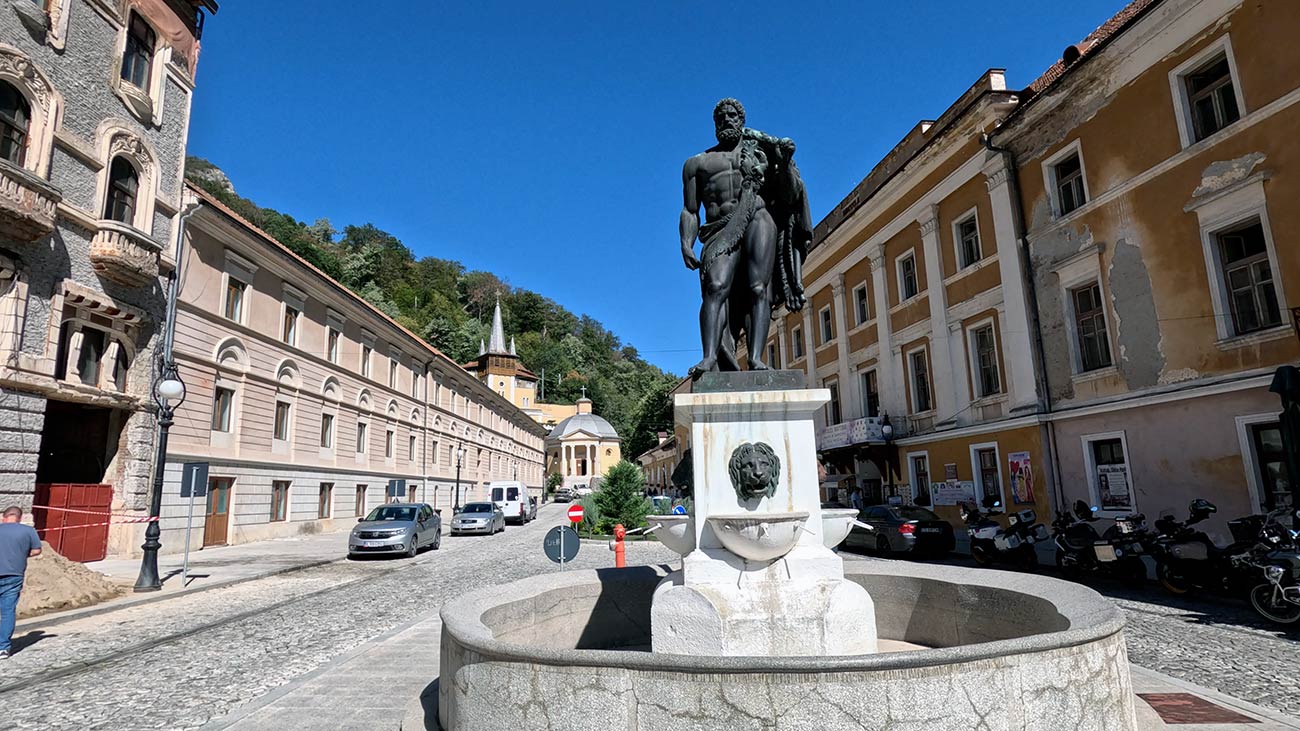
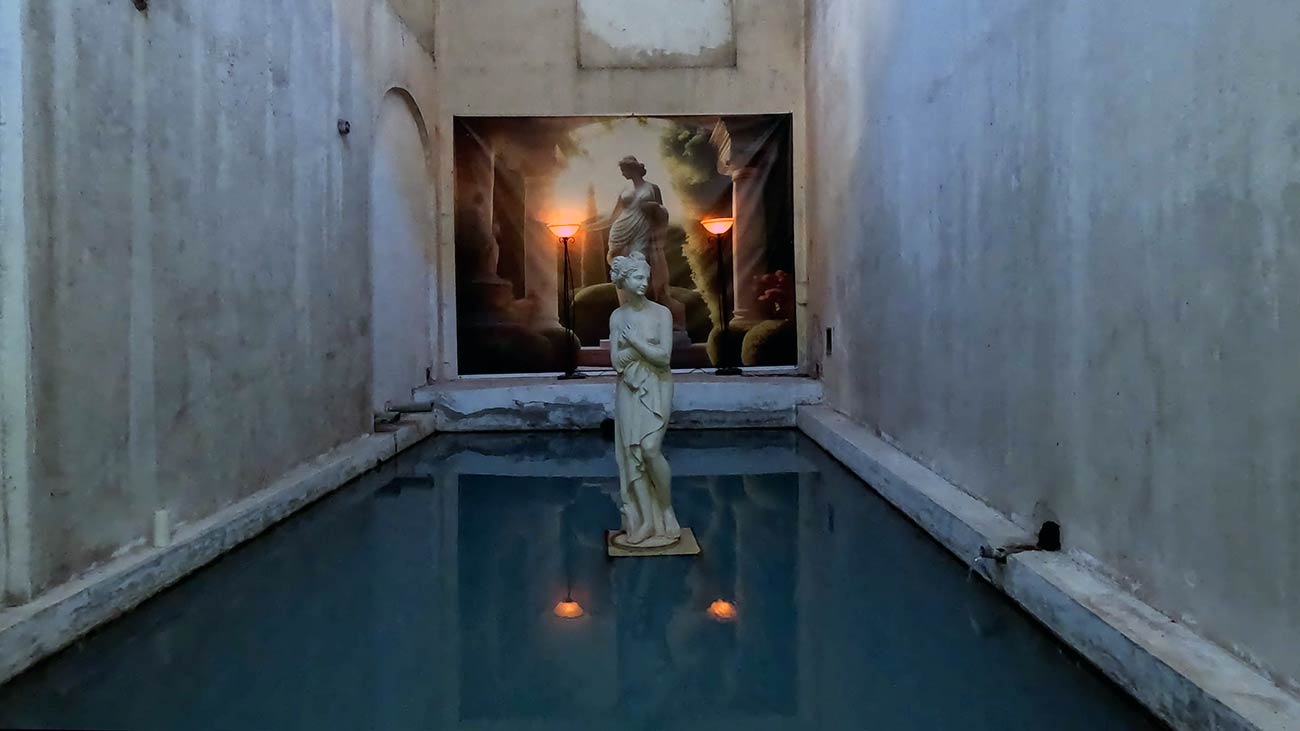
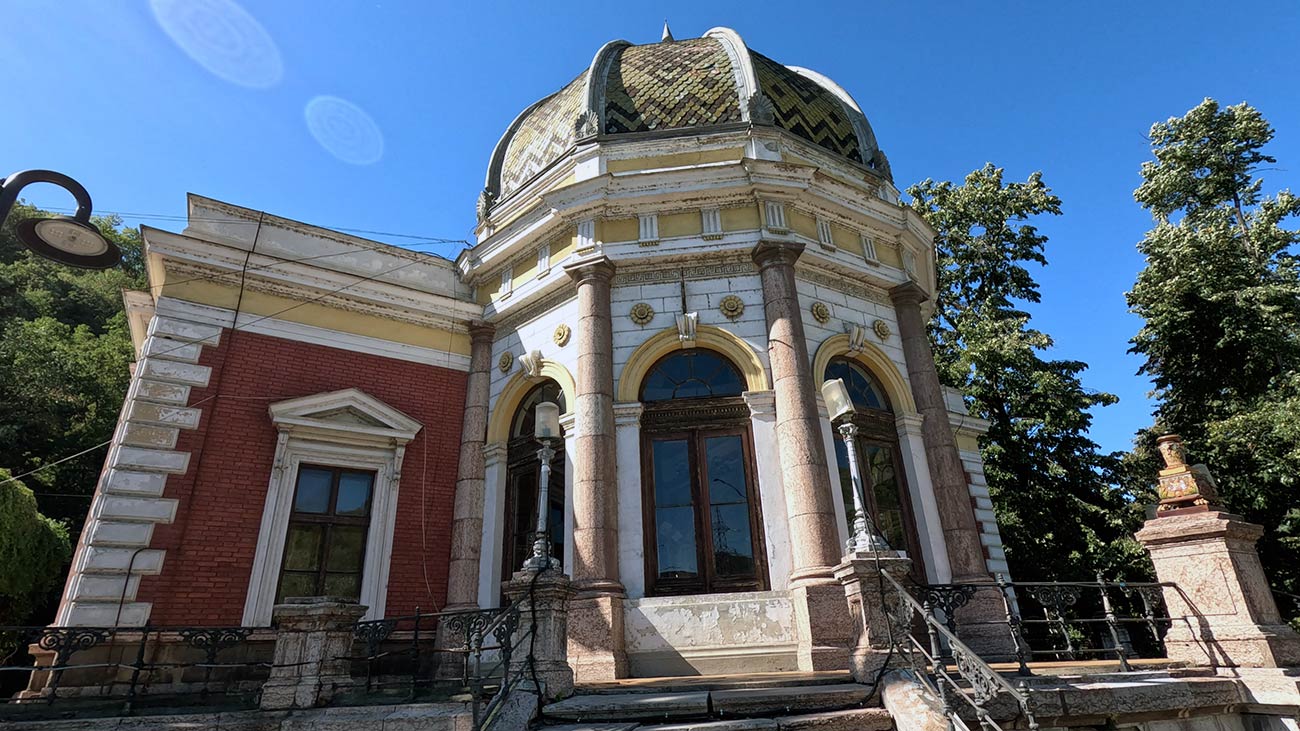
The centre’s focal point is Hercules Square (Piața Hercules), presided over by the bronze Statue of Hercules, cast in Vienna and installed in 1847, depicting the hero with the skin of the Nemean lion and his club resting on his shoulder. Around the square and along the riverbanks stands the resort’s extraordinary ensemble of nineteenth-century spa architecture, a mixture of neo-Baroque, Eclectic, and Art Nouveau styles built during the Austro-Hungarian heyday. The most imposing of these is the Neptune Baths (Băile Neptun), a masterpiece of imperial bath architecture with its own bridge over the Cerna, a sumptuous domed lobby, and twin pavilions that once housed the most modern spa facilities in Europe; today, like several of its neighbours, it stands derelict but slowly being stabilised through restoration efforts. The grand old Casino, built between 1862 and 1864 at the request of Emperor Franz Joseph, anchors the small Central Park, flanked by once-prestigious hotels now classed as historic monuments and, in some cases, under restoration toward a new future. In the historic centre, the Apollo Baths (Băile Apollo) house a modest museum, while the small Nicolae Cena Museum, set within the Roman Baths complex, preserves Roman artefacts including an ancient bas-relief of Hercules and the votive tablet attesting to the town’s two-thousand-year history. Many of the buildings can only be admired from the outside, but the overall effect, of grand imperial architecture in a state of romantic, melancholic decay against a backdrop of wild mountains, is genuinely unlike anywhere else in Romania.
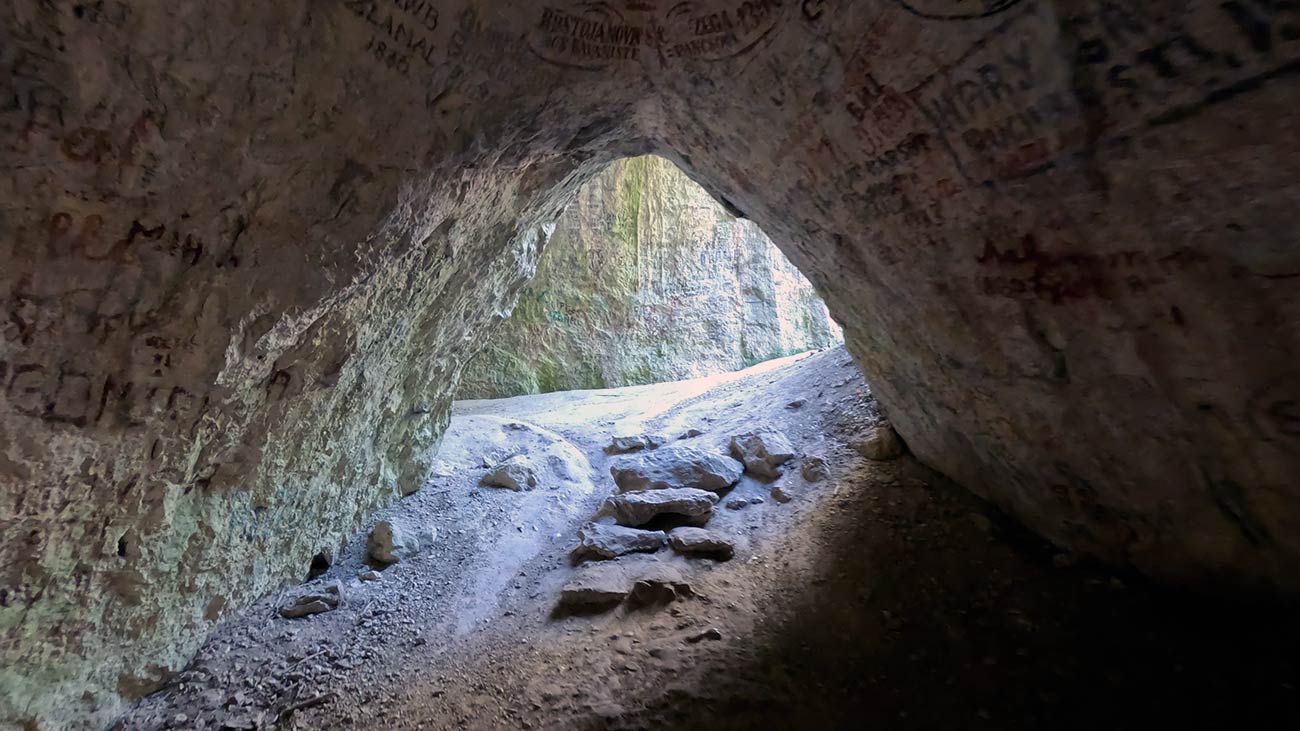
A short, easy walk from the historic centre, near the Roman Hotel and the Roman Baths, leads to the Outlaws’ Cave (Grota Haiducilor), reached by a five-minute forest trail. The cave was once a hiding place for the local outlaws, the haiduci, and its walls are carved with names and inscriptions, the oldest dating back to the eighteenth century. The cave itself is modest, but the short walk through the forest and the sense of history etched into its walls make it a worthwhile pause on the way out of town and toward the mountains.
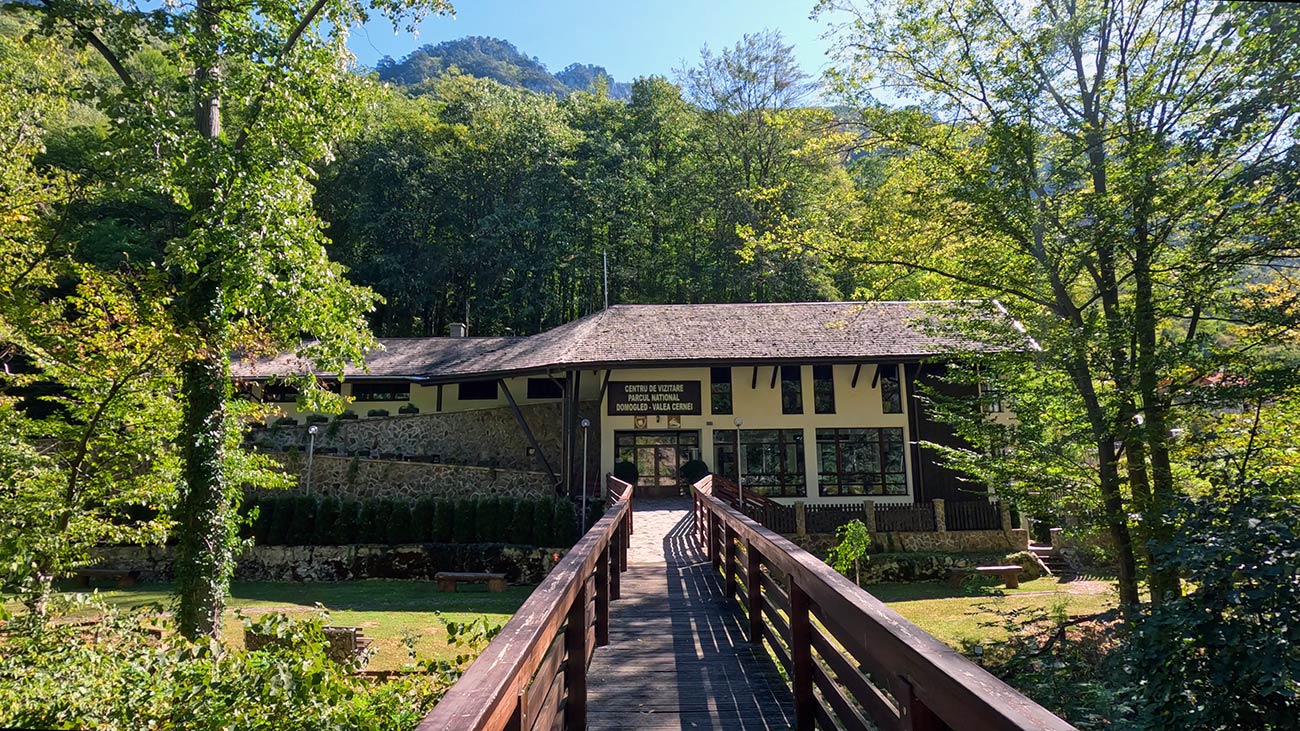
Beyond the cave, the trails climb steadily uphill into the Domogled-Valea Cernei National Park, the largest national park in Romania and a true sanctuary of biodiversity. The park protects the steep limestone gorges of the Cerna Valley, ancient beech forests, and the distinctive Black Pine of Banat, the umbrella-shaped pines that cling improbably to the bare limestone cliffs above the town. The warm microclimate created by the thermal springs supports a startling richness of life: sub-Mediterranean plants found nowhere else this far north, the harmless Carpathian scorpion, and, most famously, more than 1,500 species of butterfly, which have made the area world-renowned among entomologists. Marked trails of every difficulty level start from in and around the town, from the gentle 45-minute walk up to the White Cross (Crucea Albă) viewpoint, with its sweeping view over the valley, to longer and steeper ascents toward the summit of Domogled itself. For those who prefer their thermal water wild rather than indoors, small natural pools known as cădițe sit right beside the Cerna River, where visitors can soak for free in the open air, much as the Roman legionaries did two thousand years ago.
 Useful Links
Mobility for Cyclists
The connection
The most practical connection from the EuroVelo 6 corridor is from Drobeta-Turnu Severin, the Danube town on the route, where CFR trains run directly up the Cerna Valley to Băile Herculane, with the InterRegio services on the Timișoara-Bucharest corridor stopping here. Cyclists riding the Romanian stretch of the EuroVelo 6 will find Drobeta-Turnu Severin the natural transfer point. The town is also a recognised base for a wide range of further excursions in the region, from the Danube Cauldrons and the carved face of Decebalus near the Iron Gates to the gorges and waterfalls of the surrounding mountains, so it works equally well as a single stop or as a hub for a longer stay.
Romanian Trains
The rail network in Romania is operated mainly by CFR Călători (Căile Ferate Române), the national passenger rail company, which runs the large majority of routes across the country on what is, by track length, the fourth-largest railway network in Europe. Alongside CFR, several smaller private operators run on selected routes, including Regio Călători, InterRegional Călători, Transferoviar Călători, Softrans, and Astra Trans Carpatic, each covering a limited set of lines; in places CFR doesn’t reach, one of these operators usually fills the gap. Trains come in three main categories: Regio (R), the slowest, stopping at every station; InterRegio (IR), faster medium- and long-distance services with both first and second class, free wifi, and on longer routes sleeping cars and dining cars; and InterCity (IC), the fastest and most comfortable category, reintroduced in December 2023. Private operators often don’t have ticket offices at smaller stations, so tickets can usually be bought directly on board the train without penalty. The CFR Călători website and app, along with the independent Infofer journey planner, are the most useful tools for checking timetables across all operators and purchasing tickets in advance.
Taking your bike
Romania is moderately bike-friendly when it comes to rail transport, though the rules vary by operator and are worth checking before each journey. On CFR Călători trains, non-folding bicycles can only be carried on Regio, InterRegio, and InterCity services that are specifically marked with a bicycle icon in the online timetable, where a bicycle ticket must be purchased at the ticket office or on board, priced according to distance. Folding bicycles, by contrast, are carried free of charge as hand luggage on any CFR train, in first or second class, provided they fit within the space available for hand luggage and don’t inconvenience other passengers; bicycles with one or both wheels removed do not count as folding bikes and are instead charged as bulky luggage. Among the private operators, rules and fees differ: Regio Călători, InterRegional Călători, Transferoviar Călători, and Softrans each charge a small separate bicycle fee, while Astra Trans Carpatic does not allow bicycle transport on its trains at all. Given this patchwork of policies, the most reliable approach for cycle touring in Romania is to check the bicycle icon on the specific train in the CFR or Infofer timetable in advance, or to travel with a genuinely foldable bike, which sidesteps the issue entirely.
Bikes on Buses
Long-distance bus services in Romania are extensive and, for many domestic routes, faster and more comfortable than the equivalent train journey, particularly since FlixBus expanded into the Romanian domestic market and now connects more than 50 cities across the country, alongside its existing international routes. Outside the larger FlixBus coaches, much of Romania’s internal bus network runs through smaller regional operators using minibuses and shuttle vans, which can be considerably less comfortable but are frequent, reliable, and inexpensive; tickets for these can typically be checked through aggregator sites such as Autogari.ro. Bicycle transport on Romanian buses is not standardised and depends heavily on the specific operator and vehicle. FlixBus routes operated within Romania have, in practice, proven inconsistent for cyclists, with some drivers accepting only fully folded or bagged bicycles regardless of what is shown on international booking pages, and smaller regional minibus operators rarely have any dedicated luggage space for an assembled bike at all. As a result, buses are best treated by cyclists as a flexible but unreliable backup option in Romania, while a bicycle that is genuinely foldable, or fully disassembled and bagged, travels far more predictably than an assembled touring bike on any bus service in the country.
Arriving at Băile Herculane Station and Continuing into the Valley
Băile Herculane’s railway station, a beautiful but faded monument from 1878, sits at the lower end of the long, narrow town, around five kilometres from the historic centre, since the resort stretches out along the Cerna River from the station up toward the hydroelectric dam. A short bike ride along the river leads from the station into the historic centre and Hercules Square, mostly along the valley floor. From the centre, the route to the Outlaws’ Cave is a short and easy walk, while the trails into the Domogled-Valea Cernei National Park climb steadily uphill and are best tackled on foot once bikes are left securely in town. The terrain in the valley itself is gentle along the river but becomes steep as soon as the trails leave it for the mountains. For onward travel, the same rail line connects back toward Drobeta-Turnu Severin and the Danube corridor, as well as north-west toward Timișoara, so Băile Herculane works well as a one-day excursion or, given the wealth of things to see in the surrounding mountains, as a longer base for exploring this corner of Romania.