Bucharest
Reading time: 12 minutes
BUCHAREST, BUCHAREST MUNICIPALITY, ROMANIA
Marble Palaces, Old Streets, and Dancing Water
At the southern edge of Romania, on the wide plain just north of the Danube, lies a capital that wears its history in uneven, sometimes jarring layers. Bucharest is a city where a fifteenth-century princely church stands a few streets from Communist-era boulevards, where Belle Époque townhouses share a skyline with the second-largest administrative building on Earth, and where the slow, careful restoration of an old merchant quarter sits alongside some of the most theatrical public fountains in southeastern Europe. Once nicknamed Little Paris for its tree-lined avenues and Beaux-Arts architecture, the city’s character today is something more layered and more particular to its own history: part Ottoman-era trading town, part royal capital, part socialist showpiece, all folded into a single, sprawling urban centre.
The decisive and most visible chapter of that history belongs to the 1980s, when Nicolae Ceaușescu’s regime demolished entire historic neighbourhoods to build the Centrul Civic, a vast new civic centre anchored by the Palace of Parliament, still the dominant landmark on the city’s skyline today. Older Bucharest survives in fragments around it: in the cobbled lanes of the Old Town, in church interiors that have stood since the city’s founding as a princely seat, and in the long green ribbons of parkland that wind through the centre, originally laid out for an entirely different, more leisurely century. Each evening in the warmer months, a different, more contemporary layer of the city comes to life, as crowds gather around the capital’s illuminated fountains for a free outdoor spectacle of light, water, and music.
For cyclists exploring the Danube along the EuroVelo 6, Bucharest is reached from Giurgiu, the river town that sits directly on the route. From Giurgiu, regional trains run north into the capital, arriving either at the smaller southern station of București Progresu or, on a separate and somewhat longer service, at the main București Nord terminus from Giurgiu Nord. A full day or, ideally, an overnight stay gives enough time to move between the grand scale of the Parliament Palace, the intimate streets of the Old Town, and the quieter green spaces that thread between them.
A Capital of Marble Halls, Cobbled Lanes, and Water Lit by Night
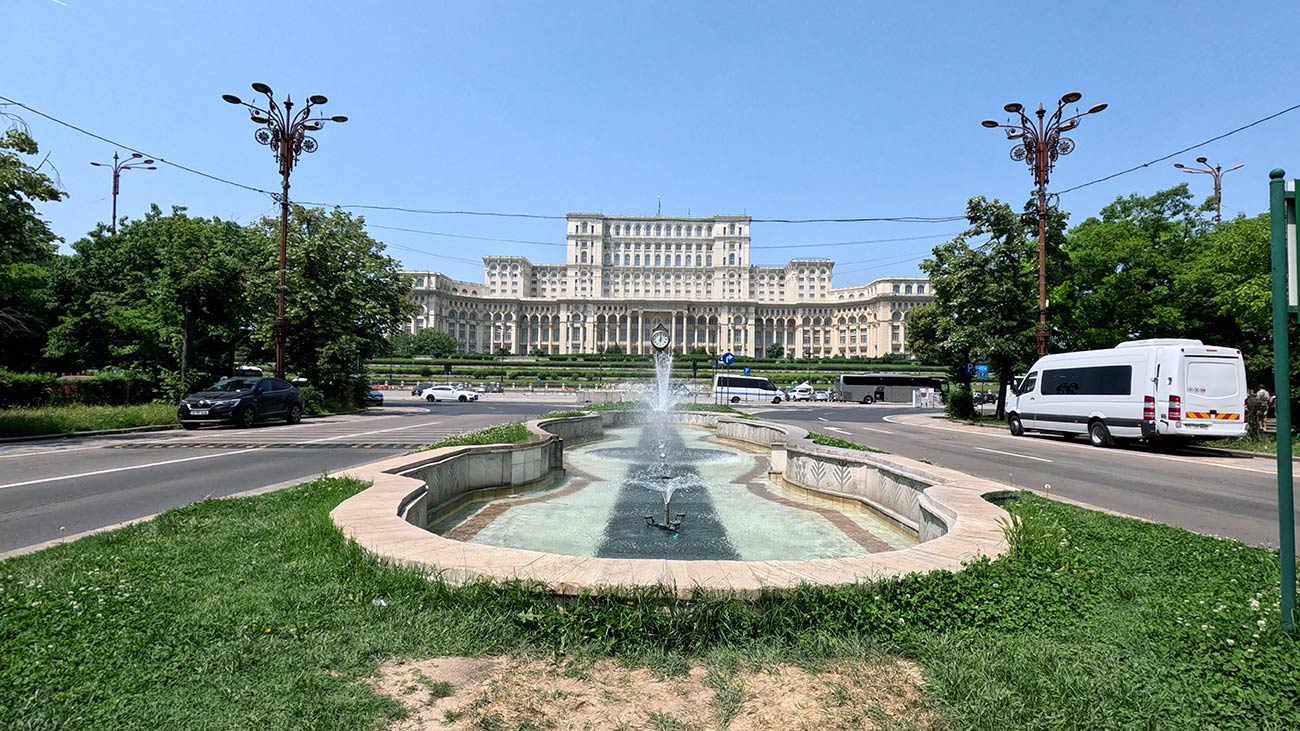
The unmissable landmark of Bucharest is the Palace of Parliament (Palatul Parlamentului), the colossal building begun in 1984 under Nicolae Ceaușescu and still, by most measures, the second-largest administrative building in the world after the Pentagon. Spread across some 330,000 square metres with more than a thousand rooms, the palace was built from a near-unimaginable quantity of Romanian materials, around a million cubic metres of marble and thousands of tonnes of crystal, all assembled at extraordinary human cost during the final, most authoritarian years of the communist regime. Today it houses the Romanian Parliament, the Constitutional Court, and the Museum of Contemporary Art, and visitors can join a guided tour through its halls and staircases, with entry only possible with a passport and advance booking. Walking out from beneath its sheer marble façade onto the wide, empty expanse of Bulevardul Unirii, it is hard not to feel the scale the building was designed to project, intentional or not.
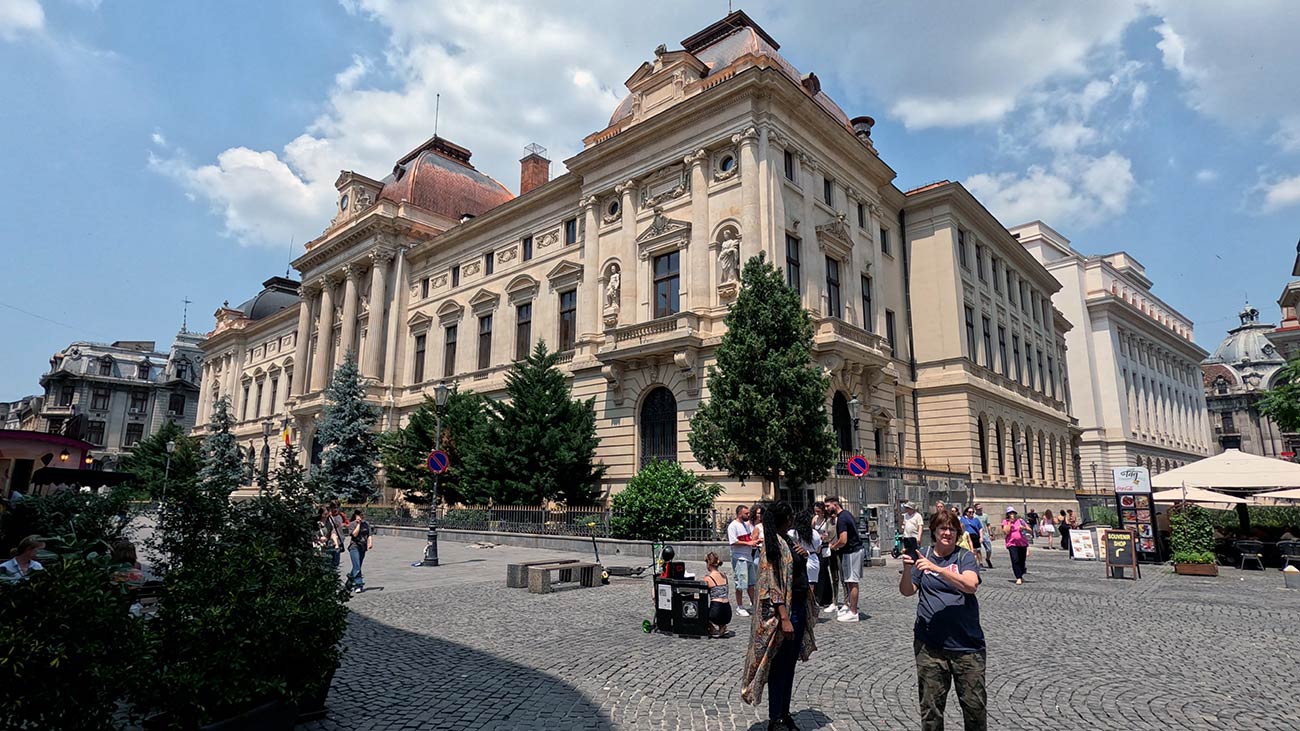
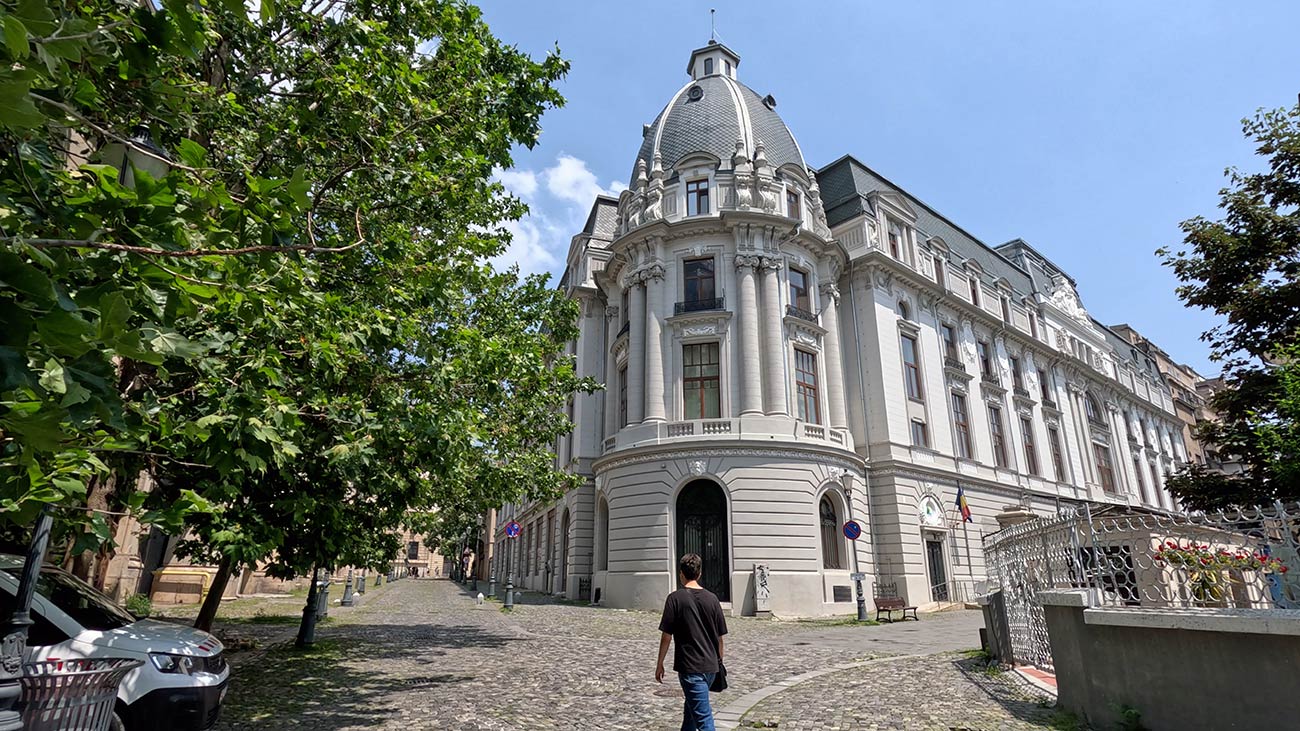
A short distance away, in complete contrast, lies the Old Town (Centrul Vechi), centred on the Lipscani district that takes its name from the merchants who once traded goods from Leipzig along these same narrow streets. This is the historic heart of Bucharest, founded around the Old Princely Court (Curtea Veche), the fifteenth-century palace traditionally associated with Vlad the Impaler, whose excavated foundations can still be seen today. Beside it stands the Old Court Church (Biserica Curtea Veche), built in 1559 and considered the oldest surviving church in the city, where Wallachian princes were once crowned. The streets around it, rebuilt and revived after decades of neglect, mix Baroque, neo-Gothic, neoclassical, and Art Nouveau facades, with Manuc’s Inn (Hanul lui Manuc), a sprawling 1808 caravanserai built around a central courtyard, standing as one of the quarter’s architectural set pieces. By day the Old Town rewards slow wandering among small museums, churches, and antique shops; by night its pedestrianised lanes turn into one of the liveliest nightlife districts in southeastern Europe.
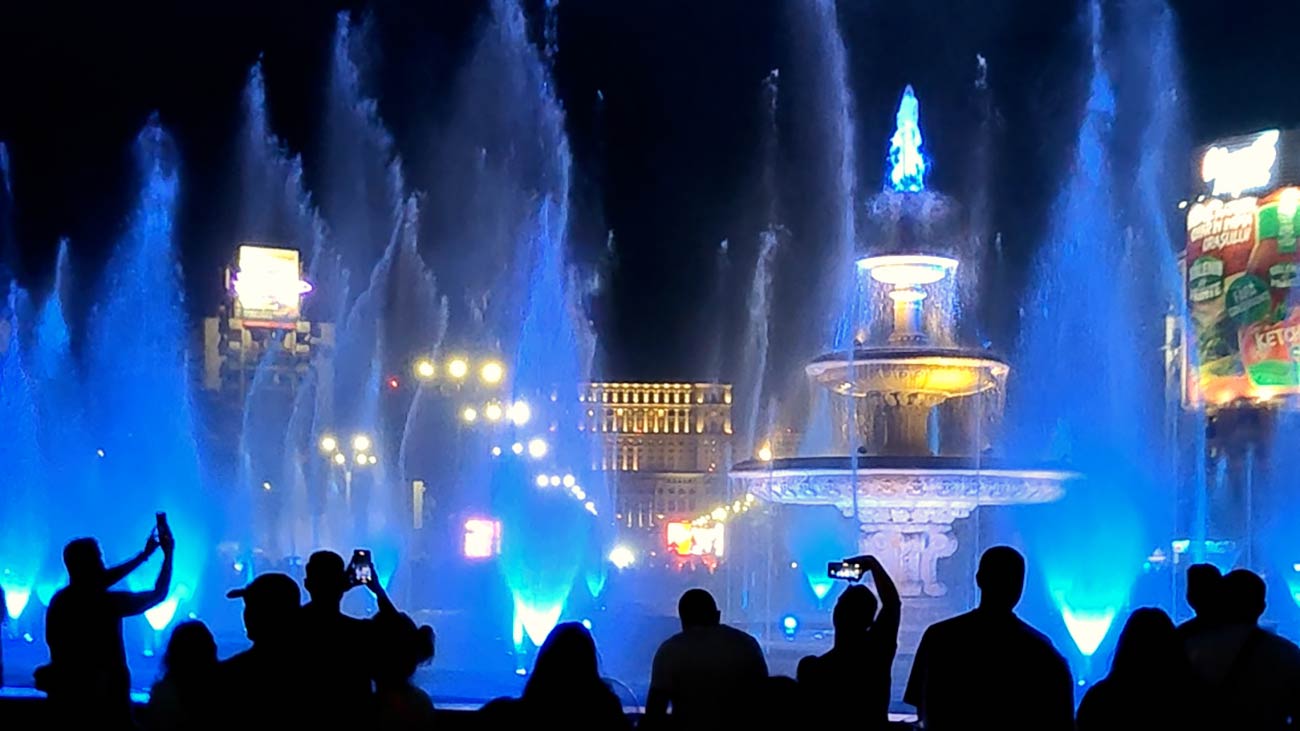
Bucharest’s public squares carry their own particular drama after dark. Union Square (Piața Unirii), one of the largest squares in the city centre and a major hub for the metro and surface transport, has long been known for its elaborate fountain displays, and on weekend evenings through the warmer months the city has staged the Water Symphony (Simfonia Apei), a free, roughly 45-minute outdoor show in which jets of water rise, fall, and shift colour in time with music and light. The square has undergone periods of renovation in recent years, so it’s worth checking locally for the current schedule before planning an evening around it, but the basic spectacle, dancing fountains choreographed to music in the middle of the capital, remains one of Bucharest’s most distinctive free evening experiences whenever it is running.
Threaded between the grand boulevards and the old streets, Bucharest’s parks offer a gentler, greener register. Cișmigiu Gardens (Grădina Cișmigiu), the oldest public park in the city, sits close to the Old Town and the Parliament Palace, with shaded paths, a small lake, and kiosks for a coffee or a cold drink on a hot afternoon. Further north, Herăstrău Park (Parcul Herăstrău), one of the largest parks in the city, wraps around its own lake with boat rides, cafés, and a 6-kilometre running and cycling path circling the water. Within its grounds stands the Village Museum (Muzeul Satului), one of the largest open-air ethnographic museums in Europe, gathering traditional rural houses, churches, and windmills relocated here from across Romania. Together, the squares, the Old Town, the Parliament Palace, and these green spaces give Bucharest a rhythm that shifts constantly between monumental and intimate, formal and relaxed, a city best understood by moving slowly between its very different registers rather than rushing toward any single one of them.
 Useful Links
Mobility for Cyclists
The connection
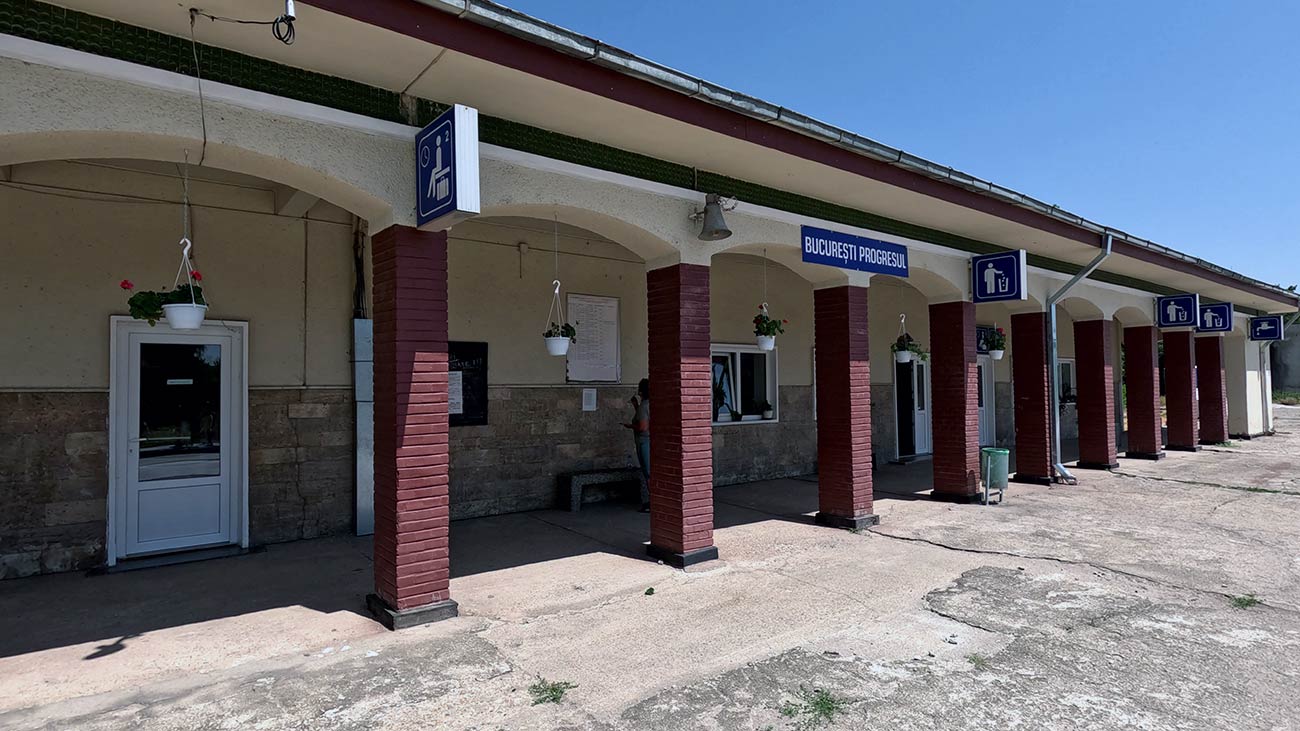
The most frequent connection is the regional service from Giurgiu to București Progresu, a smaller station on the southern edge of the capital, with a journey time of around 90 minutes and considerably more frequent departures throughout the day than the alternative route. A separate, “faster”-branded service runs from Giurgiu Nord to București Nord, the city’s main railway terminus, but despite the branding this connection actually takes longer overall, around 2 hours and 15 minutes, and departs less often. For cyclists riding the EuroVelo 6 and aiming to reach the centre of Bucharest with the least hassle, the București Progresu route is generally the more practical option, even though it arrives at the smaller of the two stations.
Romanian Trains
The rail network in Romania is operated mainly by CFR Călători (Căile Ferate Române), the national passenger rail company, which runs the large majority of routes across the country on what is, by track length, the fourth-largest railway network in Europe. Alongside CFR, several smaller private operators run on selected routes, including Regio Călători, InterRegional Călători, Transferoviar Călători, Softrans, and Astra Trans Carpatic, each covering a limited set of lines; in places CFR doesn’t reach, one of these operators usually fills the gap. Trains come in three main categories: Regio (R), the slowest, stopping at every station; InterRegio (IR), faster medium- and long-distance services with both first and second class, free wifi, and on longer routes sleeping cars and dining cars; and InterCity (IC), the fastest and most comfortable category, reintroduced in December 2023. Private operators often don’t have ticket offices at smaller stations, so tickets can usually be bought directly on board the train without penalty. The CFR Călători website and app, along with the independent Infofer journey planner, are the most useful tools for checking timetables across all operators and purchasing tickets in advance.
Taking your bike
Romania is moderately bike-friendly when it comes to rail transport, though the rules vary by operator and are worth checking before each journey. On CFR Călători trains, non-folding bicycles can only be carried on Regio, InterRegio, and InterCity services that are specifically marked with a bicycle icon in the online timetable, where a bicycle ticket must be purchased at the ticket office or on board, priced according to distance. Folding bicycles, by contrast, are carried free of charge as hand luggage on any CFR train, in first or second class, provided they fit within the space available for hand luggage and don’t inconvenience other passengers; bicycles with one or both wheels removed do not count as folding bikes and are instead charged as bulky luggage. Among the private operators, rules and fees differ: Regio Călători, InterRegional Călători, Transferoviar Călători, and Softrans each charge a small separate bicycle fee, while Astra Trans Carpatic does not allow bicycle transport on its trains at all. Given this patchwork of policies, the most reliable approach for cycle touring in Romania is to check the bicycle icon on the specific train in the CFR or Infofer timetable in advance, or to travel with a genuinely foldable bike, which sidesteps the issue entirely.
Bikes on Buses
Long-distance bus services in Romania are extensive and, for many domestic routes, faster and more comfortable than the equivalent train journey, particularly since FlixBus expanded into the Romanian domestic market and now connects more than 50 cities across the country, alongside its existing international routes. Outside the larger FlixBus coaches, much of Romania’s internal bus network runs through smaller regional operators using minibuses and shuttle vans, which can be considerably less comfortable but are frequent, reliable, and inexpensive; tickets for these can typically be checked through aggregator sites such as Autogari.ro. Bicycle transport on Romanian buses is not standardised and depends heavily on the specific operator and vehicle. FlixBus routes operated within Romania have, in practice, proven inconsistent for cyclists, with some drivers accepting only fully folded or bagged bicycles regardless of what is shown on international booking pages, and smaller regional minibus operators rarely have any dedicated luggage space for an assembled bike at all. As a result, buses are best treated by cyclists as a flexible but unreliable backup option in Romania, while a bicycle that is genuinely foldable, or fully disassembled and bagged, travels far more predictably than an assembled touring bike on any bus service in the country.
Arriving in Bucharest
From București Progresu, on the southern edge of the city, the ride into the centre covers around 8 kilometres, manageable on a touring bike along city streets, though traffic builds up quickly as you near the centre and cycling infrastructure thins out. The route passes through ordinary residential districts before reaching the Old Town, Union Square, and the Palace of Parliament. Bike racks are limited in the centre itself, so most travellers will want to lock up at their accommodation once they arrive and explore the Old Town, the squares, and the parks on foot, switching to Bucharest’s metro for longer hops between sights spread further apart, such as Herăstrău Park in the north of the city. For onward travel, the same regional line connects back toward Giurgiu and the wider Danube corridor, so Bucharest works well either as a long day trip by bike or, given the scale of the city, as a more rewarding overnight or multi-day stop just off the main EuroVelo 6 route.