Craiova
Reading time: 12 minutes
CRAIOVA, DOLJ COUNTY, ROMANIA
A Capital of Oltenia with Singing Water and Painted Walls
West of the Olt River, in the heart of the historic region of Oltenia, lies the sixth largest city in Romania and the long-standing political and commercial centre of the south-west. Craiova has been documented since the fourteenth century as a market town on the trade routes linking Transylvania to the rest of southeastern Europe, prospering over the centuries from its strategic position at the crossing of major commercial corridors. The city evolved gradually from a modest market settlement into a significant urban centre, weathering the political upheavals that shaped the Romanian principalities and emerging as one of the country’s most important provincial capitals.
Craiova’s deeper identity is bound up with its historic role as the seat of the Bănia, the office through which Wallachian princes governed Oltenia, a legacy that still gives the city its enduring nickname, Cetatea Băniei, the Citadel of the Bănie. It was from here that Michael the Brave, the prince who briefly unified the three historic Romanian lands at the end of the sixteenth century, launched his political rise, and his memory is honoured today by the statue that watches over the city’s central square. Later centuries brought prosperity through trade and agriculture, and the wealth of Oltenia’s landowning families left Craiova with a concentration of grand townhouses, palaces, and civic buildings unusual for a city of its size, many of them built in the decades around 1900 when the city’s elite competed openly in architectural ambition.
For cyclists exploring the Danube along the EuroVelo 6, Craiova sits inland from the river but makes for a rewarding detour from the Romanian stretch of the route. The city lies a direct train ride from Drobeta-Turnu Severin, itself on the Danube corridor, with a journey of a bit more than two hours through the countryside of central Oltenia. A full day, or better still an overnight stay, gives enough time to move between the city’s lively central square, its painted side streets, its two outstanding museums, and the vast green parks on its southern edge, a combination that rewards unhurried, curious wandering rather than a rushed checklist of sights.
A City of Fountains, Murals, Palaces, and Two Great Parks
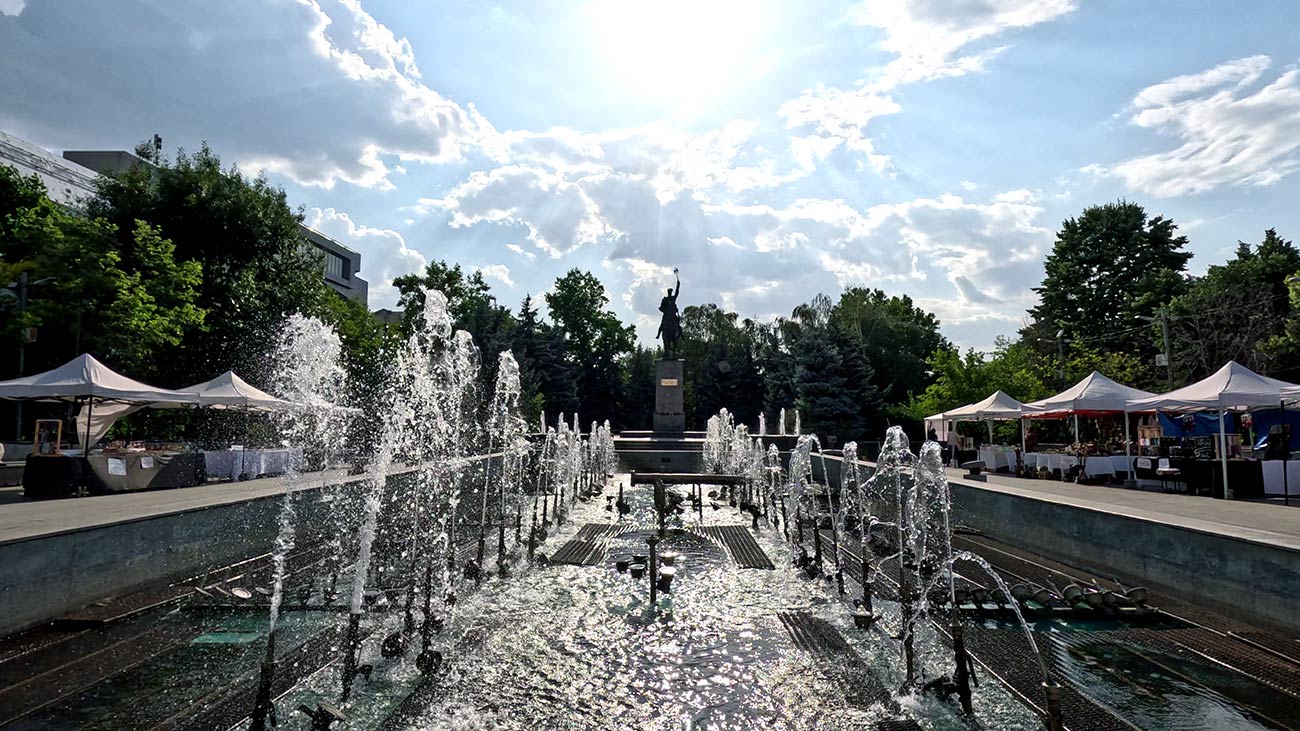
At the heart of Craiova lies Mihai Viteazul Square (Piața Mihai Viteazul), the city’s busiest and most symbolic public space, framed on one side by the imposing Administrative Palace, now the seat of the Dolj County Prefecture, and animated at its centre by a musical fountain whose evening performances have become one of the defining experiences of any visit. Through the summer months, the fountain puts on a free light-and-water show choreographed to music several evenings a week, drawing crowds of locals and visitors who gather simply to sit, talk, and watch the jets rise and fall in time with the soundtrack after dark. The square itself hosts concerts, markets, and festivals throughout the year, and during the winter holidays it transforms into the setting for Craiova’s Christmas market, complete with an ice rink and festive lighting that fills the whole space with a very different kind of energy.
A short walk from the square, in front of the City Hall, the small but carefully tended English Park (Parcul Englez) offers a quieter, more contemplative green pause within the very centre of the city. Laid out in the symmetrical English landscape style with ornamental shrubs, seasonal flower beds, and a modest fountain of its own, the park has become a favourite spot for locals to sit on a bench, read, or simply watch the comings and goings of the square next door, a small oasis of calm in the middle of the city’s busiest district.
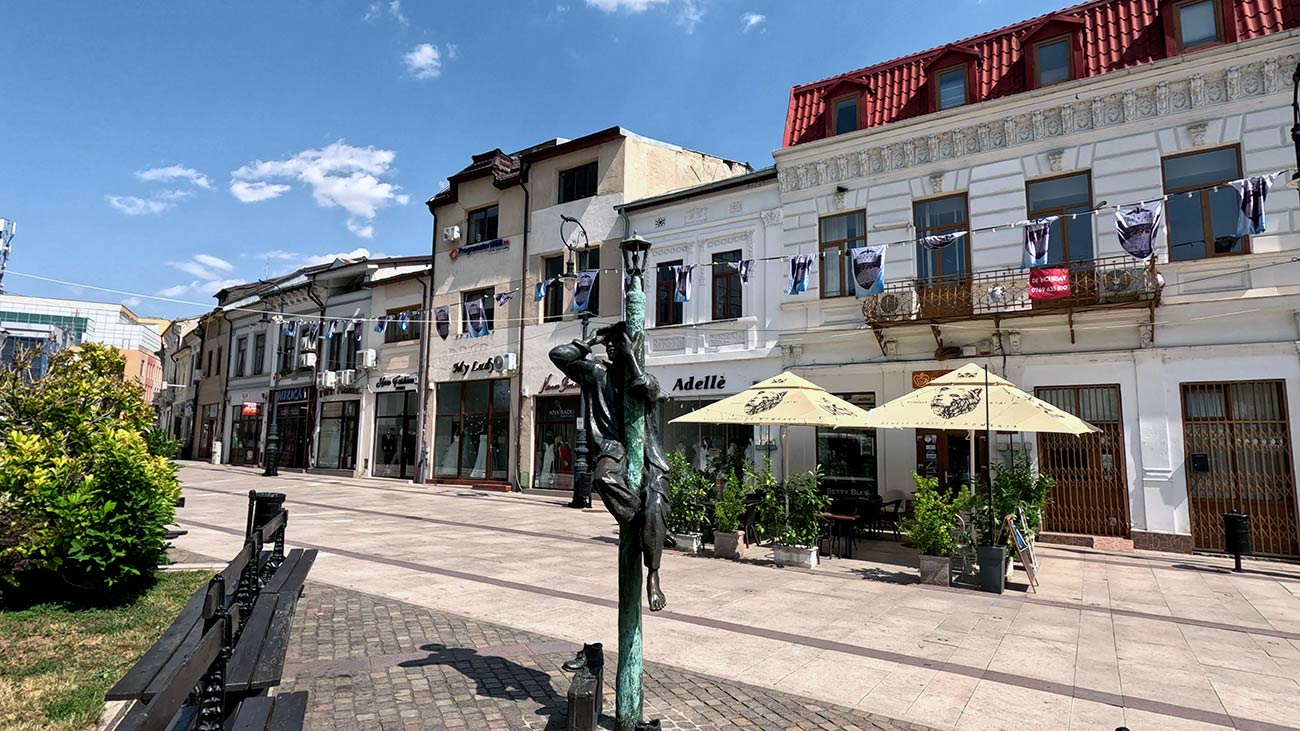
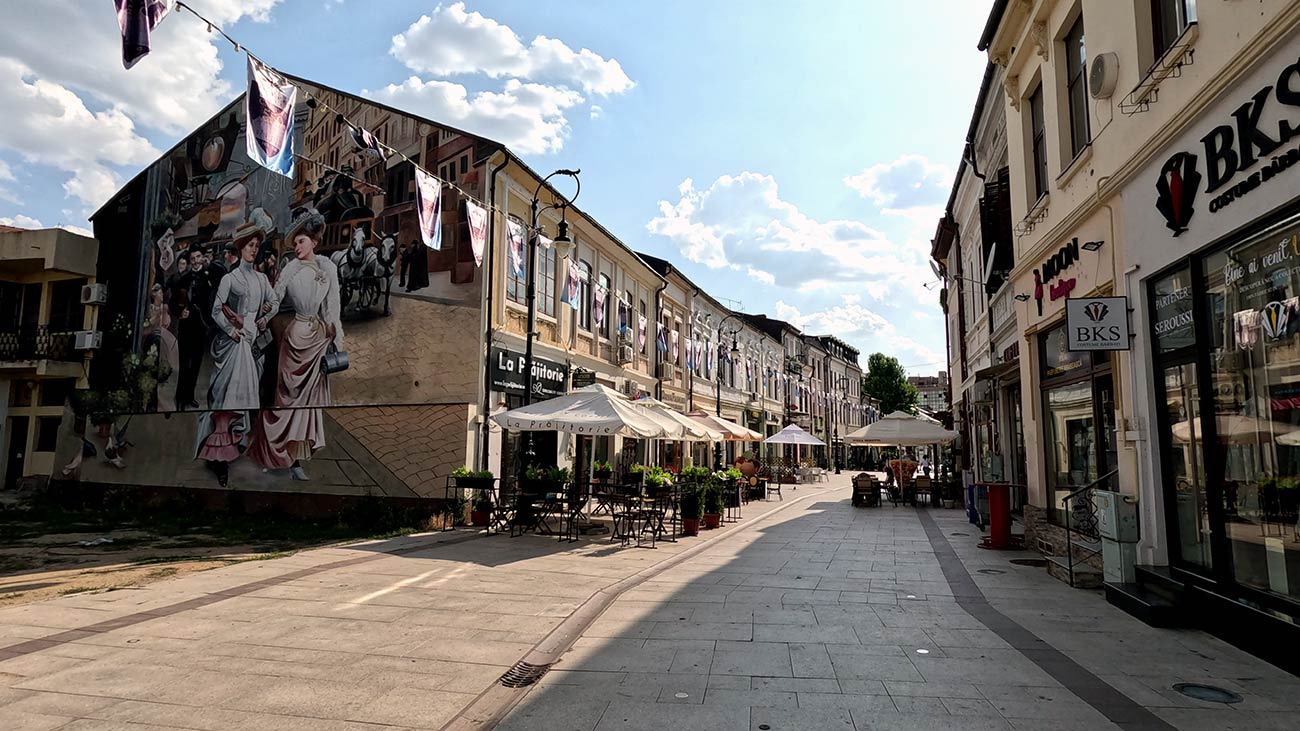
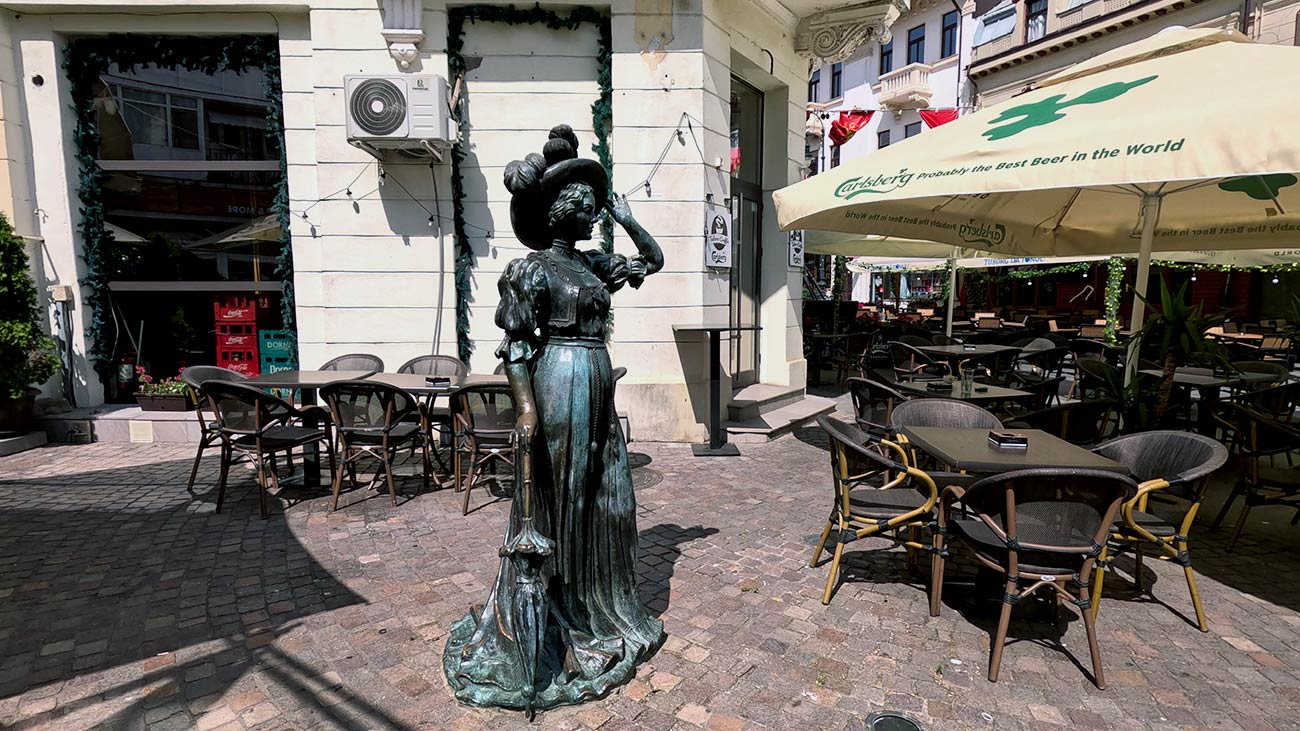
From the square and the English Park, Craiova’s pedestrianised streets spread outward along Calea Unirii and the surrounding lanes, lined with cafés, terraces, and shaded benches that make this stretch of the city centre one of its most pleasant places to linger over a coffee. In recent years, these same streets have also become something of an informal open-air gallery: building facades, narrow side alleys, and small squares throughout the centre now carry a growing collection of murals and contemporary sculptures, part of a deliberate effort by the city to give its historic core a more youthful, creative public face alongside its older architectural heritage. The effect is a centre best explored slowly and without too fixed an itinerary, since the next turn is as likely to reveal a freshly painted wall or an unexpected piece of public art as it is a grand nineteenth-century facade.
Craiova’s cultural institutions match the ambition of its public spaces. The Craiova Art Museum (Muzeul de Artă Craiova) occupies the sumptuous Jean Mihail Palace, built between 1898 and 1907 by the French architect Paul Gottereau for one of Oltenia’s wealthiest landowning families, and finished throughout with Carrara marble, Murano crystal chandeliers, and walls covered in Lyon silk. The museum’s collection runs to more than 8,000 works, with major holdings of Romanian painting by Theodor Aman, Nicolae Grigorescu, Nicolae Tonitza, and Ștefan Luchian, alongside a small but precious gallery devoted to six early sculptures by Constantin Brâncuși, the most celebrated of all Romanian artists. A short walk away, Casa Băniei, one of the oldest surviving buildings in the city, dating from the seventeenth and eighteenth centuries, now houses part of the Oltenia Museum’s ethnographic collection, presenting the traditional rural life, dress, and crafts of the wider region as a counterpoint to the high-society world preserved inside the Jean Mihail Palace.
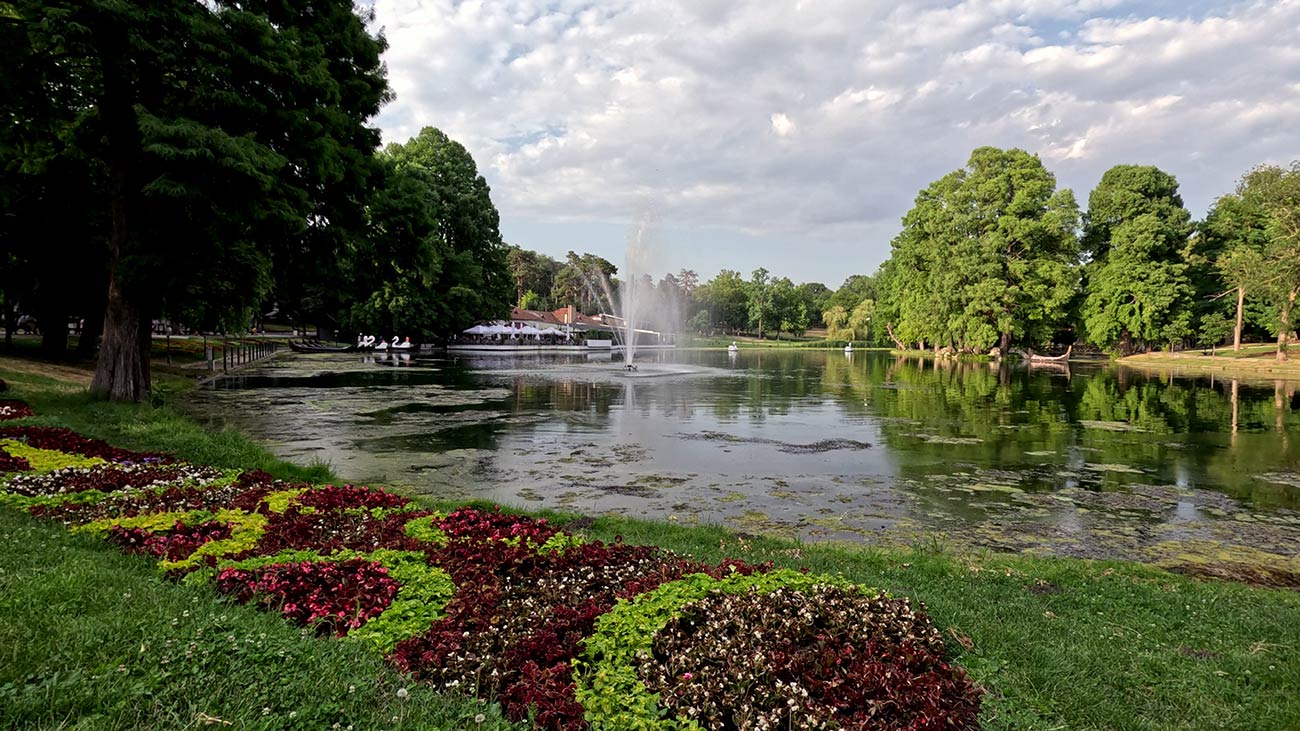
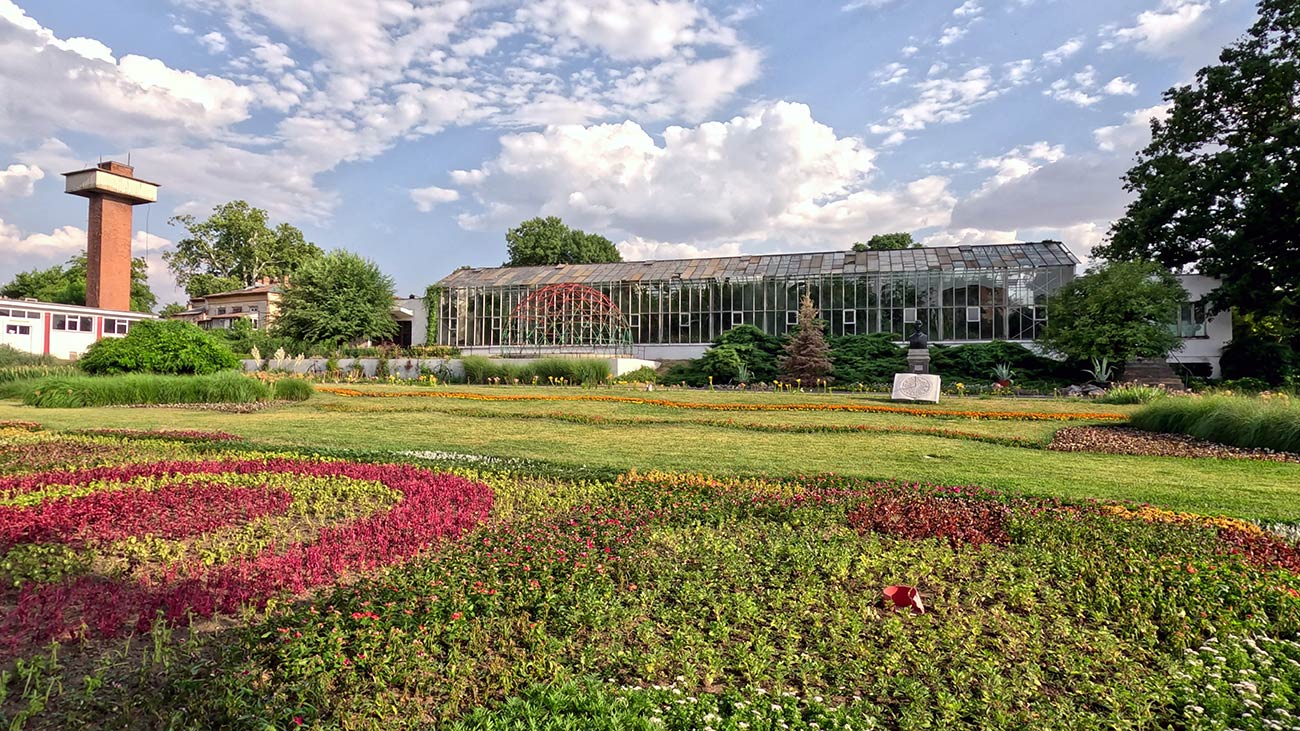
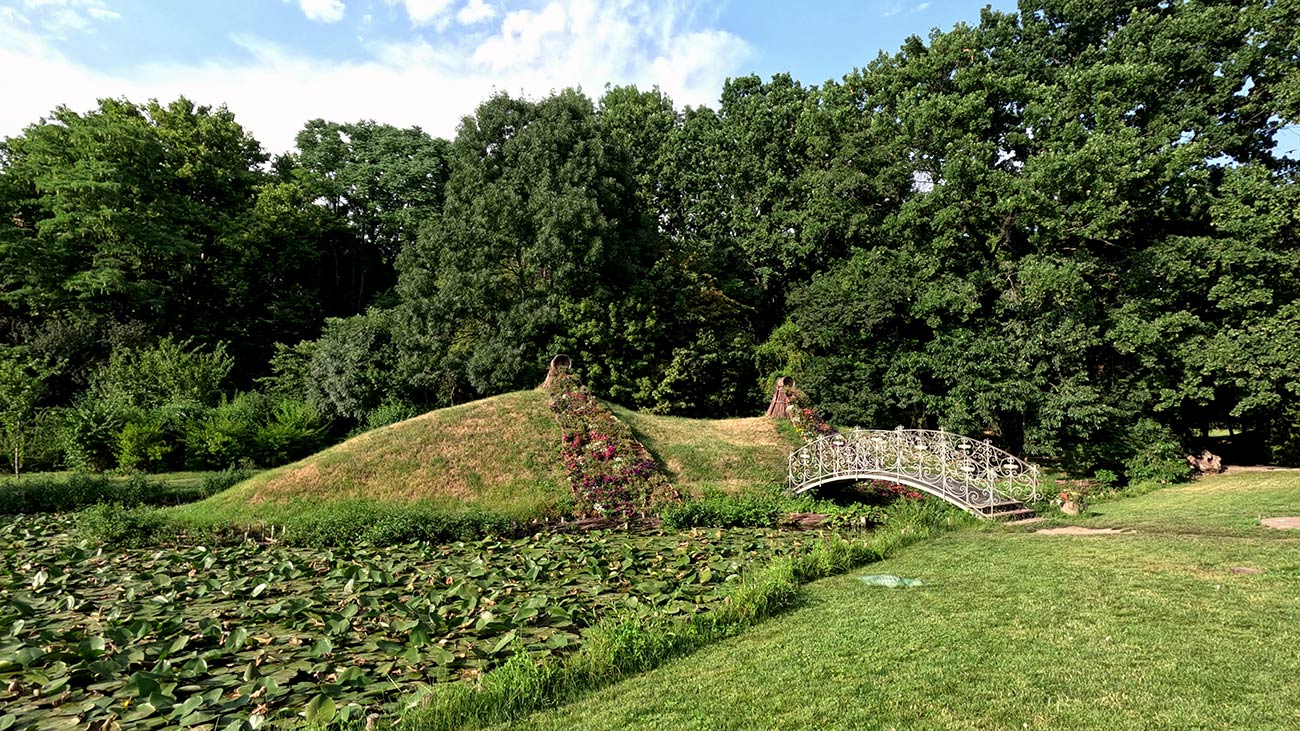
No visit to Craiova feels complete without crossing to the green southern edge of the city, where the Alexandru Buia Botanical Garden, founded in 1952 and home to more than 3,500 plant species across roughly 17 hectares, sits right beside the far larger and more celebrated Nicolae Romanescu Park. Spanning more than 90 hectares, making it one of the largest urban parks in Eastern Europe, the park was designed at the very start of the twentieth century by the French landscape architect Édouard Redont and is built around a sizeable boating lake, complete with a graceful suspended footbridge, a small fairy-tale “Enchanted Castle,” a hippodrome, a velodrome, a modest zoo, and long shaded avenues of century-old trees that change character completely with the seasons. Together, the botanical garden and Romanescu Park form a natural, unhurried final chapter to a day in Craiova, a wide green space to slow down in before heading back through the painted streets of the centre and on toward the river.
 Useful Links
Mobility for Cyclists
The connection
The most practical connection from the EuroVelo 6 corridor is from Drobeta-Turnu Severin, where CFR regional and InterRegio trains run directly to Craiova in a bit more than two hours, with departures roughly every four hours throughout the day. Cyclists riding the Romanian stretch of the EuroVelo 6 will find Drobeta-Turnu Severin the natural transfer point, and given the relatively limited frequency of the service, it’s worth checking the timetable in advance and planning the day’s itinerary around it.
Romanian Trains
The rail network in Romania is operated mainly by CFR Călători (Căile Ferate Române), the national passenger rail company, which runs the large majority of routes across the country on what is, by track length, the fourth-largest railway network in Europe. Alongside CFR, several smaller private operators run on selected routes, including Regio Călători, InterRegional Călători, Transferoviar Călători, Softrans, and Astra Trans Carpatic, each covering a limited set of lines; in places CFR doesn’t reach, one of these operators usually fills the gap. Trains come in three main categories: Regio (R), the slowest, stopping at every station; InterRegio (IR), faster medium- and long-distance services with both first and second class, free wifi, and on longer routes sleeping cars and dining cars; and InterCity (IC), the fastest and most comfortable category, reintroduced in December 2023. Private operators often don’t have ticket offices at smaller stations, so tickets can usually be bought directly on board the train without penalty. The CFR Călători website and app, along with the independent Infofer journey planner, are the most useful tools for checking timetables across all operators and purchasing tickets in advance.
Taking your bike
Romania is moderately bike-friendly when it comes to rail transport, though the rules vary by operator and are worth checking before each journey. On CFR Călători trains, non-folding bicycles can only be carried on Regio, InterRegio, and InterCity services that are specifically marked with a bicycle icon in the online timetable, where a bicycle ticket must be purchased at the ticket office or on board, priced according to distance. Folding bicycles, by contrast, are carried free of charge as hand luggage on any CFR train, in first or second class, provided they fit within the space available for hand luggage and don’t inconvenience other passengers; bicycles with one or both wheels removed do not count as folding bikes and are instead charged as bulky luggage. Among the private operators, rules and fees differ: Regio Călători, InterRegional Călători, Transferoviar Călători, and Softrans each charge a small separate bicycle fee, while Astra Trans Carpatic does not allow bicycle transport on its trains at all. Given this patchwork of policies, the most reliable approach for cycle touring in Romania is to check the bicycle icon on the specific train in the CFR or Infofer timetable in advance, or to travel with a genuinely foldable bike, which sidesteps the issue entirely.
Bikes on Buses
Long-distance bus services in Romania are extensive and, for many domestic routes, faster and more comfortable than the equivalent train journey, particularly since FlixBus expanded into the Romanian domestic market and now connects more than 50 cities across the country, alongside its existing international routes. Outside the larger FlixBus coaches, much of Romania’s internal bus network runs through smaller regional operators using minibuses and shuttle vans, which can be considerably less comfortable but are frequent, reliable, and inexpensive; tickets for these can typically be checked through aggregator sites such as Autogari.ro. Bicycle transport on Romanian buses is not standardised and depends heavily on the specific operator and vehicle. FlixBus routes operated within Romania have, in practice, proven inconsistent for cyclists, with some drivers accepting only fully folded or bagged bicycles regardless of what is shown on international booking pages, and smaller regional minibus operators rarely have any dedicated luggage space for an assembled bike at all. As a result, buses are best treated by cyclists as a flexible but unreliable backup option in Romania, while a bicycle that is genuinely foldable, or fully disassembled and bagged, travels far more predictably than an assembled touring bike on any bus service in the country.
Arriving in Craiova
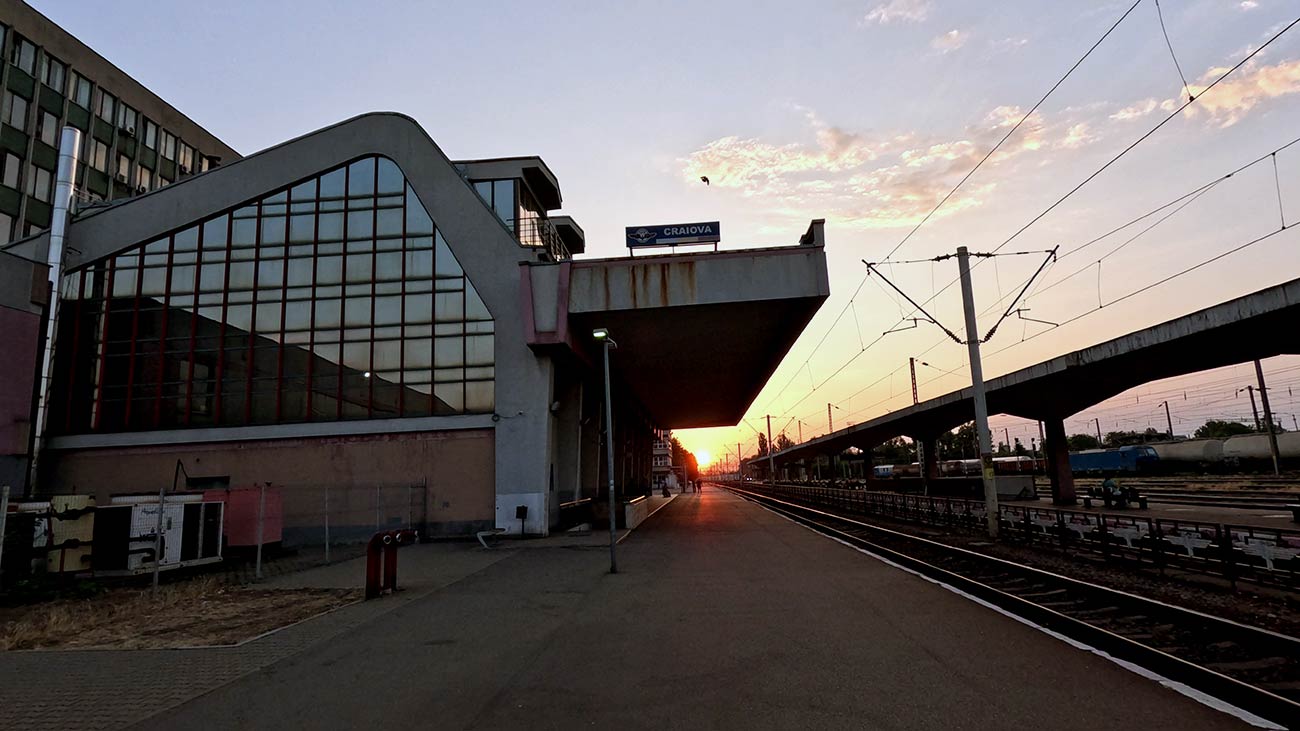
Craiova’s railway station sits within reach of the city centre, with Mihai Viteazul Square, the English Park, the pedestrianised lanes of Calea Unirii, and the Art Museum all reachable on foot or by bike along city streets. Nicolae Romanescu Park and the Botanical Garden lie further out, on the southern edge of the city, and are best reached by bike rather than on foot given the distance involved. Cycling infrastructure in central Craiova is moderate, so a mix of riding and walking generally works best once you arrive. For onward travel, the same rail line connects back toward Drobeta-Turnu Severin and the wider Danube corridor, as well as onward toward Bucharest, so Craiova works well either as a long day trip or as a more relaxed overnight stop combining the city centre with its two great parks.