Zobnatica
Reading time: 12 minutes
ZOBNATICA, NORTH BAČKA DISTRICT, SERBIA
A Horse Farm on the Bačka Plain
In the flat, fertile farmland of northern Bačka, close to the Hungarian border, a long artificial lake winds through a gentle valley carved by the river Krivaja, and beside it stands one of the oldest and most respected horse-breeding estates in this part of Europe. Zobnatica has bred thoroughbred horses for nearly two and a half centuries, and the unhurried rural atmosphere of stables, paddocks, and a converted family castle gives the place a character closer to the great horse-breeding estates of central Europe than to anything else in this corner of Vojvodina.
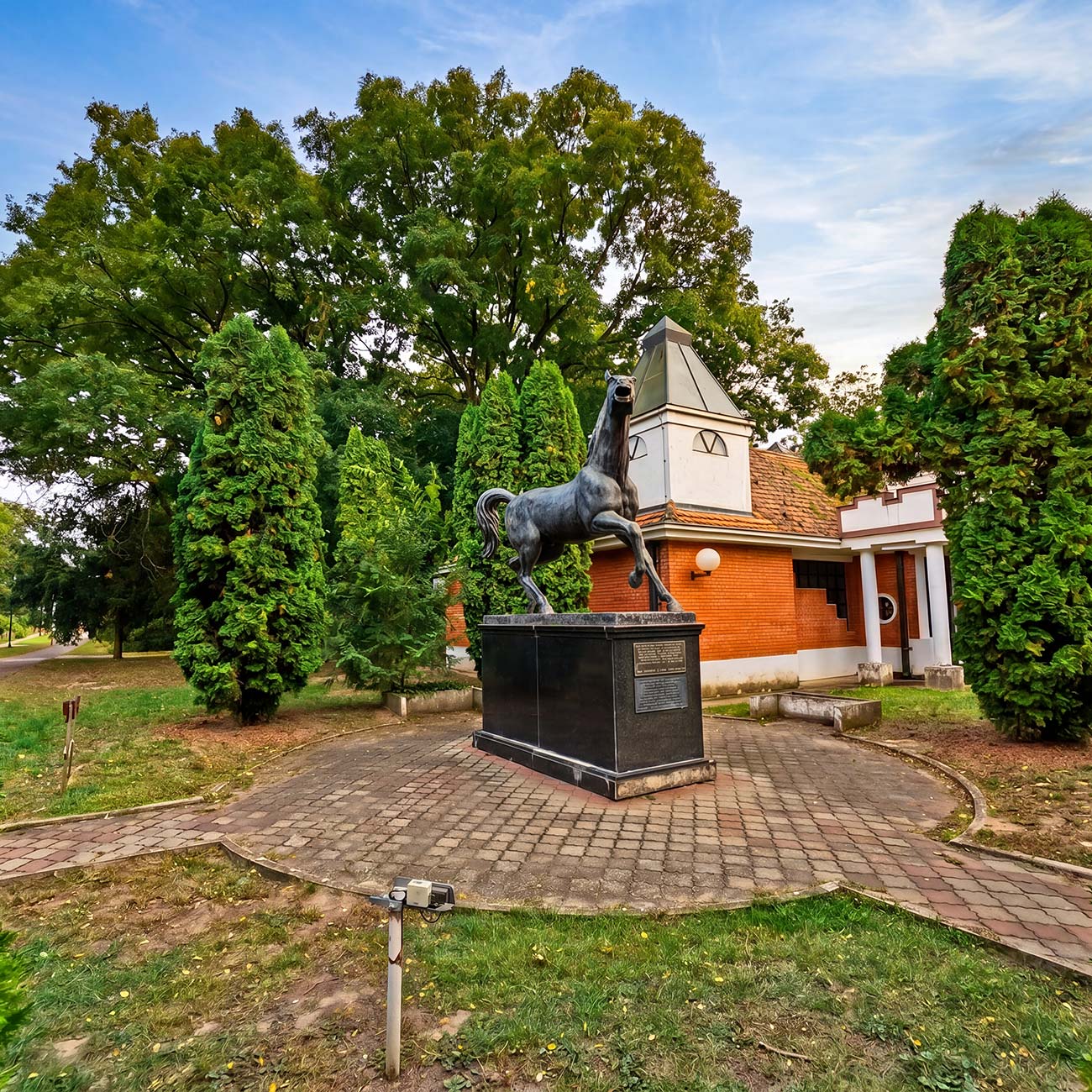
The farm traces its origins to 1779, when the noble Vojnić family of Bajša founded the first permanent stable on this site, part of a wider eighteenth-century tradition of horse breeding by the border-guard officer families of the surrounding Bačka region. The estate later passed through the hands of further notable local families, including the Törley family, whose former castle still stands at the heart of the complex, today converted into a hotel. Over the following two centuries, Zobnatica horses went on to win races across the former Yugoslavia and beyond, and the farm's most celebrated champions, including the legendary trotter Jadran II, are still honoured today with a monument and a handful of affectionate local legends about the spirits of horses and grooms said to linger around the old stables on misty autumn mornings.
For cyclists exploring the Danube along the EuroVelo 6, Zobnatica is a worthwhile inland detour from the Serbian stretch of the route. The farm lies around 5 kilometres north of Bačka Topola, itself reached by a direct, modernised train service from Novi Sad on the upgraded Belgrade-Subotica rail corridor, in around 40 minutes. A half day or full day spent around the lake, the stables, and the equestrian museum offers a slow, rural counterpoint to the river itself, with horses, open water, and quiet farmland standing in for the usual cathedral towers and castle ramparts of this travel series.
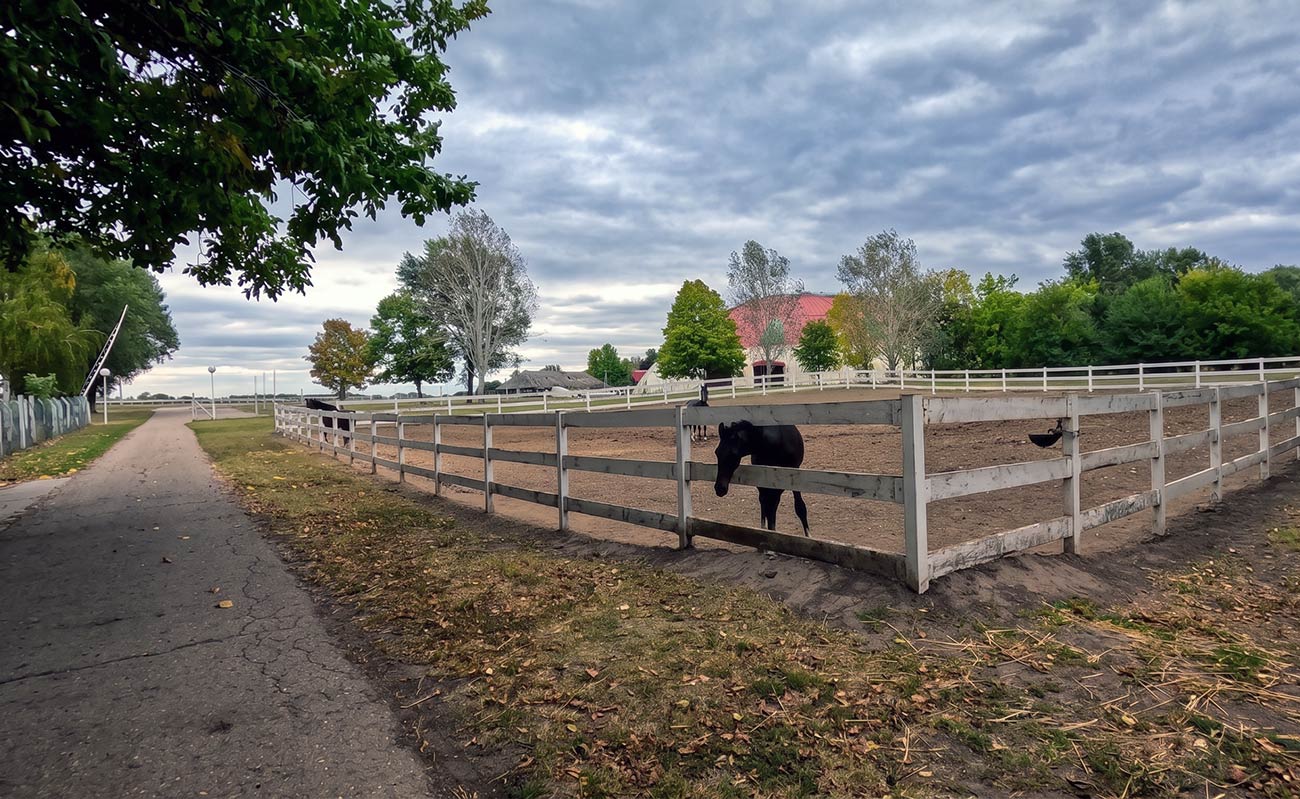
Two and a Half Centuries of Horses Beside a Quiet Bačka Lake
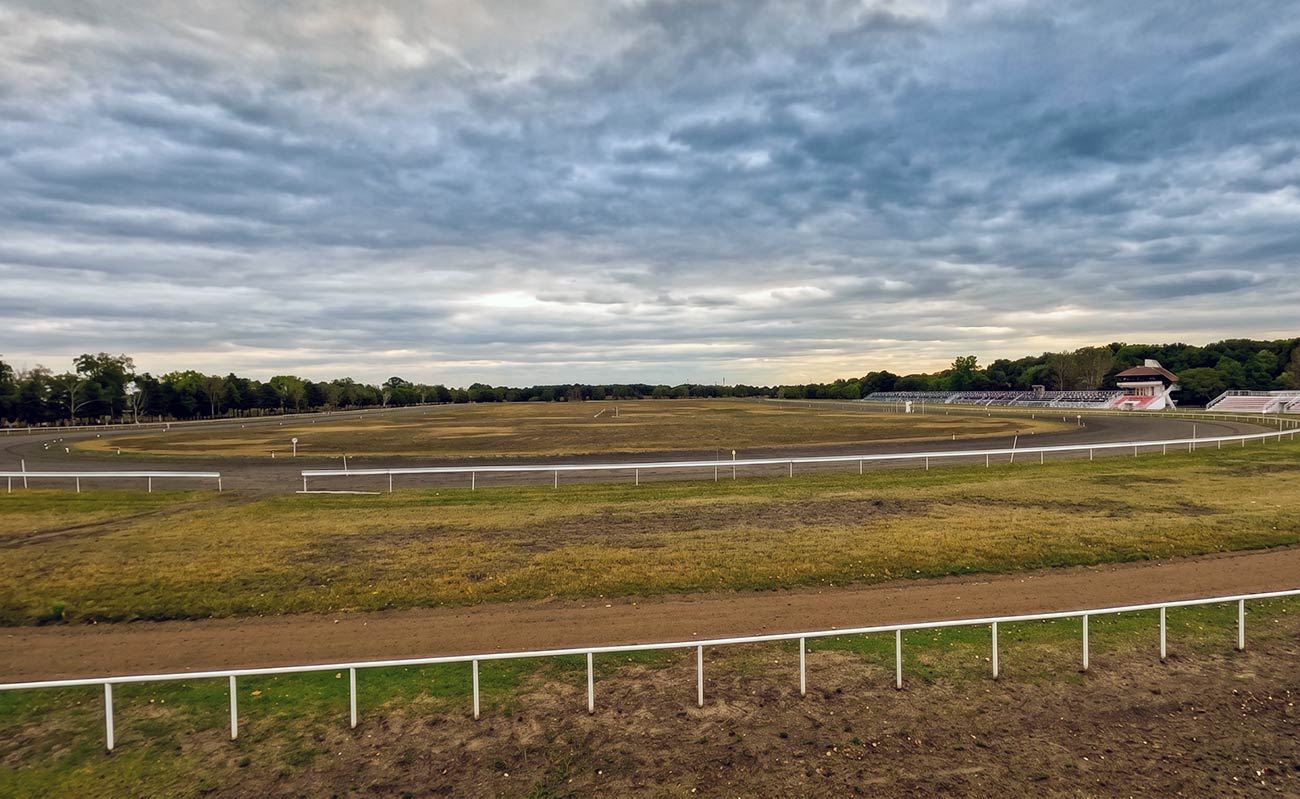
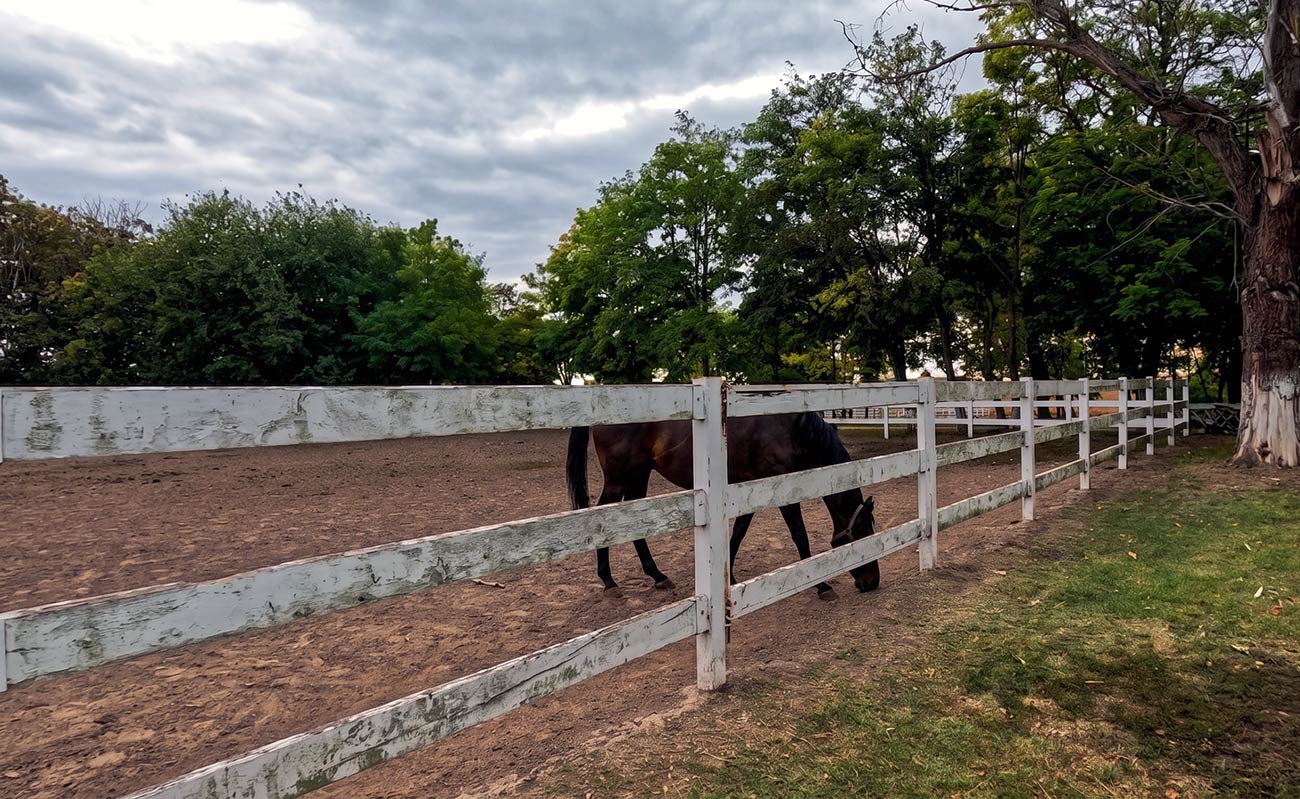
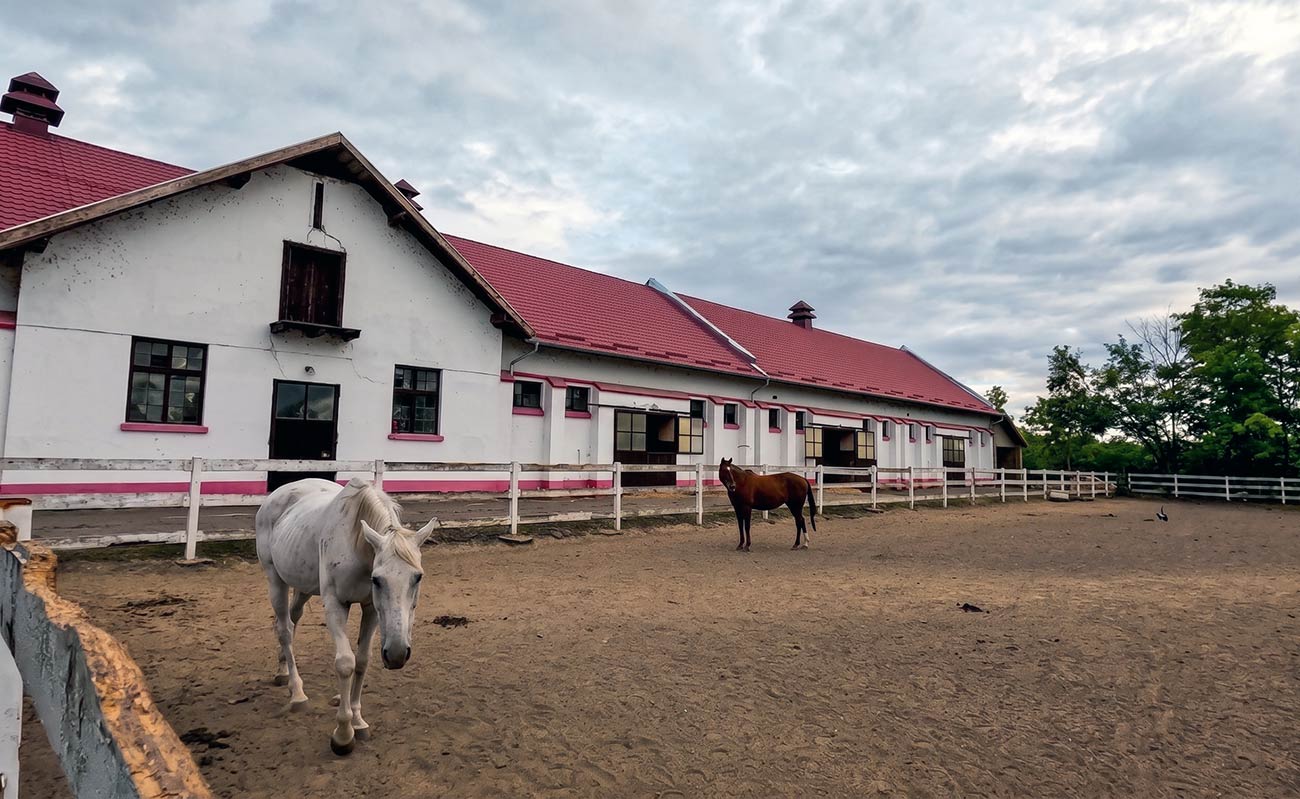
The heart of Zobnatica is, naturally, its stud farm (ergela), one of the oldest and best-known horse-breeding establishments in Serbia and the wider region. Organised horse breeding in this part of Bačka reaches back to at least 1743, when the estate of Zobnatica was first mentioned in a perpetual lease document attaching it to the city of Subotica, but the farm's continuous documented history as a working stable begins in 1779, when Bela Vojnić, a member of the influential Vojnić family from the nearby village of Bajša, established the first permanent stable here. The Vojnić family belonged to a wider group of border-guard officer families across Bačka who took advantage of the region's excellent grazing land to develop horse breeding into a serious local industry, and Zobnatica grew over the following decades into one of the most prominent of these estates, alongside other well-known farms in the family names Terlei and Lelbah. Today the stud farm keeps around eighty to a hundred thoroughbred horses, primarily gallopers bred for flat racing and show jumping, along with trotters used in harness racing, and the surrounding 2,800-hectare estate also functions as a managed hunting ground for hare, deer, pheasant, and waterfowl.
At the centre of the complex stands the former Castle of the Törley family, a stately country house that once served as the family's residence and today operates as a hotel, preserving much of its original character as a small aristocratic manor rather than a conventional modern hotel building. Beside it, the unusual Museum of Horse Breeding is built in the deliberate shape of a horseshoe, a small architectural joke that suits its subject perfectly, and inside it traces the long history of the farm and displays the trophies and memorabilia of its most successful horses across two centuries of regional and Yugoslav racing. A separate small Museum of Blacksmithing and a modest petting zoo with parrots, wild boar, ostriches, and deer round out the complex's family-friendly attractions, alongside the farm's main hippodrome and a covered indoor riding arena (manaž) used for training and show jumping year-round. Visitors can also book guided horseback rides, lessons at the riding school, or a slower carriage ride through the surrounding farmland, in each case getting a closer look at horses that have, in their best years, carried the Zobnatica name to victories across the whole of the former Yugoslavia.
Beside the stables, Lake Zobnatica was formed in 1976 by damming the valley of the river Krivaja for agricultural irrigation, and the resulting reservoir, around 226 hectares in size and stretching some 5 kilometres along the valley floor, has since become one of the most popular informal tourist spots in the wider Bačka Topola municipality, today protected as part of the Bačkotopolska Valley Nature Park. A developed beach with shade, sports fields, and a lakeside tavern draws local visitors throughout the warmer months, and the lake's quiet, gently sloping shoreline makes for an easy walk or a relaxed swim after a morning spent around the stables. The combination of horses, water, and open Bačka farmland gives Zobnatica a slower, more pastoral character than most of the destinations on this stretch of the EuroVelo 6, and it rewards travellers willing to spend a few unhurried hours away from the saddle of their own bike.
 Useful Links
Mobility for Cyclists
The connection
The most practical connection from the EuroVelo 6 corridor is from Novi Sad, where Srbija Voz runs frequent Soko and InterRegio services on the recently modernised Belgrade-Subotica corridor directly to Bačka Topola in around 40 minutes, with departures roughly every two hours throughout the day. Cyclists riding the Serbian stretch of the EuroVelo 6 will find Novi Sad the natural transfer point, and this corridor is among the fastest and most reliable rail connections anywhere in Serbia. A practical note: the Bačka Topola station does not have a staffed ticket counter, so tickets for this leg should be purchased in advance through the Srbija Voz mobile app.
Serbian Trains
The rail network in Serbia is operated mainly by Srbija Voz, the national passenger rail operator, which runs both regional and InterCity services across the country. For much of the network, the system has historically been considerably less developed than rail networks in neighbouring central European countries, with ageing rolling stock, single-track lines, and journey times that often lag well behind road travel over the same distance. Against this backdrop, the modernised Belgrade-Novi Sad-Subotica corridor stands out as a genuine exception. Upgraded with new high-speed Soko electric trains and a parallel InterRegio service, this stretch has been transformed into one of the fastest and most reliable rail journeys anywhere in the region, with frequent departures running roughly every one-two hours throughout the day and journey times that now comfortably compete with, and often beat, the equivalent bus or car trip. Stops along this corridor include Novi Beograd, Petrovaradin (serving Novi Sad), Vrbas, Bačka Topola, and Subotica on the Soko line, with several additional stops served by the InterRegio service. Away from this modernised corridor, Serbian regional rail tends to be slower and less frequent, and for many shorter regional hops, buses remain the faster and more practical option. The Srbija Voz website and app are the main tools for checking timetables and buying tickets, and the app in particular is useful since not every station along the network, including some stops on the modernised corridor itself, has a staffed ticket counter. Tickets are normally purchased in advance through the website or app, but where no ticket counter is available at the departure station, tickets can simply be bought directly on board the train from the conductor, with no extra fee charged for doing so. This makes the system fairly forgiving for visitors unfamiliar with Serbian rail, since a missing ticket counter at a small rural station is not an obstacle to travel.
Taking your bike
Cycling support on Serbian trains follows clear rules set out by Srbija Voz, though capacity varies considerably by train type. On diesel-engine trains, bicycles are loaded through doors marked with a bicycle symbol and secured on built-in bike racks, of which there are only two per train set, located near the folding seats; bikes cannot be left in front of the wheelchair space or the toilets. On electric multiple-unit trains, bicycles are again loaded through marked doors and placed beside the folding seats near the entrance and toilets, though these carriages have no fixed racks, so the rider should stay close by to steady the bike; up to three bicycles can generally be carried if the multipurpose space is free, at the conductor's discretion and depending on wheelchair users, prams, or large luggage already on board. The modern Soko electric trains on the upgraded Belgrade-Subotica corridor offer the most generous capacity, with dedicated bicycle space in every carriage near the luggage racks (the lower shelf folds down to free the space), allowing up to eight bicycles per train under normal conditions, again at the conductor's discretion. On all train types, bicycles may be refused if the train is already at full capacity on a given stretch. On any other Serbian train not covered by these specific rules, and on all international services, a bicycle can still be carried as ordinary luggage if it is folded and packed so that it fits within the same compartment as its owner. Srbija Voz accepts no liability for damage or loss of bicycles carried on board. Given this patchwork of rules, the modernised Soko service remains the most reliable option for cyclists travelling with an assembled touring bike, while a folded or disassembled bike packed as luggage travels reliably on any service.
Bikes on Buses
Long-distance bus services in Serbia are extensive and, on most routes away from the main modernised rail corridor, faster and more frequent than the equivalent train journey. The network is operated by a large number of carriers, with Lasta among the largest national operators, alongside numerous regional companies such as Niš-Ekspres and Banat Trans, and the international operator FlixBus on selected routes. Bicycle transport on Serbian buses is not standardised across operators: bikes are typically carried in the luggage compartment beneath the bus when space allows, but capacity is not guaranteed, and advance reservation or direct confirmation with the specific operator is recommended, especially for an assembled touring bike. As a result, buses are best used by cyclists as a secondary, flexible option for repositioning between towns, particularly where rail connections are slow, infrequent, or simply don't exist on a given route, while a packed or folded bike travels far more reliably as ordinary luggage than an assembled one.
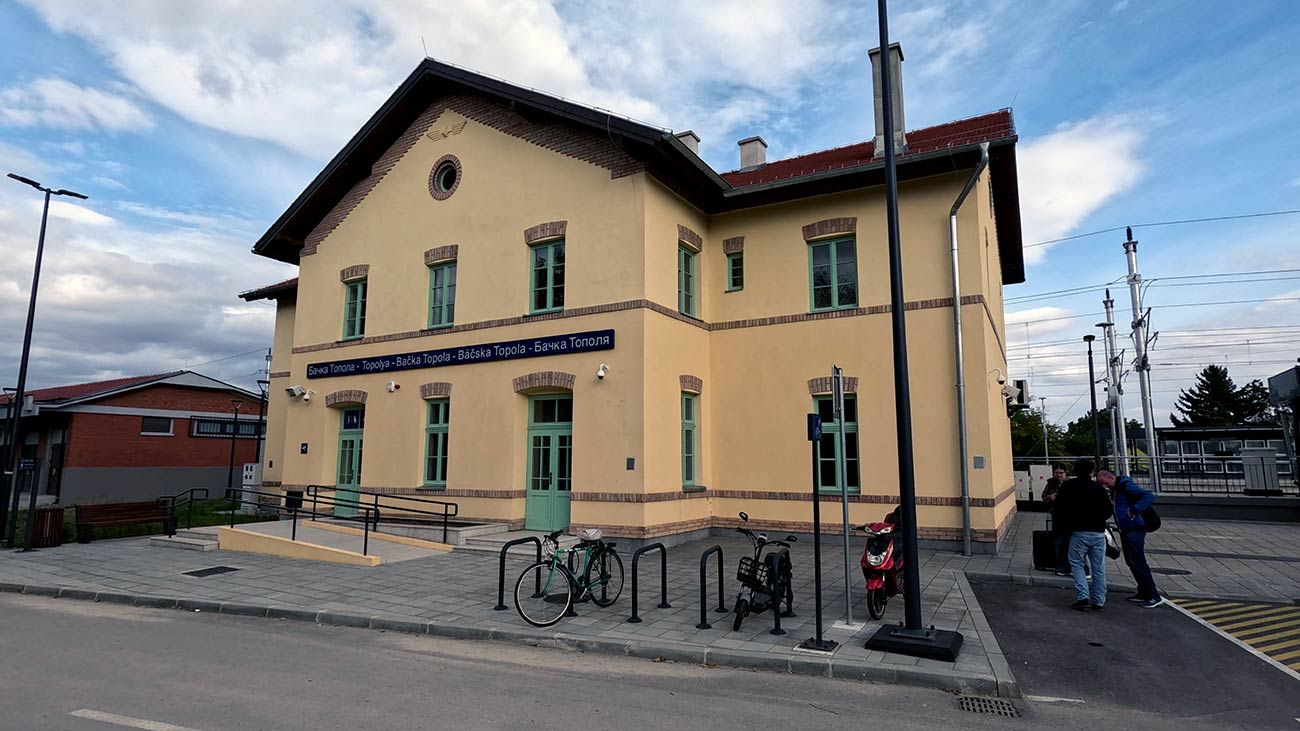
Arriving at Bačka Topola and Continuing to Zobnatica
From Bačka Topola station, the ride out to Zobnatica covers around 5 kilometres of flat, quiet country road running north through open farmland, easily managed in 20 to 30 minutes by bike. The route is straightforward to follow, with Zobnatica's stables, lake, and castle hotel forming an easily recognisable cluster of buildings at the road's end. Bike racks are available at the farm's main visitor buildings. For onward travel, the same modernised rail line connects back toward Novi Sad and the wider Danube region, as well as further north toward Subotica, so a visit to Zobnatica works equally well as a half-day excursion or as a longer, more relaxed stop combined with a stay in Bačka Topola or Subotica.