Piešťany
Reading time: 14 minutes
PIEŠŤANY, TRNAVA REGION, SLOVAKIA
A World-Famous Spa Town on the Váh
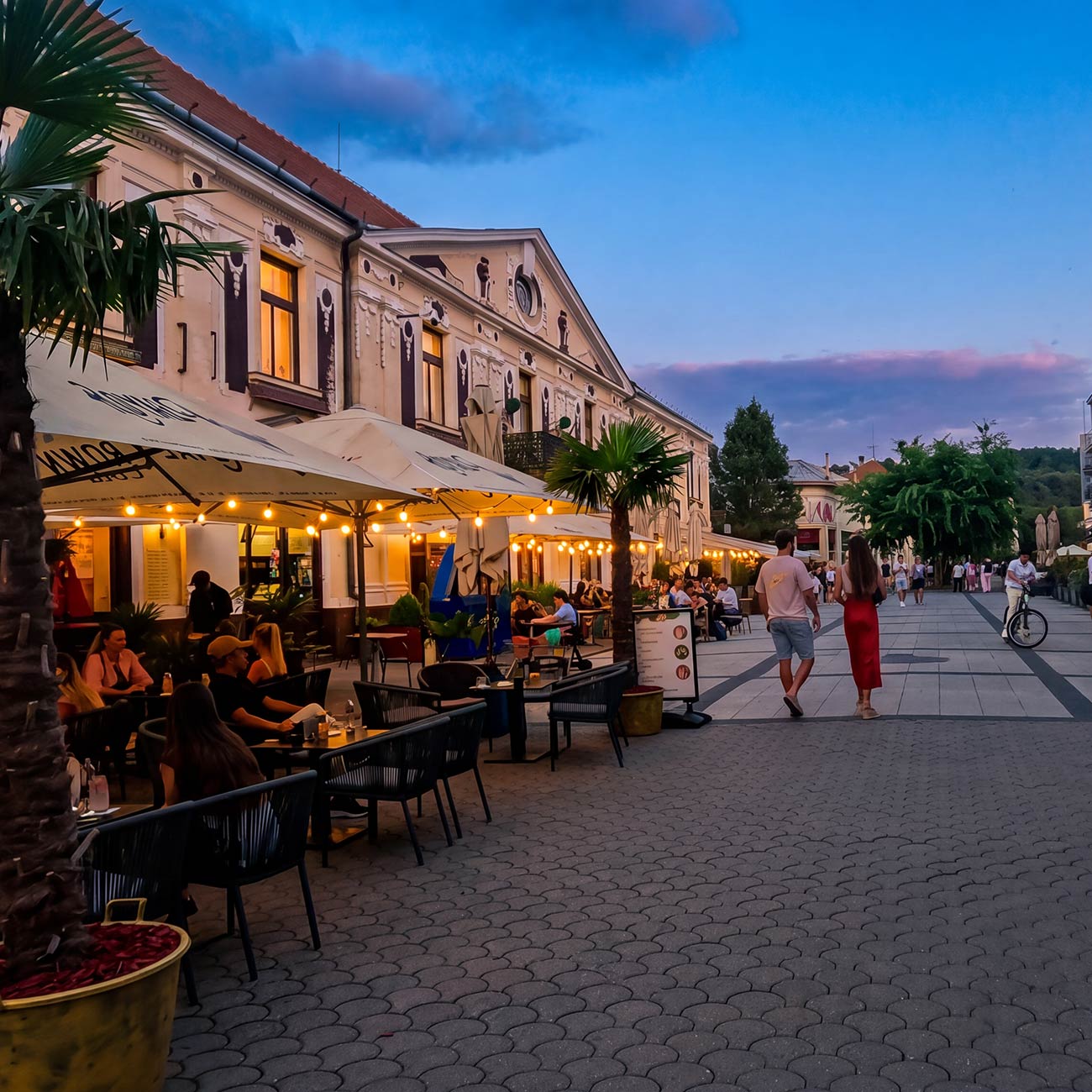
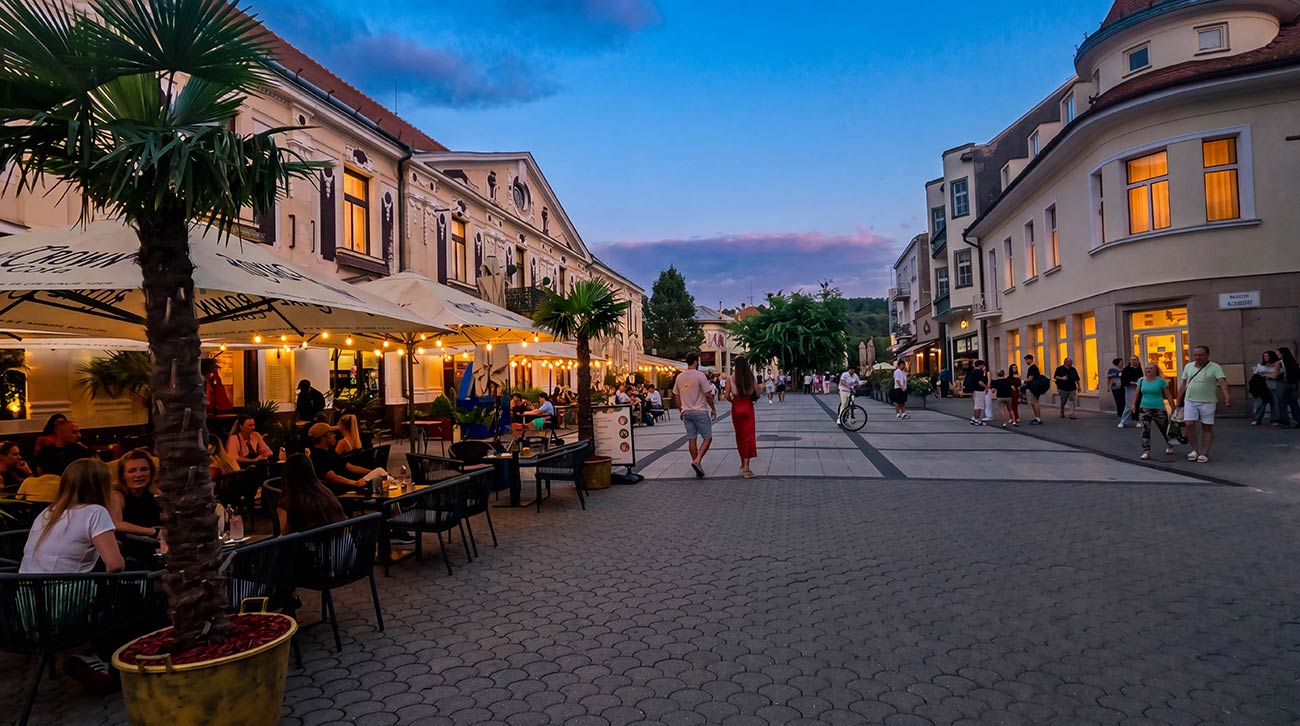
In the broad open landscape of the central Váh valley, where the river slows and widens into a long meandering arm before continuing toward the Danube, lies one of the best-known spa towns in central Europe. Piešťany has built its identity around the hot, mineral-rich water that rises naturally beneath the soft ground here, together with the thick sulphuric mud that forms in the same geological setting, and the combination has drawn visitors for more than a century. The town has grown up in two distinct halves: a small but lively civic centre on the western bank of the river, and a green, quietly grand spa quarter on Spa Island (Kúpeľný ostrov) just across the Colonnade Bridge.
The spa tradition of Piešťany has long roots. Settlement of the area reaches back into the Stone Age, when an Ice Age sculpture known as the Venus of Moravany was carved from mammoth ivory in a nearby village, and the first written record of the town appears in the Zobor Deed of King Koloman of Hungary in 1113, under the older name of Pescan. The decisive transformation, however, came in 1889, when the entrepreneur Alexander Winter and his sons leased the local baths from the Erdődy family and began converting a small village resort into an international spa town. Within a few decades, Piešťany was attracting royals, politicians, writers, and athletes from across Europe, and a long sequence of sanatorium hotels, neoclassical villas, and Belle Époque colonnades transformed the look of the entire town.
For cyclists exploring the Danube along the EuroVelo 6, Piešťany is one of the more relaxed cultural detours from the Slovak stretch of the route. The town lies around 80 kilometres north-east of Bratislava on the same main rail corridor that serves Trenčín and the Tatras, and is reached by a direct ZSSK regional train in just under an hour. A day spent moving between the spa park, the riverbanks, the Colonnade Bridge, and a slow lunch on one of the leafy promenades offers a genuine change of pace from the river road, with the kind of unhurried atmosphere that the town has been cultivating for more than a century.
SPAMudHistoryFood
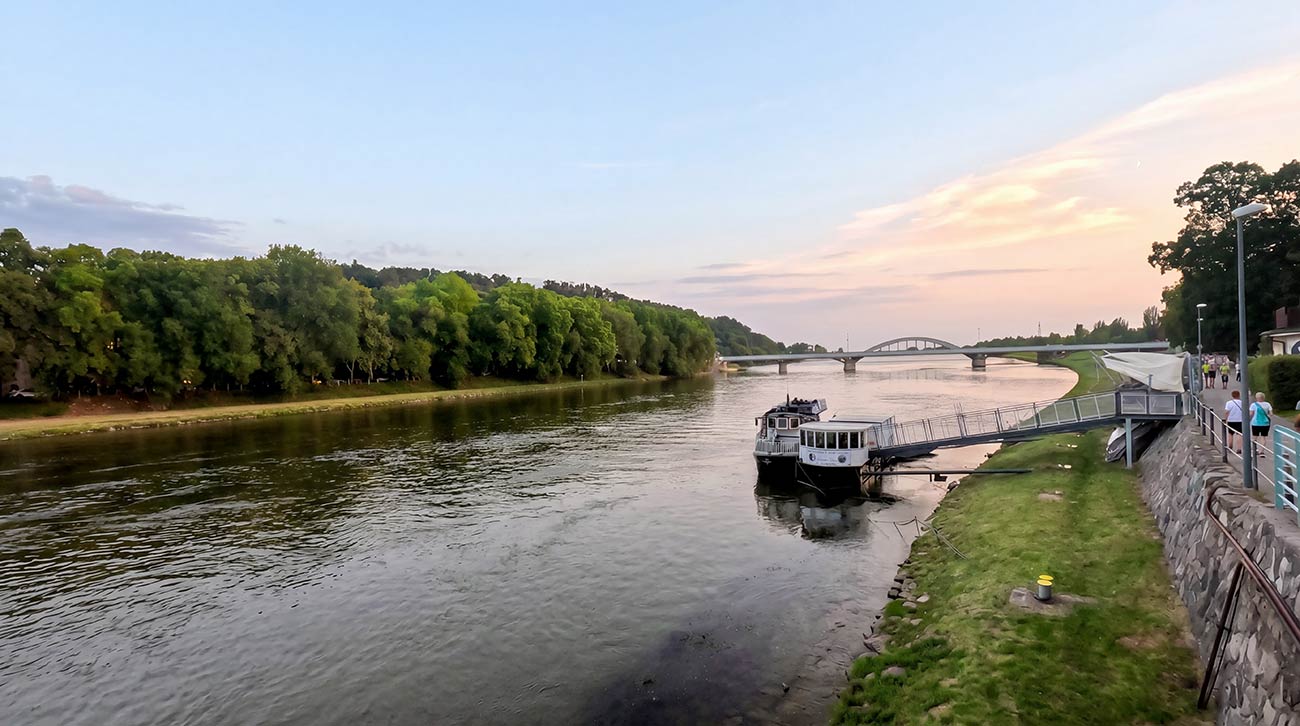
A Spa Island, a Colonnade Bridge, and the Town That Healed Europe
The natural anchor of any visit to Piešťany is Spa Island (Kúpeľný ostrov), the long green island in the middle of the Váh River that holds almost the entire spa complex. The island stretches for several kilometres between two arms of the river and is laid out as a single landscape park, with broad tree-lined avenues, ornamental flowerbeds, fountains, and a sequence of monumental nineteenth- and early twentieth-century sanatorium hotels arranged around a central axis. Several of the buildings here still operate as working balneological clinics today, drawing on the same hot mineral water that first made the town famous. At the southern end of the island stands the Napoleon Bath (Napoleonské kúpele), the oldest spa building in Piešťany, whose name commemorates the period of the Napoleonic Wars when the town first started attracting wider international attention. Throughout the surrounding Spa Park (Kúpeľný park), a quiet sequence of modern and historical sculptures recalls the long succession of artists, doctors, and patients who have shaped the place across the past two centuries.
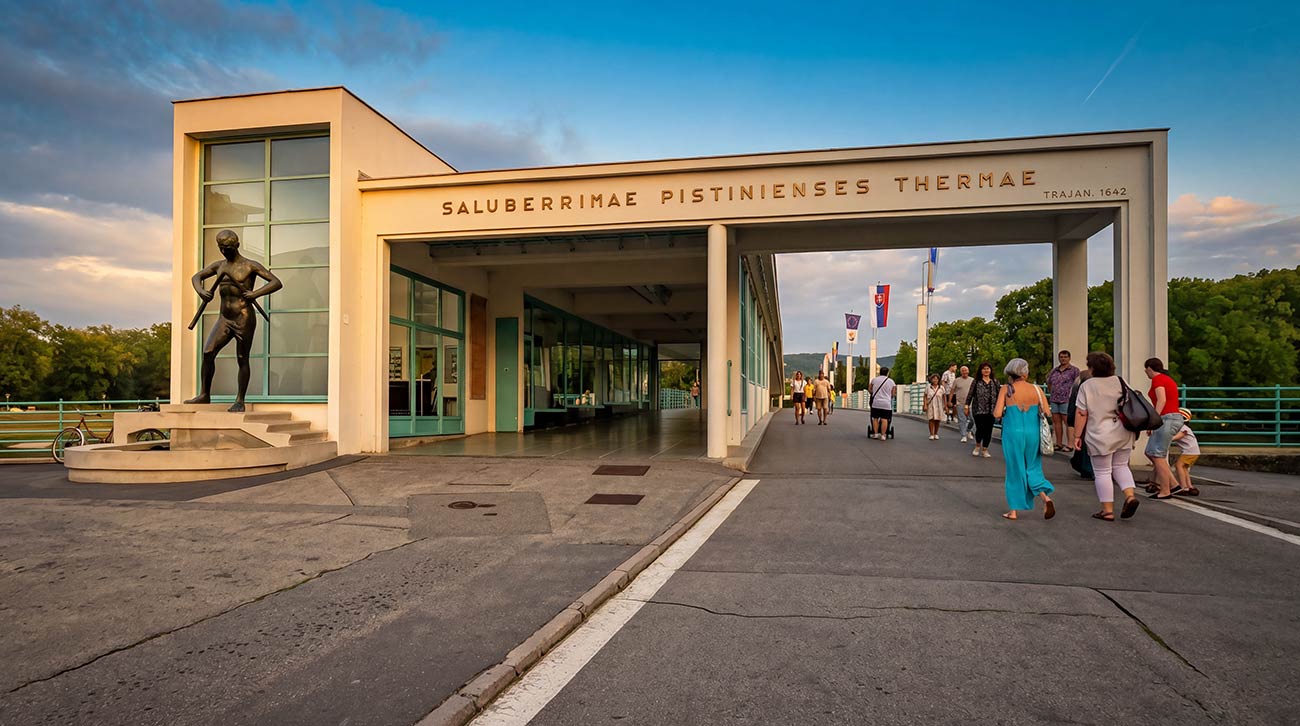
The connection between the historic centre and Spa Island is one of the defining images of the town. The Colonnade Bridge (Kolonádový most), sometimes also called the Promenade Bridge, is a graceful covered pedestrian bridge built in the 1930s, designed by the architect Emil Belluš and stretching directly across the Váh as the only walking link between the western bank and the spa quarter. It is widely considered one of the finest examples of Slovak interwar architecture and remains the natural ceremonial entrance to the spa. At the eastern end of the bridge stands the small bronze sculpture that has become the town's emblem: a man depicted in the act of breaking his crutch, a striking image of recovery from illness first installed in 1894 and now incorporated into the official coat of arms of Piešťany itself. The town's bilingual welcome on the bridge railing, Salutem aquis (in good health from the waters), captures the entire spirit of the place in two Latin words.
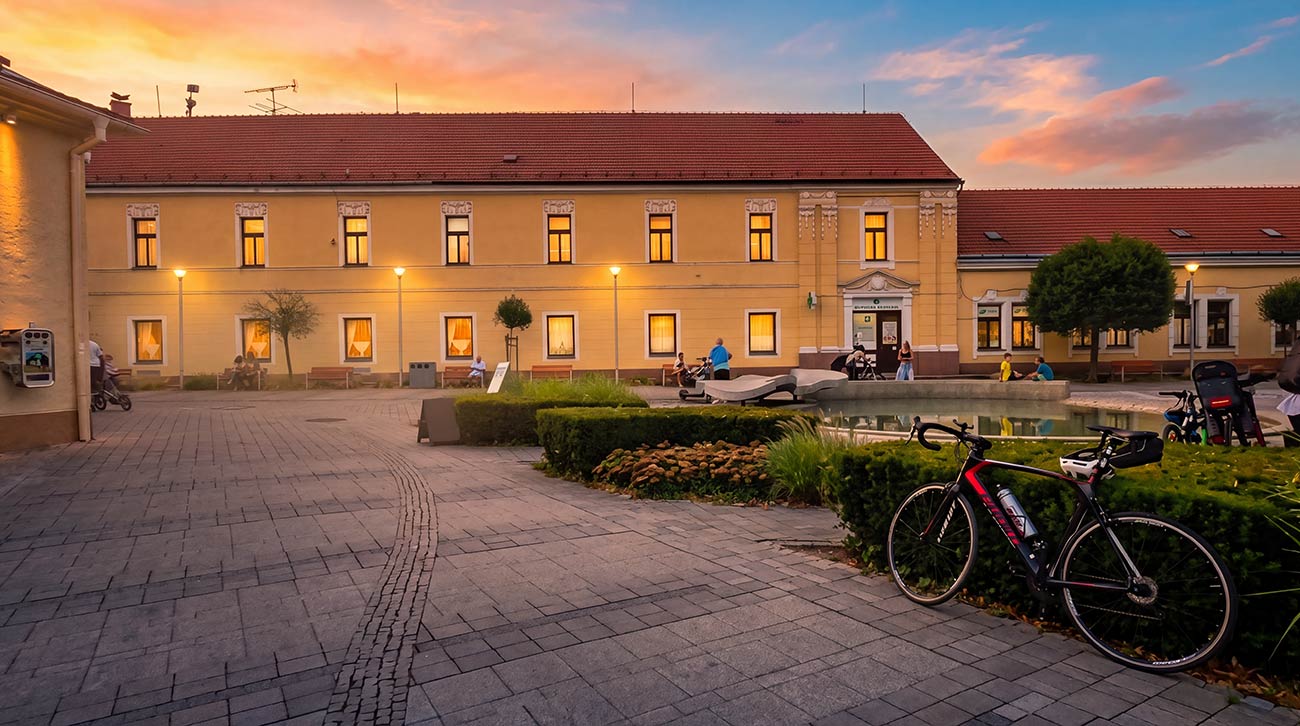
On the western bank of the river, in the wider town park beside the historic centre, stands the Spa Hall (Kúpeľná dvorana), better known by its older German name as the Kursalón. The building was conceived in the late nineteenth century as a meeting and social space for spa guests, with concert rooms, reading rooms, and a small theatre, and today it serves as the seat of the Balneological Museum (Balneologické múzeum Imricha Wintera), named after one of the sons of the family who shaped the modern spa. The museum traces the natural history, archaeology, and spa heritage of the wider region across several centuries, including reproductions of the famous Venus of Moravany, the Ice Age figurine from a village just outside Piešťany. The exhibition is set against the cultural backdrop of a town that has hosted some of the great names of European letters and music in its long career as a spa, including writers, composers, and royal guests of the Austro-Hungarian Empire.
Beyond the spa quarter, Piešťany offers an unusually wide range of outdoor and cultural distractions for a town of its size. The Sĺňava water reservoir to the south, formed by the damming of the Váh in the 1950s, has become an important recreational lake for water sports, fishing, sailing, and the long-running O pohár SNP international rowing regatta. Tennis courts, a football stadium, an indoor ice rink, a riding centre, a water-skiing facility, a golf course, and bowling and squash centres all sit within easy reach of the town centre. The summer cultural calendar is anchored by the Piešťany Music Festival and the Piešťany Organ Days, alongside the smaller folk-flavoured Country Lodenica festival and the contemporary Hodokvas Multimedia Festival, while motoring enthusiasts know the town as the long-standing host of the Cena Slovenska classic-car race. Across the streets between the river and the old town, the so-called art cafés of Piešťany, combining small galleries with a strong local coffee culture, have become a quiet trademark of the place.
 Useful Links
Mobility for Cyclists
Reaching the area by train with your bike
Piešťany can be reached from the EuroVelo 6 by a single direct rail journey from one of the main cities on the Danube cycle path. The town lies around 80 kilometres north-east of Bratislava in the Trnava Region, on the main north-south rail corridor between the Slovak capital, Trenčín, Žilina, and onward to Košice.
The connection
The most practical connection from the EuroVelo 6 corridor is from Bratislava, where ZSSK regional and InterCity trains run directly to Piešťany in around 57 minutes to one hour, depending on the service, with hourly departures throughout the day. The line follows the broad Váh valley northward through the heart of western Slovakia, with views of rolling Carpathian foothills and small wine villages along the way. Cyclists riding the Slovak stretch of the EuroVelo 6 will find Bratislava the natural transfer point, and the journey fits comfortably into a single travel day. Piešťany can also be combined naturally with Trenčín, Beckov Castle, or Senec on a longer Slovak itinerary, since all of them lie on or near the same rail corridor and can be visited in sequence with a single base in the Slovak capital.
Slovak Trains
The rail network in Slovakia is operated mainly by Železničná spoločnosť Slovensko (Slovak Railway Company, commonly known as ZSSK), the national passenger railway operator and by far the largest carrier in the country. ZSSK runs most long-distance services as well as a large share of regional connections, including the InterCity and EuroCity trains on the main east–west corridor and the dense network of regional and suburban Os and REX services that branch out into the Slovak countryside. Tickets, timetables, and bicycle reservations can be planned and booked through the ZSSK website and the IDS ZSSK app, which together serve as the central tools for travel across the system. Alongside ZSSK, the private operator RegioJet runs a smaller number of long-distance trains on selected routes, although its bicycle transport capacity is limited and depends on the specific train and route. A further private operator, Leo Express, does not serve the routes covered by this guide. For travellers leaving the EuroVelo 6 along the Slovak stretch of the Danube, the natural rail gateway is Bratislava, the country's capital, where two regional railway branches run north into the surrounding region: one west and north toward Trenčín along the Váh valley, and one east toward Nitra. Both corridors are served by frequent ZSSK regional trains throughout the day, making short detours from the Danube cycle path quick and easy to organise.
Taking your bike
Slovakia is generally very bike-friendly when it comes to rail transport, especially on regional services operated by ZSSK, which form the core of mobility for cycle touring along the Danube and its connecting corridors. On regional and local trains (the Os and REX categories), bicycles can be taken on board for an additional fee, with no advance reservation possible and a first-come, first-served allocation of space. Bicycle tickets are sold as single trips or as affordable daily, weekly, or monthly passes, valid across the regional network. On long-distance services such as R (fast), Ex (express), EC, IC, and RJX trains, an advance reservation for the bicycle is mandatory, with the bike spaces located in dedicated zones in second-class carriages or in mobile luggage compartments. The private operator RegioJet runs a smaller number of long-distance trains on selected Slovak routes and also accepts bicycles on some of these, but the capacity is more limited than on ZSSK trains and an advance reservation is required. Leo Express, a further private operator, is fully bike-friendly on its train services and allows up to four bicycles per train with advance reservation, although its routes do not cover the detours in this guide and are mainly relevant for cyclists travelling between the Czech Republic and other parts of Slovakia. Folding bikes are carried free of charge as hand luggage on all three operators, provided they fit in the luggage racks. Overall, the Slovak rail system is well adapted to cycle tourism and offers a flexible combination of train and bike that makes it easy to leave the EuroVelo 6 route in either direction for short or extended detours.
Bikes on Buses
Long-distance bus services in Slovakia are primarily operated by FlixBus, complemented by RegioJet and Slovak Lines on selected routes, alongside a smaller number of regional and private coach operators. As in many central European countries, the long-distance bus market in Slovakia is less developed than the wider rail network, and many domestic connections that would otherwise be served by intercity coaches are instead handled by ZSSK trains. FlixBus is generally the most practical option for cyclists, with bicycle transport available on certain connections, either via external bike racks or in the luggage compartment, although it is not consistently guaranteed across the network and depends on the specific vehicle type and route configuration. Where available, bicycle transport must be reserved in advance and capacity is limited, making it less flexible compared to rail services. RegioJet also runs long-distance coaches alongside its trains, and Slovak Lines operates a network of domestic and international routes from Bratislava, but the bicycle-carrying options on both operators are limited and not guaranteed on the routes relevant to the detours in this guide. As a result, buses are generally used as a secondary option for cyclists, mainly for longer-distance repositioning between major cities rather than as a core part of cycling itineraries along the Danube region. While useful in specific cases where rail connections are less convenient, they are less predictable and less standardised for bicycle transport, so advance planning is essential.
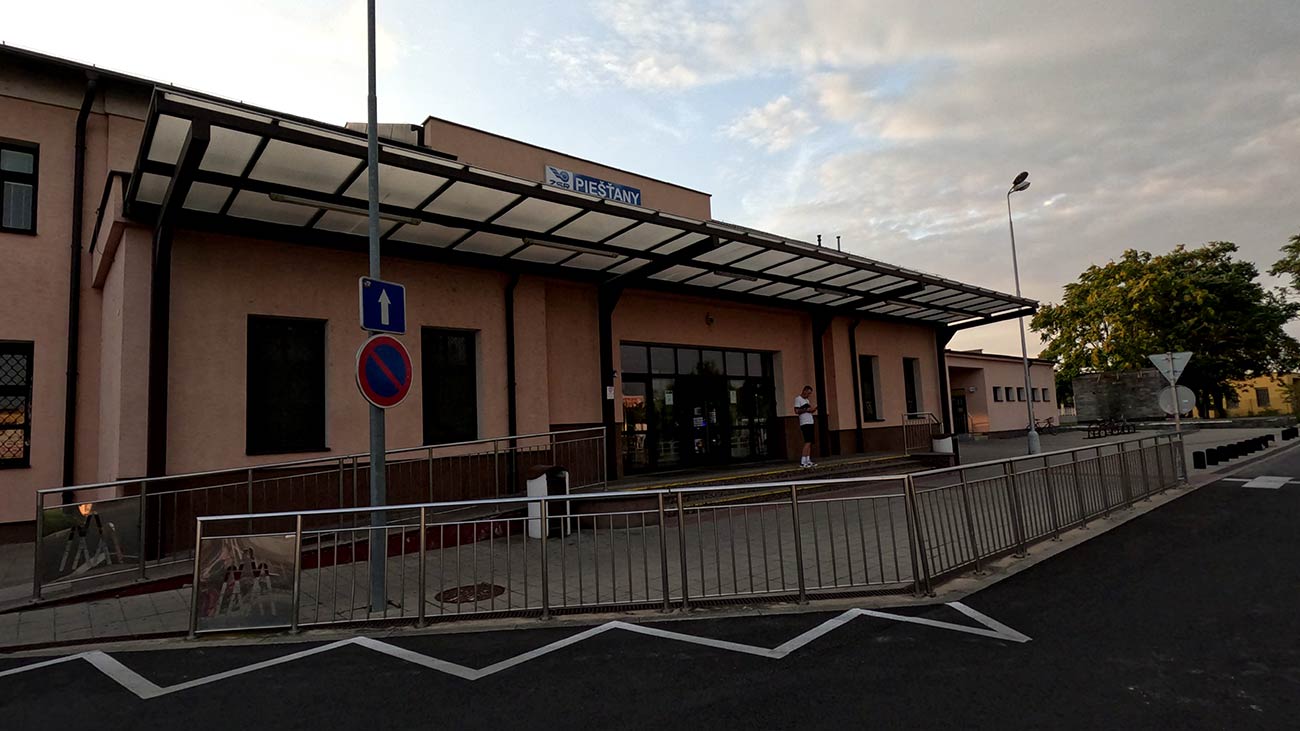
Arriving at Piešťany Station
Piešťany railway station sits a short walk or ride east of the historic centre, with the Spa Hall, the Colonnade Bridge, and the entrance to Spa Island all reachable on foot or by bike in around fifteen minutes along largely flat, well-signposted streets. The town is unusually well laid out for walking and cycling, with long pedestrian promenades along the Váh, an extensive network of riverside paths, and dedicated cycle infrastructure connecting the spa quarter with the wider town. Bike racks are available at the station and at several points around the spa quarter. For onward travel, the same ZSSK line connects back toward Bratislava and the wider Danube region, as well as further north toward Trenčín, Žilina, and the Tatras, so Piešťany works equally well as a half-day excursion or as a longer overnight detour from the EuroVelo 6.