Croatia
Reading time: 6 minutes
Croatia is the country where the EuroVelo 6 briefly leaves the Danube and follows the flat, fertile plains of Slavonia, a region that feels quieter and more rural than the stretches of the route on either side. The Danube forms Croatia’s eastern border with Serbia, passing through Vukovar and the surrounding Syrmian lowlands, while the broader cycling corridor crosses westward through a landscape of wheat fields, sunflower plantations, and small market towns built from the warm brick and pastel plaster of the old Austro-Hungarian Military Frontier. It is a gentler, slower section of the route, with long level roads, little traffic, and a pace that gives the rider time to notice the stork nests on the chimneys, the roadside shrines, and the changing light across a flat horizon.
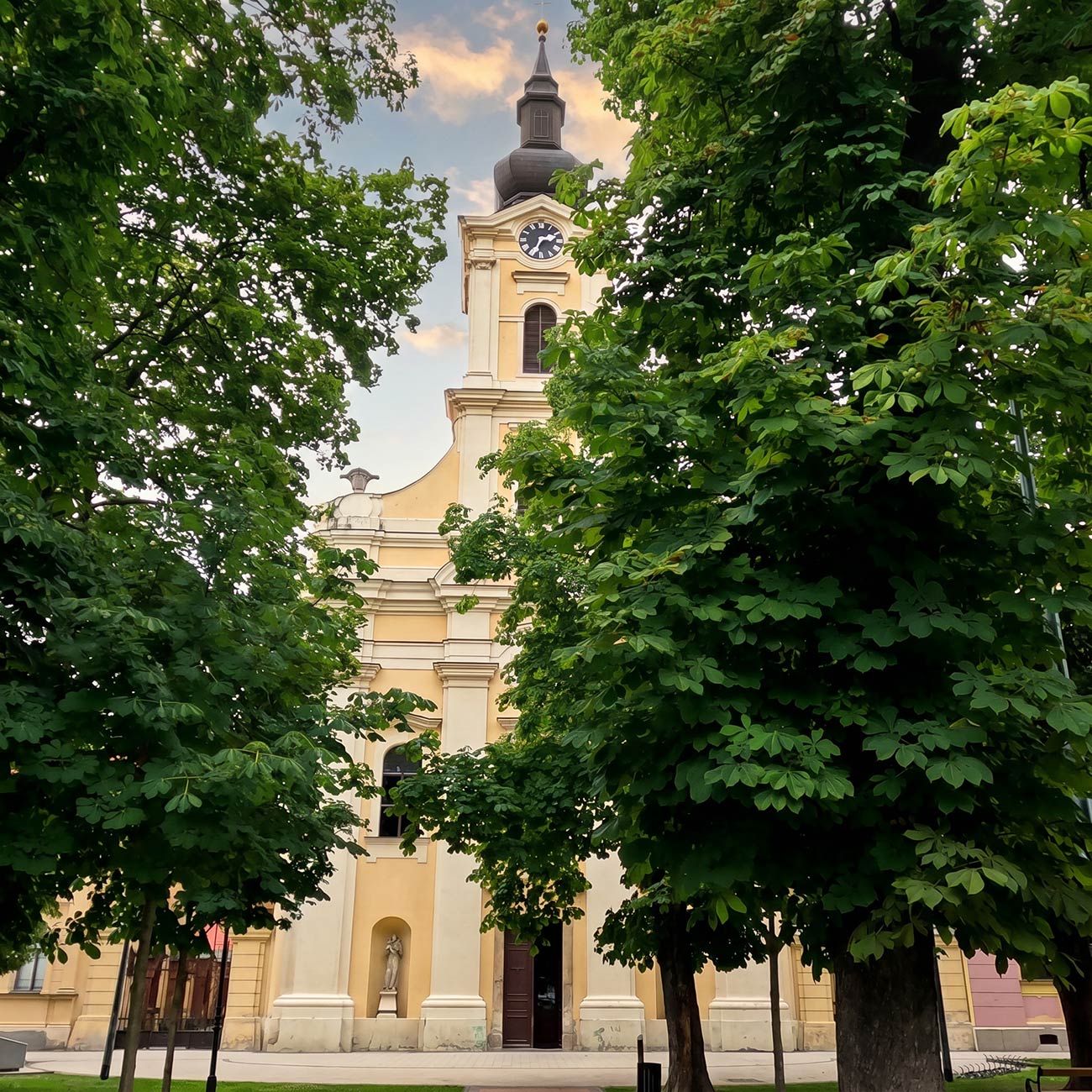
The Croatian stretch of the EuroVelo 6 does not pass through the country’s most internationally famous destinations — the Adriatic coast, Dubrovnik, and the Plitvice Lakes lie far to the west and south. What it does cross is Slavonia, the inland heartland that most international visitors never see, a region with its own distinct identity built on centuries of frontier life, a strong folk-music tradition, and some of the richest agricultural land in southeastern Europe. The main towns along or near the route — Osijek, the regional capital and largest city in the east, and Vukovar, the Danube river town whose recent history has marked both the city and the country — carry a combination of Baroque civic architecture, living multiculturalism, and a quiet, post-war resilience that gives the region a character entirely its own.
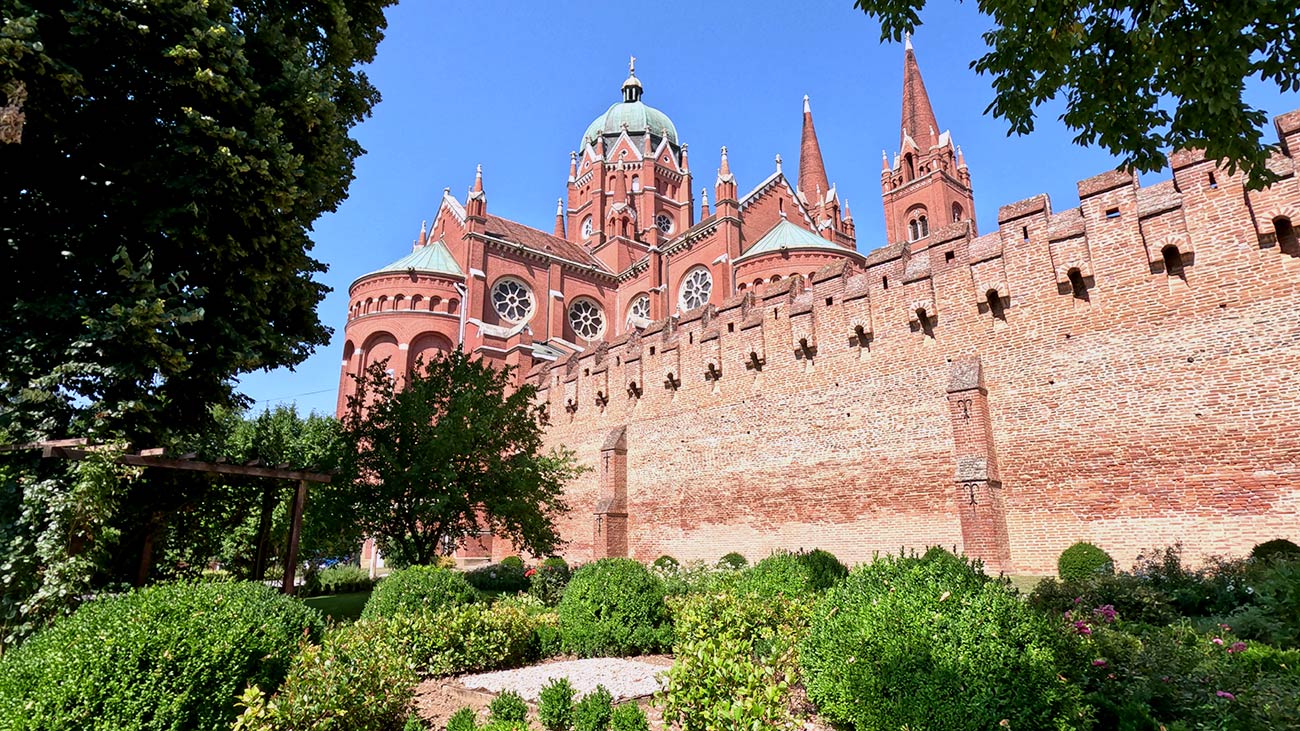
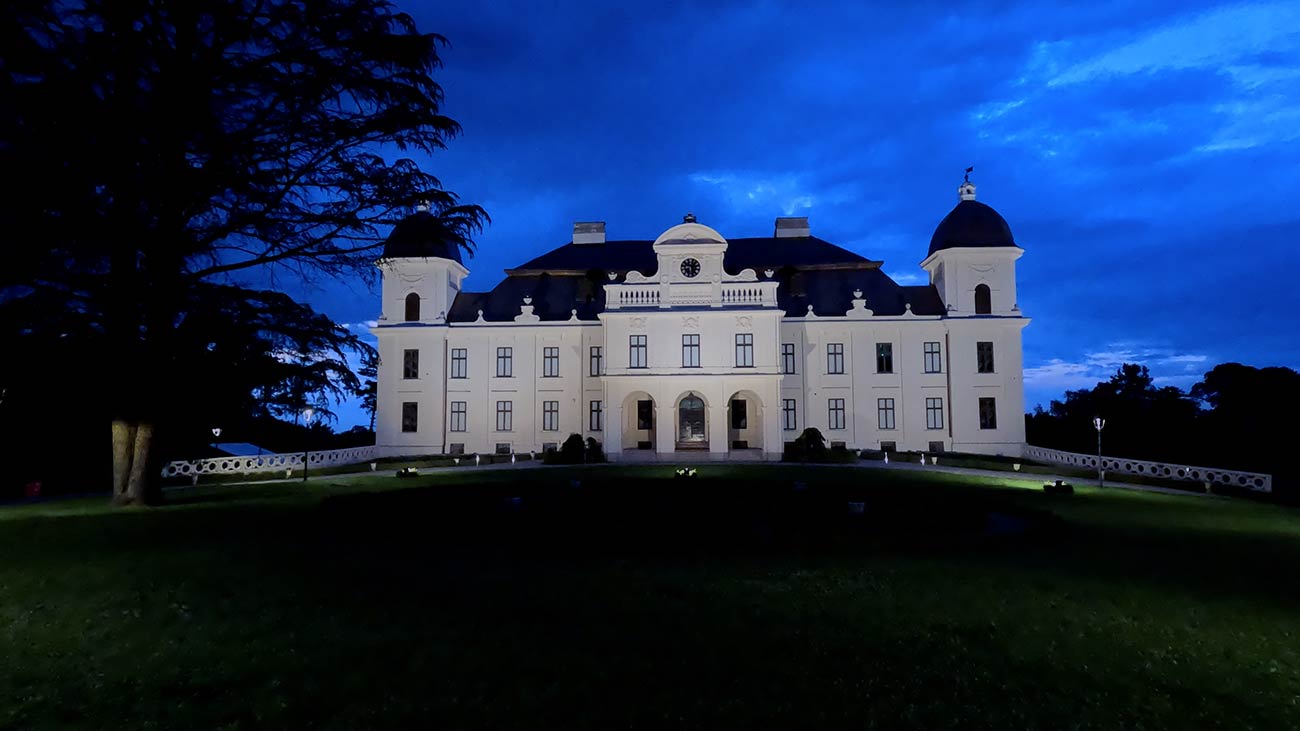
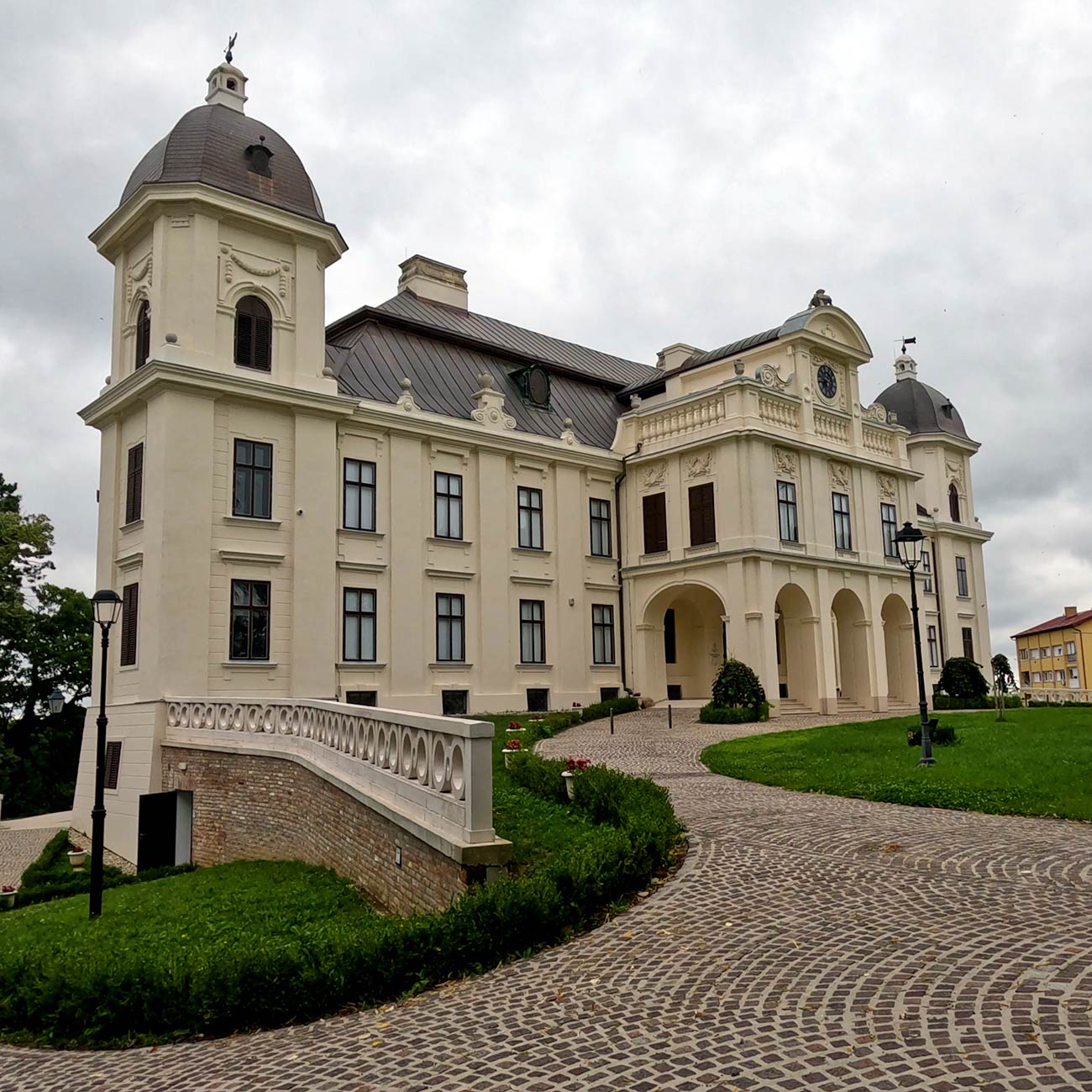
From Osijek and Vukovar, a small but rewarding network of regional train and bus connections branches out into the surrounding countryside, reaching towns that few foreign cyclists would otherwise encounter. A cathedral built from seven million red bricks and a stud farm with five centuries of Lipizzaner horses sit in Đakovo, a Baroque noble estate and Croatia’s only surviving Templar church are found near Našice, and the oldest continuously inhabited town in Europe, with a prehistoric calendar set into its modern pavement, waits in Vinkovci. These are not grand tourist destinations in the conventional sense, but they are genuine and distinctive, and the ease of reaching them by a short train ride from the main route is part of what makes the Slavonian section of the EuroVelo 6 more interesting than its flat horizon might initially suggest.
The sections below begin with a practical overview of bicycle transport options on Croatian trains and buses, followed by a map of inland destinations accessible to cyclists by public transport, and individual destination cards with photographs for each location.
Cycling & Public Transport
Below you will find a structured overview of public transport options available for cyclists, including key practical details on how bicycles can be carried on trains, buses, and other services. These notes are intended to help you understand the different possibilities for combining cycling with public transport, and to make it easier to plan flexible connections along your route depending on operator rules, capacity, and local conditions.
Croatian Trains
The rail network in Croatia is operated mainly by HŽPP (HŽ Putnički prijevoz, Croatian Railways Passenger Transport), the state-owned passenger operator that runs both regional and InterCity services across the country. Regional trains (putnički vlak) serve smaller towns with frequent stops, while a smaller number of InterCity services connect the main cities with fewer stops and faster journey times; seat reservation is compulsory on some InterCity routes, including the Zagreb-Osijek line. Croatia’s rail network is considerably less developed than its road network, and trains generally take longer than buses for the same journey, which makes rail the more practical option mainly for shorter regional hops rather than long-distance travel. The Danube region in Croatia, including the Slavonia and Srijem areas near Vukovar and Vinkovci, is served by regional lines connecting the smaller towns of the area to the main Zagreb-Osijek-Vinkovci corridor. The HŽPP app and website (hzpp.hr) are the central tools for planning journeys, checking timetables, and purchasing tickets.
Taking your bike
Croatia is moderately bike-friendly when it comes to rail transport. On Croatian trains, bicycles can generally be carried as luggage on all services, provided they are disassembled and packaged so they fit within the passenger compartment or a designated luggage area; newer regional and InterCity trains increasingly offer dedicated bicycle storage areas with space for up to ten bikes, while older rolling stock may not. The bicycle transport fee on domestic routes is around 2 euros regardless of distance, and around 5 euros on international and cross-border services, where a separate bicycle ticket and, on some routes, a bicycle seat reservation are required. Because not every train has a designated bicycle area, it is advisable to check directly with HŽPP before travelling with an assembled bike, particularly during the busy summer season. Folding or fully disassembled and bagged bicycles travel more reliably as ordinary luggage on any service. Overall, Croatian rail can be used for short cycle-touring detours, but buses remain the more flexible and frequent option for most domestic journeys.
Bikes on Buses
Long-distance bus services in Croatia are the dominant mode of intercity travel, generally faster and more frequent than the equivalent train journey. The network is operated by a large number of regional and national carriers, including FlixBus, Autotrans, and a range of smaller local operators such as Polet Vinkovci, which serves many of the shorter routes within Slavonia and Srijem. Bicycle transport on Croatian buses is possible but not standardised across operators: FlixBus and several other carriers will carry bicycles in the luggage compartment when space allows, generally for a small additional fee, but capacity is limited and advance booking or confirmation with the operator is recommended. Most regional and local bus operators do not guarantee bicycle space and should be contacted directly before travelling with an assembled bike. As a result, buses are best used by cyclists as a secondary option for longer-distance repositioning between towns, particularly where rail connections are slow or infrequent, while advance planning remains essential for anyone travelling with a bicycle.