Slovakia
Reading time: 7 minutes
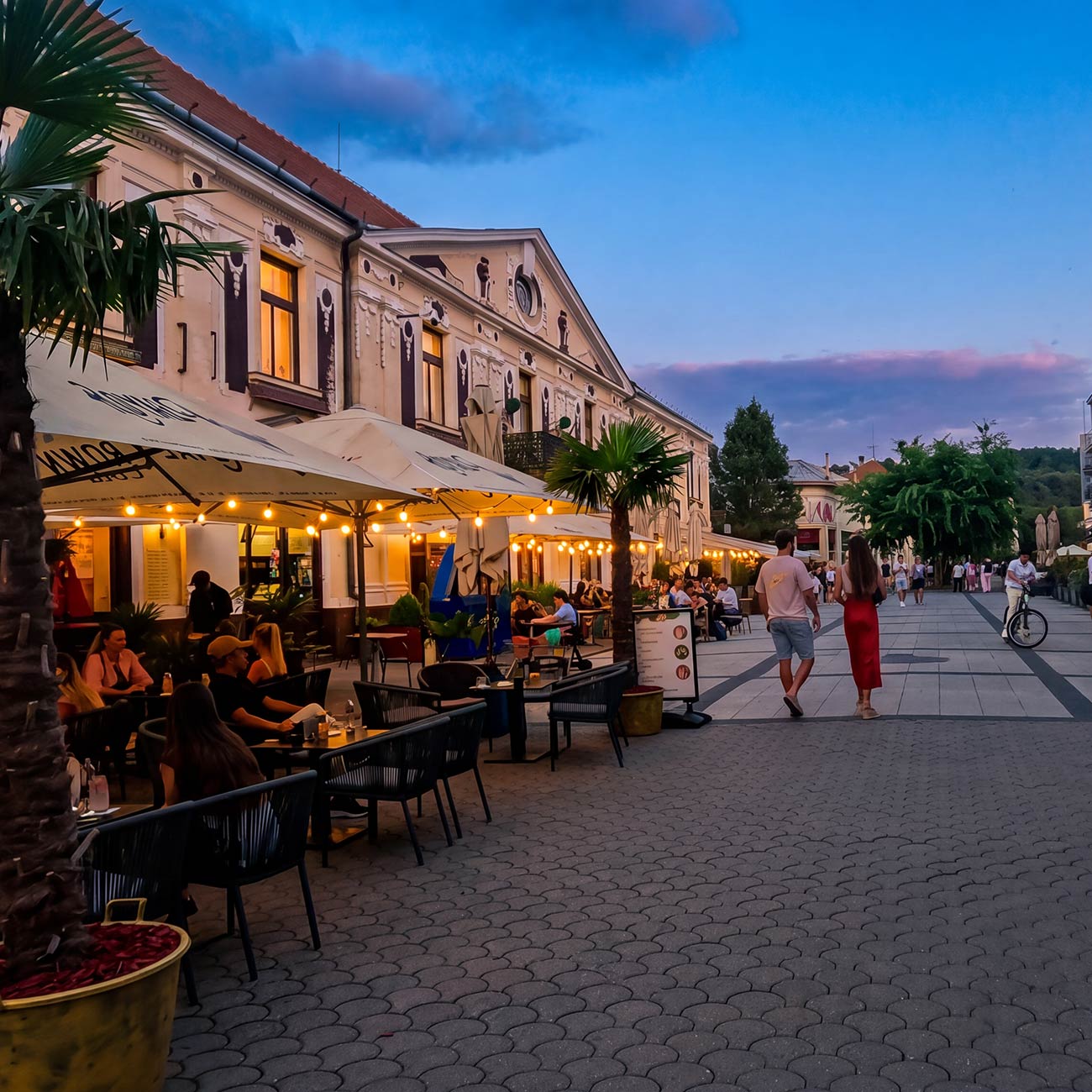
Slovakia is the shortest stretch of the EuroVelo 6 by distance, but what it lacks in length along the river it makes up for in the depth and variety of what can be reached from it. The Danube forms the country’s southern border with Hungary, entering from Austria at Devín, where a ruined castle above the confluence of the Danube and the Morava has watched over the crossing for more than a thousand years, and flowing east through Bratislava, the Slovak capital, before continuing downstream toward Štúrovo and the Hungarian border. The riverside stretch itself is relatively brief, but the city at its centre is one of the most accessible capitals on the entire route, a compact, walkable old town set directly on the river with a castle, a cathedral, and a lively café culture all within a few minutes’ walk of the cycling path.
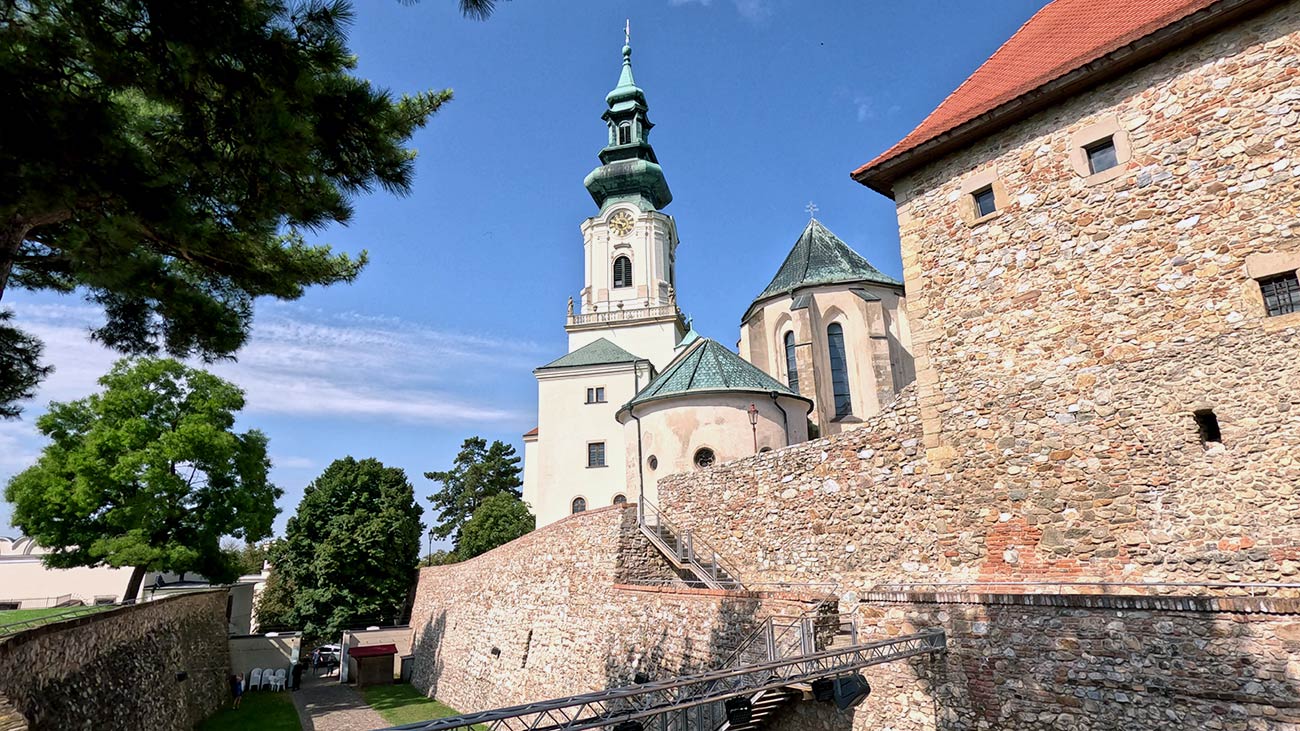
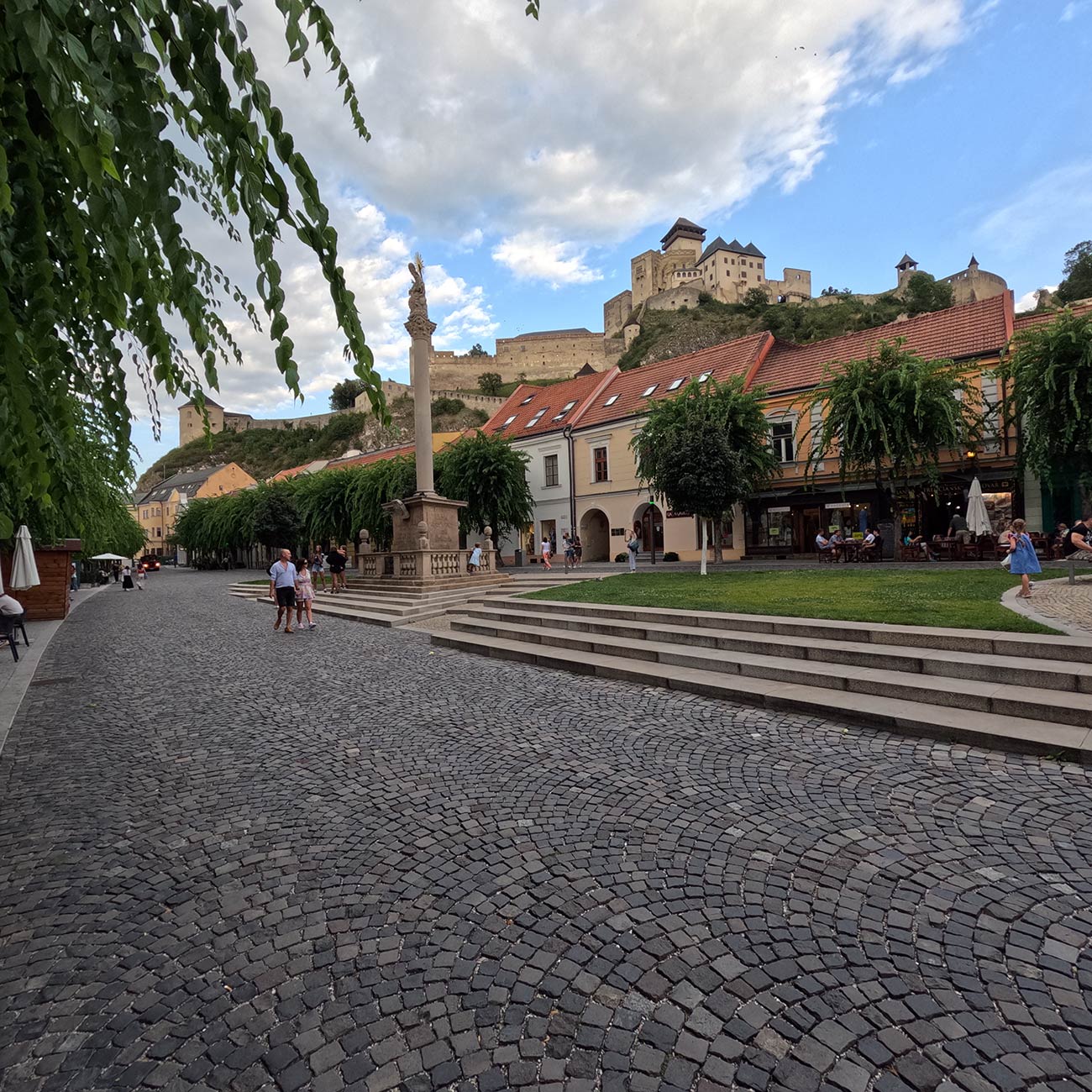
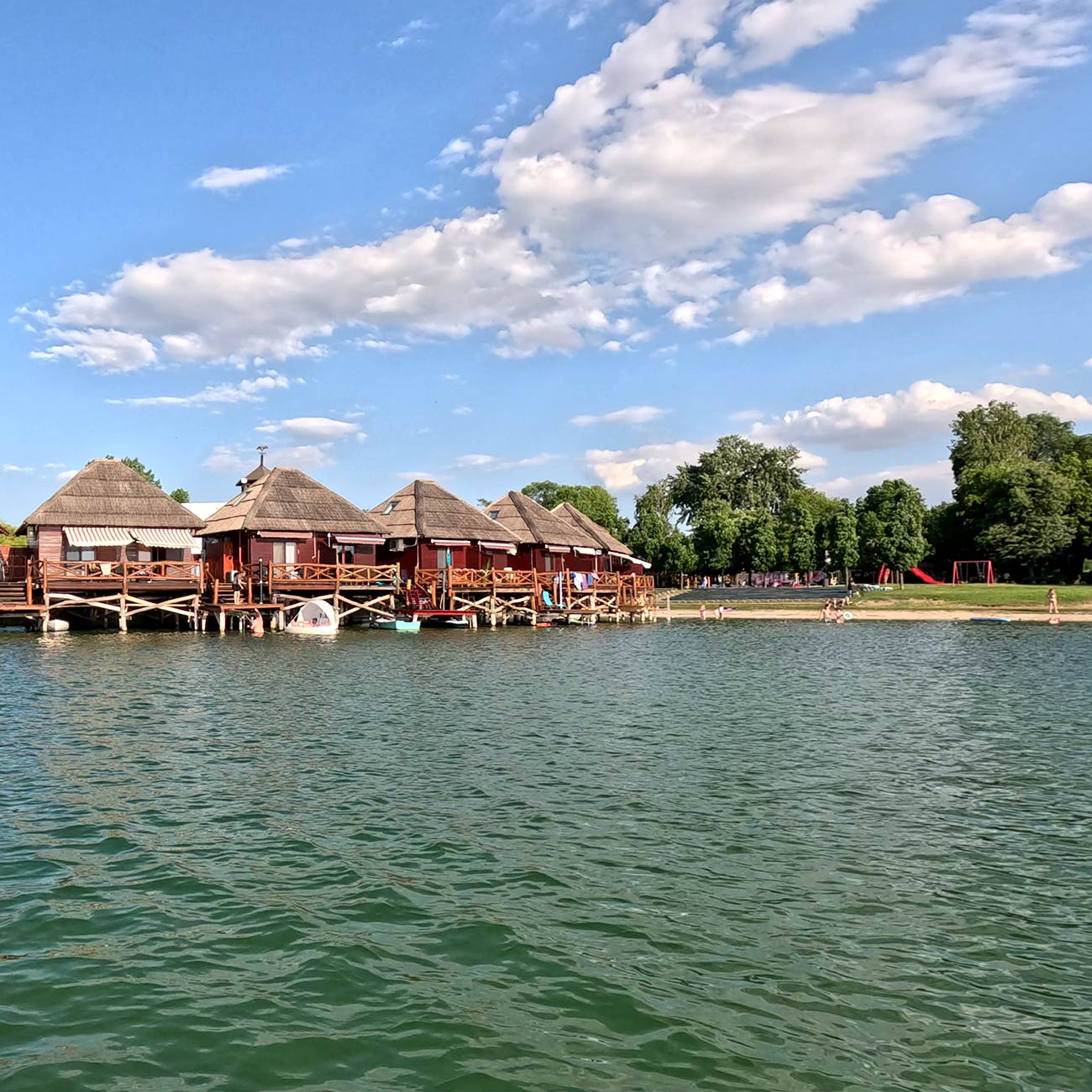
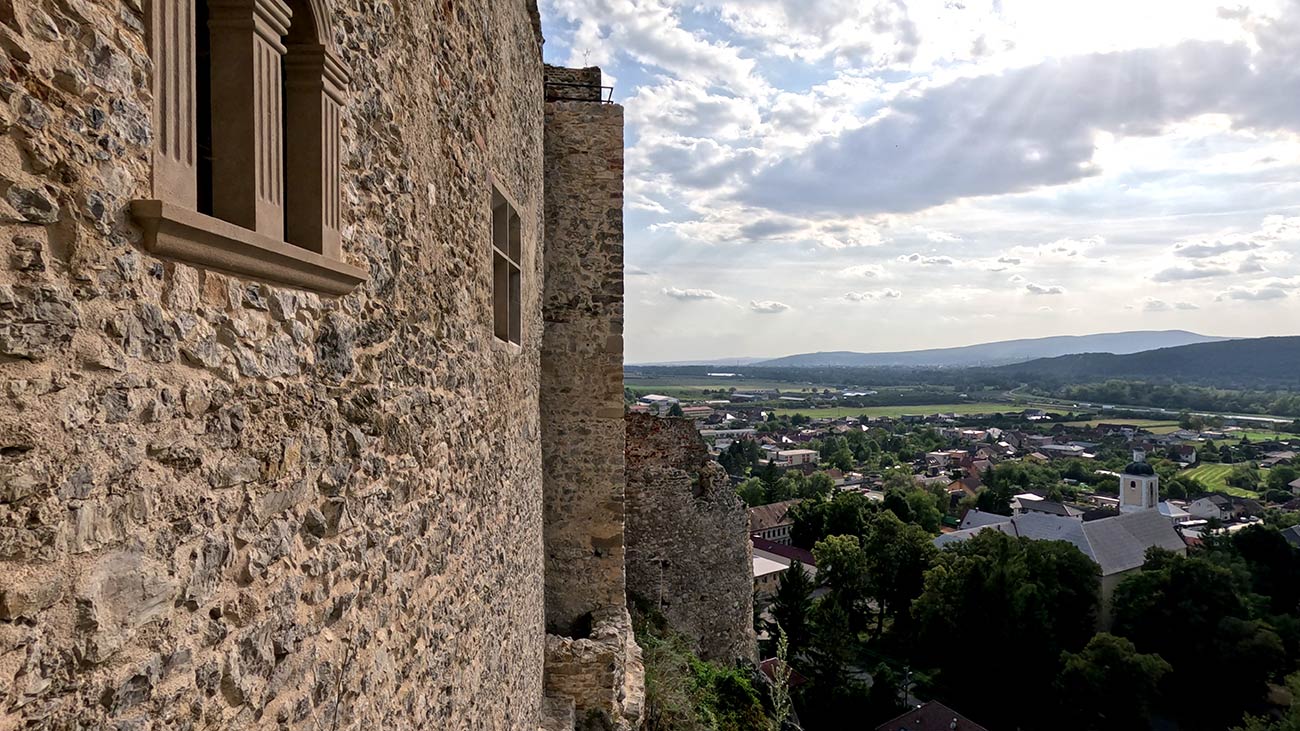
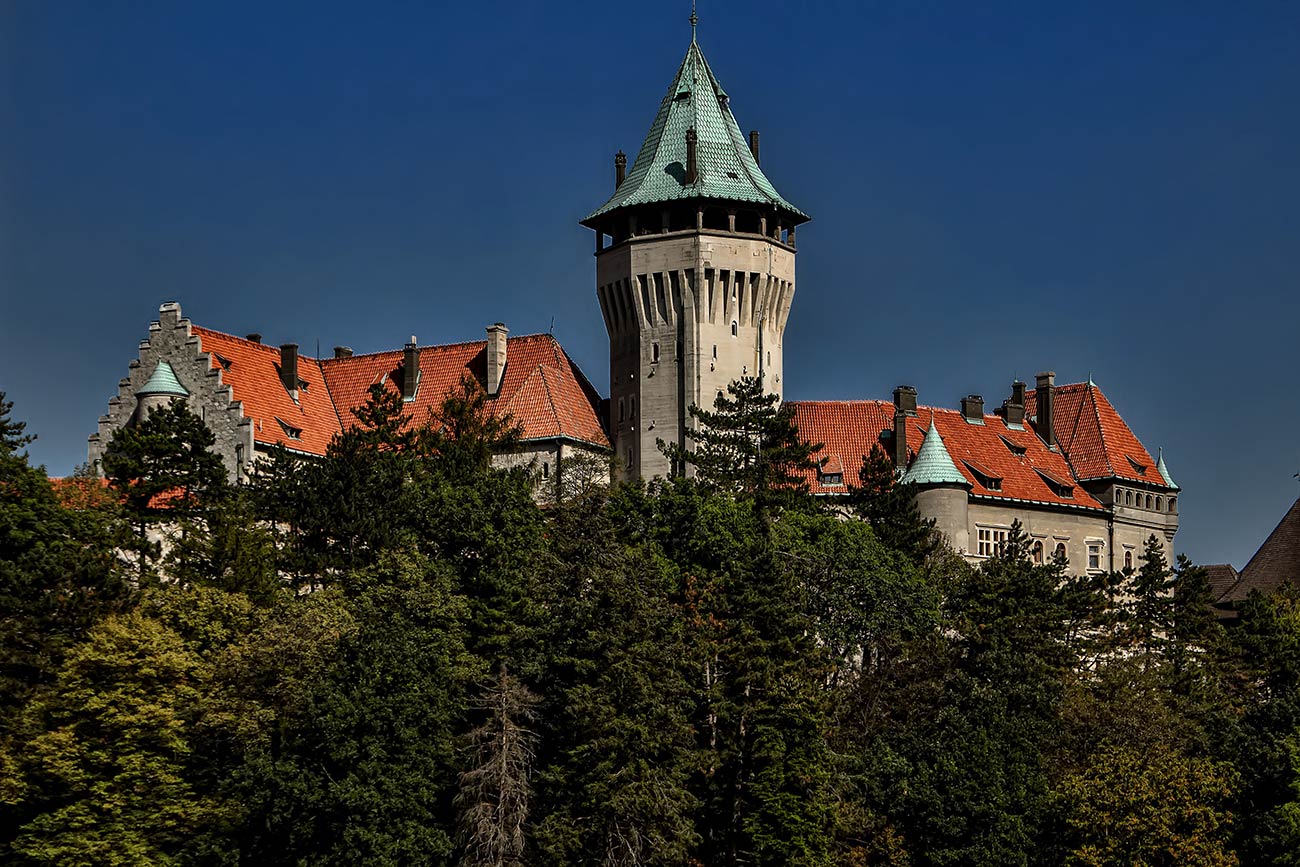
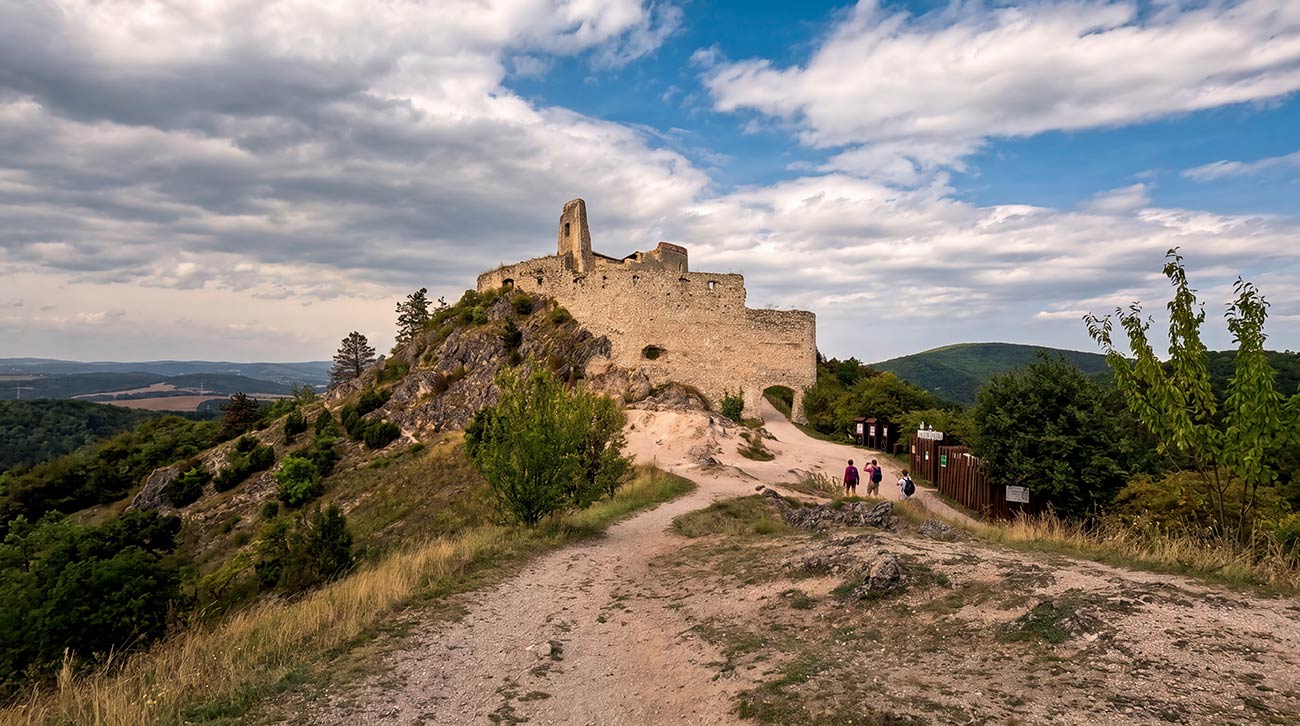
What makes the Slovak section distinctive is less the Danube corridor itself than the two railway branches that run inland from Bratislava into the surrounding countryside. One heads north-west along the broad Váh Valley toward Trenčín, passing through spa towns, castle-crowned hilltops, and the vineyards of the western Carpathian foothills. The other runs east toward Nitra, crossing the lowlands to one of the oldest cities in central Europe, a place that carries the title Mother of Slovak Towns and traces its Christian heritage back to the ninth-century missions of Cyril and Methodius. Between these two branches, a cluster of further destinations — ruined castles, thermal lakes, a romantic château in the Little Carpathians — can be reached by short connections from Bratislava or from intermediate stops along the same lines.
The destinations accessible from the Slovak Danube are united by a shared history that gives the country’s section of the route a particular coherence. Almost every castle, church, and spa town on these two branches carries the imprint of the medieval Kingdom of Hungary, of which present-day Slovakia formed the northern half for nearly a thousand years. The same noble families — Stibor, Pálffy, Esterházy, Báthory — appear again and again across different sites, and the stories of frontier fortification, religious mission, and aristocratic patronage connect one destination to the next in ways that reward visiting several of them in sequence rather than in isolation. The ZSSK rail network, the national operator, serves both branches with frequent regional trains, and the journey times from Bratislava are short enough that most of the destinations in this guide can be visited as comfortable day trips from the capital.
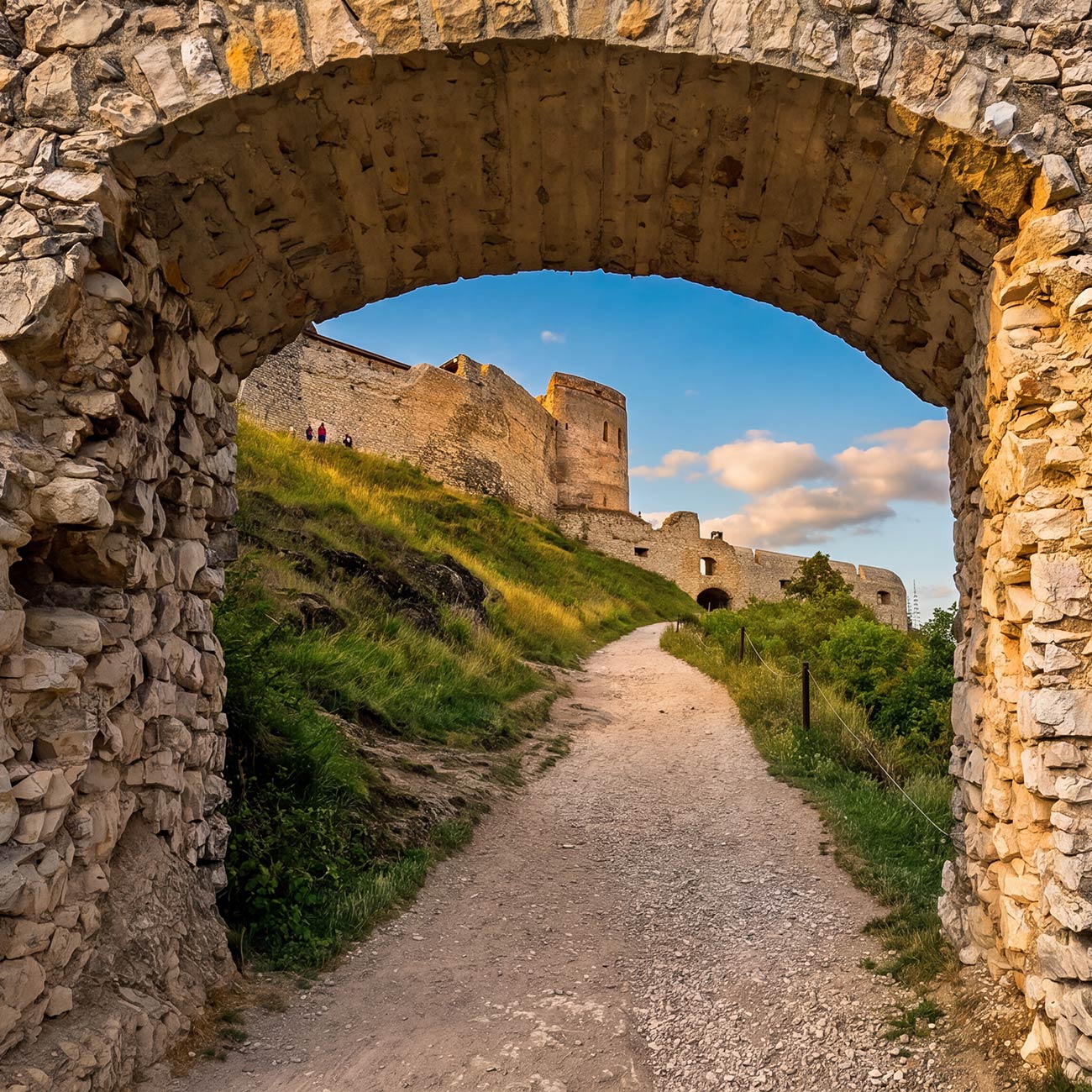
The sections below begin with a practical overview of bicycle transport options on Slovak trains and buses, followed by a map of inland destinations accessible to cyclists by public transport, and individual destination cards with photographs for each location.
Cycling & Public Transport
Below you will find a structured overview of public transport options available for cyclists, including key practical details on how bicycles can be carried on trains, buses, and other services. These notes are intended to help you understand the different possibilities for combining cycling with public transport, and to make it easier to plan flexible connections along your route depending on operator rules, capacity, and local conditions.
Slovak Trains
The rail network in Slovakia is operated mainly by Železničná spoločnosť Slovensko (Slovak Railway Company, commonly known as ZSSK), the national passenger railway operator and by far the largest carrier in the country. ZSSK runs most long-distance services as well as a large share of regional connections, including the InterCity and EuroCity trains on the main east–west corridor and the dense network of regional and suburban Os and REX services that branch out into the Slovak countryside. Tickets, timetables, and bicycle reservations can be planned and booked through the ZSSK website and the IDS ZSSK app, which together serve as the central tools for travel across the system. Alongside ZSSK, the private operator RegioJet runs a smaller number of long-distance trains on selected routes, although its bicycle transport capacity is limited and depends on the specific train and route. A further private operator, Leo Express, does not serve the routes covered by this guide. For travellers leaving the EuroVelo 6 along the Slovak stretch of the Danube, the natural rail gateway is Bratislava, the country’s capital, where two regional railway branches run north into the surrounding region: one west and north toward Trenčín along the Váh valley, and one east toward Nitra. Both corridors are served by frequent ZSSK regional trains throughout the day, making short detours from the Danube cycle path quick and easy to organise.
Taking your bike
Slovakia is generally very bike-friendly when it comes to rail transport, especially on regional services operated by ZSSK, which form the core of mobility for cycle touring along the Danube and its connecting corridors. On regional and local trains (the Os and REX categories), bicycles can be taken on board for an additional fee, with no advance reservation possible and a first-come, first-served allocation of space. Bicycle tickets are sold as single trips or as affordable daily, weekly, or monthly passes, valid across the regional network. On long-distance services such as R (fast), Ex (express), EC, IC, and RJX trains, an advance reservation for the bicycle is mandatory, with the bike spaces located in dedicated zones in second-class carriages or in mobile luggage compartments. The private operator RegioJet runs a smaller number of long-distance trains on selected Slovak routes and also accepts bicycles on some of these, but the capacity is more limited than on ZSSK trains and an advance reservation is required. Leo Express, a further private operator, is fully bike-friendly on its train services and allows up to four bicycles per train with advance reservation, although its routes do not cover the detours in this guide and are mainly relevant for cyclists travelling between the Czech Republic and other parts of Slovakia. Folding bikes are carried free of charge as hand luggage on all three operators, provided they fit in the luggage racks. Overall, the Slovak rail system is well adapted to cycle tourism and offers a flexible combination of train and bike that makes it easy to leave the EuroVelo 6 route in either direction for short or extended detours.
Bikes on Buses
Long-distance bus services in Slovakia are primarily operated by FlixBus, complemented by RegioJet and Slovak Lines on selected routes, alongside a smaller number of regional and private coach operators. As in many central European countries, the long-distance bus market in Slovakia is less developed than the wider rail network, and many domestic connections that would otherwise be served by intercity coaches are instead handled by ZSSK trains. FlixBus is generally the most practical option for cyclists, with bicycle transport available on certain connections, either via external bike racks or in the luggage compartment, although it is not consistently guaranteed across the network and depends on the specific vehicle type and route configuration. Where available, bicycle transport must be reserved in advance and capacity is limited, making it less flexible compared to rail services. RegioJet also runs long-distance coaches alongside its trains, and Slovak Lines operates a network of domestic and international routes from Bratislava, but the bicycle-carrying options on both operators are limited and not guaranteed on the routes relevant to the detours in this guide. As a result, buses are generally used as a secondary option for cyclists, mainly for longer-distance repositioning between major cities rather than as a core part of cycling itineraries along the Danube region. While useful in specific cases where rail connections are less convenient, they are less predictable and less standardised for bicycle transport, so advance planning is essential.